Table of Contents
- Why CBD May Not Have Worked: The Real Reasons
- Reason 1: Your Expectations Were Unrealistic
- Reason 2: Product Quality and Purity Issues
- Reason 3: Incorrect Dosage and How to Find the Right CBD Dosage
- Reason 4: Bioavailability and Delivery Methods
- How Long Does CBD Take to Work? Timing Matters
- Full Spectrum vs Broad Spectrum CBD: Which Did You Try?
- Overlooked Factors: Drug Interactions, Storage, and Tolerance
- Your Next Steps: A Practical Plan to Try CBD Again
- Frequently Asked Questions
Last Updated: September 5, 2026
Why CBD May Not Have Worked: The Real Reasons
If you tried CBD and felt nothing, you are not alone. The most common reason CBD didn’t work before isn’t that you are immune to it; it’s that the approach was fundamentally flawed. Whether it was the wrong product, an unrealistic timeline, or a dose that was far too low, the variables are fixable. In this guide from CBD Health Collection, we break down why your previous attempt failed and how to correct course with a science-based strategy.
CBD is a botanical extract that interacts with your body’s endocannabinoid system, which helps regulate pain, mood, and sleep. However, achieving a therapeutic effect requires the right dose, the right delivery method, and the right expectations. Below, we’ll show you exactly how to troubleshoot your experience, covering the 5 specific reasons often seen when customers say “CBD didn’t work for me.”
The core issue is usually not the compound itself, but the combination of dosage, bioavailability, and product type. Fix those three variables, and your next attempt stands a much better chance.
Reason 1: Your Expectations Were Unrealistic
Most people expect CBD to work like an over-the-counter painkiller, delivering noticeable relief within 30 minutes. That is the wrong mental model. CBD is a subtle regulator, not a blunt-force drug. It works by supporting homeostasis in the endocannabinoid system rather than masking a symptom.
Many first-time users also quit too early. While some people feel effects on the first day, it is common to need consistent daily use for several weeks before your body reaches a steady state. If you tried one tincture for three days and gave up, you didn’t give the compound a fair trial. The question isn’t whether CBD works; it’s whether you gave it enough time to work.
Reason 2: Product Quality and Purity Issues
The CBD market is unregulated at the federal level, which means product quality varies wildly between brands. If your previous CBD didn’t work, there is a real chance the product contained less CBD than the label claimed, or it lacked the necessary cannabinoids entirely.
Before you buy again, check for two things: third-party lab testing and a certificate of analysis. A reputable brand will have an independent lab verify the potency and screen for contaminants like heavy metals and pesticides. As noted by the FDA on CBD safety and quality, products sold online may be adulterated or mislabeled, which is why independent verification is non-negotiable. If the brand you used couldn’t produce a recent COA, purity was likely your problem.
Reason 3: Incorrect Dosage and How to Find the Right CBD Dosage
This is the most common failure point. Many people start with a 10 mg gummy, feel nothing, and conclude CBD is useless. The reality is that dosage is highly individualized, and 10 mg is often a microdose for adults dealing with significant discomfort.
Titration: Start Low and Go Slow
The standard clinical guidance is to start low and go slow. Begin with a modest dose, hold it steady for several days, and then gradually increase until you notice the desired effect. This process is called titration. The goal is to find your personal “sweet spot” without taking more than you need.
Weight, Metabolism, and Your Endocannabinoid System
Your ideal dose depends on your body weight, your individual metabolism, and the sensitivity of your endocannabinoid system. Two people of the same weight can require vastly different amounts. A common mistake is sticking to the same dose for a month without adjusting. If you don’t feel anything after a week, increase the dose incrementally rather than abandoning the product entirely.
Keep a daily journal during your titration period. Note the time of day, the dose, and your perceived relief level. This data will help you identify the exact amount your body needs, rather than guessing.
Reason 4: Bioavailability and Delivery Methods
Bioavailability is the fraction of the CBD you consume that actually reaches your systemic circulation. If your previous attempt was a swallowed capsule or a gummy, you were fighting a significant physiological hurdle: first-pass metabolism. When you ingest CBD orally, it travels to your liver, where enzymes, primarily cytochrome P450, break down a large portion of the cannabinoid before it ever reaches your bloodstream. This process can reduce the effective dose by as much as 80-90%, meaning a 25 mg gummy might only deliver the equivalent of 2.5-5 mg of active CBD to your system (PubMed).
Here is how the major delivery methods stack up in terms of relative bioavailability and onset time:
- Sublingual Tinctures (Oil or Water-Based): Administered under the tongue, CBD is absorbed directly through the sublingual mucous membranes into the bloodstream, bypassing the liver initially. Onset is typically 15-30 minutes. While traditional oil-based tinctures have moderate bioavailability, newer water-based or nano-emulsified tinctures (like those offered by CBD Health Collection) create smaller particles that can be absorbed more efficiently, potentially increasing bioavailability significantly.
- Edibles and Capsules: As noted, these suffer from extensive first-pass metabolism. Onset is slow (45-90 minutes), and the effects can be less predictable. However, the effects, when they do occur, often last longer because the CBD is released gradually.
- Vaping or Inhalation: This offers the highest bioavailability of any method, often cited as being in the 50-60% range, because CBD enters the bloodstream directly through the lungs. Onset is almost immediate (within minutes). However, the effects also wear off faster, and long-term safety of vaping is a concern for many users.
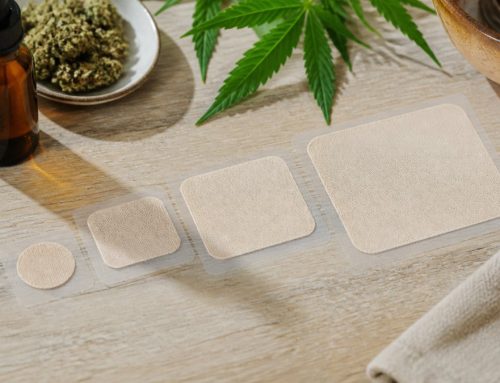
- Topicals: These are a different category entirely. They do not enter the bloodstream in significant amounts; instead, they interact with cannabinoid receptors in the skin and underlying tissue. This makes them ideal for localized joint or muscle pain but ineffective for systemic issues like anxiety or sleep.
Your previous failure might not have been the dose itself, but the route you chose to deliver it. If you were using a low-bioavailability edible for a systemic issue, you may have simply never gotten enough active CBD into your bloodstream to have an effect. Switching to a sublingual tincture or a fast-acting topical is often the single most effective change you can make.
When switching delivery methods, remember that your effective dose will change. If you were taking 50 mg of an edible, you might only need 25 mg of a high-bioavailability sublingual tincture to achieve the same effect. Always re-titrate when you change the route of administration.
How Long Does CBD Take to Work? Timing Matters
So, how long does CBD take to work? The answer depends entirely on how you consume it. For a tincture taken sublingually, you might feel effects within 15 to 30 minutes. For an edible, you are waiting 45 to 90 minutes as it passes through digestion.
Timing also affects your consistency. If you are using CBD for sleep, taking it right before bed might be too late for an edible. You may need to take it an hour earlier. Conversely, if you use a topical freeze gel for joint pain, the relief can be almost immediate. Aligning your delivery method with your timing needs is essential for success.
Full Spectrum vs Broad Spectrum CBD: Which Did You Try?
The type of extract you used previously could explain your lack of results. Full spectrum CBD contains all the phytochemicals naturally found in the hemp plant, including trace amounts of THC (below 0.3%). Broad spectrum CBD offers a similar profile but with the THC completely removed.
The difference matters because of a phenomenon called the entourage effect. Many researchers believe that the cannabinoids and terpenes work better together than in isolation. If you tried a pure CBD isolate before, you may have missed out on the synergistic benefits of a full or broad spectrum product. For those who want the benefits of the whole plant without any psychoactive effects, broad spectrum is often the preferred choice.
Overlooked Factors: Drug Interactions, Storage, and Tolerance
Beyond the basics, several overlooked factors could explain why CBD didn’t work before. This section goes beyond the generic advice to give you a concrete, actionable framework for each.
The Drug Interaction Screening: Is Your Medication Blocking CBD?
This is a frequently missed variable. CBD is metabolized by the cytochrome P450 enzyme family, specifically the CYP3A4 and CYP2C19 isoenzymes. If you are taking other medications that are also metabolized by these same enzymes, they can compete for the same metabolic pathway. This competition can have two consequences: it can cause CBD levels to drop (if the other drug is processed faster), or more commonly, it can cause your other medication’s levels to rise to dangerous levels in your blood.
Before your next attempt, run through this quick screening checklist with your pharmacist or physician:
- List all current prescriptions and over-the-counter medications.
- Ask specifically about ‘grapefruit interactions.’ The same liver enzymes that metabolize grapefruit juice are the ones that process CBD. If your medication has a grapefruit warning, it will likely interact with CBD.
- Identify common interacting drugs. These include, but are not limited to: certain blood thinners (like warfarin), anti-seizure medications (like clobazam), some antidepressants, and certain heart rhythm medications.
- Ask about timing. In some cases, separating your CBD dose from your other medications by a few hours can minimize the interaction, but this must be confirmed by a professional.
If your medication is being processed too quickly, you might be effectively eliminating the CBD before it has a chance to work. This isn’t a failure of the CBD; it’s a failure of the combination.
Storage and Degradation: The Silent Potency Killer
CBD is a fragile molecule. Exposure to light, heat, and oxygen causes it to degrade into cannabinol (CBN). While CBN is not inactive, it has different effects and is not the same as the CBD you paid for. If you stored your tincture improperly, you may have been using a product that was significantly less potent than when it left the factory.
Here are the specific degradation risks:
- Light: Ultraviolet (UV) light is the primary enemy. Clear glass bottles or leaving your dropper on a sunny counter can degrade CBD within days. This is why quality products come in amber or cobalt blue glass.
- Heat: Temperatures above 70°F (21°C) accelerate degradation (the FDA). Storing your oil in a hot car, near an oven, or in a sunny window can rapidly reduce potency.
- Air (Oxidation): Every time you open the bottle, you introduce oxygen. Over time, this oxidizes the cannabinoids. This is why you should always replace the cap tightly and avoid leaving the dropper out.
The Fix: Store your CBD in a cool, dark place, like a pantry or a cabinet away from the stove. The refrigerator is acceptable but not necessary. If your oil has become thick, darkened in color, or developed a strong, skunky smell, it has likely degraded and should be replaced.
Tolerance: The Cannabinoid Conundrum
Unlike THC, where tolerance builds rapidly, the research on CBD tolerance is less clear. However, many long-term users report a phenomenon known as ‘tachyphylaxis,’ where the same dose gradually produces a diminished effect over time. This is not a sign that CBD has stopped working; it is a sign that your receptors have adapted.
If you used the same dose daily for months and felt it ‘stop working,’ consider a tolerance break. A common pattern is to take a 3-7 day break from all cannabinoids to allow your endocannabinoid system to reset. Upon returning, many users find that their original low dose is effective again. Alternatively, you can cycle your usage, for example, using CBD for 5 days and taking 2 days off, to prevent tolerance from building in the first place.
Never stop taking prescribed medications to ‘reset’ your system. Always consult your doctor before making any changes to your prescription drug regimen. The interaction screening checklist above is for informational purposes and is not a substitute for professional medical advice.
Your Next Steps: A Practical Plan to Try CBD Again
If you are ready to give CBD another shot, do it methodically. First, choose a product with a verified certificate of analysis to ensure purity and potency. Second, opt for a sublingual tincture or a fast-acting topical to maximize bioavailability. Third, commit to a four-week titration schedule, adjusting your dose weekly based on your journal notes.
| Previous Failure Point | The Fix | Expected Outcome |
|---|---|---|
| Quit after 3 days | Commit to a 4-week trial | Allows body to reach steady state |
| Used a low-potency edible | Switch to sublingual tincture | Higher bioavailability, faster onset |
| No lab testing available | Verify third-party COA | Ensures product is pure and correctly dosed |
| Fixed dose for weeks | Titrate dose weekly | Finds your personal therapeutic window |
When you are ready to try again, CBD Health Collection offers a range of organically grown, USA-sourced products that are independently third-party lab tested for purity and potency. Our water-based CBD tinctures are designed for better absorption and optimized bioavailability, addressing the two biggest reasons for past failures. Every purchase is backed by a 30-day satisfaction guarantee, so you can try with confidence.
Frequently Asked Questions
Does CBD stop working after a while?
Yes, some people develop a tolerance to CBD over time. If you used the same dose daily for several weeks and noticed the effect fade, a short tolerance break of a few days often resets your response. You can also adjust your routine by changing the delivery method or dose slightly. Consistency matters, but so does listening to your body and taking a break when needed.
How long does it take for CBD to build up in your system?
CBD can build up in your system over several days of consistent use. While some people feel effects within 30 minutes to 2 hours, others need 3 to 7 days of daily dosing to reach a steady level. This buildup is why consistency matters more than taking a large single dose. Track your response daily and give it at least a week before judging results.
How to tell if CBD is working?
Look for subtle shifts rather than dramatic changes. Common signs include improved sleep quality, reduced tension, less joint stiffness, or a calmer mood. Many people expect an instant sensation, but CBD often works quietly in the background. Keep a simple journal of your sleep, pain levels, and stress for two weeks to spot patterns you might otherwise miss.
Why does CBD quality matter for effectiveness?
Quality directly affects how much active CBD reaches your system. Low-quality products may contain less CBD than the label claims, or they may have degraded during storage. Look for third-party lab testing with a certificate of analysis (COA), organically grown hemp, and clean CO2 extraction. A product with verified potency and purity gives you a fair chance to judge whether CBD works for you.
Finding the right CBD routine takes patience and a willingness to adjust your approach. The science of the endocannabinoid system is personal, and what works for one person may not work for another. By focusing on quality, dosage, and delivery method, you can turn a past failure into a future success. Get started with CBD Health Collection and find a routine that finally works for you.
This article was written using GrandRanker