Table of Contents
- CBD vs. THC: The Core Differences
- Psychoactive Effects: Why THC Gets You High and CBD Doesn’t
- Full-Spectrum vs. Broad-Spectrum CBD: What You Need to Know
- Therapeutic Uses: Medical and Wellness Applications
- CBD and THC Dosage Guidelines: Finding Your Right Amount
- Legal Status of Hemp-Derived CBD in the United States
- Side Effects and Drug-Drug Interactions
- Quality Control and Third-Party Testing: How to Know What You’re Getting
- Frequently Asked Questions
Last Updated: September 1, 2026
CBD vs. THC: The Core Differences
Understanding the difference between CBD and THC is essential for anyone considering cannabis products. CBD (cannabidiol) and THC (delta-9-tetrahydrocannabinol) are both naturally occurring compounds found in cannabis plants, but they produce dramatically different effects.
Chemical Structure and Origin
Both CBD and THC share the same molecular formula: C₂₁H₃₀O₂, but differ in how those atoms are arranged, a subtle structural variation that creates dramatically different outcomes in how your body responds.
THC comes primarily from marijuana plants, while CBD is found in both marijuana and hemp plants, though hemp-derived CBD dominates the legal market. The 2018 Farm Bill legalized hemp-derived products containing less than 0.3% THC by dry weight, opening the door for widespread CBD availability across the United States (usda.gov). Hemp naturally contains more CBD and minimal THC, while marijuana plants are typically bred to maximize THC content.
How They Interact With Your Body
Your body contains an endocannabinoid system, a network of receptors and signaling molecules that regulate pain perception, mood, and immune function. This system has two primary receptor types: CB1 receptors, concentrated in the brain and central nervous system, and CB2 receptors, found throughout the immune system and peripheral tissues.
THC binds directly to CB1 receptors in your brain, producing the “high” and psychoactive effects (peer-reviewed research). CBD doesn’t bind strongly to either receptor. Instead, it works indirectly, modulating how your endocannabinoid system functions overall by influencing serotonin receptors, vanilloid receptors, and other signaling pathways. This indirect mechanism is why CBD produces no intoxication.
The key difference: THC is a direct agonist at CB1 receptors (it activates them), while CBD is an allosteric modulator (it influences the system without directly activating the main receptors). This distinction explains why CBD won’t impair cognition or produce euphoria, even at high doses.
Psychoactive Effects: Why THC Gets You High and CBD Doesn’t
When THC binds to CB1 receptors in your brain, it produces a cascade of neurochemical changes that alter perception, mood, and consciousness. Users report euphoria, altered time perception, increased appetite, and changes in sensory processing. Effects typically last 2-4 hours from smoking or vaping, or 6-8 hours from edibles (peer-reviewed research).
CBD produces none of these effects. Even at high doses, CBD doesn’t create intoxication, impaired judgment, or the characteristic “high.” Users often report a sense of calm or relaxation while remaining fully functional and cognitively clear. This is why CBD products are legal in all 50 states under federal law, while THC remains federally illegal.

THC alters your mental state and impairs function. CBD promotes calm without impairing cognition or coordination. This single difference determines whether a product is legal federally and whether you can use it while working or driving.
Full-Spectrum vs. Broad-Spectrum CBD: What You Need to Know
When shopping for CBD products, you’ll encounter three main categories: full-spectrum, broad-spectrum, and isolate.
Full-spectrum CBD contains all compounds naturally present in the plant, including CBD, minor cannabinoids, terpenes, flavonoids, and trace amounts of THC (up to 0.3% by law). Full-spectrum products are believed to produce stronger effects due to the entourage effect, the theory that cannabinoids and terpenes work synergistically to enhance therapeutic potential.
Broad-spectrum CBD removes most or all THC while retaining other plant compounds. This option appeals to people who want the potential benefits of multiple cannabinoids and terpenes without any THC content.
CBD isolate contains only pure cannabidiol with all other plant compounds removed. Isolates offer precision dosing and eliminate any THC concern, but they may lack the synergistic benefits of full-spectrum products.
The choice depends on your priorities. If you want the strongest potential effects and have no THC concerns, full-spectrum may suit you. If you want multiple cannabinoids and terpenes but need to avoid THC completely, broad-spectrum is the middle ground. Isolate works best for people who want only CBD with maximum purity and consistency.
The Entourage Effect Explained
The entourage effect is the hypothesis that cannabinoids, terpenes, and other plant compounds work together more effectively than CBD alone. Terpenes, the aromatic compounds that give cannabis its smell, may influence how cannabinoids interact with your body. For most people, the practical takeaway is straightforward: full-spectrum products may offer slightly stronger effects, but broad-spectrum provides a solid alternative if THC avoidance is essential.
Therapeutic Uses: Medical and Wellness Applications
Both CBD and THC have therapeutic applications, though they address different needs and work through different mechanisms.
CBD for Chronic Pain, Inflammation, and Sleep
CBD’s most researched applications involve pain management, inflammation reduction, and sleep support. CBD may reduce pain perception by influencing serotonin signaling and reducing inflammatory responses in the body. People with arthritis, muscle soreness, and other inflammatory conditions often turn to CBD products, oils, topicals, or patches.
Sleep is another common application. CBD may promote relaxation and reduce anxiety, which can improve sleep quality for people whose insomnia stems from stress or racing thoughts. Stress and anxiety represent perhaps the most common reasons people use CBD, as the compound appears to influence serotonin signaling, which plays a key role in mood regulation.
THC’s Role in Medical Treatment
THC has legitimate medical applications, particularly for conditions where its psychoactive properties are therapeutically relevant. In states where medical cannabis is legal, THC is prescribed for chronic pain, chemotherapy-induced nausea, multiple sclerosis symptoms, and certain seizure disorders. The euphoria and altered perception can reduce anxiety and improve mood in people with depression or PTSD. The appetite stimulation helps cancer patients struggling with treatment side effects.
However, THC’s psychoactive nature also limits its use. Many people can’t use THC due to work requirements, driving responsibilities, or personal preference. This is where CBD’s non-psychoactive profile becomes valuable: it offers therapeutic potential without intoxication.
If you’re taking prescription medications, THC carries a higher risk of drug-drug interactions than CBD, particularly with medications metabolized by the liver. Always consult a healthcare provider before combining THC with medications.
CBD and THC Dosage Guidelines: Finding Your Right Amount
Dosing CBD and THC requires a different approach than most pharmaceuticals because individual responses vary widely based on body weight, metabolism, the specific product formulation, and your endocannabinoid system’s baseline state.
For CBD, typical starting doses range from 5-10 mg per day. Many people find their optimal dose between 10-50 mg daily, though some benefit from higher amounts. Start low and increase gradually, a process called titration, to identify the minimum effective dose. Bioavailability varies dramatically by delivery method: sublingual oils absorb more efficiently than swallowed edibles, which must pass through digestion.
For THC, dosing is more critical because psychoactive effects are dose-dependent. A 2.5 mg dose might produce mild relaxation, while 10 mg could produce noticeable intoxication. Newcomers should start with 1-2 mg to assess their sensitivity.
Micro-Dosing Protocols and Drug Sensitivity
Micro-dosing refers to consuming very small amounts, typically 1-3 mg of THC or 5-10 mg of CBD, with the goal of achieving therapeutic benefits while minimizing or eliminating psychoactive effects. Some people are naturally more sensitive to cannabinoids due to genetics, body composition, liver metabolism, and previous cannabis exposure. This sensitivity also influences THC detection windows: people with slower metabolism may test positive for THC longer after consumption, which is crucial for anyone subject to drug testing.
Legal Status of Hemp-Derived CBD in the United States
The legal landscape for CBD in the United States is straightforward at the federal level but varies significantly by state.
What the 2018 Farm Bill Changed
The Agriculture Improvement Act of 2018 (commonly called the 2018 Farm Bill) legalized hemp cultivation and hemp-derived products at the federal level. The law defines hemp as cannabis containing no more than 0.3% THC by dry weight. Under this law, CBD products derived from legal hemp are federally legal. You can buy, sell, and use hemp-derived CBD products across all 50 states without federal restriction.
However, “federally legal” doesn’t mean completely unregulated. The FDA maintains authority over CBD products and their claims. Companies cannot claim that CBD cures, treats, or prevents disease, these are drug claims that require clinical trials and FDA approval. Some states have imposed additional restrictions. Before purchasing CBD products, verify your state’s current regulations.
Drug Testing and Detection Windows
THC detection depends on the test type and individual metabolism. Urine tests, the most common workplace screening, typically detect THC metabolites for 3-30 days after use. Hair tests can detect THC use for 90 days or longer. Saliva tests detect active THC for 24-48 hours. Blood tests show THC for only a few hours to a few days.
CBD detection is less common in drug tests because most screening programs target THC, not CBD. However, many CBD products contain trace amounts of THC (up to 0.3% legally). If you consume enough of a full-spectrum product, you could accumulate enough THC to test positive on a sensitive urine test. Broad-spectrum products remove most THC, significantly reducing this risk. CBD isolates eliminate it entirely.
If you’re subject to drug testing, broad-spectrum CBD removes THC while preserving other beneficial plant compounds, offering a safer option for people who need to pass tests.
Side Effects and Drug-Drug Interactions
What Research Shows About Safety
CBD is generally well-tolerated, with most people experiencing no adverse effects. When side effects do occur, they’re typically mild: dry mouth, drowsiness, reduced appetite, or diarrhea. THC’s side effects are more pronounced, particularly at higher doses, including dry mouth, red eyes, impaired memory, anxiety, and paranoia. These effects are temporary and resolve as THC clears your system.
Long-term safety data for both compounds is still accumulating. Regular THC use, particularly in high doses or starting in adolescence, may have effects on cognitive development and mental health outcomes. CBD shows no such concerning patterns in available research.
Potential Interactions With Medications
CBD interacts with medications metabolized by the cytochrome P450 enzyme system in your liver. When CBD inhibits these enzymes, it can increase medication levels in your bloodstream, potentially causing side effects or toxicity. Most people using moderate CBD doses won’t experience clinically significant interactions. However, if you’re taking medications metabolized by CYP3A4 or CYP2C19 enzymes, particularly narrow-therapeutic-window drugs where small dose changes matter, consult your healthcare provider before adding CBD.
THC carries higher interaction risk than CBD due to its stronger enzyme inhibition. If you’re taking medications and considering THC products, medical consultation is essential.
Never assume CBD is risk-free with your medications. If you take prescription drugs, discuss CBD use with your doctor or pharmacist before starting. They can assess your specific medications and advise whether CBD is appropriate.
Quality Control and Third-Party Testing: How to Know What You’re Getting
The CBD market lacks comprehensive federal regulation, which means quality varies wildly between brands. Some products deliver exactly what the label claims; others contain significantly less CBD than advertised, unwanted contaminants, or even unlisted THC.
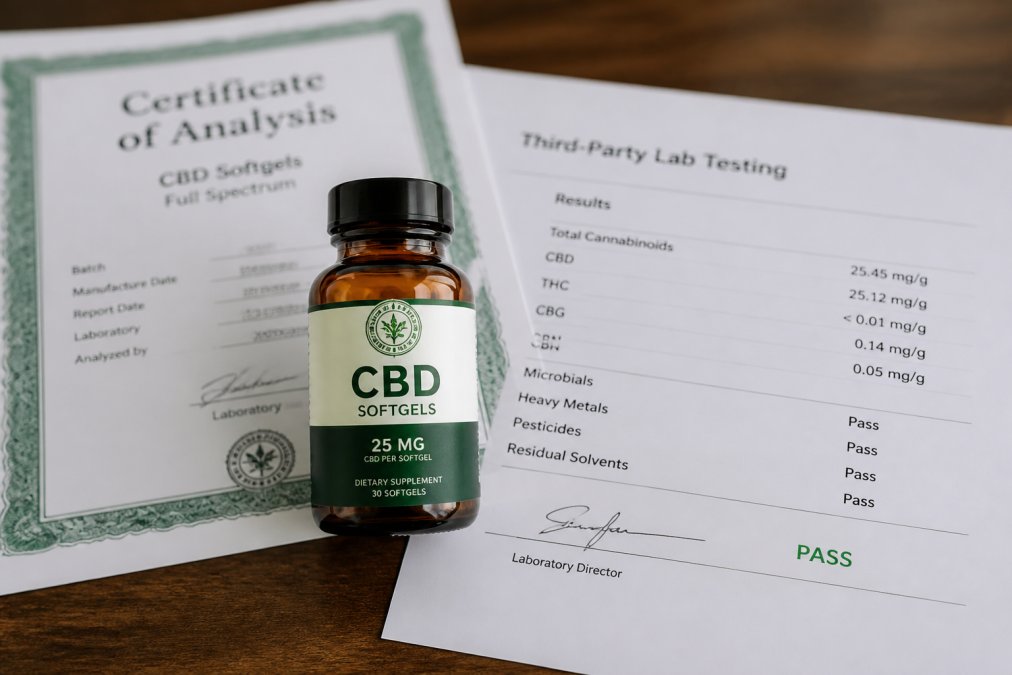
This is where third-party testing becomes essential. A third-party lab, independent from the manufacturer, analyzes the product and issues a Certificate of Analysis (COA). When evaluating any CBD product, request the COA before purchasing. Legitimate companies provide it readily. If a brand won’t share lab results, that’s a red flag. The COA should show:
- Actual CBD content (compared to label claims)
- THC content (to verify it’s below 0.3% if that matters to you)
- Contaminant screening results (pesticides, heavy metals, microbial)
- Test date (recent results matter more than old ones)
The difference between a quality product and a questionable one often comes down to this single factor: transparency and independent verification. When you choose a brand that invests in third-party testing and shares those results openly, you’re choosing accountability and safety.
Understanding the difference between CBD and THC helps you make informed choices about which products suit your needs. If you’re seeking wellness support without psychoactive effects, CBD offers therapeutic potential with legal accessibility across all 50 states. CBD Health Collection’s broad-spectrum products combine CBD with supporting plant compounds while removing THC entirely, delivering the benefits of multiple cannabinoids without any intoxication risk. Every product is independently tested for purity and potency, backed by a 30-day satisfaction guarantee and free nationwide shipping. Start with a quality product from a transparent brand, and you’ll know exactly what you’re getting.
Frequently Asked Questions
Q: Does CBD show up on a drug test?
A: Pure CBD isolate typically does not trigger a positive drug test because standard workplace tests screen specifically for THC metabolites. However, full-spectrum CBD products contain trace amounts of THC (up to 0.3% under federal law), which can accumulate in your system with regular use and potentially show up on sensitive tests. If you’re subject to drug testing, broad-spectrum CBD or CBD isolate products are safer choices. Always check your product’s third-party lab results (COA) to confirm THC content.
Q: What’s the difference between full-spectrum vs. broad-spectrum CBD?
A: Full-spectrum CBD contains all cannabinoids, terpenes, and plant compounds from the hemp plant, including trace amounts of THC (under 0.3%). This combination may produce an ‘entourage effect,’ where compounds work together for enhanced benefits. Broad-spectrum CBD includes most cannabinoids and terpenes but has THC removed through additional processing, making it THC-free while potentially preserving some entourage benefits. Isolate contains only CBD. Choose based on your tolerance for trace THC and whether you want the potential synergistic effects of multiple plant compounds.
Q: Can I take CBD and THC together, and is there a recommended dosage?
A: CBD and THC can be taken together, and some research suggests they may work synergistically. However, dosing depends on individual factors like body weight, metabolism, product type, and desired effects. Most users start with 5-10 mg of CBD daily and adjust gradually. For products containing both CBD and THC, a common starting ratio is 1:1 or 2:1 (CBD to THC). Because cannabinoid sensitivity varies widely, start low and increase slowly. Consult a healthcare provider before combining CBD with THC, especially if you take other medications.
Q: Why would someone choose CBD over THC for pain relief?
A: CBD offers pain relief and anti-inflammatory benefits without intoxication, making it suitable for people who need to stay alert or work. It’s also legal in all 50 states when derived from hemp with less than 0.3% THC, and it won’t show up on most drug tests in pure form. THC provides stronger pain relief for some people but causes euphoria and impaired cognition, limiting its use for daytime or work-related pain. Some prefer CBD for chronic conditions requiring consistent, functional relief, while others find THC more effective for acute pain or sleep issues.
This article was written using GrandRanker