Table of Contents
- Why Hemp-Derived CBD Is Legal: The Federal Framework
- The 2018 Farm Bill Hemp Definition and What Changed
- Is CBD Legal in All 50 States: State vs. Federal Authority
- FDA Regulation of CBD Products and Compliance Standards
- The Intoxicating Hemp Loophole: Delta-8, Delta-10, and THCA Products
- Controlled Substances Act: Why CBD Escaped Schedule I
- What You Need to Know Before Buying Hemp-Derived CBD
- Conclusion
Hemp-Derived CBD Legal: Why It’s Federally Allowed
Last Updated: August 4, 2026
Understanding why hemp-derived CBD is legal requires examining the shift from federal prohibition to a carefully defined legal framework. At CBD Health Collection, we’ve tracked this evolution closely. Federal law created a narrow pathway for hemp-derived cannabidiol while maintaining strict controls on cannabis plants containing higher THC levels. This guide explains the federal framework, state-by-state variations, and what consumers need to know before purchasing.
The legal status of hemp-derived CBD hinges on three interconnected factors: the 2018 Farm Bill’s definition of industrial hemp, the 0.3% THC threshold, and the distinction between psychoactive and non-psychoactive cannabinoids. According to the DEA’s guidance on hemp-derived cannabinoids, products meeting federal criteria can be legally produced, distributed, and sold across state lines. However, this doesn’t mean all CBD products are legal everywhere.
Why Hemp-Derived CBD Is Legal: The Federal Framework
Before 2018, all cannabis plants, including low-THC hemp, were classified as Schedule I controlled substances. The 2018 Farm Bill changed this by removing hemp from the Schedule I definition, but only under specific conditions: a cannabis plant with no more than 0.3% THC by dry weight.
This definition created the legal distinction that allows hemp-derived CBD to exist where federal law permits it, though state and local regulations can still restrict or prohibit it. The framework was designed primarily to support agricultural hemp cultivation for fiber, seeds, and other purposes. The CBD market emerged as a secondary benefit of this agricultural legalization.
The 0.3% THC threshold wasn’t chosen because it’s the exact point where THC becomes undetectable. It was selected somewhat arbitrarily by the USDA as a practical enforcement standard. Products testing slightly above this threshold lose federal legal protection.
The Controlled Substances Act remains the foundation of federal drug policy, and CBD’s legal status depends entirely on staying within the hemp definition. If a product exceeds 0.3% THC, it’s classified as marijuana under federal law, making it a Schedule I substance regardless of its CBD content.
The 2018 Farm Bill Hemp Definition and What Changed
The Agriculture Improvement Act of 2018, commonly called the Farm Bill, fundamentally redefined hemp in federal law. It inserted a definition: hemp is a cannabis plant with a delta-9 THC concentration of 0.3% or less by dry weight at harvest.
This definition created a legal pathway that hadn’t existed before. Farmers could now grow cannabis plants without violating federal law, provided they stayed within the THC threshold. Processors could extract cannabinoids from these plants, and retailers could sell products containing those cannabinoids.
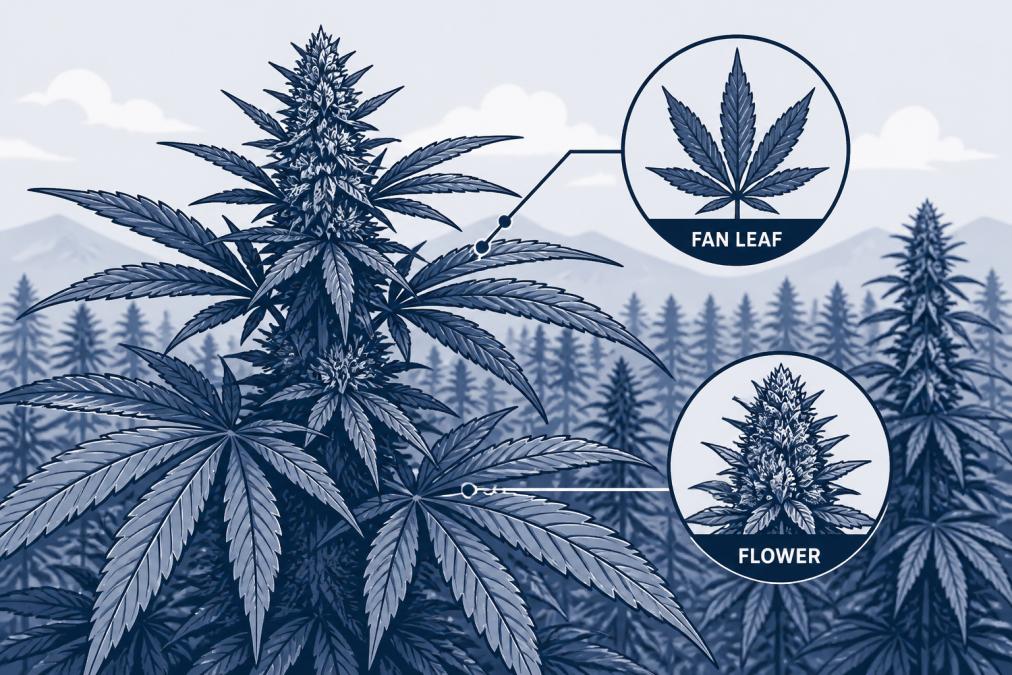
The 0.3% THC threshold is measured on a dry-weight basis, meaning the plant material’s weight after all moisture is removed. Testing must occur after drying and before processing. Industrial hemp differs from cannabis plants bred for high THC content: hemp varieties are selected for fiber quality, seed production, or cannabinoid content, not intoxicating effects. Cannabis plants bred for marijuana typically contain 10-30% THC. Hemp plants, by legal definition, contain less than 0.3%.
The Farm Bill also established the USDA’s authority to regulate hemp cultivation, creating a licensing system for hemp farmers. States can adopt their own hemp programs that meet or exceed federal standards, creating a dual regulatory structure that consumers and businesses navigate today.
Is CBD Legal in All 50 States: State vs. Federal Authority
Federal legalization of hemp does not automatically legalize hemp-derived CBD in all 50 states. States retain the power to prohibit or restrict hemp cultivation, hemp products, and CBD specifically, even when federal law permits them.
As of 2026, the legal landscape varies significantly across states. Some states have embraced hemp-derived CBD fully, allowing it to be sold in retail stores and online. Other states permit hemp cultivation but restrict CBD product sales. A few states maintain near-total prohibitions on hemp and all its derivatives, including CBD.
Where state laws diverge from federal rules, state law governs what’s legal within that state’s borders. A CBD product that’s federally compliant might be illegal to possess in certain states. The safest approach for consumers is to check both federal and state regulations before purchasing.
Several states maintain effective prohibitions on hemp-derived CBD despite federal legalization. Shipping CBD products into these states, even federally compliant products, can expose consumers and retailers to state-level prosecution. Always verify your state’s specific regulations before purchasing.
FDA Regulation of CBD Products and Compliance Standards
The FDA’s regulatory authority over CBD is narrower than many consumers assume. The FDA does not currently approve CBD as a dietary supplement or food additive for most uses. The FDA has approved exactly one CBD-containing medication: Epidiolex, a pharmaceutical-grade CBD product for treating certain seizure disorders. All other CBD products operate outside this approval framework.
The FDA regulates labeling claims and safety standards. If a CBD product makes a disease claim ("cures anxiety" or "treats arthritis"), it becomes subject to drug regulation. If it makes a dietary supplement claim ("supports wellness"), it’s subject to dietary supplement regulations.
Consumer safety is a significant concern because the FDA doesn’t pre-approve or batch-test CBD products before they reach consumers. This creates an incentive for third-party testing, which is why reputable brands use independent lab verification. Third-party testing verifies CBD content, checks for contaminants like heavy metals and pesticides, and confirms that THC levels don’t exceed the legal threshold.
The Intoxicating Hemp Loophole: Delta-8, Delta-10, and THCA Products
The 2018 Farm Bill’s definition created an unintended consequence: a loophole that allows production of intoxicating hemp-derived products that technically comply with the 0.3% delta-9 THC threshold.
The loophole works like this: the Farm Bill specifically limits delta-9 THC. But hemp plants contain dozens of other cannabinoids, including delta-8 THC, delta-10 THC, and THCA (tetrahydrocannabinolic acid). Some of these are intoxicating. Because the Farm Bill doesn’t explicitly prohibit these compounds, manufacturers can extract or synthesize them, and the resulting products are technically legal under federal law.
Delta-8 THC is the most well-known example. It’s less potent than delta-9 THC but still produces intoxicating effects. A product containing 10% delta-8 and 0.2% delta-9 THC complies with the Farm Bill’s definition of hemp, yet consumers are buying an intoxicating product.
THCA (raw, non-decarboxylated THC) presents a different loophole. THCA itself is not intoxicating, but it converts to delta-9 THC when heated. Some manufacturers argue that THCA products comply with the Farm Bill because they contain less than 0.3% delta-9 at the time of sale. However, once the consumer heats the product, the THCA converts to delta-9, producing intoxicating effects.
Some manufacturers synthesize cannabinoids in labs using chemical processes rather than extracting from hemp. If the final product is labeled as "hemp-derived," it can be marketed as a legal hemp product even if most of the cannabinoid content was created through chemical synthesis.
Why lab testing and certificates of analysis matter: This loophole has created inconsistency in the CBD market. Consumers purchasing products labeled "hemp-derived" might be getting intoxicating delta-8, THCA products, or synthetically produced cannabinoids. The only way to verify what you’re actually purchasing is through independent lab testing documented in a certificate of analysis (COA).
A legitimate COA should specify:
- Delta-9 THC concentration (to verify it’s below 0.3%)
- Delta-8, delta-10, and other cannabinoid concentrations
- Contaminants like heavy metals, pesticides, and microbial pathogens
- The testing lab’s credentials and accreditation
- The date of testing
The intoxicating hemp loophole represents a fundamental gap between the Farm Bill’s intent and its execution. Federal regulators have begun cracking down on delta-8 and synthetic cannabinoid products, but enforcement is inconsistent. Until regulations tighten, consumer vigilance through COA verification is the best protection.
Controlled Substances Act: Why CBD Escaped Schedule I
The Controlled Substances Act, passed in 1970, classified cannabis as Schedule I. The 2018 Farm Bill didn’t repeal this act. Instead, it created an exception within it: hemp, specifically defined as cannabis with less than 0.3% delta-9 THC, was removed from Schedule I. This means hemp-derived cannabinoids like CBD are no longer controlled substances when they come from compliant hemp.
The classification system distinguishes between psychoactive and non-psychoactive cannabinoids. Delta-9 THC is psychoactive and produces intoxication. CBD is non-psychoactive. However, CBD’s legal status depends on whether it comes from a plant that meets the Farm Bill’s hemp definition, not on whether it’s psychoactive.
Federal agents don’t test whether a product "feels" intoxicating. They test whether the source plant exceeds 0.3% delta-9 THC. If it does, the product is illegal at the federal level, regardless of whether the CBD itself has any psychoactive properties.
What You Need to Know Before Buying Hemp-Derived CBD
Verifying third-party testing and COA documentation is the first step in evaluating any CBD product’s legitimacy. Before purchasing, request the product’s certificate of analysis from the retailer or manufacturer.
A credible COA should include:
- The testing lab’s name and contact information
- The specific product tested (batch number or lot number)
- The date of testing
- Quantitative results for CBD and THC concentrations
- A full cannabinoid profile showing delta-8, delta-10, and other compounds
- Contaminant screening results (heavy metals, pesticides, microbial pathogens, residual solvents)
- The lab’s accreditation or certification status
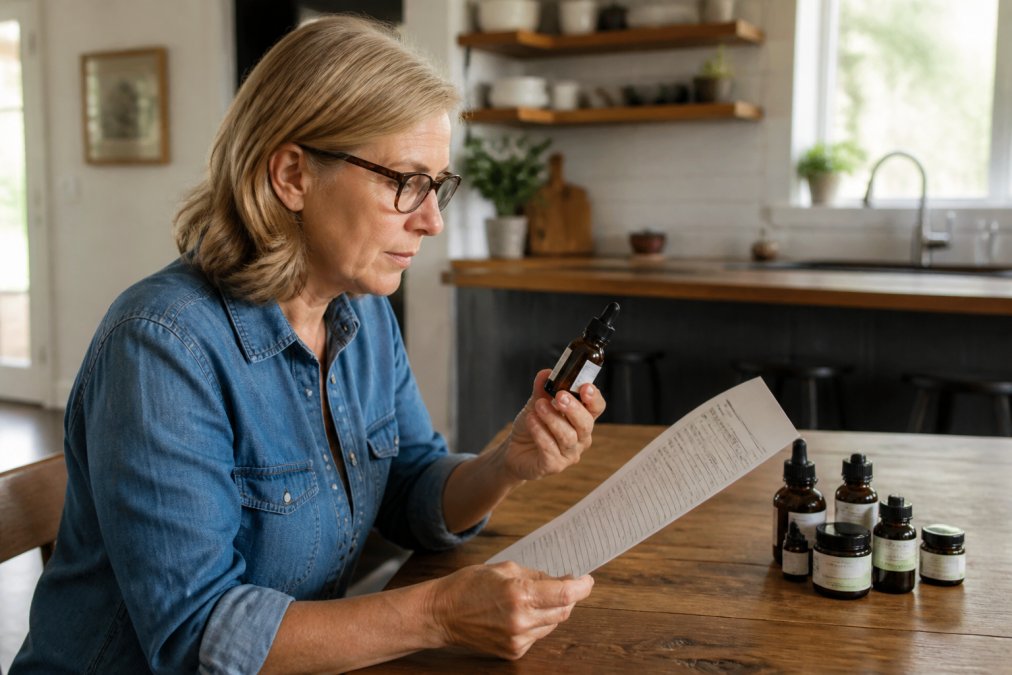
If a COA is missing, vague, or shows results that don’t match the product label, that’s a red flag. Many consumers discover that products claiming high CBD content actually contain significantly less, or that THC levels exceed the legal threshold.
Common mistakes consumers make include trusting marketing language over lab results. A product labeled "federally legal" or "farm bill compliant" might not actually be either. Another mistake is assuming that state legality equals federal legality. A product might be legal in your state but still violate federal law if it exceeds the 0.3% THC threshold.
Consumers should also understand the difference between CBD isolate, broad-spectrum, and full-spectrum products. CBD isolate contains only cannabidiol. Broad-spectrum contains multiple cannabinoids but has THC removed. Full-spectrum contains all cannabinoids, including up to 0.3% THC. Each has different legal and practical implications depending on your state and personal preferences.
When evaluating brands, look for transparency signals: published COAs, clear sourcing information, GMP certification for manufacturing facilities, and a willingness to answer questions about testing and sourcing. CBD Health Collection exemplifies this approach: all products are derived from organically grown, USA-sourced hemp, extracted using clean CO2 processes, produced in GMP- and FDA-registered facilities, and independently third-party lab tested for purity and potency.
The legal status of hemp-derived CBD remains complex because it exists at the intersection of federal agricultural policy, drug scheduling, and state-level regulation. Understanding why hemp-derived CBD is legal requires recognizing that legality isn’t binary, it’s conditional on compliance with the Farm Bill’s definition, state regulations, and consumer due diligence. Before purchasing any CBD product, verify third-party testing, confirm state legality, and choose brands that prioritize transparency. CBD Health Collection’s commitment to independent lab verification, organic sourcing, and FDA-registered manufacturing ensures you’re purchasing products that meet federal standards and deliver the quality you deserve.
Frequently Asked Questions
Is hemp-derived CBD legal federally and in all 50 states?
Hemp-derived CBD is legal at the federal level under the 2018 Farm Bill, provided it contains no more than 0.3% delta-9 THC by dry weight. However, legality varies by state. Some states have additional restrictions or bans on CBD products despite federal legalization. Check your state's specific regulations before purchasing. The federal framework applies nationwide, but individual states retain authority to impose stricter rules.
What is the difference between hemp-derived CBD and marijuana under federal law?
The key difference is THC content. Hemp plants contain 0.3% or less delta-9 THC and are legal federally. Marijuana plants contain higher THC levels and remain a Schedule I controlled substance. Both contain cannabidiol (CBD), but only hemp-derived CBD products are federally permitted. The Controlled Substances Act removed hemp from the definition of marijuana, making CBD extraction from compliant hemp legal.
Why should I verify a certificate of analysis before buying CBD products?
A certificate of analysis (COA) from an independent third-party lab confirms that a CBD product contains what the label claims and is free from contaminants like heavy metals and pesticides. Not all CBD companies provide genuine lab testing. Verify the COA directly with the testing lab, check the THC content to ensure it meets the 0.3% threshold, and confirm the product's cannabinoid profile. This protects you from mislabeled or contaminated products.
Will hemp-derived CBD show up on a drug test?
Most standard drug tests screen for THC metabolites, not CBD itself. Hemp-derived CBD products with 0.3% or less THC typically will not cause a positive result. However, some products may contain trace amounts of delta-9 THC or be mislabeled. If you're subject to workplace or legal drug testing, request a COA to verify THC content and choose products from reputable brands that provide transparent lab results.
This article was written using GrandRanker