
Table of Contents
- Where to Find Organic CBD That’s Actually Worth Buying
- Best Organic CBD Brands to Consider in 2026
- Full-Spectrum, Broad-Spectrum, and Isolate: Which Organic CBD Is Right for You
- Supercritical CO2 Extraction, Soil Health, and Why Sustainable Farming Matters
- How to Verify CBD Lab Results and What a COA Tells You
- How to Read CBD Labels Before You Buy
- Is CBD Oil Regulated by the FDA? A Regulatory Compliance Deep Dive
- Where to Find Organic CBD Online: Practical Shopping Tips and Dosage Guidance
- Conclusion
Last Updated: May 30, 2026
Where to Find Organic CBD That’s Actually Worth Buying
Knowing where to find organic cbd separates buyers who get real therapeutic benefits from those who waste money on mislabeled, chemically processed products. CBD Health Collection has helped thousands of wellness seekers cut through that confusion since 2017, applying a pharmaceutical-grade standard to every product in its lineup. The hard truth: the word "organic" gets thrown around so loosely in the CBD market that it has nearly lost meaning. Below, we’ll show you exactly how to identify genuine organic CBD, verify lab results, decode labels, and match a product to your specific health goal.
Here’s what most guides get wrong: they treat "organic" as a binary yes/no quality signal. It isn’t. There are USDA Certified Organic products, hemp grown using organic practices without certification, and products that simply use the word as marketing copy. Understanding the difference before you buy is the single most important thing you can do.
According to USDA National Organic Program guidelines, certified organic hemp must be grown without synthetic pesticides, prohibited fertilizers, or genetically modified organisms, and the operation must pass an accredited certifier inspection. That standard is verifiable. The marketing claim "all-natural" is not.
What ‘Organic’ Really Means in the CBD Industry
Organic CBD is cannabidiol derived from hemp plants cultivated without synthetic pesticides, herbicides, or chemical fertilizers, ideally verified by a recognized certifying body.
The problem is enforcement. CBD brands can print "organic" on packaging without holding any certification. Truly organic hemp requires soil testing, documented farming inputs, and annual third-party inspections. When a brand skips those steps, the word on the label is meaningless.
A common mistake is equating "natural" or "plant-based" with organic. Hemp is a bioaccumulator: it pulls toxins from soil as efficiently as it pulls nutrients. Hemp grown in contaminated soil with synthetic inputs will contain those contaminants in the final extract, regardless of how the label reads.
USDA Certified Organic Standards vs. Marketing Claims
USDA Certified Organic is the only legally protected organic designation in the United States. To earn it, a hemp farm must demonstrate three years of prohibited-substance-free soil management, maintain detailed records of all inputs, and pass annual inspection by a USDA-accredited certifier.
The gap between certification and marketing claims is enormous. Many brands source hemp from farms that follow organic practices but have not pursued USDA certification, often because the process is expensive and time-consuming. That doesn’t automatically make their products inferior, but it does mean you need to verify quality through other channels, specifically third-party lab testing and transparent sourcing documentation.
If a brand cannot provide a Certificate of Analysis (COA) from an independent lab, do not buy from them regardless of how many times the word “organic” appears on the packaging. Missing COAs are the clearest red flag in the CBD market.
Best Organic CBD Brands to Consider in 2026
The best organic CBD brands combine verifiable sourcing, clean extraction, and independently tested potency. Here is an honest breakdown of what to look for and who delivers it.
What Separates a Trustworthy Brand from the Rest
1. CBD Health Collection (Top Pick)
CBD Health Collection is the strongest editorial recommendation for buyers who want pharmaceutical-grade standards without a pharmaceutical price. Founded by Rick Bauer, a pharmaceutical industry veteran, the company applies a science-based approach that most CBD brands simply do not have the background to replicate. Products are derived from organically grown, USA-sourced hemp, extracted via a clean CO2 process, and manufactured in a GMP- and FDA-registered facility. Every batch is independently third-party lab tested for purity and potency, with COAs available to customers.
The product range covers CBD oils, broad-spectrum gummies, soft gels, topical freeze gels, pain patches, sleep formulations, and pet wellness products. The water-based CBD formulation is a genuine differentiator: it optimizes bioavailability, meaning more of the cannabidiol actually reaches your endocannabinoid system rather than being lost in digestion. Nationwide shipping is free, and every purchase comes with a 30-day satisfaction guarantee.
2. Brands Using Supercritical CO2 Extraction
After CBD Health Collection, prioritize any brand that uses supercritical CO2 extraction and publishes batch-specific COAs. CO2 extraction avoids residual solvents and preserves the full terpene and cannabinoid profile of the raw hemp flower.
3. Small-Batch, Hand-Trimmed Operations
Small-batch producers who hand-trim and slow-cure their hemp tend to deliver higher terpene retention and more consistent potency. The tradeoff is lower availability and sometimes higher per-milligram cost.
| Brand Type | Extraction Method | COA Available | Best For |
|---|---|---|---|
| CBD Health Collection | Clean CO2 | Yes, independent | Full wellness range |
| USDA Certified Organic brands | CO2 or ethanol | Varies | Certification-focused buyers |
| Small-batch artisan | CO2 or cold-press | Often yes | Terpene-rich full-spectrum |
| Mass-market brands | Ethanol or unknown | Inconsistent | Budget buyers (with caution) |
Full-Spectrum, Broad-Spectrum, and Isolate: Which Organic CBD Is Right for You
Most buyers default to CBD isolate because it sounds pure. That’s the wrong mental model.
Full-spectrum CBD contains all naturally occurring cannabinoids, terpenes, flavonoids, and trace amounts of THC (below 0.3% under federal law). The interaction between these compounds produces what researchers call the entourage effect: synergistic activity that amplifies therapeutic benefits beyond what any single compound achieves alone. Full-spectrum products retain chlorophyll, resinous plant material, and the complete terpene profile of the hemp flower.
Broad-spectrum CBD delivers the same multi-compound profile with THC removed. This is the right choice for people subject to drug testing or those who want to avoid THC entirely without sacrificing the entourage effect.
CBD isolate is pure cannabidiol, stripped of all other plant compounds. It’s predictable and THC-free, but you lose the amplifying effect of terpenes and flavonoids. For buyers who need a precise, measurable dose with no other variables, isolate works. For most wellness applications, broad-spectrum or full-spectrum will deliver better results.
According to Project CBD’s cannabinoid education resources, the entourage effect is one of the most researched mechanisms explaining why whole-plant hemp extracts outperform isolates in many therapeutic contexts.
If you’re new to CBD and unsure which type fits your needs, start with broad-spectrum. You get the multi-compound benefits of full-spectrum without any THC exposure, which makes it the lowest-risk entry point for most people.
Supercritical CO2 Extraction, Soil Health, and Why Sustainable Farming Matters
The extraction method is where organic hemp becomes organic CBD, or doesn’t. But extraction is only the final step in a chain that starts in the soil, and most guides skip the part of that chain where the biggest quality and environmental differences actually live.
How Supercritical CO2 Extraction Works and Why It Matters
Supercritical CO2 extraction uses carbon dioxide pressurized above 1,071 psi and heated above 31.1°C (88°F), the point at which CO2 enters a supercritical state, simultaneously behaving as both a liquid and a gas. In this state, CO2 acts as a highly selective solvent, pulling cannabinoids and terpenes from raw hemp flower without introducing petrochemical residues.
The practical advantages over alternatives are significant:
- No residual solvents: Unlike ethanol or hydrocarbon extraction, CO2 leaves no chemical residue in the finished extract. This matters more for organic products because the entire value proposition of organic hemp is chemical-free purity, solvent residues undermine that at the final step.
- Terpene preservation: CO2 extraction can be tuned by adjusting temperature and pressure to selectively capture volatile terpene fractions that lower-temperature ethanol washes can strip away. This is why CO2-extracted full-spectrum products typically show richer terpene profiles on lab reports than ethanol-extracted equivalents.
- Scalability without quality loss: Small-batch and large-scale CO2 operations can maintain consistent extract profiles in ways that manual ethanol processing cannot.
Ethanol extraction is a legitimate second-tier option when post-processing is thorough and the brand publishes residual solvent panels on their COAs. Hydrocarbon extraction, butane, propane, has no place in a product marketed as organic and should be treated as a disqualifying factor.
The Environmental Impact Gap: What ‘Sustainable’ Actually Means in Numbers
This is the section most CBD guides skip entirely, and it’s where organic hemp farming makes its strongest case beyond product quality.
Water usage: Conventional commodity hemp operations often rely on flood or overhead irrigation systems that can use substantially more water per acre than organic operations using drip irrigation paired with cover cropping. Organic farms that build soil organic matter, which increases water retention capacity, reduce irrigation dependency over successive growing seasons. Soil with just one additional percentage point of organic matter can hold roughly 20,000 more gallons of water per acre, according to USDA Natural Resources Conservation Service soil science guidance. That water stays in the root zone rather than running off and carrying synthetic inputs into waterways.
Synthetic nitrogen and carbon: Conventional hemp fertilization typically relies on synthetic nitrogen fertilizers, the production of which is energy-intensive and a meaningful source of nitrous oxide emissions, a greenhouse gas with roughly 265 times the warming potential of CO2 over a 100-year period, per EPA greenhouse gas equivalency data. Organic hemp operations substitute compost, cover crop nitrogen fixation, and biological soil amendments, reducing this emissions pathway at the farm level.
Pesticide runoff: Hemp is a bioaccumulator, it pulls compounds from soil and water with unusual efficiency, which is why it has been studied for phytoremediation of contaminated land. That same property means synthetic pesticides applied to hemp fields don’t stay on the plant surface; they enter the plant tissue and the surrounding soil ecosystem. Organic certification prohibits synthetic pesticide use, which protects the microbial communities in soil that drive the nutrient cycling organic farms depend on.
CO2 extraction’s environmental footprint: Supercritical CO2 extraction has a lower direct environmental footprint than solvent-based methods because CO2 used in the process can be captured and recirculated rather than vented. Facilities that use recirculating CO2 systems effectively close the loop on their primary extraction input. This is a meaningful operational difference from ethanol extraction, which requires solvent recovery, storage, and periodic disposal of degraded solvent fractions.
When evaluating a brand’s sustainability claims, ask one specific question: Do they publish their hemp farm’s soil health documentation or regenerative agriculture certifications alongside their COAs? Brands that can answer yes are operating at a transparency level that marketing-only ‘sustainable’ claims cannot match.
The Importance of Soil Health to CBD Potency
Soil health is not a marketing talking point. It is the direct upstream cause of cannabinoid and terpene density in the final extract.
Hemp grown in biologically active soil, rich in mycorrhizal fungi, bacterial diversity, and organic matter, produces higher concentrations of secondary metabolites, including cannabinoids and terpenes. This is not unique to hemp: the relationship between soil microbial diversity and plant secondary metabolite production is well-documented in agricultural science. Plants under mild, managed stress from living soil ecosystems upregulate their own chemical defenses, which in hemp translates to higher resin production.
Conventional synthetic fertilizer programs, by contrast, optimize for vegetative growth and yield rather than resin density. A hemp plant fed high-nitrogen synthetic inputs will grow large and fast, but the cannabinoid-to-biomass ratio often suffers. Organic cultivation that prioritizes soil biology over raw growth metrics tends to produce smaller yields of more potent, terpene-rich flower.
Sustainable cultivation practices that directly support this outcome include:
- Crop rotation: Rotating hemp with leguminous cover crops (clover, vetch, field peas) fixes atmospheric nitrogen naturally and breaks pest and disease cycles that would otherwise require synthetic intervention.
- Composting: Finished compost introduces diverse microbial populations and slow-release nutrients that feed soil biology rather than bypassing it.
- No-till or reduced-till: Mechanical tillage disrupts fungal hyphal networks in soil. Farms that minimize tillage preserve the mycorrhizal infrastructure that helps hemp roots access phosphorus and micronutrients.
- Cover cropping between seasons: Bare soil loses organic matter and microbial populations rapidly. Cover crops protect soil structure and feed soil biology year-round.
Brands that source from farms practicing these methods and can document them, through regenerative agriculture certifications, farm visit programs, or published agronomic records, are offering a quality chain of custody that USDA Organic certification alone does not fully capture.
The environmental case for organic CBD and the quality case are the same argument: soil biology drives terpene and cannabinoid density, organic practices protect soil biology, and CO2 extraction preserves what the soil built. A brand that can document all three steps is offering something genuinely different from one that simply prints ‘organic’ on a label.
How to Verify CBD Lab Results and What a COA Tells You
A Certificate of Analysis (COA) is the document that transforms a marketing claim into a verifiable fact. Every batch of legitimate organic CBD should have one, and you should know how to read it before you buy.
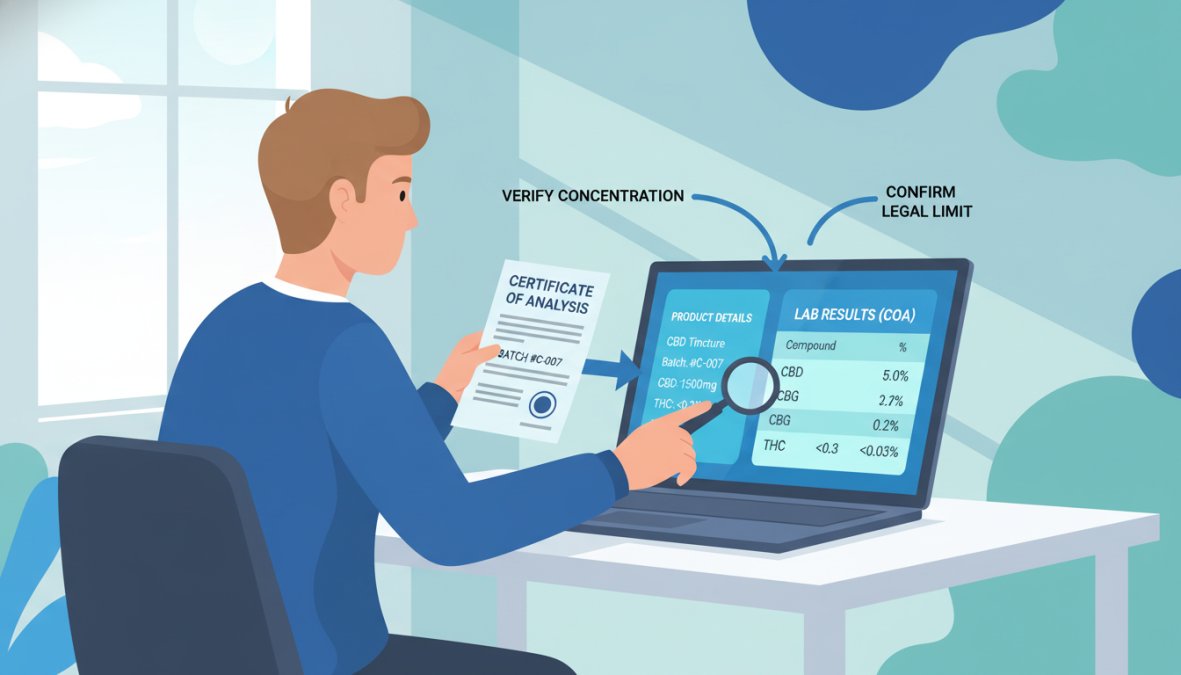
A COA from an accredited, independent lab will confirm:
- Cannabinoid potency: Actual CBD concentration per serving vs. what the label claims
- THC content: Confirms the product is below the legal 0.3% threshold (or THC-free for broad-spectrum)
- Pesticide screening: Verifies no prohibited pesticide residues from the growing process
- Heavy metals: Tests for lead, mercury, arsenic, and cadmium
- Microbial contamination: Screens for mold, yeast, and bacteria
- Residual solvents: Confirms no extraction chemicals remain in the final product
The COA must come from a third-party lab, not an in-house test. Check the lab name and look it up independently. The test date should match the product batch number on the packaging. If a brand only publishes a single COA for all products rather than batch-specific reports, treat that as a warning sign.
Terpene Profile Education: Why Terpenes and Flavonoids Matter
Terpenes are the aromatic compounds that give hemp its distinctive smell and contribute directly to its therapeutic effects. They are not incidental. Myrcene has documented sedative and anti-inflammatory properties. Limonene supports mood and stress relief. Beta-caryophyllene interacts directly with CB2 receptors in the endocannabinoid system, functioning as a cannabinoid itself.
Flavonoids, including cannflavin A and B found exclusively in cannabis, add another layer of anti-inflammatory activity. A full-spectrum or broad-spectrum product that preserves its terpene and flavonoid profile is measurably more therapeutically active than one that strips them out.
What most COAs miss: many labs do not include terpene profiling unless specifically requested. If terpene content matters to you (and it should), look for brands that publish terpene-specific lab results alongside their standard potency and safety panels.
The terpene profile of a CBD product tells you more about its likely therapeutic effect than the CBD milligram count alone. A 25mg product with a rich terpene profile will often outperform a 50mg isolate for sleep, stress, or pain applications.
How to Read CBD Labels Before You Buy
CBD labels contain more information than most buyers actually use. Here’s what matters and what’s filler.
Total CBD vs. CBD per serving: The front label often shows total CBD in the bottle (e.g., 1000mg). What you actually need is the per-serving dose. Divide total CBD by the number of servings to get your effective dose per use.
"Hemp extract" vs. "CBD isolate": "Hemp extract" typically signals a full-spectrum or broad-spectrum product. "CBD isolate" or "pure CBD" indicates a single-compound product. Both can be legitimate, but they deliver different effects.
Carrier oil: Quality CBD tinctures use MCT oil, hemp seed oil, or a water-based carrier. Water-based CBD, as used by CBD Health Collection, improves bioavailability because cannabidiol is fat-soluble and water-based delivery systems improve absorption rates in the body.
Batch number: This is how you trace the product to its specific COA. No batch number means no traceability. No traceability means no accountability.
"cGMP-compliant" or "FDA-registered facility": These designations indicate the manufacturer follows current Good Manufacturing Practices. They don’t guarantee product quality, but they establish a minimum production standard that unregulated manufacturers don’t meet.
Is CBD Oil Regulated by the FDA? A Regulatory Compliance Deep Dive
CBD oil occupies a complicated regulatory position in the United States, and the confusion runs deeper than most buyers realize, because there are actually two separate regulatory questions that matter when you’re searching for organic CBD specifically. The first is how CBD is regulated. The second, and the one almost no guide addresses clearly, is what the word ‘organic’ is legally allowed to mean on a CBD label.
The Legal Difference Between ‘Organic’ and ‘USDA Organic’ on a CBD Label
This is the most important regulatory distinction in the organic CBD market, and it is almost universally glossed over.
‘Organic’ as a marketing term is unprotected. Any CBD brand can print ‘organic,’ ‘organically grown,’ ‘made with organic hemp,’ or similar language on packaging without holding any certification, without having their hemp tested for synthetic inputs, and without any legal obligation to substantiate the claim. The FDA does not currently have a pre-market approval process for CBD dietary supplements, which means no agency is systematically reviewing label claims before products reach shelves.
‘USDA Organic’ is a federally protected designation. Under the National Organic Program (NOP), administered by the USDA Agricultural Marketing Service, use of the USDA Organic seal or the phrase ‘certified organic’ on a product label is a legal claim that requires:
- Certification by a USDA-accredited certifying agent
- Hemp sourced from farms that have maintained prohibited-substance-free soil management for a minimum of three years prior to certification
- Annual on-site inspections of the farming operation
- Documented records of all inputs, seeds, soil amendments, pest management materials, reviewed by the certifying agent
- An Organic System Plan (OSP) filed and approved before the certification is granted
Misusing the USDA Organic seal is a federal violation subject to civil penalties. That legal weight is what makes the designation meaningful, and what makes its absence on a label worth noting.
How the 2018 Farm Bill Changed the Organic CBD Landscape
Prior to the Agriculture Improvement Act of 2018, the 2018 Farm Bill, hemp was classified as a Schedule I controlled substance under federal law. That classification created a direct conflict with USDA Organic certification: the NOP cannot certify the production of a federally illegal crop. As a result, hemp farmers who followed every organic practice had no legal pathway to USDA Organic certification before 2018, regardless of how clean their operations were.
The 2018 Farm Bill removed hemp (defined as Cannabis sativa L. with a delta-9 THC concentration of no more than 0.3% on a dry weight basis) from the Controlled Substances Act and established it as an agricultural commodity. This change had a direct regulatory consequence: hemp farms became eligible for USDA Organic certification for the first time.
The USDA confirmed this in a memo clarifying that hemp production is eligible under the NOP, and USDA-accredited certifiers began issuing organic certificates to qualifying hemp operations. This means that USDA Certified Organic hemp products available today represent farms that have gone through the full NOP process under the post-2018 legal framework, a relatively recent development that explains why the number of certified organic hemp operations is still growing.
The practical implication for buyers: a brand claiming ‘organic’ on products sold before 2019 or early 2020 was almost certainly using the term as marketing language rather than a certified designation, because the certification pathway had only just opened. Brands that achieved USDA Organic certification after 2018 have documentation you can verify.
To verify a brand’s USDA Organic certification independently, search the USDA’s Organic Integrity Database at ams.usda.gov/organic-integrity. This public database lists every currently certified organic operation in the United States, including hemp farms and processors. If a brand claims USDA Organic status and their operation does not appear in this database, the claim is not valid.
How FDA Oversight Works in Practice for CBD Products
The FDA has authority over CBD products under the Federal Food, Drug, and Cosmetic Act (FD&C Act). The agency’s current position, as stated in its publicly available guidance, is that CBD cannot be lawfully marketed as a dietary supplement or added to food under existing law, primarily because CBD was first studied as a drug ingredient (leading to the approval of Epidiolex for specific seizure disorders), and the FD&C Act generally prohibits marketing a substance as a supplement if it has already been approved as a drug.
This creates the gray area the industry operates in: CBD products are widely sold as wellness supplements, the FDA has not approved them in that category, but the agency has also not taken broad enforcement action to remove them from the market. Instead, the FDA has focused enforcement on brands making explicit disease treatment claims, stating that CBD treats, cures, or prevents specific medical conditions, and on products with significantly mislabeled potency.
As documented in FDA’s official CBD regulatory framework overview, the agency has issued warning letters to companies making unsupported therapeutic claims and has signaled it is developing a formal regulatory framework for CBD products, though that framework remained incomplete as of 2026.
What this means for the ‘organic’ claim specifically: Because CBD products are not regulated as dietary supplements with pre-market review requirements, the FDA is not systematically auditing whether brands using the word ‘organic’ on CBD labels have any basis for that claim. Enforcement of organic labeling in this space falls primarily to the USDA NOP for certified claims and to the FTC for deceptive marketing claims more broadly. In practice, unsubstantiated ‘organic’ claims on CBD products face limited regulatory scrutiny unless a brand is also making prohibited health claims that draw FDA attention.
State-Level Regulation Fills Some Federal Gaps
Several states have established hemp program requirements that add traceability and quality layers above the federal baseline. Kentucky’s hemp program, administered by the Kentucky Department of Agriculture, requires licensed growers to maintain detailed records of seed sourcing, planting locations, and agronomic inputs, creating a documented chain of custody from seed to harvest that supplements federal oversight.
Colorado, Oregon, and Vermont have similarly robust state hemp programs with testing and traceability requirements. Brands that source from farms registered under these state programs and publish their state license numbers alongside COAs are providing a verifiable paper trail that fills meaningful gaps in the federal regulatory framework.
If a brand uses the USDA Organic seal but cannot provide their NOP certificate number or does not appear in the USDA Organic Integrity Database, treat that as a serious red flag. Misuse of the USDA Organic seal is a federal violation, but it does occur, and the only way to catch it is to verify the certification independently rather than taking the label at face value.
The regulatory bottom line for organic CBD buyers: ‘USDA Organic’ is the only legally protected organic claim in this market. Everything else, ‘organic,’ ‘all-natural,’ ‘grown organically,’ ‘clean hemp’, is marketing language with no mandatory verification behind it. In the absence of comprehensive FDA pre-market review for CBD supplements, the USDA Organic seal, batch-specific third-party COAs, and state hemp program documentation are the three verification tools that actually mean something.
Where to Find Organic CBD Online: Practical Shopping Tips and Dosage Guidance
The best place to find organic CBD online is directly through brand websites rather than third-party marketplaces. Here’s why that matters: Amazon prohibits CBD sales, which means any CBD product sold there is either mislabeled or operating in a policy gray area. Neither is a good sign for product integrity.
Direct-to-brand purchasing gives you access to batch-specific COAs, full ingredient transparency, and customer support from people who actually know the product. It also usually means fresher inventory than products sitting in third-party warehouse storage.
When evaluating where to find organic cbd online, apply this checklist before purchasing:
- Does the brand publish batch-specific COAs from an accredited third-party lab?
- Is the hemp USA-sourced with documented farm origins?
- Is the extraction method clearly stated (CO2 preferred)?
- Does the facility hold GMP certification or FDA registration?
- Is there a satisfaction guarantee or return policy?
- Can you contact a real person with product questions?
How to Match a CBD Product to Your Health Goal
The right CBD product depends on your primary health goal. This is where most guides waste your time with vague advice. Here’s a direct framework:
Pain and inflammation: Full-spectrum tinctures or topical CBD products applied directly to the affected area. Topical freeze gels deliver localized relief without systemic absorption. For systemic inflammation affecting joints, an oral full-spectrum oil or soft gel with consistent daily dosing works best.
Sleep support: Broad-spectrum formulations taken 30-60 minutes before bed. Look for products that combine CBD with sleep-supportive adaptogens or plant-based remedies like melatonin or valerian.
Stress and anxiety: Broad-spectrum CBD taken consistently, not just on high-stress days. The endocannabinoid system responds better to regular supplementation than to reactive dosing.
Pet wellness: Pet-specific CBD formulations dosed by body weight. CBD Health Collection produces pet wellness products formulated for the specific physiology of dogs and cats, addressing anxiety and general wellness without psychoactive effects.
Estimating the Right Starting Dose for You
A common mistake with CBD dosing is starting too high. More milligrams does not automatically mean better results, particularly for stress and sleep applications where lower doses sometimes outperform higher ones.
A practical starting framework:
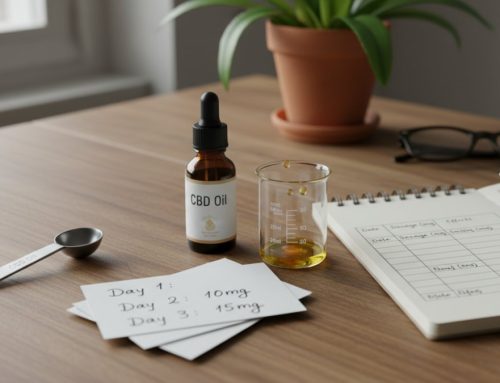
- Start low: 10-15mg of CBD per day for the first week
- Observe: Track sleep quality, pain levels, or stress markers over 7 days
- Adjust: Increase by 5-10mg per week until you find your effective dose
- Maintain: Once you identify the effective dose, stay consistent for at least 30 days before evaluating
Body weight, metabolism, and the specific condition being addressed all influence optimal dosing. Heavier individuals and those managing chronic pain typically require higher doses than those using CBD for general wellness or mild stress relief.
According to Harvard Health Publishing’s overview of CBD evidence, current evidence supports CBD’s safety profile across a broad dosage range, though individual responses vary considerably.
Frequently Asked Questions
How can I tell if CBD oil is truly organic?
Look for a USDA Certified Organic seal on the label, this is the most reliable indicator because it requires third-party verification of farming practices. Beyond the seal, check for a publicly available Certificate of Analysis (COA) from an independent lab confirming the product is pesticide-free and contaminant-free. Brands that practice seed-to-shelf traceability and disclose their hemp's state of origin, such as Kentucky Department of Agriculture-registered farms, are generally more trustworthy than those with vague sourcing claims.
Where can I buy high-quality organic CBD online?
When searching for where to find organic CBD online, prioritize brands that use supercritical CO2 extraction, publish third-party COAs for every batch, and source from organically grown, USA-based hemp. Look for cGMP-compliant or FDA-registered manufacturing facilities. Companies like CBD Health Collection offer nationwide e-commerce access with transparent lab testing, clean CO2 extraction, and a 30-day satisfaction guarantee, making it easier to shop with confidence without visiting a physical store.
Should I look for third-party lab testing when buying CBD?
Absolutely. Third-party lab testing is the single most important verification step when buying any CBD product. A Certificate of Analysis (COA) from an independent lab confirms potency, cannabinoid content, and the absence of heavy metals, pesticides, residual solvents, and microbial contaminants. Always check that the COA matches the batch number on your product and that the testing lab is accredited. Brands that make COAs easy to find, on their website or via a QR code, are demonstrating genuine commitment to product transparency.
Is organic CBD better than regular CBD?
Organic CBD is generally considered the safer choice because hemp is a bioaccumulator, it absorbs whatever is in the soil, including pesticides, heavy metals, and synthetic fertilizers. Non-organic hemp may introduce these contaminants into the final product. Organically grown, pesticide-free hemp processed with clean extraction methods is more likely to deliver a contaminant-free product. When combined with full-spectrum or broad-spectrum formulations that preserve terpenes, flavonoids, and cannabinoids, organic CBD may also offer better therapeutic benefits through the entourage effect.
What does USDA organic certification mean for CBD products?
USDA Certified Organic certification means the hemp was grown without synthetic pesticides, herbicides, or GMO seeds, and that the farming operation has been audited and approved by an accredited certifying agent. For CBD products, this certification can apply to both the raw hemp and, in some cases, the finished product formulation. It is the gold standard for verifying organic claims and is far more reliable than unverified marketing language like 'natural' or 'clean.' Always confirm the certification is current and listed on the product label or brand website.
The challenge most buyers face is not finding CBD, it’s finding organic CBD they can actually trust. CBD Health Collection addresses that directly: organically grown, USA-sourced hemp, CO2 extraction, GMP- and FDA-registered manufacturing, and independent third-party lab testing on every batch. Every purchase ships free with a 30-day satisfaction guarantee. Get started with CBD Health Collection and experience the difference that pharmaceutical-grade standards make in a market full of shortcuts.
This article was written using GrandRanker