Table of Contents
- What Is CBD Bioavailability and Why Does It Matter?
- CBD Absorption Rates by Method: A Practical Comparison
- Factors Affecting CBD Bioavailability You Should Know
- How to Increase CBD Bioavailability for Better Results
- Full-Spectrum, Broad-Spectrum, and Isolate: How CBD Form Affects Bioavailability
- Drug Testing, THC, and Broad-Spectrum CBD: What You Need to Know
- How to Verify CBD Product Quality Using a COA
- Conclusion: Getting the Most From Every Milligram of CBD
Last Updated: May 21, 2026
What Is CBD Bioavailability and Why Does It Matter?
Understanding what is cbd bioavailability is the foundation of getting real results from any CBD product you use. CBD Health Collection has helped thousands of wellness seekers answer this exact question: why does one person feel significant effects from 25mg while another notices nothing at all? The answer almost always traces back to bioavailability. Put simply, CBD bioavailability is the percentage of a consumed CBD dose that actually reaches your bloodstream and becomes available for your body to use. A product that delivers 20mg on the label might only deliver 4mg to your endocannabinoid system, depending entirely on how you take it.
Here’s what most guides get wrong: they treat all CBD products as equivalent and simply recommend "start low and go slow." That advice ignores the fundamental reality that delivery method determines how much cannabidiol your body actually absorbs. Oral gummies and sublingual tinctures contain identical milligram counts on paper. In practice, they can produce dramatically different effects because the absorption pathway is completely different.
Below, we’ll break down exactly how absorption rates differ by delivery method, what factors affect CBD bioavailability in your body, and how to verify that any product you buy is worth the milligrams on the label. The comparison table in the next section alone is worth bookmarking.
According to Project CBD’s overview of cannabinoid pharmacology, bioavailability is one of the most misunderstood aspects of CBD supplementation, with consumers routinely overpaying for products they cannot fully absorb.
CBD Absorption Rates by Method: A Practical Comparison
Different delivery formats produce meaningfully different absorption outcomes, and the gap between the best and worst methods is larger than most people expect.
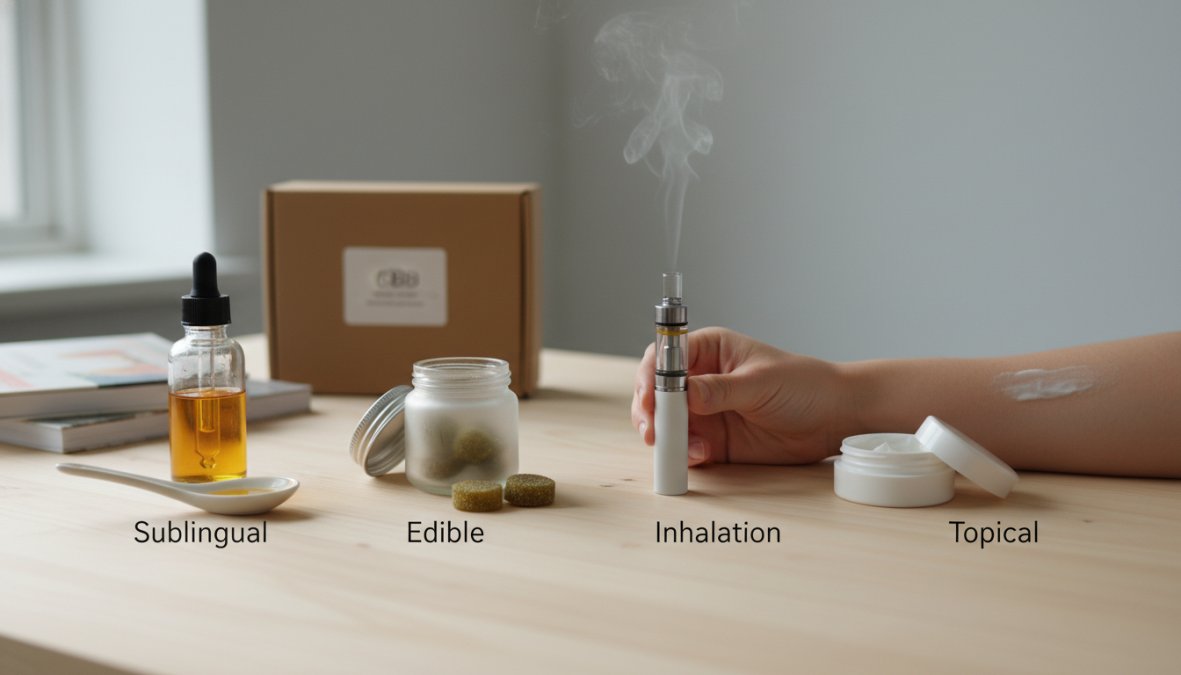
The table below summarizes how CBD absorption rates by method compare across the most common product formats:
| Delivery Method | Estimated Bioavailability Range | Onset Time | Duration |
|---|---|---|---|
| Sublingual tincture/oil | 20-35% | 15-45 minutes | 4-6 hours |
| Oral gummies/capsules | 6-19% | 45-90 minutes | 6-8 hours |
| Inhalation (vaping) | 34-56% | 2-5 minutes | 2-3 hours |
| Topical creams/gels | Localized, minimal systemic | 15-45 minutes | 4-6 hours |
| Transdermal patches | Higher than topicals, systemic | 1-2 hours | 8-12 hours |
These ranges reflect general pharmacological understanding of how lipid-soluble cannabinoids interact with different absorption pathways. Individual variation is real and significant.
Sublingual Tinctures and Oils
Sublingual administration is the most efficient oral delivery method for CBD. Holding a tincture under your tongue for 60-90 seconds allows cannabidiol to absorb directly through the sublingual mucosa, bypassing the digestive tract entirely. This avoids first-pass metabolism in the liver, which is responsible for degrading a substantial portion of orally consumed compounds before they reach systemic circulation.
The practical implication: a 30mg sublingual dose delivers meaningfully more active CBD to your endocannabinoid system than a 30mg gummy. Many practitioners consider sublingual tinctures the benchmark delivery method for consistent, predictable effects.
Hold the oil under your tongue for a full 90 seconds before swallowing. Most users stop at 30 seconds and lose a significant portion of the sublingual absorption window. The mucous membrane needs time to transfer the cannabidiol into capillaries.
Oral Gummies, Soft Gels, and Capsules
Oral formats are the most popular CBD products on the market, and they carry the lowest bioavailability of any ingestible delivery method. CBD is highly lipophilic, meaning it binds to fats rather than water. The digestive system processes it through the hepatic portal system, where liver enzymes metabolize a large fraction before it enters general circulation. This is called first-pass metabolism, and it’s the primary reason oral CBD bioavailability is substantially lower than sublingual delivery.
That said, oral formats have real advantages: precise dosing, longer duration of effect, and discreet consumption. For sleep support and sustained pain relief, the extended release profile of a soft gel or gummy often outperforms the faster but shorter-acting sublingual route.
Topical Creams, Freeze Gels, and Pain Patches
Topical CBD products work through an entirely different mechanism. Creams and freeze gels deliver cannabinoids to localized tissue, interacting with cannabinoid receptors in the skin, muscles, and joints without producing significant systemic blood levels. This makes them highly effective for targeted inflammation and localized pain, but they are not a substitute for systemic CBD effects.
Transdermal patches represent a meaningful upgrade. Unlike standard topicals, patches are formulated to drive cannabinoids through the skin barrier into systemic circulation, producing effects similar to oral ingestion but with a more controlled release profile over 8-12 hours.
Factors Affecting CBD Bioavailability You Should Know
The delivery method sets the ceiling on how much CBD your body can absorb. Everything below determines how close you actually get to that ceiling on any given dose. These are not abstract variables, each one has a concrete mechanism and a practical implication for how you use CBD.
1. Formulation Technology: The Particle Size Problem
Standard CBD oil is a lipophilic compound suspended in a carrier oil such as MCT, hemp seed, or olive oil. When you swallow it, the digestive system must emulsify these oil droplets before cannabidiol can cross the intestinal wall, a process that is inherently inefficient and highly variable depending on what else is in your stomach.
Nanoemulsification and water-soluble CBD formulations address this directly. By reducing CBD particle size to the nanometer range (typically below 100nm) and encapsulating those particles in a surfactant shell, manufacturers create droplets that are small enough to be absorbed directly through intestinal epithelial cells without requiring full emulsification. The result is faster onset and more consistent absorption compared to standard oil-based products at the same milligram count. Liposomal delivery uses a similar principle: CBD is encapsulated inside a phospholipid bilayer (a structure similar to a cell membrane), which facilitates direct cellular uptake.
The practical implication: if you are comparing two oral CBD products with identical milligram counts, a nanoemulsified or liposomal formulation will generally outperform a standard oil-based product on absorption efficiency. This is one reason why a lower-milligram water-soluble product can outperform a higher-milligram standard tincture.
2. Individual Metabolism: The CYP450 Enzyme System
CBD is primarily metabolized in the liver by the cytochrome P450 enzyme family, particularly CYP3A4 and CYP2C19. The activity level of these enzymes varies significantly between individuals based on genetics, age, and concurrent medications, and this variation directly affects how much CBD survives first-pass metabolism to reach systemic circulation.
Some individuals are classified as "poor metabolizers" of CYP2C19 substrates, meaning their liver enzymes process CBD more slowly. In practice, this can mean higher blood levels of CBD from the same dose compared to a "rapid metabolizer" who clears the compound quickly. This is one of the most underappreciated reasons why two people taking identical products at identical doses report dramatically different effects.
Important drug interaction note: because CBD is processed by CYP3A4 and CYP2C19, it can interact with other medications that use the same enzyme pathways, including certain blood thinners, antiepileptics, and antidepressants. This is not a theoretical concern; it is the mechanism behind the clinically documented interaction between CBD and clobazam (an antiepileptic drug) that was identified during the clinical development of Epidiolex. If you take prescription medications, consult a healthcare provider before starting CBD.
3. Body Composition: Fat Storage and Redistribution
CBD is highly lipophilic, it binds to fat. In individuals with higher body fat percentages, cannabidiol can accumulate in adipose tissue and be released back into circulation over time, which can extend the duration of effects but also reduce peak blood concentration after a single dose. In individuals with lower body fat, CBD clears more rapidly from the system.
This is why body weight alone is a poor guide to CBD dosing. Body composition, specifically the ratio of fat to lean mass, is a more relevant variable, though it is rarely discussed in consumer dosing guides.
4. Timing Relative to Meals: The Fat Co-Administration Effect
Consuming oral CBD with food, particularly food containing significant fat content, measurably increases bioavailability. The mechanism is well-established for lipophilic compounds: dietary fat stimulates bile secretion, which emulsifies lipid droplets in the small intestine and dramatically improves the conditions for cannabinoid absorption. Fat also slows gastric emptying, giving CBD more time in the small intestine where absorption occurs.
The type of fat matters less than the presence of fat. Saturated fats (coconut oil, butter), monounsaturated fats (olive oil, avocado), and polyunsaturated fats (fatty fish, walnuts) all create the lipid-rich environment that supports CBD absorption. A practical benchmark: a meal or snack containing at least 10-15 grams of fat is sufficient to produce a meaningful improvement in oral CBD absorption compared to a fasted state.
For sublingual tinctures, the food effect is less pronounced because a significant portion of absorption occurs through the sublingual mucosa before the compound reaches the digestive system. However, swallowing the residual oil after the sublingual hold still benefits from a fed state.
According to National Institutes of Health research on cannabinoid pharmacokinetics, co-administration of CBD with high-fat food can increase overall exposure to the compound compared to fasted administration.
5. Product Quality: Extraction Method and Phytocompound Integrity
The extraction process used to produce a CBD product affects what survives into the final formulation, and what survives affects absorption. CO2 extraction at supercritical parameters is the industry benchmark because it selectively extracts cannabinoids and terpenes without introducing residual solvents, and it preserves heat-sensitive terpenes that would be degraded by ethanol extraction with heat-based solvent removal.
Poorly extracted hemp distillate may contain residual plant waxes, chlorophyll, and lipid fractions that interfere with consistent absorption and can cause gastrointestinal discomfort that further reduces effective bioavailability. This is one reason why extraction method is worth verifying, not just as a quality signal, but as a direct variable in absorption efficiency.
6. Dose Consistency Over Time
The endocannabinoid system is not a switch, it is a regulatory network that responds to consistent input. Single-dose or occasional use of CBD produces different physiological outcomes than daily supplementation over weeks. Regular dosing allows the endocannabinoid system to reach a steady state, and many practitioners find that consistent daily use at a moderate dose produces more reliable results than intermittent high doses. This is not a bioavailability variable in the pharmacokinetic sense, but it is a practical factor in whether any given dose produces the expected effect.
Never assume two products with the same milligram count will produce the same effect. A standard oil-based 1000mg tincture without bioavailability enhancement can deliver meaningfully less active CBD than a well-formulated nanoemulsified 500mg product. Always evaluate extraction method, formulation technology, and COA verification, not just the label number.
| Factor | Mechanism | Practical Action |
|---|---|---|
| Formulation technology | Particle size determines intestinal uptake efficiency | Choose nanoemulsified or liposomal formats for oral use |
| CYP450 enzyme activity | Liver metabolism rate varies by genetics and medications | Consult a provider if on prescription medications |
| Body composition | Fat tissue stores and slowly releases lipophilic CBD | Adjust expectations for duration, not just dose |
| Meal fat content | Dietary fat improves emulsification and intestinal absorption | Take oral CBD with a fat-containing meal or snack |
| Extraction quality | CO2 extraction preserves terpenes and avoids solvent residues | Verify extraction method and request full-panel COA |
| Dosing consistency | Endocannabinoid system responds to regular input | Commit to daily dosing for at least 2-4 weeks before adjusting |
How to Increase CBD Bioavailability for Better Results
Most people are leaving a significant portion of every CBD dose unused. The good news: improving your absorption doesn’t require switching products entirely.
Here are the most effective strategies to increase CBD bioavailability:
- Switch to sublingual delivery for daily use: hold tincture oil under your tongue for 90 seconds before swallowing.
- Choose water-soluble or nanoemulsified formulations: smaller cannabinoid particles cross cell membranes faster and more completely.
- Take oral formats with fatty food: pair gummies or soft gels with a tablespoon of coconut oil, a handful of almonds, or a meal containing healthy fats.
- Avoid high-heat processing of your CBD: heat degrades cannabinoids, so never add tinctures to hot beverages.
- Maintain consistent daily dosing: the endocannabinoid system responds better to regular supplementation than occasional high doses.
- Look for CO2-extracted hemp extract: clean extraction preserves the full phytocompound profile, including terpenes and minor cannabinoids like CBG and CBN, which may support the entourage effect.
CBD Health Collection addresses the bioavailability problem directly through water-based CBD formulations and CO2 extraction, which preserves the full spectrum of cannabinoids and terpenes without chemical solvents. Products produced in a GMP- and FDA-registered facility with independently verified COA lab testing give you confidence that the milligrams on the label are actually present and bioavailable.
The single biggest lever for improving CBD absorption is switching from standard oral gummies to sublingual tinctures, or choosing a water-soluble formulation. This change alone can meaningfully increase the effective dose your body receives from the same milligram count.
Full-Spectrum, Broad-Spectrum, and Isolate: How CBD Form Affects Bioavailability
The type of CBD extract you choose affects more than just THC content. It directly influences how efficiently your body absorbs and uses the cannabinoids present, and understanding why requires looking at how each extract type is actually manufactured, not just what ends up on the label.
The Three Extract Types: A Technical Breakdown
CBD isolate is pure cannabidiol with all other phytocompounds removed. Manufacturers typically produce it by taking a crude hemp extract and running it through a series of winterization steps (chilling the extract in ethanol to precipitate waxes and lipids), followed by fractional distillation to concentrate cannabidiol, and finally a crystallization stage that yields a white powder or crystal that is typically 99%+ pure CBD. The result is highly consistent and contains no detectable THC, but the process strips out every terpene, flavonoid, and minor cannabinoid alongside it.
Full-spectrum CBD retains all naturally occurring cannabinoids, terpenes, flavonoids, and lipids from the cannabis plant, including up to 0.3% delta-9-THC (the federal legal limit for hemp-derived products in the United States). CO2 extraction is the industry benchmark for producing full-spectrum oil: supercritical carbon dioxide acts as a solvent at specific temperature and pressure thresholds, selectively pulling cannabinoids and terpenes from plant material without the residual solvent concerns associated with hydrocarbon or ethanol extraction. The resulting crude oil is then lightly processed, typically winterized to remove waxes, but deliberately left with its full phytocompound profile intact.
Broad-spectrum CBD occupies the middle ground, and this is where the manufacturing process becomes genuinely technical. Starting from a full-spectrum crude or distillate, producers must remove THC while preserving the minor cannabinoids (CBG, CBN, CBC) and terpenes that support the entourage effect. Two primary methods are used:
-
Chromatography (most common for THC removal): Preparative high-performance liquid chromatography (HPLC) or simulated moving bed (SMB) chromatography passes the hemp extract through a column packed with a stationary phase medium. Different cannabinoids travel through the column at different rates based on their molecular interactions with the medium. THC is separated from CBD and the minor cannabinoids and collected as a distinct fraction, which is discarded. The remaining cannabinoid-rich fraction is recombined with the terpene fraction (terpenes are typically captured separately because they are volatile and would be lost during chromatography). This method can achieve non-detectable THC levels while preserving a broad cannabinoid and terpene profile, but it is expensive and requires sophisticated equipment, which is why it correlates with higher-quality, higher-cost products.
-
Fractional distillation with selective isolation: Some manufacturers use short-path or wiped-film distillation to separate cannabinoids by boiling point. Because THC and CBD have similar boiling points, this method is less precise for THC removal than chromatography and often requires multiple passes or a subsequent remediation step. Products made this way may carry a higher residual THC risk unless confirmed by rigorous third-party testing.
The phrase “THC-free” on a broad-spectrum label tells you nothing about which removal method was used. A product made with a single distillation pass is not equivalent to one that underwent preparative chromatography. The only way to verify actual THC levels is a COA from an ISO/IEC 17025-accredited laboratory showing a non-detect result on a validated LC-MS/MS or GC-MS method, not a simple immunoassay strip test.
How Extract Type Affects Bioavailability
From a pharmacokinetic standpoint, the spectrum type matters because the surrounding molecular environment influences how cannabidiol is absorbed.
Isolate bioavailability follows a bell-curve dose-response pattern that has been observed in early research: at very low and very high doses, effects are less pronounced, with a narrower effective window. Without the lipid matrix and terpene content of a whole-plant extract, isolate formulations depend more heavily on the carrier oil or formulation technology (such as nanoemulsification) to achieve consistent absorption.
Full-spectrum and broad-spectrum bioavailability benefit from what is commonly called the entourage effect, a term coined by researchers studying the synergistic interactions between cannabinoids and terpenes. The natural lipid content of a whole-plant extract creates a more favorable environment for intestinal absorption of lipophilic cannabinoids. Terpenes such as myrcene are thought to increase cell membrane permeability, and beta-caryophyllene interacts directly with CB2 receptors independently of CBD, potentially broadening the physiological response. The practical implication is that broad-spectrum and full-spectrum extracts may produce a more consistent and dose-linear response than isolate at equivalent milligram counts.
The bioavailability trade-off of THC removal: The chromatography process used to produce broad-spectrum CBD does remove some terpenes along with THC, even when manufacturers recombine terpene fractions afterward. Terpenes are volatile and some loss is inevitable. This means a well-made broad-spectrum product may have a slightly different terpene profile than the original full-spectrum crude, a nuance that most product labels do not disclose. A COA that includes a terpene panel (not just a cannabinoid panel) lets you verify what is actually present.
| Extract Type | THC Content | Entourage Effect Potential | Bioavailability Notes | Best For |
|---|---|---|---|---|
| Full-spectrum | Up to 0.3% delta-9-THC | Highest | Full lipid and terpene matrix intact | Maximum whole-plant benefit, low drug-test risk tolerance |
| Broad-spectrum | Non-detectable (if verified) | High (terpene-dependent) | Slightly reduced terpene content post-chromatography | Entourage effect without THC exposure |
| Isolate | None | None | Carrier-dependent; benefits from nanoemulsification | Precise dosing, zero THC risk, sensitive individuals |
As documented in Harvard Health Publishing’s overview of CBD research, the interaction between cannabinoids and other plant compounds is an active area of scientific investigation, with early findings supporting the concept of synergistic activity.
For most people seeking the best balance of absorption, entourage effect, and THC avoidance, a broad-spectrum product made with preparative chromatography and verified by a full-panel COA (including a terpene profile) represents the highest-value option. The manufacturing method is the variable most product marketing obscures, and the one most worth asking about before you buy.
Drug Testing, THC, and Broad-Spectrum CBD: What You Need to Know
This is the section most CBD guides skip entirely, and it’s the one that matters most if you’re subject to workplace drug testing.
Standard drug tests screen for THC metabolites, not CBD. The practical concern with full-spectrum products is that regular use of products containing up to 0.3% delta-9-tetrahydrocannabinol can, in some individuals, accumulate to levels that trigger a positive result. The risk depends on dose, frequency of use, individual metabolism, and the sensitivity threshold of the specific test.
Broad-spectrum CBD is formulated to remove THC while retaining the other cannabinoids and terpenes that support the entourage effect. However, "THC-free" on a label is only as reliable as the lab testing behind it. A certificate of analysis (COA) from an independent third-party laboratory is the only way to verify that a broad-spectrum product genuinely contains non-detectable THC levels.
CBD isolate carries the lowest theoretical risk for drug testing because it contains only pure cannabidiol with no other cannabinoids present, but it also lacks the entourage effect benefits.
The honest answer: no CBD product can offer a zero-risk guarantee for drug testing. If your employment situation involves regular screening, choose a verified THC-free broad-spectrum or isolate product, confirm the COA shows non-detectable THC, and consult with your employer or a medical professional before starting any hemp extract regimen.
How to Verify CBD Product Quality Using a COA
A certificate of analysis (COA) is the non-negotiable document that separates credible CBD products from marketing claims.
Every reputable CBD brand publishes COAs from independent, accredited third-party laboratories. Here’s what to check when reading one:
- Cannabinoid panel: confirms the actual CBD potency matches the label claim. Look for cannabidiol content, and verify that delta-9-THC is at or below 0.3% (or non-detectable for broad-spectrum).
- Terpene profile: confirms the presence of naturally occurring terpenes like myrcene, linalool, and beta-caryophyllene that support the entourage effect.
- Contaminant testing: the COA should confirm the absence of pesticides, heavy metals, residual solvents, and microbial contaminants.
- Batch number: the COA batch number should match the batch number on your product. Generic COAs posted on a website without batch matching are a red flag.
- Lab accreditation: verify the testing laboratory holds ISO/IEC 17025 accreditation, the standard for analytical testing laboratories.
According to FDA guidance on hemp-derived CBD products, product transparency and accurate labeling remain active regulatory priorities for the cannabidiol market.
A common mistake is accepting a COA that only tests for CBD potency. A potency-only COA tells you nothing about pesticide residues or heavy metals. Insist on a full-panel COA before purchasing any hemp extract product.
Conclusion: Getting the Most From Every Milligram of CBD
Getting real results from CBD comes down to a straightforward problem: most people are absorbing far less than they’re paying for, and they don’t know it.
Maximizing CBD bioavailability requires choosing the right delivery method, understanding how your formulation is made, and verifying quality through a full-panel COA. CBD Health Collection was built specifically around this challenge, with water-based CBD formulations for optimized absorption, clean CO2 extraction that preserves the full cannabinoid and terpene profile, and independently verified COA lab testing on every product. All products are produced in a GMP- and FDA-registered facility using organically grown, USA-sourced hemp. Get started with CBD Health Collection and experience the difference that genuine bioavailability optimization makes in your daily wellness routine.
Frequently Asked Questions
Why is CBD bioavailability important?
CBD bioavailability determines how much of the cannabidiol you consume actually reaches your bloodstream and interacts with the endocannabinoid system. A product with low bioavailability means a large portion of the CBD is wasted before it can deliver any therapeutic potential. Understanding CBD bioavailability helps you choose the right delivery method and dosage so you get consistent, effective results from every product you use, without overspending on potency that never reaches your system.
Which CBD consumption method has the highest bioavailability?
Sublingual administration, placing a CBD tincture or oil under the tongue and holding it for 60 to 90 seconds, is generally considered to offer higher bioavailability than oral methods like gummies or soft gels. This is because the cannabidiol absorbs directly through the mucous membranes into the bloodstream, bypassing the digestive tract and first-pass liver metabolism. Water-based or nano-emulsified CBD formulations can further improve absorption rates by increasing the surface area available for uptake.
Does food affect CBD bioavailability?
Yes, food can significantly affect CBD absorption rates by method. Taking CBD with a meal that contains healthy fats, such as avocado, coconut oil, or eggs, can meaningfully increase how much cannabidiol is absorbed. CBD is fat-soluble, meaning it binds to lipids for transport through the digestive system. Eating a fatty meal before or alongside oral CBD products like gummies or soft gels may help increase CBD bioavailability compared to taking them on an empty stomach.
How can I increase the bioavailability of CBD?
There are several practical ways to increase CBD bioavailability: choose sublingual tinctures over oral capsules when faster absorption matters; take oral CBD products with a fat-rich meal; look for water-soluble or nano-emulsified CBD formulations; and select broad-spectrum hemp extracts that include terpenes, flavonoids, and minor cannabinoids like CBG and CBN, which may enhance the entourage effect and overall efficacy. Always verify potency and purity through a third-party certificate of analysis (COA) before purchasing.
What is the difference between oral and sublingual CBD bioavailability?
Oral CBD, found in gummies, soft gels, and capsules, must pass through the digestive system and liver before entering the bloodstream, a process called first-pass metabolism that reduces the amount of active cannabidiol available. Sublingual CBD, delivered via tinctures held under the tongue, bypasses this process by absorbing directly through mucous membranes. This generally makes sublingual CBD faster-acting and more efficient, though factors affecting CBD bioavailability like product formulation and individual metabolism also play a significant role.
This article was written using GrandRanker