
Table of Contents
- Full Spectrum vs Broad Spectrum CBD: Key Differences at a Glance
- What Is Full Spectrum CBD?
- What Is Broad Spectrum CBD?
- What Is the Entourage Effect and Why Does It Matter?
- What Is CBD Isolate? (And How It Compares)
- Drug Testing, Bioavailability, and Cost: What Competitors Don’t Tell You
- How to Choose the Right CBD Product for Your Specific Needs
- CBD Dosage Guide for Beginners: Starting Points by Spectrum Type
- Full Spectrum vs Broad Spectrum CBD: The Verdict
Last Updated: May 22, 2026
Choosing between full spectrum vs broad spectrum cbd is one of the most common questions new CBD users face, and getting it wrong can mean paying for a product that doesn’t match your needs. CBD Health Collection has helped thousands of customers navigate this exact decision, and the answer isn’t as simple as "one is better than the other." The right choice depends on your lifestyle, health goals, and whether you can afford any trace of THC in your system. Below, we’ll show you exactly how these two spectrum types differ, what the entourage effect actually means for your results, and how to match the right product to your specific situation.
Here’s what most guides get wrong: they treat this as a purely chemical question. It’s really a personal one.
Full Spectrum vs Broad Spectrum CBD: Key Differences at a Glance
Full spectrum CBD and broad spectrum CBD are both hemp-derived extracts that contain cannabidiol (CBD) alongside other naturally occurring plant compounds, but the critical distinction is THC content. Full spectrum retains trace amounts of delta-9-THC (up to the federally legal 0.3% limit), while broad spectrum has that THC removed through an additional processing step.
Quick Comparison Table
| Feature | Full Spectrum | Broad Spectrum | CBD Isolate |
|---|---|---|---|
| THC Content | Up to 0.3% delta-9-THC | Non-detectable / THC-free | None |
| Entourage Effect | Full | Partial | None |
| Drug Test Risk | Higher | Lower | Lowest |
| Cannabinoid Profile | Complete (CBD, CBG, CBN, CBC) | Broad minus THC | CBD only |
| Terpenes & Flavonoids | Yes | Yes | No |
| Best For | Maximum therapeutic benefit | THC-sensitive users | Precise dosing |
| Typical Bioavailability | High | High | Variable |
| Price Point | Moderate | Moderate-High | Lower |
This table captures the framework. The sections below explain why each row matters more than most buyers realize.
What Is Full Spectrum CBD?
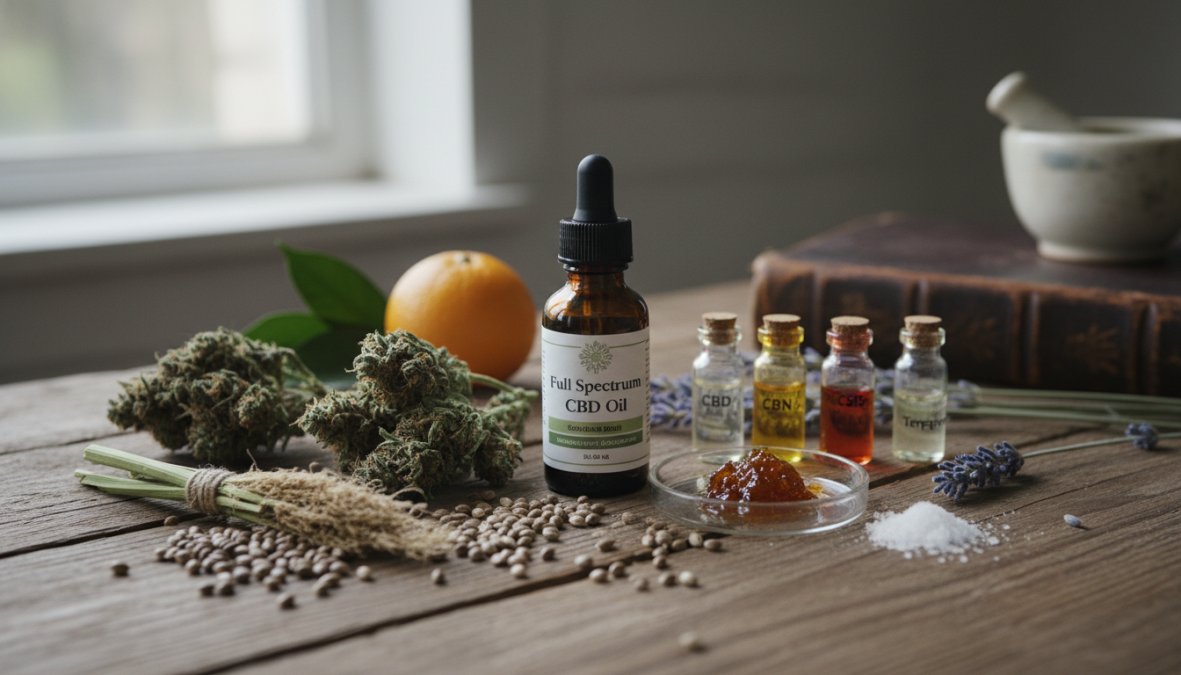
Full spectrum CBD is a hemp extract that preserves the plant’s complete cannabinoid profile, including CBD, CBG, CBN, CBC, terpenes, flavonoids, and trace levels of delta-9-THC at or below the 0.3% federal legal limit. The goal of full spectrum extraction is to keep the cannabis plant’s natural chemistry as intact as possible, which is why it’s sometimes called "whole-plant extract."
(/what-is-cbd-good-for-pain/) Is Full Spectrum CBD?]
The presence of minor cannabinoids and terpenes is what makes full spectrum products distinct. These compounds interact with the body’s endocannabinoid system in ways that isolated CBD cannot replicate. CO2 extraction is the gold standard method for preserving this profile without introducing solvents or chemical residue, which is why reputable producers like CBD Health Collection use it exclusively.
One thing that surprises many buyers: the 0.3% THC limit is a legal threshold, not a potency ceiling. At that concentration, delta-9-THC produces no psychoactive effects. What it does produce, according to current pharmacological research, is a meaningful contribution to the entourage effect.
Pros and Cons of Full Spectrum CBD
Pros:
- Complete cannabinoid and terpene profile for maximum pharmacological synergy
- Strongest candidate for the entourage effect
- Typically less processed, closer to the natural hemp plant
- Well-suited for chronic pain, inflammation, and sleep support
Cons:
- Contains trace THC, which can accumulate with heavy daily use
- Carries a real (though often overstated) drug testing risk
- Hemp taste can be stronger due to retained terpenes and flavonoids
- Not federally compliant in all employment contexts
Full spectrum products can cause a positive drug test result even at legal THC concentrations. If your employer uses urine immunoassay screening, trace THC can accumulate over time and trigger a positive result. This is not theoretical, it happens, and it’s the single most important factor to weigh before choosing full spectrum.
What Is Broad Spectrum CBD?
Broad spectrum CBD occupies the middle ground between full spectrum and CBD isolate. It retains most of the hemp plant’s cannabinoids, terpenes, and flavonoids, but undergoes an additional processing step to remove detectable levels of THC. The result is a cannabinoid-rich extract that is effectively THC-free while still delivering a complex phytocannabinoid profile.
The extraction process for broad spectrum typically starts with a full spectrum distillate, then applies targeted chromatography or other separation techniques to isolate and remove THC molecules. Done well, this preserves CBG, CBN, CBC, and the terpene structure that drives much of the product’s wellness potential.
According to FDA’s overview of hemp and CBD regulatory framework, hemp-derived CBD products must contain less than 0.3% delta-9-THC by dry weight to remain federally legal. Broad spectrum products generally fall well below this threshold, often reporting non-detectable THC on their certificate of analysis.
What most guides miss: broad spectrum is not a single, standardized formulation. Quality varies significantly between producers. A poorly made broad spectrum product can lose terpenes and minor cannabinoids during THC removal, ending up closer to an isolate in practice. Always check the certificate of analysis (COA) for the full cannabinoid breakdown, not just the CBD and THC numbers.
Pros and Cons of Broad Spectrum CBD
Pros:
- THC-free, making it appropriate for most drug-tested individuals
- Retains terpenes, flavonoids, and minor cannabinoids for partial entourage effect
- Good option for users sensitive to THC or in THC-restricted environments
- Available in tinctures, gummies, soft gels, and topical formats
Cons:
- Additional processing can reduce terpene and minor cannabinoid content
- Entourage effect is theoretically less complete than full spectrum
- Often priced higher than full spectrum due to added processing steps
- COA quality varies widely across the market
What Is the Entourage Effect and Why Does It Matter?
The entourage effect is the hypothesis, increasingly supported by pharmacological research, that the therapeutic activity of cannabis-derived compounds is greater when they work together than when any single compound is used in isolation. The term was introduced by researchers Raphael Mechoulam and Shimon Ben-Shabat in 1998 and later expanded by neurologist Ethan Russo in a widely cited 2011 paper in the British Journal of Pharmacology.
Understanding this concept is not academic. It is the primary reason full spectrum and broad spectrum products exist as distinct categories, and it directly determines whether paying more for a complex extract is justified for your specific use case.
The Mechanism: Why Compounds Interact
The endocannabinoid system (ECS) is a network of receptors, endogenous ligands, and metabolic enzymes distributed throughout the brain, immune system, and peripheral tissues. The two primary receptor types, CB1 (concentrated in the central nervous system) and CB2 (concentrated in immune tissue and peripheral organs), respond differently to different cannabinoids, and the presence of multiple cannabinoids simultaneously produces effects that cannot be predicted by adding up each compound’s individual action.
Key mechanisms driving the entourage effect:
- Allosteric modulation: Some cannabinoids alter the shape of receptor binding sites, changing how other cannabinoids bind. CBD, for example, acts as a negative allosteric modulator of CB1 receptors, which is part of why it moderates the psychoactive effects of THC even at trace concentrations.
- Enzyme inhibition: CBD inhibits FAAH (fatty acid amide hydrolase), the enzyme that breaks down anandamide, the body’s primary endogenous cannabinoid. This inhibition extends the activity of the body’s own ECS signaling, an effect that isolated CBD produces but that may be amplified by the presence of certain terpenes.
- Receptor cross-talk: Minor cannabinoids like CBG interact with alpha-2 adrenoceptors and serotonin 5-HT1A receptors in addition to CB1 and CB2, broadening the physiological reach of a full spectrum extract beyond what the ECS alone covers.
- Terpene contributions: Terpenes are not passive flavor compounds. Beta-caryophyllene is a dietary cannabinoid that binds directly to CB2 receptors and has demonstrated anti-inflammatory activity in preclinical models. Linalool (also found in lavender) modulates GABA-A receptor activity, which is relevant to anxiety and sleep. Myrcene appears to increase cell membrane permeability, potentially enhancing cannabinoid uptake.
What the Research Actually Shows
The evidence base for the entourage effect is strongest in specific contexts and weaker in others. Honest guidance requires distinguishing between them.
Where the evidence is more robust:
- Pain and inflammation: A 2020 study in the European Journal of Pain found that full spectrum hemp extract produced greater anti-inflammatory effects in preclinical models than equivalent doses of CBD isolate. The presence of minor cannabinoids and terpenes was identified as a contributing factor.
- Anxiety: Russo’s 2011 paper specifically highlighted the synergy between CBD and the terpene linalool for anxiolytic effects, with both compounds modulating GABA and serotonin pathways through complementary mechanisms.
- Sleep: CBN has been associated with sedative properties in early research, and its combination with CBD and myrcene-rich terpene profiles is a common formulation strategy in sleep-targeted full and broad spectrum products. The clinical evidence for CBN specifically is still developing, but the mechanistic rationale is established.
Where the evidence is thinner:
- General wellness and prevention: The entourage effect is less clearly demonstrated for non-specific wellness applications. Users taking low daily doses for general stress management may not experience a meaningful difference between a well-formulated broad spectrum product and a high-quality isolate.
- Topical applications: The entourage effect is primarily a systemic phenomenon. For topical products targeting localized pain or inflammation, the local receptor environment matters more than the systemic cannabinoid profile, and the advantage of full spectrum over isolate is less pronounced.
Full spectrum products offer the most complete entourage effect. Broad spectrum offers a meaningful partial version, retaining terpenes and minor cannabinoids while removing THC. CBD isolate offers none. For chronic pain, inflammation, anxiety, and sleep disruption, the entourage effect is a pharmacologically sound reason to choose full or broad spectrum. For general low-dose wellness use or topical applications, the advantage narrows considerably.
Terpenes and Flavonoids: The Underappreciated Half of the Entourage
Most CBD marketing focuses on cannabinoids. Terpenes and flavonoids are the compounds that most buyers overlook, yet they account for a significant portion of the entourage effect’s proposed mechanism.
Key terpenes and their documented activity:
| Terpene | Also Found In | Primary Mechanism | Relevant Application |
|---|---|---|---|
| Beta-caryophyllene | Black pepper, cloves | Direct CB2 agonist, anti-inflammatory | Pain, inflammation |
| Linalool | Lavender | GABA-A modulation, 5-HT1A activity | Anxiety, sleep |
| Myrcene | Hops, mango | Possible membrane permeability effect | Sedation, absorption |
| Limonene | Citrus peel | Serotonin and dopamine modulation | Mood, stress |
| Pinene | Pine needles | Acetylcholinesterase inhibition | Focus, memory |
Flavonoids, including cannflavins A and B, which are unique to the cannabis plant, have demonstrated anti-inflammatory activity in preclinical research at mechanisms distinct from both cannabinoids and common NSAIDs. They are present in full spectrum and, to a lesser degree, broad spectrum extracts, and are absent from CBD isolate.
Practical implication: When evaluating a full or broad spectrum product, a COA that only reports cannabinoid concentrations is incomplete. A COA from a quality producer will also include a terpene panel. If a product claims entourage effect benefits but cannot provide a terpene profile, the claim is not verifiable.
The Honest Caveat
The entourage effect is a well-supported hypothesis, not a proven universal law. Human clinical trial data specifically isolating the entourage effect as a variable, rather than comparing whole-plant extracts to isolate as a secondary finding, remains limited. Much of the strongest evidence comes from preclinical (animal and cell) models, which do not always translate directly to human outcomes.
What this means practically: the entourage effect is a sound reason to prefer full or broad spectrum products for the applications listed above. It is not a guarantee that you will experience superior results, and some individuals do report equivalent or better outcomes with CBD isolate, particularly at higher doses. The bell-curve dose-response pattern observed with isolate, where efficacy increases up to an optimal dose and then plateaus or declines, does not appear to apply to full spectrum extracts to the same degree, which is one of the more clinically relevant distinctions between the two.
As documented in Project CBD’s research overview on the entourage effect, the synergistic relationship between plant compounds is one of the most actively researched areas in cannabinoid science, and the evidence base continues to develop as more rigorous human trials are conducted.
What Is CBD Isolate? (And How It Compares)
CBD isolate is the purest form of cannabidiol, typically extracted and refined to 99%+ purity. It contains no other cannabinoids, no terpenes, no flavonoids, and no THC. The result is a white crystalline powder or a clear oil that delivers a precise, measurable dose of CBD with nothing else.
Isolate has its place. For users who need absolute certainty about THC absence, who are highly sensitive to other plant compounds, or who require precise dosing without variables, isolate is a rational choice. It’s also typically the least expensive option on a cost-per-milligram basis.
The limitation is significant, though. Without the supporting cast of minor cannabinoids and terpenes, isolate misses the pharmacological synergy that makes full and broad spectrum products more versatile. Research suggests that isolate also follows a bell-curve dose-response pattern, meaning there’s an optimal dose window beyond which adding more CBD produces diminishing returns. Full spectrum extracts don’t appear to share this limitation to the same degree.
Isolate is best for:
- Individuals with zero tolerance for THC (zero, not trace)
- Users who need to mix CBD into food or beverages without flavor impact
- Those managing specific conditions where precise CBD dosing is prioritized
- Budget-conscious buyers who want the lowest cost per milligram
Drug Testing, Bioavailability, and Cost: What Competitors Don’t Tell You
Most CBD guides mention drug testing in a single cautionary sentence and move on. That is not enough information for anyone whose job, professional license, or security clearance depends on a clean screen. This section gives you the specifics.
Will Full Spectrum CBD Show Up on a Drug Test? (The Detailed Answer)
Standard workplace drug tests do not screen for CBD. They screen for THC-COOH, the primary metabolite produced when your body processes delta-9-THC. This distinction is critical, and it is where full spectrum users run into real trouble.
How accumulation works: Full spectrum products contain up to 0.3% delta-9-THC by dry weight. A single dose of a 1,000mg full spectrum tincture at that legal limit contains up to 3mg of delta-9-THC. That is a small amount per dose, but THC-COOH is fat-soluble, meaning it binds to fatty tissue and clears slowly. With daily use, metabolite levels build over time rather than flushing between doses.
The cutoff thresholds that matter:
- The standard SAMHSA federal workplace urine screening cutoff is 50 ng/mL for THC-COOH on the initial immunoassay.
- Confirmatory GC-MS testing uses a lower cutoff of 15 ng/mL.
- Some private employers and DOT-regulated industries use the same SAMHSA thresholds; others set their own.
Regular daily use of a full spectrum product can push urinary THC-COOH concentrations above the 50 ng/mL threshold in frequent users, particularly those with lower body fat percentages (where fat-soluble metabolites concentrate in a smaller reservoir) or those using higher daily doses.
Estimated detection windows by use pattern (full spectrum):
| Use Pattern | Estimated Detection Window |
|---|---|
| Single use / occasional | 3-7 days |
| Moderate use (a few times per week) | 7-14 days |
| Daily use | 14-30+ days |
| Heavy daily use (high dose) | Up to 45-60 days in some cases |
These are general estimates based on how THC metabolites clear from the body. Individual variation is significant. Factors including body fat percentage, hydration, metabolism rate, and the specific product’s actual THC concentration all affect how long metabolites remain detectable. Do not treat these windows as guarantees.
Profession-specific risk tiers:
- Highest risk: DOT-regulated workers (commercial drivers, pilots, railroad employees, federal contractors), active military, law enforcement, and anyone subject to random or unannounced testing. For these individuals, full spectrum is not a responsible choice regardless of legal THC limits. Broad spectrum with a verified non-detectable THC COA, or CBD isolate, is the only defensible option.
- Moderate risk: Healthcare workers, teachers, and employees in safety-sensitive roles who are subject to periodic or cause-based testing. Broad spectrum is appropriate; full spectrum carries meaningful risk with daily use.
- Lower risk: Office workers and employees in states with strong CBD consumer protections who are tested infrequently or not at all. Full spectrum is a viable option, but awareness of accumulation risk is still warranted.
What about broad spectrum? Broad spectrum products with non-detectable THC on a third-party COA carry significantly lower drug test risk. They are not zero-risk, manufacturing cross-contamination is possible, and "non-detectable" means below the lab’s detection limit, not an absolute zero. However, for the vast majority of tested individuals, a verified broad spectrum product from a reputable producer is the responsible choice.
The false positive problem: Some early-generation immunoassay tests have shown cross-reactivity with CBD itself at very high concentrations, though this is uncommon at typical wellness doses. More relevant is the risk of mislabeled products, a 2020 study published in JAMA found that a meaningful percentage of commercially available CBD products contained more THC than their labels indicated. This is why COA verification from an ISO-accredited third-party lab is not optional, it is the only way to know what you are actually consuming.
Before purchasing any CBD product if you are subject to drug testing: (1) Request the current COA, not a sample COA, the batch-specific one for the product you are buying. (2) Confirm the testing lab is ISO/IEC 17025 accredited. (3) Look for the specific THC-COOH or delta-9-THC concentration reported in mg/g or percentage, not just “ND” without a stated detection limit. (4) Check the test date, COAs older than 12 months should not be accepted as current verification.
Bioavailability: Does the Spectrum Type Affect Absorption?
Bioavailability is the proportion of a substance that reaches systemic circulation and produces an active effect. For CBD, this number varies dramatically by delivery method, and spectrum type plays a secondary but real role.
By delivery method (approximate ranges from published pharmacokinetic research):
| Delivery Method | Estimated Bioavailability |
|---|---|
| Inhalation (vaporized) | 30-56% |
| Sublingual tincture | 13-35% |
| Oral capsule / gummy | 6-19% |
| Topical (local effect only) | Systemic absorption minimal |
The wide ranges reflect individual variation in metabolism, fed vs. fasted state, and formulation quality. Sublingual administration bypasses first-pass hepatic metabolism by allowing absorption through the oral mucosa directly into the bloodstream, this is why tinctures held under the tongue for 60-90 seconds before swallowing consistently outperform swallowed capsules at equivalent doses.
Where spectrum type intersects with bioavailability: Full spectrum and broad spectrum extracts contain terpenes, some of which, including beta-caryophyllene and myrcene, may influence membrane permeability and cannabinoid uptake. This is an active area of research rather than a settled finding, but it provides a plausible pharmacological basis for why whole-plant extracts sometimes appear to require lower doses than isolate to achieve comparable effects.
Formulation technology matters more than spectrum type alone. Water-compatible or nanoemulsified CBD formulations can significantly increase bioavailability compared to standard oil-based products, because cannabidiol is naturally lipophilic (fat-loving) and does not disperse efficiently in the aqueous environment of the digestive tract. When evaluating products, look for terms like "nanoemulsion," "liposomal," or "water-soluble" in the product description, and verify these claims are supported by the COA or formulation documentation rather than being purely marketing language.
Cost-Per-Milligram Analysis: Which Spectrum Gives Better Value?
Cost-per-milligram of CBD is the metric most buyers use. It is also the most misleading metric for full and broad spectrum products.
The correct calculation for isolate: Divide total price by total CBD milligrams. A 1,000mg isolate tincture at $40 costs $0.04 per mg of CBD. This is a complete picture because CBD is the only active compound.
The correct calculation for full and broad spectrum: Divide total price by the combined milligrams of all active cannabinoids listed on the COA, CBD, CBG, CBN, CBC, and any others present in meaningful concentrations. A broad spectrum product at $60 for 1,000mg CBD that also contains 80mg CBG and 40mg CBN has a total active cannabinoid load of approximately 1,120mg. Its true cost per milligram of active compounds is closer to $0.054, higher than isolate per CBD milligram, but delivering a meaningfully broader pharmacological profile.
A practical comparison framework:
- Pull the COA for any product you are comparing.
- Add up all cannabinoids listed above a trace threshold (typically above 1mg per serving).
- Divide the product price by that total milligram figure.
- Compare that number across products, not just the CBD-only figure.
For users whose primary goal is a specific, measurable CBD dose, such as those using CBD for a clinically studied application at a defined dose, isolate or a high-CBD isolate-based product may genuinely offer better value. For users seeking broad wellness support, the premium for full or broad spectrum is typically justified by the additional active compounds, provided the COA confirms they are actually present in meaningful amounts and not just listed as trace.
How to Choose the Right CBD Product for Your Specific Needs
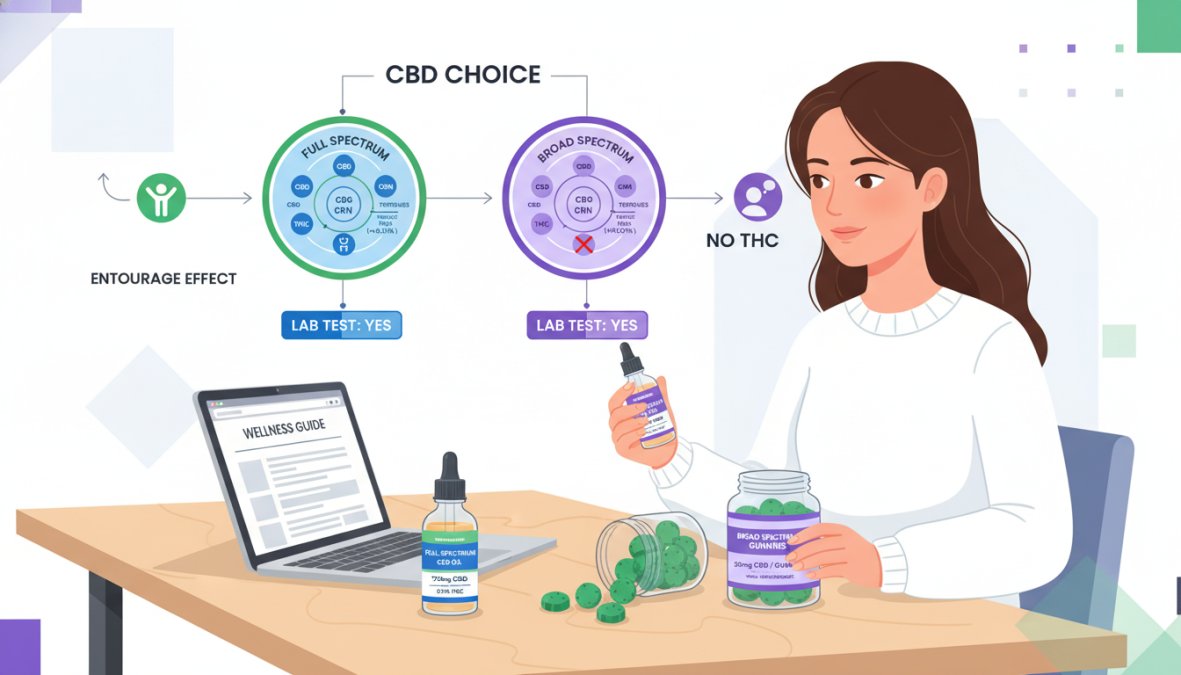
The right spectrum type is the one that matches your actual situation, not the one with the most marketing behind it. Three questions drive this decision: Do you get drug tested? How sensitive are you to THC? What are you primarily using CBD for?
Matching Spectrum Type to Your Symptoms and Lifestyle
Use this decision framework before purchasing:
Choose full spectrum if:
- You are not subject to drug testing
- Your primary goals are chronic pain relief, inflammation reduction, or sleep support
- You want the most complete entourage effect available
- You prefer minimally processed, whole-plant hemp extract
Choose broad spectrum if:
- You are subject to workplace drug testing
- You want multiple cannabinoids and terpenes without THC exposure
- You are new to CBD and want to minimize variables
- You need a product appropriate for daily use without accumulation concerns
Choose CBD isolate if:
- You require absolute THC absence (zero, not trace)
- You are extremely sensitive to plant compounds
- You need to add CBD to food or beverages without flavor impact
- Precise, predictable dosing is your top priority
For users managing joint pain, inflammation, or sleep disruption, broad spectrum and full spectrum products tend to be the most relevant options. CBD Health Collection’s broad spectrum line, produced from organically grown USA hemp via CO2 extraction and independently verified through third-party COA testing, is specifically formulated for these applications with optimal bioavailability as a design priority.
According to National Institutes of Health overview of cannabidiol research, cannabidiol’s interaction with the endocannabinoid system supports a range of physiological processes including pain modulation, stress response, and sleep regulation, which reinforces why spectrum selection matters for targeted wellness outcomes.
CBD Dosage Guide for Beginners: Starting Points by Spectrum Type
A CBD dosage guide for beginners needs to account for the fact that there’s no universal dose. Body weight, metabolism, the condition being addressed, and the delivery method all influence how much CBD you need and how quickly you feel it. That said, starting points exist.
General starting framework:
| Spectrum Type | Starting Dose | Format | Adjustment Interval |
|---|---|---|---|
| Full Spectrum | 10-15mg CBD | Tincture or soft gel | Every 5-7 days |
| Broad Spectrum | 15-20mg CBD | Tincture, gummy, or soft gel | Every 5-7 days |
| CBD Isolate | 20-25mg CBD | Tincture or capsule | Every 3-5 days |
The reason isolate starts higher: without the supporting entourage effect, you typically need more CBD to achieve the same outcome. Full spectrum starts lower because the combined cannabinoid activity means less CBD is required to engage the endocannabinoid system effectively.
The practical approach: start low, stay consistent for at least a week before adjusting, and track your results. CBD is not fast-acting for most chronic conditions, meaningful effects for sleep and pain management often take 2-4 weeks of consistent dosing to become apparent. Sublingual tinctures work faster than gummies or soft gels because absorption begins in the mouth rather than waiting for gastrointestinal processing.
A common mistake is abandoning CBD after 3-5 days because "nothing happened." The endocannabinoid system takes time to respond to consistent supplementation. Patience combined with a consistent dosing schedule is more important than finding the perfect dose immediately.
As noted in Harvard Health Publishing’s overview of CBD safety and dosing, CBD is generally well-tolerated, with the most common side effects being fatigue, diarrhea, and changes in appetite or weight, typically associated with higher doses.
Full Spectrum vs Broad Spectrum CBD: The Verdict
The full spectrum vs broad spectrum cbd debate doesn’t have a universal winner. Full spectrum delivers the most complete cannabinoid profile and the strongest entourage effect, making it the better choice for users focused on maximum therapeutic potential who aren’t concerned about drug testing. Broad spectrum is the smarter choice for anyone subject to testing, anyone new to CBD, or anyone who wants the benefits of multiple phytocannabinoids without any THC exposure.
What matters most is matching the product to your actual life, not to a theoretical ideal. Check the COA. Verify the extraction method. Start with a conservative dose and adjust based on real results.
The spectrum type is the starting point, not the whole answer.
Selecting the right CBD product is harder than it should be, and most buyers don’t have the background to evaluate what they’re actually purchasing. CBD Health Collection was founded specifically to address this gap, bringing pharmaceutical industry expertise to a market that badly needs it. All products are produced from organically grown USA hemp, extracted via clean CO2 processes, and independently verified through third-party COA testing for purity and potency. Get started with CBD Health Collection and find a product matched to your specific wellness goals, backed by a 30-day satisfaction guarantee and free shipping on every order.
Frequently Asked Questions
Does full spectrum CBD get you high?
No, full spectrum CBD will not get you high. While it does contain trace amounts of delta-9-THC, federally legal hemp-derived products must contain no more than 0.3% THC by dry weight. This concentration is far too low to produce psychoactive effects. The cannabidiol and other phytocannabinoids in full spectrum hemp extract are non-intoxicating. However, that trace THC is enough to potentially trigger a positive result on some drug tests.
Will full spectrum CBD show up on a drug test?
It can. Even though full spectrum CBD contains only trace amounts of delta-9-THC (within the legal 0.3% limit), regular use can cause THC metabolites to accumulate in your system and trigger a positive drug test. If you are subject to workplace or athletic drug testing, broad spectrum CBD or CBD isolate, both THC-free, are generally the safer choices. Always verify the cannabinoid profile via a third-party certificate of analysis before purchasing.
What is the main difference between full spectrum and broad spectrum CBD?
The primary difference between full spectrum vs broad spectrum CBD is THC content. Full spectrum products retain all naturally occurring phytocannabinoids from the cannabis plant, including trace delta-9-THC, terpenes, flavonoids, CBG, CBN, and CBC. Broad spectrum products go through an additional extraction process to remove detectable THC while preserving most other minor cannabinoids and terpenes. Both aim to leverage the entourage effect, but broad spectrum is designed to be THC-free.
Who should choose broad spectrum CBD over full spectrum?
Broad spectrum CBD is the better choice for anyone who undergoes regular drug testing, is sensitive to THC, lives in a state with stricter cannabis regulations, or simply prefers a THC-free wellness product. It is also a practical option for first-time users who want to experience the potential benefits of multiple cannabinoids and the entourage effect without any exposure to tetrahydrocannabinol. Broad spectrum gummies, tinctures, and topicals offer similar therapeutic potential with added peace of mind.
How do I use a CBD dosage guide for beginners when choosing between spectrum types?
For beginners, the general guidance is to start low and go slow regardless of spectrum type, typically 10-25mg of cannabidiol per day. With full spectrum products, start at the lower end since the combined cannabinoid profile, including trace THC, may produce stronger effects. With broad spectrum or isolate, you may need a slightly higher dose to achieve comparable results. Always check the product's certificate of analysis for potency, and adjust your dosage gradually over one to two weeks.
What are the benefits of the entourage effect in CBD products?
The entourage effect refers to the pharmacological synergy that occurs when cannabinoids, terpenes, flavonoids, and other compounds from the hemp plant work together. The theory is that these compounds enhance each other's therapeutic potential more than any single cannabinoid, like cannabidiol alone, could achieve in isolation. Full spectrum products offer the most complete entourage effect due to the presence of delta-9-THC alongside minor cannabinoids like CBG, CBN, and CBC. Broad spectrum products aim to deliver a similar benefit without detectable THC.
This article was written using GrandRanker