Table of Contents
- What Is Liposomal CBD and How Does It Work?
- Liposomal CBD Bioavailability: Why Absorption Matters
- CBD Dosage for Anxiety: Finding Your Effective Dose
- Clinical Evidence: What Research Shows About Liposomal CBD for Anxiety
- Cost-Per-Milligram Analysis: Is Liposomal CBD Worth the Price?
- Safety Profile and Potential Side Effects
- Conclusion: When Liposomal CBD Makes Sense for Anxiety
Last Updated: August 13, 2026
What Is Liposomal CBD and How Does It Work?
Liposomal CBD is cannabidiol encapsulated in liposomes, tiny spherical lipid structures that mimic the body’s cell membranes, to enhance absorption and bioavailability. Unlike standard CBD oils, liposomal delivery wraps CBD molecules in a protective phospholipid layer that allows the CBD to bypass first-pass metabolism in the liver, reach the bloodstream more efficiently, and cross the blood-brain barrier more effectively.
Liposomes are composed of the same lipid materials that make up human cell membranes. When you consume liposomal CBD, your body recognizes these structures as compatible with its own cellular architecture, absorbing the liposomal particles more readily than foreign substances. This is why liposomal delivery is sometimes called "water-based CBD", the liposomes make fat-soluble cannabinoids more compatible with aqueous environments in your body.
Standard CBD oils face a significant absorption challenge. When you take a sublingual tincture, much of the CBD gets broken down by digestive enzymes or processed through hepatic metabolism before reaching systemic circulation. Studies suggest conventional CBD oils achieve only 6-15% systemic absorption, meaning the majority of what you consume never reaches your bloodstream in active form.
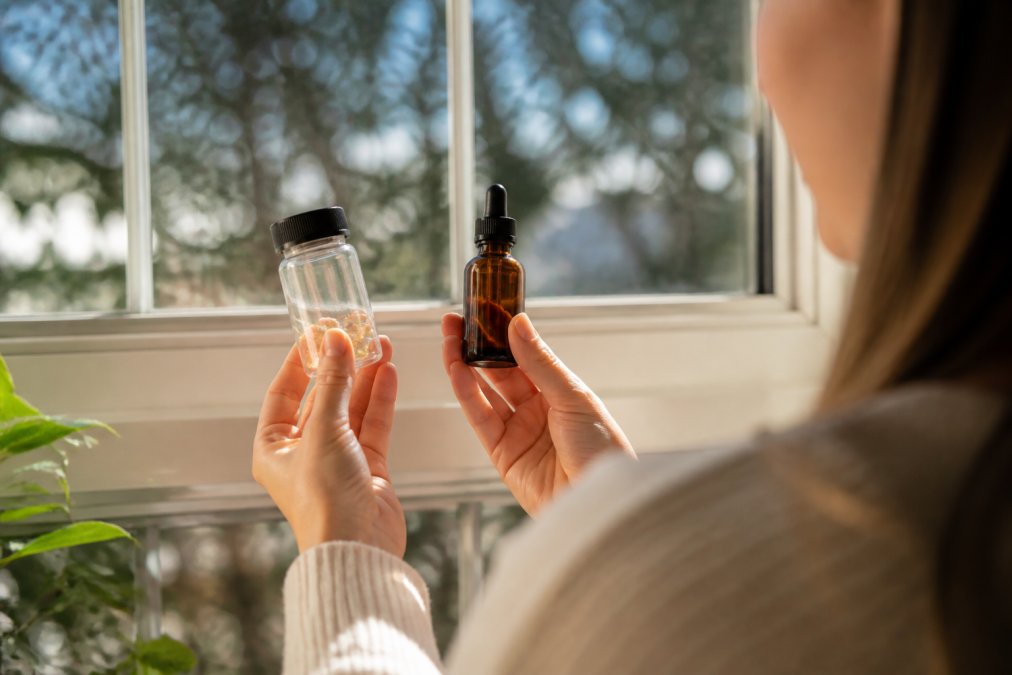
Liposomal technology addresses this inefficiency by protecting the cannabinoid from degradation and facilitating cellular uptake. The liposomes fuse with your cell membranes, allowing the CBD payload to enter cells directly. For anxiety management, this means faster onset of effects and potentially lower doses required to achieve therapeutic benefit.
At CBD Health Collection, we recognize that optimal bioavailability is central to whether any CBD product delivers measurable results. Understanding the difference between standard and liposomal delivery isn’t just marketing terminology, it’s the difference between a product that works and one that sits in your digestive tract largely unused.
Liposomal CBD typically shows onset of effects within 15-30 minutes when taken sublingually, compared to 30-90 minutes for standard oils. This faster timeline results from improved bioavailability and more efficient cellular absorption.
Liposomal CBD Bioavailability: Why Absorption Matters
Liposomal CBD bioavailability refers to the percentage of consumed CBD that actually reaches systemic circulation in active form and becomes available to your body’s tissues and nervous system. This metric is critical because it determines whether you’re paying for a product that works or one that passes through your system largely unused.
Standard CBD oils taken sublingually achieve roughly 6-15% bioavailability. Edibles perform worse at 5-10% due to stomach acid and hepatic first-pass metabolism. Inhalation methods reach 30-40% but carry other considerations. Liposomal formulations claim 40-90% bioavailability, though the actual range depends on formulation quality and individual factors.
For anxiety, this matters because anxiety disorders involve dysregulation of the endocannabinoid system, which modulates stress responses through CB1 and CB2 receptors in the brain and peripheral nervous system. CBD interacts with serotonin receptors, TRPV1 channels, and other neurochemical targets involved in anxiety regulation. These interactions only occur if CBD reaches your brain tissue in sufficient concentration. Poor bioavailability means subtherapeutic levels, explaining why some people report "it didn’t work for me."
The liposomal delivery advantage becomes clear when considering cost-per-milligram of absorbed CBD. If a standard oil requires 50mg to achieve the same therapeutic effect as 20mg of liposomal CBD, you’re actually paying more per unit of active ingredient, even if the liposomal product has a higher upfront price.
Individual absorption varies significantly based on genetics, gut health, liver function, and whether you take CBD with food. Some people with compromised intestinal permeability may see dramatic improvements with liposomal delivery. Others with strong digestive function may notice minimal difference.
Bioavailability is the hidden variable in CBD efficacy. Two products with identical CBD content can produce vastly different results depending on how much of that CBD your body actually absorbs and utilizes.
CBD Dosage for Anxiety: Finding Your Effective Dose
There is no universal "correct" dose of CBD for anxiety. Effective dosing depends on body weight, anxiety severity, individual endocannabinoid system sensitivity, the specific formulation, and previous CBD experience. Clinical literature suggests a range of 10-600mg daily, with most anxiety studies using doses between 25-75mg per day.
Many people start too low and conclude CBD doesn’t work when they haven’t reached their therapeutic window. Finding your effective dose requires dosage titration: start with 10-15mg daily for three to five days. If you notice no change in anxiety symptoms, increase by 10-15mg and maintain that dose for another three to five days. Continue until you find the minimum dose that produces noticeable anxiety relief. Most people find their therapeutic window between 25-75mg daily.
The advantage of liposomal CBD is that improved bioavailability means you may reach your therapeutic window at a lower total milligram dose, reducing overall cost and minimizing the risk of side effects during titration. If you typically need 60mg of standard CBD oil for anxiety relief, you might achieve the same effect with 25-30mg of liposomal CBD.
Timing matters as well. For generalized anxiety, taking CBD once or twice daily works for most people. For situational anxiety before public speaking or social events, taking a dose 30-60 minutes before the triggering event can be effective. The faster onset of liposomal CBD (15-30 minutes) makes it better suited for anticipatory dosing.
Keep a simple log during titration: date, dose, time taken, and subjective anxiety level on a scale of 1-10 before and after. After two to three weeks, you’ll have clear data showing which dose range produces the best anxiety reduction with minimal side effects.
Clinical Evidence: What Research Shows About Liposomal CBD for Anxiety
The research landscape on CBD for anxiety is growing, but direct evidence on liposomal CBD specifically for anxiety disorders remains limited. However, the underlying evidence supports CBD’s anxiolytic properties, and the pharmacokinetic advantages of liposomal delivery are well-documented in pharmaceutical research.
A 2019 public speaking test study found that a single 600mg dose of CBD reduced anxiety compared to placebo in healthy volunteers. This established that CBD has acute anxiolytic effects measurable in controlled settings, though the dose was notably high.
Research has examined CBD’s interaction with the endocannabinoid system and serotonin signaling pathways relevant to anxiety. CBD appears to enhance serotonin receptor signaling, the mechanism behind conventional SSRI antidepressants. It also modulates TRPV1 receptors involved in stress perception and activates adenosine receptors that promote relaxation. These mechanisms are consistent with anxiolytic effects, though clinical trial evidence remains modest compared to pharmaceutical treatments.

The gap between evidence and claims is important to acknowledge. Many CBD companies market their products for anxiety based on mechanistic plausibility and anecdotal reports rather than strong clinical trial data. The placebo effect is substantial in anxiety treatment, studies show placebo produces anxiety reduction in 30-50% of participants. Separating true CBD effects from placebo requires carefully controlled research, which remains limited.
Liposomal delivery specifically has not been extensively studied in human anxiety trials. The bioavailability advantages are theoretically sound and supported by pharmacokinetic research on other liposomal drugs, but direct human evidence comparing liposomal CBD to standard CBD for anxiety symptoms is sparse.
What we do know: CBD at doses of 25-75mg appears to have anxiolytic effects in some people. Liposomal delivery should improve absorption and potentially lower the effective dose required. But individual response varies considerably, and anxiety disorders are complex conditions that may require comprehensive treatment approaches beyond CBD alone.
Anecdotal reports of CBD effectiveness for anxiety are common, but anecdotal evidence differs from clinical evidence. Many people who report anxiety relief from CBD may also be experiencing placebo effects, lifestyle changes, or natural anxiety fluctuation. This doesn’t mean CBD is ineffective, it means individual results vary and shouldn’t be assumed guaranteed.
Cost-Per-Milligram Analysis: Is Liposomal CBD Worth the Price?
The question "is liposomal CBD worth it for anxiety" ultimately reduces to a cost-benefit calculation: does the improved bioavailability justify the higher price per unit?
Standard CBD oils typically cost $0.05-$0.15 per milligram. Liposomal CBD products typically cost $0.12-$0.25 per milligram, roughly double the price on a per-milligram basis.
However, the relevant comparison is price per milligram absorbed. If standard CBD achieves 10% bioavailability and liposomal CBD achieves 60% bioavailability, the effective cost comparison shifts dramatically.
Consider this scenario: you need 50mg of bioavailable CBD to manage your anxiety effectively.
- Standard CBD oil at 10% bioavailability: you need to consume 500mg to absorb 50mg. At $0.10/mg, that’s $50 per effective dose.
- Liposomal CBD at 60% bioavailability: you need to consume 83mg to absorb 50mg. At $0.20/mg, that’s $16.60 per effective dose.
In this model, liposomal CBD is three times more cost-effective, even at double the per-milligram price. The complication: bioavailability claims vary widely, and most liposomal CBD companies don’t provide independent verification. A product claiming 70% bioavailability without third-party pharmacokinetic testing should be treated skeptically.
A practical approach: if you’ve already established that standard CBD works for your anxiety at a certain dose, liposomal CBD may allow you to reduce that dose by 30-50% while maintaining the same effect. This cost reduction could justify the higher per-milligram price. The 30-day satisfaction guarantee offered by CBD Health Collection reduces the financial risk of testing whether liposomal delivery improves your results.
Safety Profile and Potential Side Effects
CBD is generally well-tolerated, with a favorable safety profile compared to pharmaceutical anxiety treatments. However, it’s not side-effect-free, and liposomal delivery may increase systemic CBD concentration, potentially amplifying side effects in sensitive individuals.
Common CBD side effects include dry mouth, drowsiness, reduced appetite, diarrhea, and fatigue. These are typically mild and dose-dependent. Dry mouth occurs because CBD reduces saliva production. Drowsiness can be beneficial for anxiety management but problematic if you need alertness.
More serious concerns are less common but documented. CBD can inhibit cytochrome P450 enzymes in the liver, which metabolizes many medications. If you take blood thinners, anti-seizure medications, antiarrhythmics, or other drugs metabolized by CYP3A4 or CYP2C19, CBD could increase drug concentrations and cause adverse interactions. This is sometimes called the "grapefruit effect."
Liposomal CBD may increase this interaction risk because improved bioavailability means higher systemic CBD concentrations. If you take any prescription medications, consulting with a healthcare provider before starting CBD is essential.
Pregnancy and breastfeeding: CBD’s effects on fetal development are not well-studied. Current guidance suggests avoiding CBD during pregnancy and breastfeeding until more research is available.
Psychiatric effects: some people report increased anxiety or mood changes with CBD, particularly at higher doses. If you have a history of psychotic disorders or bipolar disorder, CBD warrants caution and medical supervision.
If you take any prescription medications, especially blood thinners, anti-seizure drugs, or medications metabolized by liver enzymes, discuss CBD use with your doctor before starting. The improved bioavailability of liposomal CBD increases the risk of drug interactions compared to standard oils.
Conclusion: When Liposomal CBD Makes Sense for Anxiety
Is liposomal CBD worth it for anxiety? The answer depends on your specific situation, previous CBD experience, and anxiety severity.
Liposomal CBD makes sense if:
- You’ve tried standard CBD at reasonable doses (25-75mg) without adequate anxiety relief
- You have compromised gut health or absorption issues that might benefit from improved bioavailability
- Cost-effectiveness matters to you and you’re willing to invest in a potentially more efficient delivery system
- You need faster onset of effects (15-30 minutes vs. 30-90 minutes)
- You want to minimize total CBD consumption through improved absorption
Liposomal CBD may not be necessary if:
- Standard CBD already provides adequate anxiety relief at doses under 50mg daily
- You’re price-sensitive and can’t justify double the per-milligram cost
- You’re new to CBD and should start with more affordable options to assess individual response
- You take medications that interact with CBD, making any formulation risky without medical supervision
The evidence supports CBD’s anxiolytic potential, but clinical research on liposomal CBD specifically remains limited. What matters most is whether a product delivers measurable anxiety reduction for your individual neurochemistry and life circumstances.
CBD Health Collection offers a science-based approach to CBD wellness with organically grown, USA-sourced hemp, clean CO2 extraction, GMP- and FDA-registered facility production, and independent third-party lab testing for purity and potency. Their water-based CBD formulations prioritize optimal bioavailability, and their 30-day satisfaction guarantee lets you evaluate whether liposomal delivery improves your anxiety response without financial risk. Start with their product selector tool to find your best option in under a minute, then use a methodical dosage titration protocol to identify your therapeutic window. If liposomal technology aligns with your absorption profile and anxiety severity, the improved bioavailability may justify the investment.
Comparison Table: Liposomal vs. Standard CBD Delivery
| Factor | Standard CBD Oil | Liposomal CBD |
|---|---|---|
| Estimated Bioavailability | 6-15% | 40-90% (varies by product) |
| Onset Time | 30-90 minutes | 15-30 minutes |
| Cost Per Milligram | $0.05-$0.15 | $0.12-$0.25 |
| Cost Per Absorbed Milligram | $0.33-$1.67 | $0.13-$0.63 |
| Best For | Budget-conscious users, first-time CBD users | Experienced users, those needing faster effects |
| Taste | Often earthy, bitter | Varies by formulation |
| Shelf Stability | Good | Good (phospholipids are stable) |
Frequently Asked Questions
What is the difference between liposomal CBD and regular CBD?
Liposomal CBD uses lipid-based carriers (liposomes) to encapsulate cannabidiol, protecting it from stomach acid and liver metabolism. Regular CBD oils and tinctures dissolve directly in the digestive system, where much of the CBD breaks down before absorption. Liposomal delivery allows more CBD to reach your bloodstream intact, potentially increasing bioavailability and therapeutic effect for anxiety symptoms.
What is the best CBD dosage for anxiety?
Research suggests anxiety relief typically begins around 10-25 mg of CBD daily, though individual responses vary. Some people see benefits at 5 mg, while others need 50+ mg. Start low and increase gradually every 3-7 days until you notice symptom improvement. Keep detailed notes on your dosage and anxiety levels to identify your optimal dose. Always consult a healthcare provider before starting CBD, especially if you take anxiety medications.
Does liposomal CBD have higher bioavailability than oil tinctures?
Yes, liposomal delivery typically improves bioavailability compared to standard oil tinctures. Liposomes protect CBD from stomach acid and first-pass liver metabolism, allowing a higher percentage of the dose to enter your bloodstream. While exact bioavailability percentages vary by formulation, liposomal products generally deliver more active CBD per milligram than traditional oils, making them potentially more cost-effective despite higher upfront prices.
How long does liposomal CBD take to work for anxiety?
Liposomal CBD typically takes 15-45 minutes to show effects, faster than standard oils due to improved absorption. Some users report feeling calmer within 30 minutes, while others need 1-2 hours. Full therapeutic benefits for chronic anxiety often take 2-4 weeks of consistent daily use as CBD builds in your system. Individual metabolism, stomach contents, and anxiety severity all affect onset time.
This article was written using GrandRanker