Table of Contents
- Is CBD Oil Worth It for Daily Wellness: The Bottom Line
- What Is CBD Oil and How Does It Work in Your Body
- Real CBD Oil Benefits for Chronic Pain, Sleep, and Stress
- CBD Dosage for Wellness: Finding Your Effective Amount
- CBD Oil Side Effects and Safety Concerns You Should Know
- Best CBD Oil for Daily Use: What Quality Actually Looks Like
- Is CBD Oil Worth It: Cost, Results, and Your Wellness Goals
- Conclusion: Making Your Daily Wellness Decision
Is CBD Oil Worth It for Daily Wellness: A Science-Based Review
Last Updated: August 2, 2026
Is CBD Oil Worth It for Daily Wellness: The Bottom Line
The question of whether is cbd oil worth it for daily wellness has shifted from speculation to practical evaluation. What matters now is whether it delivers measurable results for your specific needs at a price that makes sense. This guide from CBD Health Collection breaks down the evidence, costs, and realistic outcomes so you can decide if CBD oil belongs in your daily routine.
CBD oil isn’t a cure-all and won’t work like prescription medication. But for chronic pain management, sleep support, and stress reduction, research and real-world feedback suggest it can be worth trying, especially with a quality product backed by transparent testing.
The real question isn’t whether CBD works. It’s whether it works for your situation, at a dosage that suits your body, from a brand that actually delivers what it promises.
CBD affects everyone differently. Expect a 30-day trial period to assess whether CBD oil is worth it for your specific wellness goals.
What Is CBD Oil and How Does It Work in Your Body
Cannabidiol (CBD) is a non-psychoactive compound extracted from hemp plants that interacts with your body’s endocannabinoid system, a network of receptors involved in regulating pain, mood, sleep, and immune function. Unlike THC, CBD doesn’t produce a "high" or intoxication.
The endocannabinoid system maintains homeostasis across multiple bodily systems. CBD influences serotonin receptors, vanilloid receptors, and other pathways that affect pain signaling and mood regulation. This indirect mechanism explains why CBD’s effects tend to be subtle compared to prescription medications, and why it has a favorable safety profile for daily use.
CBD oil comes in several forms with different bioavailability (how efficiently your body absorbs it). Sublingual drops allow some CBD to bypass first-pass metabolism and enter the bloodstream directly. Tinctures, gummies, and capsules are absorbed through the digestive system, taking longer but providing sustained effects. Topical formulations target localized inflammation without significant bloodstream entry.
CO2 extraction, used by CBD Health Collection and quality producers, preserves beneficial compounds while avoiding chemical residues. Third-party testing verifies that what’s on the label matches what’s in the bottle.
Real CBD Oil Benefits for Chronic Pain, Sleep, and Stress
Research supports CBD’s use for three primary wellness areas: chronic pain management, sleep quality, and anxiety reduction.
For chronic pain, CBD reduces inflammation and modulates pain perception without opioid or NSAID side effects. People using CBD for arthritis, neuropathy, and post-injury pain report meaningful relief, particularly with topical applications. Results vary; some notice improvement within days, others need weeks of consistent use.
Sleep support is well-documented. CBD promotes relaxation by reducing anxiety and regulating sleep-wake cycles through serotonin and melatonin pathways. Users report falling asleep more easily and experiencing deeper sleep. For insomnia related to chronic pain or stress, CBD offers a non-habit-forming alternative to prescription sleep aids. Taking CBD in the evening works better than morning doses for sleep support.
Anxiety reduction is perhaps the most researched benefit. CBD reduces self-reported anxiety in both acute situations and chronic conditions. Effects develop gradually with daily use, typically becoming noticeable within one to two weeks. This makes CBD worth trying if you’re seeking a well-tolerated alternative to benzodiazepines or SSRIs, though it shouldn’t replace professional treatment for severe anxiety disorders.
The strongest evidence supports CBD for pain, sleep, and anxiety, three interconnected wellness challenges that often improve together with consistent dosing.
CBD Dosage for Wellness: Finding Your Effective Amount
Finding your optimal CBD dosage requires understanding that there’s no universal "correct" dose. Individual response depends on body weight, metabolism, the specific condition, and product bioavailability. Most people find their effective range through systematic trial.
Start with 5 to 10 milligrams per day and increase gradually every three to five days while monitoring your response. Many find their sweet spot between 15 and 30 milligrams daily for general wellness. Those addressing chronic pain or severe anxiety may need 40 to 100 milligrams or more. Consistency matters: daily use builds effectiveness better than occasional doses.
Timing affects results. For sleep support, take CBD 30 to 60 minutes before bed. For anxiety management, morning or midday dosing works better. For pain relief, some benefit from divided doses rather than one large dose. Topical CBD should be applied directly to affected areas and can be used multiple times daily.
The relationship between dose and effect isn’t always linear. Some experience a "sweet spot" where 20 milligrams works better than 40. Keep a simple log: date, dose, time, and how you felt. After 30 days, you’ll have clear data on what works for your body.
| Wellness Goal | Starting Dose | Typical Range | Timeline to Results |
|---|---|---|---|
| General wellness | 5-10 mg daily | 10-20 mg daily | 1-2 weeks |
| Sleep support | 15-25 mg evening | 20-40 mg evening | 3-7 days |
| Anxiety reduction | 10-15 mg daily | 15-30 mg daily | 1-3 weeks |
| Chronic pain | 20-30 mg daily | 30-100 mg daily | 2-4 weeks |
Quality products make dosing easier. CBD Health Collection’s formulations are clearly labeled with milligram amounts per serving, eliminating guesswork. Third-party testing confirms that labeled dosages match actual content.
CBD Oil Side Effects and Safety Concerns You Should Know
CBD is generally well-tolerated, but it’s not side-effect-free. The most commonly reported side effects are mild: dry mouth, drowsiness, fatigue, and appetite changes. These typically appear only at higher doses or during the first week as your body adjusts.
Dry mouth is easily managed by drinking more water or using sugar-free lozenges. Drowsiness and fatigue are dose-dependent; if they occur, reduce your dose or shift timing to evening. Some experience appetite suppression, others increased appetite. These effects usually diminish within a week.
More serious concerns emerge primarily with drug interactions. CBD inhibits cytochrome P450 enzymes in the liver, which metabolize many medications. If you take blood thinners, heart medications, seizure medications, or immunosuppressants, CBD may increase those drugs’ concentration in your bloodstream. This requires medical supervision. Always inform your healthcare provider if you’re using CBD, particularly if you’re on prescription medications.
Pregnant and breastfeeding individuals should avoid CBD until more research clarifies safety. The same caution applies to children, though some pediatric epilepsy cases have used CBD under medical supervision with positive results.
Quality control directly impacts safety. Low-quality CBD products may contain heavy metals, pesticides, or mold if sourced from contaminated hemp or processed without proper standards. Third-party testing verifies that products are free from contaminants and that potency claims are accurate.
Never stop prescription medications to try CBD without consulting your doctor. CBD is a complement to conventional treatment, not a replacement. Abruptly stopping medications can be dangerous.
Best CBD Oil for Daily Use: What Quality Actually Looks Like
Choosing quality CBD oil means evaluating five critical factors: hemp sourcing, extraction method, third-party testing, bioavailability optimization, and brand transparency.
Hemp sourcing matters. USA-grown hemp is subject to stricter agricultural standards than imported hemp. Organically grown hemp avoids pesticide residues. CBD Health Collection sources organically grown, USA-sourced hemp, significantly reducing contamination risk compared to products using imported or conventionally grown hemp.
Extraction method determines purity. CO2 extraction uses pressurized carbon dioxide to separate CBD from plant material, leaving no chemical residues. This is the gold standard for quality. Solvent-based extraction is cheaper but risks leaving solvent traces. Avoid products with vague ingredient lists.
Bioavailability optimization separates premium from average. Standard CBD oil has roughly 6% bioavailability when taken orally. Water-based or nano-emulsified CBD dramatically improves absorption, sometimes reaching 20-30% bioavailability. This means you need smaller doses to achieve results, making premium products more cost-effective despite higher upfront prices. CBD Health Collection’s water-based formulation represents this advancement.
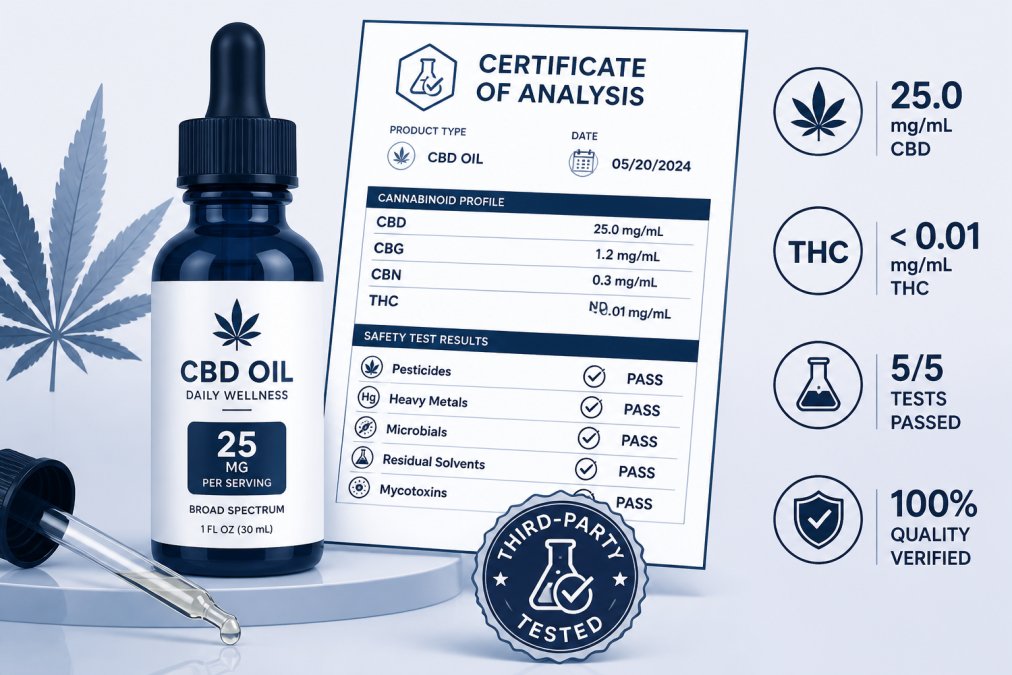
Third-Party Testing and Certificate of Analysis
A certificate of analysis (COA) is your proof that a product contains what it claims. Independent labs test CBD products for:
- Potency verification: Does the product contain the labeled milligrams of CBD?
- Contaminant screening: Are heavy metals, pesticides, mold, or microbial pathogens present?
- Cannabinoid profile: What other cannabinoids (THC, CBG, CBN) are present?
- Terpene content: Does it contain beneficial plant compounds beyond CBD?
Quality brands publish COAs on their websites or provide them upon request. If a company won’t share testing results, that’s a red flag. CBD Health Collection makes COAs readily available. Look for testing by accredited labs; ISO 17025 certification indicates rigorous standards.
Bioavailability and Extraction Methods
Standard CBD oil has low bioavailability because CBD is fat-soluble and poorly absorbed through the digestive tract. A 30 mg dose might deliver only 2 mg of usable CBD. Water-based formulations use nano-emulsification to break CBD into microscopic particles, allowing better absorption.
The practical benefit: water-based CBD works faster (30-60 minutes versus 90-120 minutes) and at lower doses. A 10 mg dose of optimized CBD may deliver more usable cannabinoids than a 30 mg dose of standard oil. This directly impacts whether CBD is worth it, since bioavailability determines whether you’re getting results.
Full-spectrum CBD oil contains all cannabinoids and terpenes from hemp, offering "entourage effect" benefits. Broad-spectrum removes THC while preserving other compounds. CBD isolate contains only pure cannabidiol. For daily wellness, broad-spectrum offers therapeutic benefits without any THC.
Is CBD Oil Worth It: Cost, Results, and Your Wellness Goals
Whether is cbd oil worth it for daily wellness depends on your specific situation, expected outcomes, and budget.
For chronic pain management, CBD becomes worth it when it reduces reliance on NSAIDs or opioids. Ibuprofen and naproxen carry cardiovascular and gastrointestinal risks with long-term use. Opioids create dependency and serious side effects. If CBD provides meaningful pain relief without these risks, the cost is justified. Many find that combining CBD with physical therapy amplifies results.
For sleep support, compare CBD to prescription sleep aids. Benzodiazepines and Z-drugs carry addiction risks and next-day impairment. CBD produces no dependency and minimal side effects. If it helps you sleep without these drawbacks, it’s worth trying for 30 days.
For anxiety and stress, therapy and lifestyle changes should be your foundation. CBD works best as a complement, not a replacement. If you’re already doing the work and still struggling, CBD’s cost is reasonable compared to prescription SSRIs.
The real cost isn’t just the price per bottle, it’s finding the right dose and product. Premium brands like CBD Health Collection cost more upfront but deliver consistent quality, accurate dosing, and better bioavailability. This means you reach your effective dose faster and waste less money. A 30-day satisfaction guarantee eliminates financial risk while you assess whether CBD is worth it for your needs.
Track your results for 30 days before deciding whether CBD is worth continuing. Document sleep quality, pain levels, anxiety symptoms, or whatever you’re addressing. Data beats intuition when deciding whether to keep using CBD.
Conclusion: Making Your Daily Wellness Decision
The real question isn’t whether CBD oil works in general; evidence supports its use for pain, sleep, and anxiety. The question is whether it works for you, at a dose and price that fit your life, from a brand you can trust.
If you’re struggling with chronic pain, poor sleep, or stress and haven’t found relief through other approaches, CBD oil is worth a 30-day trial. Choose a brand that prioritizes quality through organically grown hemp, clean CO2 extraction, water-based bioavailability optimization, and transparent third-party testing. CBD Health Collection delivers all these elements, with a 30-day satisfaction guarantee and free shipping. Start low, track your response, and let data guide your decision.
According to the National Institutes of Health research on cannabinoid pharmacology, CBD’s mechanism in the endocannabinoid system supports its therapeutic applications for pain and anxiety management. The American Academy of Pain Management’s position on non-opioid pain management increasingly recognizes CBD as a legitimate option for chronic pain patients seeking alternatives to prescription medications. For those evaluating whether CBD oil is worth it for daily wellness, Mayo Clinic’s overview of CBD safety and efficacy provides evidence-based guidance on realistic expectations and appropriate medical supervision.
Frequently Asked Questions
What are the benefits of taking CBD oil daily for wellness?
Daily CBD oil users report potential benefits including reduced chronic pain, improved sleep quality, decreased anxiety, and better stress management. The endocannabinoid system regulates homeostasis, and CBD may support this natural balance. However, individual results vary significantly. Clinical trials show some evidence for anxiety reduction and pain management, though more research is ongoing. Start with a low dose and track your personal response over 2-4 weeks to determine if CBD oil benefits your specific wellness goals.
How do I know if a CBD oil product is actually high quality and worth the price?
Look for third-party lab testing with a certificate of analysis (COA) showing cannabidiol content, absence of contaminants, and heavy metal testing. Quality indicators include CO2 extraction (not solvent-based), organically grown hemp sourced in the USA, GMP-certified manufacturing, and water-based formulations for better bioavailability. Avoid brands making absolute cure claims. Transparent companies publish their COAs on their website and offer satisfaction guarantees. Higher prices often reflect rigorous testing and clean processing, not just marketing.
Is it safe to take CBD oil every day, and what side effects should I expect?
CBD is generally well-tolerated for daily use, with most people experiencing minimal side effects. Common mild effects include dry mouth, drowsiness, and fatigue. CBD may interact with certain medications by affecting how your liver processes them, so consult your doctor if you take prescription drugs. Daily regimens are safe for most adults, but pregnant or nursing individuals should avoid CBD. Start with a low dose and monitor your response. If you experience unexpected symptoms, reduce your dose or discontinue and speak with a healthcare provider.
How long does it take for CBD oil to actually work for daily wellness?
Some people report effects within 15-30 minutes of taking CBD oil, while others notice changes after several days or weeks of consistent daily use. Short-term effects like relaxation may appear quickly, but long-term benefits for chronic pain or sleep often require 2-4 weeks of regular dosing as CBD accumulates in your system. Individual bioavailability varies based on extraction method, formulation type, and your metabolism. Track your self-reported functioning in a wellness journal to identify patterns. If no improvement occurs after 30 days, your dose may need adjustment or CBD may not be the right fit for your needs.
What makes CBD Health Collection different from other CBD brands I see online?
CBD Health Collection brings pharmaceutical-industry expertise to product development and maintains rigorous quality standards: organically grown USA-sourced hemp, clean CO2 extraction, GMP and FDA-registered facility production, and independent third-party lab testing. The company offers water-based CBD formulations optimized for bioavailability, a 30-day satisfaction guarantee, and free shipping nationwide. Founded by a pharmaceutical veteran, the brand prioritizes transparent COAs, consumer education, and science-based product development rather than marketing hype. Their diverse product line addresses specific wellness needs including pain relief, sleep support, stress management, and pet wellness.
This article was written using GrandRanker