
Table of Contents
- How CBD Works for Canine Anxiety
- Signs of Thunderstorm Phobia in Dogs
- Is CBD Safe for Dogs During Storms
- CBD Dosage for Dog Anxiety: Guidelines and Timing
- How to Administer CBD Oil to Dogs
- THC-Free vs. Full-Spectrum CBD for Storm Anxiety
- Choosing Quality: Certificate of Analysis and Purity Standards
- Combining CBD with Behavioral Modification Strategies
Last Updated: August 12, 2026
How CBD Works for Canine Anxiety
Cannabidiol (CBD) interacts with your dog’s endocannabinoid system, a network of receptors throughout their body that regulates stress response, mood, and nervous system function. When CBD binds to these receptors, it may help modulate how your dog’s brain processes anxiety triggers, particularly the intense fear responses that thunderstorms provoke.
During a storm, your dog’s body floods with adrenaline and cortisol as part of a fight-or-flight response. CBD doesn’t sedate your dog into unconsciousness. Instead, it works to calm the underlying anxiety response, allowing your dog to remain alert but less reactive to the noise and atmospheric changes that trigger panic. Research shows anxiolytic effects appear within 30 minutes to 2 hours of administration, depending on product type and your dog’s metabolism. Many pet owners report their dogs still react to storms but with noticeably less panic, they may still seek a safe space, but they’re not pacing frantically or showing signs of extreme distress.
Signs of Thunderstorm Phobia in Dogs
Thunderstorm phobia in dogs manifests through recognizable behavioral and physical signs that go beyond normal caution during bad weather. Common indicators include pacing, whining, trembling, hiding in closets or under furniture, destructive behavior, excessive drooling, rapid panting, and refusal to eat. Physical signs also include dilated pupils, raised hackles, tucked tail, muscle tension, accelerated heart rate, and stress incontinence.
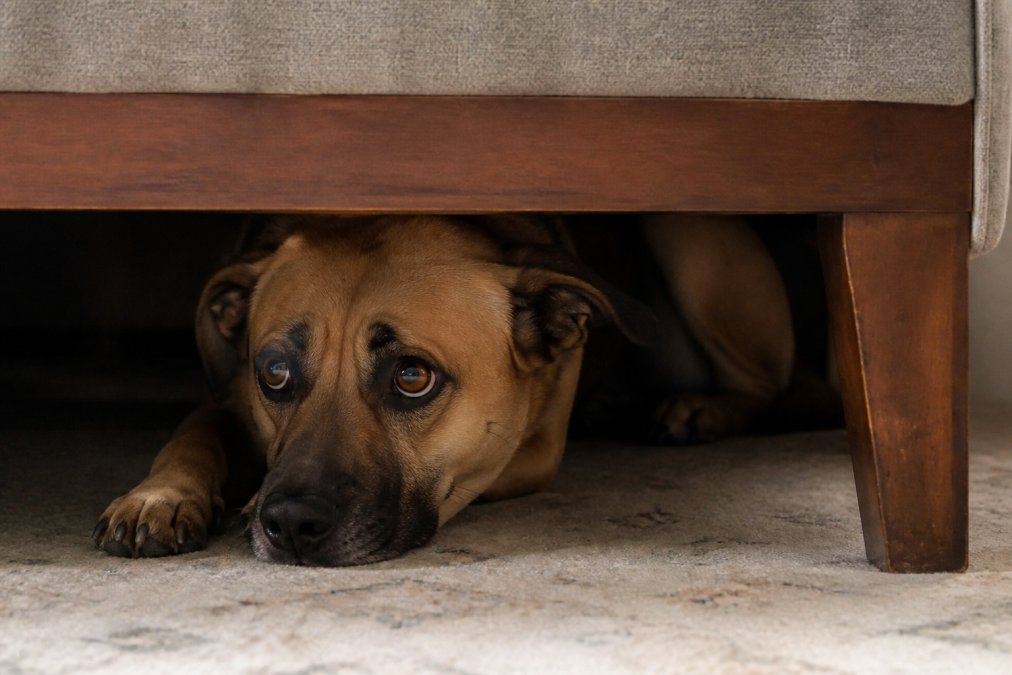
The distinction between normal storm caution and true thunderstorm phobia matters because it determines your approach. A dog showing mild concern may benefit from behavioral modification and environmental management alone. A dog showing severe panic, destructive behavior, or refusing to eat requires more intervention, this is where CBD becomes a practical consideration. Documenting your dog’s anxiety helps when discussing options with your veterinarian. Note when the anxiety begins, how long it lasts, and whether it’s worsening over time.
Is CBD Safe for Dogs During Storms
CBD is generally recognized as safe for dogs when sourced from reputable manufacturers and administered at appropriate dosages. The non-psychoactive nature of CBD means it won’t intoxicate your dog or create the high associated with THC. The most common side effects are mild and temporary: dry mouth, slight drowsiness, or mild digestive changes.
Safety Considerations and Potential Side Effects
The safety profile of CBD depends heavily on product quality and dosing accuracy. Low-quality products may contain contaminants, inconsistent CBD concentrations, or trace amounts of THC that accumulate with regular use. Third-party lab testing and a Certificate of Analysis (COA) verify what’s actually in the product.
Potential side effects include lethargy, appetite changes, and gastrointestinal upset. These effects are typically mild and dose-dependent. If your dog shows persistent vomiting, severe diarrhea, or unusual behavior changes, discontinue use and contact your veterinarian. CBD is processed through the liver, so dogs with existing liver disease or those taking medications metabolized by the liver require veterinary oversight.
If your dog has a history of liver disease, kidney problems, or is taking medications for seizure control, do not administer CBD without veterinary approval. Drug interactions are possible, and your vet needs to evaluate the risk-benefit profile for your individual dog.
Drug Interactions and Veterinary Approval
CBD inhibits cytochrome P450 enzymes in the liver, the same enzymes that metabolize many common medications. If your dog takes medications for seizures, pain management, anxiety, or other conditions, CBD could increase those medication levels in your dog’s bloodstream, potentially causing toxicity. Common medications that may interact with CBD include phenobarbital (seizure control), NSAIDs like carprofen, and benzodiazepines.
If your dog is on any prescription medication, veterinary approval is essential. Your vet can assess whether the interaction risk is manageable, adjust medication timing, or recommend against CBD if the risk is too high. Some veterinarians are knowledgeable about CBD and comfortable recommending it; others lack training and default to caution. If your vet is unfamiliar with CBD, ask specifically about drug interactions relevant to your dog’s medications.
The FDA has not approved CBD for veterinary use, which means manufacturers cannot make medical claims and your vet cannot prescribe it as a medication. However, many veterinarians recommend CBD based on clinical experience and emerging research.
CBD Dosage for Dog Anxiety: Guidelines and Timing
Proper dosing is where most pet owners struggle because there’s no universal standard established by regulatory bodies. Dosing depends on your dog’s weight, the specific product’s concentration, your dog’s individual metabolism, and the severity of anxiety you’re treating.
Weight-Based Dosing and Proactive Administration
A practical starting point is 0.25 to 0.5 mg of CBD per pound of body weight, given once or twice daily depending on your dog’s needs. For a 50-pound dog, this means 12.5 to 25 mg per dose. For a 75-pound dog, 18.75 to 37.5 mg per dose. Your dog may need adjustment up or down based on response.
Proactive dosing means giving CBD before your dog shows signs of anxiety, ideally 30 minutes to 2 hours before the predicted storm arrives. Weather apps and barometric pressure changes can help you time proactive dosing. If a storm is forecast for evening, administer CBD in the afternoon. Some pet owners use a consistent daily dose during storm season rather than dosing only when storms occur. Others prefer occasional dosing only when storms are predicted.
Keep a dosing log for the first 2-3 weeks: note the dose given, the time, your dog’s behavior during the storm, and any side effects observed. This data helps you identify the optimal dose for your individual dog.
Start with the lower end of the dosing range (0.25 mg per pound) and observe your dog’s response over 3-5 storms before increasing. Many dogs respond well to lower doses, and starting conservatively helps you identify the minimum effective dose for your dog.
How to Administer CBD Oil to Dogs
The method of administration affects how quickly CBD takes effect and how much your dog actually absorbs. Different product types have different bioavailability profiles.
Product Types: Oils, Soft Chews, and Tinctures
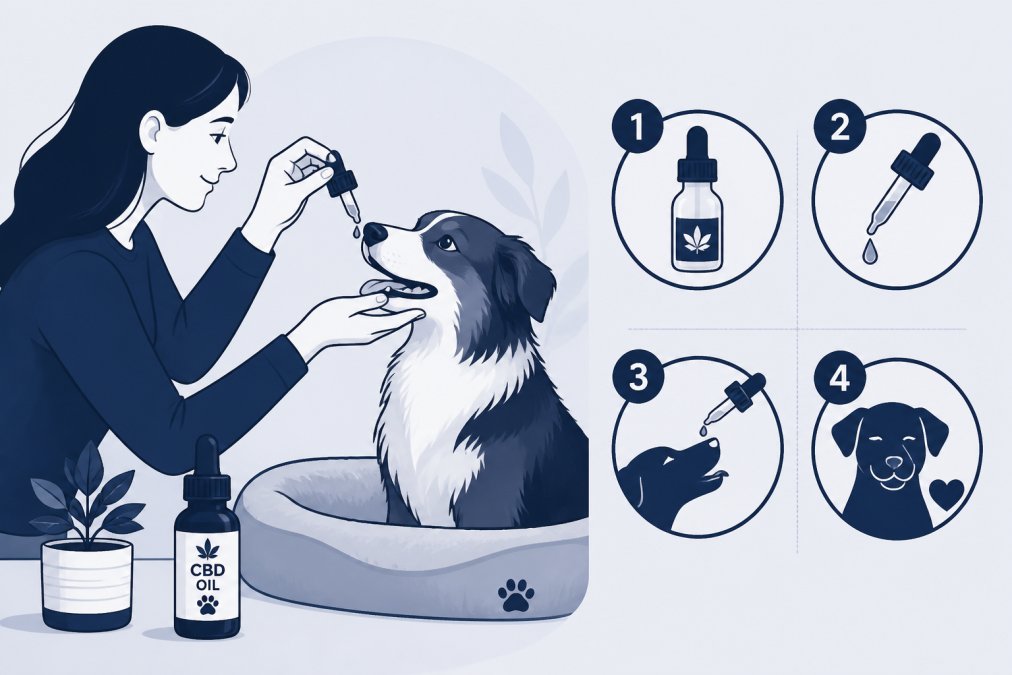
CBD oils are liquid products designed for direct administration or mixing into food. You can place the oil directly in your dog’s mouth using the dropper, mix it into wet food like canned pumpkin or yogurt, or drizzle it over their regular meal. Oils typically have faster onset (15-30 minutes) because they’re absorbed through mucous membranes in the mouth and digestive tract.
Soft chews are the most convenient option for most pet owners. They’re pre-dosed, taste like treats, and eliminate measurement guessing. Dogs typically accept them readily. The trade-off is slightly slower onset (30-60 minutes) compared to oils. Tinctures are concentrated liquid extracts, typically more potent than oils, making them useful for larger dogs where oil volumes would be impractical.
For storm anxiety specifically, soft chews offer a balance of convenience and reliability. Whatever method you choose, use the same approach each time so your dog’s body develops a predictable response pattern.
THC-Free vs. Full-Spectrum CBD for Storm Anxiety
THC-free CBD products contain only cannabidiol with all THC removed through additional processing steps. These products are the safest choice for dogs because they eliminate any risk of THC toxicity, which can cause serious adverse effects in canines including tremors, disorientation, and in severe cases, seizures. THC-free products are also the only legal choice in all 50 states.
Full-spectrum CBD products contain all cannabinoids naturally present in the hemp plant, including trace amounts of THC (typically less than 0.3% by federal law). Proponents argue that full-spectrum products are more effective because of the "entourage effect," the theory that cannabinoids work synergistically. However, this theory hasn’t been definitively proven in dogs, and the presence of THC introduces unnecessary risk.
For dogs with storm anxiety, THC-free is the recommended choice. When shopping for products, look for labels that explicitly state "THC-free" or "broad-spectrum" and confirm it through the Certificate of Analysis.
Choosing Quality: Certificate of Analysis and Purity Standards
The CBD market for pets is largely unregulated, which means quality varies dramatically between manufacturers. A Certificate of Analysis (COA) is your primary tool for evaluating product quality and verifying that what’s on the label matches what’s actually in the bottle.
A legitimate COA should show:
- Total CBD content (milligrams per serving or bottle)
- THC content (should be 0% or non-detectable for THC-free products)
- Heavy metals testing (lead, cadmium, mercury should be non-detectable or below safe thresholds)
- Pesticide screening (should show no detectable pesticides)
- Microbial testing (should show no harmful bacteria or mold)
- The testing laboratory’s name and accreditation status
The testing lab matters. Third-party labs with ISO 17025 accreditation are more reliable than in-house testing. Red flags include products without a publicly available COA, COAs that only show CBD content without heavy metals or pesticide testing, or labs you can’t verify.
CBD Health Collection products are independently third-party lab tested and derived from organically grown, USA-sourced hemp extracted using a clean CO2 process in a GMP- and FDA-registered facility. This means you can verify purity and potency through their COA before purchasing. Products formulated with water-based CBD have better absorption than traditional oil-based formulations, meaning your dog’s body utilizes more of the CBD you’re paying for.
Combining CBD with Behavioral Modification Strategies
CBD is most effective when paired with behavioral modification. It reduces the emotional intensity of anxiety, but it doesn’t teach your dog new coping responses. The combination addresses both the immediate symptom and the underlying anxiety pattern.
Desensitization involves gradually exposing your dog to storm sounds at low volumes while they’re in a calm state, slowly increasing volume over weeks. Creating a safe space gives your dog a designated area where they feel protected, such as a bathroom with no windows or a crate covered with blankets to muffle sound. Counterconditioning pairs storm sounds with positive experiences like treats or play sessions.
CBD enhances all these approaches by reducing anxiety enough that your dog can actually learn. A dog in full panic mode can’t process new associations. A dog whose anxiety is moderated by CBD can engage with desensitization exercises and form new associations. Desensitization typically takes 4-8 weeks of consistent practice. During this learning period, CBD serves as a bridge, reducing panic so your dog can participate in training and preventing traumatic storm experiences that reinforce the phobia.
| Strategy | Timeline | Best For | Effectiveness |
|---|---|---|---|
| CBD alone (without behavioral work) | Immediate relief per dose | Acute storm management | Symptom management only |
| Desensitization + CBD | 4-8 weeks of practice | Long-term anxiety reduction | Lasting improvement |
| Safe space creation + CBD | Immediate setup, ongoing use | Reducing panic during storms | Effective for anxious dogs |
| Counterconditioning + CBD | 6-12 weeks of practice | Changing emotional response | Strong long-term results |
The most effective approach combines CBD for immediate anxiety reduction with [behavioral modification strategies](/how-to-calm-dog-during-fireworks/) that teach your dog new coping responses. CBD alone provides temporary relief during storms, but behavioral work creates lasting change that may eventually reduce or eliminate the need for CBD.
Pet owners dealing with canine storm anxiety face a genuine challenge. CBD offers a practical tool for reducing the intensity of panic, but it’s not a standalone solution. When combined with environmental management and behavioral modification, CBD becomes part of a comprehensive approach that addresses both immediate panic and long-term anxiety patterns.
CBD Health Collection offers pet wellness products specifically formulated for anxious dogs, derived from organically grown hemp and independently verified for purity and potency. Their products come with a 30-day satisfaction guarantee and free shipping, making it easy to try an approach that many pet owners report helps their dogs weather storms with noticeably less distress.
Frequently Asked Questions
Is CBD oil safe for dogs with thunderstorm anxiety?
CBD is generally considered safe for dogs when sourced from reputable manufacturers and dosed appropriately. However, safety depends on product quality, proper dosing, and your dog's individual health status. Always consult your veterinarian before starting CBD, especially if your dog takes other medications. Look for products with a Certificate of Analysis (COA) from an independent lab confirming the absence of heavy metals, pesticides, and contaminants. THC-free formulations are essential for pet safety.
How much CBD should I give my dog for anxiety?
CBD dosage for dog anxiety typically ranges from 1-5 mg per pound of body weight, though individual needs vary. For a 50-pound dog, this means 50-250 mg daily, divided into doses. Start with the lowest recommended dose and gradually increase while monitoring your dog's response. Administer CBD 30-60 minutes before anticipated storms for proactive dosing, or as needed during acute anxiety. Work with your veterinarian to determine the optimal dosage for your dog's weight and anxiety severity.
What are the side effects of CBD for dogs?
Most dogs tolerate CBD well, but potential side effects include drowsiness, dry mouth, and mild gastrointestinal upset. In rare cases, dogs may experience sedation or changes in appetite. These effects are typically mild and temporary. More concerning is the risk of drug interactions if your dog takes medications metabolized by the liver's cytochrome P450 enzymes. Always inform your veterinarian about any medications your dog is taking before introducing CBD to avoid unwanted interactions.
How long does it take for CBD to calm a dog during a storm?
CBD typically begins working within 30-60 minutes when administered orally, though bioavailability varies depending on whether the dog has eaten recently and the product's formulation. For storm preparation, give CBD proactively 30-60 minutes before weather arrives rather than waiting until anxiety peaks. Some dogs show calming effects within 15-20 minutes, while others may take up to 90 minutes. Consistent use over several days often produces better results than single doses, as CBD builds in the system.
This article was written using GrandRanker