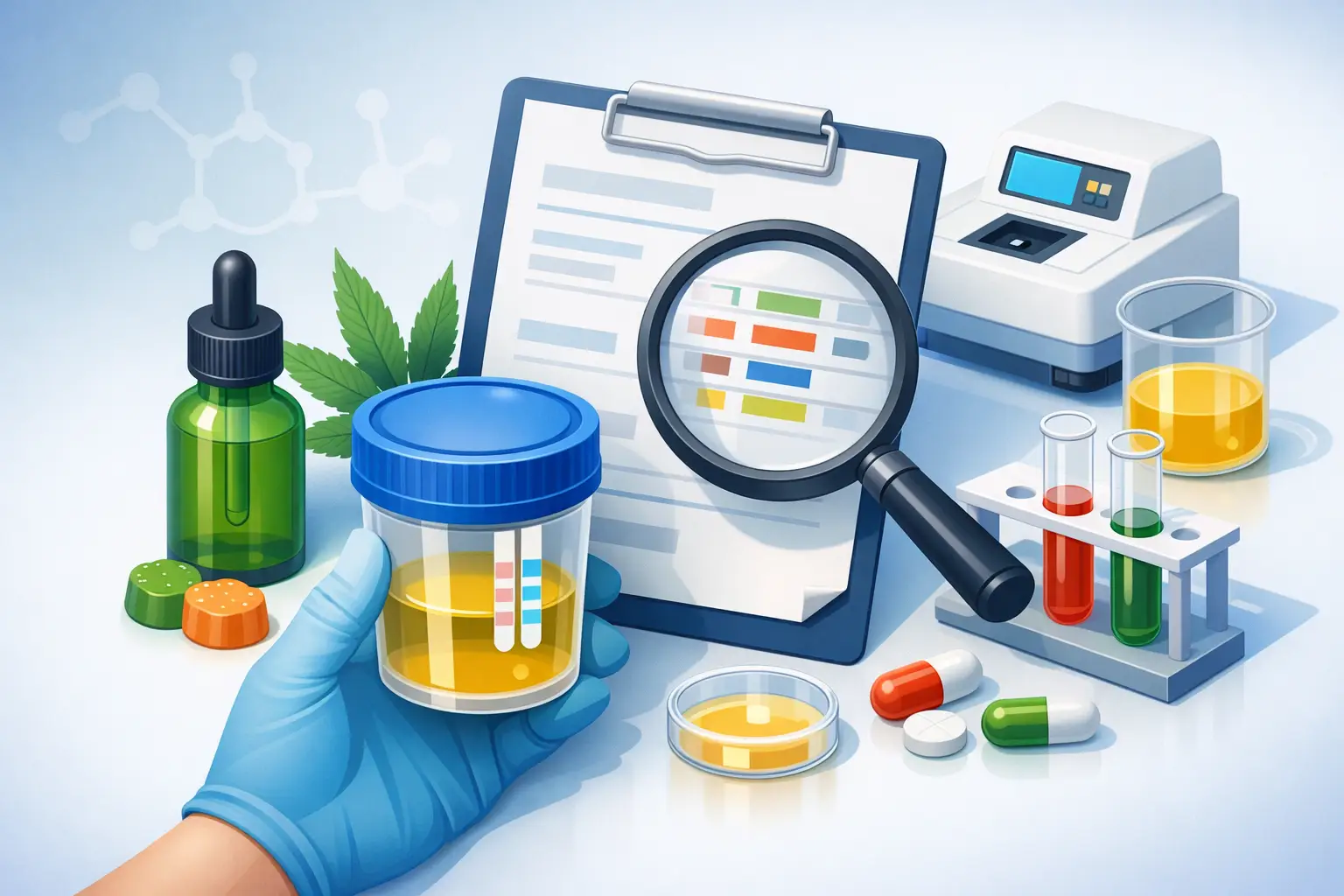
A new job, a workplace policy, or a routine medical appointment can make one question feel urgent: will CBD affect a drug test? CBD drug screening is often misunderstood because CBD and THC come from the same plant, but they are not the same compound and are not treated the same way by standard testing programs.
For most consumers, the key point is straightforward: standard drug screens typically look for THC or its metabolites, not CBD. However, a positive result can still be possible if a CBD product contains THC – even in small amounts. Product type, testing quality, personal use patterns, and an employer’s policies all matter.
What CBD Drug Screening Usually Looks For
Most workplace drug tests use urine samples and screen for THC metabolites, especially THC-COOH. These are compounds the body produces after processing THC. Standard panels may also test for substances such as opioids, amphetamines, cocaine, and PCP, depending on the program.
CBD is chemically distinct from THC and is not generally included in routine drug-testing panels. Using a genuinely THC-free CBD product should not, by itself, create the THC metabolite that a typical test is designed to detect.
The concern is not that CBD converts into THC in the body. It does not. The concern is whether the product taken actually contains THC, whether it is clearly disclosed or not. CBD products vary widely in quality, and a label alone cannot confirm what is in a bottle, gummy, oil, or topical.
Why CBD Products Can Create a THC Risk
The phrase “CBD product” covers several formulations with very different THC profiles. Understanding the distinction helps you make a more informed choice when drug testing is a concern.
Full-spectrum CBD contains a range of hemp compounds, including THC. Under federal hemp rules, qualifying hemp products may contain no more than 0.3% delta-9 THC by dry weight. That is a legal threshold, not a guarantee that the product is appropriate for someone subject to drug testing. Repeated use of a full-spectrum product can increase the chance of consuming enough THC to trigger a positive result.
Broad-spectrum CBD is typically made to include multiple hemp-derived compounds while removing THC. This may be a better fit for people avoiding THC, but the term alone is not enough. Manufacturing controls and batch-specific testing still matter.
CBD isolate contains CBD without the broader mix of hemp compounds. It can be an option for consumers who want the simplest cannabinoid profile. Yet even isolate products should be verified through independent laboratory testing, since product quality and labeling are not equal across the market.
A product marketed as THC-free should have no detectable THC at the laboratory’s stated detection limit. That claim is especially meaningful when it is supported by a current certificate of analysis for the exact batch being sold. No product choice can promise a specific employment or testing outcome, but transparent testing is a practical way to reduce unnecessary uncertainty.
How to Read a CBD Lab Report
A certificate of analysis, often called a COA, is a laboratory report that identifies what was found in a product sample. It is one of the most useful tools available to a CBD customer, particularly when THC exposure is a concern.
First, make sure the report is batch-specific. The lot or batch number on the product should match the number shown on the report. A generic report from years ago, or one that cannot be connected to the item in your hands, provides limited reassurance.
Next, check the cannabinoid section. Look for delta-9 THC and, when reported, total THC. For a THC-free product, the result should show “ND,” meaning not detected, or a reported amount of zero within the lab’s testing limits. The report should also identify the laboratory and provide a test date.
It is also wise to review safety testing. A quality report may include screens for pesticides, heavy metals, residual solvents, microbial contaminants, and mycotoxins. These tests address broader product purity, not just drug-screening concerns.
Independent testing does not make a product risk-free in every circumstance. It does give you meaningful evidence that the brand is verifying its claims rather than asking you to take them on faith.
Factors That Can Affect the Outcome
Drug testing is not one-size-fits-all. The type of test, the THC content of the product, frequency of use, and the sensitivity of the testing process can all influence what happens next.
Urine testing is common for employment screening and generally detects prior THC exposure through metabolites. Blood and saliva tests are used in some settings and tend to focus on more recent exposure. Hair testing may reflect a longer history of use, although testing practices and interpretation differ by organization.
If an initial screening result is positive, many programs use a more specific confirmation method, such as mass spectrometry, before reporting a final result. Initial screening methods can occasionally produce presumptive positives, which is one reason confirmation is valuable. Still, policies vary. If you are subject to a workplace, licensing, court, athletic, military, or medical testing program, review its rules before using any hemp-derived product.
Topical CBD products may feel like the lower-concern choice because they are applied to the skin rather than swallowed. In general, topical use is less likely to create meaningful systemic THC exposure than ingesting a product that contains THC. But “less likely” is not the same as guaranteed. Product formulation, THC content, frequency of application, and the testing program all remain relevant.
Choosing CBD When Testing Matters
If avoiding THC is a priority, choose products with clear THC-free positioning backed by third-party, batch-specific lab results. Avoid assuming that hemp-derived automatically means drug-test safe. Hemp can legally contain THC, and full-spectrum products are not the best match for people who need to avoid THC exposure.
Purchase from brands that clearly explain their sourcing, extraction, ingredients, and testing standards. Clean cultivation, careful processing, and transparent COAs help create a more reliable product experience. At CBD Health Collection, THC-free products are paired with independent lab testing so customers can make decisions with clearer information.
Be cautious with vague claims, missing test reports, unusually low prices, or products that do not identify whether they are full-spectrum, broad-spectrum, or isolate-based. It is also sensible to avoid combining several hemp products without checking each label. A THC-free oil does not offset the THC exposure from a full-spectrum gummy, vape, or tincture.
When to Ask for Professional Guidance
CBD can be a useful part of an everyday wellness routine, but testing requirements deserve individual attention. Speak with your employer’s human resources department or testing program administrator if you need to understand a policy. A healthcare professional or pharmacist can also help if you take prescription medications, have a medical condition, or want guidance on choosing a product.
Do not rely on claims that a particular product, dose, cleanse, or timing method can guarantee a negative test result. Those promises are not dependable. If a test carries serious professional, legal, or safety consequences, the most cautious approach is to avoid products that may contain THC and confirm the rules that apply to you.
Confidence starts with knowing what you are using. When CBD supports your routine, clear labeling and current lab verification help you focus on the wellness benefits you want without adding avoidable questions about THC exposure.