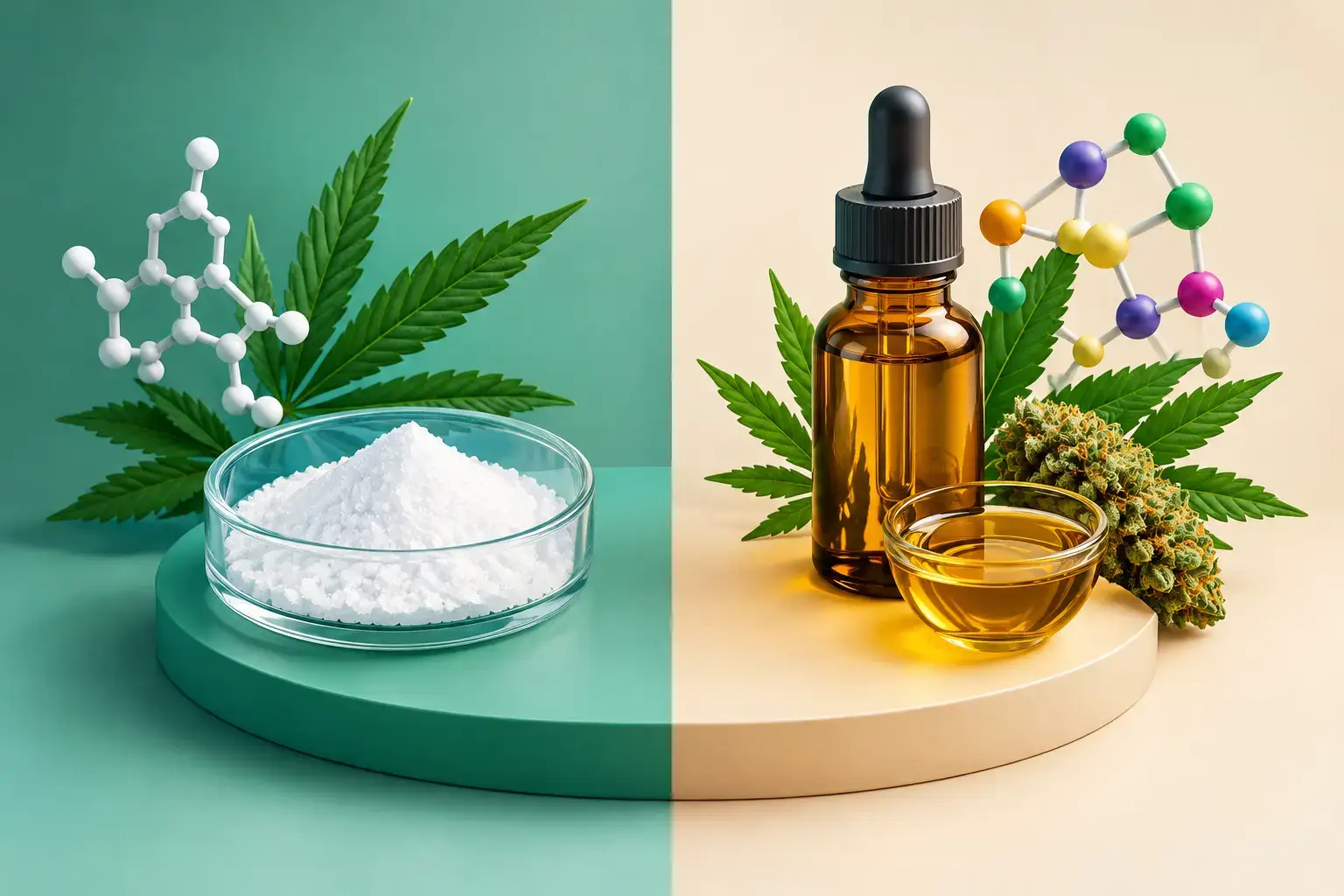
Choosing CBD should not require guessing what is in the bottle. When comparing CBD isolate vs full spectrum, the practical difference comes down to what remains in the final extract, whether THC exposure is acceptable to you, and how much ingredient simplicity matters in your daily routine.
For many people, especially those who need to avoid THC for work, military service, personal preference, or peace of mind, a THC-free CBD isolate can be the clearer choice. Others prefer a full spectrum formula because it contains a wider range of naturally occurring hemp compounds. Neither option is automatically better for every person. The right choice depends on your priorities, your sensitivity to THC, and the quality of the product you select.
CBD Isolate vs Full Spectrum: The Core Difference
CBD isolate is the most refined form of cannabidiol. During processing, CBD is separated from the other compounds found in the hemp plant. A finished isolate product is designed to contain CBD without THC, terpenes, or other cannabinoids. It may be made into oils, gummies, topical products, capsules, or pet formulas.
Full spectrum CBD contains CBD along with a broader collection of hemp compounds, including minor cannabinoids, plant terpenes, flavonoids, and potentially trace amounts of THC. Under federal hemp rules, qualifying hemp products must contain no more than 0.3% delta-9 THC by dry weight. That limit does not mean a product is THC-free.
This distinction is especially important when you are looking for a non-intoxicating wellness product. CBD itself does not create a high. However, a full spectrum product may contain enough THC to be a concern for people who want to avoid THC altogether or who are subject to drug testing.
What CBD Isolate Offers
CBD isolate is a straightforward option for people who want CBD without additional hemp compounds. Its biggest advantage is clarity. You know the formula is centered on CBD, and a properly made THC-free product is the better fit when THC exposure is not an option.
That can matter for active-duty service members, veterans returning to the workforce, transportation workers, healthcare professionals, athletes, and anyone whose employment may involve drug screening. It can also matter for customers who have had uncomfortable experiences with THC or simply do not want it in their wellness routine.
Isolate may also be easier to evaluate if you are new to CBD. With fewer variables in the formula, it is often simpler to notice how a serving size fits into your routine. If you are using CBD for everyday stress support, sleep habits, occasional discomfort, or general balance, consistency can be more useful than chasing the most complex ingredient list.
The trade-off is that isolate does not include the additional hemp-derived compounds found in full spectrum extracts. Some people specifically want those compounds present. Others see their absence as a benefit. Your preference should be based on your comfort level, not on marketing claims.
What Full Spectrum CBD Offers
Full spectrum CBD appeals to customers who want a less filtered hemp extract. In addition to CBD, it may include naturally occurring cannabinoids and aromatic plant compounds called terpenes. Some consumers believe these components work together in what is commonly called the entourage effect.
The entourage effect is a useful theory to understand, but it should be approached with perspective. Research into CBD and hemp compounds is still developing, and individual results vary. A full spectrum label does not guarantee that a product will work better, faster, or more strongly for everyone.
The most significant consideration is THC. Even when the amount is legally compliant and not intended to be intoxicating, full spectrum products can contain detectable THC. Repeated use may increase the risk of a positive drug test, depending on the product, amount used, your body, and the type of test. No responsible brand should promise that full spectrum CBD is risk-free for drug testing.
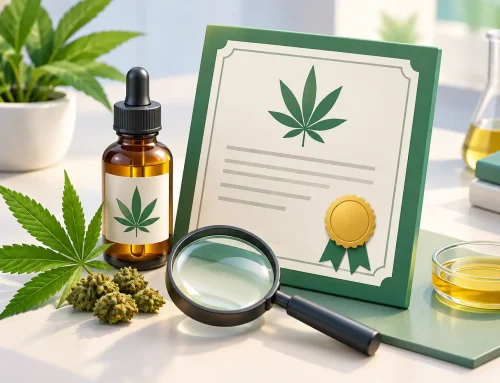
For that reason, full spectrum CBD is usually not the best match if no detectable THC is a firm requirement. Read the certificate of analysis, often called a COA, rather than relying on the front label alone.
Isolate, Full Spectrum, and Broad Spectrum Are Not the Same
The CBD market can be confusing because a third category often appears alongside isolate and full spectrum: broad spectrum CBD. Broad spectrum products generally contain CBD and other hemp compounds while being processed to remove THC.
That makes broad spectrum worth considering if you want a wider hemp profile but prefer to avoid THC. Still, the phrase “THC-free” should be supported by current third-party lab results. Product names alone are not enough.
Here is the simple breakdown: isolate is CBD only; full spectrum includes CBD plus other hemp compounds and may include THC; broad spectrum includes CBD plus other hemp compounds but is typically formulated without detectable THC. Manufacturing methods vary, so testing remains the clearest way to confirm what is actually in a product.
How to Choose Based on Your Needs
Start with the question that matters most: Do you need to avoid THC completely? If the answer is yes, choose a CBD isolate or a clearly tested broad spectrum product with no detectable THC. This is the most cautious path for people concerned about workplace testing, military policies, or personal THC sensitivity.
If you are comfortable with the possibility of trace THC and prefer a broader plant profile, full spectrum may be worth discussing with your healthcare professional. Just keep expectations realistic and choose products with transparent test results.
Your preferred product format matters, too. An oil may allow flexible serving adjustments, while gummies offer convenience and a consistent amount per serving. Topical CBD is commonly selected for targeted application to specific areas, such as after daily activity. Pet products require extra care: use formulas made for animals and speak with a veterinarian before adding CBD, especially if your pet takes medication or has a health condition.
For any format, begin with the product directions and allow time to assess your experience. More is not always better. Keep a simple note of the amount used, the time of day, and how you feel over several days. This can help you make thoughtful adjustments rather than changing products too quickly.
What to Look for Before You Buy
The quality gap between CBD products can be significant. A clean formula begins with hemp cultivation and continues through extraction, manufacturing, and testing. Look for brands that explain where their hemp comes from and use third-party laboratory testing for cannabinoid content and contaminants.
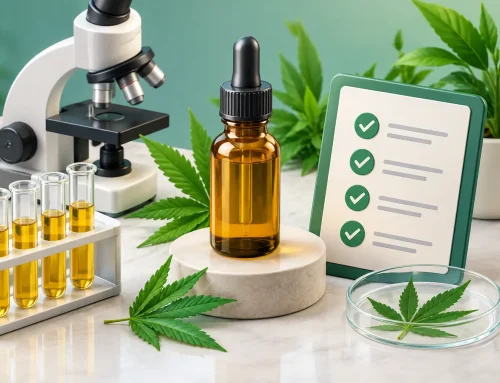
A complete COA should help you confirm the amount of CBD in the product and whether THC is detected. It should also include testing for common concerns such as pesticides, heavy metals, residual solvents, and microbial contaminants. If a company cannot make testing information available, that is a reason to keep looking.
Extraction also matters. CO2 extraction is widely used because it can separate beneficial hemp compounds without relying on harsh chemical processing. Ingredient labels deserve the same attention. Avoid assuming that “natural” means appropriate for you, particularly if you have allergies, take prescription medications, are pregnant or nursing, or manage an ongoing medical condition.
CBD can interact with certain medications. A pharmacist or healthcare professional can help you evaluate possible interactions, including medications with grapefruit warnings. CBD products are not intended to diagnose, treat, cure, or prevent disease, and they should not replace medical care.
A Clearer Choice Starts With Your Priorities
If clean, non-intoxicating CBD with no detectable THC is your priority, CBD isolate offers a direct and easy-to-understand option. If you prefer a broader hemp extract and accept the possibility of trace THC, full spectrum may align with your preferences. The label matters, but independent testing matters more.
The best CBD routine is the one you can use with confidence: a carefully tested product, a format that fits your day, and a choice that respects your comfort level around THC. Start there, stay consistent, and give yourself room to learn what supports your everyday wellness best.