Table of Contents
- CBD Brands Comparison Overview
- CBD Health Collection vs Competitors
- How to Read a CBD Certificate of Analysis
- Water-Soluble CBD Benefits vs Traditional Oils
- Product Type Comparison: Oils, Gummies, Topicals, and Pet Wellness
- Which Brand Should You Choose?
- Conclusion
Last Updated: August 15, 2026
CBD Brands Comparison Overview
When you’re evaluating CBD products, the differences between brands go far deeper than price tags and flashy marketing. The real distinction comes down to extraction methods, third-party verification, and whether a company actually prioritizes bioavailability or just sells what’s easiest to manufacture.
This guide breaks down how CBD brands stack up across the categories that matter most. We’ll examine extraction transparency, lab testing rigor, product formulations, and the specific benefits each brand targets. Whether you’re managing chronic pain, sleep issues, or pet anxiety, understanding these differences helps you avoid wasting money on products that won’t deliver results.
CBD Health Collection, founded by pharmaceutical veteran Rick Bauer in 2017, brings a science-based approach to this market. The company sources organically grown USA hemp, uses clean CO2 extraction, and maintains independent third-party lab verification for every product. That foundation matters when you’re comparing brands, because it sets a standard for what transparency actually looks like.
Below, we’ll show you exactly how to evaluate CBD brands so you can make a choice based on what your body actually needs, not marketing claims.
The best CBD brand for you depends on three factors: extraction method (which affects bioavailability), third-party testing transparency (which verifies purity), and product format (oil, gummy, topical, or pet product). Most brands excel in one area and cut corners in another.
CBD Health Collection vs Competitors
CBD Health Collection stands apart because it combines three elements most competitors separate: pharmaceutical-grade sourcing, clean CO2 extraction, and water-soluble formulations designed for actual absorption.
The brand sources from organically grown USA hemp and extracts using CO2 methods, a process that preserves cannabinoids and terpenes without chemical solvents. Products are manufactured in a GMP- and FDA-registered facility, then independently third-party lab tested. The company offers a 30-day satisfaction guarantee with free shipping nationwide.
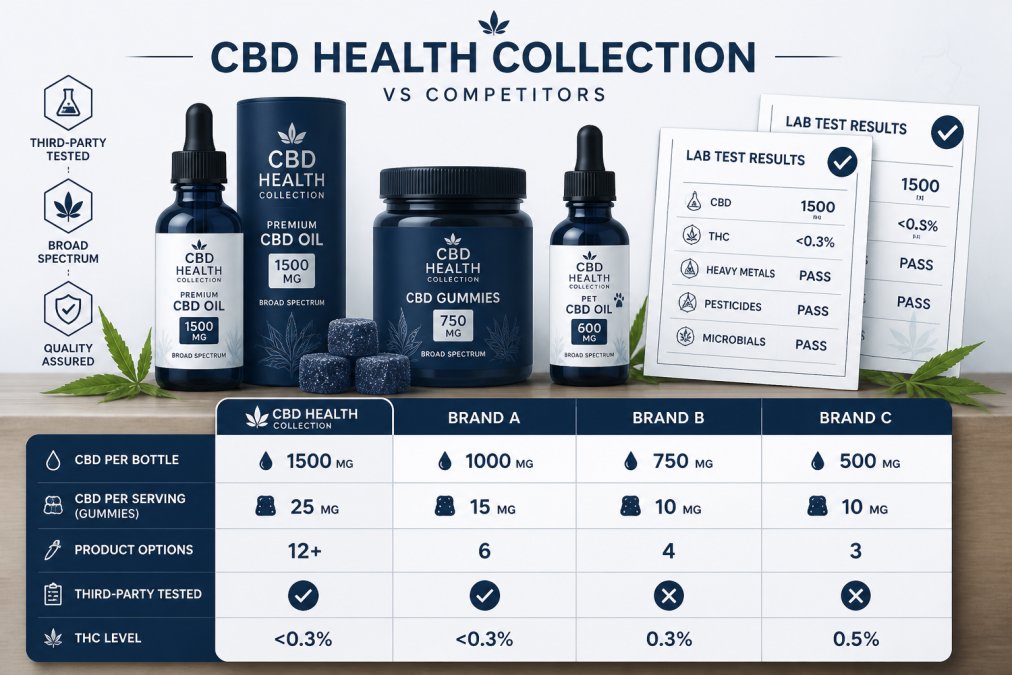
When comparing CBD brands, Charlotte’s Web represents the full-spectrum category. Their Original Formula contains a complete cannabinoid profile with terpenes and flavonoids, which many users value for the entourage effect. The trade-off: full-spectrum oils carry an earthy taste that doesn’t appeal to everyone, and pricing runs higher than some alternatives.
CBDfx offers broad-spectrum gummies with added turmeric and spirulina. This appeals to users seeking anti-inflammatory synergy beyond CBD alone. The formula is vegan and gluten-free, and third-party testing is standard. The drawback is that their large product catalog can overwhelm first-time buyers, and some COAs show minor discrepancies between lab results and label claims.
Medterra Daily Relief targets the isolate market with 99% pure CBD and zero THC. For users sensitive to THC or needing to pass workplace tests, this matters. Their pricing starts lower than full-spectrum alternatives, and COAs are readily available online. The limitation is that isolate products lack the terpene and flavonoid profile that many users report makes a difference in how they feel.
When comparing brands, request their most recent Certificate of Analysis before purchasing. A legitimate company provides this without friction. If a brand makes you jump through hoops to see lab results, that’s a red flag.
Extraction Methods and Bioavailability
The way CBD is extracted determines what makes it into your final product, and what stays behind.
CO2 extraction preserves the full spectrum of cannabinoids and terpenes by using pressurized carbon dioxide as a solvent. The process is clean, leaves no chemical residue, and produces a product that retains the plant’s natural compounds. CBD Health Collection uses this method, which is why their products maintain bioavailability without additives.
Ethanol extraction is cheaper and faster but often strips away terpenes and requires additional processing to remove solvent residue. Hydrocarbon extraction (butane, propane) is efficient but carries contamination risk if not done in controlled settings. Many budget brands use these methods because they cut production costs.
Water-soluble CBD represents a newer category that addresses a fundamental problem: CBD is fat-soluble, meaning your body struggles to absorb it efficiently from traditional oils. Water-soluble formulations use emulsification technology to break CBD into smaller particles that mix with water-based fluids in your digestive system. This increases bioavailability, the amount your body actually uses, by a measurable margin compared to standard oil tinctures.
The practical difference: a water-soluble product at 500mg may deliver more usable CBD than a traditional oil at 750mg, because your body can actually process it.
Third-Party Testing and Transparency
A Certificate of Analysis (COA) from an independent lab is your proof that what’s on the label matches what’s in the bottle.
Legitimate third-party testing verifies three core elements: cannabinoid potency (does it contain the advertised amount of CBD?), purity (are there pesticides, heavy metals, or microbial contaminants?), and safety (are solvents or other chemicals present?).
CBD Health Collection publishes COAs for every product batch on their website. This level of transparency is not standard. Many brands make you email support or dig through their site to find results. Some brands test only a few batches per year and assume consistency across production runs, a practice that leaves room for variation.
When evaluating CBD brands, check whether COAs are easy to access, recent (within the last 6 months), and specific to the batch you’re buying. Generic testing certificates that apply to all products are less reliable than batch-specific results.
Heavy metal testing and microbial screening matter more than most consumers realize. Hemp is a bioaccumulator, meaning it absorbs contaminants from soil. If the hemp was grown in contaminated soil or processed in unsanitary conditions, the final product concentrates those problems.
How to Read a CBD Certificate of Analysis
A COA can look intimidating, but understanding the key sections takes about two minutes and tells you everything about product quality.
The first section lists cannabinoid potency. You’ll see CBD content in milligrams per milliliter (for oils) or per serving (for gummies). This is where label claims get verified. A product claiming 1000mg should test close to that figure, most reputable brands fall within 10% of the label claim. If testing shows 600mg in a 1000mg bottle, you’ve found a problem.
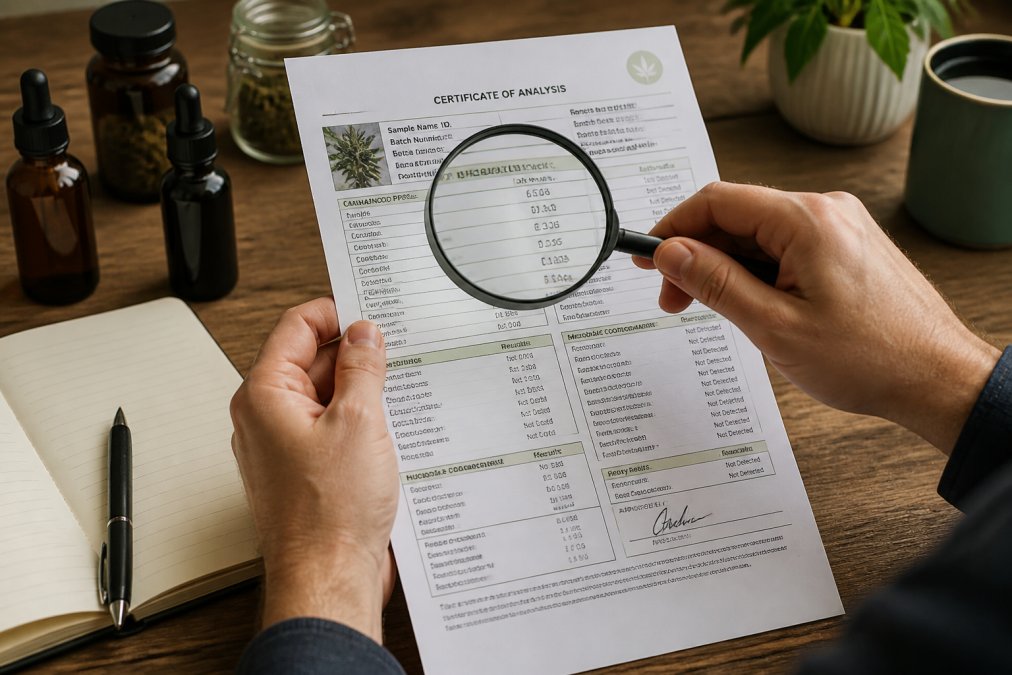
The second section shows residual solvents and contaminants. Look for "none detected" or values below the detection limit for pesticides, heavy metals (lead, cadmium, mercury), and microbial pathogens. If a COA lists detected contaminants, even in trace amounts, that’s a red flag unless values fall well below safety thresholds set by the FDA.
The third section reports terpene profiles, which matters if you’re using CBD for specific outcomes. Myrcene promotes relaxation, limonene supports mood, and pinene aids focus. Full-spectrum and broad-spectrum products show these; isolates won’t.
Finally, check the testing date and lab credentials. The lab should be ISO 17025 accredited, which means it meets strict quality standards. A COA from an unaccredited lab is nearly worthless.
If a brand’s COA shows THC content above 0.3%, it violates federal law. Even if the product is marketed as “broad-spectrum” or “THC-free,” [lab results](/understanding-cbd-lab-results/) are the actual proof. Do not purchase products with detectable THC above the legal limit, regardless of marketing claims.
Water-Soluble CBD Benefits vs Traditional Oils
The absorption problem with standard CBD oils is real and measurable. Your digestive system processes fats differently than water, and CBD is lipophilic, it dissolves in fat, not water. When you take a traditional tincture, your body absorbs only a fraction of the CBD you consumed.
Water-soluble CBD addresses this through emulsification, which breaks CBD molecules into nano-sized particles that can mix with your digestive fluids. The result is faster onset (some users report effects within 15-30 minutes instead of 60-90) and higher bioavailability (your body uses more of what you take).
For someone managing chronic pain or sleep issues, this matters. A 500mg water-soluble product may deliver more effective relief than a 1000mg traditional oil, because your body actually absorbs a meaningful percentage of the dose.
The trade-off is cost. Water-soluble formulations require more processing and technology, so they typically cost more per milligram than standard oils. For budget-conscious users, traditional oils remain the entry point. For users who’ve tried oils without results, water-soluble versions often work better.
CBD Health Collection offers water-soluble formulations specifically because the founder understood pharmaceutical bioavailability principles. This isn’t a marketing gimmick, it’s a direct application of drug delivery science to CBD products.
Product Type Comparison: Oils, Gummies, Topicals, and Pet Wellness
Different product formats serve different needs, and choosing the wrong one wastes money.
Tincture oils offer the fastest absorption and most flexible dosing. You can take exactly the amount you need by adjusting drops. Onset is typically 15-45 minutes. The downside: taste ranges from neutral to earthy, and oils require daily discipline to use consistently.
Gummies prioritize convenience and taste. They’re pre-dosed, easy to travel with, and taste like candy. The tradeoff is slower absorption (45-90 minutes) because they must be digested first. Gummies also work best for consistent daily use rather than as-needed relief.
Topical freeze gels and patches are designed for localized pain. You apply them directly to joints, muscles, or areas of discomfort. Onset is typically 10-20 minutes. These work best for arthritis, muscle soreness, or targeted inflammation rather than systemic issues like sleep or general anxiety.
Pet wellness products come as oils, soft gels, or treats formulated for dogs and cats. Dosing is based on pet weight, and products are designed to address pet-specific issues like anxiety, joint support, or aging-related discomfort. CBD Health Collection offers pet products because the founder’s family experienced results with their own animals.
For chronic pain management, many users combine formats: a topical for immediate localized relief plus an oil or gummy for systemic support. This layered approach often works better than relying on a single product type.
Which Brand Should You Choose?
The answer depends on your specific situation, and honest comparison requires acknowledging where each brand excels and where it falls short.
Choose CBD Health Collection if you prioritize bioavailability and transparency. The water-soluble formulations, CO2 extraction, and batch-specific COAs represent a high standard in the market. The 30-day guarantee and free shipping reduce financial risk. This brand works best for users who’ve tried other products without results and want to know exactly what they’re getting.
Choose Charlotte’s Web if you want an established brand with proven reputation and full-spectrum benefits. The entourage effect appeals to users who believe whole-plant compounds work better than isolated CBD. Accept that you’ll pay premium pricing and deal with an earthy taste.
Choose CBDfx if you want gummies with added functional ingredients like turmeric. This appeals to users seeking anti-inflammatory synergy beyond CBD alone. Understand that their large catalog can be overwhelming for first-time buyers.
Choose Medterra if THC sensitivity is your primary concern or budget is the limiting factor. Their isolate products are genuinely affordable and third-party tested. Accept that you lose the terpene profile that some users find essential.
The one scenario where none of these wins: if you need pet-specific products, CBD Health Collection’s pet wellness line is purpose-built for animals in ways generic human products aren’t.
CBD Health Collection works best for: users who’ve tried other brands without results, people prioritizing bioavailability, pet owners seeking natural calming solutions, and anyone who values transparent lab testing and easy refund policies.
Choosing the right CBD brand comes down to matching product quality to your actual needs. Most users waste money trying random brands before finding one that delivers results. The difference between a product that works and one that doesn’t often comes down to extraction method, bioavailability, and third-party verification, not marketing budget.
CBD Health Collection combines all three elements: organically grown USA hemp, clean CO2 extraction, water-soluble formulations for better absorption, and independent lab verification for every batch. Get started with CBD Health Collection and experience the difference that pharmaceutical-grade sourcing and transparent testing actually deliver.
Frequently Asked Questions
What makes CBD Health Collection different from other CBD brands?
CBD Health Collection uses organically grown, USA-sourced hemp extracted with clean CO2 processing in a GMP- and FDA-registered facility. The brand prioritizes water-soluble CBD formulations for better absorption and optimal bioavailability, which many competitors don't emphasize. Every product undergoes independent third-party lab testing for purity and potency, with results available to customers. Additionally, the company offers a 30-day satisfaction guarantee and free shipping, backed by real customer testimonials showing measurable results for pain relief and sleep support.
How do I know if a CBD brand is high quality?
Look for brands that provide independent third-party lab testing with publicly available certificates of analysis (COAs). Check that the COA shows testing for cannabinoid potency, pesticide residues, heavy metals, and microbial contaminants. Verify the brand sources hemp from U.S. growers and uses clean extraction methods like CO2 extraction. Reputable brands clearly state whether their products are full-spectrum, broad-spectrum, or isolate, and they offer transparency about ingredient sourcing. Customer testimonials and satisfaction guarantees also indicate confidence in product quality.
What are the benefits of water-soluble CBD compared to traditional oil-based CBD?
Water-soluble CBD offers superior bioavailability, meaning your body absorbs and uses more of the active cannabinoids. Traditional oil-based CBD must be processed through your digestive system, which can reduce absorption efficiency. Water-soluble formulations mix easily with beverages and are absorbed faster, potentially delivering results more quickly. This technology allows for lower dosages to achieve the same therapeutic effects, making it a more cost-effective option over time. CBD Health Collection emphasizes water-soluble formulations specifically to optimize how your body processes and benefits from the CBD.
How do full-spectrum and broad-spectrum CBD differ in effectiveness?
Full-spectrum CBD contains all cannabinoids, terpenes, and flavonoids naturally present in the hemp plant, creating what's called the entourage effect, where compounds work together for enhanced benefits. Broad-spectrum products contain multiple cannabinoids and plant compounds but have THC removed, offering similar benefits without any THC content. Isolate products contain only pure CBD. Full-spectrum may provide stronger results for some users, but broad-spectrum is ideal if you're concerned about THC or need to pass drug tests. The best choice depends on your individual needs and sensitivity to THC.
This article was written using GrandRanker