Table of Contents
- What Is CO2 Extracted CBD and Why It Matters
- How Does the CO2 Extraction Process Work?
- Benefits of CO2 Extracted CBD Oil
- CO2 Extraction Methods Comparison: Why It Beats Other Approaches
- How to Identify High Quality CO2 Extracted CBD Oil
- Safety, Purity, and Sustainability in CO2 Extraction
- Conclusion: What Is CO2 Extracted CBD and Why Choose It
What Is CO2 Extracted CBD: The Complete Guide
Last Updated: June 29, 2026
What Is CO2 Extracted CBD and Why It Matters
Not all CBD products are created equal. The extraction method determines purity, potency, preservation of beneficial plant compounds, and ultimate effectiveness. CO2 extraction has become the gold standard because it delivers the cleanest, most complete cannabinoid profile without leaving toxic residues. Unlike solvent-based methods using butane or ethanol, supercritical CO2 selectively targets cannabinoids and terpenes while leaving behind unwanted plant material.
The CBD market remains largely unregulated, meaning consumers can’t simply trust labels. According to research from the Journal of the American Medical Association, many CBD products contain far less cannabidiol than advertised, and some contain unlisted contaminants. A CO2-extracted product from a reputable manufacturer provides transparency and predictability.
The fastest way to spot quality: look for a [Certificate of Analysis (COA) from an independent lab](/understanding-cbd-lab-results/). That single document tells you everything about purity, potency, and contamination levels.
How Does the CO2 Extraction Process Work?
CO2 extraction uses pressurized carbon dioxide to pull cannabinoids, terpenes, and other beneficial compounds from raw hemp plant material. The process relies on a phase transition at specific temperature and pressure points that makes CO2 uniquely effective as a solvent.
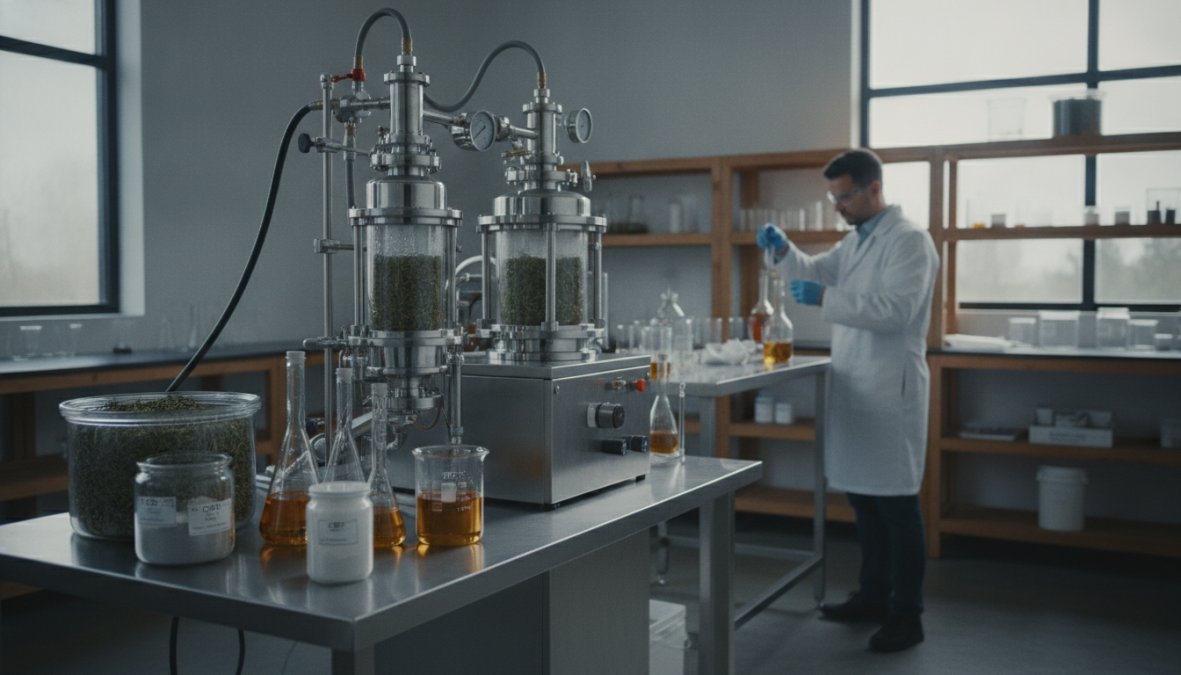
Raw hemp flowers are loaded into a stainless steel extraction chamber. Pressurized CO2 transforms into a supercritical fluid, behaving simultaneously as both liquid and gas. This supercritical CO2 penetrates the plant material and dissolves target compounds: cannabidiol (CBD), cannabinol (CBN), cannabigerol (CBG), and terpenes. The extraction chamber operates at temperatures between 35°C and 60°C and pressures exceeding 73 bar, preventing degradation of heat-sensitive compounds while maximizing efficiency. As the pressurized mixture flows into a separator chamber, pressure drops and CO2 reverts to gas form, leaving behind concentrated oil. The entire process is closed-loop, ensuring no solvent residue contaminates the final product.
Understanding Supercritical vs. Subcritical CO2 Extraction
Supercritical CO2 extraction operates above 31°C and 73.8 bar. At this state, CO2 exhibits excellent solvent properties, extracting a broad spectrum of cannabinoids, terpenes, and plant waxes. Extraction is faster and more complete, typically yielding 12-18% CBD from quality hemp biomass. The trade-off: supercritical extraction also pulls in plant waxes and lipids requiring additional purification.
Subcritical CO2 extraction operates below the critical point, using lower temperatures (below 31°C) and pressures (below 73.8 bar). This gentler approach preserves heat-sensitive terpenes more effectively and produces a cleaner extract with fewer unwanted compounds, typically yielding 8-12% CBD. However, subcritical extraction is slower and requires minimal winterization.
The choice depends on the desired final product. Full-spectrum oils benefit from subcritical extraction to preserve the complete terpene profile. Broad-spectrum and isolate products typically use supercritical extraction followed by chromatography.
Post-Extraction Purification and Winterization
After initial extraction, crude extract requires purification to remove plant waxes, lipids, and chlorophyll that degrade quality and shelf stability.
Winterization is the primary purification technique. The crude extract is mixed with ethanol and frozen to approximately -20°C for 24-48 hours. Waxes and fats solidify and separate from the cannabinoid-rich solution. The mixture is filtered, removing solid lipids, and ethanol is evaporated, leaving behind a refined extract with higher cannabinoid concentration and improved clarity.
Some producers employ additional methods: short-path distillation separates cannabinoids by boiling point, creating ultra-pure distillates. Chromatography techniques isolate specific cannabinoids. These advanced steps add cost but deliver exceptional purity and consistency.
The quality of purification directly impacts bioavailability, how effectively your body absorbs and utilizes CBD. A well-purified extract absorbs more efficiently than crude extract, delivering better results from smaller doses.
Winterization removes plant waxes that cloud the extract and reduce shelf stability. A clear, golden oil indicates proper purification; cloudy or dark oils suggest incomplete processing.
Benefits of CO2 Extracted CBD Oil
CO2-extracted CBD delivers advantages that solvent-based methods cannot match. Because CO2 is inert and non-toxic, it leaves zero chemical residue in the final product. Solvent-based extraction always carries some risk of residual solvent contamination.
CO2 preserves the full spectrum of beneficial compounds. The extraction process doesn’t destroy terpenes or minor cannabinoids like CBN, CBG, or CBDA. These compounds work synergistically in what researchers call the "entourage effect." Full-spectrum CO2 extracts produce stronger therapeutic outcomes than isolated CBD alone.
CO2-extracted oils demonstrate superior bioavailability when processed correctly. The absence of residual solvents and proper purification mean the extract absorbs more readily through the digestive tract or sublingual membranes, translating to faster onset and stronger effects.
CO2 extraction ensures consistency and potency. Temperature, pressure, and extraction time are precisely regulated, meaning batch-to-batch variation is minimal. A 1500mg bottle contains reliably close to 1500mg of CBD, not 800mg or 2000mg.
Finally, CO2 extraction supports sustainability. Unlike butane or propane extraction, which requires disposal of flammable solvents, CO2 is recycled within closed-loop systems. No toxic waste enters the environment.
CO2 Extraction Methods Comparison: Why It Beats Other Approaches
The extraction method determines quality, safety, and effectiveness of your CBD product.
CO2 vs. Solvent-Based Extraction (Ethanol and Butane)
| Extraction Method | Solvent Type | Residue Risk | Terpene Preservation | Speed | Cost |
|---|---|---|---|---|---|
| CO2 (Supercritical) | CO2 gas | None | Good | Moderate | Higher |
| CO2 (Subcritical) | CO2 gas | None | Excellent | Slower | Highest |
| Ethanol | Chemical solvent | Low-moderate | Moderate | Fast | Lower |
| Butane | Hydrocarbon | Moderate-high | Good | Fast | Lower |
Ethanol extraction is fast and inexpensive but also extracts chlorophyll, giving the extract a dark green color and bitter taste. If ethanol isn’t completely evaporated, residual solvent can remain in the final product.
Butane extraction delivers high-quality concentrates quickly and at low cost, but butane is highly flammable and explosive. Extraction facilities face significant safety risks, and butane residue in the final product is a legitimate concern. The FDA has flagged butane-extracted CBD products for solvent contamination.
CO2 extraction eliminates these trade-offs. There’s no flammability risk, no toxic solvent residue, and no environmental disposal problem. The only drawback is cost, which translates to higher prices for consumers, but quality justifies the expense.
Why CO2 Preserves Cannabinoids and Terpenes Better
Terpenes are volatile organic compounds responsible for aroma, flavor, and bioactive effects. Many have boiling points between 150°C and 250°C, making them vulnerable to heat degradation.
CO2 extraction operates at temperatures well below these thresholds. Subcritical CO2 extraction uses temperatures below 40°C, ensuring terpenes remain intact. Ethanol and butane extraction often requires heat to accelerate solvent evaporation, risking terpene loss.
CO2 extraction’s low-temperature operation protects the entire cannabinoid profile, including minor cannabinoids that may have therapeutic significance. The supercritical state also offers selective extraction, pulling cannabinoids and terpenes preferentially while leaving behind unwanted compounds like chlorophyll.
The result is a full-spectrum extract that preserves the complete phytochemical profile of the hemp plant.
Subcritical CO2 extraction takes longer and yields less total cannabinoid content than supercritical methods. If a product claims to be “subcritical extracted” but costs the same as supercritical alternatives, verify the claim through the COA.
How to Identify High Quality CO2 Extracted CBD Oil
Not all CO2-extracted products are equal. Extraction method alone doesn’t guarantee quality; sourcing, purification, and testing matter equally.
Start by verifying hemp source. Premium CBD comes from organically grown hemp cultivated in the United States. Organic certification means no synthetic pesticides, herbicides, or fertilizers were used. Hemp grown in regulated US states faces stricter oversight than imports from unregulated regions.
Examine the product’s color and clarity. A properly extracted and purified CO2 oil should be golden to amber, clear and transparent. Dark brown or murky oils suggest incomplete purification or oxidation.
The label should clearly state "CO2 extracted" or "supercritical CO2 extracted." Vague language like "naturally extracted" or "clean extraction" doesn’t confirm the method.
Reading the Certificate of Analysis (COA)
The COA is your most important verification tool. This document, produced by an independent third-party lab, reports exact cannabinoid content, terpene profile, and contamination testing.
A legitimate COA includes:
- Cannabinoid potency: Exact percentages of CBD, CBN, CBG, and other cannabinoids. Reported CBD content should match the product label within ±10%.
- Terpene profile: Breakdown of major terpenes and their concentrations.
- Pesticide screening: Confirmation of no detectable residues of prohibited pesticides.
- Microbial testing: Verification that the product is free from E. coli, salmonella, mold, and other pathogens.
- Solvent residue testing: Confirmation that no residual extraction solvents are present above acceptable limits.
- Heavy metal analysis: Testing for lead, cadmium, arsenic, and mercury.
- Lab credentials: The testing lab should be ISO 17025 accredited.
Request the COA before purchasing. Reputable manufacturers make COAs freely available. If a company won’t provide a COA, move on.
What to Look for in Purity and Potency Testing
Potency refers to cannabinoid concentration, measured in milligrams or as a percentage. A 1500mg bottle should contain 1500mg of total cannabinoids. If the label claims 1500mg but the COA shows only 900mg, the product is mislabeled.
Purity measures the absence of contaminants. A pure extract contains cannabinoids, terpenes, and trace plant compounds, nothing else. Look specifically for:
- Pesticide results: Should show "Not Detected" or "ND" for all tested pesticides.
- Heavy metals: Lead, cadmium, arsenic, and mercury should all be ND or below 0.1 ppm.
- Microbial: E. coli and salmonella must be ND.
- Solvent residue: Any residual butane, propane, or ethanol should be ND.
A product that passes all these tests is genuinely pure.
Safety, Purity, and Sustainability in CO2 Extraction
CO2 extraction has earned its reputation as the safest, cleanest method available.
Why CO2 Extraction Is Non-Toxic and Residue-Free
CO2 is a gas at room temperature and atmospheric pressure. When pressurized, it becomes a liquid or supercritical fluid, an excellent solvent for cannabinoids and terpenes. Critically, CO2 is non-toxic, it’s the same gas used in food carbonation and beverage production. The FDA recognizes CO2 as GRAS, "Generally Recognized as Safe", for food use.
When extraction ends and pressure drops, CO2 simply reverts to gas and disperses. There’s nothing left behind except dissolved cannabinoids and terpenes. No residual solvent, no chemical byproducts, no toxins. This is fundamentally different from ethanol or butane extraction, where the solvent must be physically removed through evaporation, a process never 100% complete.
The closed-loop system design adds another safety layer. CO2 circulates continuously within sealed stainless steel vessels. Operators never handle pressurized CO2 directly, and the system vents safely through pressure relief valves, preventing explosive risks associated with butane or propane extraction.
For consumers, a CO2-extracted product from a reputable manufacturer is the safest option available.
Debunking Sustainability Myths About CO2 Extraction
CO2 extraction has faced criticism from environmentalists who argue that using pressurized CO2 contributes to carbon emissions. This criticism misses how CO2 extraction actually works.
Modern CO2 extraction systems are closed-loop, meaning CO2 is recycled continuously. The same CO2 that enters the extraction chamber is recovered, purified, and reused thousands of times. A well-maintained system loses less than 1% of its CO2 per year. Furthermore, the CO2 used often comes from industrial byproducts, waste CO2 captured from ammonia production or brewery operations. Using this waste CO2 prevents it from entering the atmosphere.
Compare this to solvent-based extraction: manufacturing ethanol or butane requires energy and generates emissions. Evaporating these solvents releases volatile organic compounds into the air. Over the full lifecycle, solvent-based extraction has a larger environmental footprint than closed-loop CO2 extraction.
CO2 extraction also requires no water, making it ideal for water-scarce regions.
Closed-loop CO2 extraction recycles the same CO2 thousands of times. The environmental impact is minimal, far lower than solvent-based alternatives.
Conclusion: What Is CO2 Extracted CBD and Why Choose It
Choosing a CBD product without understanding extraction methods leaves you vulnerable to mislabeling, contamination, and ineffective formulations. CO2 extraction stands apart because it reliably delivers a clean, complete extract without toxic residue. It preserves the full spectrum of cannabinoids and terpenes that work synergistically for maximum effect. It’s safe for operators, safe for consumers, and sustainable for the environment.
When evaluating CBD products, prioritize CO2 extraction and verify the claim through a third-party COA. At CBD Health Collection, every product is extracted using clean CO2 process, produced in a GMP- and FDA-registered facility, and independently lab-tested for purity and potency. Explore CBD Health Collection’s full range of CO2-extracted oils, gummies, and topicals at cbdhealthcollection.com, backed by a 30-day satisfaction guarantee and free shipping nationwide.
Frequently Asked Questions
What is CO2 extracted CBD and why is it considered the gold standard?
CO2 extracted CBD uses supercritical carbon dioxide as a solvent to pull cannabinoids, terpenes, and phytocompounds from hemp plant material. It's the gold standard because the process is solvent-free in the final product, preserves delicate cannabinoids and terpenes, produces residue-free oil, and maintains high potency and bioavailability. The closed-loop system ensures no harmful chemicals remain, making it the safest extraction method available for premium CBD products.
How does CO2 extraction compare to solvent-based methods like ethanol or butane?
CO2 extraction uses pressurized carbon dioxide in a closed-loop system, while solvent-based methods rely on chemical solvents. CO2 extraction is superior because it doesn't leave toxic residues, better preserves volatile compounds and terpenes, produces higher-purity full-spectrum CBD, and is non-toxic. Solvent-based extraction is faster and cheaper but risks leaving residual solvents and degrades heat-sensitive phytocompounds, resulting in lower-quality end products.
Is CO2 extracted CBD safe, and does it contain any harmful residues?
Yes, CO2 extracted CBD is safe and residue-free. Because carbon dioxide is food-grade and non-toxic, it leaves no chemical residue in the final product. The closed-loop extraction system recycles all CO2, ensuring a clean process from start to finish. Third-party lab testing through COA (Certificate of Analysis) verifies purity and potency, confirming the absence of contaminants, heavy metals, or pesticides in quality CO2 extracted CBD products.
What makes CO2 extracted CBD better for bioavailability and absorption?
CO2 extraction preserves the full spectrum of cannabinoids, terpenes, and phytocompounds, which work together synergistically, known as the entourage effect. This full-spectrum profile enhances bioavailability compared to isolates. Additionally, water-based formulations of CO2 extracted CBD improve absorption in the body. The preservation of volatile compounds during extraction ensures maximum potency and effectiveness, meaning your body can utilize more of the active compounds in each dose.
The CBD market demands skepticism. Demand verification. Demand CO2 extraction. Your health depends on the purity of what you consume, and CO2 extraction is the only method that guarantees it.
This article was written using GrandRanker