
Table of Contents
- CBD vs Magnesium for Muscle Cramps: Overview and Comparison
- How Magnesium Supports Muscle Function and Prevents Cramps
- How CBD Works for Muscle Recovery and Relaxation
- Best Magnesium for Muscle Cramps: Types and Bioavailability
- FDA Regulations on CBD Supplements and What They Mean for Safety
- Natural Remedies for Nocturnal Leg Cramps: CBD, Magnesium, and Combined Approaches
- Combining CBD and Magnesium: Safety, Synergy, and Practical Dosage Guidelines
- Conclusion: Choosing Between CBD and Magnesium for Your Muscle Cramps
Last Updated: August 16, 2026
CBD vs Magnesium for Muscle Cramps: Overview and Comparison
Muscle cramps strike without warning, and when they do, the search for relief becomes urgent. Both CBD and magnesium have gained attention as natural options for managing muscle cramps, but they work through fundamentally different mechanisms. Understanding how each addresses the underlying causes of muscle tension and cramping is essential before choosing between them.
Many people experiment with one option or the other without fully grasping why the choice matters. The truth is neither CBD nor magnesium is universally superior, the better option depends on your specific situation, the type of cramps you experience, and how your body responds to each compound.
This guide breaks down the science behind both approaches, compares their effectiveness, and shows you how to evaluate which solution aligns with your needs. We’ll also explore whether combining them offers additional benefits and what safety considerations apply when using either option.
CBD and magnesium address muscle cramps through different pathways: magnesium supports the electrolyte balance and nerve signaling required for proper muscle contraction, while CBD may influence pain perception and inflammation through the endocannabinoid system. Neither has overwhelming clinical evidence for muscle cramps specifically, making practical experience and individual response the deciding factors.
How Magnesium Supports Muscle Function and Prevents Cramps
Magnesium is an essential mineral involved in skeletal muscle contraction and relaxation. When magnesium levels drop, muscles struggle to relax properly after contraction, leading to involuntary spasms and cramps. The mineral works by regulating calcium flow into muscle cells, too much calcium without sufficient magnesium causes sustained muscle tension and cramping.
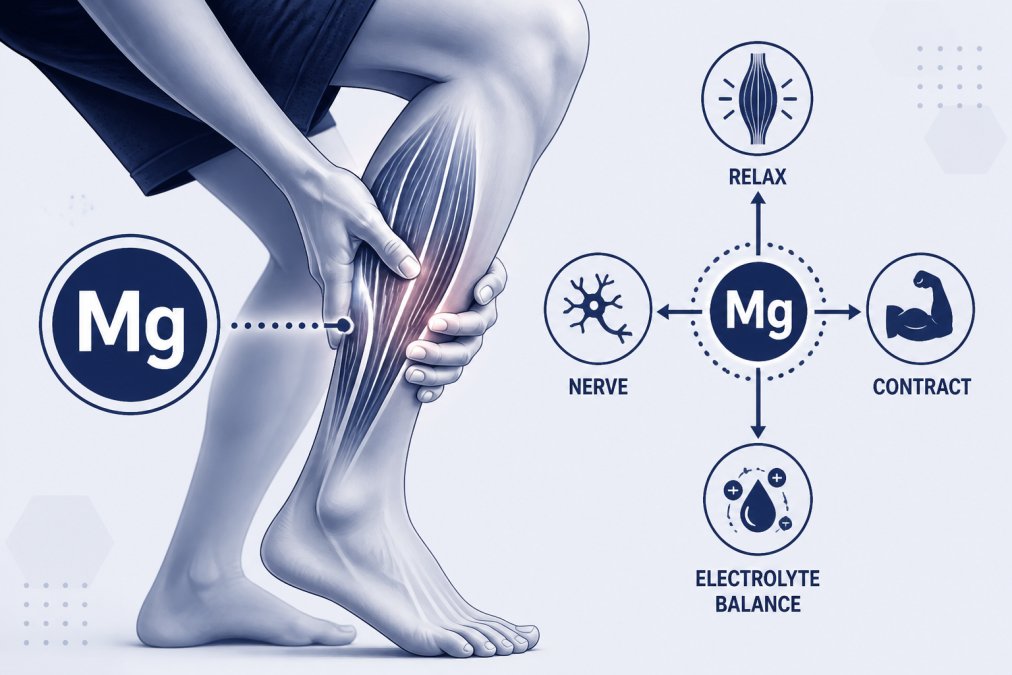
Many athletes and individuals experiencing nocturnal leg cramps report relief after supplementing with magnesium, particularly forms like magnesium glycinate and magnesium citrate. These forms have higher bioavailability than other variants, meaning your body absorbs and uses them more efficiently. Magnesium glycinate, for example, combines magnesium with the amino acid glycine, which itself has calming properties and may enhance absorption.
The connection between electrolyte imbalance and muscle cramps is well-established in exercise physiology. During intense activity or prolonged periods without adequate hydration and mineral intake, electrolytes become depleted. Magnesium depletion specifically impairs neuromuscular function, making muscles more prone to involuntary contractions.
However, it’s important to acknowledge that scientific evidence for magnesium supplementation in the general population with muscle cramps remains mixed. While some individuals see dramatic improvements, others notice minimal change. This variability suggests that magnesium works best for people whose cramps stem from actual magnesium deficiency rather than other causes like dehydration, poor circulation, or nerve dysfunction.
If you’re considering magnesium for nocturnal leg cramps, start with magnesium citrate or glycinate forms rather than magnesium oxide, which many people find causes digestive upset and is less efficiently absorbed by your body.
How CBD Works for Muscle Recovery and Relaxation
CBD interacts with the endocannabinoid system, a complex cell-signaling network that regulates pain perception, inflammation, and muscle tension. Rather than directly forcing muscles to relax like some pharmaceutical options, CBD may modulate how your nervous system perceives and responds to pain signals.
The endocannabinoid system includes receptors throughout the nervous system and in muscle tissue itself. When CBD binds to these receptors, it may reduce inflammatory responses and alter pain signaling pathways. For muscle cramps, this means CBD might reduce the intensity of cramping sensations even if it doesn’t directly prevent the muscle contraction itself.
Many users report that CBD helps them relax before sleep, which indirectly supports muscle recovery. Better sleep quality allows muscles to repair and regenerate more effectively. Additionally, CBD’s potential anti-inflammatory properties may help reduce muscle soreness that follows intense exercise or cramping episodes.
Topical CBD applications, creams, gels, and patches, deliver cannabidiol directly to affected areas. This localized approach means the compound works on nearby nerve endings and inflamed tissue without entering systemic circulation significantly. For localized muscle cramps, topical CBD may provide faster relief than oral supplements.
The limitation here is that clinical evidence specifically linking CBD to muscle cramp prevention remains limited. Most research focuses on CBD for general pain management and inflammation rather than cramping specifically. This means your experience with CBD depends heavily on individual factors like your endocannabinoid system sensitivity and the root cause of your cramps.
Best Magnesium for Muscle Cramps: Types and Bioavailability
Not all magnesium supplements perform equally. Bioavailability, the percentage your body actually absorbs and uses, varies dramatically by form. Understanding these differences helps you select the most effective option for your situation.
Magnesium Glycinate binds magnesium to glycine, an amino acid with its own calming properties. This form has excellent bioavailability and rarely causes digestive issues. Thorne Magnesium Bisglycinate Powder represents this category well, offering high absorption and the flexibility of powder dosing. This form works particularly well for people with sensitive digestion or those seeking additional relaxation support.
Magnesium Citrate combines magnesium with citric acid, creating another highly absorbable form. Nature Made Magnesium Citrate 250 mg Softgels exemplifies this approach, providing an economical option widely available at retailers. Magnesium citrate has a mild laxative effect for some users, which can actually be beneficial if constipation accompanies your muscle issues.
Magnesium Oxide is the most common and cheapest form, but it has poor bioavailability and frequently causes digestive upset. Many practitioners recommend avoiding this form despite its low cost.
Magnesium Malate combines magnesium with malic acid and is often marketed for muscle pain and fatigue. Some evidence suggests it may be particularly helpful for exercise-related cramping, though research remains preliminary.
For best results with magnesium supplementation, consistency matters more than form. Taking your chosen magnesium daily allows levels to build in your system, supporting neuromuscular function over time. Most people notice improvements within 2-4 weeks of consistent use.
Taking too much magnesium can cause diarrhea and digestive discomfort. Start with lower doses and gradually increase to find your tolerance threshold. If you have kidney disease or take certain medications, consult a healthcare provider before supplementing.
FDA Regulations on CBD Supplements and What They Mean for Safety
The FDA has not approved CBD as a dietary supplement ingredient, which creates a complex regulatory landscape. CBD products marketed as dietary supplements operate in a gray area where the FDA has enforcement discretion but hasn’t established clear approval pathways. This means you need to evaluate CBD product quality independently rather than relying on FDA approval as a safety guarantee.
However, responsible CBD manufacturers follow Good Manufacturing Practice (GMP) standards voluntarily. CBD Health Collection, for example, produces all products in a GMP- and FDA-registered facility, ensuring consistent quality and purity standards. Independent third-party lab testing provides another critical safety layer, legitimate companies share Certificates of Analysis (COA) showing exactly what’s in each batch.
The FDA has issued warnings to companies making unsubstantiated health claims about CBD, particularly claims that it cures diseases or completely replaces medical treatment. When evaluating CBD products, avoid those making absolute cure claims and instead look for companies describing CBD as supporting wellness and relaxation.
For muscle cramps specifically, ensure any CBD product you purchase comes with accessible lab testing results showing cannabinoid content and screening for contaminants like heavy metals and pesticides. This transparency indicates the manufacturer prioritizes safety and quality.
CBD Health Collection products suit health-conscious consumers prioritizing verified purity and [optimal bioavailability](/how-to-improve-cbd-bioavailability-for-pain/). Their water-based CBD formulation enhances absorption, and every product includes independent third-party lab testing with accessible results.
Natural Remedies for Nocturnal Leg Cramps: CBD, Magnesium, and Combined Approaches
Nocturnal leg cramps, those painful nighttime muscle contractions, respond differently to various interventions. Many people find that a multi-pronged approach works better than relying on a single remedy.
Hydration forms the foundation. Dehydration concentrates electrolytes and increases cramping risk. Drinking adequate water throughout the day, particularly before bed, prevents many nocturnal cramps without requiring supplements.
Stretching before sleep helps prevent cramping by maintaining muscle flexibility and reducing baseline tension. Gentle calf stretches, hamstring stretches, and hip flexor stretches take just five minutes but significantly reduce cramping frequency for many people.
Magnesium supplementation addresses the electrolyte component directly. Taking magnesium 1-2 hours before bed allows absorption and supports the mineral balance needed for muscle relaxation during sleep. Combined with hydration and stretching, magnesium supplementation creates a comprehensive approach to nocturnal cramp prevention.
CBD can complement these strategies by promoting relaxation and potentially reducing pain if cramps do occur. Some people use CBD oil sublingually before bed or apply topical CBD to their legs. The relaxation support from CBD may also improve sleep quality, which indirectly supports muscle recovery.
Heat application during active cramps provides immediate relief. A heating pad or warm bath relaxes tense muscles and improves circulation. This works well alongside CBD or magnesium for acute cramping episodes.
Combining CBD and Magnesium: Safety, Synergy, and Practical Dosage Guidelines
Using CBD and magnesium together addresses muscle cramps from multiple angles: magnesium supports the electrolyte and neuromuscular foundation while CBD may reduce pain perception and inflammation. The two compounds don’t interact negatively, making combination use generally safe for most people.
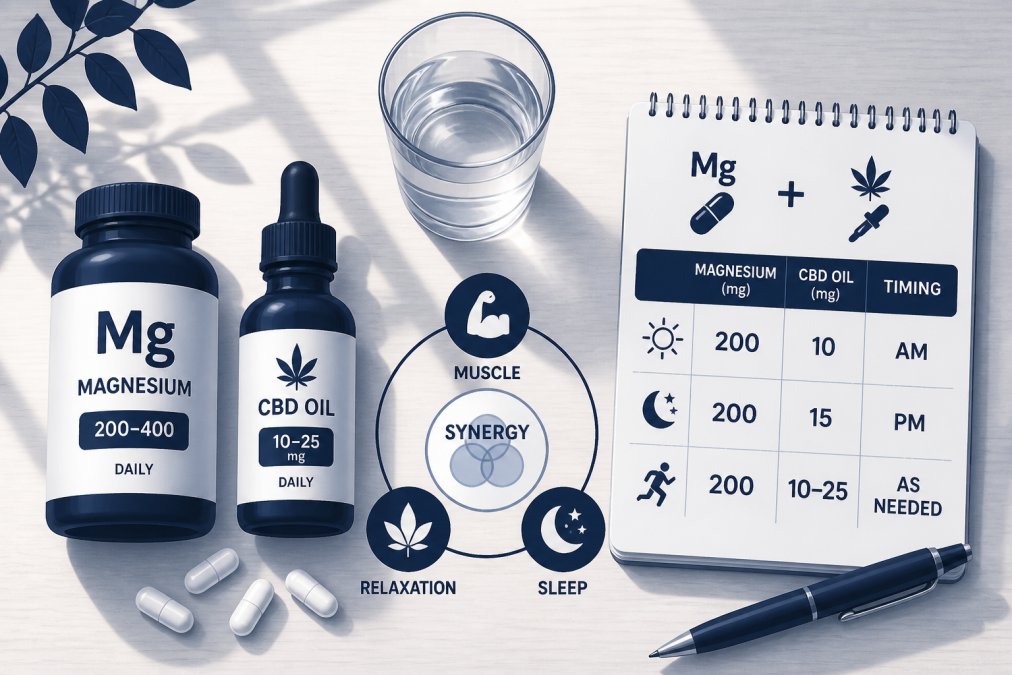
Synergistic Mechanism of Action occurs because these compounds work through different biological pathways. Magnesium restores electrolyte balance and supports proper skeletal muscle contraction physiology. CBD influences pain signaling through the endocannabinoid system. Together, they provide complementary support, one addressing the mechanical muscle function issue while the other addresses pain perception and inflammation.
Practical Dosage Guidelines depend on your individual needs and response. For magnesium, most people benefit from 200-400 mg daily, taken consistently. Magnesium glycinate or citrate forms work best for muscle support. For CBD, starting doses range from 10-20 mg daily, gradually increasing based on your response. Many people find 25-50 mg daily effective for relaxation and muscle support.
Timing matters. Take magnesium 1-2 hours before bedtime to support nighttime muscle function. CBD can be taken at the same time for combined relaxation support. If using topical CBD, apply directly to affected areas after magnesium supplementation for localized and systemic support.
Bioavailability Comparison between oral and topical applications influences effectiveness. Oral magnesium enters systemic circulation and supports whole-body electrolyte balance. Oral CBD has variable absorption depending on whether you take it with food. Topical CBD bypasses digestion entirely and works on localized nerve endings and inflammation, making it useful for specific cramping areas.
Start conservatively with either supplement, particularly if you take medications or have existing health conditions. Individual responses vary significantly, and what works powerfully for one person may have minimal effect for another. Track your cramping frequency and intensity over 3-4 weeks to assess whether the combination is working for your situation.
If you take blood thinners, have kidney disease, or use certain medications, consult a healthcare provider before combining magnesium and CBD supplements. Magnesium can interact with some medications, and CBD may affect how your body metabolizes certain drugs.
Conclusion: Choosing Between CBD and Magnesium for Your Muscle Cramps
Muscle cramps result from complex interactions between hydration, electrolyte balance, muscle tension, and nerve signaling. Neither CBD nor magnesium alone addresses every factor, which explains why individual results vary so dramatically.
Choose magnesium if your cramps correlate with intense exercise, inadequate hydration, or dietary deficiency. The evidence supporting magnesium for electrolyte balance is stronger than evidence for CBD specifically for cramping. Magnesium glycinate or citrate forms offer the best bioavailability and tolerability.
Choose CBD if your cramps accompany anxiety, poor sleep, or significant pain perception. CBD’s potential to support relaxation and reduce pain signaling makes it valuable for people whose cramping stems from muscle tension and stress rather than pure electrolyte depletion.
Consider combining both if you’re experiencing persistent nocturnal leg cramps or cramping that hasn’t responded to single-intervention approaches. The complementary mechanisms mean they support each other without competing for the same biological pathways.
Start with the most fundamental intervention: consistent hydration and daily stretching. Add magnesium supplementation for 3-4 weeks and track results. If cramping persists, introduce CBD, either oral for systemic support or topical for localized relief. CBD Health Collection offers both options with independently verified purity and optimal bioavailability through water-based formulations. Their 30-day satisfaction guarantee means you can evaluate whether their products work for your specific situation without financial risk. Visit cbdhealthcollection.com to explore their full range of CBD and complementary wellness products designed to support muscle recovery and relaxation.
| Approach | Best For | Timeline | Cost Consideration |
|---|---|---|---|
| Magnesium alone | Exercise-related cramping, electrolyte depletion | 2-4 weeks to notice improvement | Budget-friendly option |
| CBD alone | Anxiety-related cramping, pain sensitivity | 1-2 weeks for relaxation effects | Higher initial investment |
| Hydration + stretching | All cramp types (foundational) | Immediate to 1 week | No cost |
| Combined CBD + magnesium | Persistent, multi-factor cramping | 3-4 weeks for full effect | Moderate investment |
| Topical CBD + oral magnesium | Localized cramping with systemic support | 1-2 weeks | Moderate to higher cost |
Frequently Asked Questions
Is CBD or magnesium better for muscle cramps?
Neither has definitive superiority, both work through different mechanisms. Magnesium addresses electrolyte imbalance and supports neuromuscular function, making it effective for cramp prevention when deficiency exists. CBD may reduce muscle tension and inflammation through the endocannabinoid system, offering relief during cramping episodes. The better choice depends on your cramp type: magnesium for chronic deficiency-related cramps, CBD for inflammatory or tension-based cramps. Many people find combining both offers broader relief.
Can you take CBD and magnesium together for muscle pain?
Yes, taking CBD and magnesium together is generally safe and may provide complementary benefits. Magnesium supports skeletal muscle contraction and relaxation, while CBD may reduce inflammation and muscle tension. No significant drug interactions exist between them. However, always consult a healthcare provider before combining supplements, especially if you take medications. Start with standard dosages of each and monitor your response before adjusting amounts.
Which form of magnesium is best for muscle cramps?
Magnesium glycinate and magnesium citrate offer the highest bioavailability for muscle support. Glycinate binds magnesium to the amino acid glycine, enhancing absorption and reducing digestive side effects while supporting muscle relaxation. Citrate is well-absorbed and affordable. Avoid magnesium oxide, which has poor bioavailability and often causes digestive upset. For nocturnal leg cramps specifically, glycinate taken 1-2 hours before bed may provide the best results due to its calming properties and absorption rate.
What are the side effects of using CBD for muscle recovery?
CBD is generally well-tolerated, but some users report fatigue, dry mouth, appetite changes, or mild dizziness, especially at higher doses. Topical CBD applications rarely cause systemic side effects. CBD may interact with medications metabolized by the liver's CYP3A4 enzyme, potentially affecting drug efficacy or levels. The FDA does not regulate CBD supplements the same way as medications, so product quality varies. Choose independently tested products from reputable sources to minimize contamination risks and ensure accurate dosing.
How does magnesium help with skeletal muscle cramps?
Magnesium is essential for proper skeletal muscle contraction and relaxation. It regulates calcium flow into muscle cells and maintains electrolyte balance, which is critical for neuromuscular signaling. Magnesium deficiency disrupts this balance, leading to involuntary muscle contractions and cramps. By restoring magnesium levels, you support the ion channels and proteins that control muscle relaxation, reducing cramp frequency and severity. This is especially relevant for nocturnal leg cramps and exercise-induced cramping in individuals with insufficient dietary magnesium intake.
This article was written using GrandRanker