Table of Contents
- Understanding Runner’s Knee and How CBD May Help
- How CBD Interacts With Inflammation and Joint Pain
- Topical CBD vs. Oral CBD for Knee Pain Relief
- CBD Dosage Guidelines for Athletes
- Step-by-Step: How to Apply CBD Topicals for Runner’s Knee
- Runner’s Knee Recovery Tips: Combining CBD With Physical Therapy
- Safety, Side Effects, and When to See a Doctor
- Verifying Quality: Third-Party Testing and Potency
- Frequently Asked Questions
Last Updated: September 3, 2026
Understanding Runner’s Knee and How CBD May Help
Runner’s knee, medically known as patellofemoral pain syndrome, develops around the kneecap due to repetitive stress, muscle imbalances, or improper alignment. The condition affects distance runners, sprinters, and high-impact athletes. Many turn to CBD as part of their recovery strategy, seeking natural alternatives to manage inflammation and joint discomfort alongside conventional treatments.
When you run, forces equivalent to 2-3 times your body weight compress the knee joint with each stride (peer-reviewed research). Over time, this repetitive impact triggers an inflammatory response that creates a cycle of pain and reduced mobility. CBD, or cannabidiol, is a non-psychoactive compound from hemp that interacts with the body’s endocannabinoid system. The endocannabinoid system regulates pain perception and inflammatory responses, which is why some runners report that CBD helps them manage symptoms while working through rehabilitation exercises.
The key to effective runner’s knee management is combining multiple approaches. CBD works best as part of a comprehensive recovery routine that includes stretching, strengthening, proper footwear, and rest.
How CBD Interacts With Inflammation and Joint Pain
CBD’s mechanism centers on its interaction with cannabinoid receptors involved in inflammation regulation. Research suggests CBD may modulate inflammatory markers by influencing immune cell activity and reducing pro-inflammatory cytokine production (peer-reviewed research). This helps regulate the inflammatory response so it supports tissue repair without excessive pain or swelling that limits training.
CBD may reduce pain signaling through multiple pathways. Many athletes experience referred pain patterns around the knee, with tightness in the hip, calf, or quadriceps compounding patellofemoral pain. By potentially reducing pain perception, CBD may help break this cycle and allow fuller engagement in physical therapy exercises that resolve underlying dysfunction.
CBD is not an analgesic in the traditional sense. It doesn’t numb pain like topical anesthetics do. Instead, it appears to work through longer-term modulation of pain and inflammatory pathways, so expect gradual improvement over days or weeks, not immediate relief.
CBD’s role in managing runner’s knee centers on regulating inflammation and pain signaling, not eliminating pain entirely. This allows you to participate more actively in rehabilitation while your body repairs underlying tissue damage.
Topical CBD vs. Oral CBD for Knee Pain Relief
When treating runner’s knee pain with CBD, you have two primary delivery methods: topical applications and oral supplements. Each offers distinct advantages depending on your goals, timeline, and individual response.
Topical CBD for knee pain involves applying a CBD-infused gel, cream, or patch directly to the affected area. This allows cannabinoids to interact with localized receptors in the skin, soft tissue, and potentially the joint capsule. Many runners find topical CBD freeze gels particularly useful because they combine CBD with cooling agents like menthol, providing immediate sensory relief while CBD works on longer-term inflammation. Water-based CBD formulations are designed with optimized bioavailability in mind, meaning cannabinoids are more likely to reach tissues beneath the skin.
Oral CBD, taken as an oil, soft gel, or gummy, enters the bloodstream through the digestive system and distributes throughout the body. This systemic approach means CBD reaches your nervous system, which plays a significant role in pain perception. Oral CBD is particularly useful if you have multiple areas of inflammation or want to address systemic inflammatory response contributing to your injury. The trade-off is absorption, oral CBD must pass through the digestive system and liver metabolism before reaching systemic circulation, reducing the amount of active cannabinoid that reaches your bloodstream compared to topical application.
| Method | Best For | Onset Time | Duration | Coverage |
|---|---|---|---|---|
| Topical CBD | Localized knee pain, immediate sensory relief | 15-30 minutes | 4-6 hours | Patellofemoral region |
| Oral CBD | Systemic inflammation, sleep support, overall recovery | 30-90 minutes | 4-8 hours | Full body |
Many athletes use both methods strategically: topical CBD for acute pain during training or recovery sessions, and oral CBD as part of their daily wellness routine to address systemic inflammation and support sleep.
CBD Dosage Guidelines for Athletes
Finding the right CBD dosage for runner’s knee requires a personalized approach, as individual responses vary based on body weight, metabolism, symptom severity, and prior CBD experience.
For topical CBD, apply roughly a quarter to half-dollar amount directly to the affected knee area. Massage gently into the skin around the patella and surrounding soft tissue. Repeat every 4-6 hours as needed, up to 3-4 times daily.
For oral CBD, dosage titration, starting low and gradually increasing, is most prudent. A common starting point is 10-15 mg daily, taken consistently for 5-7 days to assess your response. If you don’t notice meaningful changes after a week, increase by 5-10 mg every few days until you reach a dose that provides noticeable benefit. Most athletes find effective relief in the 20-40 mg daily range, though some require higher doses. Consistency matters more than sporadic high doses.
Do not dramatically increase your CBD dose hoping for faster results. Higher doses don’t necessarily produce proportionally better outcomes and may increase the likelihood of side effects like drowsiness or digestive changes. Patience with dosage titration is essential.
Body weight, prior CBD experience, and symptom severity all affect how much CBD you need. Heavier individuals often require higher doses, while mild discomfort may respond to lower doses than significant pain and inflammation.
Step-by-Step: How to Apply CBD Topicals for Runner’s Knee
Preparation and Application Technique
Before applying topical CBD to your knee, clean the skin with warm water and mild soap, then pat dry completely. Moisture can interfere with the CBD product’s ability to penetrate effectively. If you’ve just showered, wait 10-15 minutes before applying CBD.
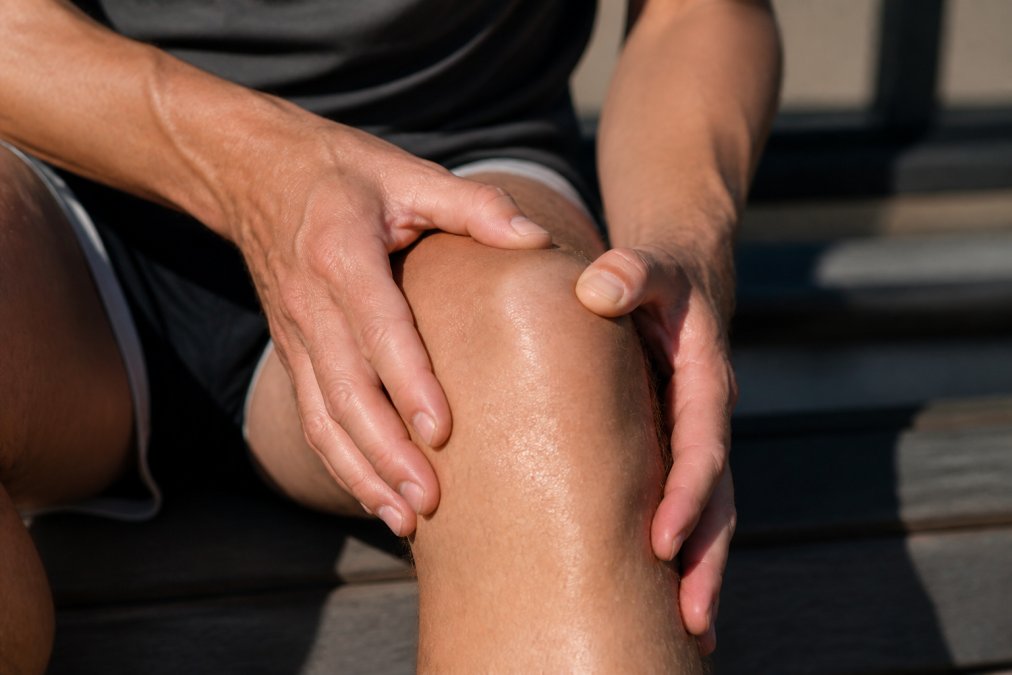
Dispense a small amount of CBD topical, roughly a quarter for mild symptoms or a half-dollar for more significant discomfort, onto your fingertips or palm. Begin at the center of the knee over the patella and use gentle circular motions to work the product into the skin. Expand your application to include surrounding soft tissue: the area above the patella, below the patella, and along the inner and outer edges of the knee. Spend 2-3 minutes on application, allowing the product time to absorb. manage muscle soreness.
Timing and Frequency for Best Results
Many athletes find the most benefit when applying CBD immediately after training, when inflammation is beginning but before significant swelling occurs. Apply topical CBD before stretching or foam rolling your knee area. The combination of CBD application followed by gentle soft tissue work enhances recovery for many runners.
For daily management of chronic runner’s knee, apply topical CBD 2-3 times daily: morning, after training, and evening before bed. If using CBD topicals alongside physical therapy, apply the topical 15-20 minutes before your therapy session, allowing it time to absorb and creating a window where your tissues are primed for therapeutic work.
Many runners report better results when combining topical CBD application with a structured stretching routine. The CBD may reduce pain sensitivity enough to allow deeper, more effective stretching of tight tissues contributing to your knee pain.
Runner’s Knee Recovery Tips: Combining CBD With Physical Therapy
CBD works best as one component of a comprehensive recovery approach addressing the mechanical and muscular causes of runner’s knee. While CBD may help manage pain and inflammation, actual resolution requires addressing muscle imbalances, improving joint alignment, and correcting movement patterns.
A foundational routine includes targeted strengthening of hip abductors and external rotators, muscles that stabilize the pelvis and knee during running. Exercises like single-leg glute bridges, clamshells, and lateral band walks directly address this dysfunction. Perform these 3-4 times weekly. Quadriceps strengthening, particularly the vastus medialis obliquus, helps control patellar tracking and reduces abnormal joint forces.
Flexibility work prevents muscle tightness contributing to poor alignment. Quad stretches, hip flexor stretches, and calf stretches address common tight areas in runners. Hold stretches for 30-45 seconds daily, especially on non-running days.
The R.I.C.E. method, rest, ice, compression, elevation, remains relevant for acute flare-ups. When pain suddenly worsens, take 1-2 days of reduced activity, apply ice for 15-20 minutes several times daily, wear a compression sleeve, and elevate the leg. Recovery timelines vary based on severity and training modifications. Mild cases may improve within 2-4 weeks of consistent physical therapy, while moderate cases typically require 4-8 weeks (peer-reviewed research).
Safety, Side Effects, and When to See a Doctor
CBD is generally well-tolerated, but common side effects include drowsiness, dry mouth, appetite changes, and mild digestive changes. If CBD makes you feel sedated, take it in the evening rather than before training.
Drug interactions are possible, particularly with medications metabolized by the liver’s cytochrome P450 system. If you take prescription medications, especially blood thinners, anti-seizure medications, or immunosuppressants, consult your healthcare provider before starting CBD.
Seek professional evaluation if your knee pain persists beyond 2 weeks despite self-care, if pain significantly limits your activities, if swelling doesn’t respond to ice and elevation, or if you develop instability or a sensation that your knee might “give way.” If working with a physical therapist, inform them about your CBD use.
Verifying Quality: Third-Party Testing and Potency
The CBD market lacks comprehensive federal regulation, so product quality varies dramatically between brands. Third-party testing is your primary tool for verifying that a CBD product contains what the label claims and is free from contaminants.
A certificate of analysis (COA) from an independent laboratory tests your CBD product for potency, purity, and contaminants. Legitimate CBD brands make their COAs publicly available on their website or upon request. When reviewing a COA, look for the testing laboratory’s name and accreditation, recent testing date (within 6-12 months), specific product batch number, and cannabinoid profile showing CBD content. The CBD amount should match the product label claim within a reasonable margin (typically ±10%).
At CBD Health Collection, all products are independently third-party lab tested for purity and potency. Each product comes with a COA verifying it contains the stated amount of CBD, is free from heavy metals and pesticides, and has been produced in a GMP- and FDA-registered facility. This transparency allows you to confidently use CBD products knowing exactly what you’re taking.
Avoid products making exaggerated health claims, lacking visible contact information, or refusing to provide third-party testing documentation. Water-based CBD formulations represent an advancement in bioavailability compared to traditional oil-based products and typically offer superior absorption and therapeutic delivery.
Treating runner’s knee pain with CBD requires a thoughtful approach combining the right CBD product with evidence-based physical therapy and recovery practices. Inflammation and pain associated with patellofemoral pain syndrome respond best to comprehensive strategies, not single solutions. CBD Health Collection offers topical freeze gels and oral formulations specifically designed for joint health and pain relief, all independently tested for purity and potency. Our products are made from organically grown hemp, extracted using clean CO2 processing, and backed by a 30-day satisfaction guarantee. Start your runner’s knee recovery plan with products formulated to support your rehabilitation journey while you work through the physical therapy that actually resolves the underlying dysfunction.
Frequently Asked Questions
Q: How long does it take for CBD to help with runner’s knee pain?
A: Topical CBD products often provide localized relief within 10-15 minutes of application, though individual responses vary. For systemic inflammation reduction, oral CBD may take several days to weeks of consistent use. Recovery timelines depend on injury severity, consistency of use, and whether you combine CBD with physical therapy and rest. Many users report noticeable improvements within 2-4 weeks when using CBD as part of a comprehensive recovery routine.
Q: Is CBD effective for treating runner’s knee, or is it just hype?
A: CBD interacts with the endocannabinoid system to help reduce inflammation and support joint mobility. While more human clinical trials are needed, many athletes report meaningful relief when combining CBD with established recovery methods like physical therapy, stretching, and the R.I.C.E. method. CBD works best as part of a comprehensive approach rather than as a standalone treatment. Results vary by individual, product quality, and dosage consistency.
Q: Should I use a CBD topical or oral CBD oil for runner’s knee pain?
A: CBD topicals (freeze gels, creams, patches) deliver localized relief directly to the knee and work quickly for acute pain management. Oral CBD (oils, gummies) supports systemic inflammation reduction and overall recovery. Many runners use both: topicals for immediate pain relief during or after activity, and oral CBD daily for ongoing inflammation management. Topicals avoid first-pass metabolism, while oral products support whole-body joint health and endocannabinoid system balance.
Q: How do I know if a CBD product is actually pure and safe?
A: Look for products with a Certificate of Analysis (COA) from an independent third-party lab that verifies potency and screens for contaminants, heavy metals, and pesticides. Reputable brands source hemp from U.S. farms, use clean extraction methods like CO2 processing, and produce in GMP- and FDA-registered facilities. Request the COA before purchasing, and verify the lab is accredited. Transparent brands publish lab results on their website or provide them upon request.
This article was written using GrandRanker