Table of Contents
- What CBD Oil Actually Does for Marathon Runners
- CBD for Muscle Inflammation and Recovery
- CBD Oil Dosage for Athletes: Finding Your Effective Range
- Is CBD Banned in Sports? What Marathon Runners Need to Know
- Sleep Quality and Stress Recovery: Where CBD Delivers Results
- How to Choose High-Quality CBD Products That Actually Work
- The Real Value: Is CBD Oil Worth the Investment for Your Training?
Last Updated: August 18, 2026
What CBD Oil Actually Does for Marathon Runners
CBD oil doesn’t work like ibuprofen. It doesn’t block pain signals or reduce inflammation through the same mechanism as NSAIDs. Instead, cannabidiol interacts with your endocannabinoid system, a network of receptors throughout your body that helps regulate homeostasis, stress response, and recovery. For marathon runners, this distinction matters because is CBD oil worth it for marathon runners depends entirely on what you’re trying to solve and whether you’re willing to wait for results that take days or weeks rather than hours.
The endocannabinoid system influences inflammation, sleep quality, stress hormones like cortisol, and pain perception. When you train hard, you create micro-tears in muscle fibers and trigger inflammatory cascades that are actually necessary for adaptation. But excessive inflammation without adequate recovery leads to delayed onset muscle soreness (DOMS), joint stiffness, and compromised performance in subsequent training sessions. This is where runners often turn to CBD, not as a replacement for ice baths and sleep, but as a complement to their recovery protocol.
What makes this question complex is that individual responses vary significantly. A runner dealing with chronic joint pain from years of impact training may experience meaningful relief, while another runner with primarily muscular fatigue might notice nothing. The research on CBD remains limited in scope, with most studies focusing on general inflammation or anxiety rather than athletic performance specifically. This means you’re largely working with anecdotal reports and mechanistic reasoning rather than definitive clinical evidence.
The timing of when you use CBD matters. Taking it post-run addresses acute inflammation and muscle soreness, while taking it before bed targets sleep quality and stress recovery, two completely different use cases with different expected outcomes.
CBD for Muscle Inflammation and Recovery
Inflammation after hard training isn’t inherently bad, it’s part of the adaptation process. Your body detects damage, mounts an inflammatory response, and rebuilds stronger. The problem emerges when inflammation becomes excessive or chronic, preventing adequate recovery between sessions. Many runners find that managing inflammation strategically allows them to train more consistently without lingering soreness that compromises the next workout.
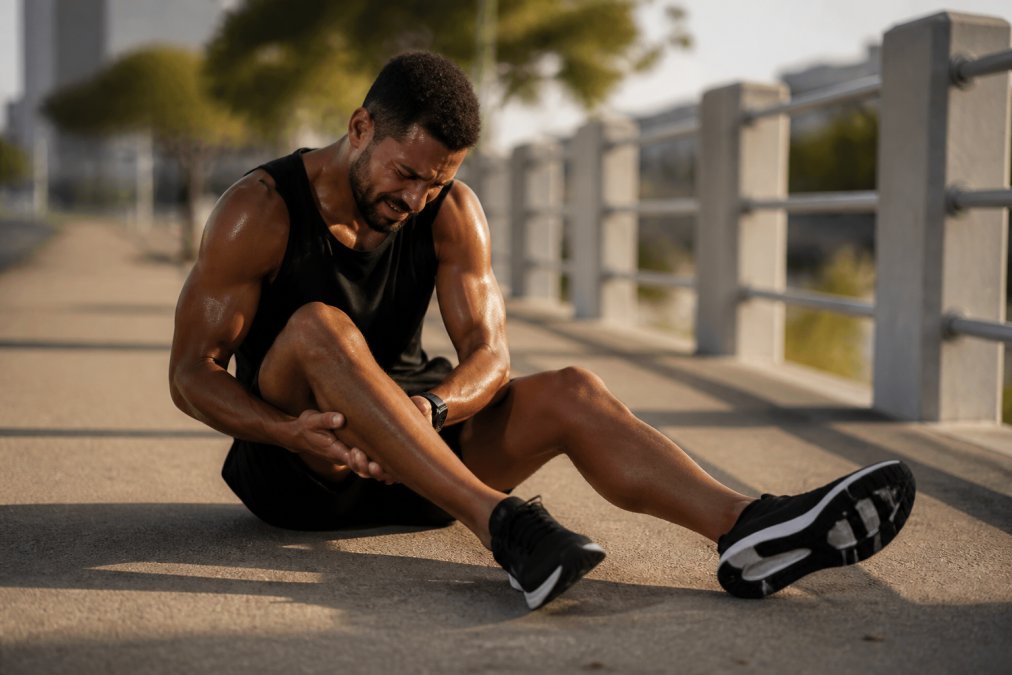
CBD’s potential role here centers on its anti-inflammatory properties. The endocannabinoid system helps regulate immune responses and inflammatory cytokines. When you consume CBD oil, it may help modulate this response, reducing excessive inflammation without shutting down the beneficial adaptation signaling your body needs. For runners experiencing DOMS or chronic inflammation from high training volume, this modulation could theoretically accelerate recovery.
The practical question is timing and consistency. A single dose of CBD oil won’t eliminate soreness from a 20-mile run. But runners who take CBD daily or in the days following hard efforts report that soreness resolves faster and training-induced joint discomfort decreases. This isn’t dramatic pain elimination like a topical cream with menthol provides, it’s a subtle reduction in inflammatory burden that compounds over weeks.
CBD Health Collection’s topical freeze gel roll-on offers a different approach for localized inflammation. The menthol and camphor provide immediate cooling sensations while the CBD targets the underlying inflammatory response. For runners with specific problem areas, a knee that flares after long runs, an ankle that’s chronically tight, the topical route delivers faster, localized relief than ingested CBD oils. The trade-off is that topicals don’t address systemic inflammation the way ingested products do.
The broad-spectrum CBD oil from CBD Health Collection excludes THC entirely, which matters for athletes concerned with drug testing. Broad-spectrum products still contain other cannabinoids and terpenes that may provide an "entourage effect", where multiple compounds work synergistically, without any psychoactive effects or testing complications.
For inflammation management, consistency matters more than dose. A runner taking CBD daily sees better results than someone who uses it sporadically. Start with lower doses and assess over 2-3 weeks before concluding whether it’s effective for your specific inflammation patterns.
CBD Oil Dosage for Athletes: Finding Your Effective Range
There’s no official dosage guideline for CBD in athletes because the FDA doesn’t regulate CBD as a medication. This means dosing is largely empirical, you find what works for your body through careful observation. The range published in available research spans from 5 mg to 1,500 mg daily, depending on the condition being addressed and individual factors like body weight, metabolism, and the specific product’s bioavailability.
For a marathon runner using CBD oil for recovery and inflammation, most people start in the 10-30 mg daily range and adjust based on results. Some athletes find relief at 15 mg, while others need 50-75 mg to notice meaningful effects. The common mistake is taking too little for too short a period, then assuming CBD doesn’t work. Many runners need 2-3 weeks of consistent dosing before they can reliably assess whether it’s helping.
Bioavailability, how much of the CBD your body actually absorbs and utilizes, varies dramatically by delivery method. Sublingual oils (held under the tongue before swallowing) bypass some first-pass liver metabolism and absorb faster, typically within 15-45 minutes. Ingested CBD in food or capsules takes longer (1-2 hours) and may have lower bioavailability due to stomach acid and digestive processes. CBD Health Collection uses water-based formulations designed for optimized bioavailability, which means you may need lower doses than oil-based products from other brands to achieve similar effects.
Body weight influences dosing. A 150-pound runner typically needs different amounts than a 200-pound runner, though the relationship isn’t perfectly linear. A practical approach: start with 0.1-0.2 mg per pound of body weight daily, then adjust based on results. For a 160-pound runner, that’s roughly 16-32 mg daily as a starting point.
Split dosing, taking CBD twice daily rather than once, often works better for runners. A dose in the morning addresses daytime inflammation and stress, while an evening dose supports sleep quality and overnight recovery. This approach maintains more consistent endocannabinoid system activity than a single larger dose.
| Dosage Strategy | Typical Range | Best For | Timeline to Assess |
|---|---|---|---|
| Low/conservative | 10-20 mg daily | Testing tolerance, first-time users | 2-3 weeks |
| Moderate | 20-50 mg daily | Most runners, general recovery support | 2-3 weeks |
| High/therapeutic | 50-100+ mg daily | Chronic pain, severe inflammation | 3-4 weeks |
| Split dosing | 10-25 mg twice daily | Sleep + daytime inflammation | 2-3 weeks |
Is CBD Banned in Sports? What Marathon Runners Need to Know
This is where is CBD oil worth it for marathon runners intersects with eligibility and compliance. The answer depends entirely on which sanctioning body governs your racing and whether you’re subject to drug testing.
The World Anti-Doping Agency (WADA) removed CBD from its prohibited list in 2018, meaning CBD itself is legal for athletes competing in Olympic sports, professional cycling, and most organized running events. However, and this is critical, WADA still prohibits THC and THC metabolites. This means you can use CBD, but you cannot use full-spectrum products that contain any detectable THC, even trace amounts.
Understanding the THC Risk
Full-spectrum CBD products contain all compounds naturally present in hemp, including cannabinoids like CBN, CBG, and trace amounts of THC. Federal law allows hemp-derived products to contain up to 0.3% THC by dry weight, which sounds negligible but creates real testing risk. A runner consuming a full-spectrum product with 0.2% THC could theoretically accumulate enough THC metabolites to trigger a positive test, particularly if they use the product daily for weeks leading into a major race.
Broad-spectrum products have THC removed through post-extraction processing, reducing contamination risk dramatically. Isolate products contain only CBD with no other cannabinoids, eliminating THC risk entirely but potentially sacrificing the entourage effect where multiple cannabinoids work synergistically.
For road marathons sanctioned by USA Track & Field (USATF), CBD is generally permitted as long as it’s THC-free. Local running clubs and most marathon events don’t conduct drug testing, so THC content is irrelevant for recreational runners. But if you’re competing in events with stricter testing protocols, elite athlete status, or subject to out-of-competition testing, you need to verify the specific rules for your event and use only products with third-party lab testing confirming non-detectable THC levels.
The Certificate of Analysis (COA) as Legal Protection
The critical protection is the Certificate of Analysis, the lab report that verifies what’s actually in the product. A legitimate COA should specify:
- Total CBD potency (exact milligrams per serving)
- THC content (reported as "non-detectable" or specific ppm, ideally <0.03%)
- Full cannabinoid profile (CBN, CBG, CBC levels)
- Pesticide screening results
- Heavy metals testing
- Microbial testing for mold and bacteria
A COA from an accredited third-party lab (ISO 17025 certified) proves the product is THC-free and contains the labeled amount of CBD. This documentation protects you if testing ever occurs. Broad-spectrum products from reputable brands are inherently safer than full-spectrum alternatives because they’re formulated to exclude THC entirely, but the COA is your verification that the formulation actually succeeded.
Real-World Testing Scenarios
Most recreational marathoners will never face drug testing. But several scenarios create testing risk:
-
Employer drug screening: If your employer conducts random or pre-employment drug tests, THC metabolites could trigger a positive result, even from a legal CBD product. This is the most common real-world risk for working athletes.
-
Elite or sponsored athlete status: If you’re competing for prize money, sponsorship, or elite qualifying standards, event organizers may conduct testing. USATF-sanctioned events can test elite competitors.
-
Military, law enforcement, or government employment: These sectors often have stricter drug testing protocols than civilian employers.
-
International competition: If you’re competing in events outside the United States, different countries have different CBD and THC regulations. Some countries prohibit CBD entirely regardless of THC content.
-
NCAA or collegiate athletics: If you’re running for a college team, NCAA rules prohibit THC but allow CBD. However, NCAA testing is conducted by WADA-accredited labs, so the same THC contamination risk applies.
Never assume a product is THC-free based on marketing claims alone. Contamination happens through multiple pathways: hemp plants naturally contain trace THC, extraction processes can concentrate it, and cross-contamination during manufacturing is possible. Only products with independently verified COA documentation confirming non-detectable THC (<0.03%) are truly safe for athletes subject to drug testing.
Choosing the Right Product Type
For competitive runners or anyone subject to employer drug screening, broad-spectrum CBD oil is the optimal choice. You get the potential benefits of multiple cannabinoids (CBD, CBN, CBG) without THC risk. The entourage effect, where multiple compounds work synergistically, may provide better results than isolate products, while eliminating the testing liability of full-spectrum alternatives.
Isolate products are the safest option if you’re extremely risk-averse, but they contain only CBD with no other cannabinoids, potentially reducing effectiveness. Some runners find isolates less effective than broad-spectrum alternatives, though individual responses vary.
Full-spectrum products should be avoided entirely by competitive runners, anyone subject to drug testing, or athletes in sports with strict testing protocols. The cost savings don’t justify the testing risk.
Documentation and Peace of Mind
When purchasing CBD, request the COA before buying. Reputable brands like CBD Health Collection provide third-party lab testing for every product batch, with COA documentation readily accessible on their website. This documentation proves the product is THC-free and contains the labeled amount of CBD, protecting you if testing ever occurs.
The 30-day satisfaction guarantee from quality brands provides additional protection. If you’re concerned about any product, you can test it and return it if needed. This removes financial risk from your initial purchase while you verify the product works for your specific needs.
For serious marathon training, the peace of mind from using a verified, THC-free product is worth the premium over discount alternatives. You’re already investing significant time and effort in training; protecting your eligibility and employment status through product transparency is a logical extension of that commitment.
Sleep Quality and Stress Recovery: Where CBD Delivers Results
Marathon training creates a paradox: the harder you train, the more sleep and recovery you need, yet intense training often disrupts sleep through elevated cortisol, muscle soreness, and racing thoughts about upcoming races. This is where many runners find CBD’s most tangible benefit. While inflammation reduction is subtle and requires weeks to assess, sleep improvement is often noticeable within days.
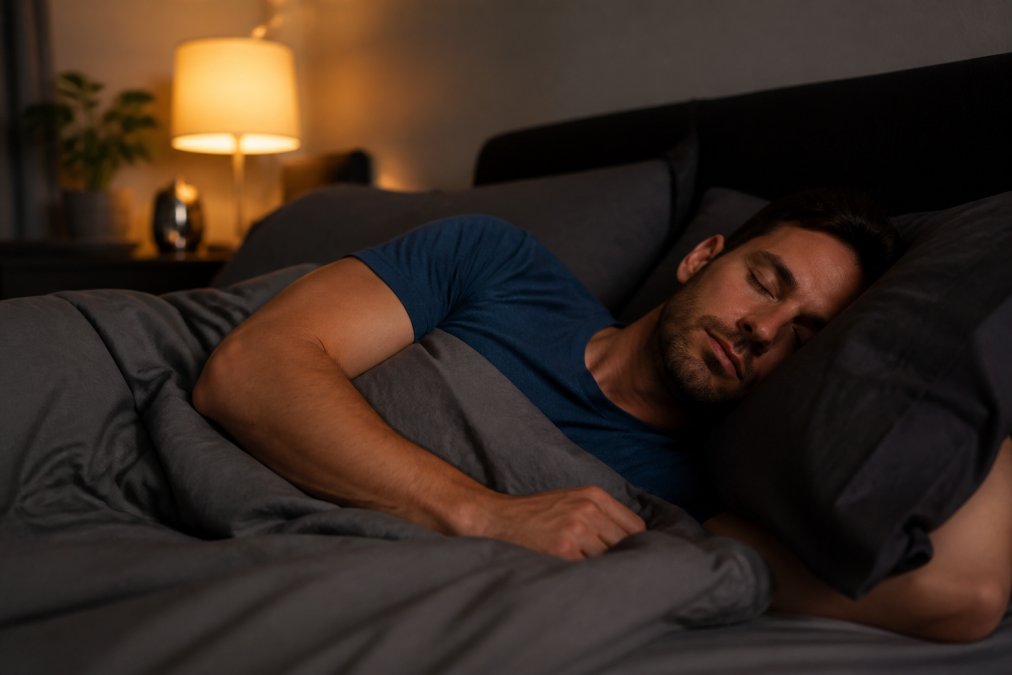
CBD influences sleep through multiple pathways. It may reduce anxiety that keeps runners mentally active at night, replaying workouts, worrying about upcoming races, analyzing every twinge. It also appears to influence serotonin and GABA signaling, neurotransmitters involved in relaxation. For runners dealing with post-training hyperarousal (the state where your nervous system is still activated hours after finishing a hard workout), CBD can help shift toward parasympathetic activation, the "rest and digest" mode necessary for sleep.
The timing matters significantly. Taking CBD 30-60 minutes before bed works better than taking it earlier in the evening. Sublingual oils work faster than capsules or gummies, so if sleep is your primary goal, an oil-based product offers quicker onset. CBD Health Collection offers sleep-specific formulations designed with this timing in mind, though their standard broad-spectrum CBD oil works for sleep as well.
Stress recovery extends beyond just sleeping more. Marathon training triggers elevated cortisol, the stress hormone necessary for intense effort but problematic when chronically elevated. Chronic high cortisol impairs immune function, increases injury risk, and slows recovery. CBD appears to help normalize cortisol response, meaning your body can mount appropriate stress responses during hard training but return to baseline more quickly afterward. This is particularly valuable during heavy training blocks when cumulative stress from multiple hard sessions compounds.
Many runners report that combining CBD with other recovery practices, ice baths, stretching, adequate nutrition, produces better results than any single intervention. CBD isn’t a replacement for 8 hours of sleep; it’s an addition that helps you actually achieve that sleep despite training stress. The endocannabinoid system’s role in stress regulation means CBD addresses a fundamental recovery bottleneck for serious runners.
Sleep improvements from CBD are typically noticeable within 3-5 days, while inflammation and stress reduction take 2-3 weeks. If you don’t notice better sleep within a week, dosing or timing may need adjustment, not the product itself.
How to Choose High-Quality CBD Products That Actually Work
The CBD market is fragmented and largely unregulated. Products range from genuinely effective, carefully formulated options to overpriced marketing with minimal actual CBD. For runners making this investment, product quality directly determines whether you’re getting results or wasting money. But quality encompasses more than just purity, bioavailability, how much CBD your body actually absorbs and utilizes, varies dramatically between products and delivery methods, and this difference is often invisible to consumers.
Bioavailability: Why Two Products With the Same CBD Amount Produce Different Results
Bioavailability is the percentage of an ingested substance that reaches your bloodstream in active form. Two CBD products might both contain 25 mg of CBD, but if one has 15% bioavailability and another has 40% bioavailability, you’re actually absorbing 3.75 mg versus 10 mg respectively. This explains why some runners need 50 mg of one product to feel effects while others need only 20 mg of a different product, the difference isn’t individual sensitivity, it’s absorption efficiency.
Delivery method dramatically impacts bioavailability:
Sublingual oils (tinctures): CBD held under the tongue before swallowing bypasses first-pass liver metabolism, where the liver breaks down compounds before they enter general circulation. Sublingual absorption typically reaches 15-35% bioavailability and takes effect within 15-45 minutes. This is why many runners prefer oils for sleep, faster onset means you can take it 30-60 minutes before bed and feel effects by the time you’re ready to sleep. The downside is that sublingual oils have a distinctive earthy taste that some runners find unpleasant.
Ingested capsules or edibles: CBD swallowed with food or in capsule form must survive stomach acid, digestive enzymes, and first-pass liver metabolism before entering circulation. Bioavailability drops to 5-15%, and onset takes 1-2 hours. However, effects last longer (6-8 hours versus 4-6 hours for sublingual), making capsules better for all-day inflammation management. The trade-off is that you need higher doses to achieve the same effect as sublingual products.
Water-based formulations: This is where modern CBD technology creates a competitive advantage. Standard CBD oil is lipophilic (fat-soluble), which means it doesn’t mix well with the water-based environment of your digestive system. Water-based CBD formulations use emulsification technology to break CBD into tiny particles that mix with digestive fluids, dramatically improving absorption. Water-based products can achieve 40-60% bioavailability, nearly double that of traditional oil-based products. This means you need significantly lower doses to achieve results, making your money go further despite higher per-bottle costs.
Topical creams and gels: These absorb through skin into localized tissue rather than entering general circulation. Bioavailability for systemic effects is minimal (topicals don’t significantly raise blood CBD levels), but they deliver high local concentrations to specific areas. A topical freeze gel on your knee after a long run provides localized anti-inflammatory and cooling effects within 10-15 minutes, making it ideal for acute, localized pain. However, topicals don’t address systemic inflammation or support sleep quality the way ingested products do.
Inhalation (vaping): CBD vape products achieve 35-50% bioavailability with near-immediate onset (5-10 minutes), but most runners avoid this method due to respiratory concerns and the difficulty of precise dosing. Inhalation is also less practical for pre-run or pre-sleep timing.
Practical Bioavailability Strategy for Marathon Runners
For sleep support and stress recovery, sublingual oil is optimal: faster onset means you can time it precisely before bed, and the higher bioavailability means lower doses. A 20 mg sublingual dose may produce better sleep results than a 30 mg capsule because more of the CBD actually reaches your bloodstream.
For all-day inflammation management during heavy training blocks, capsules or water-based formulations work better. Capsules provide sustained release over 6-8 hours, supporting recovery throughout the day. Water-based formulations offer the sustained release of capsules with the improved bioavailability of sublingual products, making them the most efficient option if cost-per-effective-dose is your concern.
For acute, localized pain (knee flare after a long run, ankle tightness), topical gels provide the fastest relief, 10-15 minutes, without requiring systemic absorption. Many runners use both: a topical gel for immediate localized relief plus an ingested product for systemic inflammation management.
Third-Party Lab Testing: The Non-Negotiable Standard
Every reputable CBD brand should provide a Certificate of Analysis (COA) for every product batch, showing:
- Exact CBD potency (does the product contain what it claims?)
- THC level (is it truly non-detectable for athletes?)
- Full cannabinoid profile (CBD, CBN, CBG, CBC amounts)
- Pesticide screening (no harmful chemicals)
- Heavy metals testing (no lead, cadmium, or other toxins)
- Microbial testing (no mold, bacteria, or pathogens)
- Solvent residue testing (if solvent extraction was used)
If a brand doesn’t provide COA documentation readily accessible on their website, that’s a red flag. The lab conducting testing should be ISO 17025 accredited, an international standard for testing laboratory competence. This accreditation means the lab meets rigorous quality standards and their results are defensible if you ever need to prove product safety.
Source and Extraction Method
Hemp is a bioaccumulator, it pulls heavy metals and pesticides from soil. USA-sourced, organically grown hemp is significantly safer than imported hemp from unregulated sources. CBD Health Collection uses organically grown, USA-sourced hemp exclusively, eliminating the risk of contamination from unregulated agricultural practices in countries with minimal environmental oversight.
Extraction method influences product quality. CO2 extraction is the gold standard, it preserves cannabinoids and terpenes while avoiding chemical residues. Solvent-based extraction (using ethanol, butane, or propane) is cheaper but risks leaving solvent residues in the final product. Some runners are sensitive to residual solvents, experiencing headaches or digestive upset. CBD Health Collection uses clean CO2 extraction, ensuring a pure product without chemical contamination.
Broad-Spectrum vs. Isolate vs. Full-Spectrum: The Entourage Effect Trade-Off
Broad-spectrum products contain multiple cannabinoids and terpenes but THC is removed through post-extraction processing. Best for athletes concerned with drug testing, broad-spectrum offers the entourage effect (where multiple compounds work synergistically) without THC risk. Most runners find broad-spectrum products more effective than isolates at similar doses.
Isolate products contain pure CBD only, no other compounds. Most predictable dosing and zero THC risk, but potentially less effective than broad-spectrum products. Some runners find isolates underwhelming compared to broad-spectrum alternatives.
Full-spectrum products contain all hemp plant compounds including trace THC. Potentially more effective due to the entourage effect, but unsuitable for athletes subject to testing. The cost savings don’t justify the testing risk for competitive runners.
For marathon runners, broad-spectrum is typically the optimal choice: you get the potential benefits of multiple cannabinoids without THC testing complications.
Brand Reputation and Transparency
Brand reputation matters because it reflects consistency and accountability. A company founded by someone with pharmaceutical industry experience brings scientific rigor to product development. Real customer testimonials describing specific results (not generic praise) indicate products that actually work rather than marketing-driven formulations. Look for testimonials that describe concrete outcomes: "I noticed better sleep within 3 days" or "My knee soreness resolved faster" rather than vague claims like "I feel better."
The 30-day satisfaction guarantee is a practical filter. Reputable brands stand behind their products because they know they work. If a company offers this guarantee, they’re confident enough to refund your money if you’re unsatisfied. This removes financial risk from your initial purchase.
Practical Purchasing Checklist
- Request the COA before purchasing. If the brand won’t provide it, don’t buy.
- Verify the lab is ISO 17025 accredited. This ensures testing quality.
- Check the extraction method. CO2 extraction is superior to solvent-based methods.
- Confirm the source. USA-sourced, organically grown hemp is safer than imported alternatives.
- Choose broad-spectrum if you’re subject to any drug testing. Isolate is acceptable if you want maximum safety but may be less effective.
- Compare bioavailability, not just CBD amount. A 20 mg water-based product may work better than a 30 mg traditional oil.
- Verify the satisfaction guarantee. 30 days is standard; anything less is a red flag.
For runners committed to optimization and willing to invest in quality, these standards separate products that actually work from expensive placebos. The premium cost of high-quality CBD is justified by superior bioavailability, verified purity, and consistent results across batches.
The Real Value: Is CBD Oil Worth the Investment for Your Training?
Whether CBD oil is worth it depends on your specific situation, budget, and what you’re trying to achieve. For a runner dealing with chronic joint pain that compromises training consistency, the value calculation is straightforward, if CBD allows you to train without pain, it pays for itself through improved performance. For a runner with minor post-run soreness, the value proposition is less clear.
Consider your alternatives. NSAIDs like ibuprofen provide faster, more dramatic pain relief but carry risks with chronic use, gut damage, cardiovascular effects, potential impacts on muscle adaptation. Ice baths are free but uncomfortable and time-consuming. Massage is effective but expensive at $60-100 per session. CBD sits in a middle ground: moderate cost, no known serious side effects, but slower and more subtle effects than pharmaceuticals.
The investment includes not just the CBD product but also the time to find your effective dose and assess results properly. Budget 3-4 weeks of consistent use before making a final judgment. Many runners underestimate how long meaningful changes take, they try a product for 5 days, feel nothing, and dismiss it. CBD’s effects compound over time as your endocannabinoid system adjusts.
For serious marathon training, a comprehensive recovery approach that includes CBD makes sense. You’re already investing in proper nutrition, training structure, and sleep. Adding CBD addresses inflammation and stress recovery through a different mechanism than your other interventions. The synergistic effect, CBD supporting sleep, which improves recovery, which reduces injury risk, which allows more consistent training, creates value that exceeds the cost of the product itself.
The practical reality is that high-quality CBD from a reputable brand like CBD Health Collection costs more than discount alternatives, but the difference in effectiveness justifies the premium. A product with verified bioavailability, third-party testing, and consistent potency produces results at lower doses than cheaper alternatives, making the per-dose cost comparable despite higher sticker prices.
For runners committed to optimization and willing to experiment systematically, CBD oil is worth trying. Start with a 3-week trial using a high-quality product from a transparent brand. Track sleep quality, post-run soreness, and overall recovery. If you notice meaningful improvements in any of these areas, you’ve found a valuable tool for your training. If you don’t, the 30-day guarantee from CBD Health Collection ensures you can recoup your investment without financial loss.
Marathon training demands comprehensive recovery. CBD oil addresses specific bottlenecks, inflammation, sleep disruption, and stress response, that limit how consistently you can train and how quickly you bounce back from hard efforts. CBD Health Collection’s broad-spectrum CBD oil, topical freeze gel, and sleep-focused formulations give you multiple tools for different recovery needs. All products are derived from organically grown, USA-sourced hemp, extracted using clean CO2 processes, and independently third-party tested for purity and potency. Get started with CBD Health Collection and experience how optimized bioavailability and transparent quality standards can accelerate your recovery and support your marathon training goals.
Frequently Asked Questions
Does CBD oil actually help marathon runners recover faster?
CBD may support recovery by addressing inflammation and muscle soreness through interaction with the endocannabinoid system, which helps maintain homeostasis in the body. Many runners report reduced delayed onset muscle soreness (DOMS) and improved sleep quality after training, both critical for recovery. However, individual responses vary. High-quality, third-party tested products like those from CBD Health Collection offer the best chance of consistent results, though you should consult a sports medicine professional about incorporating CBD into your specific training plan.
What is the right CBD oil dosage for athletes?
There is no universal dosage for athletes, as optimal CBD oil dosage for athletes depends on body weight, the severity of inflammation, individual metabolism, and the product's potency. Most runners start with 10-20mg daily and adjust upward based on results. Some athletes use higher doses (25-50mg) for acute muscle soreness after long runs. Begin low and track your response over 2-3 weeks before increasing. Third-party lab testing (COA) ensures you know the exact CBD concentration, which is essential for consistent dosing.
Is CBD banned in sports like marathons or professional running?
CBD itself is not banned by WADA (World Anti-Doping Agency) as of 2026. However, full-spectrum CBD products may contain trace amounts of THC, which is a prohibited substance. For competitive marathon runners subject to drug testing, broad-spectrum or isolate CBD products (THC-free) are the safer choice. Always verify your event's specific anti-doping rules before competing, and choose products with a certificate of analysis (COA) confirming zero THC to avoid any compliance issues.
What makes CBD Health Collection different from other CBD brands?
CBD Health Collection combines pharmaceutical expertise (founded by a pharma industry veteran) with science-based product development. Their products are made from organically grown, USA-sourced hemp, extracted using clean CO2 processing, and produced in a GMP- and FDA-registered facility. Every product is independently third-party tested for purity and potency, with a certificate of analysis (COA) available. They also offer a 30-day satisfaction guarantee and free shipping, plus water-based formulations optimized for bioavailability, meaning your body absorbs the CBD more effectively.
How long does it take to feel the effects of CBD oil?
Timing depends on the delivery method. Sublingual CBD oils (held under the tongue) typically show effects within 15-45 minutes due to faster absorption through mucous membranes. Topical products like freeze gels or pain patches provide localized relief in 10-20 minutes but don't address systemic inflammation. Edibles (gummies) take 1-2 hours. For sleep support, taking CBD 30-60 minutes before bed allows time for the calming effects to develop. Consistency over 2-3 weeks is more important than immediate results for chronic inflammation and recovery.
This article was written using GrandRanker