
What if the biggest obstacle to your wellness routine isn’t the supplement itself, but the conversation you’re avoiding with your physician? Many people feel a lingering sense of anxiety when considering how to talk to your doctor about cbd, fearing they might be dismissed or misunderstood. You want to feel supported in your choices, especially as the 2026 federal regulations bring more clarity and safety to the hemp industry. It’s natural to feel hesitant about discussing hemp-derived options like pure gummies or capsules in a clinical setting.
We understand that speaking with a healthcare provider can feel overwhelming when you’re looking for natural relief. You deserve a partnership with your doctor that’s built on transparency and scientific facts rather than old stigmas. This guide will show you exactly how to approach your provider to ensure a safe, supportive, and effective wellness routine. We’ll cover the right questions to ask about drug interactions, how to present your research on third-party testing, and the best way to build a collaborative plan that validates your personal health goals.
Key Takeaways
- Understand the science behind how CBD interacts with your medical history to ensure your wellness routine is both safe and effective.
- Use our pre-appointment checklist to document your specific goals and lifestyle habits, providing your physician with clear data.
- Master professional conversation scripts that show you exactly how to talk to your doctor about cbd with confidence and clarity.
- Identify the three non-negotiable quality markers, such as third-party lab results, that help bridge the gap between hemp products and clinical trust.
- Learn how to navigate professional hesitation by asking the right questions to understand your doctor’s specific clinical concerns.
Why Transparency Matters: CBD and Your Medical History
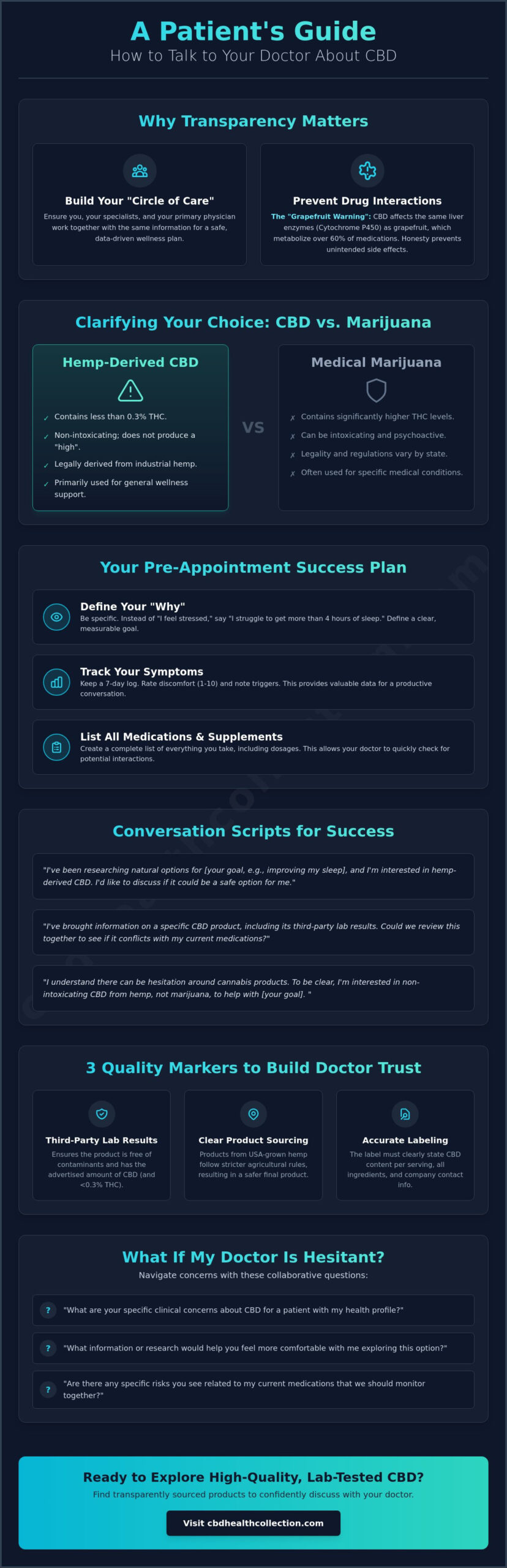
Effective wellness starts with a complete “Circle of Care.” This concept means that you, your specialists, and your primary physician all work together with the same information. When you are learning how to talk to your doctor about cbd, transparency is your most valuable tool. While hemp-derived products are natural, they are still bioactive compounds that interact with your unique physiology. In 2026, healthcare providers are increasingly familiar with the science of Cannabidiol (CBD), but they can only guide you safely if they know exactly what you’re taking.
To better understand the professional perspective on these conversations, watch this helpful video:
Honesty allows your doctor to monitor your progress and adjust other treatments if necessary. A supervised regimen provides peace of mind, ensuring that your choice to use gummies or capsules aligns with your long-term health goals. It’s about moving from a “trial and error” approach to a professional, data-driven wellness plan. You aren’t just a consumer; you’re a proactive participant in your own healthcare.
CBD and Potential Drug Interactions
The main reason doctors need to know about your CBD use involves the Cytochrome P450 enzyme system. This system in your liver is responsible for metabolizing over 60% of common medications. CBD can temporarily “occupy” these enzymes, which might slow down or speed up how your body processes other drugs. This is often called the “Grapefruit Warning” because CBD affects the body in a similar way to grapefruit juice. If your doctor has told you to avoid grapefruit with your blood thinners or NSAIDs, they definitely need to know about your interest in CBD. Being open helps prevent unintended side effects and ensures your primary medications work exactly as intended.
The Difference Between CBD and Medical Marijuana
One common hurdle in learning how to talk to your doctor about cbd is the fear of being associated with recreational marijuana. It’s helpful to clarify that you’re interested in industrial hemp-derived products. These options, like CBD capsules or freeze gels, are non-intoxicating and contain less than 0.3% THC. By 2026, federal rules have even introduced a cap of 0.4 milligrams of total THC per finished product container to ensure safety. By explaining that you’re seeking the wellness benefits of hemp without the “high” of marijuana, you help your doctor see CBD as a legitimate tool for stress or physical discomfort rather than a recreational choice.
Preparing for Your Appointment: The CBD Pre-Checklist
Walking into your appointment with a clear plan changes the dynamic from a patient asking permission to a partner proposing a wellness strategy. When you’re learning how to talk to your doctor about cbd, your preparation serves as a bridge of trust. Doctors value data. By providing specific details about your daily experience, you help them make informed decisions regarding your care. This proactive approach shows you’re serious about your health and that you’ve done the necessary research to prioritize safety.
Start by documenting your “Why” with precision. Instead of saying you “feel stressed,” describe the actual impact on your life. Do you struggle to stay asleep past 3:00 AM? Does physical discomfort in your lower back peak after four hours at your desk? Defining your specific wellness goals, such as achieving six hours of uninterrupted rest, helps your physician understand the intended outcome of your CBD use. If you haven’t selected a delivery method yet, browsing a trusted source like CBD Health Collection can help you identify high-quality options to discuss.
Symptom Tracking for Better Results
A 7-day symptom and lifestyle log is an excellent tool for a productive visit. Track your discomfort on a scale of 1 to 10 and note any specific triggers or the time of day when symptoms are most intense. This level of detail is much more helpful than general statements. You should also gather a complete list of your current supplements and medications. Since we previously discussed how CBD interacts with liver enzymes, having this list ready allows your doctor to quickly check for potential conflicts with your existing routine.
Bringing Product Evidence
Evidence is the best way to address professional skepticism. Bring the physical bottle or a printed Certificate of Analysis (COA) to your visit. This document proves the product is third-party tested and matches the label claims. Look for markers like “USA Grown” and “Organic” to highlight purity and quality control. This level of transparency is vital because of what the FDA says about CBD safety and the importance of avoiding contaminants. You can find more details on evaluating these delivery methods in our guide to understanding CBD products. Knowing whether you prefer CBD gummies for systemic support or a CBD freeze gel for targeted relief helps your doctor evaluate the absorption and duration of the product.
Exactly What to Say: Conversation Scripts for Success
Approaching your physician with specific phrasing can lower your anxiety and lead to a more productive visit. When learning how to talk to your doctor about cbd, it helps to frame the conversation around a “complementary” approach. This means you aren’t looking to replace your current treatments, but rather to find a natural tool that works alongside them. It’s about enhancing your wellness, not substituting professional medical advice.
Doctors are primarily concerned with safety and how new substances might affect your existing prescriptions. By mentioning that you’ve researched potential drug interactions, you show that you value their expertise in managing your health. This preparation transforms the discussion from a vague request into a professional wellness consultation.
Sample Script: Bringing up CBD for the First Time
If you’re nervous, try the Direct Approach. You might say: “I’ve been reading about CBD for my sleep quality and would like your professional opinion on adding it to my routine.” Be sure to mention that you’re looking at THC-free options. This immediately reduces concerns about intoxication or legal issues. You can even ask about specific forms, such as CBD gummies, which offer a consistent and easy way to track your intake. This clarity helps your doctor provide more tailored feedback.
Sample Script: Discussing Topical Relief
For those dealing with physical discomfort, a Research-Based Approach works well. Try saying: “I’m interested in using a topical CBD freeze gel for my joint discomfort; how does that fit with my current treatments?” This allows you to discuss CBD for pain relief while emphasizing that the application is localized. Doctors often feel more comfortable with topicals because they don’t involve the same systemic absorption as oral supplements. It’s a great entry point for a clinical conversation.
Talking to Your Vet About Your Dog
Wellness isn’t just for humans. Learning how to talk to your doctor about cbd is a skill that also applies to your pet’s healthcare team. When you’re curious about CBD for dogs, focus on your pet’s quality of life. You might tell your vet: “I’ve noticed my dog is slowing down during our morning walks, and I’d like to try a hemp-derived oil to help with their comfort.” Ask for weight-based dosage guidance to ensure you’re giving them the right amount for their size. This collaborative approach ensures your furry family member stays safe while exploring natural support.
What if My Doctor Isn’t Supportive?
Receiving a hesitant or negative response can feel discouraging when you’ve done your research. It’s helpful to remember that the medical community often maintains a cautious stance due to strict liability standards and a lack of formal training in cannabinoid science. If your physician dismisses the idea, don’t take it personally. Instead, use it as an opportunity to dig deeper into your clinical needs. Understanding how to talk to your doctor about cbd even when they disagree is a vital part of being an empowered patient.
Ask for the specific reasons behind their “no.” Is it a concern about a specific medication you’re taking, or is it a general discomfort with the hemp industry? If the concern is medical, you must respect their expertise. However, if the hesitation is based on a lack of familiarity with the product, you can offer to provide the third-party lab results we discussed earlier. Maintaining a professional relationship is key. You can still explore your options while keeping your primary care provider informed of your choices.
Decoding ‘Doctor Speak’
When a doctor says there’s “not enough clinical data,” they usually mean there aren’t enough large-scale, peer-reviewed human trials for your specific condition. It doesn’t necessarily mean CBD won’t work for you; it means they can’t officially prescribe it as a standard treatment. If they say they “can’t recommend it because it’s not FDA approved,” they’re stating a legal reality for their practice. You can respond by clarifying that you’re looking for their help in monitoring your safety while you use it as a supplement, rather than asking for a formal prescription.
Finding an Integrative Specialist
If your current doctor isn’t open to the conversation, you might seek a second opinion from a functional or integrative MD. These professionals often have additional training in the endocannabinoid system and how natural supplements fit into a traditional care plan. You can also consult with a pharmacist, as they’re experts in chemical interactions and can offer a different perspective on safety. Remember that a “no” today might turn into a “let’s monitor it” tomorrow as more research becomes available and federal standards continue to evolve. If you’re ready to start with high-quality, transparent options, you can shop our collection of lab-tested CBD products to bring more data to your next consultation.
Your wellness journey is a marathon, not a sprint. Even if your doctor remains skeptical, keeping them in the loop ensures your safety. By staying calm and professional, you demonstrate that you’re making a responsible, health-focused decision for your lifestyle. This methodical approach builds trust over time, even in a clinical setting.
Evaluating CBD Quality to Build Doctor Trust
Building a bridge between your personal wellness and clinical care requires proof of quality. Doctors often hesitate because the market is flooded with unregulated products found in gas stations or convenience stores. These products frequently lack proper testing and may contain heavy metals or synthetic additives. When you are learning how to talk to your doctor about cbd, presenting a product that meets high standards of purity is the best way to earn their respect and support. It shows you’ve moved beyond casual interest and into a responsible, health-focused mindset.
This preference for direct-to-consumer reliability is a growing trend among discerning shoppers across various sectors. For example, those who appreciate luxury and craftsmanship can explore Direct-to-Consumer E-commerce Sales at gillianjulius inc, where designer jewelry is sold directly to ensure the highest standards of authenticity and style.
At CBD Health Collection, we focus on transparency through every step of our production lifecycle. We prioritize organic origins and domestic production standards to ensure that what you put in your body is safe and effective. By choosing products that are US-processed and strictly third-party verified, you can walk into your appointment with confidence. This level of quality control is what transforms a “natural supplement” into a legitimate wellness tool in the eyes of a medical professional. Our commitment to purity and quality serves as a recurring proof point for your safety.
Reading a Certificate of Analysis (COA)
A COA is your most powerful piece of evidence. It isn’t just a piece of paper; it’s a scientific validation of purity. When you review a COA, first check the potency to ensure the milligrams listed on the label match the laboratory’s findings. Next, look for a “Pass” status on screenings for heavy metals, pesticides, and molds. Third-party testing is your best defense against the contaminants found in lower-tier brands. Showing this data to your physician proves that you’ve prioritized safety and chosen a responsible partner for your health.
Choosing the Right Delivery Method
Different wellness goals require different methods of biological absorption. You can guide your doctor through your choice by explaining the benefits of each format. For example, CBD Gummies provide long-lasting, systemic support that’s easy to track throughout the day. If you need immediate, targeted comfort for joint or muscle issues, a CBD Freeze Gel is an excellent topical choice because it avoids systemic absorption. For those who prefer a familiar routine, CBD Capsules offer a precise and discreet way to incorporate hemp into your daily wellness plan.
While some sources suggest that “CBD is sold everywhere,” the reality is that quality varies wildly. High-THC or intoxicating products often confuse the clinical conversation. This is why we focus on THC-free options as the gold standard for wellness. This approach makes it much easier when you’re deciding how to talk to your doctor about cbd, as it removes concerns about mind-altering effects or legal gray areas. By choosing a brand that emphasizes scientific validation, you’re not just buying a product; you’re investing in a safer, more collaborative path to wellness.
Empower Your Wellness Journey Today
Taking charge of your health is a brave and rewarding step. By preparing your symptom logs and understanding the science of enzyme interactions, you’ve already done the hard work of professional preparation. You now have the scripts and the quality standards needed to turn a potentially awkward visit into a productive consultation. Knowing how to talk to your doctor about cbd is about more than just asking questions; it’s about building a safe, collaborative plan for your long-term vitality.
When you’re ready to bring high-quality data to your physician, we’re here to help. Our products are organically grown in the USA and undergo rigorous third-party lab testing with public COAs for every batch. We offer 100% THC-free options like our gummies and capsules to ensure total peace of mind for you and your healthcare team. Explore our transparently tested CBD Collection to find the right fit for your routine. You deserve a wellness path that’s built on purity, transparency, and professional support. Stay encouraged; you’re making a responsible choice for your future self.
Frequently Asked Questions
Is it legal to talk to my doctor about CBD in 2026?
Yes, it’s completely legal to discuss any health choice with your healthcare provider. Under the 2026 Farm Bill, hemp-derived products are federally legal and removed from the controlled substances list. As the market expands under these regulations, you can discover more about Retail and Wholesale Distribution of Hemp-Derived Products to see how professional suppliers operate. Your conversation is also protected by HIPAA privacy laws. Being open about your wellness routine helps your doctor provide the most accurate care possible. Don’t let fear of legality prevent you from seeking professional guidance on how to talk to your doctor about cbd.
Can my doctor fire me as a patient for using CBD?
While a doctor can technically choose to stop seeing a patient, it’s very rare for this to happen over CBD use. Most physicians prefer that you’re honest so they can monitor your safety. However, some specialized clinics, like those for chronic pain management, have strict contracts regarding any cannabinoid use. It’s best to review your patient agreement or ask about their specific policy regarding hemp-derived supplements during your next visit.
What should I do if my doctor says CBD is just a placebo?
If your doctor attributes your results to a placebo effect, stay calm and present your 7-day symptom log. Focus on the objective data you’ve collected, such as improved sleep hours or lower pain scores on a 1 to 10 scale. Ask them to explain the specific clinical reasons for their skepticism. This keeps the dialogue professional and moves the focus back to your personal wellness outcomes and documented progress.
Does CBD show up on a drug test if I’m using it for medical reasons?
Pure CBD doesn’t typically appear on standard drug tests, but trace amounts of THC found in full-spectrum products might. If your employer or clinic has a zero-tolerance policy, you should prioritize 100% THC-free options like our capsules or gummies. Always check the third-party lab results to verify that the product contains non-detectable levels of THC. This transparency is crucial for maintaining your professional and medical standing.
How do I know if the CBD I bought is safe to show my doctor?
You’ll know your product is safe when it comes with a verifiable Certificate of Analysis (COA). A trustworthy brand will provide public access to these tests, showing that the product is free from heavy metals, pesticides, and synthetic additives. Bringing this document to your appointment is a key part of how to talk to your doctor about cbd. It proves you’re using a high-quality, domestic product that meets rigorous safety standards.
Should I tell my surgeon I use CBD before a procedure?
Yes, you should always inform your surgeon and anesthesiologist about your CBD use at least two weeks before a procedure. CBD can interact with anesthesia and may affect how your blood clots during or after surgery. Your surgical team needs this information to adjust your care plan and ensure a safe recovery. Transparency in the operating room is a non-negotiable part of your “Circle of Care.”
Can I use CBD if I’m already taking blood pressure medication?
You must speak with your physician before combining CBD with blood pressure medication. Because CBD interacts with the liver’s enzyme system, it can change how your body processes these specific drugs. This might lead to your blood pressure dropping too low or the medication staying in your system longer than intended. Your doctor can help you monitor your levels and decide if a hemp-derived supplement is a safe addition.
Will my insurance cover a consultation about CBD?
Your insurance will likely cover the cost of the office visit, but they won’t cover the CBD products themselves. Most insurance companies view CBD as a wellness supplement rather than a prescription medication. When you schedule your appointment, frame it as a “medication reconciliation” or a “wellness consultation” to ensure the time spent discussing your supplements is billed correctly. Check with your provider for specific coverage details.