
Table of Contents
- How CBD Works for Pain Through the Endocannabinoid System
- Types of Pain CBD May Help With
- Full-Spectrum, Broad-Spectrum, and Isolate: Which Works Best for Pain
- How Long Does CBD Take to Work for Pain
- CBD Dosage for Pain: A Practical Starting Protocol
- How to Read a COA Before You Buy CBD for Pain
- Safety Profile, Drug Interactions, and What to Watch For
- Common Mistakes People Make When Using CBD for Pain Relief
- Conclusion
Last Updated: May 13, 2026
Understanding how cbd works for pain is one of the most searched health questions of the past decade, and for good reason. Millions of people dealing with chronic pain, neuropathic conditions, and persistent inflammation are looking for alternatives that don’t come with the side effect profile of opioids or long-term NSAID use. This guide from CBD Health Collection breaks down the science, the practical protocols, and the honest trade-offs so you can make an informed decision. Below, we’ll show you exactly how cannabidiol interacts with your body’s pain pathways, which delivery methods work fastest, and how to read a Certificate of Analysis before you spend a dollar.
Here’s what most guides get wrong: they treat CBD as a magic switch. The reality is more nuanced, and understanding that nuance is what separates people who get results from those who give up after two weeks.
How CBD Works for Pain Through the Endocannabinoid System
Cannabidiol (CBD) is a non-psychoactive compound derived from hemp that interacts with the body’s endocannabinoid system (ECS) to modulate pain signaling, inflammation, and neurological responses. The ECS is not some niche discovery. It is a regulatory network present in virtually every tissue of the human body, governing everything from immune response to mood to pain perception.
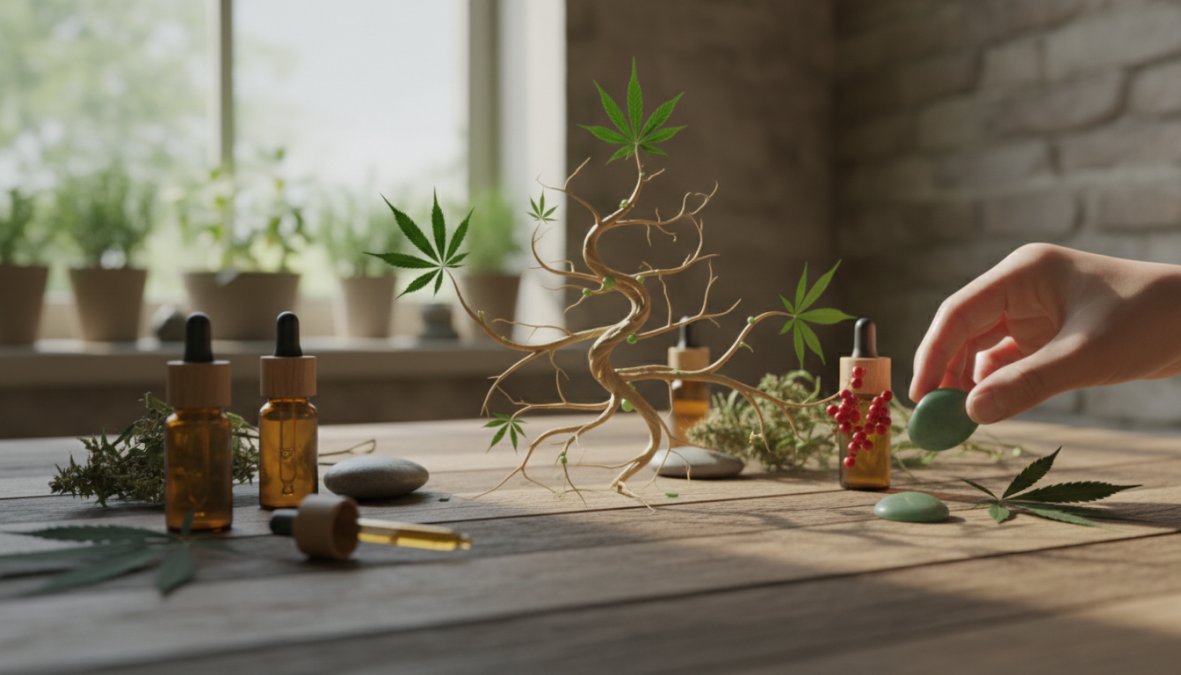
The ECS operates through endogenous cannabinoids your body produces naturally, along with the receptors they bind to. CBD doesn’t flood this system. Instead, it modulates it, which is a critical distinction most guides skip entirely.
CB1 and CB2 Receptors: What They Do
CB1 receptors are concentrated primarily in the central nervous system, including the brain and spinal cord. They influence pain perception, memory, and mood. Tetrahydrocannabinol (THC) binds directly to CB1 receptors, which is why it produces psychoactive effects. CBD does not bind directly to CB1 receptors with the same affinity. Instead, it acts as a modulator, influencing how other compounds interact with them.
CB2 receptors are found predominantly in immune tissues and peripheral nerves. These are the receptors most relevant to pain and inflammation. CBD shows a stronger affinity for CB2 receptors, which is why its analgesic properties are most pronounced in inflammatory and immune-mediated pain conditions.
Beyond direct receptor interaction, CBD also inhibits the enzyme FAAH (fatty acid amide hydrolase), which breaks down anandamide, your body’s natural "bliss molecule." By slowing that breakdown, CBD effectively raises anandamide levels, which contributes to pain modulation and anxiety reduction.
Inflammation, Neuropathic Pain, and Analgesic Properties
Most pain falls into two broad categories: inflammatory pain (caused by tissue damage or immune response) and neuropathic pain (caused by nerve damage or dysfunction). CBD addresses both through different mechanisms, which is part of what makes it pharmacologically interesting.
For inflammatory pain, CBD’s interaction with CB2 receptors suppresses pro-inflammatory cytokine production. This is the pathway relevant to conditions like arthritis, where joint inflammation drives pain and stiffness.
Neuropathic pain is harder to treat. It’s the burning, shooting, or electric-shock sensation caused by damaged or misfiring nerves. CBD appears to reduce mechanical allodynia (pain from normally non-painful stimuli) by acting on TRPV1 receptors and modulating serotonin levels, which play a role in pain signal transmission. According to the National Institutes of Health research on cannabinoids and pain, preclinical evidence supports CBD’s role in neuropathic pain modulation, though large-scale human clinical trials remain limited.
CBD addresses pain through multiple pathways simultaneously: CB2 receptor modulation for inflammation, TRPV1 interaction for neuropathic pain, and FAAH inhibition to raise natural anandamide levels. No single mechanism explains its full effect.
Types of Pain CBD May Help With
The clinical picture for CBD and pain is promising but not uniform. The conditions where people most commonly report meaningful relief include:
- Arthritis and joint pain: CB2 receptor activity reduces inflammatory cytokines, which may promote joint flexibility and reduce swelling.
- Chronic back pain: Both inflammatory and neuropathic components respond to CBD’s multi-pathway approach.
- Fibromyalgia: A condition involving central sensitization, where serotonin modulation and ECS support may reduce pain amplification.
- Post-exercise muscle soreness: Topical application directly to affected muscles addresses localized inflammation efficiently.
- Nerve pain from diabetes or injury: Neuropathic pathways involving TRPV1 and serotonin are relevant here.
What CBD is less likely to help with: acute trauma pain (a broken bone, a surgical wound) where the pain signal is protective and immediate. CBD’s mechanisms are better suited to chronic, persistent pain states than acute protective pain responses.
This matters more than most guides acknowledge. Setting realistic expectations is the difference between a useful tool and a disappointing supplement.
Full-Spectrum, Broad-Spectrum, and Isolate: Which Works Best for Pain
The type of CBD product you choose affects how well it works. This is not marketing language. It reflects real pharmacological differences.
Full-spectrum CBD contains cannabidiol plus other cannabinoids, terpenes, and trace amounts of THC (below 0.3% in hemp-derived products). The "entourage effect" theory holds that these compounds work synergistically, producing greater analgesic and anti-inflammatory effects than any single compound alone. Many practitioners find full-spectrum products more effective for chronic pain precisely because of this synergy.
Broad-spectrum CBD retains the terpenes and minor cannabinoids but removes THC entirely. This is the category CBD Health Collection specializes in, making it the appropriate choice for people who need to avoid THC for professional or personal reasons without sacrificing the entourage effect entirely.
CBD isolate is pure cannabidiol, stripped of all other compounds. It’s predictable and easy to dose, but it loses the synergistic benefits. For some people with specific sensitivities or those requiring absolute THC-free certainty, isolate is the right call. For most chronic pain applications, it’s the weakest option of the three.
| Type | THC Content | Entourage Effect | Best For |
|---|---|---|---|
| Full-Spectrum | Up to 0.3% | Full | Maximum pain relief |
| Broad-Spectrum | None | Partial | THC-free, broader effect |
| Isolate | None | None | Precise dosing, simplicity |
If you’re subject to drug testing, broad-spectrum is your best option. Even trace THC in full-spectrum products can accumulate with daily use and potentially trigger a positive result.
How Long Does CBD Take to Work for Pain
How long does CBD take to work for pain depends almost entirely on the delivery method. There is no single answer, and anyone giving you one without qualifying it is oversimplifying.
The honest framework: onset time and duration are inversely related. Fast-acting methods wear off sooner. Slower methods last longer.
Delivery Method Comparison: Tinctures, Topicals, Patches, and Soft Gels
Tinctures (sublingual): Held under the tongue for 60-90 seconds, CBD absorbs directly into the bloodstream through the sublingual mucosa. Onset is typically 15-30 minutes. This is the fastest systemic option. Bioavailability is meaningfully higher than oral ingestion because the first-pass liver metabolism is bypassed.
Topical application (freeze gels, creams): Onset is 15-45 minutes for localized pain. Topicals do not enter the bloodstream in significant amounts, so they address surface and joint pain directly without systemic effects. CBD Health Collection’s topical freeze gel is designed specifically for this localized approach.
Patches (transdermal): These deliver CBD through the skin into systemic circulation over hours, providing sustained release. Onset is slower (1-2 hours) but duration can extend 8-12 hours. Patches are underused for chronic pain management and worth serious consideration for consistent overnight relief.
Soft gels and capsules: Must pass through the digestive system. Onset is 45-90 minutes, but duration is the longest, often 6-8 hours. The trade-off is lower bioavailability due to first-pass metabolism. Water-based CBD formulations, like those used by CBD Health Collection, are engineered to improve absorption at this stage.
| Delivery Method | Onset Time | Duration | Best For |
|---|---|---|---|
| Tincture (sublingual) | 15-30 min | 4-6 hours | Fast systemic relief |
| Topical | 15-45 min | 2-4 hours | Localized joint/muscle pain |
| Patch (transdermal) | 1-2 hours | 8-12 hours | Overnight/sustained relief |
| Soft gel/capsule | 45-90 min | 6-8 hours | Consistent daily dosing |
CBD Dosage for Pain: A Practical Starting Protocol
CBD dosage for pain is where most people either give up too early or start too high and misattribute side effects. The practical protocol below is built on a conservative, adjustable framework.
Starting Protocol (Low and Slow):
- Week 1: Start at 10-15mg CBD per day, taken once in the evening. This establishes baseline tolerance and lets you observe initial effects without overwhelming your system.
- Week 2: If no adverse effects, increase to 15-25mg per day. Split into morning and evening doses for systemic conditions like arthritis.
- Week 3-4: Assess pain reduction. If improvement is partial, increase by 5-10mg increments every 3-5 days until you find your effective dose.
- Maintenance: Most people managing chronic pain find their effective range between 25-75mg daily, though individual variation is significant.
For acute flare-ups, a sublingual tincture taken on top of your daily baseline can provide faster relief without abandoning your consistent protocol.
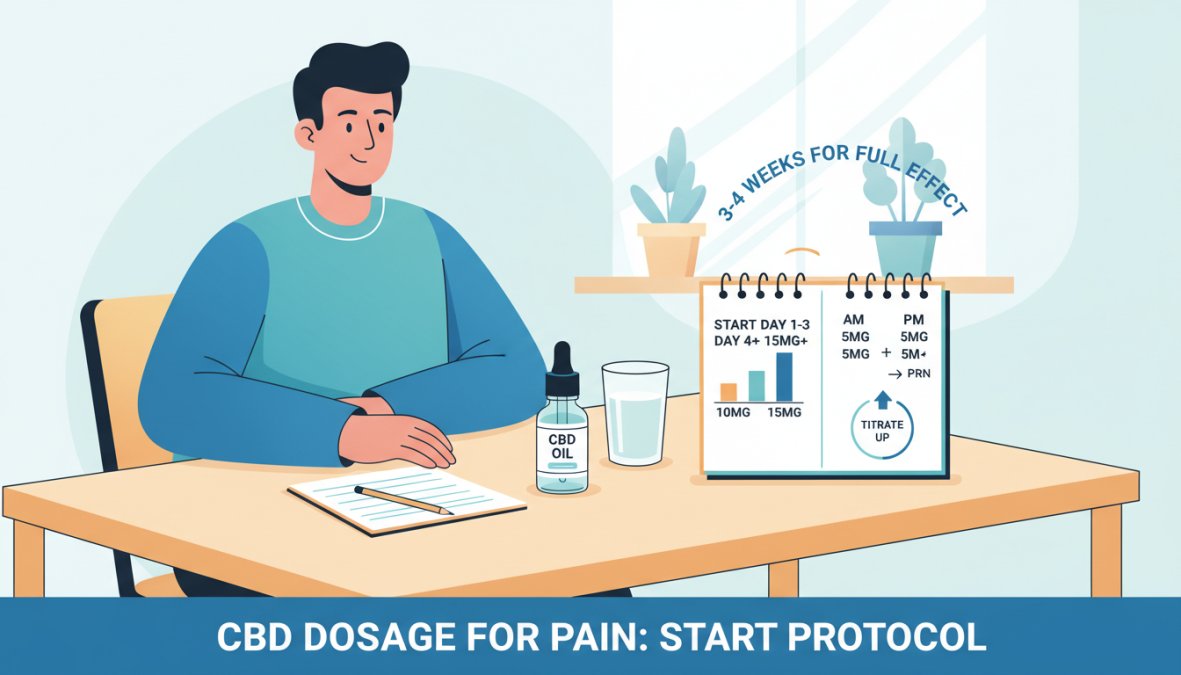
Do not increase your dose dramatically if you don’t see results in the first three days. CBD’s effects on chronic pain often build over 2-4 weeks of consistent use as the endocannabinoid system recalibrates. Jumping doses too quickly makes it impossible to identify your actual effective level.
Cost-Per-Milligram Analysis: Getting Real Value
Price per bottle is a misleading metric. The number that matters is cost per milligram of CBD.
How to calculate it: Divide the product price by the total milligrams of CBD in the bottle.
- A $40 bottle with 500mg CBD = $0.08 per mg
- A $60 bottle with 1,500mg CBD = $0.04 per mg
- A $30 bottle with 250mg CBD = $0.12 per mg
The third option looks cheapest at checkout. It costs three times as much per dose. This is the most common purchasing mistake in the CBD market.
CBD Health Collection’s products are priced with this transparency in mind, and every product’s milligram content is clearly labeled and verified through independent third-party lab testing.
How to Read a COA Before You Buy CBD for Pain
A Certificate of Analysis (COA) is a third-party lab document that verifies what’s actually in a CBD product. Without one, you’re trusting marketing copy. With one, you have verifiable data.
What to look for in a COA:
- Cannabinoid panel: Confirms the CBD concentration matches the label claim. Check that THC is below 0.3% for hemp-derived products.
- Heavy metals test: Should show non-detectable or below action limits for lead, arsenic, mercury, and cadmium.
- Pesticide screening: Organic hemp is preferable. The COA should confirm pesticide residues are absent or below safety thresholds.
- Microbial testing: Confirms the product is free of harmful bacteria, mold, and yeast.
- Terpene profile (for full/broad-spectrum): Verifies the entourage compounds are actually present.
- Lab accreditation: The testing lab should be ISO 17025 accredited. If the company runs its own lab, that’s a red flag.
- Batch number: The COA should match the batch number on your specific product packaging.
According to the FDA’s guidance on cannabis-derived products, the agency has found significant label inaccuracy across the CBD market, with some products containing substantially more or less CBD than claimed. A current, batch-specific COA is your only protection against this.
CBD Health Collection publishes independently verified COAs for every product, produced in a GMP- and FDA-registered facility using CO2 extraction, which leaves no chemical residue in the final product.
Safety Profile, Drug Interactions, and What to Watch For
CBD has a favorable safety profile compared to most pharmaceutical pain management options. The most commonly reported side effects are mild: drowsiness, dry mouth, and digestive changes, typically at higher doses.
The more serious concern is drug interactions. CBD is metabolized by the cytochrome P450 enzyme system in the liver, specifically CYP3A4 and CYP2D6. These same enzymes process a significant portion of common medications, including blood thinners, antidepressants, and certain heart medications.
This is not a theoretical concern. If you’re taking any prescription medication, particularly warfarin, statins, or antiepileptics, speak with your prescribing physician before starting CBD. The interaction can alter drug plasma levels in either direction.
The question of liver toxicity arises primarily from Epidiolex, the FDA-approved CBD pharmaceutical, which uses much higher doses than typical consumer products. At standard consumer doses, liver toxicity is not a documented concern for healthy adults. Still, periodic liver enzyme monitoring is reasonable for anyone using high-dose CBD long-term.
As documented in Harvard Health Publishing’s overview of CBD safety, CBD’s adjunctive treatment potential is real, but the drug interaction profile warrants medical supervision for anyone on existing medications.
Common Mistakes People Make When Using CBD for Pain Relief
The gap between people who benefit from CBD and those who don’t often comes down to avoidable errors in how they use it.
Mistake 1: Inconsistent dosing. Taking CBD only when pain spikes treats it like an aspirin. For chronic pain, CBD works best as a consistent daily supplement that maintains stable ECS support. Sporadic use rarely produces meaningful results.
Mistake 2: Choosing the wrong delivery method for their pain type. Systemic conditions (fibromyalgia, widespread inflammation) need systemic delivery, meaning tinctures, soft gels, or patches. Applying a topical to a systemic condition is like putting a bandage on a broken bone. It doesn’t reach the right tissue.
Mistake 3: Buying on price alone without checking the COA. The cheapest product per bottle is almost never the best value per milligram, and without a COA, there’s no way to verify you’re getting what you paid for.
Mistake 4: Expecting results in 24-48 hours. Chronic pain conditions took time to develop. The ECS recalibration that produces meaningful pain relief often takes 2-4 weeks of consistent use. Abandoning a protocol at day five is the most common reason people conclude "CBD doesn’t work."
Mistake 5: Ignoring drug interactions. This is the safety mistake. CBD is not inert, and assuming it’s safe to combine with any medication without checking is a genuine risk, not just a legal disclaimer.
According to Project CBD’s clinical guidance on cannabidiol use, the most successful outcomes with CBD for pain management involve consistent dosing, appropriate delivery method selection, and realistic timeline expectations.
Keep a simple pain journal for the first 30 days. Rate your pain on a 1-10 scale each morning and evening. This gives you objective data to assess whether your protocol is working and helps you identify the optimal dose and timing for your specific condition.
Chronic pain management is genuinely difficult, and the landscape of available options is frustrating for most people caught between inadequate relief and unacceptable side effects. CBD Health Collection was founded by a pharmaceutical industry veteran specifically to bring a science-based, medically informed approach to this gap. Every product is derived from organically grown, USA-sourced hemp, extracted via clean CO2 processing, independently third-party lab tested, and produced in a GMP- and FDA-registered facility. Get started with CBD Health Collection and access products built for real bioavailability, full COA transparency, and a 30-day satisfaction guarantee on every order.
Frequently Asked Questions
How does CBD interact with pain receptors in the body?
CBD works for pain primarily by interacting with the endocannabinoid system, which includes CB1 receptors in the brain and nervous system and CB2 receptors in immune tissues. Rather than binding directly to these receptors like THC does, cannabidiol modulates their activity, helping to reduce inflammation and dampen pain signaling. It may also influence serotonin levels, which play a role in how the body perceives pain. This multi-pathway approach is why CBD is explored as an adjunctive treatment for various pain conditions.
How long does CBD take to work for pain, and what affects the timeline?
How long CBD takes to work for pain depends heavily on the delivery method. Sublingual tinctures may produce noticeable effects within 15 to 45 minutes because the cannabidiol enters the bloodstream quickly under the tongue. Topical application to a localized area can work within 20 to 30 minutes for surface-level discomfort. Soft gels and gummies typically take 45 to 90 minutes due to digestion. Consistent daily use over one to four weeks generally produces the most meaningful results for chronic pain.
What is a good starting CBD dosage for pain?
A practical starting CBD dosage for pain is typically 10 to 25 mg of cannabidiol per day, taken consistently at the same time each day. Most practitioners suggest a 'start low, go slow' approach, begin at the lower end, assess your response after one week, then increase by 5 to 10 mg increments as needed. Body weight, metabolism, pain severity, and product bioavailability all influence your ideal dose. Hemp-derived, broad-spectrum or full-spectrum products with verified COAs tend to offer more predictable potency than untested isolates.
Are there side effects or drug interactions to know about before using CBD for pain?
CBD has a generally favorable safety profile, but it is not without considerations. Potential side effects include fatigue, dry mouth, and changes in appetite. More importantly, cannabidiol can interact with medications metabolized by the liver's CYP450 enzyme system, including blood thinners and certain anticonvulsants, which raises liver toxicity concerns at high doses. Anyone on prescription medications should consult a healthcare provider before starting CBD. Always choose products with third-party lab testing to confirm purity and accurate potency.
Does full-spectrum CBD work better for pain than CBD isolate?
Full-spectrum hemp-derived CBD contains cannabidiol alongside trace amounts of tetrahydrocannabinol (under 0.3%), terpenes, and other cannabinoids, which may create an 'entourage effect' that enhances analgesic properties. Broad-spectrum products offer a similar benefit without THC. CBD isolate is pure cannabidiol with no additional compounds and may be less effective for pain in some users. For most pain applications, full-spectrum or broad-spectrum formulations in a quality carrier oil are generally considered the more effective choice.
This article was written using GrandRanker