Table of Contents
- What to Know Before You Buy CBD Oil for Pain Relief
- Topical vs. Oral CBD for Pain: Which Delivery Method Is Right for You?
- CBD Dosage for Pain: How to Find Your Effective Range
- CBD Oil Third-Party Testing: Why a Certificate of Analysis Matters
- Best CBD Oils to Buy for Pain Relief: Brand-by-Brand Comparison
- How to Use CBD Oil for Pain: Application Tips and Common Mistakes
- Conclusion: Choosing the Right CBD Oil for Your Pain Relief Goals
Last Updated: May 12, 2026
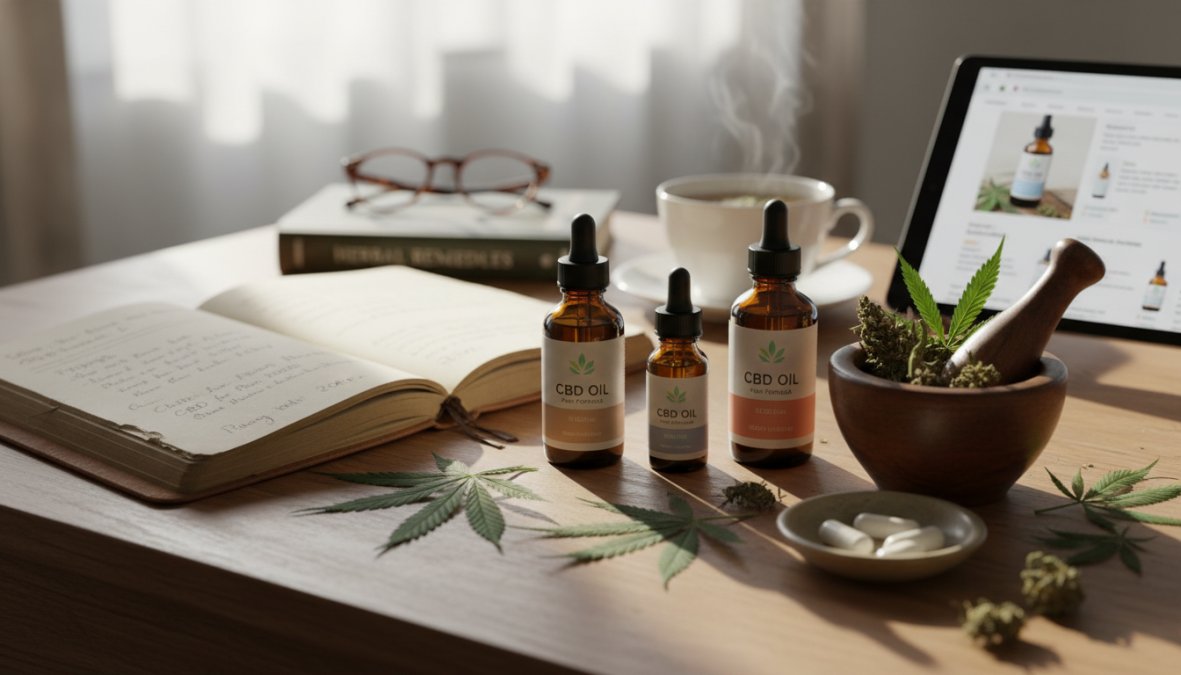
Deciding to buy cbd oil for pain relief sounds straightforward until you realize the market is flooded with products that vary wildly in quality, potency, and transparency. CBD Health Collection has helped thousands of customers cut through that noise with a pharmaceutical-grade approach to cannabidiol wellness, and this guide applies that same rigor to help you choose the right product in 2026. Below, we cover every decision point: spectrum type, delivery method, dosage, third-party testing, and a brand-by-brand comparison of the top options available today. The biggest mistake most buyers make is skipping the certificate of analysis. Do not do that.
What to Know Before You Buy CBD Oil for Pain Relief
Most guides start with definitions. This one starts with the decision that actually matters: what type of cannabidiol extract belongs in your product, and why that choice changes everything downstream.
Cannabidiol (CBD) is a non-psychoactive compound derived from hemp that interacts with the body’s endocannabinoid system to modulate pain signaling and inflammation. It does not produce a high, but the surrounding compounds in the hemp plant significantly influence how effective it is.
Full-Spectrum vs. Broad-Spectrum vs. Isolate: Which Works Best for Pain?
Three extract types dominate the market, and each has a distinct trade-off profile:
- Full-spectrum: Contains all naturally occurring cannabinoids, terpenes, and trace THC (under 0.3%). The presence of multiple compounds creates what researchers call the "entourage effect," where cannabinoids amplify each other’s effectiveness. For chronic pain management, full-spectrum products are generally the strongest performers.
- Broad-spectrum: All cannabinoids and terpenes are retained, but THC is removed. This is the best option for people subject to drug testing or those who prefer THC-free products without sacrificing the entourage effect entirely.
- Isolate: Pure CBD only, no other cannabinoids. Predictable and THC-free, but many practitioners find it less effective for pain than the other two types because it lacks the synergistic compounds.
For arthritic symptoms, joint stiffness, and muscle soreness, full-spectrum and broad-spectrum options consistently outperform isolate in real-world use.
How the Endocannabinoid System Connects to Pain and Inflammation
The endocannabinoid system (ECS) is a network of receptors found throughout the body, including in joints, muscles, and immune cells, that regulates pain perception, inflammation, and immune response. CBD does not bind directly to ECS receptors the way THC does. Instead, it modulates receptor activity and inhibits enzymes that break down the body’s own endocannabinoids, effectively prolonging natural pain-relief signaling.
This mechanism is particularly relevant for rheumatoid arthritis and osteoarthritis sufferers, where chronic inflammation drives ongoing joint damage. CBD’s anti-inflammatory properties work at this receptor level, which is why many people with inflammatory pain conditions report meaningful localized relief. According to the Arthritis Foundation’s guidance on CBD, interest in CBD among people with arthritis is significant, and the organization has called for more clinical research into its effects on arthritic symptoms.
The endocannabinoid system is your body’s built-in pain regulation network. CBD supports it by slowing the breakdown of natural pain-relief compounds, making it particularly relevant for inflammatory conditions like rheumatoid arthritis and osteoarthritis.
Topical vs. Oral CBD for Pain: Which Delivery Method Is Right for You?
The delivery method question is where most buyers make their second-biggest mistake: choosing oral when they need topical, or vice versa. The right answer depends entirely on the nature of your pain.
When to Choose a Topical: Localized Relief for Joint and Muscle Pain
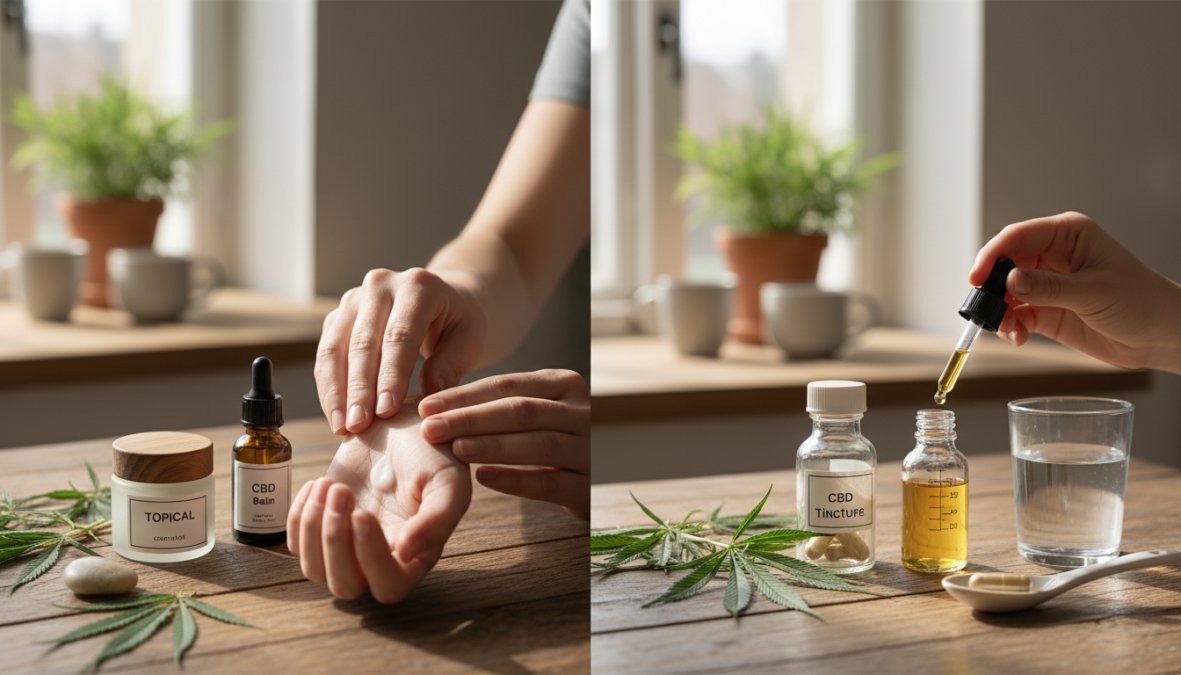
Topical CBD products, including freeze gels, balms, and pain patches, work through transdermal absorption. The cannabidiol penetrates the skin layers and interacts with local ECS receptors without entering the bloodstream in meaningful concentrations. This means topical application is ideal for localized relief: a specific arthritic knee, a sore shoulder, or muscle soreness after exercise.
Topicals often combine CBD with complementary actives that enhance the pain-relief profile. Menthol delivers an immediate cooling sensation that disrupts pain signaling at the skin surface. Arnica montana is a botanical anti-inflammatory with a long clinical history. Capsaicin, derived from chili peppers, depletes substance P, a neurotransmitter involved in pain transmission. These ingredient combinations are not accidental. When formulated correctly, they create layered relief that CBD alone cannot achieve.
For osteoarthritis of the hands, knees, or wrists, a high-quality CBD freeze gel applied directly to the affected joint is often more effective than an oral product at the same milligram dose, because the CBD reaches the target tissue without being metabolized first.
When Oral CBD Makes More Sense: Systemic and Chronic Pain Support
Oral CBD, including tinctures and soft gels, enters the bloodstream and produces systemic effects. This makes oral delivery the right choice for widespread pain, fibromyalgia, chronic pain management, and conditions where the pain source is not localized to a specific joint or muscle group.
Bioavailability is the critical variable here. Standard oil-based tinctures have relatively modest bioavailability because CBD is fat-soluble and metabolized significantly during digestion. Water-based CBD formulations, like those used by CBD Health Collection, improve absorption by reducing particle size and increasing the amount of cannabidiol that reaches systemic circulation. For chronic pain sufferers who need consistent blood levels of CBD throughout the day, bioavailability is not a minor detail. It is the difference between a product that works and one that does not.
:::pro tip
Hold oral CBD tinctures under your tongue for 60-90 seconds before swallowing. Sublingual absorption bypasses first-pass liver metabolism, delivering more cannabidiol into circulation than swallowing immediately.
:::
CBD Dosage for Pain: How to Find Your Effective Range
CBD dosage for pain is one of the most frequently misunderstood aspects of cannabidiol use, and the honest answer is that no universal dose exists. Body weight, metabolism, the severity of the condition, and the bioavailability of the specific product all influence the effective range.
A practical starting framework for oral CBD:
- Start low: Begin with 10-20mg per day for mild to moderate pain.
- Hold for one week: Give your endocannabinoid system time to respond before adjusting.
- Titrate upward: Increase by 5-10mg per week until you find your effective range.
- Track consistently: Note the time of day, dose, and pain level to identify patterns.
- Plateau awareness: Many people find an effective dose and see no additional benefit from higher amounts. More is not always better.
For topicals, dosage is less precise because transdermal absorption varies by skin thickness, application area, and product formulation. Apply a generous amount to the affected area and reapply every four to six hours as needed. Potency matters here: a topical with 500mg of CBD in a 2oz container delivers meaningfully more cannabidiol per application than one with 150mg in the same size.
One important note on interactions: if you take blood thinners, anti-epileptic medications, or certain medications for rheumatoid arthritis, consult your physician before starting CBD. CBD can inhibit cytochrome P450 enzymes, which are responsible for metabolizing many common drugs. This is not a reason to avoid CBD, but it is a reason to have an informed conversation with your prescribing doctor first. As referenced in FDA guidance on CBD and drug interactions, the regulatory body has flagged potential interactions as an area requiring further research and clinical attention.
CBD Oil Third-Party Testing: Why a Certificate of Analysis Matters
Third-party lab testing is the single most important quality signal when you buy CBD oil for pain relief. A certificate of analysis (COA) is a document issued by an independent laboratory that verifies the cannabinoid content, potency, and purity of a specific product batch.
Here is what a legitimate COA must confirm:
- Cannabinoid potency: Verifies that the milligrams of CBD stated on the label match what is actually in the product. Mislabeling is common in the unregulated CBD market.
- THC content: Confirms the product is within legal limits (under 0.3% for hemp-derived products) and, for broad-spectrum products, verifies THC-free status.
- Pesticide screening: Confirms the hemp was grown without prohibited agricultural chemicals.
- Heavy metals testing: Screens for lead, arsenic, mercury, and cadmium, which hemp plants readily absorb from contaminated soil.
- Microbial testing: Checks for mold, bacteria, and other contaminants.
The COA should be batch-specific, not a single document applied to all products. It should come from an accredited third-party laboratory, not an in-house testing facility. And it should be publicly accessible, either via a QR code on the packaging or a searchable database on the brand’s website. According to U.S. Hemp Authority certification standards, transparent third-party testing is a baseline requirement for responsible CBD producers.
A COA that only tests for cannabinoid potency and skips pesticide, heavy metal, and microbial panels is incomplete. Do not treat it as full verification. Incomplete testing is a red flag, not a green light.
Best CBD Oils to Buy for Pain Relief: Brand-by-Brand Comparison
Here is how the leading brands stack up across the criteria that matter most for pain relief applications.
| Brand | Starting Price | Spectrum | Best For | THC-Free |
|---|---|---|---|---|
| CBD Health Collection | Visit site | Broad-spectrum | Bioavailability, pharmaceutical transparency | Yes |
| Lazarus Naturals | $40 | Full-spectrum | High-potency value | No |
| Joy Organics | $44.95 | Broad-spectrum | THC-free, USDA organic | Yes |
| Cornbread Hemp | $54.99 | Full-spectrum | Chronic pain, maximum potency | No |
| NuLeaf Naturals | $39.00 | Full-spectrum | Clean ingredient profile | No |
CBD Health Collection: Best for Bioavailability and Pharmaceutical Transparency
CBD Health Collection is the top pick for anyone who wants pharmaceutical-grade standards applied to a consumer CBD product. Founded by pharmaceutical industry veteran Rick Bauer in Granville, Ohio, the company brings a level of scientific rigor to product development that most CBD brands simply cannot match.
What sets CBD Health Collection apart is its water-based CBD formulation, which delivers significantly better absorption than standard oil-based tinctures. The practical implication: more cannabidiol reaches your bloodstream per milligram, which matters when you are managing chronic pain and need consistent systemic levels. All products are produced in a GMP- and FDA-registered facility, extracted via clean CO2 process from organically grown USA hemp, and independently third-party lab tested with publicly available COAs.
The product range is designed for real pain management needs: CBD oils, soft gels, topical freeze gels, pain patches, and broad-spectrum gummies. The 30-day satisfaction guarantee and free shipping remove the purchase risk entirely.
Pros:
- Water-based formulation for optimized bioavailability
- GMP- and FDA-registered manufacturing facility
- Full COA transparency on every batch
- Pharmaceutical founder with science-based formulation approach
- Free shipping and 30-day satisfaction guarantee
Cons:
- Pricing not publicly listed for all products; requires visiting cbdhealthcollection.com
Lazarus Naturals: Best High-Potency Full-Spectrum Value
Lazarus Naturals delivers 50mg of CBD per 1ml serving, making it one of the most potent and cost-accessible full-spectrum options starting at $40. As a certified B Corp with transparent third-party testing for pesticides, heavy metals, and potency, it earns its reputation for honesty. The trade-off is trace THC, which rules it out for anyone subject to drug testing.
Pros: High potency per serving, strong transparency, affordable entry price
Cons: Contains trace THC; not suitable for THC-free requirements
Joy Organics: Best THC-Free Broad-Spectrum Option
Joy Organics takes the USDA-certified organic route with a broad-spectrum formula that tests at 0.0% THC. Starting at $44.95 and available up to 2,250mg per bottle, it covers a wide potency range. The organic olive oil carrier base is a clean choice, though the absence of full-spectrum compounds means the entourage effect is partial rather than complete.
Pros: Certified THC-free, USDA organic certification, wide potency range
Cons: Lacks the full entourage effect of full-spectrum products
Cornbread Hemp: Best for Chronic Pain and Maximum Potency
Cornbread Hemp uses flower-only extraction, which concentrates cannabinoids more than whole-plant or stem-inclusive methods. The result is a high-potency, USDA-certified organic full-spectrum oil starting at $54.99, vertically integrated from farm to finished product. For people managing severe or chronic pain who want maximum cannabinoid density, this is the most logical choice. The earthy hemp flavor is pronounced, which is a practical consideration for daily use.
Pros: Flower-only extraction for higher cannabinoid concentration, strict USDA organic certification
Cons: Strong hemp flavor; contains trace THC
NuLeaf Naturals: Best Clean Ingredient Profile
NuLeaf Naturals keeps the formula to two ingredients: organic full-spectrum hemp extract and organic virgin hemp seed oil. That simplicity is a deliberate choice, and it appeals to users who want maximum cannabinoid content without additives, flavoring agents, or carrier oil blends. Concentrations go up to 6,000mg per bottle, making it the highest-potency option on this list. Starting at $39.00, the entry price is accessible, though high-concentration bottles carry a premium. This is the right pick for experienced CBD users who know their effective dose and want a clean, no-frills product.
Pros: Minimal ingredient list, very high potency options, rigorous third-party testing
Cons: Premium pricing at higher concentrations; no flavor options
How to Use CBD Oil for Pain: Application Tips and Common Mistakes
Proper application separates people who get results from those who dismiss CBD as ineffective after two weeks.
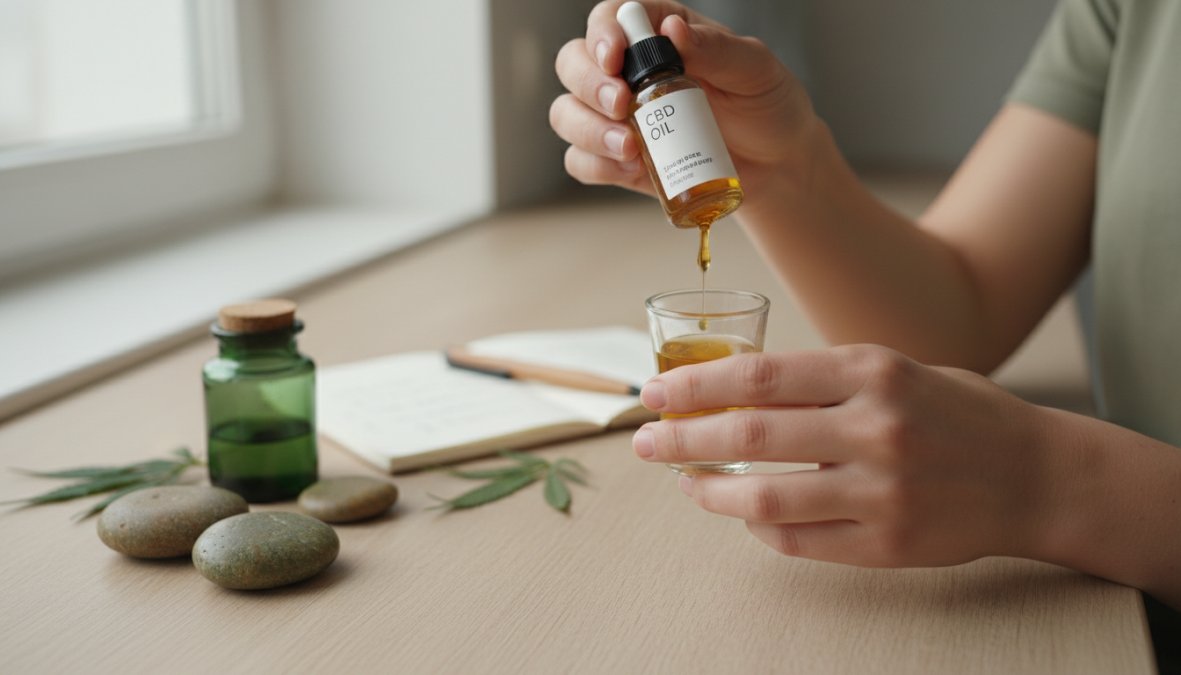
For oral tinctures, the most common mistake is swallowing immediately. Hold the oil under your tongue for at least 60 seconds. The sublingual mucosa absorbs cannabidiol directly into the bloodstream, bypassing the digestive system and liver metabolism. Swallowing immediately reduces bioavailability significantly.
A second common mistake is inconsistency. CBD builds in the endocannabinoid system over time. Many people quit after a week because they do not feel dramatic effects, not realizing that the therapeutic window for many users is two to four weeks of consistent daily use. Treat it like a supplement, not a painkiller.
For topicals, dermatological safety is generally excellent for most users, but always patch-test a new product on a small skin area before applying to a large joint surface. People with sensitive skin or known carrier oil allergies should check the ingredient list carefully. Coconut oil, MCT oil, and beeswax are common carrier bases that occasionally cause reactions in sensitive individuals.
Application tips by pain type:
- Joint pain (osteoarthritis, rheumatoid arthritis): Apply topical directly to the joint, massage gently for 30-60 seconds to encourage absorption, follow with oral CBD for systemic support.
- Muscle soreness: Topical with menthol for immediate cooling sensation, then oral CBD for recovery support.
- Chronic widespread pain: Oral CBD twice daily (morning and evening) for consistent systemic levels.
- Acute flare-ups: Topical for immediate localized relief while oral CBD takes effect.
:::pro tip
For arthritic joints, apply your topical CBD immediately after a warm shower. Warm skin has dilated capillaries and open pores, which improves transdermal absorption of cannabidiol and other active ingredients.
:::
The thing most guides miss is the interaction between timing and meals. Oil-based oral CBD taken with a high-fat meal absorbs better because CBD is fat-soluble. Water-based formulations are less dependent on food timing, which is one practical advantage of the water-based approach used by CBD Health Collection.
Choosing the right product to buy cbd oil for pain relief comes down to three decisions: spectrum type, delivery method, and testing transparency. For most people managing joint or muscle pain, a combination of a high-bioavailability oral CBD and a quality topical delivers the most comprehensive relief. CBD Health Collection addresses both needs with pharmaceutical-grade manufacturing, water-based formulations for optimized absorption, independently verified COAs, and a full product range that includes topical freeze gels and pain patches alongside its core oils. Visit cbdhealthcollection.com to find the right product for your pain relief goals, backed by a 30-day satisfaction guarantee and free shipping on every order.
Frequently Asked Questions
What should I look for when buying CBD oil for pain?
When you buy CBD oil for pain relief, prioritize products with a verified certificate of analysis (COA) from an independent third-party lab, this confirms potency and purity. Look for organically grown, USA-sourced hemp, a clean CO2 extraction process, and clear milligram (mg) labeling. Decide whether full-spectrum, broad-spectrum, or isolate fits your needs and THC tolerance. A 30-day satisfaction guarantee and transparent ingredient lists are strong trust signals worth seeking out.
What is the difference between full-spectrum and isolate CBD for pain?
Full-spectrum CBD contains a range of cannabinoids, terpenes, and trace THC, which may work together through what is often called the entourage effect, potentially enhancing anti-inflammatory and pain-relieving properties. CBD isolate is pure cannabidiol with no other compounds and is completely THC-free. Broad-spectrum sits in between, offering multiple cannabinoids without detectable THC. For chronic pain management, many users find full-spectrum or broad-spectrum formulas more effective than isolate alone.
How do I determine the right CBD dosage for pain?
There is no universal CBD dosage for pain, as individual factors like body weight, metabolism, pain severity, and product potency all play a role. A practical starting approach is to begin with a low dose, typically 10-20mg per serving, and increase gradually every few days until you notice consistent relief. Always check the milligrams (mg) per serving on the label and review the COA to confirm actual potency matches the label claim before adjusting your dose.
Is topical or oral CBD better for arthritis and joint pain?
For localized relief from arthritic symptoms or joint stiffness in a specific area, topical CBD, such as a freeze gel or cream containing ingredients like menthol, arnica montana, or capsaicin, can deliver targeted support directly to the affected area. Oral CBD oil, whether full-spectrum or broad-spectrum, is better suited for systemic or chronic pain management throughout the body. Many people managing conditions like rheumatoid arthritis or osteoarthritis use both methods together for broader coverage.
How do I know if a CBD oil brand is reputable?
A reputable brand will publish up-to-date certificates of analysis (COAs) from independent third-party labs, confirming cannabidiol potency, THC levels, and the absence of pesticides or heavy metals. Look for hemp-derived products made in GMP- and FDA-registered facilities, with organically grown US hemp and a clean extraction method such as CO2. Transparent labeling, clear return policies, and verifiable manufacturing standards are the clearest indicators of a trustworthy brand.
This article was written using GrandRanker