A CBD label should answer a basic question before you buy: will this product expose you to THC? When comparing full spectrum vs THC-free CBD, that distinction can affect your comfort level, workplace concerns, travel plans, and the kind of daily wellness routine you want to maintain.
For people seeking support for discomfort, stress, sleep, or everyday balance without an intoxicating compound, THC-free CBD offers a clearer starting point. Still, the right choice depends on what is in the formula, how the brand verifies it, and what matters most in your situation.
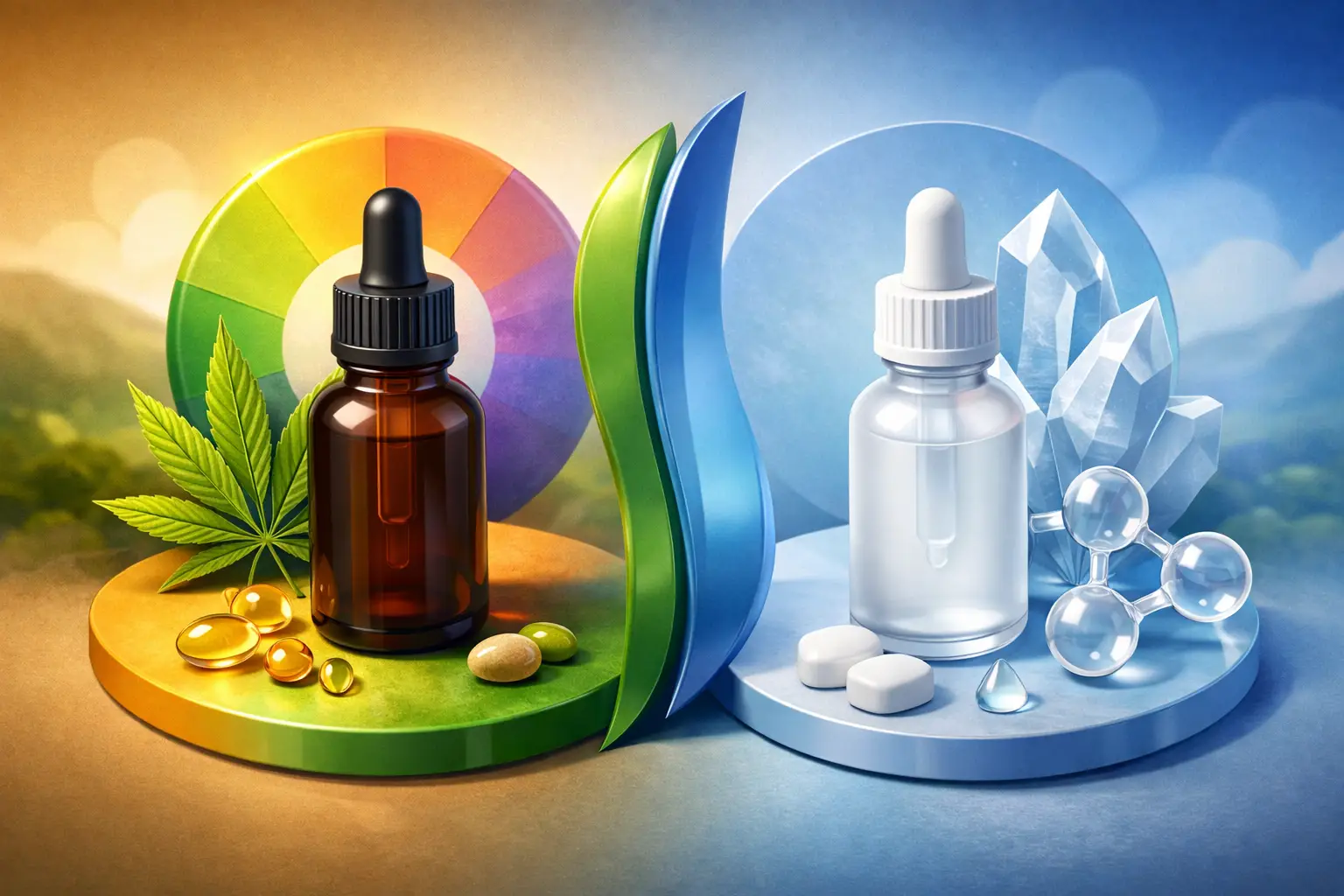
Full Spectrum vs THC-Free CBD: The Core Difference
Full spectrum CBD is made from hemp extract that retains a wider range of naturally occurring plant compounds. Along with CBD, it may contain minor cannabinoids, terpenes, flavonoids, and trace amounts of THC. Under federal hemp standards, hemp-derived products are generally defined by a delta-9 THC concentration of no more than 0.3% on a dry-weight basis. That legal threshold does not mean a product contains no THC.
THC-free CBD is formulated and processed to contain no detectable THC. Depending on the product, it may use broad spectrum hemp extract, which can retain select non-THC hemp compounds, or CBD isolate, which contains CBD without the broader cannabinoid profile. “THC-free” describes the intended THC status, but the most reliable confirmation comes from a current independent lab report.
The difference is not simply about whether one formula is better. It is about matching a product to your priorities. A person who is comfortable with trace THC may consider full spectrum options. A person who wants to avoid THC exposure as fully as possible will likely prefer a verified THC-free formula.
Why Trace THC Matters to Some CBD Users
THC is the cannabinoid associated with marijuana’s intoxicating effects. The trace quantity in a compliant full spectrum hemp product may be small, but it can still be meaningful to someone who wants to avoid THC entirely.
This is especially relevant for people subject to workplace or athletic drug testing, active-duty service members, veterans in regulated roles, commercial drivers, healthcare workers, and anyone with a personal or family preference to stay away from THC. Regular use of a full spectrum product can create a greater chance of THC exposure than a verified THC-free product. No CBD product can promise a negative drug test in every circumstance, because test methods, frequency of use, individual metabolism, and product quality all vary. But choosing a product with no detectable THC helps reduce an avoidable concern.
It also matters for first-time users. Many people want CBD as a non-intoxicating addition to a wellness routine, not an experience that feels connected to cannabis culture. A clean THC-free option makes that decision more straightforward.
What Full Spectrum CBD May Offer
The reason some customers choose full spectrum CBD is its broader hemp profile. Hemp contains more than CBD, and some people prefer products that preserve multiple naturally occurring compounds from the plant. You may hear this called the “entourage effect,” a term used to describe the possibility that cannabinoids and terpenes work differently together than in isolation.
That idea is still being studied, and it should not be treated as a guarantee of better results. Individual response to CBD is highly personal. A full spectrum formula may suit someone who values a whole-plant approach and has no concern about trace THC, but it is not automatically the best fit for everyone or every wellness goal.
A quality full spectrum product should be just as transparent as a THC-free product. The label and lab report should clearly identify cannabinoid content, including the amount of THC detected.
What THC-Free CBD May Offer
THC-free CBD is built for people who want to keep their routine focused on CBD without detectable THC. That can make it a practical choice for daily use, whether you are using an oil as part of a calming evening routine, gummies for convenient support, a topical for targeted areas of discomfort, or a pet formula designed specifically for companion animals.
The benefits of THC-free products are often less about making broad promises and more about reducing uncertainty. You can focus on the product format, CBD strength, ingredients, and intended use without wondering whether trace THC belongs in your routine.
THC-free does not have to mean stripped-down or low quality. Broad spectrum formulas may include other non-THC hemp compounds, while isolate formulas can appeal to shoppers who prefer a simple, focused ingredient profile. The best option comes down to your comfort level and your preference for either a broader extract or CBD alone.
Do Not Rely on the Front Label Alone
Terms such as “hemp extract,” “natural,” and even “THC-free” can sound reassuring, but they do not replace verification. A trustworthy CBD company makes it easy to understand what is in the bottle or package.
Look for independent third-party laboratory testing that identifies CBD potency and THC results. Ideally, the report also screens for contaminants such as pesticides, heavy metals, residual solvents, and microbial impurities. The report should be current and connected to the product or batch you are considering.
Pay attention to the way THC is reported. “No detectable THC” means the lab did not detect THC above its testing limit. That is stronger and more useful language than a vague claim that a product is “non-intoxicating.” If THC avoidance is a priority, choose brands that state their standards plainly and provide the documentation to support them.
Extraction and ingredient quality matter, too. Organically cultivated hemp, CO2 extraction, and chemical-free processing can help support a cleaner formula. For oils and other ingestible products, consider the carrier ingredients and delivery format, especially if you have dietary restrictions or prefer a water-based option.
Choosing the Right CBD Format for Your Goal
Once you have decided whether THC-free or full spectrum fits your comfort level, choose a format that works with your real routine. The most carefully made product is only helpful if you can use it consistently.
CBD oils offer flexible serving sizes and may work well for people who want to adjust their amount gradually. Gummies are convenient, discreet, and easy to take on a predictable schedule. Topicals, including creams and salves, are designed for application to specific areas and can be a sensible choice when discomfort feels localized. Pet CBD products should be made for pets, with clear serving guidance based on the animal’s needs and size.
For sleep or stress support, consider when you plan to use the product and whether the formula includes other ingredients. For pain or physical discomfort, think about whether an ingestible product, a topical, or a combination best matches the area and timing of your concern. Start with the label directions, give your routine time, and keep notes on how you feel rather than changing multiple variables at once.
Safety Questions to Ask Before You Start
CBD is not a replacement for medical care, and it can interact with certain medications. Speak with a qualified healthcare professional before using CBD if you take prescription medications, are pregnant or breastfeeding, have a liver condition, or are managing a serious health concern. This step is particularly valuable for older adults and caregivers who are coordinating several medications.
Start low and increase gradually only if needed and consistent with the product directions. More CBD is not always better. A measured approach helps you evaluate what works for you while avoiding unnecessary expense or unwanted effects such as drowsiness or digestive discomfort.
For pets, consult a veterinarian before introducing CBD, particularly if your animal takes medication or has an existing health condition. Never assume a human CBD product is appropriate for a pet.
A Clearer Way to Make Your Choice
Choose full spectrum CBD only if you are comfortable with the possibility of trace THC and have reviewed a lab report that clearly shows the amount present. Choose THC-free CBD when avoiding detectable THC is central to your decision, whether that is because of work, family, travel, personal preference, or simple peace of mind.
The most useful CBD routine is not the one with the most complicated label. It is the one that fits your needs, uses ingredients you can feel good about, and gives you clear proof of what is inside. When THC-free is your standard, make independent testing and transparent product information part of every purchase.