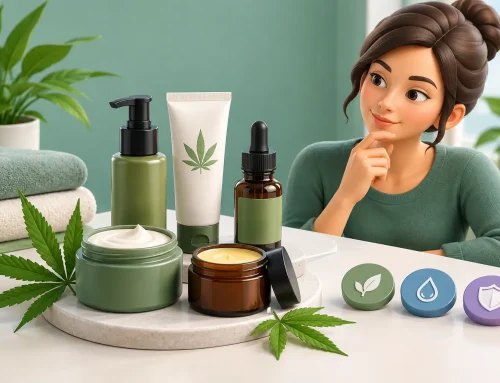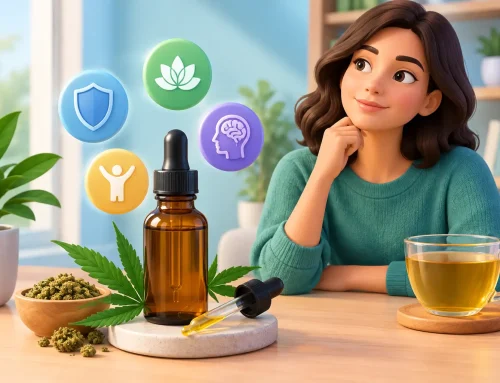
A CBD label can look simple until one question changes everything: does CBD contain THC? The honest answer is that it depends on the type of CBD product you choose. Some CBD products contain measurable THC, while others are formulated to contain no detectable THC.
For people seeking everyday support for discomfort, sleep, stress, or general wellness without intoxication, that distinction matters. It can affect how you feel, whether a product fits your personal preferences, and whether it is appropriate if drug testing is a concern.
Does CBD Contain THC?
CBD, short for cannabidiol, and THC, short for tetrahydrocannabinol, are both naturally occurring compounds found in cannabis plants. They are not the same thing. THC is the compound associated with the intoxicating “high” from marijuana. CBD is non-intoxicating and does not produce that high.
However, CBD can be extracted from hemp in ways that leave THC in the finished product. Under federal hemp rules, hemp-derived products may contain up to 0.3% delta-9 THC by dry weight. That limit does not mean every CBD product contains THC. It means that some legally marketed hemp CBD products can contain small amounts of it.
The most reliable way to understand what is in a CBD product is to look beyond the front label. Check the product type and review its current third-party laboratory report, often called a certificate of analysis or COA. A trustworthy report identifies the cannabinoids detected in the finished batch, including THC.
The Three Main Types of CBD
The phrase “CBD product” does not tell you enough on its own. Full-spectrum, broad-spectrum, and CBD isolate products can all be marketed as CBD, but they differ in a meaningful way.
Full-Spectrum CBD Contains THC
Full-spectrum CBD retains a wider range of naturally occurring hemp compounds, including cannabinoids, terpenes, and trace THC. A compliant full-spectrum hemp product must stay within the legal delta-9 THC limit, but even a small amount can be a concern for some customers.
Full-spectrum CBD may appeal to adults who specifically want a whole-plant hemp extract and are comfortable with trace THC. Still, “legal” and “THC-free” are not interchangeable terms. If avoiding THC is your priority, full-spectrum CBD is generally not the right fit.
Broad-Spectrum CBD Is Made Without Detectable THC
Broad-spectrum CBD contains CBD and may include other hemp-derived compounds, but it is processed to remove THC. Reputable broad-spectrum products should have laboratory results showing no detectable THC at the test method’s reporting limit.
That wording deserves attention. “No detectable THC” means the laboratory did not detect THC above its validated threshold. It is a stronger and more useful claim than a vague “THC-free” statement on a package because it is tied to independent testing.
For people who want non-intoxicating CBD while avoiding THC exposure, broad-spectrum products with clear batch testing are often a practical choice.
CBD Isolate Contains CBD Only
CBD isolate is purified CBD with the other hemp compounds removed. It is typically the most straightforward option for someone who wants CBD without THC or additional cannabinoids.
The trade-off is simple: isolate provides a focused CBD formula, while broad-spectrum products may provide additional non-THC hemp compounds. Neither format is automatically better. The better choice depends on your preferences, sensitivities, and desired routine.
Can THC in CBD Make You Feel High?
A CBD product formulated with no detectable THC should not cause intoxication. CBD itself is non-intoxicating.
Full-spectrum CBD is different because it contains trace THC. In many hemp products, that amount is low, but individual experiences can vary based on the formula, serving size, frequency of use, body weight, metabolism, and sensitivity to THC. Taking more than the suggested serving can also increase your exposure.
If you want to avoid the possibility of feeling THC effects altogether, choose a product clearly labeled as broad-spectrum or CBD isolate and verify the laboratory report. Do not assume that a product is THC-free simply because the front label says “hemp extract” or “natural.”
Can CBD Cause a Positive Drug Test?
Drug tests generally screen for THC metabolites, not CBD. Pure CBD is not what standard workplace drug tests are designed to detect. The concern comes from THC that may be present in a CBD product, especially full-spectrum formulas.
Even trace amounts may create a risk for some people, particularly with frequent use, high serving sizes, or products that are inaccurately labeled. A product that contains more THC than its label claims can increase that uncertainty further.
No CBD product can guarantee a negative drug test. If testing is required for employment, military service, athletics, legal supervision, or another high-stakes reason, the cautious approach is to avoid products containing THC and speak with the relevant testing program or a qualified healthcare professional before using CBD.
For consumers who still choose CBD, third-party tested broad-spectrum or isolate products with no detectable THC offer more confidence than unverified products. Keep in mind that personal risk tolerance and testing policies vary.
How to Check Whether Your CBD Has THC
The product’s cannabinoid profile should be easy to find and easy to understand. A company that takes purity seriously should not make customers guess what is in the bottle, gummy, salve, or pet formula.
Start by identifying the extract type. “Full-spectrum” signals that THC may be present. “Broad-spectrum” usually signals that THC has been removed, while “CBD isolate” indicates a CBD-only extract.
Then review the COA for the specific product batch. Look for a cannabinoid panel that lists delta-9 THC and, when available, other THC forms. A no-detect result may appear as “ND,” “not detected,” or below the lab’s limit of quantification. The report should also match the product name or batch information and come from an independent laboratory.
Quality testing should go beyond cannabinoids. Depending on the product, a complete report may also screen for contaminants such as heavy metals, pesticides, residual solvents, and microbes. Clean sourcing and careful extraction matter because a CBD product is only as trustworthy as what testing confirms.
Why Extraction and Formulation Matter
THC content is shaped by more than the hemp plant itself. It is also affected by the extraction, refinement, and quality-control process. CO2 extraction is widely used because it can separate desirable hemp compounds without relying on harsh chemical solvents.
After extraction, manufacturers can further refine the oil to create broad-spectrum CBD or isolate. The process must be carefully controlled, then verified with testing. A claim of “THC-free” without accessible evidence is not enough for customers who are intentionally avoiding THC.
Formulation matters, too. CBD is available in oils, gummies, topical products, capsules, salves, and pet products. A topical CBD salve applied to a specific area is used differently from an oil or gummy taken orally, but the same labeling rule applies: verify the extract type and the lab results rather than making assumptions based on format.
Choosing CBD With Confidence
If your goal is non-intoxicating daily support, begin with your comfort level around THC. A full-spectrum formula may be appropriate for some adults, but it is not the best choice for anyone who wants to avoid THC exposure. Broad-spectrum CBD and CBD isolate are more aligned with a no-detectable-THC preference when backed by current independent testing.
It is also wise to start with the manufacturer’s suggested serving, allow time to understand how the product fits your routine, and avoid stacking multiple CBD products without considering total daily CBD intake. If you take prescription medications, are pregnant or nursing, or have a medical condition, speak with a healthcare professional first.
CBD Health Collection focuses on clean, non-intoxicating CBD with independent testing so customers can choose products based on their wellness goals without confusion about THC.
The right CBD choice should feel clear, not complicated. Read the label, ask for the batch test, and choose the level of THC assurance that lets you use your wellness product with confidence.