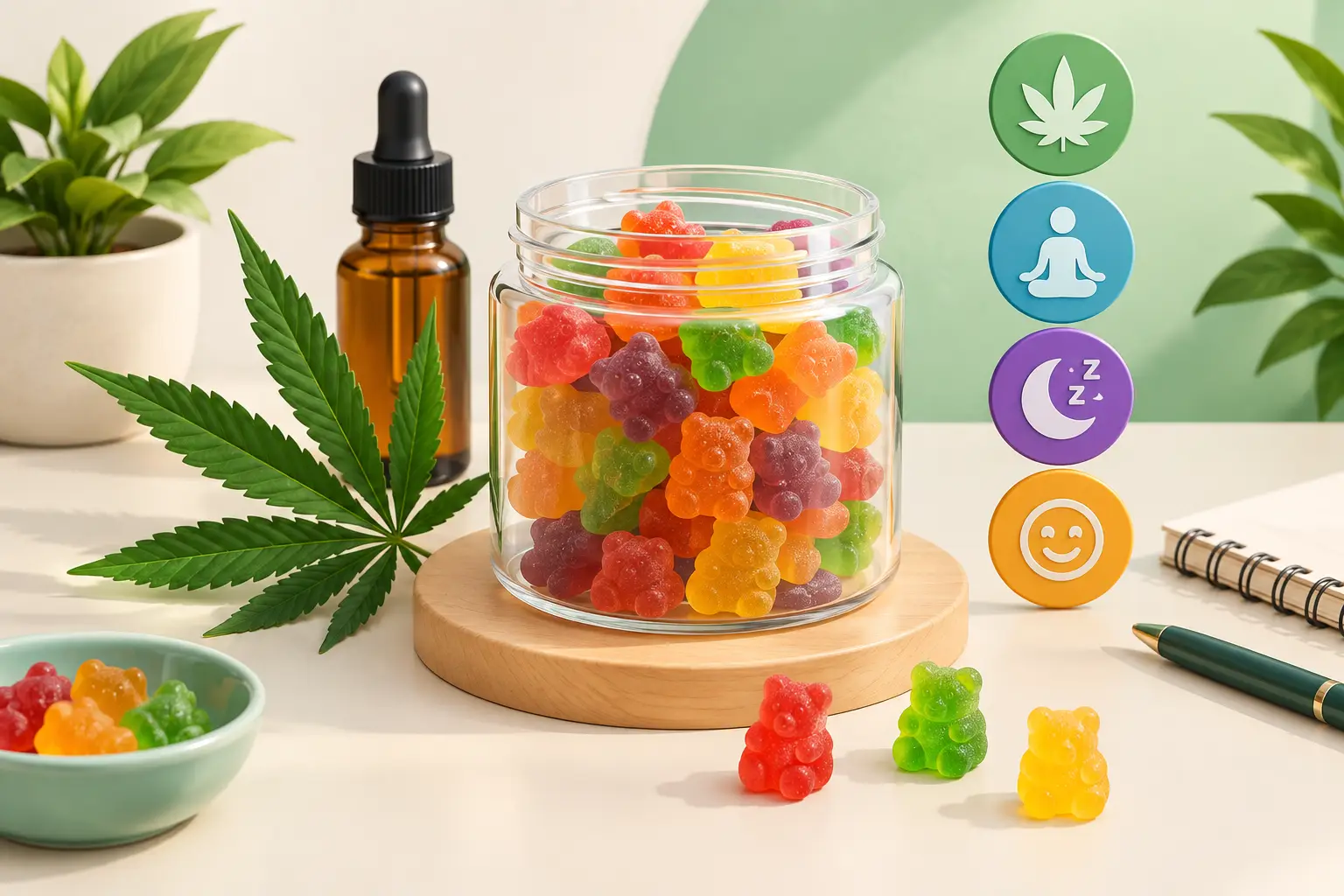
A gummy can feel like the simplest way to add CBD to your routine: no dropper, no topical application, and no complicated schedule. But the label matters. CBD gummies vary widely in CBD content, ingredients, testing standards, and whether they contain any detectable THC. For people seeking everyday support without an intoxicating effect, knowing what to look for makes the choice much clearer.
CBD gummies are not designed to replace medical care or prescription treatment. They may be one part of a thoughtful wellness routine for adults managing occasional stress, trouble winding down, or everyday discomfort. The right approach is practical: choose a clean product, start conservatively, and give your body time to respond.
What CBD Gummies Are Designed to Do
CBD, short for cannabidiol, is a naturally occurring compound found in hemp. Unlike THC, CBD is not associated with a high. Gummies deliver a measured amount of CBD in a familiar, portable format, which can make them especially appealing to first-time users and anyone who prefers not to use oils.
Because a gummy is swallowed, it must move through the digestive system before CBD enters the bloodstream. That process takes longer than placing an oil under the tongue or using an inhaled product. Many people notice effects in roughly 30 minutes to two hours, though timing can vary based on the individual, whether they have eaten, and the product’s formulation.
That delayed timing is one reason patience matters. Taking an extra gummy too soon is an easy way to use more CBD than intended. A consistent routine and realistic expectations are usually more useful than chasing an immediate result.
Why THC-Free Testing Matters
“Hemp-derived” and “THC-free” are not interchangeable terms. Hemp products can legally contain small amounts of THC, depending on their formulation and applicable regulations. For customers who want to avoid THC exposure, including service members, veterans, caregivers, and people subject to workplace drug testing, that distinction deserves close attention.
A quality THC-free product should be supported by independent laboratory testing. Often called a certificate of analysis, or COA, this report should verify the CBD amount and show whether THC was detected. It should also screen for contaminants such as heavy metals, pesticides, residual solvents, and microbial impurities.
No CBD company can promise how an individual drug test will respond. Testing methods, product use, and personal metabolism differ. Still, choosing products formulated with no detectable THC and backed by current third-party results is a more careful path than relying on broad marketing claims.
How to Choose CBD Gummies With Confidence
Start with the CBD amount per gummy, not just the total CBD shown on the package. A bottle containing 750 mg of CBD may sound strong, but the more useful number is the serving size. If it contains 30 gummies, each gummy provides 25 mg of CBD. That makes it easier to compare products and adjust your routine responsibly.
For many new users, a modest serving is a sensible place to begin. Some people start with 5 to 10 mg, while others may use a higher amount depending on their experience and goals. There is no single serving that works for everyone. Body size, individual sensitivity, medications, diet, and the reason for use can all influence the experience.
Look beyond the CBD number as well. The ingredient list should be straightforward and easy to understand. If you have food allergies, dietary restrictions, or diabetes-related nutrition concerns, check for gelatin, added sugars, artificial colors, and flavoring ingredients that may not fit your needs.
Extraction and cultivation practices provide another layer of reassurance. CBD made from organically cultivated hemp and extracted with CO2 can help customers avoid unnecessary chemical processing. Transparent brands explain their sourcing, manufacturing practices, and quality controls rather than asking customers to accept vague claims.
A dependable checklist includes:
- CBD content clearly listed per gummy and per container
- Independent lab reports that verify cannabinoids and contaminant screening
- No detectable THC when a THC-free option is your priority
- Clearly disclosed ingredients and allergen information
- Batch details or lot numbers that connect the product to its testing
Finding a Routine That Fits Your Goal
CBD gummies are often used as part of an evening wind-down routine, a busy-day stress-management plan, or a broader approach to everyday comfort. The best time to take one depends on what you hope to support and how your body responds.
If your goal is a calmer evening, consider taking your gummy well before you plan to rest. Because edibles can take time to take effect, waiting until you are already in bed may be too late. If you are using CBD for daytime balance, try it first on a day when you do not need to drive, make major decisions, or perform tasks requiring close attention until you know how it affects you.
Consistency can be useful when evaluating a product. Taking the same serving at approximately the same time for several days gives you a clearer picture than changing the amount and timing every day. Keep simple notes about when you took it, how much you used, meals, sleep, and how you felt. This is especially helpful if you are trying to identify the smallest serving that suits your routine.
Safety Questions to Consider Before You Start
CBD is widely used, but it is not right for every situation. Talk with a physician, pharmacist, or qualified healthcare professional before using CBD if you take prescription medications or over-the-counter medicines regularly. CBD may affect how the body processes certain drugs, including medications that carry grapefruit warnings.
It is also wise to seek professional guidance if you are pregnant, nursing, managing liver disease, preparing for surgery, or caring for a child. CBD products should be kept away from children and pets unless they are specifically formulated and dosed for veterinary use. Human gummies, particularly those containing sweeteners or chocolate-like ingredients, are not automatically appropriate for animals.
Possible side effects may include drowsiness, digestive upset, appetite changes, or dry mouth. A lower starting serving may reduce the chance of unwanted effects. Avoid combining CBD with alcohol or other substances that cause drowsiness unless a healthcare professional has advised you otherwise.
A Better Standard Than a Trendy Label
The CBD market can be crowded with bright packaging and oversized promises. A trustworthy product does not need to claim it can solve every problem. It should tell you what is in it, how much CBD it contains, how it was tested, and what steps the company takes to protect product quality.
That standard matters even more with gummies because they are easy to take and easy to mistake for ordinary candy. A measured serving, child-resistant packaging, and clear instructions support responsible use. So does choosing a company that makes customer care and product documentation easy to find.
CBD Health Collection focuses on clean, non-intoxicating CBD options supported by transparent testing, helping customers choose products around practical wellness goals rather than confusion or hype.
The most useful CBD gummy is not necessarily the strongest one or the one with the boldest promise. It is the one with verified quality, no detectable THC when that is your priority, ingredients you are comfortable taking, and a serving that fits your life. Start thoughtfully, pay attention to your experience, and let reliable information guide the routine you build.