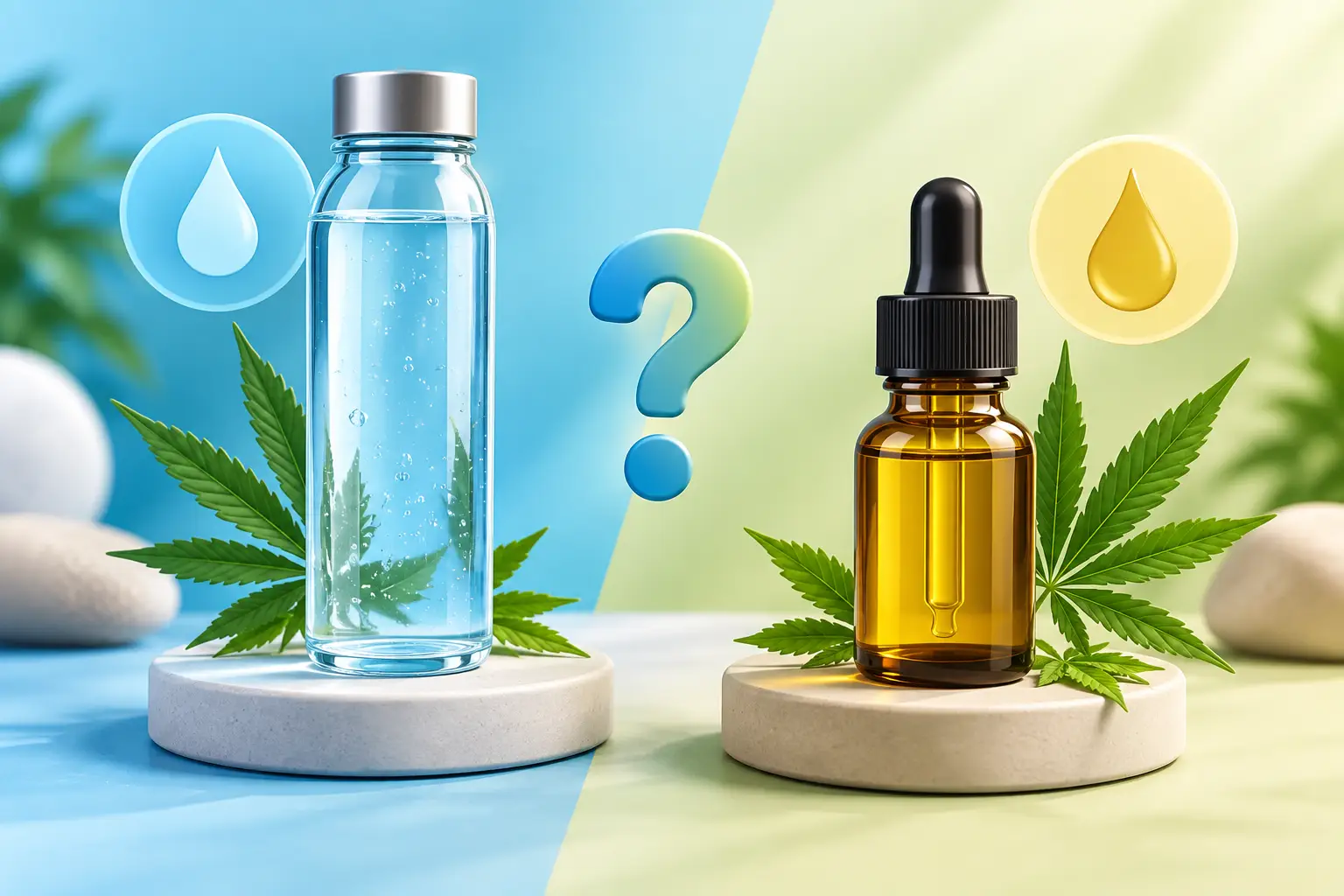
A CBD routine only works when it is one you can follow consistently. When comparing CBD water vs oil, the better choice is not always the product with the boldest promise. It is the format that fits your needs, your schedule, and your comfort level with measuring a serving.
Both can offer a simple, non-intoxicating way to add CBD to an everyday wellness plan. The meaningful differences are in how each product is formulated, how much CBD it provides per serving, how you take it, and how easily you can adjust your use over time.
CBD Water vs Oil: The Core Difference
CBD oil is typically taken under the tongue with a measured dropper, although it can also be added to food or drinks. It usually combines hemp-derived CBD extract with a carrier oil, such as MCT oil. Because CBD and oil naturally mix, this format has long been a familiar option for people who want a straightforward, concentrated serving.
CBD water is a beverage or water-based CBD formula. Since CBD is naturally oil-based and does not dissolve readily in plain water, a quality water-based product needs a formulation process that disperses CBD into very small particles. You may see this called emulsification or nanoemulsion. The goal is to create a more evenly mixed product that is easy to drink and may support efficient absorption.
That distinction matters, but it should not overshadow the basics. A water-based formula should still clearly state the CBD amount per serving, provide accessible independent lab results, and confirm whether THC is detectable. For customers who want to avoid THC exposure, transparent THC-free testing is essential regardless of format.
Why People Choose CBD Oil
CBD oil is often the stronger choice for people who want flexibility and precise dose control. A dropper lets you start with a small amount, observe how it fits into your routine, and adjust gradually if needed. This can be especially useful for adults building a consistent wellness practice around occasional stress, difficulty winding down, everyday discomfort, or general balance.
Concentration is another practical advantage. Oils often contain more CBD per bottle and per serving than ready-to-drink CBD water. If you prefer taking CBD once or twice daily without carrying multiple beverages, an oil may be more convenient and cost-effective over time.
Taking CBD oil under the tongue may also offer a different experience than swallowing it immediately. Many people hold it under the tongue briefly before swallowing, though individual results vary based on the formula, serving size, metabolism, food intake, and personal response. There is no universal timeline that applies to everyone.
The trade-off is taste and routine. Even clean, well-made CBD oils can have a natural hemp flavor that some people do not enjoy. Others simply find a dropper less convenient than reaching for a drink during a busy day. An oil also requires a little more attention to serving size. You need to read the label carefully to understand how much CBD is in a full dropper, half dropper, or individual milliliter.
When CBD Oil May Make More Sense
Oil may be a good fit if you want a higher-strength option, prefer to customize your serving, or are looking for a compact product for regular use. It can also work well for people who already have a daily morning or evening supplement routine and want a simple product to keep beside their vitamins or on a nightstand.
For first-time users, an oil can make gradual experimentation easier. Start with the manufacturer’s suggested serving, keep your routine consistent for several days, and pay attention to how you feel. Increasing too quickly makes it harder to identify the serving size that works best for you.
Why People Choose CBD Water
CBD water is built around convenience. It feels familiar because it fits naturally into a hydration routine: keep it in the refrigerator, take it to work, or drink it after a walk. For people who do not want to measure a dropper or who dislike the taste of hemp oil, this format can make daily use feel more approachable.
A water-based delivery format may also appeal to people who value a formula designed for easier mixing and absorption. However, it is wise to treat broad bioavailability claims carefully. Absorption can vary considerably from person to person, and the formulation itself matters. A well-made water-based CBD product should explain what is in it, how much CBD it contains, and how it has been tested instead of relying on vague claims.
CBD water is often best for lower-dose, on-the-go use. That may be exactly what someone wants for an afternoon reset, a travel day, or a wellness habit that feels as easy as opening a bottle. It can be especially useful for people who are hesitant to try CBD because it offers a familiar way to begin.
The main limitation is dose flexibility. A bottled beverage generally provides a fixed amount of CBD, so you cannot fine-tune the serving as easily as you can with an oil. Depending on the product and your desired serving size, using CBD water every day may also cost more than a concentrated oil.
When CBD Water May Make More Sense
CBD water may be the better fit if convenience, taste, and a ready-to-drink format matter most to you. It can support a simple wellness ritual for people who want to add THC-free CBD to a work bag, gym bag, or daily hydration routine without extra measuring.
It is also worth checking the full ingredient panel. Some CBD beverages contain added sugar, flavorings, caffeine, herbs, or other functional ingredients. Those additions are not automatically a concern, but they should match your preferences and health needs. If you are looking for a clean daily product, fewer clearly identified ingredients can make your decision easier.
How to Compare Quality in Either Format
The format is only one part of the decision. A high-quality CBD water and a high-quality CBD oil should both provide clear answers about what you are taking.
Look for independently tested products with a current certificate of analysis that confirms CBD content and checks for contaminants such as heavy metals, pesticides, residual solvents, and microbial impurities. If avoiding THC is a priority, verify that the product is specifically tested for no detectable THC rather than assuming all hemp products are THC-free.
Extraction and sourcing also deserve attention. CBD made from organically cultivated hemp and extracted with CO2 can help support a cleaner product profile. Just as important, choose brands that explain their formulas in plain language and make serving information easy to find. You should not have to guess what is in the bottle or how to use it.
Be cautious with products that promise to cure, treat, or prevent medical conditions. CBD may support everyday wellness, but it is not a replacement for medical care. If you take prescription medication, are pregnant or nursing, have a medical condition, or are purchasing CBD for an older adult or pet, speak with a qualified healthcare professional or veterinarian before starting a new product.
Choosing the Format That Supports Consistency
Choose CBD oil when you want concentration, serving flexibility, and a product that can become part of a consistent morning or evening routine. Choose CBD water when you want a convenient, approachable option that fits naturally into hydration and life on the go.
Some people find that both formats have a place. An oil may be practical at home, while a water-based option is easier during travel or busy days. There is no need to force one format to do every job.
The most useful next step is simple: decide what you want your CBD routine to feel like. When the ingredients are clean, the testing is transparent, the formula is THC-free, and the serving is one you can maintain, you can choose with greater confidence and give your wellness routine room to work.