
Table of Contents
- How CBD for Stress Management Works in the Body
- What the Evidence Says: CBD, Cortisol, and Anxiety
- Full Spectrum vs Isolate CBD for Stress: Which One Is Better?
- Best CBD Products for Stress Relief: Tinctures, Gummies, and More
- CBD Dosage for Stress Relief: How Many Milligrams Do You Need?
- How to Take CBD for Anxiety and Stress: Timing and Method
- Safety, Side Effects, and Drug Interaction Warnings
- Conclusion: Making CBD for Stress Management Work for You
Last Updated: May 27, 2026
Stress is one of the most common health complaints driving people toward natural wellness alternatives, and cbd for stress management has become one of the most searched topics in the cannabidiol space. CBD Health Collection has helped thousands of customers explore this option since 2017, bringing a pharmaceutical-grade perspective to a market crowded with confusing claims. Below, we’ll show you exactly how CBD interacts with your body’s stress response, which product types work best, how to dose safely, and what safety signals to look for before you buy. But first, here’s what most guides get wrong: they treat CBD as a simple "calm pill" rather than a compound that modulates a complex biological system. The distinction matters enormously for setting realistic expectations.
How CBD for Stress Management Works in the Body
Cannabidiol is a non-psychoactive compound derived from hemp that interacts with the body’s endocannabinoid system to support physiological balance, or homeostasis. Unlike THC, cannabidiol produces no intoxicating effect. It works by influencing cannabinoid receptors, serotonin receptors, and other signaling pathways that regulate mood, inflammation, and the stress response.
The Endocannabinoid System and Homeostasis
The endocannabinoid system (ECS) is a cell-signaling network present throughout the brain, nervous system, and immune tissue that regulates sleep, appetite, mood, and stress response. It consists of three core components: endocannabinoids (molecules your body produces naturally), receptors (CB1 and CB2), and enzymes that break those molecules down.
CBD does not bind directly to CB1 or CB2 receptors the way THC does. Instead, it modulates receptor activity and inhibits the enzyme FAAH, which breaks down anandamide, sometimes called the "bliss molecule." Higher anandamide levels are associated with reduced anxiety and improved emotional regulation. This is why CBD’s effect on stress tends to feel subtle and cumulative rather than immediate and sedating.
CBD works best when used consistently over days or weeks. Many users report little effect from a single dose but notice meaningful changes after two to three weeks of daily use. Think of it as nutritional support for your ECS, not a rescue medication.
Somatic vs. Psychological Stress: Does CBD Address Both?
This is the part most guides skip entirely, and it’s genuinely important.
Stress is not a single phenomenon. Somatic stress refers to physical tension held in the body: tight muscles, elevated heart rate, shallow breathing, headaches, and digestive disruption. Psychological stress refers to cognitive and emotional distress: rumination, worry, irritability, and difficulty concentrating.
CBD appears to address both pathways, but through different mechanisms. For somatic stress, topical CBD and systemic CBD may reduce inflammation and muscle tension through peripheral CB2 receptor activity. For psychological stress, CBD’s interaction with serotonin receptors (specifically 5-HT1A) is the primary mechanism of interest, as this receptor is directly implicated in anxiety regulation. The practical implication: someone dealing primarily with physical tension may respond well to a topical or a lower oral dose, while someone dealing with persistent worry or anxiety may need consistent sublingual or oral dosing at a moderate-to-higher milligram range.
What the Evidence Says: CBD, Cortisol, and Anxiety
The science here is promising but not conclusive. That’s an honest position, and any brand that tells you otherwise is overselling. But "promising" deserves more than a shrug, here’s what the actual body of research shows, what its limitations are, and what it means for someone using CBD for stress management today.
The Cortisol Connection
Cortisol is your body’s primary stress hormone, released by the adrenal glands in response to perceived threats via the hypothalamic-pituitary-adrenal (HPA) axis. Chronically elevated cortisol is associated with disrupted sleep, weight gain around the midsection, immune suppression, memory impairment, and increased cardiovascular risk. Bringing cortisol back into a healthy range is one of the central goals of any stress management strategy.
Preclinical research, primarily in rodent models, has consistently shown that CBD blunts HPA axis activation in response to acute stressors, reducing both corticosterone (the rodent equivalent of cortisol) and the behavioral markers of anxiety. The mechanism most frequently implicated is CBD’s agonist activity at the 5-HT1A serotonin receptor, which exerts an inhibitory effect on HPA axis overactivation. CBD also appears to modulate the amygdala, the brain region responsible for threat detection and fear response, reducing its reactivity to stress signals.
What Human Studies Actually Show
Human clinical evidence is more limited in scale but directionally consistent. The most frequently cited human study in this space involved participants with Social Anxiety Disorder (SAD) who received a single 600mg oral dose of CBD before a simulated public speaking test, a well-validated laboratory stress model. Compared to placebo, CBD-treated participants showed significantly reduced subjective anxiety, reduced cognitive impairment during the speech, and reduced discomfort in anticipatory anxiety. Physiological measures including heart rate and blood pressure also trended lower in the CBD group.
A separate study examined CBD’s effects on anxiety and sleep in a clinical population over a one-month period. Anxiety scores improved in the majority of participants within the first month and remained improved over the observation period. Sleep scores also improved in a meaningful portion of participants, though with more variability than the anxiety outcomes.
It is worth noting that the 600mg dose used in the public speaking study is substantially higher than what most consumers use daily. Most over-the-counter CBD products are dosed between 15mg and 75mg per serving. The translational gap between research doses and consumer doses is a legitimate limitation that few guides acknowledge directly.
The Placebo Problem and What It Means
Placebo effect is a documented and significant factor in CBD anxiety research. In several trials, placebo groups also showed meaningful reductions in self-reported anxiety, which complicates the interpretation of subjective outcome measures. This does not mean CBD has no effect, it means that well-controlled, larger trials are needed to isolate CBD’s pharmacological contribution from expectation effects. Researchers generally consider this a call for more rigorous study design, not evidence that CBD is inert.
What the current evidence does support with reasonable consistency:
- CBD appears safe for most adults at doses studied, with a favorable side-effect profile compared to pharmaceutical anxiolytics
- Anxiolytic signals appear across multiple animal models and several human studies using validated anxiety measures
- CBD does not produce the physical dependence, withdrawal syndrome, or cognitive impairment associated with benzodiazepines
- Effects appear dose-dependent and may require consistent use to accumulate
The Gap Between Research and Real-World Use
Most clinical trials use pharmaceutical-grade CBD isolate at controlled doses administered in laboratory settings. Real-world consumers use full-spectrum or broad-spectrum products, at variable doses, with variable bioavailability depending on the delivery format and whether they’ve eaten. This means direct extrapolation from trial results to product recommendations requires caution.
According to National Institutes of Health research on cannabidiol and anxiety, researchers consistently call for larger, longer-duration randomized controlled trials before definitive clinical recommendations can be made. That call has not yet been fully answered.
CBD is not FDA-approved for anxiety or stress disorders. Epidiolex, a purified CBD medication, is FDA-approved only for specific seizure conditions. Do not replace prescribed mental health medications with CBD without consulting your healthcare provider first. If you are experiencing clinical anxiety, panic disorder, PTSD, or depression, please work with a licensed mental health professional, CBD may be a useful complement, but it is not a substitute for evidence-based treatment.
Mental health outcomes are complex. CBD for stress management works best as a complement to a broader wellness strategy that includes sleep hygiene, regular physical activity, stress reduction practices, and professional support where appropriate. The evidence supports cautious optimism, not certainty, and not dismissal.
Full Spectrum vs Isolate CBD for Stress: Which One Is Better?
For most people using CBD for stress relief, full-spectrum products are the stronger starting point. Full-spectrum CBD contains cannabidiol alongside minor cannabinoids, terpenes, and trace amounts of THC (below 0.3% in hemp-derived products). These compounds interact synergistically in what researchers call the "entourage effect," potentially amplifying each other’s calming and anti-inflammatory properties.
CBD isolate is pure cannabidiol with all other plant compounds removed. It’s predictable, flavorless, and THC-free, which makes it the right choice for people who are drug-tested or highly sensitive to other cannabinoids. The trade-off is that isolate lacks the entourage effect and often requires higher doses to achieve comparable results.
| CBD Type | THC Content | Entourage Effect | Best For |
|---|---|---|---|
| Full-Spectrum | Up to 0.3% | Yes | General stress, sleep support |
| Broad-Spectrum | None | Partial | Drug-tested individuals |
| Isolate | None | No | Sensitivity, precise dosing |
Broad-Spectrum CBD: The Middle Ground
Broad-spectrum CBD is full-spectrum with THC removed, preserving most minor cannabinoids and terpenes while eliminating the psychoactive compound entirely. For cbd for stress management, broad-spectrum sits in a practical sweet spot: more effective than isolate for most users, safe for those who cannot have any THC in their system.
CBD Health Collection’s broad-spectrum gummies use this formulation specifically because it balances efficacy with accessibility. The products are derived from organically grown, USA-sourced hemp and extracted via CO2 process, which preserves the full terpene and cannabinoid profile without chemical solvents.
Best CBD Products for Stress Relief: Tinctures, Gummies, and More
Different delivery formats produce meaningfully different experiences. Choosing the right one depends on your lifestyle, the type of stress you’re managing, and how quickly you need relief.
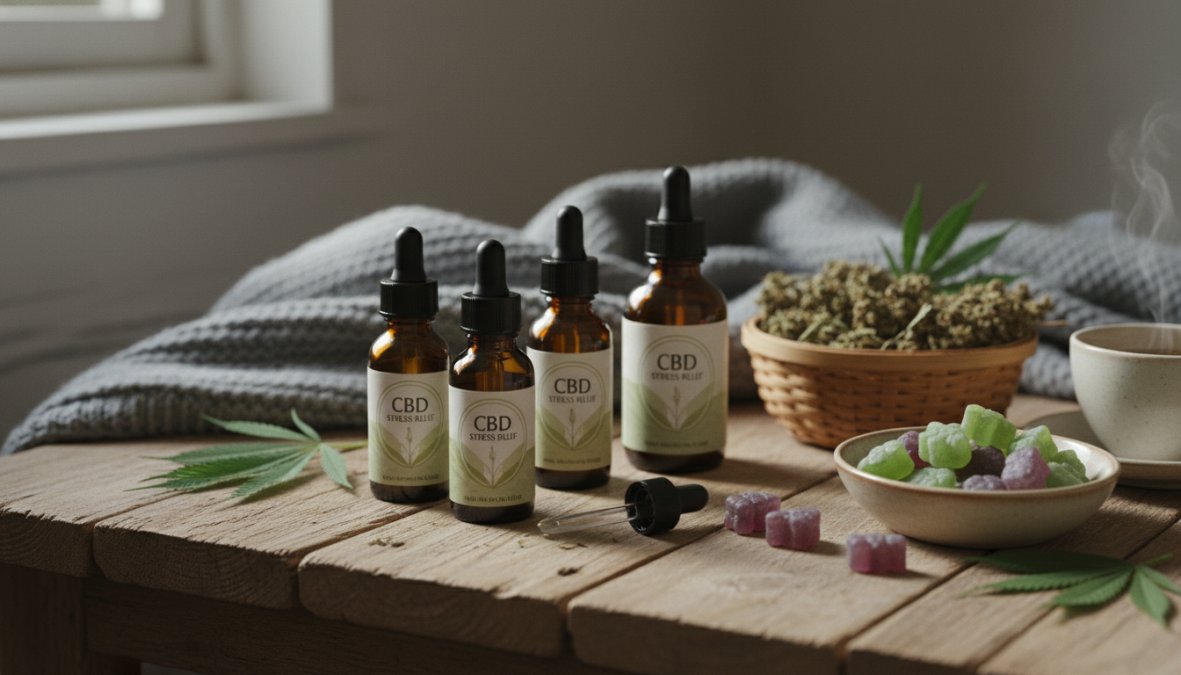
CBD Tinctures (Oils): Taken sublingually (under the tongue), tinctures absorb directly into the bloodstream through mucous membranes, bypassing first-pass liver metabolism. Onset is typically 15-45 minutes. This makes tinctures the best option for situational stress, like before a presentation or difficult conversation. CBD Health Collection’s CBD oils use a water-based formulation for optimized bioavailability, which is a meaningful differentiator from standard oil-based carriers.
CBD Gummies: Gummies pass through the digestive system, so onset is slower (45-90 minutes) but effects tend to last longer (4-6 hours). They’re ideal for sustained, daily stress management rather than acute relief. Dosing is also consistent and convenient.
Soft Gels: Similar pharmacokinetics to gummies, but with no added sugars or flavors. A good option for people who prefer a supplement-style routine.
Topicals: CBD freeze gels and pain patches work locally rather than systemically. They’re the right choice for somatic stress manifesting as muscle tension, headaches, or physical discomfort, not for psychological anxiety.
| Product Type | Onset Time | Duration | Best Use Case |
|---|---|---|---|
| Tincture (sublingual) | 15-45 min | 3-5 hours | Acute, situational stress |
| Gummies | 45-90 min | 4-6 hours | Daily stress management |
| Soft Gels | 45-90 min | 4-6 hours | Supplement routine |
| Topicals | 15-30 min (local) | 2-4 hours | Physical tension, muscle stress |
CBD Dosage for Stress Relief: How Many Milligrams Do You Need?
CBD dosage for stress relief is not one-size-fits-all, and the reason goes deeper than "everyone is different." Understanding why dosing varies, and the specific factors that influence your optimal dose, is what separates a CBD routine that works from one that gets abandoned after two weeks.
Why CBD Dosing Is Genuinely Complex
Unlike most supplements where a standard dose produces a predictable effect, CBD interacts with a biological system, the endocannabinoid system, that varies significantly between individuals in receptor density, baseline endocannabinoid tone, and enzyme activity. Two people of identical body weight taking the same product at the same dose can have meaningfully different experiences. This is not a marketing disclaimer; it reflects real pharmacological variability.
Key factors that influence your effective dose:
- Body weight and composition: Higher body weight generally correlates with a need for higher doses, as CBD distributes into fatty tissue. A common starting reference is 1-6mg of CBD per 10 pounds of body weight, depending on symptom severity.
- Metabolism and liver enzyme activity: CBD is metabolized primarily by CYP3A4 and CYP2C19 enzymes. Individuals who are "fast metabolizers" of these pathways will clear CBD more quickly and may need higher or more frequent doses. Genetic variation in these enzymes is common.
- Prior cannabinoid exposure: People with prior regular cannabis use may have downregulated CB1 receptors, which can affect CBD’s indirect modulation of that pathway. Conversely, those with no prior exposure may be more sensitive at lower doses.
- Delivery format and bioavailability: A 25mg sublingual tincture dose delivers meaningfully more CBD into circulation than a 25mg gummy, because oral ingestion subjects CBD to first-pass liver metabolism, reducing bioavailability by an estimated 60-80% compared to sublingual absorption. This means the "effective dose" from a gummy is a fraction of the milligrams on the label.
- Whether you’ve eaten: Taking oral CBD with a high-fat meal significantly increases absorption. Studies have shown that food, particularly fat-containing food, can increase CBD bioavailability from oral formats by a substantial margin compared to fasted administration.
- Stress severity and chronicity: Acute situational stress and chronic generalized stress are different physiological states and may respond to different dose ranges.
The Biphasic Dose-Response: The Most Important Thing Most Guides Don’t Tell You
This is the piece of dosing information that most consumer CBD guides omit entirely, and it may explain why some users try CBD and report that it "made their anxiety worse" or "didn’t help."
CBD exhibits a biphasic dose-response curve for anxiety-related outcomes. This means:
- At low-to-moderate doses, CBD tends to produce anxiolytic (anxiety-reducing) effects
- At very high doses, some research suggests CBD may paradoxically increase anxiety in certain individuals, or produce a flat (no effect) response
This is not universal, many people tolerate and benefit from higher doses, but it is a documented pharmacological pattern that has appeared in both animal models and some human studies. The practical implication: if you increase your dose and feel more anxious or unsettled rather than less, the answer is not to push higher. It is to step back to the previous dose and hold there.
This also means that "more is not always better" with CBD for stress, which is the opposite of how most supplements work and why the titration approach matters.
A Practical Dosing Framework
A practical starting framework based on stress severity and body weight:
| Stress Level | Starting Dose | Target Range | Format Recommendation |
|---|---|---|---|
| Mild / Situational | 10-15mg | 15-25mg | Sublingual tincture for acute use |
| Moderate / Daily | 20-25mg | 25-50mg | Gummies or tincture, consistent daily timing |
| Chronic / Pronounced | 30-40mg | 50-75mg | Tincture AM + gummies PM, titrate slowly |
| Physical tension focus | 10-20mg oral + topical | As needed | Oral + topical combination |
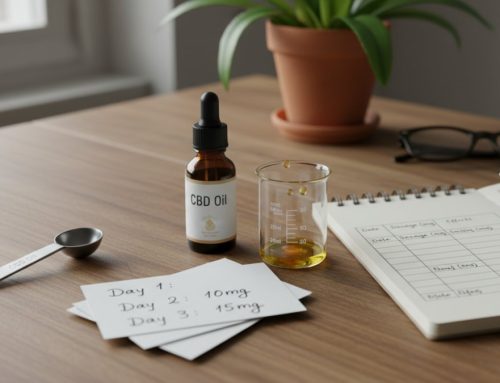
The standard titration protocol recommended by most practitioners: start at your chosen entry dose for five to seven days. If you notice no effect and no adverse response, increase by 5-10mg. Repeat this process every five to seven days until you find your effective dose. Do not increase more rapidly, CBD’s effects on stress accumulate over consistent use, and premature escalation is the most common reason people overshoot their optimal dose.
The single most common dosing mistake is giving up after one or two attempts at a low dose. CBD’s effects on stress accumulate over consistent use. Give any new dose at least two weeks before evaluating whether to increase. The second most common mistake is escalating too quickly past the dose that was actually working.
Bioavailability in Practice: Getting More From the Same Milligrams
Before increasing your dose, consider whether a format or timing change would achieve the same result more efficiently:
- Switch from gummies to sublingual tincture at the same milligram dose. For many users, this effectively doubles the amount of CBD reaching circulation without changing the label dose.
- Take oral CBD with a meal containing healthy fats (avocado, olive oil, nuts). This is a simple, evidence-supported way to increase absorption from gummies and soft gels.
- Split your daily dose rather than taking it all at once. Some users find that two smaller doses (morning and evening) produce more consistent stress relief than one larger dose, because it maintains more stable CBD levels throughout the day.
When to Consult a Professional About Dosing
If you are taking any prescription medications, the dosing conversation becomes more complex because CBD can affect how those medications are metabolized (see the Safety section for full detail). In this case, starting at the lowest possible dose, 10mg or below, and increasing only with physician awareness is the appropriate approach.
If you have not noticed any meaningful effect after six weeks of consistent use at moderate doses, it is worth discussing with a healthcare provider whether CBD is the right tool for your specific stress profile, or whether additional support is warranted.
Keep a brief daily log for your first four weeks: note your dose, timing, format, stress level (1-10), sleep quality, and any notable symptoms. This data is invaluable for identifying your effective dose and for any conversation with a healthcare provider. Most people who do this find their optimal dose within three to four weeks rather than guessing indefinitely.
How to Take CBD for Anxiety and Stress: Timing and Method
How to take CBD for anxiety is as important as how much you take. Timing your dose to your stress patterns significantly improves outcomes.
For daily background stress: Take CBD in the morning with breakfast to establish a consistent baseline. Effects accumulate over days and weeks, so consistency matters more than timing precision.
For situational anxiety (public speaking, social events, high-stakes meetings): Take a sublingual tincture 30-45 minutes before the stressor. The faster onset of sublingual delivery makes it the right format here.
For stress-related sleep disruption: Take CBD 60-90 minutes before bed. Gummies or soft gels work well here because their longer duration aligns with the sleep window.
For physical tension: Apply a topical CBD product directly to the area of tension. This can be combined with oral CBD for a dual-action approach.
A practical checklist for starting a CBD stress routine:
- Choose your format based on stress type (acute vs. chronic, somatic vs. psychological)
- Start at 15-25mg per dose
- Take at a consistent time daily for the first two weeks
- Keep a brief daily log (1-10 stress rating, sleep quality, notable symptoms)
- Evaluate after 14 days and adjust dose by 10mg if needed
- Consult your physician before starting if you take any prescription medications
Safety, Side Effects, and Drug Interaction Warnings
CBD is well-tolerated by most adults, but it is not without risks. The most commonly reported side effects include dry mouth, drowsiness, reduced appetite, and mild gastrointestinal discomfort, particularly at higher doses. These effects are generally dose-dependent and resolve when the dose is reduced.
The drug interaction issue is where most consumer guides fall short, and it deserves direct attention.
CBD is metabolized by the cytochrome P450 enzyme system in the liver, specifically CYP3A4 and CYP2C19. This is the same enzyme system responsible for metabolizing a large number of prescription medications, including blood thinners (warfarin), anticonvulsants, antidepressants, antifungals, and some heart medications. When CBD is present, it can inhibit these enzymes, causing other medications to accumulate in the bloodstream at higher-than-intended levels.
According to FDA guidance on drug interactions with CBD, this interaction is clinically significant and should be discussed with a prescribing physician before starting CBD. The risk is not theoretical.
Specific categories requiring caution:
- Anticoagulants (warfarin, apixaban)
- Antiepileptics (clobazam, valproate)
- Immunosuppressants (tacrolimus, cyclosporine)
- Certain antidepressants and antipsychotics
If you take any prescription medication, a conversation with your pharmacist or physician before starting cbd for stress management is not optional, it’s necessary.
How to Read a Certificate of Analysis (COA)
A Certificate of Analysis is a third-party lab report that verifies what’s actually in a CBD product. Every reputable CBD brand provides one. If a company doesn’t, that’s a hard stop.
Here’s what to look for in a COA:
Cannabinoid panel: Confirms the CBD milligram content matches the label claim. Check that THC is below 0.3% (federal legal limit for hemp-derived CBD). For THC-free products, it should read "ND" (not detected).
Contaminant panel: Should include testing for heavy metals (lead, arsenic, cadmium, mercury), pesticides, residual solvents, and microbial contaminants. All should be below detection thresholds or within safe limits.
Issuing laboratory: The lab should be ISO 17025-accredited and independent from the manufacturer. A brand testing its own products is not third-party testing.
Batch number: The COA should match the batch number on your product. A COA from a different batch tells you nothing about what’s in your bottle.
CBD Health Collection provides independently verified COA lab testing for every product, produced in a GMP- and FDA-registered facility. That’s the baseline standard you should expect from any brand you buy from.
As documented in American Botanical Council guidance on CBD product quality standards, COA transparency is the single most reliable quality indicator available to consumers in an otherwise largely unregulated market.
Finding a CBD product that genuinely supports stress relief requires cutting through significant noise, from misleading potency claims to untested formulations. CBD Health Collection was built specifically to address that problem: organically grown, CO2-extracted, independently lab-tested products made in a GMP- and FDA-registered facility, with a 30-day satisfaction guarantee and free shipping on every order. Get started with CBD Health Collection and experience the difference that pharmaceutical-grade sourcing and transparent third-party testing make to your stress management routine.
Frequently Asked Questions
Does CBD actually help with stress and anxiety?
CBD for stress management shows promise in early research, with studies suggesting it may interact with serotonin receptors and help regulate the body's stress response. However, clinical trials are still limited and results vary by individual. Many users report feeling calmer and more relaxed after consistent use. CBD is not FDA-approved to treat anxiety disorders, so it should be viewed as a wellness supplement rather than a medical treatment. Always consult a healthcare provider for persistent mental health concerns.
What is the best CBD dosage for stress management?
There is no universal CBD dosage for stress relief, but most beginners start with 10-25 milligrams per day and adjust based on response. Factors like body weight, metabolism, and product bioavailability all influence how much you need. Sublingual tinctures tend to act faster and allow easier dose control than gummies. Start low, wait at least a week before increasing, and track how you feel. A broad-spectrum or full-spectrum product may offer enhanced effects compared to isolate at the same dose.
Is CBD oil or gummies better for stress relief?
CBD oil tinctures taken sublingually typically have higher bioavailability and faster onset, often 15-45 minutes, making them useful for acute stress. Gummies are more convenient and offer consistent dosing, but take longer to absorb due to digestion. For ongoing stress management, gummies work well as a daily routine. For situational or somatic stress, a sublingual tincture may be more effective. The best choice depends on your lifestyle, how quickly you need relief, and personal preference.
Are there drug interactions or side effects I should know about?
CBD can interact with medications metabolized by the liver enzyme CYP450, including blood thinners, antidepressants, and certain anticonvulsants. Common side effects include drowsiness, dry mouth, and changes in appetite. These are generally mild but worth monitoring. Always disclose CBD use to your doctor, especially if you take prescription medications. Choosing a hemp-derived, THC-free product with a verified Certificate of Analysis (COA) from third-party testing reduces the risk of contaminants and unexpected psychoactive effects.
How do I verify that a CBD product is safe and accurately labeled?
Look for a Certificate of Analysis (COA) from an independent third-party lab, not just the brand's own testing. A trustworthy COA confirms cannabidiol potency, verifies THC levels are within legal limits, and screens for pesticides, heavy metals, and solvents. Reputable brands like CBD Health Collection make COAs publicly available on their website. Check that the batch number on the product matches the COA, and confirm the lab is accredited. This is the most reliable way to ensure product purity and quality.
This article was written using GrandRanker