Table of Contents
- What Is CBD and How Does It Work for Pain
- CBD vs THC for Pain: Understanding the Difference
- Methods of Using CBD for Pain Relief
- How Long Does CBD Take to Work for Pain
- CBD Dosage for Pain Chart and Finding Your Right Dose
- Safety, Side Effects, and Drug Interactions
- Quality and Third-Party Testing: What to Look For
- Common Mistakes to Avoid When Using CBD for Pain
Last Updated: August 27, 2026
What Is CBD and How Does It Work for Pain
Cannabidiol, or CBD, is a non-intoxicating compound derived from the hemp plant that interacts with your body’s endocannabinoid system to help manage pain and inflammation. Unlike THC, CBD doesn’t produce a "high", it works quietly to support pain relief without psychoactive effects.
Your body naturally produces endocannabinoids, signaling molecules that regulate pain perception, immune response, and inflammation. CBD appears to enhance this natural process by interacting with CB1 and CB2 receptors throughout your nervous system and immune tissue, potentially amplifying your body’s own pain-management capabilities. The anti-nociceptive properties of CBD (its ability to reduce pain signaling) have made it increasingly popular among people seeking natural alternatives to traditional pain management. The therapeutic effect varies significantly between individuals, which is why finding your right approach matters more than following generic advice.
CBD vs THC for Pain: Understanding the Difference
Both CBD and THC come from the same plant but affect your body differently. THC is psychoactive, binding strongly to CB1 receptors in your brain and producing the "high" associated with cannabis. CBD has weaker affinity for these receptors and produces no intoxication.
For pain management, THC provides immediate, potent relief and is particularly effective for acute pain and muscle spasms. However, its psychoactive effects make it unsuitable for people who need to remain alert. CBD offers a more subtle approach: it doesn’t produce dramatic immediate relief, but many users find it provides steady, sustained pain management without impairing cognition.
The legal landscape differs significantly. THC remains controlled at the federal level, while hemp-derived CBD with less than 0.3% THC is legal nationwide under the Farm Bill. Some full-spectrum CBD products contain trace amounts of THC (up to 0.3% by law) and may offer enhanced therapeutic effects through the "entourage effect", the theory that cannabinoids work synergistically together. If you’re sensitive to THC or need to avoid it entirely, look for broad-spectrum or isolate products instead.
Methods of Using CBD for Pain Relief
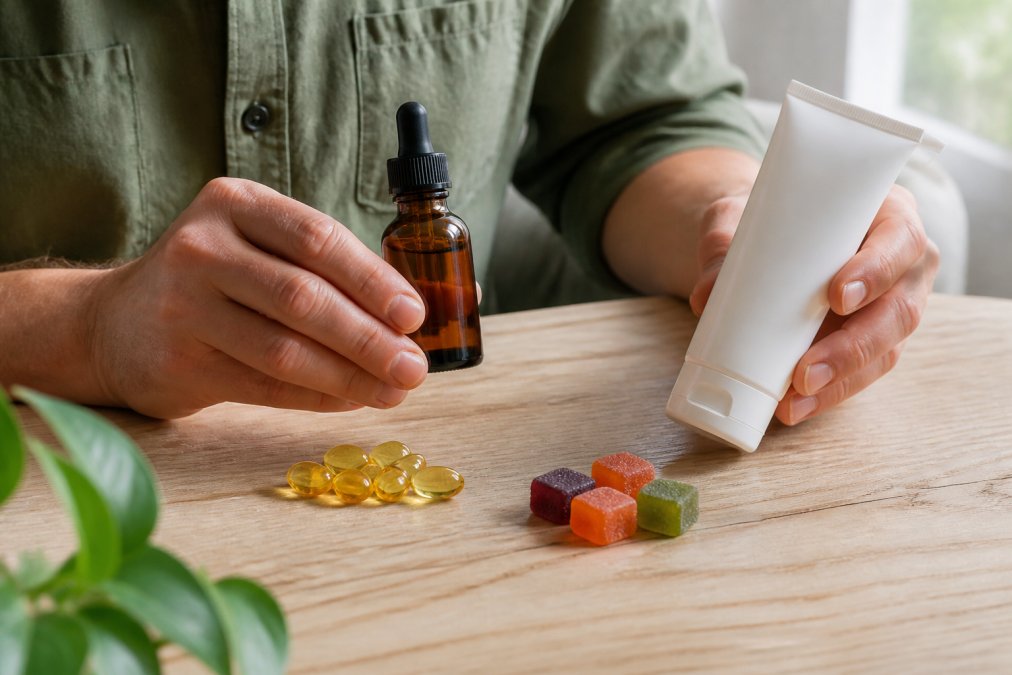
The method you choose dramatically affects how quickly CBD works, how long effects last, and how much you’ll need. Each delivery method has distinct advantages depending on your pain type, lifestyle, and preferences.
Sublingual Oils and Tinctures
Sublingual administration, placing CBD oil under your tongue for 30-60 seconds before swallowing, is the most popular method for systemic pain relief. The tissue under your tongue is highly vascularized, absorbing CBD directly into your bloodstream and bypassing the digestive system.
This affects bioavailability, the percentage of CBD that reaches your system in active form. Sublingual administration typically achieves 12-35% bioavailability, significantly higher than swallowing oil directly (peer-reviewed research). You’ll feel effects within 15-45 minutes, lasting 4-6 hours. This makes sublingual tinctures ideal for chronic pain management with predictable timing.
The main drawback is taste. Full-spectrum tinctures often taste earthy or bitter, though this is harmless.
Topical Balms and Freeze Gels
Topical CBD products work through a different mechanism than sublingual oils. When applied directly to skin over a painful joint or muscle, CBD penetrates tissue layers and interacts with cannabinoid receptors locally. This approach doesn’t enter your bloodstream but works right where you apply it.
The advantage is immediate, targeted relief. Many users report feeling effects within 10-20 minutes, making topicals ideal for localized pain like tennis elbow, knee pain, or sore shoulders. Topicals won’t help with systemic pain affecting multiple areas or deep internal pain.
Topical effectiveness depends heavily on formulation. Products including menthol or arnica often provide enhanced relief. The "freeze gel" category combines CBD with cooling agents for immediate sensory relief while addressing underlying inflammation. One user reported that CBD Health Collection’s Soothing Freeze Gel eliminated tennis elbow pain within 10-15 minutes.
Capsules and Soft Gels
Capsules and soft gels offer convenience and precise dosing. You swallow them like any supplement, and they travel through your digestive system where CBD is absorbed. This method is discreet and eliminates taste issues entirely.
The trade-off is slower onset and lower bioavailability. Capsules typically take 30-90 minutes to produce effects, with bioavailability generally 6-15%. However, effects last longer, typically 6-8 hours, because slow absorption creates sustained blood levels. This method works best for people who prefer simplicity or want morning dosing with all-day coverage.
Edibles and Gummies
Gummies function similarly to capsules but are more enjoyable to consume. Onset is still slow (30-90 minutes) and bioavailability remains modest (6-15%), but consistency is excellent. A 25mg gummy delivers exactly 25mg of CBD every time, with no measuring required.
One consideration: gummies often contain added sugars and flavorings. Check ingredient lists carefully if you’re watching sugar intake.
How Long Does CBD Take to Work for Pain
The speed at which CBD takes effect depends almost entirely on your delivery method. Sublingual oils produce effects in 15-45 minutes. Topicals work fastest, often within 10-20 minutes, though effects are localized. Capsules and edibles require 30-90 minutes because they must be digested.
Duration also varies by method. Sublingual effects typically last 4-6 hours. Topicals may last 3-5 hours. Capsules and edibles provide longer coverage, often 6-8 hours, because slow absorption creates sustained blood levels.
Some people report that CBD requires consistent use over several days before they notice effects. This isn’t a flaw, your endocannabinoid system may need time to respond to CBD’s presence. If you’re trying CBD for the first time, give yourself at least a week of consistent dosing before deciding whether it’s effective. back pain relief methods.
CBD Dosage for Pain Chart and Finding Your Right Dose
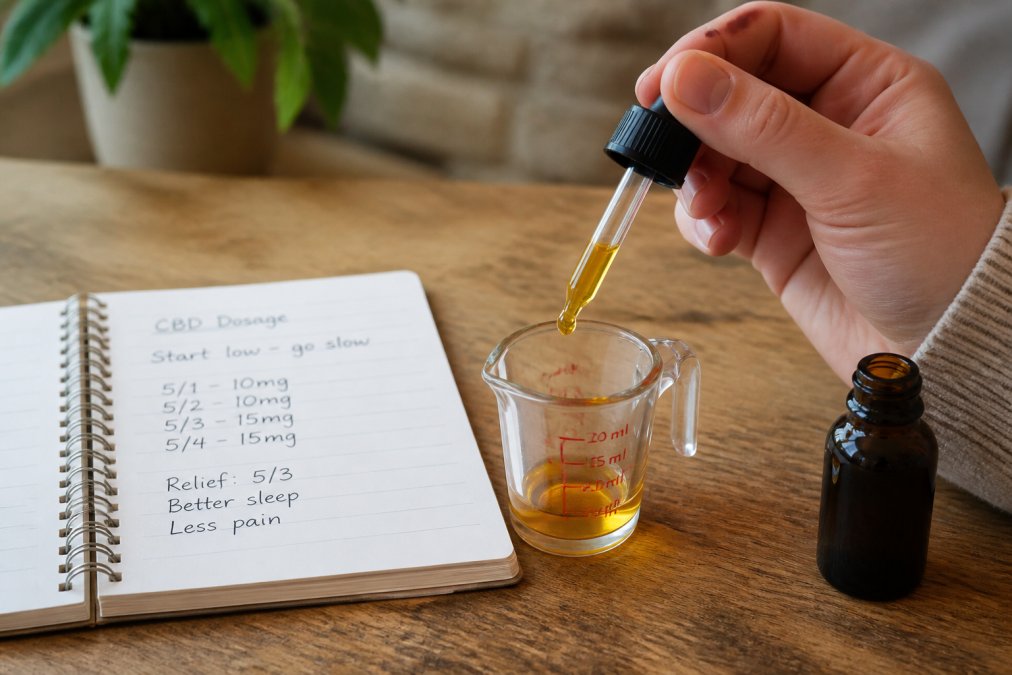
Finding your optimal dose is a process called titration, starting low and gradually increasing until you achieve desired effects. This minimizes the risk of side effects while helping you identify the minimum effective dose.
There’s no universal CBD dosage for pain. Clinical research suggests effective doses range from 5mg to 600mg daily, depending on pain severity, body weight, and individual metabolism (peer-reviewed research). Someone managing mild muscle soreness might find relief with 10-15mg daily, while someone with severe chronic pain might need 50-100mg or more.
A practical titration protocol: start with 5-10mg once daily for 3-5 days. If you don’t notice effects, increase to 10-15mg daily. Continue increasing in small increments every 3-5 days until you find relief. Most people discover their effective dose within 2-3 weeks.
Keep a simple log recording your dose, timing, and pain level before and after taking CBD. This reveals patterns you might otherwise miss. You might discover that CBD works better for certain pain types or that morning dosing produces better results than evening dosing.
| Pain Severity | Suggested Starting Dose | Typical Effective Range | Timing |
|---|---|---|---|
| Mild (occasional discomfort) | 5-10mg daily | 10-25mg daily | Once daily |
| Moderate (regular pain affecting activity) | 15-25mg daily | 25-50mg daily | 1-2 times daily |
| Severe (chronic, limiting) | 25-50mg daily | 50-100mg+ daily | 2-3 times daily |
Remember this is guidance, not prescription. Your optimal dose depends on your unique physiology. The goal is finding the minimum dose that provides noticeable relief.
Safety, Side Effects, and Drug Interactions
CBD is generally well-tolerated but not side-effect-free. Common mild effects include dry mouth, drowsiness, reduced appetite, and diarrhea. These typically occur at higher doses and often diminish with continued use.
More importantly, CBD can interact with medications you’re currently taking. CBD inhibits cytochrome P450 enzymes in your liver, the same enzymes that metabolize many medications (peer-reviewed research). This means CBD can increase the concentration of certain drugs in your bloodstream, potentially causing side effects. Medications commonly affected include blood thinners, heart medications, anti-seizure drugs, and immunosuppressants.
Consult your healthcare provider before starting CBD, especially if you take prescription medications. Your doctor can review your specific medications and advise whether CBD is appropriate or whether dose adjustments are needed. This conversation is particularly important if you take medications with narrow therapeutic windows.
Pregnancy and breastfeeding present another consideration. Current evidence is insufficient to determine whether CBD is safe during pregnancy or while nursing. If you’re pregnant, planning pregnancy, or breastfeeding, consult your healthcare provider before using CBD.
Quality and Third-Party Testing: What to Look For
Not all CBD products are created equal. The CBD industry remains loosely regulated, meaning quality varies dramatically between brands. Some products contain less CBD than labeled, others contain contaminants, and some contain THC levels exceeding the legal limit.
Reputable brands send their products to independent laboratories for testing and publish the results (called a Certificate of Analysis, or COA). A legitimate COA shows actual CBD potency, THC content, pesticide screening, heavy metal testing, microbial testing, and solvent residue testing.
When evaluating a brand, insist on seeing the COA. Reputable companies make this readily available on their website or provide it upon request. If a brand refuses to share testing results, that’s a red flag.
The extraction method matters too. CO2 extraction is considered the gold standard because it’s efficient, clean, and doesn’t leave solvent residues. Avoid products extracted with hydrocarbons or other harsh solvents. CBD Health Collection uses clean CO2 extraction and produces in a GMP- and FDA-registered facility, ensuring manufacturing standards comparable to pharmaceutical production.
Source matters as well. Hemp grown in the United States is subject to USDA oversight and testing requirements. Organically grown hemp is preferable because it’s cultivated without synthetic pesticides.
Common Mistakes to Avoid When Using CBD for Pain
The most common mistake is expecting immediate dramatic relief like you’d get from ibuprofen or prescription pain medication. CBD works differently, it’s subtle, cumulative, and highly individual.
Another frequent error is inconsistent dosing. CBD works best with consistent daily use. Taking it sporadically provides less reliable results than maintaining steady blood levels.
Many people also choose the wrong delivery method for their pain type. Using a topical for widespread systemic pain won’t work because topicals only affect localized tissue. Conversely, using a sublingual oil for a specific sore shoulder is less efficient than applying a topical directly.
Underestimating the importance of quality is another costly mistake. Buying the cheapest CBD product often means getting low-quality products with questionable potency and purity. Premium CBD from reputable brands costs more upfront but delivers better results per dollar spent.
Finally, many people fail to give CBD adequate time to work. Most people need 7-14 days of consistent use before noticing meaningful pain reduction. Patience combined with consistent dosing is essential.
Finding the best way to use CBD for pain requires understanding how different delivery methods work, matching them to your specific pain type, and committing to consistent use long enough to assess effectiveness. CBD Health Collection’s comprehensive product line, from sublingual oils to topical freeze gels to soft gels, gives you options to find your optimal approach. All products are derived from organically grown, USA-sourced hemp, extracted using clean CO2 processing, independently third-party tested for purity and potency, and backed by a 30-day satisfaction guarantee with free shipping. Start with a low dose, track your results, and adjust gradually as you discover what works best for your pain management needs.
=== FAQ ANSWERS (audit these too, same rules) ===
[1] Q: What form of CBD is most effective for pain relief?
A: The most effective form depends on your pain type and location. Sublingual oils and tinctures offer fast absorption and systemic relief for chronic pain. Topical balms and freeze gels work best for localized joint or muscle pain, providing relief within 15-30 minutes. Capsules and gummies offer convenient, long-lasting effects but take 1-2 hours to work. Many people find combining methods, such as using a topical for immediate localized relief and an oil for overall pain management, delivers the best results for comprehensive pain management.
[2] Q: How long does CBD take to work for pain?
A: Onset time varies by method. Sublingual tinctures typically work within 15-45 minutes due to direct absorption through the mouth’s mucous membranes. Topical applications provide relief in 10-30 minutes for localized pain. Capsules and gummies take 1-2 hours as they must be digested. Full effects may take 5-7 days of consistent use as CBD builds in your system. Starting with a low dose and gradually increasing allows you to find your optimal response time.
[3] Q: What should you not mix CBD with?
A: CBD can interact with certain medications, particularly those processed by the liver enzyme CYP3A4, including blood thinners, heart medications, and some anti-seizure drugs. Always consult your healthcare provider before combining CBD with prescription medications. Avoid mixing CBD with alcohol, as this may increase drowsiness. Do not use CBD as a replacement for prescribed pain medication without medical guidance. If you take multiple medications, discuss CBD use with your doctor or pharmacist to check for potential interactions.
[4] Q: How do I determine the right CBD dosage for my pain?
A: Start low and go slow: begin with 5-10 mg daily and increase by 5-10 mg every 3-5 days until you notice relief. Most people find effective doses between 15-50 mg daily, though some need higher amounts. Factors affecting dosage include body weight, pain severity, and CBD product type. Keep a dosage journal noting the amount, time, method, and pain relief level to identify your optimal dose. A CBD dosage for pain chart can guide initial estimates, but individual response varies significantly. Consult a healthcare provider if you’re unsure about dosing.
Frequently Asked Questions
Q: What form of CBD is most effective for pain relief?
A: The most effective form depends on your pain type and location. Sublingual oils and tinctures offer fast absorption and systemic relief for chronic pain. Topical balms and freeze gels work best for localized joint or muscle pain, providing relief within 15-30 minutes. Capsules and gummies offer convenient, long-lasting effects but take 1-2 hours to work. Many people find combining methods, such as using a topical for immediate localized relief and an oil for overall pain management, delivers the best results for comprehensive pain management.
Q: How long does CBD take to work for pain?
A: Onset time varies by method. Sublingual tinctures typically work within 15-45 minutes due to direct absorption through the mouth's mucous membranes. Topical applications provide relief in 10-30 minutes for localized pain. Capsules and gummies take 1-2 hours as they must be digested. Full effects may take 5-7 days of consistent use as CBD builds in your system. Starting with a low dose and gradually increasing allows you to find your optimal response time.
Q: What should you not mix CBD with?
A: CBD can interact with certain medications, particularly those processed by the liver enzyme CYP3A4, including blood thinners, heart medications, and some anti-seizure drugs. Always consult your healthcare provider before combining CBD with prescription medications. Avoid mixing CBD with alcohol, as this may increase drowsiness. Do not use CBD as a replacement for prescribed pain medication without medical guidance. If you take multiple medications, discuss CBD use with your doctor or pharmacist to check for potential interactions.
Q: How do I determine the right CBD dosage for my pain?
A: Start low and go slow: begin with 5-10 mg daily and increase by 5-10 mg every 3-5 days until you notice relief. Most people find effective doses between 15-50 mg daily, though some need higher amounts. Factors affecting dosage include body weight, pain severity, and CBD product type. Keep a dosage journal noting the amount, time, method, and pain relief level to identify your optimal dose. A CBD dosage for pain chart can guide initial estimates, but individual response varies significantly. Consult a healthcare provider if you're unsure about dosing.
This article was written using GrandRanker