Table of Contents
- Does CBD Topical Cream Actually Help with Arthritis Pain?
- Full Spectrum vs. Isolate CBD for Pain: Which Works Better?
- CBD vs. NSAIDs for Arthritis: An Honest Comparison
- How to Apply CBD Cream for Maximum Relief on Specific Joints
- How to Choose the Right CBD Topical Cream for Arthritis
- Side Effects of CBD Topical Cream and Safety Considerations
- Conclusion
Last Updated: May 19, 2026
Arthritis affects the joints of millions of adults, and the search for effective, non-opioid pain relief has pushed cannabidiol-based products into the mainstream conversation. Using a cbd topical cream for arthritis has become one of the most discussed options among people managing chronic joint pain, and CBD Health Collection has helped thousands of customers navigate the choices with a science-based, transparent approach. Below, we’ll show you exactly how these creams work, what the evidence actually says, how to apply them correctly for specific joints, and how to avoid the most common buying mistakes. The information that follows is practical, honest, and built for people who want real answers rather than marketing copy.
Here’s what most guides get wrong: they either oversell the clinical evidence or dismiss the entire category because large-scale trials are still limited. The truth sits somewhere more useful in the middle.
Does CBD Topical Cream Actually Help with Arthritis Pain?
CBD topical cream for arthritis works by delivering cannabidiol directly to the skin surface above affected joints, where it interacts with local cannabinoid receptors in the endocannabinoid system without entering the bloodstream in significant quantities. This localized mechanism is what separates topicals from oral CBD products and makes them particularly relevant for joint-specific pain relief.
The endocannabinoid system includes CB1 and CB2 receptors distributed throughout skin tissue, peripheral nerves, and immune cells. Cannabidiol is thought to influence these receptors in ways that may reduce localized inflammation and modulate pain signaling. The anti-inflammatory pathway is especially relevant for both osteoarthritis, which involves cartilage breakdown, and rheumatoid arthritis, an autoimmune condition causing joint swelling and stiffness.
What the Research Says (Without Overpromising)
The honest picture of the research is this: preclinical evidence is encouraging, human clinical trial data is still developing. Animal model studies have shown that transdermal cannabidiol application reduced joint swelling and pain-related behaviors. Human trials on topical application specifically are fewer in number, smaller in scale, and not yet sufficient to make definitive clinical claims.
According to Arthritis Foundation guidance on CBD, many people with arthritis who have tried CBD report noticeable improvements in pain, sleep, and anxiety, though the organization stops short of formal endorsement pending more clinical evidence. That’s a measured, accurate position. It doesn’t mean CBD topicals don’t work. It means the science hasn’t caught up to the volume of anecdotal reports yet.
What practitioners generally observe is that topical application avoids the bioavailability challenges of oral CBD, since the cream doesn’t have to survive digestion. The cannabidiol interacts with local tissue rather than circulating systemically, which also means the side effects profile is considerably narrower.
Anecdotal Evidence vs. Clinical Trials: Bridging the Gap
The gap between anecdotal evidence and clinical trials is real, but it’s not a reason to dismiss the category. Anecdotal evidence from arthritis patients consistently points to reduced stiffness, decreased swelling perception, and improved morning mobility. Clinical trials, by contrast, require controlled conditions, standardized dosing, and large sample sizes that take years to organize.
A practical way to bridge this gap: treat topical CBD as a complementary approach alongside established therapies, not a replacement. The risk profile of a properly formulated, third-party tested topical is low. The potential benefit, based on what we know about the endocannabinoid system and localized anti-inflammatory action, is plausible and biologically grounded.
CBD topical creams interact with local cannabinoid receptors in skin and joint tissue. The clinical trial base is still growing, but the biological mechanism is well-established and the anecdotal evidence from arthritis patients is consistently positive.
Full Spectrum vs. Isolate CBD for Pain: Which Works Better?
Most people buying a CBD cream for arthritis pain face this choice without enough context to make a confident decision. The spectrum question matters, but it’s only half the formulation story. The other half, which almost no buying guide addresses, is how the CBD extract interacts with the other active ingredients in the cream. Getting both right is what separates a product that delivers noticeable relief from one that doesn’t.
The Spectrum Decision
Here’s the direct answer on spectrum: full-spectrum CBD tends to outperform isolate for pain and inflammation because of what researchers call the "entourage effect", cannabidiol working synergistically with other hemp-derived compounds including minor cannabinoids, terpenes, and trace amounts of THC within the federal 0.3% limit.
Full-spectrum hemp extract contains the complete range of cannabinoids and terpenes found in the plant. Compounds like CBG (cannabigerol), CBC (cannabichromene), and naturally occurring terpenes such as beta-caryophyllene, which directly binds CB2 receptors and has demonstrated anti-inflammatory properties in its own right, are present alongside cannabidiol. For arthritis-related inflammation, this combination appears more effective than CBD in isolation because multiple compounds are acting on overlapping but distinct pathways simultaneously.
CBD isolate is pure cannabidiol with all other compounds removed. It’s appropriate for people who need to avoid any THC for professional or personal reasons, but for raw anti-inflammatory performance, the evidence generally favors full-spectrum formulations.
Broad-spectrum CBD is the practical middle ground: hemp-derived extract with THC removed but other cannabinoids and terpenes retained. You get meaningful entourage effect benefits without any THC content. For arthritis sufferers who are drug-tested at work or who are sensitive to even trace THC, broad-spectrum is the right call.
| CBD Type | THC Content | Entourage Effect | Best For |
|---|---|---|---|
| Full-Spectrum | Up to 0.3% | Full | Maximum anti-inflammatory benefit |
| Broad-Spectrum | None | Partial | THC-free with retained benefits |
| Isolate | None | None | Strict THC avoidance |
Ingredient Synergy: The Part Most Guides Skip
The spectrum of the CBD extract is one variable. The formulation around it is equally important, and this is where most buying guides go silent. The best CBD topicals for arthritis don’t rely on cannabidiol alone. They combine it with active ingredients that work through different biological mechanisms, creating a layered analgesic and anti-inflammatory effect that no single ingredient could produce alone.
Here’s how the most common co-ingredients interact with CBD, and why the pairing matters:
CBD + Menthol
Menthol activates TRPM8 receptors in peripheral nerve endings, producing the familiar cooling sensation that registers as immediate pain relief. CBD, by contrast, works more gradually on the inflammatory pathway through cannabinoid receptors. These are different receptor targets, which means the two compounds are not competing, they’re complementary. Menthol delivers fast-acting sensory relief while CBD addresses the underlying inflammatory signaling. The practical result is a product that feels effective immediately (menthol) and continues working after the cooling fades (CBD). Look for menthol concentrations in the 1-4% range for meaningful analgesic effect without skin irritation.
CBD + Capsaicin
Capsaicin activates TRPV1 receptors, the same receptor that CBD also modulates, though through different binding mechanisms. Capsaicin initially causes TRPV1 to fire (producing the familiar heat sensation), then desensitizes the receptor over repeated applications, reducing pain signal transmission. CBD’s TRPV1 modulation works differently, acting more as a modulator than a direct activator. Used together, they can produce a more sustained desensitization effect than either alone. The trade-off: capsaicin causes a burning sensation that some arthritis patients find uncomfortable, particularly on inflamed or sensitive skin. This pairing works best for people who tolerate the initial heat response.
CBD + Arnica
Arnica montana extract contains helenalin and other sesquiterpene lactones that inhibit NF-κB, a key transcription factor in the inflammatory cascade. This is a different anti-inflammatory pathway than CBD’s cannabinoid receptor activity. The combination targets inflammation through two distinct molecular mechanisms simultaneously, cannabinoid receptor modulation and NF-κB inhibition, making the anti-inflammatory effect more comprehensive than either ingredient alone. Arnica has a long documented history of use for joint pain, bruising, and swelling, and its mechanism is well-characterized enough that the pairing with CBD is biologically coherent, not just marketing.
CBD + MSM (Methylsulfonylmethane)
MSM is an organic sulfur compound that supports the structural integrity of connective tissue, including the collagen matrix in joint cartilage and surrounding soft tissue. Its anti-inflammatory action in joint tissue is thought to involve inhibition of pro-inflammatory cytokines. Unlike menthol or capsaicin, MSM doesn’t produce a sensory effect, its contribution is structural and biochemical. Paired with CBD’s receptor-level anti-inflammatory action, MSM addresses the connective tissue environment that arthritis progressively degrades. This pairing is particularly relevant for osteoarthritis, where cartilage breakdown is the central problem.
CBD + Camphor
Camphor is a counter-irritant, it works by creating a mild irritation that overrides the pain signal from the joint, a mechanism sometimes called the gate control effect. It also has mild local anesthetic properties. Like menthol, camphor provides faster-onset sensory relief that complements CBD’s slower-acting anti-inflammatory mechanism. The combination gives the product both an immediate perceptible effect and a sustained therapeutic one.
Why Carrier Oils Are Not Passive Ingredients
The oil or water base that carries CBD into the skin is not a neutral vehicle. It directly affects how deeply cannabidiol penetrates the skin layers and how much reaches the target tissue above the joint.
Lipophilic (oil-based) carriers like coconut oil and jojoba oil are compatible with CBD’s fat-soluble nature and can facilitate absorption through the lipid layers of the skin. However, heavy oil-based formulations can sit on the skin surface longer and feel greasy, which affects compliance, people apply less, less often.
Water-based formulations with emulsified CBD can offer improved skin feel and, in some formulations, improved absorption characteristics because they don’t leave a barrier on the skin surface. The trade-off is that water-based formulations require effective emulsification technology to keep CBD bioavailable rather than separating out.
Argan oil and hemp seed oil are lighter carriers that absorb more readily than coconut oil, making them practical choices for joint areas where you want the product to absorb quickly and allow normal movement.
When comparing two products with similar CBD milligrams and spectrum type, check the active ingredient list for at least one synergistic compound, menthol, arnica, MSM, or capsaicin. A CBD-only topical with no co-actives is a less sophisticated formulation than one that layers complementary mechanisms. The co-actives are often what you feel working while the CBD does its slower anti-inflammatory work.
Full-spectrum or broad-spectrum CBD outperforms isolate for arthritis pain due to the entourage effect. But spectrum alone doesn’t determine effectiveness, the co-ingredients in the formulation (menthol, arnica, MSM, capsaicin, camphor) work through distinct biological mechanisms that complement CBD’s action. The best topicals layer multiple pathways: fast-acting sensory relief from counter-irritants, sustained anti-inflammatory action from CBD and arnica, and connective tissue support from MSM.
CBD vs. NSAIDs for Arthritis: An Honest Comparison
This comparison matters because NSAIDs, nonsteroidal anti-inflammatory drugs like ibuprofen, naproxen, and diclofenac, are the default over-the-counter and prescription recommendation for arthritis pain, and most people want to know whether CBD topicals can replace them, reduce their reliance on them, or work alongside them. The honest answer requires looking at mechanism, risk profile, patient profile, and practical use case, not just a headline comparison.
How Each One Works
NSAIDs inhibit cyclooxygenase enzymes (COX-1 and COX-2), which reduces prostaglandin synthesis throughout the body. Prostaglandins are lipid compounds that drive inflammation, fever, and pain signaling. Blocking their production systemically is effective, but systemic is the key word. The same mechanism that reduces joint inflammation also affects the stomach lining (COX-1 inhibition reduces the protective mucus layer), the kidneys (prostaglandins regulate renal blood flow), and the cardiovascular system (particularly with COX-2-selective NSAIDs).
CBD topical cream works through a fundamentally different pathway. Applied to the skin above a joint, cannabidiol interacts with CB1 and CB2 receptors in local skin tissue, peripheral nerve endings, and resident immune cells. It also appears to modulate TRPV1 (the capsaicin receptor), which is involved in pain and heat signaling, and may inhibit local production of pro-inflammatory cytokines. Critically, this action is localized, topical CBD does not produce the systemic COX inhibition that drives NSAID side effects.
The Risk Profile, Honestly Stated
According to FDA consumer information on NSAID risks, long-term NSAID use is associated with documented risks that are particularly relevant for the chronic arthritis population:
- Gastrointestinal: Regular NSAID use increases the risk of stomach ulcers and GI bleeding. This risk is elevated in adults over 60, those with a history of ulcers, and those taking blood thinners or corticosteroids concurrently.
- Cardiovascular: Non-aspirin NSAIDs carry an increased risk of heart attack and stroke with prolonged use. This risk is higher in people with existing cardiovascular disease.
- Renal: Long-term NSAID use can impair kidney function, particularly in people who are dehydrated, elderly, or have pre-existing kidney conditions.
- Drug interactions: NSAIDs interact with anticoagulants, ACE inhibitors, diuretics, and lithium, a relevant concern for arthritis patients who are often managing multiple conditions.
Topical CBD’s risk profile is genuinely narrower. Because significant systemic absorption does not occur with topical application, the GI, cardiovascular, and renal concerns associated with oral NSAIDs are not applicable. The realistic risks, skin irritation, contact dermatitis from carrier ingredients, and rare allergic reactions, are local and reversible. The drug interaction risk for topical CBD is considered low, though anyone on immunosuppressants or anticoagulants for rheumatoid arthritis should confirm with their physician.
Where Each Option Wins: A Decision Framework
Neither option is universally superior. The right choice depends on the clinical picture:
| Situation | Better Option | Reasoning |
|---|---|---|
| Single swollen joint (knee, wrist, knuckles) | CBD topical | Localized action, no systemic side effects |
| Widespread RA flare affecting multiple joints | Oral NSAID or prescribed DMARD | Systemic inflammation requires systemic treatment |
| Long-term daily pain management, OA | Consider CBD topical to reduce NSAID frequency | Lower cumulative risk profile |
| GI sensitivity or history of ulcers | CBD topical preferred | Avoids COX-1 inhibition in the stomach |
| Cardiovascular risk factors | CBD topical preferred | No cardiovascular risk signal for topicals |
| Pre-exercise or activity preparation | CBD topical (applied 20-30 min prior) | Primes local tissue before inflammation begins |
| Acute systemic inflammation | Oral NSAID | Topical reach is insufficient for systemic response |
The Complementary Use Pattern
The most practical approach many arthritis patients use is not replacement but reduction. Applying a CBD topical for localized joint relief on lower-pain days, and reserving oral NSAIDs for flares or high-demand days, reduces cumulative NSAID exposure without abandoning an effective tool. This is not a medical recommendation, it’s a pattern that reflects how people are actually using these products, and it’s worth discussing with a prescribing physician who can evaluate it in the context of your specific medications and history.
For rheumatoid arthritis specifically: disease-modifying antirheumatic drugs (DMARDs) and biologics address the underlying autoimmune mechanism. CBD topicals do not. No topical product, CBD or otherwise, should be used as a reason to discontinue or delay disease-modifying therapy in RA.
Do not stop prescribed arthritis medication to replace it with topical CBD without consulting your doctor. CBD topicals are a complement to established treatment plans, not a substitute for disease-modifying drugs in rheumatoid arthritis or for any prescribed NSAID regimen your physician has recommended for your specific condition.
NSAIDs and CBD topicals work through different mechanisms and serve different use cases. NSAIDs are systemic and effective for widespread inflammation but carry documented long-term risks. CBD topicals are localized, with a narrow side-effect profile, and are most useful for single-joint or targeted relief. For many arthritis patients, the practical opportunity is complementary use, not replacement.
How to Apply CBD Cream for Maximum Relief on Specific Joints
Application technique is the part most guides skip entirely, and it’s where a significant amount of effectiveness is lost. Rubbing a small amount of CBD cream onto the surface of a joint and moving on is not the same as a proper application. The difference in perceived relief can be substantial.
The goal is to drive cannabidiol into the tissue layers directly above the joint capsule. That requires friction, time, and the right amount of product. A pea-sized amount is almost always insufficient for a large joint like a knee or hip. A generous application with active massage pressure is what actually moves the product through the skin layers toward the cannabinoid receptors in deeper tissue.

Application Techniques by Joint Type
Fingers and knuckles: Apply cream directly to each affected knuckle and use the thumb of the opposite hand to work the product in with circular pressure for 60-90 seconds per joint. The skin over finger joints is thin, which aids absorption, but the small surface area means precision matters more than volume.
Wrists and ankles: Apply a generous amount and use both thumbs to work in overlapping circular motions across the entire joint circumference, not just the top surface. These joints wrap around, and applying only to the visible surface misses the joint structures underneath.
Knees: Use a larger amount (roughly a nickel-sized application) and work it in with the heel of your palm using long, firm strokes from below the kneecap upward, then circular motions around the entire joint. Warming the area with a heating pad for five minutes before application can increase skin permeability and improve how much cannabidiol reaches the target tissue.
Hips and shoulders: These are deep joints with significant tissue coverage. Topical CBD has limited reach into deep hip joint structures, so realistic expectations matter here. Focus application on the periarticular soft tissue and bursa areas rather than expecting direct joint penetration.
Application Frequency and Timing Tips
Most CBD topicals for arthritis work best with two to three applications per day. Morning application addresses overnight stiffness. A midday application sustains relief through peak activity hours. An evening application before bed can support overnight comfort.
The most commonly missed timing opportunity is pre-activity application. Applying a CBD topical 20-30 minutes before exercise or physically demanding tasks primes the local tissue with cannabidiol before inflammation begins, rather than chasing relief after the fact.
Warm the affected joint with a damp warm cloth for five minutes before applying CBD cream. Slightly elevated skin temperature increases topical absorption noticeably, particularly for larger joints like the knee or shoulder.
How to Choose the Right CBD Topical Cream for Arthritis
Choosing a cbd topical cream for arthritis comes down to four concrete criteria: the type of CBD extract, the concentration in milligrams, the supporting ingredient profile, and the verification of what’s actually in the product. Most consumers skip the last two and end up with products that underperform.
Reading a Certificate of Analysis (COA): What to Look For
A Certificate of Analysis is a third-party lab document that verifies a product’s actual cannabinoid content, THC levels, and the absence of contaminants. Every reputable CBD topical should have a current COA accessible on the brand’s website. If a company makes it difficult to find their COA, treat that as a disqualifying signal.
Here’s what to check on a COA:
- Cannabinoid panel: Confirms the actual CBD milligrams per unit matches the label claim. A product claiming 500mg should test at or near 500mg.
- THC content: Should be at or below 0.3% to comply with federal hemp regulations. Broad-spectrum products should show non-detectable THC.
- Heavy metals panel: Confirms the absence of lead, mercury, arsenic, and cadmium. Hemp is a bioaccumulator, meaning it absorbs soil contaminants, so this panel matters.
- Pesticide screen: Confirms no agricultural chemical residues.
- Microbial testing: Confirms absence of mold and harmful bacteria.
- Test date: COAs older than 12 months are stale. The product batch may have changed.
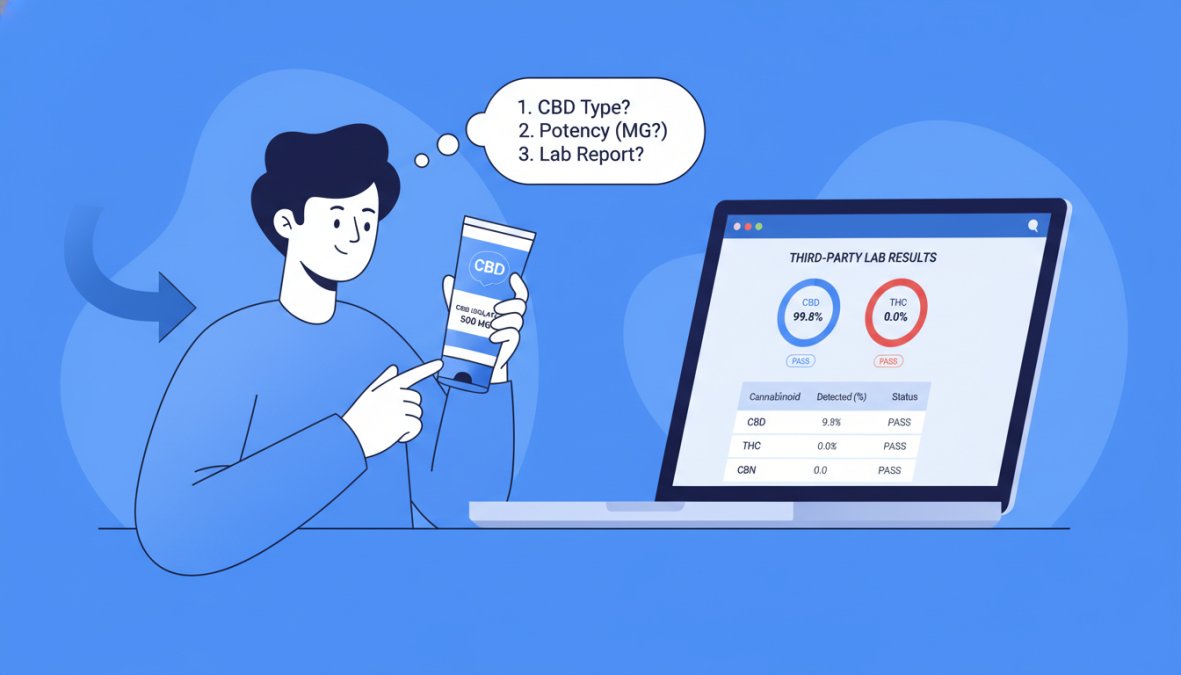
CBD Health Collection products carry independently verified COAs covering all of the above panels, produced in a GMP- and FDA-registered facility. That combination of facility certification and independent lab verification is the standard serious buyers should hold every brand to.
Ingredient Synergy: What to Pair with Cannabidiol
Cannabidiol doesn’t work in isolation in the best topical formulations. Several supporting ingredients have well-established dermatological and analgesic properties that complement CBD’s anti-inflammatory action:
Menthol: Produces a cooling sensation that activates TRPM8 receptors, creating an immediate analgesic effect while CBD works more gradually on the inflammatory pathway. This pairing gives both fast-acting and sustained relief.
Arnica: A botanical with a long history of use for bruising and joint pain. Its anti-inflammatory compounds work through different pathways than cannabidiol, making the combination more comprehensive.
MSM (methylsulfonylmethane): A sulfur compound that supports connective tissue health and has demonstrated anti-inflammatory properties in joint tissue specifically.
Camphor: Another topical analgesic that pairs well with CBD for its counter-irritant effect, reducing pain perception in the treated area.
Carrier oils (coconut, jojoba, argan): These aren’t passive ingredients. The right carrier oil improves how deeply cannabidiol penetrates the skin layers. Water-based CBD formulations, like those used by CBD Health Collection, can offer improved absorption characteristics compared to heavy oil-based carriers for some users.
Budget-to-Potency Ratio: Getting Real Value per Milligram
The single most useful metric for comparing CBD topicals is cost per milligram of CBD. A $60 product with 1000mg of CBD costs $0.06 per mg. A $40 product with 250mg costs $0.16 per mg. The cheaper product is actually more expensive in terms of actual cannabidiol delivered.
Here’s a practical evaluation checklist:
- Confirm the total CBD milligrams listed on the label
- Divide the price by the total milligrams to get cost per mg
- Verify the COA confirms the labeled mg claim
- Check whether the CBD type is full-spectrum, broad-spectrum, or isolate
- Confirm the product contains at least one synergistic active ingredient (menthol, arnica, MSM)
- Verify the COA is current (within 12 months) and covers heavy metals and pesticides
For most arthritis applications, a topical in the 500-1000mg range per container represents a reasonable starting potency. Products below 250mg total are unlikely to deliver meaningful results on larger joints.
According to Project CBD’s consumer guide to CBD products, potency and third-party verification are the two most important factors consumers should evaluate before purchasing any CBD product, with COA literacy being the skill that separates informed buyers from those who rely on marketing claims alone.
Side Effects of CBD Topical Cream and Safety Considerations
The side effects profile of topical CBD is genuinely narrow compared to oral CBD or systemic medications. Because topical application doesn’t produce significant systemic absorption, the concerns associated with oral cannabidiol, including drug interactions, liver enzyme changes, and digestive effects, are largely not relevant for creams and gels applied to the skin.
The realistic risks for topical CBD are:
Skin irritation or contact dermatitis: Some people react to carrier oils, fragrances, or other inactive ingredients rather than the CBD itself. If irritation occurs, it’s worth checking whether the reaction is to the full formula or a specific component.
Allergic reaction to hemp: Rare but possible. People with known hemp or cannabis allergies should patch test any new topical on a small skin area before full application.
Interaction with broken skin: CBD topicals should not be applied to open wounds or severely broken skin. This isn’t specific to cannabidiol but applies to any topical product.
Drug interactions: Topical CBD has minimal systemic absorption, so interactions with medications are considered low risk. However, anyone on blood thinners or immunosuppressants managing rheumatoid arthritis should confirm with their physician before adding any new topical product.
FDA regulation of CBD remains an evolving area. As of 2026, CBD topicals sold over-the-counter are not FDA-approved drugs, which means label claims must be carefully worded and consumers bear responsibility for evaluating product quality through COA verification rather than relying on regulatory approval as a quality signal.
The practical implication: the burden of quality verification falls on the brand and the buyer. Brands that produce COAs, operate in registered facilities, and source from certified organic hemp are doing the work that regulation hasn’t fully mandated yet. Brands that don’t offer these verifications are a higher-risk purchase regardless of their marketing language.
Finding a cbd topical cream for arthritis that actually delivers requires cutting through a crowded market with the right evaluation criteria. CBD Health Collection was built specifically for this: pharmaceutical-industry expertise applied to hemp-derived wellness products, with organically grown USA-sourced hemp, clean CO2 extraction, GMP- and FDA-registered manufacturing, and independently verified COAs on every product. With a 30-day satisfaction guarantee and free shipping, the barrier to trying a properly formulated product is low. Get started with CBD Health Collection and experience the difference that transparent sourcing and real potency verification make for joint pain relief.
Frequently Asked Questions
Does CBD cream actually help with arthritis pain?
CBD topical cream for arthritis may help reduce localized joint pain and stiffness by interacting with cannabinoid receptors in the skin and underlying tissue. While large-scale clinical trials in humans remain limited, many users report meaningful relief from chronic pain and swelling associated with osteoarthritis and rheumatoid arthritis. The anti-inflammatory properties of cannabidiol are well-documented in preclinical research. Results vary by individual, potency, and product quality, so starting with a well-tested, third-party verified cream is the most practical first step.
How often should you apply CBD cream for arthritis?
Most users apply CBD topical cream two to three times daily for consistent pain relief, particularly during morning stiffness and before bed. Because topical bioavailability is localized rather than systemic, more frequent application is generally considered safe. For best results, apply after warming the joint slightly and use a gentle massage technique to encourage absorption. Adjust application frequency based on symptom severity and always follow the product's recommended usage guidelines.
What should I look for when buying CBD cream for arthritis?
Prioritize products with a publicly available Certificate of Analysis (COA) from an independent third-party lab confirming potency and purity. Look for hemp-derived CBD with a THC content at or below the 0.3% legal limit. Check the milligrams (mg) of CBD per container to evaluate the budget-to-potency ratio. Beneficial companion ingredients like menthol, arnica, or terpenes can enhance the topical analgesic effect. Avoid products with vague labeling, no COA, or unrealistic health claims.
Can CBD topical cream interact with other arthritis medications?
Topical CBD cream has minimal systemic absorption compared to oral cannabidiol, which significantly reduces the risk of drug interactions. However, if you are taking prescription medications for rheumatoid arthritis or chronic pain, especially blood thinners or immunosuppressants, consult your healthcare provider before adding any CBD product to your routine. The FDA has not approved CBD topicals as a treatment for arthritis, so medical guidance remains important, particularly for those managing complex conditions.
How long does it take for CBD cream to work on joints?
Many users notice localized relief from CBD topical cream within 15 to 45 minutes of application, though this varies based on potency, skin thickness over the joint, and individual response. Consistent daily use over one to two weeks tends to produce more noticeable cumulative effects on joint pain and stiffness. Applying the cream with a massage technique that promotes circulation can accelerate onset. Unlike oral CBD, topical products act locally and do not need to pass through the digestive system.
Is full-spectrum or isolate CBD better for arthritis pain?
Full-spectrum CBD contains cannabidiol alongside other cannabinoids, terpenes, and trace amounts of THC (under 0.3%), which may create an 'entourage effect' that enhances overall pain relief. Isolate CBD is pure cannabidiol with no other compounds, making it preferable for those avoiding THC entirely. Broad-spectrum sits between the two, retaining beneficial terpenes and minor cannabinoids while removing THC. For arthritis pain specifically, full-spectrum or broad-spectrum formulas are generally considered more effective due to compound synergy.
This article was written using GrandRanker