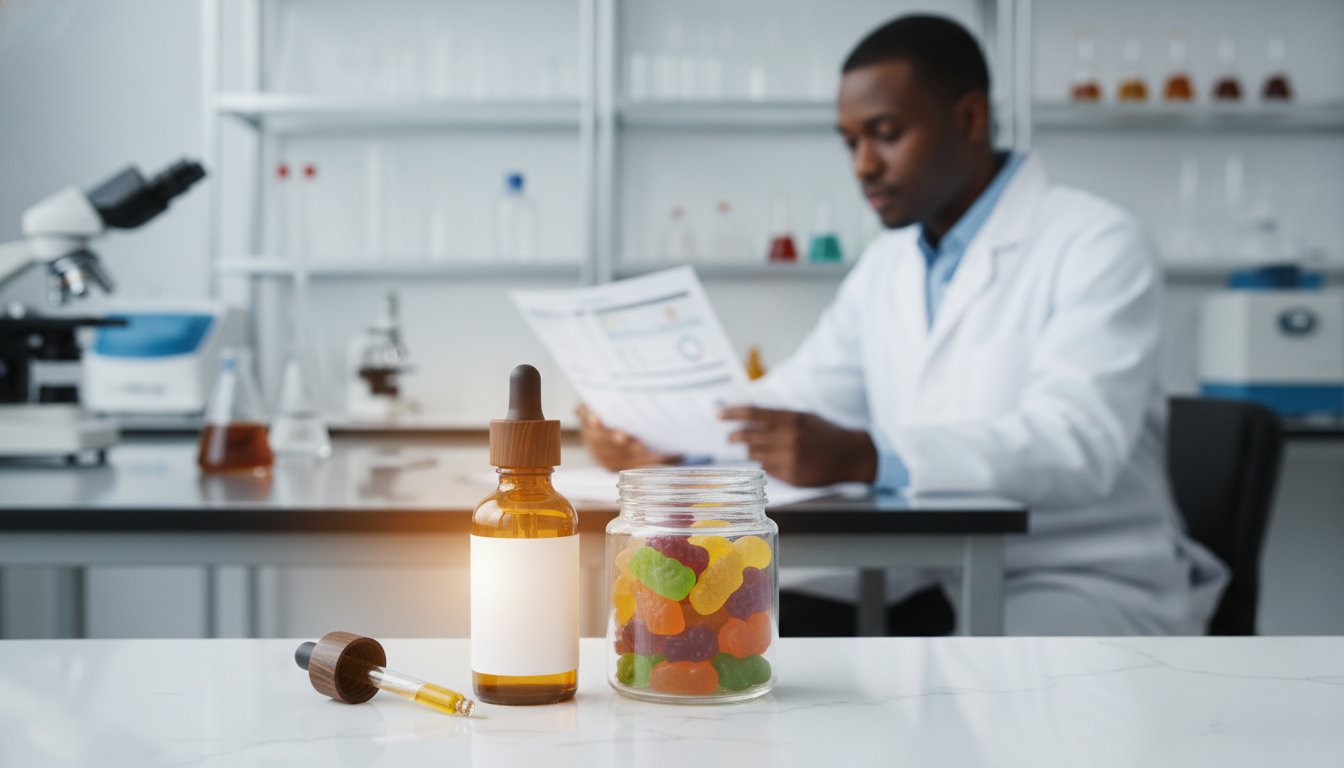
Did you know that new federal regulations taking effect on November 12, 2026, are expected to eliminate approximately 95% of hemp products currently on the market? This staggering shift means that understanding cbd lab results is no longer just a helpful skill; it’s a vital necessity for your safety and peace of mind. It is completely normal to feel overwhelmed by technical jargon like LOQ or complex measurements like mg/g. You might worry about accidentally consuming high levels of THC or feel concerned about heavy metals hiding in unregulated products. You’re simply looking for a safe way to support your wellness, and you deserve to know exactly what’s inside every bottle you buy.
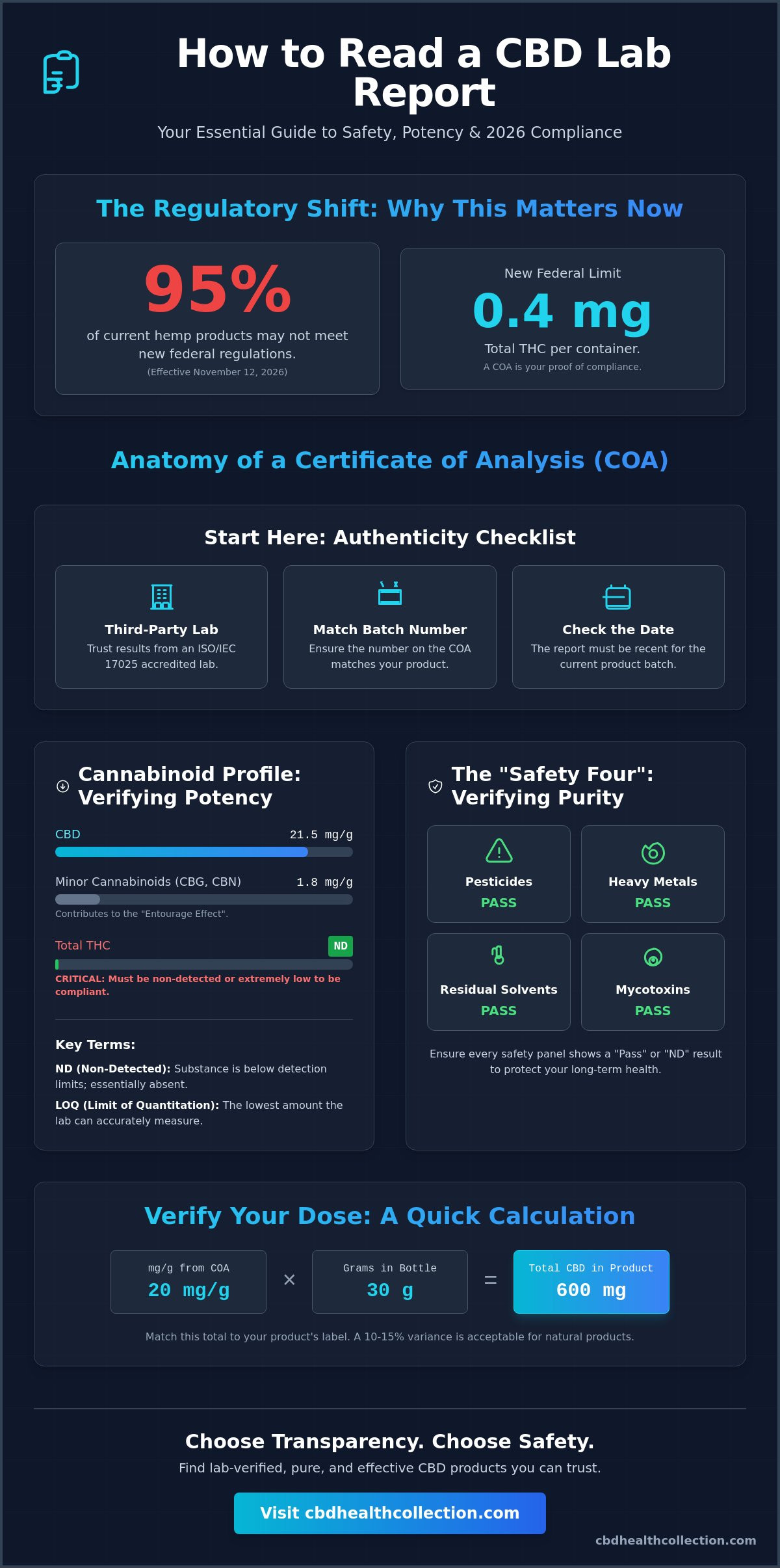
We’re here to demystify the process and act as your knowledgeable guide. In this article, you’ll learn exactly how to read a Certificate of Analysis (COA) so you can verify the safety and potency of your CBD gummies, capsules, or pet oils. We will show you how to identify the precise CBD and THC content to ensure compliance with the new 0.4 milligram per container federal limit. You’ll also discover how to spot the red flags of an outdated report and which specific contaminants to look for. By the end, you’ll have the confidence to choose products that are scientifically validated, pure, and effective.
Key Takeaways
- Master the skill of understanding cbd lab results to ensure the product you hold matches the label’s promises exactly.
- Learn to navigate the cannabinoid profile to confirm your CBD capsules or gummies stay within the new 2026 federal THC limits.
- Identify the “Safety Four” contaminants—pesticides, heavy metals, solvents, and mycotoxins—to protect your long-term health.
- Gain the tools to spot fake or outdated reports by verifying batch numbers and checking for current 2026 testing dates.
- Discover how a transparent “seed-to-shelf” process ensures your CBD oil for pets or freeze gel remains pure and effective.
Why Understanding CBD Lab Results is Non-Negotiable in 2026
Imagine buying a bottle of CBD gummies, hoping for a restful night, only to find the label didn’t tell the whole story. For years, the hemp industry felt like the Wild West. A past study revealed that 26% of products contained less CBD than advertised, leaving many people feeling frustrated and misled. In 2026, the stakes are even higher. With new federal laws setting a strict limit of 0.4 milligrams of total THC per container, understanding cbd lab results is your best tool to stay safe and compliant. A Certificate of Analysis (COA) acts as a transparent report card, proving that what’s on the label is exactly what’s in the jar.
To help you visualize how these documents look, watch this helpful breakdown:
The Role of Third-Party Laboratories
COAs and the 2018 Farm Bill Compliance
The 2018 Farm Bill established a 0.3% THC threshold, but the 2026 regulatory shift focuses on total THC, which includes precursors like THCA. This makes reading a COA even more vital. If you are searching for a THC-free CBD experience, the report must show a Non-Detected (ND) status for all THC variants. This verification protects you from unexpected mind-altering effects and ensures you’re using a product that aligns with your health goals. By checking the COA before you buy, you can confidently verify that your CBD oil for pets or freeze gel meets these strict legal and safety standards.
Decoding the Cannabinoid Profile: Potency vs. Reality
The cannabinoid profile is the heart of any lab report. It lists the specific compounds found in your product, starting with the “Big Two”: CBD and THC. When you are understanding cbd lab results, you will notice these are often measured in “Weight %” or “mg/g.” Weight percentage tells you how much of the total formula consists of that cannabinoid, while mg/g provides the concentration per gram of material. These numbers verify that the potency matches what you see on the front of your CBD gummies or oil bottle.
You might also see terms like LOQ (Limit of Quantitation) and LOD (Limit of Detection). These aren’t just technical filler. LOD is the lowest level the lab can possibly see, while LOQ is the lowest level they can accurately measure. If a result is listed as “ND” or “Below LOQ,” it means the substance is essentially absent. This level of detail is why Harvard Health on CBD emphasizes the importance of quality control in a market that is still maturing. Beyond the main ingredients, you may see minor cannabinoids like CBG or CBN. These compounds work together in what scientists call the “Entourage Effect,” where the presence of multiple plant elements may enhance the overall wellness benefits.
Calculating Your Actual CBD Intake
To verify a label, look at the mg/g column on your report. If your CBD oil for pets has 20mg/g and the bottle contains 30 grams of liquid, the total CBD should be 600mg. The “Total Cannabinoids” sum represents the overall plant power contained within the product. Keep in mind that a small variance, usually between 10% and 15%, is normal. Because hemp is a natural plant, concentrations can shift slightly during organic processing without affecting the quality of your experience.
Verifying THC Levels for Peace of Mind
Safety means knowing you won’t experience unwanted mind-altering effects. In 2026, a “Pass” status on a COA confirms the product meets the strict federal limit of 0.4 milligrams of total THC per container. When you use CBD for pain relief, you want comfort without the “high.” A verified lab report distinguishes between Delta-9 THC and other variants, giving you the certainty that your product is non-intoxicating. If you’re ready to see this transparency for yourself, you can browse our verified collection to find your perfect match.
Beyond Cannabinoids: Analyzing Purity and Safety Panels
While verifying potency is a great first step, true peace of mind comes from knowing your product is pure. Hemp is a known bioaccumulator. This means the plant acts like a sponge, naturally absorbing everything from the soil where it grows. While it pulls in beneficial nutrients, it can also soak up harmful toxins. This biological trait makes understanding cbd lab results essential for every consumer. You aren’t just looking for what is in the bottle; you’re looking for what stayed out of it.
A comprehensive lab report includes the “Safety Four”: heavy metals, pesticides, residual solvents, and mycotoxins. When you review these panels, look for the “Pass/Fail” column. A “Pass” status indicates that any detected substances are well below the strict safety limits established by regulatory bodies. If a batch fails any of these tests, a responsible brand will pull that entire run from production. This rigorous screening is especially critical for CBD for dogs. Because pets have smaller bodies and sensitive systems, even trace amounts of contaminants can be problematic for their wellness.
Heavy Metals and Pesticide Screening
The heavy metals panel specifically checks for the “Big Four” toxins: Lead, Arsenic, Cadmium, and Mercury. Long-term exposure to these elements can lead to significant health challenges, making organic growing practices a non-negotiable standard. These safety checks are just as important for topicals as they are for consumables. For example, CBD cream should be entirely free of skin-irritating pesticides. Since your skin is your largest organ, you want to ensure that the relief you seek doesn’t come with a side of harsh agricultural chemicals.
Microbial and Solvent Testing
Microbial testing ensures that your CBD gummies or capsules are free from harmful bacteria like E. coli, as well as mold and yeast. These contaminants can develop during storage or processing if standards aren’t strictly followed. Additionally, the lab checks for residual solvents. Many extraction methods use substances like butane or ethanol to pull cannabinoids from the plant. A “clean” extraction process ensures these solvents are completely purged from the final product. This purity is vital for those using CBD for stress on a daily basis. You deserve a pure, natural solution that supports your calm without introducing synthetic residues into your routine.
How to Spot a Fake or Outdated Certificate of Analysis
Even the most detailed report is useless if it doesn’t actually belong to the product in your hand. In 2026, understanding cbd lab results requires a keen eye for authenticity. A common mistake is trusting a report simply because it looks official. However, a lab result from 2022 cannot protect you today. Since the federal limit for total THC dropped to 0.4 milligrams per container on November 12, 2026, older reports simply don’t reflect current legal or safety standards. You need a document that matches the specific batch of CBD gummies or capsules you are about to use.
Verification is the bridge between a label’s promise and your actual safety. Most reputable brands now include a QR code on their packaging for instant transparency. When you scan this with your smartphone, it should take you directly to a PDF or a secure database hosted by the laboratory. If the branding on that report doesn’t match the brand on your bottle, it’s a sign that the company might be “borrowing” results from another manufacturer. This mismatch is a major warning sign that the product’s purity hasn’t been properly validated.
Red Flags for Inauthentic Reports
Dishonest companies sometimes use “Photoshopped” results to hide failed safety tests or inflated potency numbers. Look closely at the fonts and alignment on the document. If the numbers look blurry or slightly off-center compared to the rest of the text, the report may have been altered. Every legitimate COA must include the lab’s contact information and a clear signature from the lab director. A missing COA is the biggest red flag of all. If a brand hides its testing data, they are likely hiding something about the product’s quality as well.
Practical Guide: Finding the COA on the Bottle
Finding the batch information shouldn’t be a scavenger hunt. Most companies print a batch number or a QR code in a few standard locations:
- The bottom of the jar or bottle.
- The side of the label near the supplement facts.
- Inside the box or on a separate insert.
If the QR code is missing or damaged, you can usually visit the brand’s website and enter the batch number into an online database. This ensures the CBD oil for pets or freeze gel you purchased was part of that specific, tested run. If a company refuses to provide a lab report or makes it difficult to find, you should walk away. Your wellness is too important to gamble on a mystery. Ensure your wellness journey is backed by truth; you can access our fully transparent batch records here to see what real accountability looks like.
Transparency in Action: The CBD Health Collection Commitment
We believe that true wellness begins with transparency. Our “Seed-to-Shelf” promise isn’t just a phrase; it’s a commitment to tracking every single step of the production lifecycle. From the moment an organic seed is planted in American soil to the second a finished bottle reaches your door, we maintain total control. By choosing hemp that is grown and processed exclusively in the USA, we ensure that every product meets the highest domestic standards for safety and consistency. This rigorous oversight is how we curate our CBD gummies and topicals for maximum purity.
We understand the anxiety that comes with trying something new for your health. That’s why we make finding our latest third-party results simple and stress-free. You shouldn’t have to hunt for the truth. Every batch of our CBD capsules, freeze gels, and oils is independently verified to ensure it meets our strict internal benchmarks and the new 2026 federal requirements. We want you to feel certain that the relief you find is both safe and effective.
Our Testing Protocol for People and Pets
We apply the same exacting standards to our CBD oil for pets as we do to our human-grade products. Your furry companions are part of the family, and they deserve the same level of care. Every pet product undergoes the same comprehensive screening for heavy metals and pesticides as our human line. THC-free verification is a cornerstone of our process, providing a worry-free experience for everyone in your household. This dedication to excellence is why we call our process the gold standard for purity and quality. It is our way of ensuring you feel supported at every turn.
Your Next Steps to Wellness
Now that you’ve mastered understanding cbd lab results, you have the power to make informed choices for your physical and mental health. You no longer have to guess about what’s inside your bottle. You can look at a COA and see the scientific proof of safety and potency for yourself. If you ever have a question about a specific batch number or a technical term on a report, please reach out to us. We’re here to help you find the relief you’ve been searching for. You can explore our lab-verified CBD collection today and take the first step toward a more balanced, natural lifestyle with total confidence.
Take Control of Your Wellness Journey with Confidence
You now have the essential tools to navigate the complex hemp landscape of 2026. By learning to verify the new 0.4 milligram total THC limit and identifying the “Safety Four” contaminants, you ensure that your path to relief is both legal and safe. You can now distinguish between a genuine, current report and an outdated one with ease. Mastering the art of understanding cbd lab results transforms you from a cautious shopper into a confident advocate for your own health.
We’re dedicated to being your partner in this journey. Every product we offer is organically grown in the USA and undergoes rigorous third-party testing on every single batch to ensure it meets our gold standard for purity. From our soothing topicals to our THC-free options for pets, we provide the scientific validation you need for true peace of mind. Your search for natural, reliable comfort ends here. Shop Our Lab-Verified CBD Collection today and experience the balance you deserve.
Frequently Asked Questions
What is a COA in CBD?
A COA, or Certificate of Analysis, is a verified document from an accredited laboratory that details the chemical makeup of your hemp product. It serves as a transparent report card, confirming the levels of cannabinoids like CBD and ensuring the product is free from harmful contaminants. This document is the only way to prove that the contents of your CBD gummies or capsules match the claims made on the label.
How do I read a CBD Certificate of Analysis?
To read a COA effectively, start by finding the cannabinoid profile to check the potency of CBD and THC. Next, look for the safety panels, often called purity or contaminant tests, which list results for heavy metals, pesticides, and solvents. Understanding cbd lab results becomes much easier when you focus on the “Pass/Fail” column and ensure the batch number matches the one on your bottle.
Is it safe to buy CBD without a lab report?
No, buying CBD without a lab report is a significant risk to your wellness. Without a COA, you have no way to verify the product’s safety or potency. You might accidentally consume high levels of THC or dangerous toxins like lead and mold. Reputable brands always provide these reports to build trust and ensure you are receiving a pure, wellness-focused product that supports your health goals.
What does “ND” mean on a CBD lab result?
“ND” stands for “Non-Detected,” which means the laboratory’s sensitive equipment could not find any measurable trace of that specific substance. This is the ideal result for contaminants like pesticides or residual solvents. If you are looking for a THC-free experience, seeing “ND” next to all THC variants on the report provides the reassurance that the product is non-intoxicating and safe for your daily routine.
How much THC is allowed in a legal CBD product?
Effective November 12, 2026, federal law requires hemp products to contain no more than 0.3% total THC on a dry weight basis and a strict limit of 0.4 milligrams of total THC per container. This standard is very restrictive compared to previous years. Always check your lab results to ensure your CBD oil for pets or freeze gel complies with these updated safety and legal requirements to avoid any issues.
Can I trust a lab report if it was done by the brand itself?
You should only trust lab reports conducted by an independent, third-party laboratory. While brands may perform in-house testing for quality control during production, an outside lab provides an unbiased verification of the final product. Look for ISO/IEC 17025 accreditation on the report. This certification ensures the lab follows rigorous international standards, giving you the confidence that the results are accurate and honest.
What are the red flags to look for on a CBD COA?
Major red flags include a report date that is more than a year old or a brand name that doesn’t match the label on your product. You should also be wary of blurry text that looks altered or missing lab contact information. Understanding cbd lab results involves verifying that the lab director has signed the document and that all safety tests show a clear “Pass” status without any missing panels.
How do I find the batch number on my CBD bottle?
You can typically find the batch number printed on the bottom of the jar or on the side of the label near the expiration date. Many brands also use a QR code that takes you directly to the specific report for that batch when scanned with a smartphone. If you can’t find a batch number on your CBD capsules or gummies, it is best to contact the manufacturer for clarification before using the product.