Table of Contents
- Is It Safe to Take CBD Oil on an Empty Stomach? The Short Answer
- How CBD Bioavailability with Food Affects Your Results
- Empty Stomach vs. Fed State: What the Research Shows
- CBD Oil Side Effects and Nausea: Empty Stomach Risks
- Best Time of Day to Take CBD Oil for Your Goals
- CBD Oil vs. Gummies and Capsules: Empty Stomach Considerations
- Optimizing Your CBD Routine: Dosage and Timing Strategy
- Conclusion: Making the Right Choice for Your CBD Practice
Is It Safe to Take CBD Oil on an Empty Stomach?
Last Updated: July 5, 2026
Is It Safe to Take CBD Oil on an Empty Stomach? The Short Answer
Yes, it’s generally safe to take CBD oil on an empty stomach, but you likely won’t get the best results. How you time your CBD intake relative to food significantly impacts how your body absorbs and processes the cannabinoids. Taking CBD without food means fewer cannabinoids reach your bloodstream compared to taking it with a fat-rich meal, since CBD is fat-soluble and dissolves in lipids rather than water.
The real question isn’t safety, it’s effectiveness. An empty stomach won’t harm you, but it will reduce bioavailability, the percentage of CBD your body actually uses. Most people find that taking CBD with food produces more noticeable effects and more consistent results over time.
How CBD Bioavailability with Food Affects Your Results
Food transforms how your body processes CBD. The presence of dietary fats triggers the release of bile and digestive enzymes that break down lipids, and since CBD is fat-soluble, this process directly impacts how much cannabidiol your system absorbs. When you take CBD without food, your digestive tract has far fewer tools to work with, meaning a larger portion passes through unabsorbed.
(/what-is-cbd-bioavailability/) with Food Affects Your Results]
Research consistently shows that taking CBD with a meal containing fat can increase plasma concentrations by 4-5 times compared to fasted administration. Your liver contains enzymes called CYP450 that metabolize CBD during first-pass metabolism. When food is present, your digestive system activates more thoroughly, blood flow to the gastrointestinal tract increases, and more CBD reaches your liver in a form it can process effectively.
Understanding Fat-Soluble Cannabinoids and Absorption
CBD belongs to a class of lipophilic molecules, they’re attracted to fats and repelled by water. This fundamental property determines how your body handles CBD from the moment it enters your mouth. Your saliva is water-based, your stomach acid is water-based, and your small intestine needs to convert fat-soluble compounds into a form your bloodstream can transport.
When you consume CBD on an empty stomach, it encounters a harsh, acidic environment with minimal lipid support. Your body can still absorb some CBD through passive diffusion, but the amount is substantially lower than if dietary fats were present to facilitate transport. This is why CBD products often come with carrier oils like MCT oil or hemp seed oil, they’re functional ingredients that improve absorption by providing the lipid environment your digestive system expects.
MCT Oil vs. Long-Chain Fats: Which Enhances Absorption?
Not all fats enhance CBD absorption equally. Medium-chain triglycerides (MCT oil) and long-chain triglycerides (LCT, found in nuts, avocados, and olive oil) follow different metabolic pathways.
MCT oil is the faster option. Your digestive system processes it more quickly, which means CBD reaches your liver faster and produces effects within 30-60 minutes. However, peak plasma concentration may be slightly lower than with long-chain fats.
Long-chain fats create a more sustained absorption profile. When you pair CBD with foods rich in LCT, salmon, walnuts, coconut meat, olive oil, your digestive system takes longer to process the fat, extending CBD absorption over a longer period. Peak effects may take 90-120 minutes to appear, but overall bioavailability can be higher and effects often last longer.
For practical purposes: if you want fast results, pair CBD with MCT oil or a light meal. If you want sustained, consistent effects, combine it with a meal containing long-chain fats.
Empty Stomach vs. Fed State: What the Research Shows
The difference between taking CBD fasted and fed is measurable through plasma concentration studies. When you take CBD on an empty stomach, your body absorbs approximately 6-12% of the dose. In the fed state, that number rises to 30-40%, depending on the fat content and type of food consumed. This 3-4x difference explains why experienced CBD users consistently report that timing matters.
The fed state also reduces variability. Empty-stomach absorption is unpredictable; factors like stomach acid, individual gut health, and metabolic rate create wide swings in how much CBD actually enters your system. Food creates a more standardized environment, making your results more consistent and reproducible.
If you’re trying to assess whether CBD works for your specific needs, taking it on an empty stomach will give you a false negative. You may conclude that CBD doesn’t help your anxiety or sleep when, in reality, you’re simply not absorbing enough of the dose to produce noticeable effects.
CBD Oil Side Effects and Nausea: Empty Stomach Risks
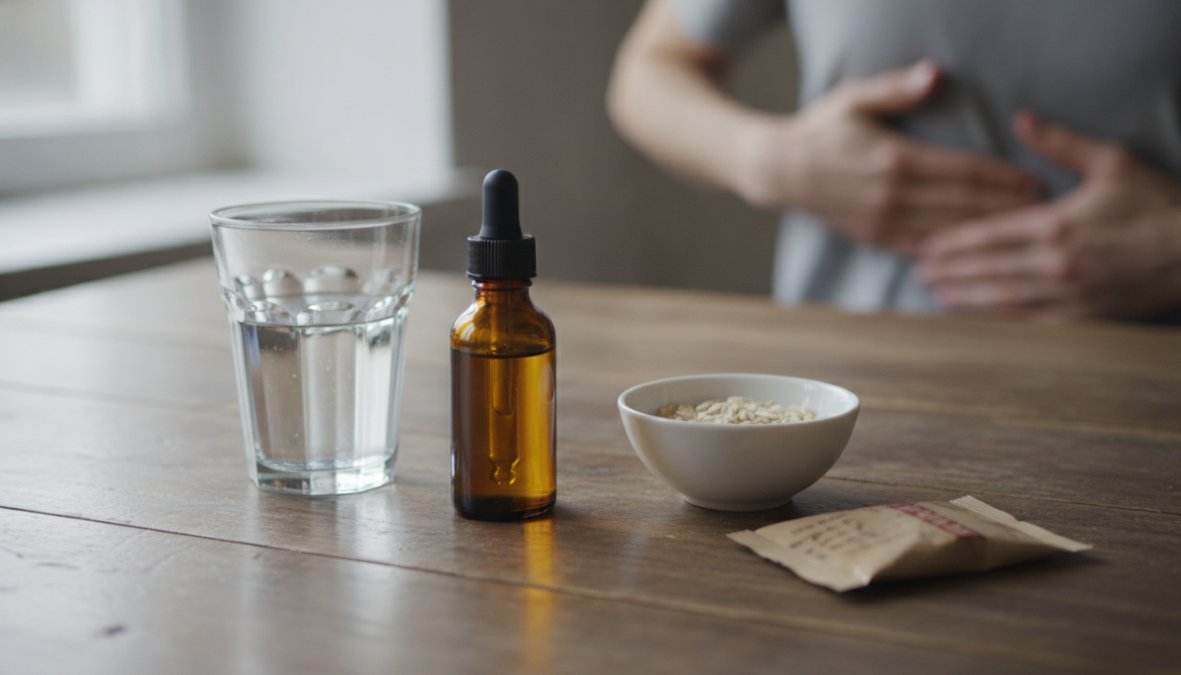
Taking CBD on an empty stomach doesn’t cause serious harm, but it does increase the likelihood of experiencing mild gastrointestinal discomfort. Nausea, mild stomach upset, and digestive sensitivity are more common when CBD is taken fasted, particularly at higher doses.
Concentrated CBD reaching the stomach without buffering from food can trigger mild irritation in sensitive individuals. A 10mg dose on an empty stomach rarely causes issues, but a 50mg or 100mg dose taken fasted is more likely to produce nausea, especially in people with sensitive digestive systems or those new to CBD.
Stomach Sensitivity and Gastrointestinal Reactions
Individual digestive health plays a major role in how you respond to empty-stomach CBD. People with irritable bowel syndrome, acid reflux, or sensitive stomachs are more likely to experience nausea or discomfort. For these individuals, taking CBD with food prevents side effects entirely.
Your stomach’s protective mucus layer and acid buffering system work best when food is present. Food triggers the release of bicarbonate, which neutralizes stomach acid and creates a more hospitable environment for any substance passing through.
Minimizing Nausea and Digestive Discomfort
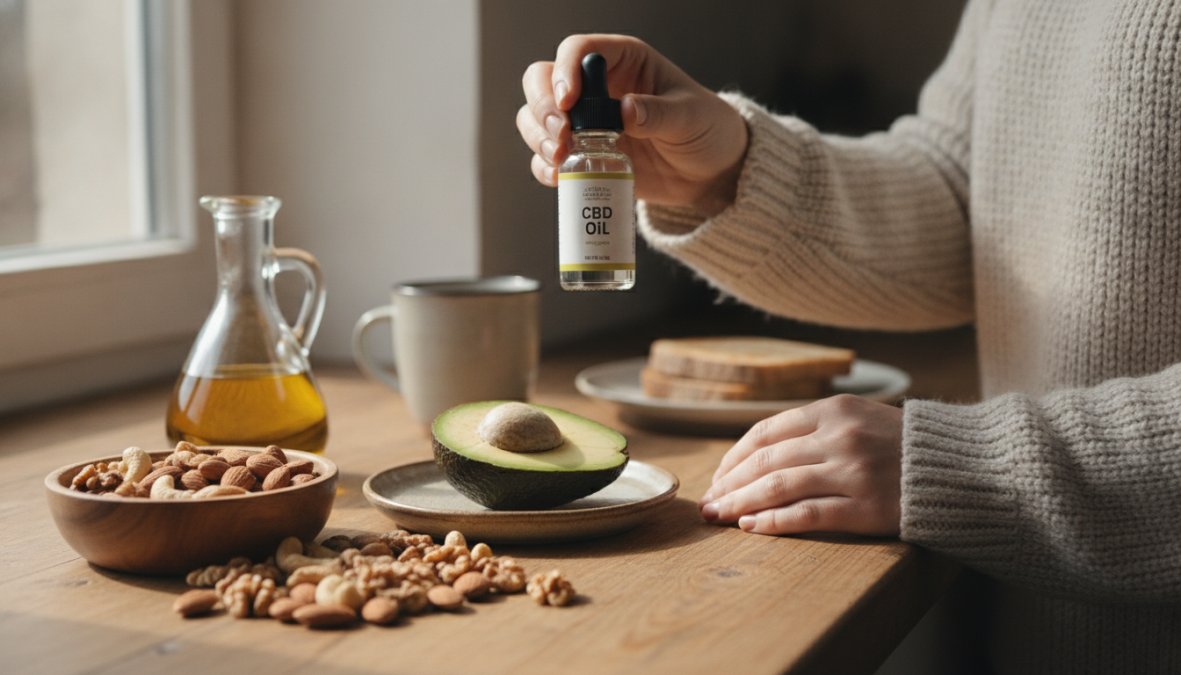
The simplest solution is to take CBD with food. Even a small snack, a handful of nuts, a piece of cheese, a few bites of avocado, provides enough dietary fat to buffer the CBD and improve absorption simultaneously.
If nausea occurs despite taking CBD with food, consider these adjustments:
- Reduce the dose temporarily. Start with a lower amount and increase gradually.
- Switch product formats. Capsules and gummies are gentler on an empty stomach than tinctures, though they still absorb better with food.
- Take it with specific foods. Fatty fish, nuts, seeds, and olive oil are ideal.
- Time it strategically. Take CBD 15-30 minutes after eating, when your digestive system is actively processing food.
Best Time of Day to Take CBD Oil for Your Goals
The ideal time to take CBD depends entirely on what you’re trying to achieve. Timing should align with your health goals and how you want to feel.
Morning Dosing for Anxiety and Focus
If you’re taking CBD for daytime anxiety, stress management, or focus, morning is typically ideal. Many users find that CBD taken in the morning produces a calm, alert state without sedation. Pair CBD with breakfast containing protein and healthy fats, eggs with avocado, Greek yogurt with nuts, or salmon on whole grain toast. CBD reaches peak plasma concentration around 90-120 minutes later, aligning perfectly with the start of your workday.
Morning timing also prevents potential sleep interference. While CBD isn’t stimulating, some users report that taking it too late in the day produces mild alertness that makes falling asleep harder.
The dose for daytime anxiety typically ranges from 10-30mg, depending on individual sensitivity and anxiety severity.
Evening Dosing for Sleep and Recovery
For sleep support and evening relaxation, take CBD 30-60 minutes before bed. This allows CBD to reach peak concentration just as you’re preparing to sleep. Evening doses tend to be slightly higher, 20-50mg is common for sleep support.
Take CBD with a light evening snack containing fat, a small handful of almonds, a piece of cheese, or a spoonful of almond butter. Evening CBD is particularly useful for managing chronic pain or inflammation, supporting overnight recovery and reducing morning stiffness.
CBD Oil vs. Gummies and Capsules: Empty Stomach Considerations
Different CBD product formats behave differently on an empty stomach.
CBD Oil Tinctures are most sensitive to empty-stomach consumption. The concentrated oil can irritate sensitive stomachs and produces variable absorption without food. However, tinctures offer the fastest absorption when taken with food. Always take them with a meal.
CBD Gummies and Soft Gels are gentler on an empty stomach because they’re pre-encapsulated. The coating protects your stomach lining from direct contact with concentrated CBD. However, they still absorb significantly better with food.
CBD Capsules occupy a middle ground. They’re gentle on the stomach but slower to absorb than tinctures. Taking a capsule with food increases absorption and reduces any potential nausea.
For most people, gummies or capsules are safer choices if you’re frequently taking CBD on an empty stomach, simply because they’re less likely to cause digestive irritation.
Optimizing Your CBD Routine: Dosage and Timing Strategy
Creating a consistent, effective CBD routine requires three elements: the right dose, the right timing, and the right food pairing.
Creating a Consistent Dosing Schedule
Consistency matters more than perfection. Your endocannabinoid system responds to regular, predictable CBD intake. Taking 20mg daily produces better results than taking 50mg sporadically.
Start with a low dose and increase gradually. Many people begin with 5-10mg daily and add 5mg every 3-5 days until they find their optimal dose. Most people find their sweet spot between 15-30mg daily, though individual needs vary widely.
Track your results. Keep a simple log noting your dose, timing, food pairing, and how you felt that day. After 2-3 weeks of consistent use, patterns emerge and you’ll notice which combinations produce the best results.
Adjusting Dose Based on Meal Timing and Health Goals
If you’re taking CBD for anxiety, a lighter dose taken with breakfast produces consistent daytime calm. If you’re taking CBD for sleep, a slightly higher dose taken with a fat-rich dinner produces deeper, more restorative sleep.
For pain management, many people find that split dosing works best, a smaller dose in the morning for daytime mobility and a larger dose in the evening for overnight recovery.
| Scenario | Ideal Dose | Best Timing | Food Pairing | Expected Effect Timeline |
|---|---|---|---|---|
| Daytime anxiety | 10-20mg | Morning | Breakfast with protein & fat | 60-90 minutes |
| Sleep support | 20-40mg | Evening | Dinner or light snack with fat | 90-120 minutes |
| Chronic pain | 15-30mg | Morning & evening | With meals | 2-3 weeks for full effect |
| Acute stress | 10-15mg | As needed | With food | 45-60 minutes |
| General wellness | 10-15mg | Morning | With breakfast | Cumulative over weeks |
Most people underestimate how much food affects their results. If you’ve tried CBD before and didn’t notice much effect, try the exact same dose with a fat-rich meal. The difference is often dramatic.
Conclusion: Making the Right Choice for Your CBD Practice
Taking CBD on an empty stomach is safe, but it’s not optimal. The bioavailability difference between fasted and fed states is substantial enough that most people who switch to taking CBD with food report noticeably better results. If you’re investing in CBD for anxiety, sleep, pain management, or general wellness, timing it with a fat-containing meal ensures you’re actually absorbing enough of the dose to produce measurable effects.
Start with a consistent morning or evening routine, always take your CBD with a meal containing healthy fats, and track your results for 2-3 weeks. Most people find their ideal dose and timing within this window.
Frequently Asked Questions
Is it safe to take CBD oil on an empty stomach?
Yes, taking CBD oil on an empty stomach is generally safe for most people. However, it may reduce bioavailability and increase the risk of nausea or stomach sensitivity in some individuals. Taking CBD with a fat-rich meal can enhance absorption and minimize gastrointestinal discomfort. The safest approach depends on your individual digestive health and sensitivity.
How does food affect CBD bioavailability and absorption?
Food, particularly fat-rich meals, significantly enhances CBD bioavailability. Since cannabinoids are fat-soluble compounds, consuming CBD with dietary fats, especially MCT oil or long-chain triglycerides, increases absorption rate and peak plasma concentration. Taking CBD on an empty stomach reduces bioavailability, meaning your body absorbs less of the active compound, potentially requiring higher doses for therapeutic effects.
Can taking CBD oil on an empty stomach cause nausea or side effects?
Some users report nausea, stomach sensitivity, or gastrointestinal discomfort when taking CBD on an empty stomach. This occurs because CBD may irritate the digestive tract without the buffering effect of food. If you experience these side effects, try taking your CBD dose with a meal or snack containing healthy fats to reduce symptoms and improve overall tolerance and therapeutic outcomes.
What's the best time of day to take CBD oil for sleep or anxiety?
For sleep support, take CBD in the evening with a fat-rich meal 1-2 hours before bedtime to allow time for absorption and onset. For anxiety management throughout the day, morning or early afternoon dosing with breakfast works well. Consistency matters more than timing, establish a routine that fits your schedule. Pair your dose with food containing healthy fats to optimize bioavailability and therapeutic effects.
This article was written using GrandRanker