Table of Contents
- Understanding How CBD Affects Sleep
- CBD Oil vs. Gummies for Sleep: Which Works Better
- Finding Your Optimal CBD Dosage for Sleep
- Side Effects of CBD for Sleep and Safety Considerations
- Choosing a High-Quality CBD Sleep Product
- Integrating CBD with Sleep Hygiene Practices
- Managing Tolerance and Long-Term CBD Use for Sleep
- Conclusion
Last Updated: August 24, 2026
Understanding How CBD Affects Sleep
CBD for sleep works differently from traditional sedatives. Rather than forcing drowsiness, cannabidiol interacts with your body’s natural sleep-wake system to promote more sustainable, restorative rest.

The endocannabinoid system is a network of receptors throughout your body that regulates sleep-wake cycles, anxiety, and inflammation. When you consume CBD, it doesn’t directly bind to these receptors the way THC does. Instead, it influences how your body produces and uses its own endocannabinoids, the natural compounds that keep this system balanced.
Sleep cycles depend on circadian rhythm regulation. Your brain naturally produces melatonin in response to darkness, and your body cycles through REM sleep and non-REM stages throughout the night. CBD appears to support this process by reducing anxiety that often interferes with sleep onset and by potentially extending sleep duration without the grogginess associated with prescription sedatives.
CBD’s effects on sleep are dose-dependent and highly individual. Some people notice improvements within days; others require 2-3 weeks of consistent use before experiencing meaningful changes. Start tracking your sleep quality immediately when you begin using CBD so you can identify patterns specific to your body.
CBD Oil vs. Gummies for Sleep: Which Works Better
The choice between CBD oil and gummies for sleep comes down to bioavailability and onset time. Both deliver cannabidiol, but through different routes.
CBD oil taken sublingually (under the tongue) has higher bioavailability than gummies. When you hold oil under your tongue for 60-90 seconds before swallowing, the cannabidiol absorbs directly through the mucous membranes and enters your bloodstream more efficiently. Sublingual CBD oil typically takes 15-45 minutes to produce noticeable effects, making it ideal for winding down before bed (peer-reviewed research).
Gummies take longer, usually 1-2 hours, because they must be digested before absorption. However, they offer a sustained release effect. The CBD enters your system gradually and remains active longer, typically 6-8 hours compared to 4-6 hours for oil. For someone who struggles with middle-of-the-night wakefulness, gummies may be better. For someone who needs help falling asleep quickly, oil is more practical.
Dosing precision also favors oils. With a tincture, you can adjust your dose in small increments. Gummies come in fixed doses, so you’re limited to whole-gummy increments when titrating upward.
CBD Health Collection offers both formats specifically designed for sleep support, with formulations that include complementary compounds like broad-spectrum cannabinoids and terpenes that enhance the sleep-promoting effects.
Neither format is inherently “better.” If you struggle to fall asleep, sublingual oil works faster. If you wake multiple times during the night, gummies’ extended duration may serve you better.
Finding Your Optimal CBD Dosage for Sleep
Determining the right CBD dosage for sleep requires a methodical approach because individual responses vary significantly based on body weight, metabolism, and sleep issue severity.
Start low and increase gradually. Many people take a large dose immediately, don’t notice results, and conclude CBD doesn’t work. In reality, they simply haven’t found their effective dose yet.
A reasonable starting point for sleep support is 10-15 mg of CBD taken 30-60 minutes before bedtime (the NIH). Track your sleep quality for 3-5 nights at this dose. If you notice improvements in sleep latency or fewer nocturnal awakenings, you’ve likely found your therapeutic dose. If you see no change, increase by 5-10 mg and repeat.
Most people find their optimal dose falls between 15-30 mg per night for sleep support. Some require higher amounts, 40-50 mg, particularly if managing anxiety alongside insomnia. Others find 10 mg sufficient.
Track specific metrics as you adjust: the time you took CBD, when you fell asleep, how many times you woke during the night, and how you felt the next morning. After 2-3 weeks at a stable dose, you’ll have enough information to know whether you’ve found the right amount.
Consistency matters more than dose size. Taking the same dose every night at the same time allows your body to develop a rhythm and prevents erratic results.
Increasing your dose beyond 50-75 mg per night rarely produces better sleep results and can trigger adverse reactions like next-day drowsiness. More CBD is not automatically better. Once you identify your effective dose, resist the urge to keep increasing it.
Side Effects of CBD for Sleep and Safety Considerations
CBD is generally well-tolerated, but it does produce side effects in some users, particularly at higher doses or when combined with certain medications.
Common adverse reactions include drowsiness that extends into the next day, dry mouth, and changes in appetite. Drowsiness occurs when your dose exceeds what your body needs, you fall asleep fine, but the CBD remains active when you wake, leaving you groggy. Reducing your dose typically resolves it.
Dry mouth happens because CB1 and CB2 receptors in your salivary glands influence saliva production. It’s minor and manageable by drinking water before and after taking CBD. Changes in appetite usually normalize within a few weeks.
More serious concerns arise with drug interactions. CBD inhibits cytochrome P450 enzymes in your liver, which metabolize many medications (peer-reviewed research). If you take blood thinners, anti-seizure medications, immunosuppressants, or certain heart medications, CBD can increase those drugs’ concentrations in your bloodstream, potentially causing adverse effects.
This doesn’t mean you can’t use CBD for sleep if you take other medications, it means you must consult your healthcare provider before starting. They can assess your specific medication profile and determine whether CBD is safe for you or whether dose adjustments are needed.
Medications of particular concern include warfarin (a blood thinner), clobazam and seizure medications, and certain cardiac drugs. If you’re on any prescription medication, check with your doctor or pharmacist before using CBD for sleep.
CBD doesn’t interact significantly with melatonin or most over-the-counter sleep aids, so combining CBD with these is generally safe. However, combining CBD with prescription sedatives or benzodiazepines requires medical oversight because both substances promote drowsiness and the combined effect is unpredictable.
Choosing a High-Quality CBD Sleep Product
The CBD market is largely unregulated, which means product quality varies dramatically. Some products contain far less CBD than their labels claim; others contain contaminants like heavy metals or pesticide residues. Choosing a high-quality product is the single most important step in ensuring CBD for sleep actually works.
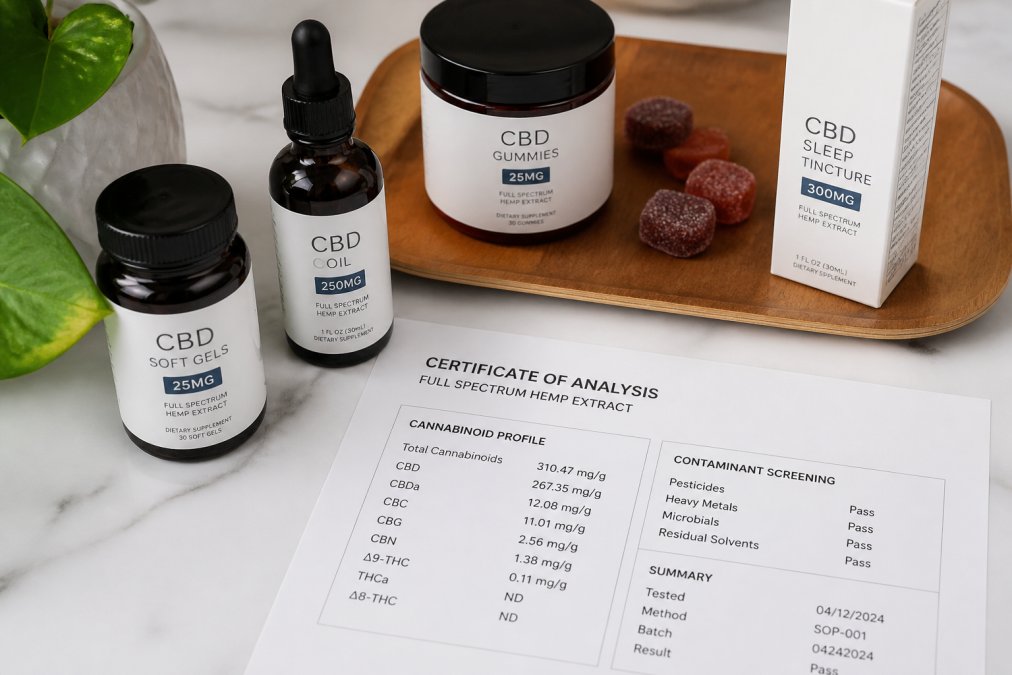
Third-party lab testing is non-negotiable. Reputable manufacturers send their products to independent laboratories for analysis. The lab tests for cannabinoid content, microbial contamination, heavy metals, and pesticide residues. You should receive a certificate of analysis (COA) for every product batch.
Examine the COA carefully. It should specify the exact CBD concentration (in mg per serving), list all detected cannabinoids, and show results for contaminant screening. If a company claims their products are tested but won’t provide a COA, that’s a red flag. sleep strategies for shift workers.
Full-spectrum vs. isolate is a meaningful distinction. Full-spectrum CBD contains all the cannabinoids, terpenes, and other compounds naturally present in the hemp plant. Isolate contains only pure CBD. Full-spectrum products often produce stronger effects because of the entourage effect, the synergistic interaction between cannabinoids and terpenes. For sleep specifically, full-spectrum formulations tend to work better because the terpene profile includes sleep-promoting compounds like myrcene and linalool.
Broad-spectrum products occupy a middle ground: they contain multiple cannabinoids and terpenes but have THC removed. If you’re concerned about THC showing up on a drug test, broad-spectrum is a safer choice while still offering some entourage effect benefits.
Extraction method matters for purity. CO2 extraction is the gold standard, producing clean CBD without solvent residues. Avoid products extracted with ethanol or butane unless the manufacturer has thoroughly purged these solvents. CBD Health Collection uses clean CO2 extraction in a GMP- and FDA-registered facility, ensuring both purity and consistency across batches.
Source of the hemp plant affects quality. Hemp grown in the United States under regulated agricultural standards is generally superior to imported hemp. Look for products made from organically grown, USA-sourced hemp.
Integrating CBD with Sleep Hygiene Practices
CBD for sleep is most effective when combined with evidence-based sleep hygiene practices. Think of CBD as a tool that makes good sleep habits more effective, not a replacement for them.
Timing your CBD dose matters. Take it 30-60 minutes before your intended bedtime for sublingual oil or 1-2 hours before for gummies. This timing allows the cannabidiol to reach effective concentrations in your bloodstream around the time you’re trying to sleep.
Circadian rhythm alignment is critical. Your body’s natural sleep-wake cycle is regulated by light exposure, temperature, and consistent sleep schedules. Taking CBD at the same time every night reinforces this rhythm.
Combine CBD with proven sleep habits: maintaining a consistent sleep schedule, keeping your bedroom cool and dark, limiting screen time 1-2 hours before bed, and avoiding caffeine after 2 PM. These practices address the behavioral and environmental factors that influence sleep quality. CBD handles the neurochemical side, reducing anxiety and supporting endocannabinoid system function.
Temperature control is underrated. Your core body temperature naturally drops as sleep approaches. A cool bedroom (around 65-68°F) supports this process.
Light exposure shapes your circadian rhythm more than any other factor. Get bright light exposure early in the day (ideally from sunlight) and avoid blue light from screens in the evening. This natural light-dark cycle primes your body to produce melatonin at the right time.
Exercise supports sleep quality, but timing matters. Regular physical activity improves sleep, but intense exercise within 3 hours of bedtime can be stimulating. Combine moderate daily exercise with CBD for sleep for better results.
Keep a simple sleep log for the first month of CBD use. Record bedtime, wake time, number of awakenings, and next-day alertness. After 4 weeks, you’ll have clear evidence of what’s working.
Managing Tolerance and Long-Term CBD Use for Sleep
One legitimate concern with any sleep aid is whether your body develops tolerance, requiring increasingly higher doses to achieve the same effect. With CBD, tolerance appears to develop more slowly than with pharmaceutical sedatives, but it’s still a consideration for long-term use.
Some users report that CBD’s sleep benefits remain consistent over months or years of use. Others notice that the same dose becomes less effective after 2-3 months. Individual variation is significant.
A practical approach is to use CBD consistently for 8-12 weeks, then take a 1-2 week break. This cycling approach appears to prevent tolerance buildup while maintaining CBD’s effectiveness. After your break, resume your regular dose.
If you do develop tolerance, increasing the dose might work temporarily, but it often leads to diminishing returns and increases the risk of side effects. Cycling is more effective than escalating doses.
Long-term safety of CBD remains understudied, but current evidence suggests it’s well-tolerated over extended periods. Monitor your sleep quality continuously. If CBD is no longer improving your sleep after months of consistent use, the issue may be tolerance or your sleep problem may have changed due to stress, health changes, or life circumstances.
Chronic sleep deprivation affects your health, mood, and productivity in ways that become apparent only after weeks of poor rest. If you’ve tried traditional approaches without success, CBD for sleep offers a natural, non-habit-forming alternative that works with your body’s existing systems rather than forcing sedation. CBD Health Collection’s sleep formulations combine pure, organically grown cannabidiol with complementary compounds specifically designed to support rest, backed by third-party lab testing and a 30-day satisfaction guarantee. Start with a low dose, track your results, and combine CBD with consistent sleep hygiene practices for the best chance of success.
Frequently Asked Questions
What is the best CBD dosage for sleep?
Effective therapeutic doses for sleep vary, though individual responses differ. Start with a lower dose (15-25 mg) and gradually increase over one to two weeks until you find the amount that supports your sleep. Factors like body weight, metabolism, and product formulation affect how much CBD you need. Keep a sleep journal to track which dose produces the best results for your sleep latency and overall sleep quality.
How does CBD oil compare to gummies for sleep?
CBD oil offers faster onset (15-45 minutes) due to sublingual absorption, making it ideal if you need quick relief. Gummies take longer (1-2 hours) but provide consistent, longer-lasting effects. Choose oil for immediate support before bed, or gummies for sustained sleep duration throughout the night.
What are the common side effects of CBD for sleep?
Most people tolerate CBD well, but some experience drowsiness, dry mouth, changes in appetite, or mild fatigue. These effects are generally mild and temporary. More serious adverse reactions are rare but can include dizziness or interactions with medications you take. If you use blood thinners, anti-seizure medications, or other prescriptions, consult your healthcare provider before starting CBD to check for potential drug interactions.
How do I know if a CBD product is high quality and safe?
Look for products with a certificate of analysis (COA) from a third-party lab that tests for purity, potency, and contaminants like heavy metals and pesticides. Full-spectrum or broad-spectrum formulations contain beneficial terpenes that enhance the entourage effect, supporting better sleep. Choose CBD derived from organically grown hemp and extracted using clean methods like CO2 extraction. Reputable brands make their lab results easily accessible and offer a satisfaction guarantee.
This article was written using GrandRanker