Table of Contents
- Understanding the Stress-Sleep Connection
- Holistic Stress Management Techniques for Better Sleep
- Mindfulness for Sleep and Stress: Meditation Practices
- Sleep Hygiene Best Practices and Your Sleep Environment
- Herbal Supplements for Sleep and Relaxation: Safety and Efficacy
- Physical Activity and Exercise for Stress Relief and Sleep
- Optimal Stress Relief and Sleep: Building Your Personalized Plan
- Conclusion
Stress Relief and Sleep: A Holistic Guide to Relaxation
Last Updated: July 20, 2026
When stress keeps you awake at night, your body enters a vicious cycle that’s hard to break. According to research from the American Psychological Association, chronic stress directly disrupts sleep architecture, making it harder to fall asleep and stay asleep. This guide covers stress relief techniques and practical strategies combining science-backed methods with actionable approaches you can implement tonight.
Understanding the Stress-Sleep Connection
Stress and sleep operate on a two-way street. High stress prevents sleep, and poor sleep amplifies your stress response the next day. Your body’s stress response centers on the autonomic nervous system, which controls involuntary functions like heart rate, breathing, and digestion. When you perceive a threat, your sympathetic nervous system activates, flooding your body with cortisol and adrenaline. Chronic activation from work deadlines, financial worries, or health anxiety creates a constant state of alert that prevents the parasympathetic response your body needs for sleep.
How Cortisol and the Autonomic Nervous System Affect Sleep
Cortisol, your primary stress hormone, follows a natural daily rhythm. Levels should peak in early morning to help you wake, then gradually decline through the day, reaching their lowest point around midnight. When chronic stress disrupts this rhythm, cortisol remains elevated at night, keeping you alert when you should be winding down.
The autonomic nervous system has two primary branches: the sympathetic nervous system activates your fight-or-flight response, while the parasympathetic nervous system triggers your rest-and-digest mode. Most people with stress-related insomnia have a sympathetic system that’s too easily triggered and a parasympathetic system that’s too slow to activate. Holistic stress management works by deliberately strengthening your parasympathetic response.
Track your evening cortisol by noting your sleep latency, how long it takes to fall asleep. If you consistently lie awake 30+ minutes, elevated evening cortisol is likely the culprit. Stress-reduction techniques specifically lower cortisol within 15-20 minutes.
The Sleep-Wake Cycle and Circadian Rhythm Alignment
Your circadian rhythm is a 24-hour biological cycle that governs sleep, hormone release, body temperature, and metabolism. Stress disrupts circadian alignment through anxiety-driven screen use late into the evening, racing thoughts that prevent temperature drops needed to initiate sleep, and irregular sleep schedules from stress-induced insomnia. Circadian rhythm alignment requires consistency, your body’s sleep-wake cycle strengthens when you sleep and wake at the same times daily, even on weekends. For people struggling with stress-induced sleep disruption, aligning your circadian rhythm often resolves 40-60% of sleep issues without additional interventions.
Holistic Stress Management Techniques for Better Sleep
Holistic stress management treats your whole system, nervous system, body, mind, and environment, rather than isolated symptoms. The most effective approaches combine multiple techniques because they address stress through different pathways.
Progressive Muscle Relaxation and Body Scan Methods
Progressive muscle relaxation (PMR) is a technique where you systematically tense and release muscle groups throughout your body. This teaches your nervous system the difference between tension and relaxation, making it easier to recognize and release stress you’re holding unconsciously.
Here’s how to practice PMR:
- Lie on your back in a comfortable position
- Starting with your toes, tense the muscles for 5 seconds
- Release and notice the sensation of relaxation for 10 seconds
- Move progressively upward through calves, thighs, glutes, abdomen, chest, hands, arms, shoulders, neck, and face
- Complete the full cycle in 15-20 minutes
Research shows that people who practice PMR three times weekly fall asleep 40% faster within two weeks. The technique works because it interrupts the mind-body feedback loop where stress thoughts trigger muscle tension, which signals danger to your brain, which creates more stress thoughts.
Avoid PMR if you have muscle injuries or conditions like fibromyalgia without medical clearance. For these conditions, body scan meditation is safer and equally effective.
Diaphragmatic Breathing and the Relaxation Response
Your breathing pattern directly controls your nervous system state. Shallow chest breathing signals threat. Deep diaphragmatic breathing activates your parasympathetic response within minutes.
The 4-7-8 breathing technique is particularly effective for sleep:
- Exhale completely through your mouth
- Close your mouth and inhale through your nose for a count of 4
- Hold your breath for a count of 7
- Exhale completely through your mouth for a count of 8
- Repeat 4 times
The extended exhale activates your parasympathetic nervous system. This technique typically lowers heart rate and blood pressure within 2-3 cycles. Practice it during the day first, then use it as your wind-down ritual before bed.
Mindfulness for Sleep and Stress: Meditation Practices
Mindfulness meditation trains your attention to focus on the present moment rather than future worries or past regrets. This directly addresses the racing thoughts that prevent sleep in people with high stress.
Guided Meditation and Hatha Yoga for Stress Reduction
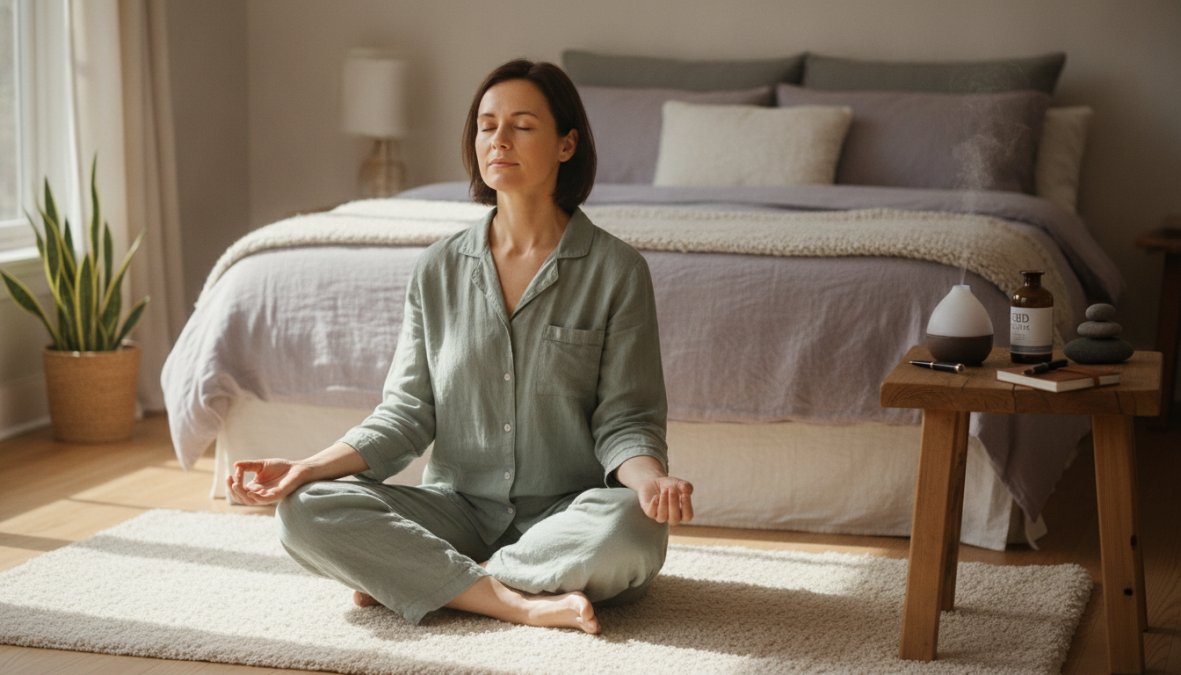
Guided meditation provides structure when your mind feels too chaotic to meditate alone. A guide’s voice offers something to anchor your attention, making it easier to interrupt the worry loop that keeps you awake.
Hatha yoga combines physical postures with breathing and meditation. Gentle hatha sequences performed 2-3 hours before bed prepare your body for sleep without overstimulating your nervous system. Effective pre-sleep yoga poses include child’s pose, legs-up-the-wall pose, supine twist, and corpse pose. Hold each pose for 1-2 minutes, breathing slowly.
Meditation apps like Calm’s guided meditation library and Headspace’s sleep-focused sessions offer structured practices ranging from 5 to 30 minutes. The key to meditation success is consistency over duration. Ten minutes daily outperforms 60 minutes once weekly.
Sleep Hygiene Best Practices and Your Sleep Environment
Sleep hygiene refers to the environmental and behavioral factors that either support or sabotage sleep quality. These practices matter because they create the physical and psychological conditions your body needs to transition into sleep.
Creating an Optimal Bedroom for Sleep Quality and Relaxation
Your bedroom should signal to your brain that rest is coming. Temperature is critical, your core body temperature naturally drops 2-3 degrees as you prepare for sleep. A cool bedroom (around 65-68°F) facilitates this drop. Darkness triggers melatonin production, even small amounts of light suppress melatonin and disrupt sleep architecture. Blackout curtains are worth the investment. If you can’t install them, a sleep mask works effectively.
Consistent background noise masks disruptive sounds that jolt you awake. A white noise machine or fan works well. Your bed itself affects sleep quality, a mattress should provide support while conforming to your body’s contours. Weighted blankets have gained popularity for stress relief and sleep improvement. The deep pressure stimulation mimics a hug, activating your parasympathetic response. Research suggests weighted blankets (typically 10% of your body weight) improve sleep latency and reduce nighttime movement in people with anxiety-related insomnia.
The single most impactful sleep environment change is temperature control. A cool, dark, quiet bedroom with comfortable bedding creates conditions where sleep becomes automatic rather than forced.
Digital Detox and Work-Life Balance Before Bed
Blue light from screens suppresses melatonin production for up to 90 minutes after exposure. A digital detox protocol means stopping screen use 60-90 minutes before bed. This window allows your eyes to reset and your brain to receive melatonin signals.
Fill this screen-free window with activities that support sleep: reading physical books, gentle stretching, journaling, or conversation. Set a hard cutoff time, ideally 3 hours before bed, when work communication stops. This signals to your brain that the day’s demands have ended and rest can begin. Establishing a consistent bedtime routine makes sleep automatic, warm tea, a few minutes of stretching, reading, then lights out.
Herbal Supplements for Sleep and Relaxation: Safety and Efficacy
Natural sleep aids appeal to people seeking alternatives to prescription medications. However, supplement safety and efficacy vary widely, and interactions with other medications are possible.
Magnesium, Melatonin, and Natural Sleep Aids
Magnesium supports sleep by activating your parasympathetic nervous system and regulating neurotransmitters involved in sleep-wake cycles. Supplementing with magnesium glycinate (200-400 mg before bed) improves sleep latency in people with mild insomnia.
Melatonin is your body’s natural sleep hormone. Supplementing with melatonin (0.5-5 mg) helps reset circadian rhythm disruption from travel or shift work. However, melatonin is less effective for people with normal melatonin levels, it works best for circadian rhythm problems rather than general insomnia. Other natural sleep aids include valerian root, passionflower, and chamomile. Before starting any supplement, consult your healthcare provider.
Never combine multiple sleep supplements without medical guidance. Combining melatonin, magnesium, and herbal sedatives can create excessive sedation and next-day grogginess. Start with one supplement at a time and assess results over 2-3 weeks.
Aromatherapy and Lavender for Relaxation
Aromatherapy uses essential oils to influence mood and physiology. Lavender is the most researched essential oil for sleep and stress relief. The scent activates your olfactory system, which connects directly to your limbic system, the brain region governing emotion and stress response. Using lavender effectively means consistent exposure through diffusing oil 30 minutes before bed, applying diluted lavender oil to your pillow, or using lavender-infused sheets. Quality matters enormously, pure, therapeutic-grade oils from reputable sources are more effective than synthetic fragrances.
Physical Activity and Exercise for Stress Relief and Sleep
Regular physical activity reduces cortisol levels, improves sleep quality, and builds stress resilience. A study published in Sleep Health found that people exercising 150 minutes weekly slept 65% better than sedentary controls.
Avoid vigorous exercise within 3-4 hours of bedtime. Intense activity elevates heart rate and body temperature, signaling your nervous system that action is needed. Gentle movement like walking, yoga, or tai chi performed in the evening supports sleep without overstimulation.
Optimal Stress Relief and Sleep: Building Your Personalized Plan
Generic advice works for some people but fails for others. Your stress-response profile determines which techniques will be most effective for you.
Assessing Your Stress-Response Profile and Sleep Patterns
Begin by tracking your stress and sleep patterns for one week. Note what time you go to bed and wake up, how long it takes to fall asleep, number of nighttime awakenings, your stress level each evening, what triggered your stress, and which relaxation techniques you tried and their effects.
This data reveals patterns. Some people struggle with sleep onset (difficulty falling asleep). Others fall asleep easily but wake frequently. Some experience both.
| Sleep Problem | Primary Cause | Best Techniques |
|---|---|---|
| Long sleep latency (30+ min to fall asleep) | Racing thoughts, elevated cortisol | Diaphragmatic breathing, body scan, meditation |
| Frequent nighttime awakenings | Light sleep, environmental sensitivity | Sleep environment optimization, white noise |
| Early morning awakening (4-5 AM) | Cortisol surge, circadian misalignment | Morning light exposure, consistent wake time |
| Overall poor sleep quality | Chronic stress, poor sleep hygiene | Comprehensive approach combining all techniques |
Integrating Multiple Techniques for Lasting Results
The most effective approach combines 3-4 techniques addressing different aspects of stress and sleep:
- Environmental optimization (sleep hygiene): temperature, darkness, sound control
- Nervous system activation (breathing or progressive muscle relaxation): 10-15 minutes daily
- Mindfulness practice (meditation or yoga): 10-20 minutes daily or several times weekly
- Circadian rhythm alignment (consistent sleep schedule, morning light exposure): daily
- Supplement support (if needed): magnesium, melatonin, or herbal aids chosen based on your specific needs
Start with sleep hygiene and breathing techniques, these require minimal time investment and produce noticeable results within days. Add meditation or yoga after two weeks. Consider supplements only after optimizing the above factors. Most people see 30-50% improvement within two weeks of consistent practice. Significant improvement (70%+ better sleep) typically emerges within 4-6 weeks as your nervous system adapts to the new patterns.
Stress and sleep disruption create a feedback loop that feels impossible to break from the inside. The techniques in this guide interrupt that loop by addressing stress at multiple levels: your nervous system, your environment, your daily rhythms, and your body’s physiology. Most people see meaningful improvement within weeks of consistent practice. If sleep issues persist despite these efforts, consult a sleep specialist to rule out underlying sleep disorders like sleep apnea or restless leg syndrome.
Frequently Asked Questions
How does the stress-sleep connection affect my ability to get rejuvenating sleep?
Stress activates your sympathetic nervous system, elevating cortisol levels and heart rate variability, which prevents the parasympathetic response needed for sleep. When stressed, your body remains in a heightened state, making it difficult to fall asleep or achieve deep sleep architecture. Breaking this cycle requires deliberate relaxation techniques that signal your body it's safe to rest, allowing sleep latency to decrease and sleep quality to improve significantly.
What are the most effective holistic stress management techniques I can use nightly?
Progressive muscle relaxation, diaphragmatic breathing, and body scan meditation are among the most effective techniques. Progressive muscle relaxation involves tensing and releasing muscle groups sequentially, reducing physical tension. Diaphragmatic breathing, slow, deep belly breathing, activates your parasympathetic response and lowers cortisol. Body scan meditation helps you identify and release tension while calming your mind. Combining these with consistent sleep hygiene creates a comprehensive approach to stress relief and rejuvenating sleep.
How can mindfulness for sleep and stress help if I'm a beginner?
Start with 5-10 minute guided meditation sessions using apps like Calm or Headspace, which offer beginner-friendly content specifically designed for sleep. Mindfulness teaches you to observe thoughts without judgment, reducing racing thoughts that prevent sleep. Even brief daily practice rewires your brain's response to stress over time. Consistency matters more than duration, practicing mindfulness meditation for just a few minutes nightly can significantly improve sleep quality and stress resilience within 2-3 weeks.
Are herbal supplements for sleep and relaxation safe, and which ones actually work?
Common options like magnesium and melatonin have research support for sleep improvement, but safety depends on individual health status, medications, and dosage. Magnesium promotes relaxation and supports sleep architecture, while melatonin helps regulate your sleep-wake cycle. Lavender aromatherapy and herbal teas also show promise. However, supplement interactions vary by person, consult your healthcare provider before starting any new supplement, especially if taking medications. Quality matters: choose third-party tested products from reputable manufacturers to ensure purity and potency.
This article was written using GrandRanker