
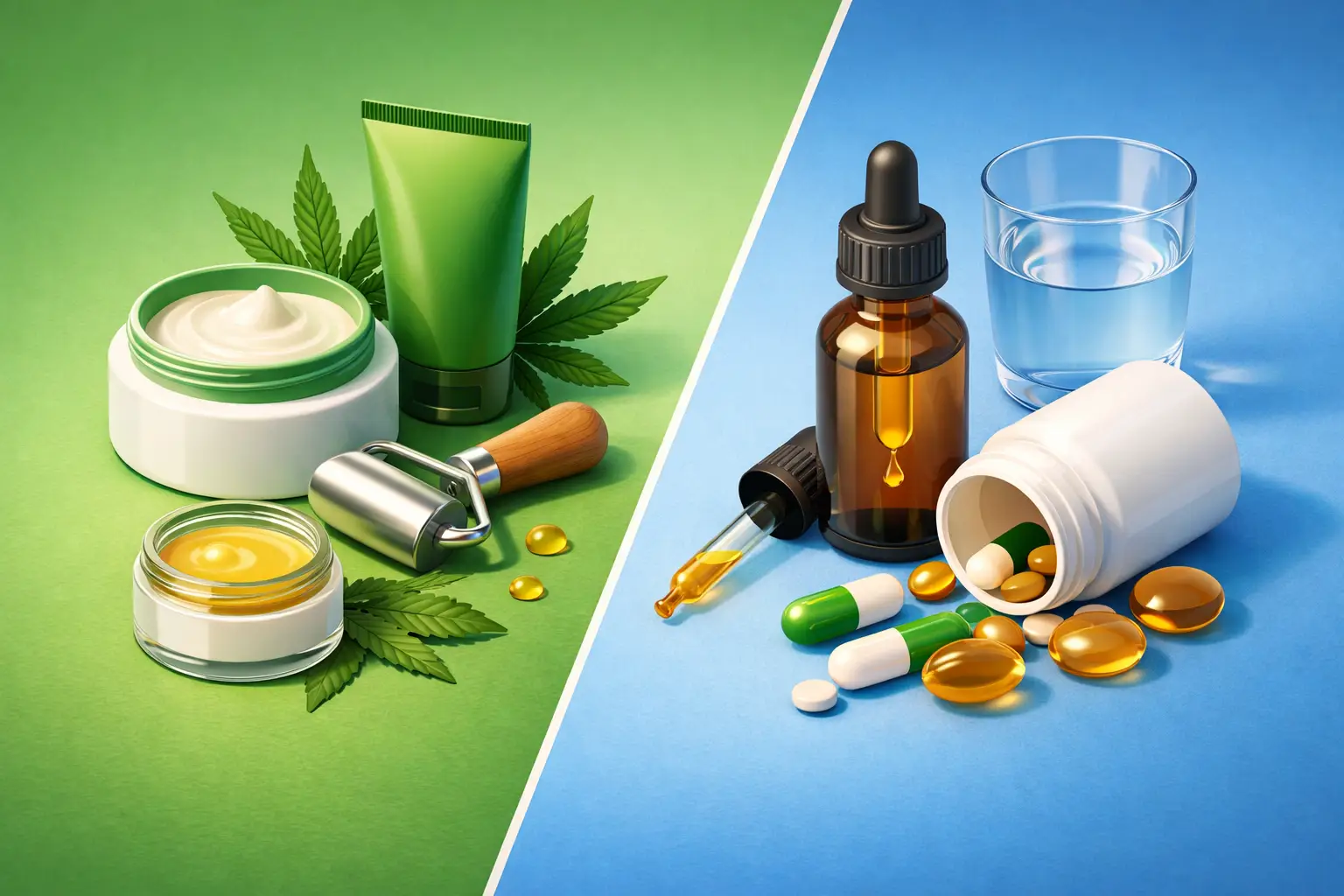
A sore knee after a long walk, tense shoulders at the end of the day, and trouble settling into a bedtime routine may all lead you to the same question: should you apply CBD where you need it or take it by mouth? The choice between CBD topicals vs oral CBD is less about which format is “better” and more about what kind of support you want, when you want it, and how CBD fits into your routine.
Both options can be part of a thoughtful, non-intoxicating wellness plan. The right choice starts with understanding a simple distinction: topical products are generally used for focused, external application, while oral products are taken internally for broader, whole-body support.
CBD Topicals vs Oral CBD: The Core Difference
CBD topicals are products applied directly to the skin. They include creams, lotions, salves, balms, and roll-ons. Many people use them on areas that feel overworked, stiff, or uncomfortable, such as the shoulders, back, knees, hands, feet, or elbows. A topical gives you a practical way to build a moment of care around one specific area.
Oral CBD includes oils, gummies, capsules, and similar products that are swallowed or held under the tongue, depending on the format. Rather than applying CBD to one area, oral products are commonly chosen for everyday wellness goals that feel less location-specific, such as maintaining a calm routine, supporting nighttime wind-down, or promoting overall balance.
This difference matters because the experience is different. If your concern is centered in one place, reaching for a topical may feel more intuitive. If you are trying to support a regular wellness habit throughout your day or evening, an oral option may be a better fit.
When a CBD Topical May Make Sense
A CBD topical is often the most straightforward choice when you can point to the area you want to address. For example, someone whose hands feel tired after gardening may prefer a cream they can massage into their hands. Someone who carries tension in their neck and shoulders after desk work may appreciate a balm as part of an evening stretching routine.
Application itself can be part of the benefit people value. Taking a few minutes to massage a cream or salve into the skin can create a useful pause in a busy day. The product is localized, easy to keep in a gym bag or bedside drawer, and does not require you to plan around a daily serving schedule.
Topicals can also be a comfortable starting point for first-time CBD users. There is no swallowing, measuring, or waiting to see how an oral product fits into your body. You simply apply a small amount to clean, dry skin and assess how the product feels.
How to use a topical thoughtfully
Start with the label directions and use enough product to lightly cover the desired area. Massage it in until absorbed, then wash your hands unless your hands are the area being treated. Avoid broken or irritated skin, and keep the product away from your eyes and other sensitive areas.
Give any new topical a patch test first. Apply a small amount to a limited area of skin and wait to see whether you experience redness, itching, or irritation. Botanical ingredients, essential oils, and added cooling or warming components can be helpful for some people but may not suit sensitive skin.
A topical may be especially appealing if you want CBD support without introducing a swallowed supplement into your routine. Still, it is not designed to replace medical care for persistent pain, swelling, injury, or other symptoms that need professional evaluation.
When Oral CBD May Be a Better Fit
Oral CBD is often chosen when the goal is broader than one spot on the body. A person managing a demanding schedule may use an oil or gummy as part of a calm, consistent routine. Another person may prefer an oral product in the evening as they reduce screen time, make tea, and prepare for sleep.
Consistency is a key advantage of oral CBD. Because it can become part of an established daily or nightly ritual, it may be easier to notice whether a particular serving and schedule work for you. Oils allow for more flexible serving adjustments, while gummies and capsules offer convenience and a familiar, pre-measured format.
Oral CBD also requires a little more patience. Individual experiences vary based on the product format, serving size, food intake, metabolism, and personal sensitivity. Gummies and capsules travel through the digestive system, so their timing can feel different from an oil used under the tongue. Rather than expecting an immediate, dramatic change, approach oral CBD as a wellness product that may take time and consistency to evaluate.
Start low and keep your routine simple
If you are new to oral CBD, begin with the suggested serving on the product label or a lower starting amount when appropriate. Use it at a consistent time for several days before deciding whether to adjust. Changing the product, serving size, and timing all at once makes it difficult to understand what is actually working for you.
Keep a brief note of when you take it, how much you use, and how you feel. This does not need to be complicated. A few words about your sleep routine, stress level, or daily comfort can help you make a more confident decision over time.
Can You Use CBD Topicals and Oral CBD Together?
Yes, many adults choose a topical for focused application and an oral product for broader daily wellness. For example, you might use an oral CBD oil as part of your evening routine while keeping a topical salve on hand for shoulders, knees, or hands after activity.
The practical question is whether using both adds value to your routine. If your primary need is occasional, localized comfort, a topical alone may be enough. If you have a consistent wellness goal and also want targeted application after activity, combining formats may feel more complete.
Using more than one product does not mean you should use more CBD without a plan. Follow each label carefully, track your total daily CBD use, and introduce one product at a time whenever possible. That gives you a clearer understanding of your individual response.
What to Look for Before You Buy
The CBD category can be confusing because products vary widely in quality, labeling, and formulation. Whether you choose a topical or oral CBD, look beyond the front-label promises.
A trustworthy product should clearly identify the CBD amount per serving or container, provide accessible independent lab testing, and list its full ingredients. For people who want to avoid THC exposure, choosing a product labeled THC-free and reviewing its testing information is especially important. No detectable THC should be supported by current third-party results, not simply stated as a marketing claim.
It is also worth considering the rest of the formula. A topical should have ingredients you are comfortable applying to your skin. An oral product should fit your dietary preferences and daily routine. Clean sourcing, careful extraction methods, and transparent processing standards can offer additional peace of mind.
CBD Health Collection focuses on THC-free products, independent testing, and straightforward guidance because choosing CBD should not require guesswork. The most useful product is one you understand, can use consistently, and feel confident keeping in your wellness routine.
Important Safety Considerations
CBD is not right for every person or every situation. Speak with a physician, pharmacist, or qualified healthcare professional before using oral CBD if you take prescription medications, especially medications with grapefruit warnings, or if you have liver concerns. CBD may interact with certain medicines.
If you are pregnant, nursing, preparing for surgery, or managing a serious medical condition, seek professional guidance before using CBD. For topicals, discontinue use if skin irritation occurs. Keep all CBD products away from children and pets unless the product is specifically formulated and labeled for animal use.
Finally, be cautious about products that promise to diagnose, treat, cure, or prevent a disease. CBD can be a supportive part of everyday self-care, but it should not replace medical advice, prescribed treatment, physical therapy, or urgent care when those are needed.
The best starting point is usually the simplest one: choose a topical when your routine calls for focused, hands-on care, or choose oral CBD when you want consistent, whole-body wellness support. Start with quality, pay attention to your experience, and let your actual needs guide the next step.