Table of Contents
- CBD Oil vs Pills for Cats: Key Differences at a Glance
- What Is CBD for Cats and How Does It Work?
- CBD Oil for Cats: Pros, Cons, and Administration
- CBD Pills for Cats: Pros, Cons, and Suitability
- How to Determine the Correct CBD Dosage for Cats
- How to Give a Cat CBD Oil vs Pills: Administration Methods
- Safety, Side Effects, and Drug Interactions
- Cost-Per-Dose Analysis: Oil vs Pills
CBD Oil vs Pills for Cats: Which Works Best?
Last Updated: July 12, 2026
When choosing between CBD oil for cats vs pills, pet owners face a decision that affects how their cat receives treatment, consistency of administration, and ultimately whether the CBD will work. This guide breaks down everything you need to know to make the right choice for your feline companion.
The comparison isn’t about finding a universally "best" option, it’s about matching the right delivery method to your cat’s temperament, your lifestyle, and your cat’s specific health needs.
CBD Oil vs Pills for Cats: Key Differences at a Glance
CBD oil reaches the bloodstream faster through sublingual absorption (under the tongue), typically showing effects within 15-45 minutes. Pills must be digested through the gastrointestinal tract, taking longer but potentially providing more sustained effects.
| Characteristic | CBD Oil | CBD Pills/Capsules |
|---|---|---|
| Absorption Time | 15-45 minutes | 30-90 minutes |
| Bioavailability | Higher (sublingual) | Lower (digestive) |
| Dosage Precision | Requires dropper measurement | Pre-measured, exact dose |
| Palatability | Flavor-dependent, often rejected | Easier to hide in food |
| Cost per Dose | Varies by concentration | Generally higher per serving |
| Shelf Life | 12-24 months | 18-24 months |
| Best For | Cats needing quick relief | Cats requiring consistent dosing |
What Is CBD for Cats and How Does It Work?
CBD, or cannabidiol, is a non-psychoactive compound from hemp that interacts with your cat’s endocannabinoid system to promote balance and wellness. Unlike THC, CBD doesn’t produce a "high" and is safe for feline use when sourced from reputable, third-party tested suppliers. The compound works by binding to cannabinoid receptors throughout your cat’s body, influencing pain perception, anxiety response, and inflammatory markers.
The Endocannabinoid System in Felines
Cats possess cannabinoid receptors (CB1 and CB2) distributed throughout their nervous system, organs, and immune tissue. CB1 receptors in the brain and spinal cord influence neurological function and pain perception. CB2 receptors in immune cells and peripheral tissues play a role in inflammatory response and immune regulation. When CBD enters your cat’s body, it influences how your cat’s own endocannabinoids interact with the system, producing gentler effects than pharmaceutical interventions.
THC-Free and Full-Spectrum vs Broad-Spectrum Options
For cats, THC-free products are essential, felines are sensitive to THC and can experience adverse effects even at trace levels. Broad-spectrum products offer the "entourage effect" (enhanced benefits from multiple cannabinoids working together) without THC risk. Full-spectrum products are generally not recommended for cats due to THC sensitivity.
CBD Oil for Cats: Pros, Cons, and Administration
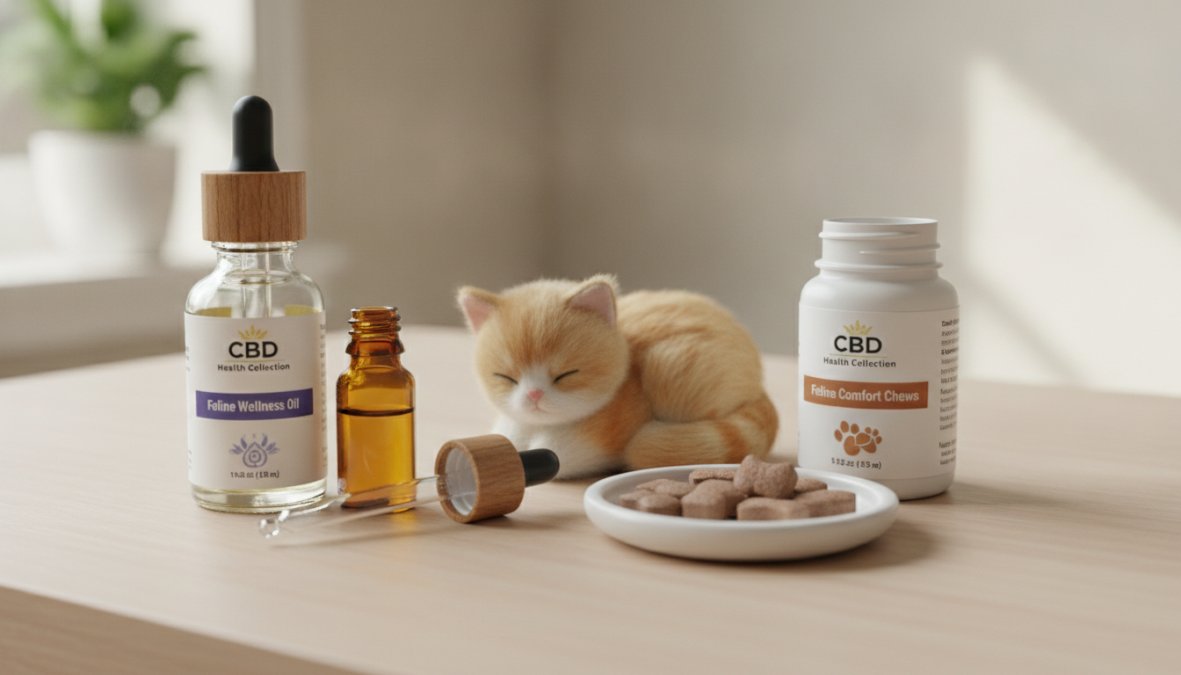
CBD oil offers dosage flexibility, you can adjust in small increments by adding more or fewer drops. The biggest drawback is administration difficulty. Most cats dislike the taste and texture of oil, and getting a cat to accept sublingual dosing is nearly impossible without stress. Many owners resort to mixing oil into food, which can reduce bioavailability and risks uneven distribution if the cat doesn’t finish a meal.
Bioavailability and Absorption Rates
Bioavailability refers to the percentage of CBD that reaches your cat’s bloodstream. CBD oil administered sublingually has higher bioavailability, roughly 20-30% of the dose is absorbed through mouth mucous membranes, bypassing first-pass liver metabolism. When mixed into food, bioavailability drops to around 6-15%, depending on whether your cat has eaten recently and whether fatty foods were consumed, which improve absorption.
Palatability and Sensory Considerations
Most cats reject unflavored CBD oil outright. The earthy, sometimes bitter taste and oily texture trigger aversion responses in many felines. Some products add catnip or chicken flavoring, but success varies dramatically between individual cats. This palatability challenge is the primary reason many cat owners abandon CBD oil despite its bioavailability advantages. For anxious cats, the added stress of forcing oil can actually worsen the condition you’re trying to treat.
CBD Pills for Cats: Pros, Cons, and Suitability
Pills and capsules represent the easiest administration method for most cats. They’re pre-dosed, eliminating measurement errors, and small enough to hide in food or treats, reducing administration stress. They’re also shelf-stable, requiring no special storage beyond a cool, dry place.
The trade-off is lower bioavailability and less dosage flexibility. Once you’ve purchased a specific strength, you’re committed to that dose. If your cat needs adjustment, you’re either taking partial pills or switching to a different strength bottle entirely.
Ease of Dosing and Consistency
Pills eliminate the guesswork of dropper measurements. Each capsule contains an exact, predetermined amount of CBD, typically ranging from 5mg to 50mg. This precision is invaluable for cats requiring consistent dosing, especially those being monitored for specific conditions or taking concurrent medications where dosage consistency matters. Owners report higher adherence rates with pill-based protocols, which translates to more consistent therapeutic effects over time.
How to Determine the Correct CBD Dosage for Cats
Proper dosing is where many cat owners struggle. Unlike pharmaceutical medications with established dosing protocols, CBD lacks FDA approval and standardized veterinary guidelines. Most recommendations are based on body weight and cannabinoid sensitivity research, but individual cats respond differently based on age, metabolism, existing health conditions, and concurrent medications.
A general starting point is 1-2mg of CBD per kilogram of body weight, administered once or twice daily. For a 5kg (11-pound) cat, this translates to 5-10mg per dose.
Dosage by Body Weight and mg/kg Guidelines
The mg/kg measurement system allows for proportional dosing based on your cat’s weight. For a cat weighing 4kg (8.8 pounds), the low-end starting dose is 4mg, mid-range is 6mg, and higher dose is 8mg. For a cat weighing 6kg (13.2 pounds), the low-end starting dose is 6mg, mid-range is 9mg, and higher dose is 12mg. Most cats show noticeable effects at doses between 1.5-2mg/kg.
Keep a dosing log for the first 2-4 weeks. Record the date, dose given, time administered, and any behavioral or physical changes observed. This data helps you identify patterns and determine whether your current dose is producing the desired effect.
Starting Low and Monitoring for Results
Begin with the lowest recommended dose for your cat’s weight and observe for 1-2 weeks before making adjustments. CBD’s effects aren’t always dramatic or immediate. A cat with anxiety might show subtle improvements in willingness to explore or reduced hiding behavior. A cat with joint discomfort might show improved mobility or increased playfulness. Expect a 2-4 week observation period before concluding whether a dose is effective. If you see no changes after 2-3 weeks at the starting dose, increase by 1-2mg and observe for another 2 weeks. Most cats show clear responses somewhere in the 1-3mg/kg range.
How to Give a Cat CBD Oil vs Pills: Administration Methods
The administration method you choose will likely determine whether you stick with CBD long-term or abandon it after a few weeks of frustration.
Sublingual and Food-Based Administration for Oils
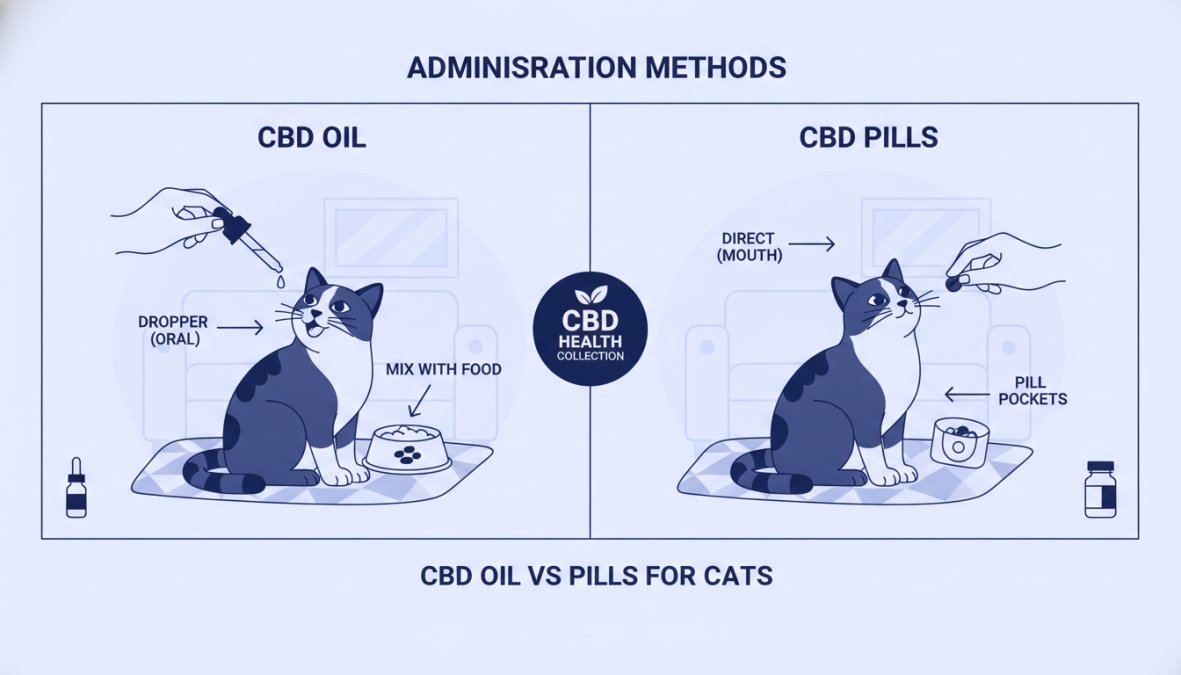
Sublingual administration (placing oil directly under the tongue) offers the highest bioavailability but requires a calm, cooperative cat, a rare combination. The technique involves using a dropper to place the prescribed amount of oil directly under your cat’s tongue, then gently holding the mouth closed for 30-60 seconds to allow absorption. Most cats will resist intensely.
Food-based administration is far more practical. Mix the prescribed dose of oil into a small amount of wet food, a pill pocket, or a treat your cat loves. Mixing CBD oil with fatty foods improves absorption by 10-15% compared to regular food.
Never mix CBD oil into your cat’s regular meal bowl if she shares meals with other cats or if you can’t guarantee she’ll finish the portion. You risk either under-dosing your target cat or accidentally dosing a cat that shouldn’t receive CBD.
Pill Administration Techniques and Alternatives
Direct pill administration works if your cat will accept a small capsule placed in her mouth. For resistant cats, try wrapping the pill in wet food, using a pill pocket designed to mask medication, or crushing the capsule and mixing the powder into a small amount of wet food with strong flavor like tuna or chicken.
Safety, Side Effects, and Drug Interactions
CBD is generally well-tolerated in cats when sourced from reputable suppliers and dosed appropriately. The most commonly reported side effects are mild and transient: drowsiness, reduced appetite, or mild digestive changes. These typically resolve within a few days as your cat’s body adjusts.
Potential Adverse Effects and Liver Enzyme Monitoring
In healthy cats, CBD at therapeutic doses (1-3mg/kg) produces few adverse effects. Drowsiness is the most common, particularly at higher doses or when CBD is first introduced. Cats with pre-existing liver disease face higher risk. CBD is metabolized in the liver through the cytochrome P450 enzyme system, the same pathway used by many medications. In cats with compromised liver function, CBD metabolism slows, potentially leading to accumulation and increased risk of adverse effects.
If your cat has liver disease, kidney disease, or is taking medications that affect liver function, consult with a veterinarian before starting CBD. A baseline liver enzyme panel before starting CBD, followed by a repeat panel 4-6 weeks into treatment, provides early warning if CBD is affecting liver function.
If your cat is on chronic medications, inform your veterinarian before starting CBD. A dose adjustment to the existing medication may be necessary to account for potential interactions.
CBD Interactions with Common Feline Medications
Cats on anticonvulsant medications (like phenobarbital for seizure management) face the highest interaction risk. CBD inhibits the same liver enzymes that metabolize phenobarbital, potentially increasing blood levels of the drug. Blood pressure medications, pain medications, and sedative or anti-anxiety medications may also interact with CBD. The safest approach is to compile a list of all supplements and medications your cat takes, discuss CBD with your veterinarian, and establish a monitoring protocol if you proceed.
Cost-Per-Dose Analysis: Oil vs Pills
A 30ml bottle of CBD oil at 500mg total CBD, dosed at 5mg per day, provides 100 days of supply. If the bottle costs $40, that’s $0.40 per dose. Pills present a different calculation. A bottle of 30 capsules at 10mg each costs roughly $30-45 depending on quality and brand. Dosed at one capsule daily, that’s $1-1.50 per dose. Pills are generally more expensive per dose than oil, but the convenience may justify the premium for many owners.
Choosing between CBD oil for cats vs pills ultimately comes down to your cat’s temperament, your lifestyle, and your priorities. If your cat accepts oil and you can administer it consistently, oil offers superior bioavailability and lower cost-per-dose. If your cat refuses oil or if consistent, stress-free administration matters more than bioavailability, pills are the pragmatic choice.
The most important factor is choosing a high-quality product from a supplier committed to transparency and safety. Explore both formats, observe your cat’s response carefully, and adjust your approach based on what works best for your feline companion’s unique needs and personality.
Frequently Asked Questions
Is CBD oil or pills better for cats?
The choice depends on your cat's temperament and your preferences. CBD oil offers faster absorption and flexible dosing via sublingual or food-based delivery, with bioavailability advantages for rapid effects. Pills provide consistent, pre-measured doses and easier administration for some owners. Oil works better for anxious cats or those needing quick relief; pills suit cats that refuse liquids or owners preferring precision dosing. Both formats should be THC-free and third-party tested via COA for safety.
How do I give my cat CBD oil vs pills?
For CBD oil: Use a dropper to place oil directly under the cat's tongue (sublingual), or mix it into wet food or treats. Sublingual delivery bypasses digestion for faster absorption. For pills: Hide them in soft food, use a pill crusher mixed with wet food (if appropriate), or use a pill gun for direct administration. Some cats tolerate neither method; in such cases, CBD pastes or treats formulated for feline wellness may be easier alternatives.
What is the recommended CBD dosage for cats?
Dosing is typically calculated using mg/kg of body weight. Most veterinarian-recommended guidelines suggest starting with 1-2 mg/kg per dose, once or twice daily. A 10-pound cat might start with 5-10 mg total. Begin low and monitor for results over 1-2 weeks before adjusting. Factors like individual metabolism, the specific condition being treated (anxiety relief, joint support, or appetite stimulation), and the product's bioavailability affect optimal dosing. Always consult your veterinarian before starting.
Can CBD oil or pills interact with my cat's medications?
Yes, CBD can interact with medications metabolized through liver enzymes, potentially affecting drug efficacy or toxicity. Common feline medications like pain relievers, seizure medications, or heart drugs may be affected. CBD may also increase drowsiness with sedatives. Always inform your veterinarian before using CBD, especially if your cat takes prescription medications. Your vet can monitor liver enzymes and adjust dosing to prevent adverse interactions while supporting your cat's feline wellness goals.
How long does CBD oil or pills take to work in cats?
CBD oil typically shows effects within 15-45 minutes when administered sublingually, due to higher bioavailability and faster absorption rates. Pills may take 1-2 hours, as they must be digested first. Full effects often develop over several days to weeks as the endocannabinoid system adjusts. For anxiety relief or acute discomfort, oil offers faster pharmacokinetics. For chronic conditions like joint support, consistent daily dosing builds cumulative benefits over time regardless of format.
This article was written using GrandRanker