
Table of Contents
- How CBD Oil for Anxiety Dogs Actually Works
- Full-Spectrum vs Isolate CBD for Pets: Which Is Better?
- CBD Dosage for Dogs: A Weight-Based Guide
- How to Administer CBD Oil to Dogs Effectively
- Side Effects of CBD for Dogs and Drug Interaction Warnings
- How to Choose a High-Quality CBD Oil for Anxiety Dogs
- What the Research and FDA Regulation Say
- Conclusion
Last Updated: June 15, 2026
Dog anxiety is more common than most pet owners realize, and the search for safe, effective relief has led many to explore cbd oil for anxiety dogs as a natural alternative to prescription sedatives. CBD Health Collection has helped pet owners across the country understand how cannabidiol works, what to look for in a product, and how to use it responsibly. Below, we cover everything from the endocannabinoid system to dosing by weight, drug interaction warnings, and how to read a certificate of analysis. What most guides skip entirely are the breed-specific nuances and the risks of transitioning off conventional anxiety medication. We cover both.
How CBD Oil for Anxiety Dogs Actually Works
The endocannabinoid system is the biological framework that makes CBD relevant to your dog’s anxiety. Dogs, like all mammals, have an endocannabinoid system (ECS) that regulates mood, stress response, pain perception, and sleep. When this system is out of balance, anxiety-related behaviors emerge. Cannabidiol interacts with ECS receptors throughout the body to help restore that balance without producing psychoactive effects.
This is the part most guides gloss over: CBD does not sedate your dog. It does not work the same way as acepromazine or benzodiazepines. Instead, it modulates the signaling pathways that govern how your dog perceives and reacts to stress triggers. That distinction matters enormously when you are deciding whether cbd oil for anxiety dogs is the right tool for your situation.
The Endocannabinoid System in Dogs
Dogs have a notably high concentration of cannabinoid receptors in the brain, particularly in areas governing fear and memory. This is why cannabidiol can influence anxiety responses without requiring psychoactive tetrahydrocannabinol (THC). Hemp-derived CBD products contain less than 0.3% THC by law, making them non-psychoactive and generally safe for pets when dosed correctly.
The ECS operates through two primary receptor types: CB1 receptors in the central nervous system and CB2 receptors in the immune system and peripheral tissues. CBD does not bind directly to these receptors the way THC does. Instead, it acts as a modulator, influencing how other cannabinoids and neurotransmitters interact with them. The practical result is a calming effect that does not impair your dog’s alertness or coordination.
Anxiety-Related Behaviors CBD May Help Address
Anxiety in dogs presents in recognizable patterns. CBD for dog anxiety is most commonly sought for:
- Pacing and restlessness during storms or fireworks
- Destructive behavior when left alone (separation anxiety)
- Excessive vocalization and whining
- Trembling or hiding in response to stress triggers
- Aggression rooted in fear rather than dominance
These are behavioral signals of a dysregulated stress response, not personality flaws. Addressing the underlying physiological state is where cannabidiol shows the most promise, according to American Kennel Club’s overview of CBD research for dogs.
Full-Spectrum vs Isolate CBD for Pets: Which Is Better?
Full-spectrum CBD is generally the stronger choice for anxiety because it preserves the natural range of cannabinoids, terpenes, and omega fatty acids found in the hemp plant. This creates what researchers call the "entourage effect," where multiple plant compounds work together to amplify the therapeutic response. Isolate CBD, by contrast, contains only pure cannabidiol with all other compounds removed.
For dog anxiety specifically, full-spectrum hemp-derived products tend to produce more consistent calming results. The presence of minor cannabinoids, including cannabigerol (CBG), cannabinol (CBN), and trace terpenes such as linalool and myrcene, alongside CBD appears to support a more complete stress-response modulation. The trade-off is that full-spectrum products contain trace amounts of THC (below 0.3% by federal law), which, while well below psychoactive thresholds for most dogs, introduces a variable that matters enormously depending on your dog’s breed, size, and genetic makeup.
Never use a full-spectrum product formulated for humans on your dog. Human-grade tinctures often contain THC concentrations that exceed safe thresholds for pets, particularly small breeds. Always use a product specifically formulated and dosed for animals.
Broad-Spectrum as a Middle Ground
Broad-spectrum CBD is the practical middle ground for most pet owners. It retains the beneficial minor cannabinoids and terpenes found in full-spectrum products but removes THC entirely through an additional extraction step. This makes broad-spectrum an appealing option for owners who want the entourage effect without any THC exposure risk.
For dogs with anxiety that does not respond to isolate CBD, broad-spectrum is the logical next step before committing to full-spectrum. CBD Health Collection’s pet wellness products use a clean CO2 extraction process on organically grown, USA-sourced hemp, which preserves the beneficial cannabinoid profile while eliminating unwanted solvents or chemical residues.
| CBD Type | THC Content | Entourage Effect | Best For |
|---|---|---|---|
| Full-Spectrum | Trace (<0.3%) | Yes | Moderate to severe anxiety |
| Broad-Spectrum | None | Partial | Mild to moderate anxiety, THC-sensitive dogs |
| Isolate | None | No | Dogs with specific cannabinoid sensitivities |
The Breed-Specific Dimension Most Guides Ignore
What almost no CBD guide addresses is how a dog’s breed and genetic profile should directly influence which spectrum type you choose. This is not a minor footnote, for certain breeds, it is a safety consideration.
MDR1 gene mutation (ABCB1 gene): Collies, Australian Shepherds, Shetland Sheepdogs, Border Collies, and several other herding breeds carry a higher prevalence of the MDR1 (multi-drug resistance) gene mutation. This mutation impairs the P-glycoprotein pump, a cellular mechanism that normally prevents certain compounds from accumulating in the brain. While CBD itself is not currently identified as a P-glycoprotein substrate, the carrier oils, flavoring agents, and additional botanical ingredients found in some full-spectrum tinctures may include compounds that interact with this pathway. For MDR1-positive dogs or any herding breed where MDR1 status is unknown, the conservative choice is a broad-spectrum or isolate product with a minimal, clean ingredient list, and a starting dose at the absolute low end of the weight-based range.
Brachycephalic breeds: Bulldogs, French Bulldogs, Pugs, and Boston Terriers have anatomical airway restrictions that make them more sensitive to any compound affecting muscle tone or respiratory rate. Higher doses of full-spectrum CBD, particularly those containing sedating terpenes like myrcene, warrant extra caution in these breeds. Start with isolate or a terpene-light broad-spectrum product and monitor respiratory rate and energy level closely during the first two weeks.
Giant breeds and slow metabolizers: Dogs over 100 pounds, Great Danes, Saint Bernards, Mastiffs, often have slower hepatic metabolism relative to their mass compared to medium breeds. This means CBD may persist in their system longer than the standard dosing interval assumes. Starting with once-daily dosing rather than twice-daily is advisable until you have observed how the individual dog responds over a full week.
Small breeds and THC sensitivity: Dogs under 20 pounds have a lower threshold for THC-related adverse effects, including ataxia (loss of coordination), urinary incontinence, and prolonged sedation. Even trace THC in a full-spectrum product can become clinically relevant if the dog is dosed at the higher end of its weight range. Broad-spectrum is the safer default for toy and small breeds unless a veterinarian specifically recommends otherwise.
If you do not know your herding breed dog’s MDR1 status, a simple cheek-swab genetic test is available through several veterinary diagnostic labs. Knowing your dog’s status before introducing any new supplement, CBD or otherwise, is a worthwhile one-time investment.
Terpene Profiles and Anxiety: A Closer Look
One underappreciated advantage of full-spectrum and broad-spectrum products over isolate is the contribution of specific terpenes to the anxiety-modulating effect. Linalool, the same terpene responsible for lavender’s calming properties, is present in some hemp cultivars and has demonstrated anxiolytic activity in preclinical research. Myrcene contributes sedative-adjacent effects. Beta-caryophyllene is notable because it directly binds to CB2 receptors, making it technically a cannabinoid as well as a terpene, and has shown anti-inflammatory and stress-modulating properties.
Isolate products contain none of these compounds. If your dog has not responded to isolate CBD at an appropriate dose over a four-week trial, switching to a broad-spectrum product with a disclosed terpene profile is a more targeted next step than simply increasing the isolate dose.
CBD Dosage for Dogs: A Weight-Based Guide
CBD dosage for dogs follows a straightforward weight-based calculation, though the therapeutic dose varies depending on the severity of anxiety and the bioavailability of the product. A general starting point is 1-2 mg of CBD per 10 pounds of body weight, administered once or twice daily. Begin at the lower end and adjust upward gradually over one to two weeks.
| Dog Weight | Starting Dose | Moderate Dose | Maximum Dose |
|---|---|---|---|
| Under 20 lbs | 2-4 mg | 4-8 mg | 10 mg |
| 20-50 lbs | 4-8 mg | 8-15 mg | 20 mg |
| 50-100 lbs | 8-15 mg | 15-25 mg | 30 mg |
| Over 100 lbs | 15-25 mg | 25-40 mg | 50 mg |
These are general guidelines, not veterinary prescriptions. Always consult your veterinarian before starting any cannabinoid supplement, particularly if your dog is on other medications.
Water-based CBD formulations offer significantly better bioavailability than oil-based tinctures in some dogs, meaning a lower dose achieves the same effect. If your dog is not responding to standard oil tinctures at the expected dose, a water-soluble formulation is worth trying before increasing the amount.
Acute vs Long-Term Dosing Strategies
The dosing strategy for cbd oil for anxiety dogs differs depending on whether you are addressing a predictable, acute stressor or a chronic anxiety condition.
Acute dosing (thunderstorms, fireworks, vet visits, travel): Administer 30-60 minutes before the anticipated stressor. Use the moderate dose range for your dog’s weight. This approach is appropriate for situational anxiety and does not require daily supplementation.
Long-term dosing (separation anxiety, generalized anxiety disorder, chronic fear-based behaviors): Daily supplementation at a consistent dose allows cannabidiol to build a more stable presence in the endocannabinoid system. Many pet owners report that results improve noticeably after two to four weeks of consistent use. Starting low and titrating upward every seven days is the safest approach for long-term protocols.
A common mistake with long-term dosing is abandoning the protocol after a few days because results are not immediate. CBD is not a fast-acting sedative. Its effects on chronic anxiety accumulate over time.
How to Administer CBD Oil to Dogs Effectively
Getting CBD into your dog reliably is a practical challenge, and the method you choose affects both compliance and bioavailability. There are four main administration routes, each with real trade-offs.
Sublingual tincture (under the tongue or on gums): The fastest onset and highest bioavailability. Many dogs resist this method, but applying the oil directly to the gum line rather than under the tongue often works better. Onset is typically 20-40 minutes.
Mixed into food: The most practical option for most dogs. Bioavailability is reduced because the oil passes through the digestive system, but compliance is nearly 100%. Onset is 45-90 minutes. Use a small, high-value food item rather than a full meal to speed absorption.
Calming chews or treats: Pre-dosed and palatable, calming chews are ideal for owners who want simplicity over precision. The dose is fixed, which limits titration flexibility but removes the guesswork entirely.
Topical application: Not effective for anxiety. Topical CBD products address localized inflammation, not systemic stress response. Avoid this route for behavioral applications.
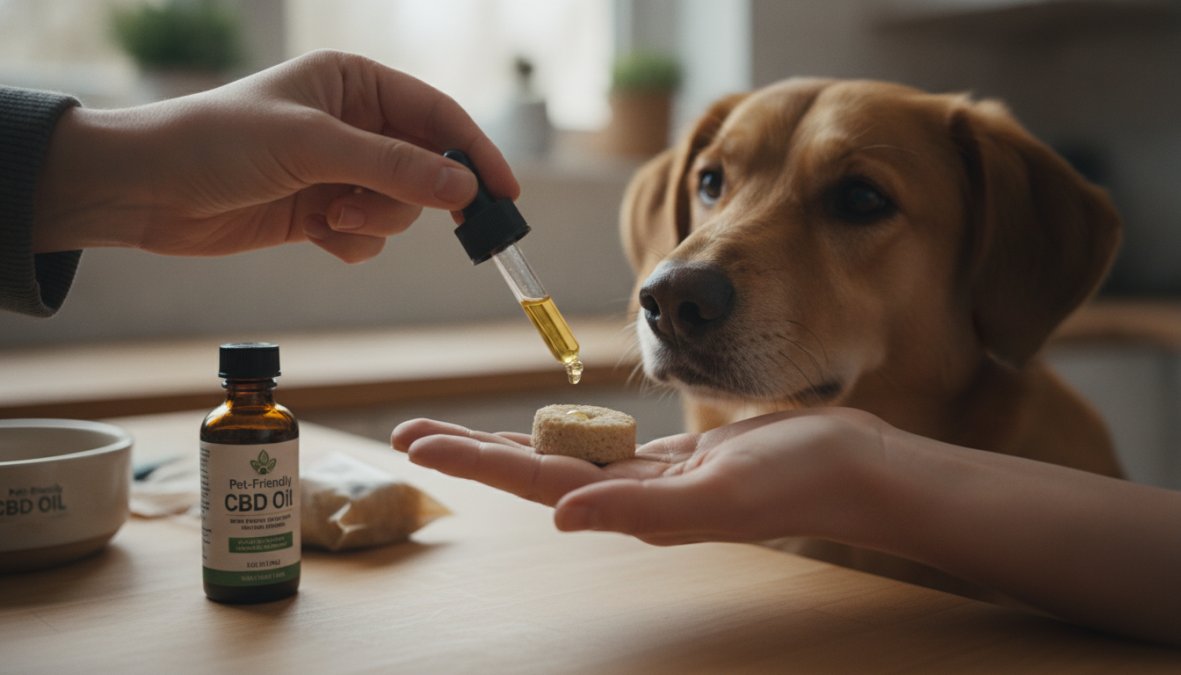
For dogs with acute anxiety triggers like fireworks, the sublingual route is the best choice because of its faster onset. For chronic anxiety managed daily, mixing into food is more sustainable and produces consistent results over time.
Side Effects of CBD for Dogs and Drug Interaction Warnings
The safety profile of hemp-derived CBD for dogs is generally favorable, but side effects do occur, particularly at higher doses. The most commonly reported effects are drowsiness, dry mouth (evidenced by increased water intake), and mild gastrointestinal upset. These are dose-dependent and typically resolve when the dose is reduced.
The drug interaction risk is the area most guides fail to address adequately. CBD is metabolized by the liver’s cytochrome P450 enzyme system, the same pathway used by many common veterinary medications. This means CBD can alter the blood concentration of drugs processed by this pathway, including:
- Phenobarbital (used for seizures)
- Cyclosporine (immunosuppressant)
- NSAIDs such as carprofen and meloxicam
- Some antiparasitic medications
If your dog takes any prescription medication, a veterinary consultation before starting CBD is not optional. It is necessary. According to Cornell University’s College of Veterinary Medicine research on CBD in dogs, drug interaction monitoring is one of the primary clinical considerations when introducing cannabinoids to medicated dogs.
Breed-Specific Considerations
Breed matters more than most CBD guides acknowledge. Dogs with MDR1 gene mutations, most commonly found in Collies, Australian Shepherds, Shelties, and Border Collies, have reduced ability to clear certain compounds from the brain. While CBD itself is not known to be a P-glycoprotein substrate, the carrier oils and other ingredients in some tinctures may present concerns. Owners of herding breeds should use products with minimal additional ingredients and start at the lowest possible dose.
Brachycephalic breeds (Bulldogs, Pugs, French Bulldogs) may show heightened sensitivity to any compound that affects respiratory rate or muscle tone. Use caution with higher doses in these breeds and monitor closely during the first two weeks.
Transitioning Off Conventional Anxiety Medication
This is the topic almost no CBD brand addresses honestly. If your dog is currently on fluoxetine, clomipramine, or alprazolam for anxiety, do not stop those medications abruptly to start CBD. Abrupt discontinuation of psychiatric medications can trigger rebound anxiety, withdrawal symptoms, and behavioral deterioration.
The appropriate approach is a gradual taper under veterinary supervision, with CBD introduced as a complementary support during the transition period. CBD does not replace veterinary care. What it can do is provide additional support during the taper process and, for some dogs, reduce the final maintenance dose needed. Always work with your veterinarian on any transition plan.
How to Choose a High-Quality CBD Oil for Anxiety Dogs
The CBD market for pets is largely unregulated, which means product quality varies enormously. Choosing a high-quality cbd oil for anxiety dogs comes down to four non-negotiable criteria: sourcing, extraction method, third-party testing, and formulation transparency.
Sourcing: Look for hemp-derived CBD from organically grown, USA-sourced hemp. USDA organic certification or equivalent documentation indicates the plant was grown without synthetic pesticides or herbicides that could concentrate in the final extract.
Extraction: CO2 extraction is the cleanest method available. It does not use chemical solvents and preserves the full cannabinoid and terpene profile without introducing contaminants. Avoid products that do not disclose their extraction method.
Third-party testing: Every reputable product should have a current certificate of analysis (COA) from an independent lab. "Third-party tested" is not a marketing phrase; it is a verifiable claim. If a brand cannot produce a COA on request, do not buy from them.
Formulation transparency: The product label should clearly state the total CBD content in milligrams, the CBD content per serving, and whether the product is full-spectrum, broad-spectrum, or isolate. Vague labels like "hemp extract" without milligram disclosure are a red flag.
CBD Health Collection meets all four criteria: organically grown USA hemp, clean CO2 extraction, GMP- and FDA-registered facility production, and independently verified COA lab testing for every product.
What a Certificate of Analysis Should Show
A certificate of analysis is a lab report from an independent, accredited testing facility. It should confirm:
- Cannabinoid profile: Confirms the actual CBD content matches the label claim. Also shows the presence and concentration of other cannabinoids including THC.
- Contaminant screening: Tests for heavy metals (lead, arsenic, mercury, cadmium), residual solvents, pesticides, and microbial contamination.
- Batch number: The COA should match the batch number on the product you purchased. Generic COAs that apply to all products are not meaningful.
- Testing date: COAs older than 12 months should be treated with skepticism for a product currently on shelves.
As noted by U.S. Food and Drug Administration’s guidance on hemp-derived CBD products, the absence of standardized labeling requirements makes independent COA verification the consumer’s primary quality assurance tool.
What the Research and FDA Regulation Say
The clinical efficacy of CBD for canine anxiety is an area of active research, not settled science. The honest position is that current evidence is promising but limited, and understanding exactly what has and has not been studied helps you set realistic expectations and make a more informed decision.
What the Veterinary Research Actually Shows
The strongest published evidence for CBD in dogs comes from pain and seizure research, not anxiety specifically. A landmark study from Colorado State University’s College of Veterinary Medicine found that CBD oil significantly reduced seizure frequency in dogs with epilepsy compared to placebo. A separate Colorado State trial examining osteoarthritis found that dogs receiving CBD showed measurable reductions in pain scores and increased mobility, with no significant adverse effects at the doses used. These studies matter for anxiety because they establish two things: CBD is pharmacologically active in dogs at reasonable doses, and it is tolerated without serious adverse events in controlled veterinary settings.
Anxiety-specific canine research is thinner but growing. The AKC Canine Health Foundation has funded research into CBD for canine anxiety and epilepsy, and preliminary findings from veterinary practitioners suggest that dogs with noise aversion and separation anxiety show behavioral improvements with consistent CBD supplementation. The challenge is that anxiety is harder to measure objectively than seizure frequency or pain scores, which is why the anxiety evidence base lags behind the pain and seizure literature.
The mechanistic rationale is well-established even where clinical trial data is sparse. CBD’s anxiolytic effects operate through at least two documented pathways relevant to dogs:
-
Serotonin receptor modulation (5-HT1A agonism): CBD acts as a partial agonist at the 5-HT1A serotonin receptor, the same receptor targeted by buspirone, a pharmaceutical anxiolytic used in both human and veterinary medicine. This is not a speculative mechanism, it is one of the more replicated findings in CBD pharmacology research, documented in multiple preclinical studies indexed by the National Institutes of Health.
-
TRPV1 receptor desensitization: CBD desensitizes the TRPV1 receptor, which is involved in pain signaling and stress response. Chronic activation of TRPV1 is associated with heightened anxiety states. By reducing TRPV1 sensitivity, CBD may lower the baseline reactivity that makes anxious dogs overrespond to ordinary stimuli.
-
Endocannabinoid tone enhancement: CBD inhibits the enzyme FAAH (fatty acid amide hydrolase), which breaks down anandamide, the endogenous cannabinoid sometimes called the "bliss molecule." By slowing anandamide degradation, CBD effectively raises the baseline level of this naturally calming compound in the brain.
These mechanisms do not guarantee clinical outcomes, but they explain why CBD is a pharmacologically rational choice for anxiety rather than a purely anecdotal one.
When evaluating any CBD study cited by a brand, check whether the research was conducted in dogs or extrapolated from rodent or human trials. Canine pharmacokinetics differ meaningfully from human pharmacokinetics, CBD is metabolized faster in dogs, which is part of why dosing intervals and mg-per-kg calculations differ between species.
The FDA’s Current Position and What It Means for You
The FDA has not approved any CBD product for use in animals. This has two practical consequences that every pet owner should understand before purchasing.
First, no CBD pet product can legally make disease treatment claims. A product label or brand website that states CBD "treats" anxiety, "cures" separation anxiety, or "eliminates" fear responses is making an illegal drug claim under current FDA guidelines. Reputable brands use language like "supports calm behavior" or "promotes relaxation", qualified wellness language rather than treatment claims. If a brand’s marketing reads like a pharmaceutical advertisement, that is a red flag about how they interpret regulatory boundaries.
Second, the absence of FDA approval means there is no standardized dosing guidance from a regulatory authority. The weight-based dosing guidelines used in this article and across the industry are derived from veterinary practitioner experience and the doses used in published research trials, not from an FDA-approved prescribing framework. This is why starting low, titrating slowly, and involving your veterinarian is not just cautious advice; it is the only responsible approach given the current regulatory environment.
The FDA has taken enforcement action against companies making unsubstantiated health claims and selling products with inaccurate potency labels. Third-party certificate of analysis verification exists precisely because federal labeling standards for CBD products are not yet enforced uniformly. According to publicly available FDA warning letters, some CBD products have been found to contain significantly less CBD than labeled, or, in some cases, detectable THC levels inconsistent with their "THC-free" claims. This is why COA verification is not optional.
The Long-Term vs. Acute Use Research Gap
One area where the research is almost entirely silent is the comparison between long-term daily CBD supplementation and acute situational dosing in dogs. Most published veterinary trials run for four to twelve weeks with daily dosing, they are not designed to evaluate single-dose effectiveness for an acute stressor like a thunderstorm or fireworks event.
What practitioners generally observe in clinical settings is that acute dosing requires a higher single dose and faster-onset delivery method (sublingual rather than food-mixed) to produce a meaningful effect within the 30-60 minute window before a stressor. Long-term daily dosing at lower amounts appears to reduce baseline anxiety reactivity over weeks, potentially lowering the intensity of acute anxiety episodes even without a situational top-up dose.
This distinction has practical implications: if you are using CBD only for the Fourth of July once a year, you are operating almost entirely outside the evidence base of existing trials. If you are using it daily for a dog with generalized anxiety, you are closer to the conditions studied. Neither use case is wrong, but calibrating your expectations to what the research actually supports is important.
The science supports CBD as a pharmacologically rational, generally safe supplement for canine anxiety with a plausible mechanism and a growing evidence base. It does not yet support CBD as a clinically proven treatment equivalent to veterinary-prescribed pharmaceuticals. Use it as a serious wellness tool with realistic expectations, not as a pharmaceutical substitute for dogs with severe anxiety disorders.
According to National Institutes of Health research on cannabidiol pharmacology, the pharmacological basis for CBD’s anxiolytic effects is supported by preclinical evidence, with serotonin receptor modulation identified as a key mechanism. The translation to clinical veterinary practice is still developing, but the foundational science is not speculative. And according to Cornell University’s College of Veterinary Medicine research on CBD in dogs, drug interaction monitoring and dose transparency remain the primary clinical considerations when introducing cannabinoids to dogs already on prescription medications.
Frequently Asked Questions
Is CBD oil safe for dogs with anxiety?
CBD oil derived from hemp is generally considered safe for dogs when sourced from a reputable, third-party tested brand and given at an appropriate therapeutic dose. It is non-psychoactive, meaning it contains no tetrahydrocannabinol (THC) at meaningful levels. However, you should always consult your veterinarian before starting CBD, especially if your dog takes other medications, as interactions are possible. Look for products with a certificate of analysis confirming purity and potency.
How long does it take for CBD oil to work for dog anxiety?
Most dog owners report noticing a calming effect within 30 to 60 minutes when using a tincture administered sublingually or mixed into food. Bioavailability plays a key role, oil-based tinctures tend to absorb faster than calming chews or soft gels. For chronic or situational anxiety, consistent daily use over one to two weeks may be needed before the full benefit is apparent. Acute stress triggers like fireworks may benefit from a dose given 30-45 minutes beforehand.
What is the recommended CBD dosage for dogs?
A commonly suggested starting CBD dosage for dogs is 1-2 mg of cannabidiol per 10 pounds of body weight, given once or twice daily. For example, a 30-pound dog might start at 3-6 mg per dose. Always start at the low end and increase gradually while monitoring your dog's response. Dosing guides vary by product concentration, so check the label carefully. A veterinary consultation is strongly recommended to determine the right therapeutic dose for your dog's specific condition and size.
What is the difference between CBD oil and CBD treats for dogs?
CBD oil tinctures offer more precise dosing control and faster absorption, making them preferable for managing acute anxiety-related behaviors like pacing or destructive behavior. CBD treats and calming chews are more convenient and palatable for picky dogs but typically have lower bioavailability because they pass through the digestive system first. For consistent pet wellness support, tinctures are often preferred by veterinarians. Treats work well as a complement or for dogs that resist liquid administration.
Should I consult my vet before giving my dog CBD oil?
Yes, veterinary consultation is strongly recommended before starting CBD oil for anxiety dogs, particularly if your pet is already on prescription medications such as anti-seizure drugs, sedatives, or NSAIDs. CBD is metabolized by the same liver enzymes as many common drugs, which can affect how those medications work. A vet can also help you evaluate whether CBD is appropriate given your dog's breed, weight, age, and health history, and guide you on transitioning off conventional anxiety medication safely if needed.
This article was written using GrandRanker