
Table of Contents
- Recognizing Dog Storm Phobia Symptoms
- How CBD Works for Storm Anxiety in Dogs
- Choosing the Right CBD Product for Your Dog
- CBD Dosage for Dog Anxiety: Finding the Right Amount
- How Long Does CBD Take to Work for Dogs?
- Safety, Side Effects, and Medication Interactions
- Combine CBD with Training and Environmental Calming
- Final Thoughts on CBD for Dog Storm Anxiety
- Frequently Asked Questions
Last Updated: September 6, 2026
Recognizing Dog Storm Phobia Symptoms
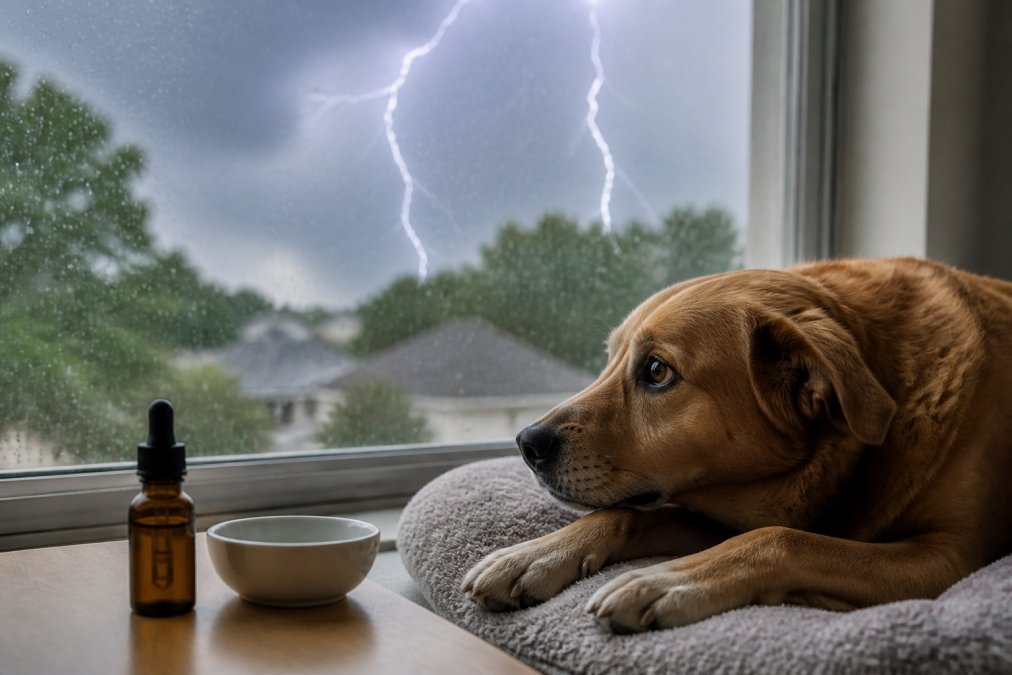
Storm anxiety is a genuine, often distressing condition for many dogs, manifesting in behaviors that range from subtle to severe. Signs of dog storm phobia include panting, pacing, trembling, drooling, attempts to hide or escape, and destructive behaviors like chewing or scratching at doors.
Observe when these changes occur. If your dog becomes restless and clingy only when the barometric pressure drops or thunder sounds, it indicates a situational phobia rather than general anxiety. This shapes your management strategy, from environmental adjustments to targeted calming supplements.

How CBD Works for Storm Anxiety in Dogs
Cannabidiol (CBD) is a phytocannabinoid derived from hemp that interacts with your dog’s endocannabinoid system, which regulates mood, stress response, and nervous system function. When a storm triggers a stress response, CBD is believed to support this system in dampening overactivity, potentially reducing the intensity of panic.
CBD’s anxiolytic properties are why pet owners turn to it for storm relief. It promotes calm without the psychoactive “high” of THC, shifting your dog from frantic fear to manageable relaxation. CBD is not a traditional sedative; it regulates the nervous system, resulting in a calmer demeanor during stressful events.
Choosing the Right CBD Product for Your Dog
Selecting the best CBD oil for dog anxiety requires attention to formulation and sourcing. You will encounter three types: full-spectrum, broad-spectrum, and isolate. Full-spectrum contains cannabinoids, terpenes, and trace THC, which some believe creates an “entourage effect.” For pets, a safer choice is often a THC-free broad-spectrum product or an isolate, providing calming benefits without THC-related risks.
Look for products made from organically grown, USA-sourced hemp extracted with a clean CO2 process, ensuring they are free from solvents and pesticides. Verify purity and potency through third-party lab testing; a reputable brand provides a certificate of analysis (COA) confirming CBD content and the absence of contaminants like heavy metals.
CBD Dosage for Dog Anxiety: Finding the Right Amount
Finding the correct CBD dosage for dog anxiety is not one-size-fits-all, but it doesn’t have to be guesswork. The most reliable method is a structured ‘start low, go slow’ titration protocol based on your dog’s body weight, widely recommended by veterinary professionals to identify the minimum effective dose while minimizing risks.
Step-by-Step Titration Protocol
Step 1: Calculate the Starting Dose
Use your dog’s weight in pounds to determine the initial dose. A common clinical starting point is 0.1 mg of CBD per pound of body weight (veterinarypracticenews.com). This translates to roughly 0.2 mg per kilogram. Here is a quick reference table for common weight ranges:
| Dog Weight (lbs) | Starting Dose (mg) | Typical Effective Range (mg) |
|---|---|---|
| 10 – 20 lbs | 1 – 2 mg | 2 – 5 mg |
| 21 – 40 lbs | 2 – 4 mg | 5 – 10 mg |
| 41 – 60 lbs | 4 – 6 mg | 10 – 15 mg |
| 61 – 80 lbs | 6 – 8 mg | 15 – 20 mg |
| 81+ lbs | 8+ mg | 20 – 30 mg |
Step 2: Administer and Observe
Give this starting dose 30 to 60 minutes before the anticipated storm and observe behavior closely for the next hour. Look for reductions in pacing, panting, trembling, and hiding. Note any drowsiness or lethargy, which may indicate the dose is too high.
Step 3: Titrate Upward Slowly
If there is no improvement after 2 to 3 storm events (or 48 to 72 hours if using CBD daily), increase the dose by 25% to 50%. For example, from 4 mg, the next step would be 5 mg to 6 mg. Hold this dose for another 2 to 3 events before increasing again. Most dogs find their optimal dose within 2 to 3 steps.
Step 4: Find the ‘Ceiling’ Dose
The goal is the lowest dose that produces a noticeable calming effect without heavy sedation. If your dog becomes lethargic or unsteady, you have exceeded the therapeutic window; back down to the previous dose that provided relief without side effects.
Keep a simple log with columns for date, dose (in mg), time given, storm intensity, and behavior scores (e.g., 1 = calm, 5 = severe panic) at 30 and 60 minutes post-administration. This data is invaluable for fine-tuning the protocol and discussing it with your veterinarian.
Potency Matters: Read the Label
The ‘mg’ on the label refers to the total CBD in the entire bottle, not per dropper. For example, a 30 mL bottle with 300 mg of CBD provides 10 mg per full 1 mL dropper. If your dog needs 5 mg, administer half a dropper. Always calculate the per-milliliter concentration before drawing up a dose. alternatives to sedation.
When to Give the Dose
Timing is critical. Because storms are often preceded by a drop in barometric pressure, your dog may become anxious 20 to 30 minutes before you hear thunder. Administer CBD as soon as you notice these signs, or proactively when the forecast calls for storms. For oral oils given into the cheek pouch, effects begin within 15 to 30 minutes. For chews or treats, which pass through the digestive system, allow 45 to 90 minutes.
How Long Does CBD Take to Work for Dogs?
The onset of action for CBD varies by delivery method and the individual dog’s metabolism. Administered as a sublingual oil (under the tongue), CBD is absorbed quickly, with effects typically seen within 15 to 30 minutes. This route offers the best bioavailability.
If you mix the oil into food, digestion slows absorption, and it may take 45 to 90 minutes to see results. Administer the oil directly or on a small treat shortly before a storm is expected. Watch the forecast and give CBD about an hour before the storm’s arrival to establish a calm baseline. The calming effect typically lasts for several hours.
Safety, Side Effects, and Medication Interactions
CBD is generally well-tolerated in dogs, but like any supplement, it has potential side effects, typically mild and temporary. The most common include slight drowsiness, dry mouth, or a temporary drop in blood pressure, manifesting as mild lethargy or unsteadiness. These signs usually subside as the dog adjusts, or they may indicate the dosage is too high and should be reduced.
Recognizing an Adverse Reaction or Overdose
While a true CBD overdose is extremely rare and not life-threatening, recognize the signs to respond appropriately. Symptoms of excessive intake include:
- Severe lethargy or unresponsiveness (your dog will not rouse easily)
- Loss of coordination or stumbling (ataxia)
- Vomiting or diarrhea
- Excessive drooling
- Incontinence (loss of bladder control)
If you observe any of these signs, stop administering CBD immediately and contact your veterinarian or the ASPCA Animal Poison Control Center at (888) 426-4435. Have the product label and estimated amount given ready. In most cases, supportive care and monitoring are all that is needed, and symptoms resolve within a few hours.
Never attempt to induce vomiting in your dog without explicit veterinary instruction. Always store CBD products securely out of your pet’s reach, as the flavored oils and chews can be appealing to dogs.
CBD and Prescription Anxiety Medications: What You Need to Know
The most critical safety consideration is the interaction between CBD and prescription medications. CBD inhibits the cytochrome P450 enzyme system in the liver, which metabolizes a wide range of drugs (peer-reviewed research). When slowed, medications can build up to higher-than-intended levels, potentially amplifying effects or causing toxicity.
This is particularly relevant for two medications commonly prescribed for canine storm anxiety:
- Trazodone: An antidepressant often used off-label for situational anxiety in dogs. Because trazodone is metabolized by the CYP3A4 enzyme (part of the P450 system), concurrent CBD use can increase trazodone levels by 30% to 60% in some cases (PubMed). This can lead to excessive sedation, dizziness, or gastrointestinal upset.
- Gabapentin: An anticonvulsant and nerve pain medication also used for anxiety. Gabapentin is primarily excreted unchanged by the kidneys, so the interaction risk with CBD is considered lower than with trazodone. However, both drugs cause sedation, so the additive effect can make your dog excessively sleepy.
Other medications that warrant caution include benzodiazepines (like alprazolam), SSRIs (like fluoxetine), and NSAIDs (like carprofen).
Safe Co-Administration Protocol
If your dog is on any of these medications, do not stop or adjust the prescription without veterinary guidance. Follow this safe protocol:
- Consult your veterinarian before starting CBD. Bring the CBD product label and your dog’s current medication list.
- Request a baseline blood panel to assess liver enzyme levels, especially if your dog is on long-term medication.
- Start with the lowest possible CBD dose (the low end of the titration table above) and monitor for excessive drowsiness.
- Consider spacing doses, administer CBD and the prescription medication at least 2 hours apart to minimize the peak interaction.
- Watch for signs of over-sedation such as difficulty walking, excessive drooling, or unresponsiveness. If these occur, contact your vet immediately.
A common pattern among veterinarians is to reduce the prescription medication dose by 10% to 25% when CBD is added, but this must only be done under direct veterinary supervision. The goal is to find a combination that provides relief without oversedation, and that requires professional oversight.
Combine CBD with Training and Environmental Calming
While CBD can be a powerful tool for managing acute storm anxiety, it works best as part of a comprehensive approach that includes behavioral modification and environmental management. Relying on a supplement alone often yields suboptimal results. Combine CBD with proven training techniques like desensitization and counter-conditioning, which gradually change your dog’s emotional response to storm sounds.
In practice, play recorded thunder at a very low volume while engaging your dog in a positive activity, like playing with a favorite toy or giving treats. Slowly increase the volume as your dog remains relaxed. Simultaneously, create a safe, quiet den during a storm, a windowless room, covered crate, or a spot with white noise. Pairing this safe space with CBD can significantly improve your dog’s ability to cope.
Final Thoughts on CBD for Dog Storm Anxiety
Helping your dog through storm anxiety requires patience, observation, and combining multiple strategies. CBD offers a promising, natural option for managing acute fear, but it is most effective when paired with environmental adjustments and a consistent routine. By recognizing symptoms early and starting with a carefully titrated dose of a high-quality, lab-tested product, you can make a significant difference in your dog’s quality of life.
For pet owners seeking a reliable solution, CBD Health Collection offers a pet wellness line. Our CBD oils are derived from organically grown, USA-sourced hemp, extracted with a clean CO2 process, and produced in a GMP- and FDA-registered facility. Every batch is independently third-party lab tested for purity and potency, ensuring you are providing your dog with a pure and consistent product you can trust. Get started with CBD Health Collection and help your dog find calm during the next storm.
Frequently Asked Questions
Is CBD safe for dogs with severe storm anxiety?
CBD is generally safe for dogs when given in appropriate doses, but you should always consult your veterinarian first, especially if your dog has health conditions or takes other medications. Choose a THC-free product from a brand that provides third-party lab test results. Start with a low dose and monitor your dog’s response. Watch for side effects like drowsiness or an upset stomach, and stop if you see any concerning signs.
How much CBD should I give my dog for storm anxiety?
A common starting dose is 0.1 to 0.2 mg of CBD per pound of body weight, given 30 to 60 minutes before a storm. For a 20-pound dog, that is 2 to 4 mg. You can adjust gradually over several days based on your dog’s reaction. Always follow the product’s dosing instructions and consult your vet to determine the right amount for your pet.
How long does CBD take to calm a dog during a storm?
CBD typically takes effect within 30 to 60 minutes when given orally. However, the exact timing varies based on your dog’s size, metabolism, and whether they have eaten recently. Giving CBD on an empty stomach may speed up absorption, but it can also increase the risk of stomach upset. For best results, give CBD before the storm starts, so it is already active when anxiety begins.
Can I combine CBD with other calming methods for my dog?
Yes, combining CBD with behavioral and environmental strategies often works better than using CBD alone. Create a safe space, use white noise or calming music to mask thunder sounds, and try desensitization or counter-conditioning. These approaches help your dog learn to cope with storms over time. Always introduce new products gradually and consult your vet for a complete plan.
This guide from CBD Health Collection has walked you through the signs of storm anxiety, the mechanics of how CBD works, and the practical steps for dosing and safety. By taking a proactive and informed approach, you can move from a place of helplessness to one of confident action, providing your loyal companion with the comfort and security they need during stressful weather events.