Table of Contents
- Why CBD Bioavailability Matters for Your Wellness
- What Is the First-Pass Effect in CBD Metabolism
- CBD Absorption Rates by Method: Oral vs. Inhalation vs. Sublingual
- Key Factors Influencing CBD Bioavailability
- How to Increase CBD Bioavailability: Practical Strategies
- Why Bioavailability Matters More Than You Think
- Conclusion: Making Informed CBD Choices
Last Updated: June 29, 2026
Why CBD Bioavailability Matters for Your Wellness
Most people buy CBD based on milligram count alone, assuming a 1000mg bottle is twice as effective as a 500mg bottle. The reality is far more complex. Your body’s ability to absorb and use CBD, what scientists call bioavailability, determines whether you’re getting a therapeutic dose or wasting money. Oral CBD products deliver only 6-15% bioavailability, meaning 85-94% of what you consume never reaches your bloodstream. The difference between a poorly formulated product and an optimized one can be the gap between feeling nothing and experiencing meaningful relief.
The single biggest mistake CBD users make: they assume higher milligram counts automatically mean better results. A 500mg product with superior bioavailability often outperforms a 1500mg product with poor absorption. Always prioritize formulation quality over raw dosage numbers.
Understanding Cannabidiol and Systemic Circulation
Cannabidiol (CBD) is a non-psychoactive compound from hemp that interacts with your body’s endocannabinoid system, affecting pain perception, stress response, sleep, and immune function. For CBD to produce therapeutic effects, it must reach your bloodstream in sufficient concentrations. This is where bioavailability becomes critical.
CBD is lipophilic, meaning it dissolves in fat but poorly in water. Your digestive system is aqueous, creating a barrier to absorption. Products formulated without addressing this chemical incompatibility will sit in your gut largely unabsorbed. The CBD molecules that do get absorbed must then survive presystemic metabolism, where liver enzymes break down compounds before they reach your bloodstream.
What Is the First-Pass Effect in CBD Metabolism
The first-pass effect is the primary reason oral CBD has such poor bioavailability. When you swallow a CBD capsule or tincture, it travels through your digestive tract and is absorbed into the portal blood system, which carries all nutrients from your gut directly to your liver before they enter general circulation. In the liver, CYP450 enzymes metabolize CBD, breaking it down into inactive compounds. By the time CBD reaches your bloodstream, much of the original dose has been eliminated.
Sublingual and inhalation methods perform better because they bypass first-pass metabolism. Sublingual products absorb directly through oral mucous membranes into the bloodstream. Inhalation delivers CBD directly into the lungs, where it crosses into circulation without liver processing. The difference in bioavailability between these methods is dramatic: 6% for oral versus 56% for inhalation.
How Presystemic Metabolism Reduces Active Ingredients
Your liver’s CYP450 enzymes eliminate approximately 85-94% of an oral CBD dose through hepatic metabolism. This explains why a 1000mg CBD capsule produces minimal effects while a 100mg sublingual dose creates noticeable results.
The rate of metabolism varies significantly between individuals based on genetics, liver function, medications, and diet. Some people metabolize CBD rapidly, while others metabolize slowly and accumulate CBD over time. This individual variability explains why standard dosing recommendations often fail.
If you’re taking medications metabolized by CYP450 enzymes, including statins, blood thinners, and antidepressants, CBD can interact by competing for enzyme availability. This may increase medication levels in your bloodstream. Always discuss CBD use with your healthcare provider before starting.
CYP450 Enzymes and Individual Metabolic Variation
The CYP450 enzyme family includes over 50 different enzymes, with CYP3A4 being the primary one responsible for CBD metabolism. Genetic variations create dramatic differences in how quickly people process CBD. Some individuals are "fast metabolizers," breaking down CBD within hours. Others are "slow metabolizers," retaining CBD for days. This explains why one person feels significant effects from 20mg while another requires 100mg.
Age, liver health, and concurrent medications further modify your metabolic rate. Older adults typically metabolize CBD more slowly. People with liver disease may experience dangerously high CBD accumulation. Understanding your individual metabolic profile would require genetic testing, which most people never pursue. This is why formulation quality becomes your practical lever: choosing products with superior bioavailability ensures you’re getting a meaningful dose regardless of your metabolic rate.
CBD Absorption Rates by Method: Oral vs. Inhalation vs. Sublingual
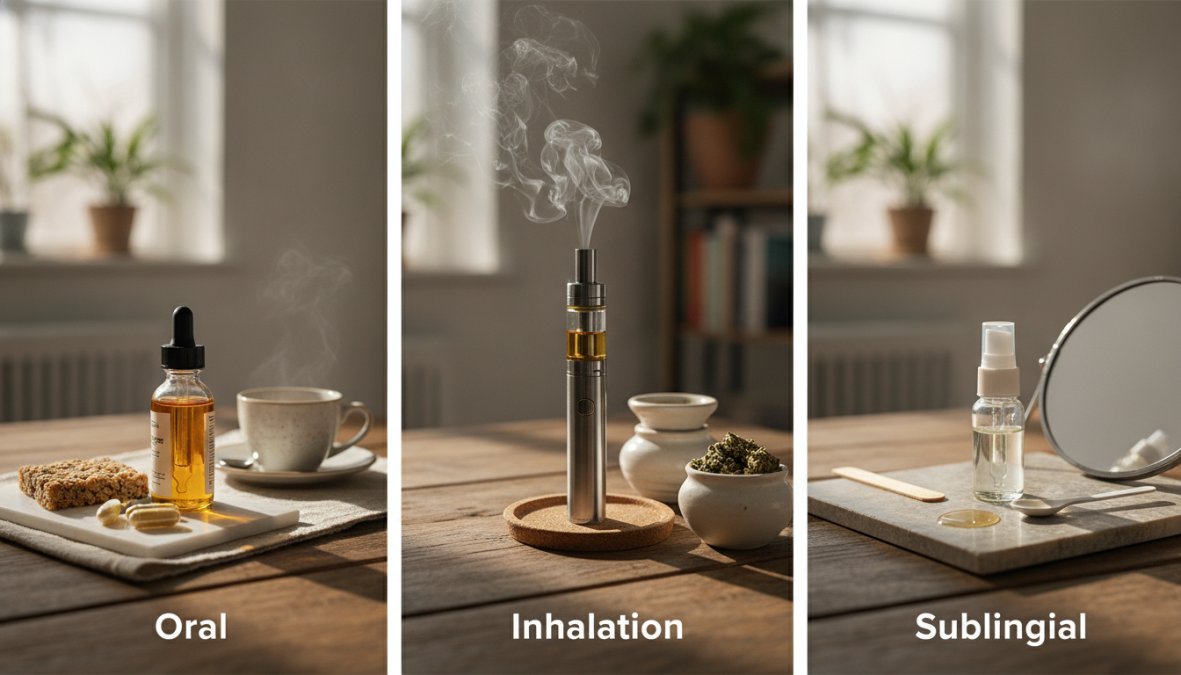
The delivery method you choose determines how much CBD actually enters your system. Oral delivery offers convenience but suffers from first-pass metabolism, delivering only 6-15% bioavailability. Sublingual administration achieves 12-35% bioavailability by allowing absorption through oral mucous membranes. Inhalation via vaping delivers the highest bioavailability at 34-56%, but carries considerations around lung health.
| Delivery Method | Bioavailability Range | Onset Time | Duration | Best For |
|---|---|---|---|---|
| Oral (capsules/edibles) | 6-15% | 1-2 hours | 6-8 hours | Convenience, discreet use |
| Sublingual (oil under tongue) | 12-35% | 15-45 minutes | 4-6 hours | Balanced absorption and convenience |
| Inhalation (vaping) | 34-56% | 5-15 minutes | 2-4 hours | Fast-acting relief, lower total dose needed |
| Topical (creams/patches) | 5-10% | 15-30 minutes | 4-6 hours | Localized pain relief, no systemic effects |
Oral Delivery and Digestive System Processing
Swallowing CBD capsules or mixing oil into food sends the compound through your entire digestive system. This route offers maximum convenience but subjects CBD to harsh metabolic challenges. Food in your stomach affects bioavailability significantly; consuming CBD with a high-fat meal can improve absorption by 4-5 times compared to taking it on an empty stomach, because lipophilic CBD dissolves better in dietary fat.
The upside of oral delivery is duration, effects last 6-8 hours compared to 2-4 hours for inhalation. The downside is unpredictability. Digestive health, meal timing, and individual metabolism create wide variation in how much CBD you actually absorb.
Sublingual Administration and Membrane Permeability
The tissue under your tongue is highly permeable, allowing rapid absorption directly into the bloodstream. Holding CBD oil under the tongue for 30-60 seconds allows cannabidiol molecules to cross the oral mucous membrane through passive diffusion. This bypasses your digestive system and most first-pass metabolism, improving bioavailability to 12-35%. Onset is faster than oral delivery, typically 15-45 minutes, and effects last 4-6 hours.
Water-soluble or nano-emulsified CBD formulations perform better sublingually because their smaller particle size increases surface area for membrane contact, improving absorption rates beyond standard oil tinctures.
Inhalation and Peak Plasma Concentration
Vaping CBD delivers the highest bioavailability, 34-56%, because inhaled compounds bypass your digestive system and liver metabolism entirely. Peak plasma concentration occurs within 5-15 minutes, making inhalation the fastest-acting delivery method. For acute pain, anxiety, or insomnia, this rapid onset is valuable.
The trade-off is duration. Inhalation produces effects that peak within 30 minutes then gradually decline over 2-4 hours. Additionally, inhalation isn’t suitable for everyone, including those with respiratory conditions or lung sensitivities.
For most users seeking consistent, all-day relief, sublingual delivery offers the best balance of bioavailability (12-35%), onset time (15-45 minutes), and practical usability. Oral delivery works if you prioritize convenience over maximum absorption. Inhalation is ideal when you need fast-acting effects.
Key Factors Influencing CBD Bioavailability
Beyond delivery method, several factors determine how much CBD your body actually absorbs. These variables interact in complex ways, explaining why one product works wonderfully for your friend but produces minimal effects for you.
High-Fat Meals and Lipophilic Enhancement
CBD is lipophilic and dissolves in fat but not in water. Consuming CBD with a high-fat meal dramatically improves absorption. Research shows that taking CBD with food containing 20-30 grams of fat can increase bioavailability by 4-5 times compared to taking it on an empty stomach. Saturated fats (butter, coconut oil) and medium-chain triglycerides (MCT oil) show the strongest enhancement effect. This is why many premium CBD products use MCT oil as a carrier, it’s a functional choice that improves your body’s ability to absorb cannabidiol.
Chemical Instability and Formulation Quality
CBD is chemically unstable when exposed to heat, light, and oxygen. Poorly stored products or those formulated without stabilization degrade over time, losing potency. Quality formulation means purifying CBD, stabilizing it against degradation, and adding bioavailability enhancers like nano-emulsions or lipid-based delivery systems. Products stored in dark glass bottles with minimal headspace maintain potency far longer than those in clear plastic containers.
Individual Biological Variability and Metabolic Rate
Your unique biology, genetics, age, weight, liver function, gut health, and metabolic rate, creates individual variation in CBD response that’s often larger than variation between products. Genetic variations in CYP450 enzymes determine how quickly you metabolize CBD. Gut microbiome composition affects how efficiently you absorb cannabinoids. Body composition influences CBD distribution; since CBD is lipophilic, people with higher body fat may accumulate and retain CBD differently.
Rather than chasing a specific milligram number, successful CBD use involves starting low, adjusting based on your personal response, and finding your individual optimal dose. This typically takes 2-4 weeks of consistent use because CBD accumulates in your system over time.
How to Increase CBD Bioavailability: Practical Strategies
If you’re already using CBD products but not getting the results you expected, improving bioavailability may be the solution.
Nano-Emulsion and Advanced Delivery Systems
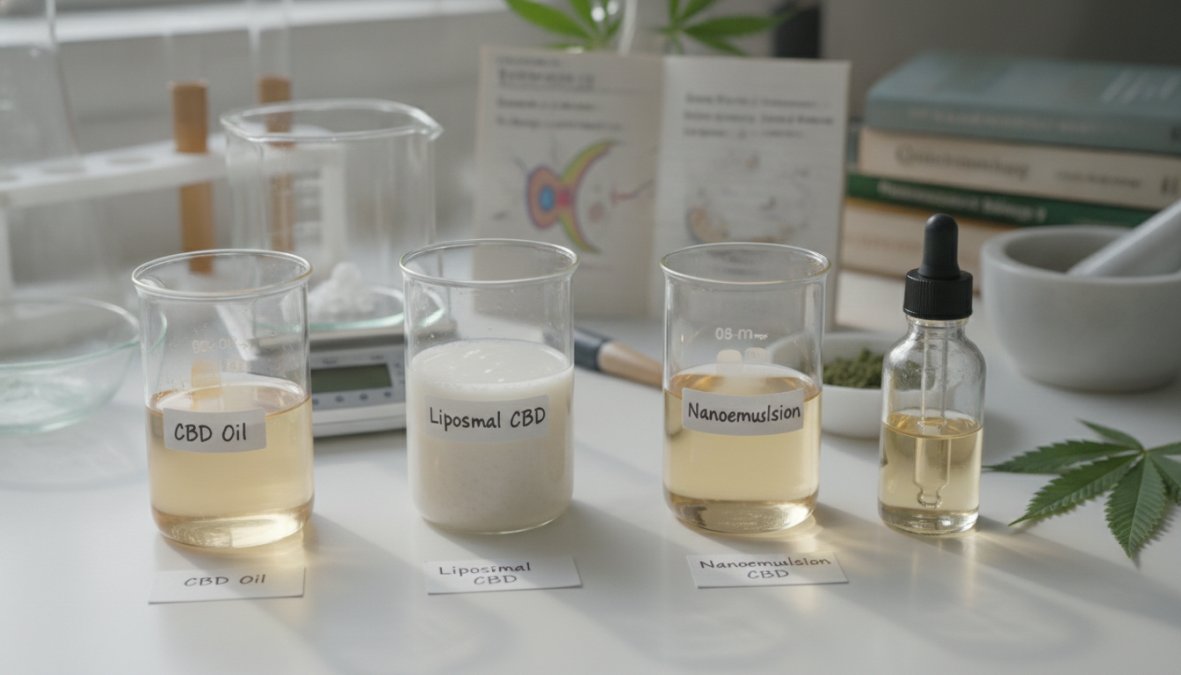
Nano-emulsion technology breaks CBD into particles 100-1000 times smaller than conventional oil droplets, dramatically increasing surface area for absorption. Products using nano-emulsion technology typically achieve 2-3 times higher bioavailability than standard oil tinctures. Water-soluble CBD formulations make cannabidiol compatible with your aqueous digestive system, overcoming the fundamental lipophilic barrier that limits absorption.
Liposomal CBD encapsulates cannabidiol molecules in lipid vesicles that protect them during digestion and improve cellular uptake. These formulations are more expensive than standard oils, but the bioavailability improvement, often 50-100% higher than conventional products, justifies the cost for users seeking maximum therapeutic benefit.
Optimizing Dosage and Timing for Peak Absorption
Finding your optimal dose requires systematic adjustment. Start with the lowest effective dose, typically 5-10mg for most people, and increase by 5mg every 3-5 days until you experience desired effects. Keep detailed notes on timing, dose, effects, and variables like food intake or medications. After 2-4 weeks at your optimal dose, you’ll have a clear sense of what works for your individual biology.
Taking CBD with meals containing fat improves absorption substantially. Morning dosing works well for anxiety or focus support; evening dosing suits sleep or pain relief. Consistency matters more than timing; taking CBD daily at roughly the same time allows it to accumulate in your system and reach therapeutic concentration.
Choosing Bioavailability-Enhanced Formulations
The most practical way to improve bioavailability is selecting products specifically formulated for superior absorption. Look for these indicators:
- Water-soluble or nano-emulsified formulations
- MCT oil or coconut oil carriers
- Products formulated with absorption enhancers
- Third-party lab testing confirming CBD content and purity
- Proper storage in dark glass with minimal air exposure
If you’re using a standard CBD oil tincture and not experiencing results, your first adjustment should be switching to a nano-emulsified or water-soluble formulation, not increasing the dose. A 500mg bioavailability-optimized product often outperforms a 1500mg standard oil.
Why Bioavailability Matters More Than You Think
Most CBD marketing focuses on milligram count, ignoring bioavailability entirely. A 1000mg product with 6% bioavailability delivers only 60mg of active CBD to your system. A 300mg product with 35% bioavailability delivers 105mg, nearly double the therapeutic dose from a fraction of the raw cannabidiol.
The bioavailability gap explains why some people report dramatic results from CBD while others feel nothing. It’s rarely about the product being ineffective; it’s about the formulation and delivery method not matching that individual’s absorption capacity.
Bio-Accessibility vs. Marketing Claims
Bio-accessibility, the amount of CBD your digestive system can actually absorb, differs fundamentally from the total CBD content on the label. A product containing 1000mg of CBD might have bio-accessibility of only 60-150mg depending on formulation and your individual factors. Honest manufacturers discuss bioavailability; deceptive ones hide behind inflated milligram counts.
When evaluating CBD products, ask: does the company discuss bioavailability and formulation? Do they provide third-party lab testing confirming not just CBD content but also purity and stability? Companies confident in their bioavailability are transparent about it.
Bioavailability of Minor Cannabinoids and Full Spectrum Efficacy
Hemp extract contains 100+ compounds including other cannabinoids, terpenes, and flavonoids. These minor cannabinoids contribute to overall therapeutic effects through the "entourage effect," where multiple compounds work synergistically. However, minor cannabinoids have different bioavailability profiles than CBD.
Full-spectrum products may produce stronger effects than CBD isolate at equivalent dosages, but only if the formulation preserves bioavailability for all active ingredients. Premium products optimize bioavailability across the entire spectrum of active compounds, not just CBD.
Conclusion: Making Informed CBD Choices
Bioavailability is the hidden variable that separates effective CBD use from expensive disappointment. Understanding why CBD bioavailability matters, and how to optimize it, transforms your ability to find products that actually work for your wellness needs. Start with a bioavailability-optimized product matched to your preferred delivery method, adjust your dose based on your individual response, and experience CBD that delivers measurable results.
Frequently Asked Questions
What is CBD bioavailability and why does it matter?
CBD bioavailability refers to the percentage of cannabidiol that enters your systemic circulation after consumption. It matters because higher bioavailability means more active ingredients reach your bloodstream, directly influencing the therapeutic effect you experience. Two products with identical CBD amounts can produce vastly different results depending on their bioavailability. Lower bioavailability means you may need higher doses to achieve the same effect, increasing costs and potential side effects.
What is the first-pass effect in CBD and how does it reduce efficacy?
The first-pass effect occurs when CBD is absorbed through the digestive system and travels to the liver before reaching systemic circulation. In the liver, CYP450 enzymes metabolize CBD through presystemic metabolism, significantly reducing the amount of active ingredients available. Oral CBD bioavailability is typically only 6-15% due to this process, whereas sublingual and inhalation methods bypass first-pass metabolism, achieving 20-30% and 50-80% bioavailability respectively.
How can I increase the bioavailability of my CBD products?
Several strategies enhance CBD bioavailability: (1) Take CBD with high-fat meals to improve absorption of this lipophilic compound; (2) Choose products using nano-emulsion or lipid-based delivery systems, which improve bio-accessibility; (3) Select sublingual or inhalation methods over oral delivery to avoid first-pass metabolism; (4) Use products from reputable manufacturers ensuring proper formulation and chemical stability; (5) Consider your individual metabolic rate and adjust dosage timing accordingly. Water-based CBD formulations also offer optimized absorption compared to standard oils.
Which CBD delivery method has the highest bioavailability?
Inhalation (vaping) offers the highest bioavailability at 50-80%, with peak plasma concentration reached in minutes. Sublingual administration (under the tongue) follows at 20-30% bioavailability, bypassing first-pass metabolism through oral mucosa absorption. Oral delivery has the lowest bioavailability at 6-15% due to presystemic metabolism in the digestive system and liver. However, the best method depends on your needs: inhalation provides rapid effects, sublingual offers a balance of speed and convenience, and oral provides long-lasting, discrete dosing.
This article was written using GrandRanker