Table of Contents
- The Best CBD for Sleep and Anxiety: Our Top Picks
- 1. CBD Health Collection Broad-Spectrum Sleep Formula, Best Overall
- 2. Lazarus Naturals Full Spectrum CBD Tincture, Best for Fast-Acting Anxiety Relief
- 3. CBDistillery Shhh Distilled CBN + CBD Oil, Best for Sleep Onset
- 4. CBDfx Mixed Berry CBD Gummies, Best Broad-Spectrum Gummy
- 5. Joy Organics Broad Spectrum CBD Oil, Best for Beginners
- 6. Medterra Daily Relief CBD Oil, Best CBD Isolate Option
- 7. Aspen Green Bliss Organic Full Spectrum Gummies, Best Premium Organic Pick
- How We Chose the Best CBD for Sleep and Anxiety
- How CBD Works for Sleep and Anxiety: The Science Behind It
- Full Spectrum vs Broad Spectrum vs Isolate for Sleep
- CBD Dosage for Anxiety and Sleep: Protocols That Actually Work
- How to Choose High Quality CBD: What Labels Don’t Always Tell You
- Safety, Side Effects, and Who Should Be Cautious
- Conclusion
Last Updated: June 7, 2026
Finding the best cbd for sleep and anxiety is harder than it should be. The market is flooded with products that make big promises but deliver little. This guide from CBD Health Collection ranks the top cannabidiol products for 2026 based on sourcing transparency, extraction quality, third-party lab verification, and real-world effectiveness for both anxiety and sleep.
Most guides treat sleep and anxiety as the same problem requiring the same solution. They’re not. Below, we’ll show you exactly how to match the right product and dosage protocol to your specific need.
The Best CBD for Sleep and Anxiety: Our Top Picks
| Product | Type | Starting Price | Best For | THC-Free |
|---|---|---|---|---|
| CBD Health Collection Sleep Formula | Broad-spectrum | Contact for pricing | Best overall sleep + anxiety | Yes |
| Lazarus Naturals Full Spectrum Tincture | Full-spectrum | $40.00 | Fast-acting anxiety relief | No |
| CBDistillery Shhh CBN + CBD Oil | Full-spectrum | $60.00 | Sleep onset difficulty | No |
| CBDfx Mixed Berry Gummies | Broad-spectrum | $54.99 | Daily anxiety management | Yes |
| Joy Organics Broad Spectrum Oil | Broad-spectrum | $44.95 | Beginners | Yes |
| Medterra Daily Relief CBD Oil | Isolate | $34.99 | Drug-tested individuals | Yes |
| Aspen Green Bliss Organic Gummies | Full-spectrum | $69.99 | Premium organic option | No |
1. CBD Health Collection Broad-Spectrum Sleep Formula, Best Overall
CBD Health Collection is the top pick for anyone who wants pharmaceutical-grade quality without the pharmaceutical price tag. Founded by Rick Bauer, a pharmaceutical industry veteran, the company applies a science-based approach most wellness brands can’t replicate.

What separates this product is the combination of water-based CBD formulation and CO2 extraction from organically grown, USA-sourced hemp. Water-based delivery significantly improves bioavailability compared to standard oil tinctures. Every batch is independently third-party lab tested with a publicly available Certificate of Analysis (COA), and production happens in a GMP- and FDA-registered facility. The broad-spectrum profile delivers multiple cannabinoids and terpenes without detectable THC.
Pros: Water-based formula for superior bioavailability, CO2 extraction, COA-verified, organically grown hemp, 30-day satisfaction guarantee, free shipping
Cons: Pricing requires direct inquiry through cbdhealthcollection.com
Anyone who wants a pharmacist-informed, transparency-first CBD product for both nighttime sleep support and daytime stress relief, without THC.
2. Lazarus Naturals Full Spectrum CBD Tincture, Best for Fast-Acting Anxiety Relief
Full-spectrum means the whole plant comes along: cannabidiol, trace THC, terpenes, and minor cannabinoids working together through the entourage effect. For anxiety, this synergy tends to produce faster, more pronounced relief than isolate products.

Starting at $40.00 and available in multiple concentrations, Lazarus Naturals offers solid third-party testing transparency. The natural hemp taste is strong, which some users find off-putting.
Pros: Entourage effect, transparent lab testing, multiple concentrations, vegan and gluten-free
Cons: Contains trace THC, strong hemp flavor
3. CBDistillery Shhh Distilled CBN + CBD Oil, Best for Sleep Onset
The problem most CBD sleep products ignore is sleep latency. CBDistillery’s Shhh formula addresses this directly by combining CBD with CBN (cannabinol), a cannabinoid considered more sedative than CBD alone.
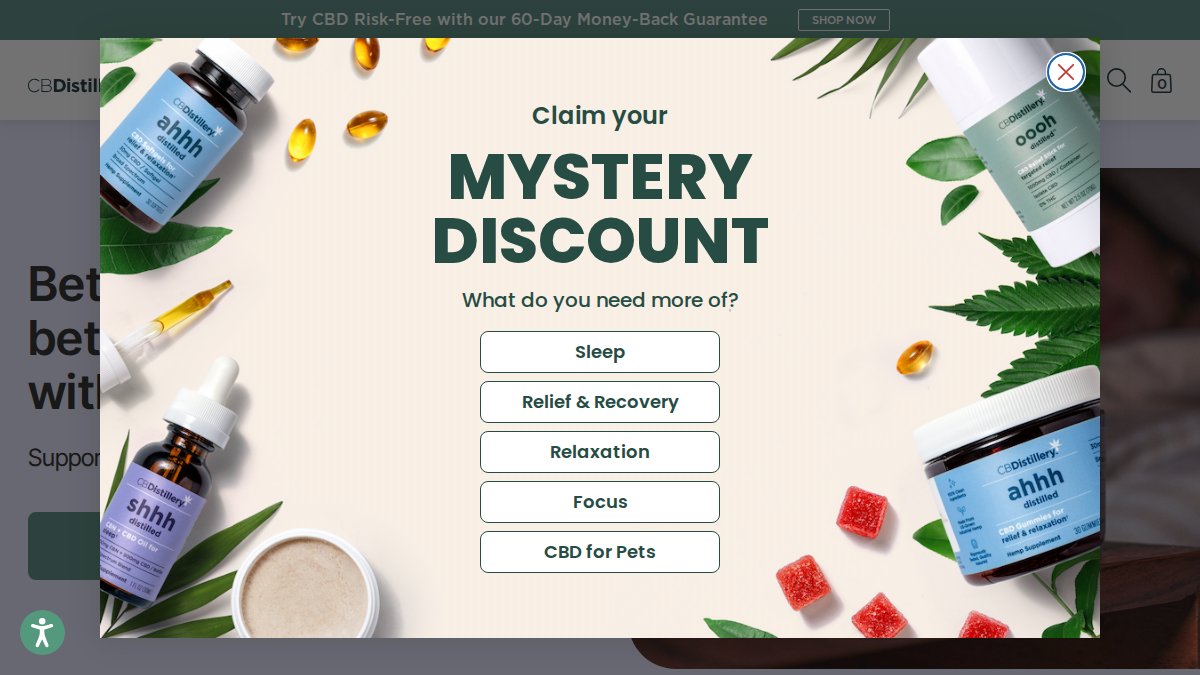
Starting at $60.00, this is a purpose-built nighttime formula. If you lie awake for an hour before sleep arrives, this one deserves serious attention. If your issue is daytime anxiety, look elsewhere.
Pros: CBN specifically targets sleep onset, trusted brand, third-party tested
Cons: Higher cost due to CBN, contains trace THC, not ideal for daytime anxiety
4. CBDfx Mixed Berry CBD Gummies, Best Broad-Spectrum Gummy
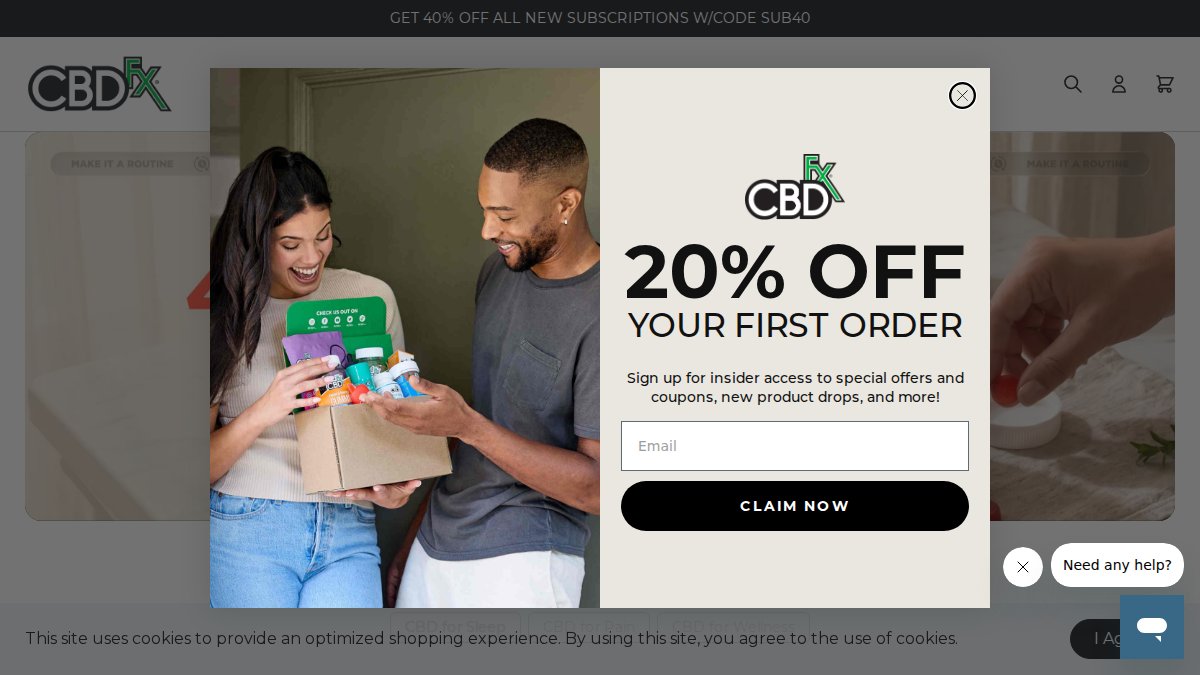
Gummies offer consistent dosing per piece, no measuring, and no hemp taste. CBDfx Mixed Berry Gummies are THC-free, vegan, and cruelty-free, starting at $54.99. The broad-spectrum profile delivers a mild entourage effect, though onset runs 45-90 minutes, slower than tinctures. For daily anxiety management where timing isn’t critical, that’s a reasonable trade.
Pros: Consistent dosing, THC-free, pleasant flavor, long-lasting effects
Cons: Contains added sugars, slower onset than tinctures
5. Joy Organics Broad Spectrum CBD Oil, Best for Beginners
Joy Organics’ Tranquil Mint formula solves the palatability problem that keeps many beginners from sticking with a regimen. Starting at $44.95, it’s reasonably priced for a THC-free broad-spectrum oil with rigorous third-party testing. Without full-spectrum cannabinoids, experienced users chasing stronger relief will likely outgrow it.
Pros: Excellent flavor, consistent quality, THC-free, beginner-friendly
Cons: Lacks full entourage effect, not the strongest option for severe anxiety or insomnia
6. Medterra Daily Relief CBD Oil, Best CBD Isolate Option
CBD isolate is 99%+ pure cannabidiol with everything else removed, including THC. For anyone subject to regular drug testing, this is the only category worth considering. Medterra starts at $34.99, the most affordable option on this list. Without terpenes and minor cannabinoids, anxiolytic and sedative effects are generally milder than full or broad-spectrum products.
Pros: Guaranteed THC-free, affordable, simple ingredient list, US-grown hemp
Cons: No entourage effect, milder overall efficacy for sleep and anxiety
7. Aspen Green Bliss Organic Full Spectrum Gummies, Best Premium Organic Pick
USDA Certified Organic certification is harder to earn than most brands admit. Aspen Green has it, along with a physician-formulated full-spectrum profile free from parabens, sulfates, and artificial dyes. Starting at $69.99, this is the most expensive option on the list.
Pros: USDA organic certified, high potency, physician-formulated, no artificial additives
Cons: Highest price point, contains trace THC
How We Chose the Best CBD for Sleep and Anxiety
Picking the best cbd for sleep and anxiety products came down to four non-negotiable criteria, not affiliate commissions or brand relationships.
Third-Party Lab Testing and COA Verification
A Certificate of Analysis (COA) from an independent lab is the baseline requirement. COA verification confirms cannabinoid potency, the absence of pesticides, heavy metals, and residual solvents, and whether THC levels are within legal limits. Any product without a publicly accessible, current COA was immediately disqualified.
Buying CBD without verifying the COA is a significant risk. Some products contain far less CBD than advertised, and others have tested positive for contaminants. Always download and review the COA before purchasing.
Extraction Method and Sourcing Transparency
CO2 extraction is the gold standard for hemp-derived cannabidiol. It produces a clean extract without residual solvents, preserves the natural terpene profile, and allows precise control over cannabinoid concentration. CO2-extracted products received preference, and organic hemp sourcing from USA-grown plants was weighted heavily, as domestic agriculture is subject to stricter oversight than imported hemp.
How CBD Works for Sleep and Anxiety: The Science Behind It
Cannabidiol is a non-psychoactive cannabinoid derived from hemp that interacts with the body’s endocannabinoid system to promote balance across stress response, sleep regulation, and mood.
CBD and the Endocannabinoid System
The endocannabinoid system (ECS) is a network of receptors, enzymes, and naturally occurring cannabinoids that regulates homeostasis throughout the body. CBD doesn’t bind directly to CB1 or CB2 receptors the way THC does. Instead, it modulates them indirectly and interacts with serotonin receptors associated with anxiety disorders and adenosine receptors involved in sleep-wake cycles.
At moderate doses, many users report reduced anxiety without drowsiness, making CBD viable for daytime use. At higher doses, sedative effects become more pronounced, which is why dosage protocols for anxiety and sleep differ meaningfully. According to research published by the National Institutes of Health, the endocannabinoid system plays a significant role in regulating stress and anxiety responses.
CBD and Sleep Architecture: REM Sleep, Deep Sleep, and Sleep Latency
Sleep cycles through light sleep, deep (slow-wave) sleep, and REM sleep, each serving a different restorative function. Preliminary research suggests CBD influences sleep latency and may affect time spent in different sleep stages, some evidence points to CBD reducing REM sleep at higher doses, relevant for people whose anxiety manifests as vivid nightmares. CBN, added to CBDistillery’s sleep formula, appears to support deeper, longer sleep cycles.
The practical implication: if your problem is falling asleep, prioritize a CBD + CBN combination. If your problem is staying asleep or waking unrefreshed, a full-spectrum product with a broader terpene profile may serve you better.
Full Spectrum vs Broad Spectrum vs Isolate for Sleep
Full-spectrum CBD contains all naturally occurring cannabinoids including trace THC (below 0.3%), plus terpenes and flavonoids. The entourage effect is most pronounced here. Best for: people who want maximum efficacy and have no THC restrictions.
Broad-spectrum CBD retains multiple cannabinoids and terpenes but has THC removed. You get a partial entourage effect without psychoactive risk. Best for: people who want more than isolate but can’t have any THC.
CBD isolate is pure cannabidiol with everything else removed. No entourage effect, but guaranteed THC-free. Best for: drug-tested individuals or those sensitive to other cannabinoids.
For sleep specifically, full-spectrum products tend to outperform isolates. The terpenes myrcene and linalool, present in many full-spectrum hemp extracts, have mild sedative properties that isolate products simply don’t offer.
CBD Dosage for Anxiety and Sleep: Protocols That Actually Work
Dosage for Anxiety: Daytime Use
For daytime anxiety, start at 10-25mg of CBD taken sublingually, hold the oil under the tongue for 60-90 seconds before swallowing to maximize absorption. Titrate upward in 5-10mg increments every 3-5 days until anxiety decreases without affecting alertness. Consistency matters more than the specific dose: daily use produces more stable effects than as-needed dosing.
Take your daytime CBD dose at the same time each morning for at least two weeks before evaluating effectiveness. The endocannabinoid system responds better to consistent cannabinoid input than sporadic use.
Dosage for Sleep: Nighttime Use
Sleep dosing typically runs higher than anxiety dosing and is taken 30-60 minutes before bed. A common starting range is 25-50mg, with some users needing 75mg or more. Because bioavailability varies by format, a 25mg gummy may deliver less active CBD than a 25mg sublingual dose. If using a CBD + CBN product, start at the lower end, grogginess the next morning signals to reduce the dose, not increase it.
Interactions With Common Sleep Medications
CBD is metabolized by the liver’s cytochrome P450 enzyme system, the same pathway used by many common medications. This can increase or decrease the effectiveness of other drugs. Specific medications warranting caution include benzodiazepines, certain antidepressants, and antihistamine-based sleep aids, CBD can slow their metabolism, effectively increasing blood concentration. As documented in FDA guidance on CBD and drug interactions, patients taking prescription medications should consult a healthcare provider before adding CBD to their regimen.
How to Choose High Quality CBD: What Labels Don’t Always Tell You
Label claims in the CBD industry are largely unregulated. "Premium," "pure," and "pharmaceutical grade" meet no defined standard.
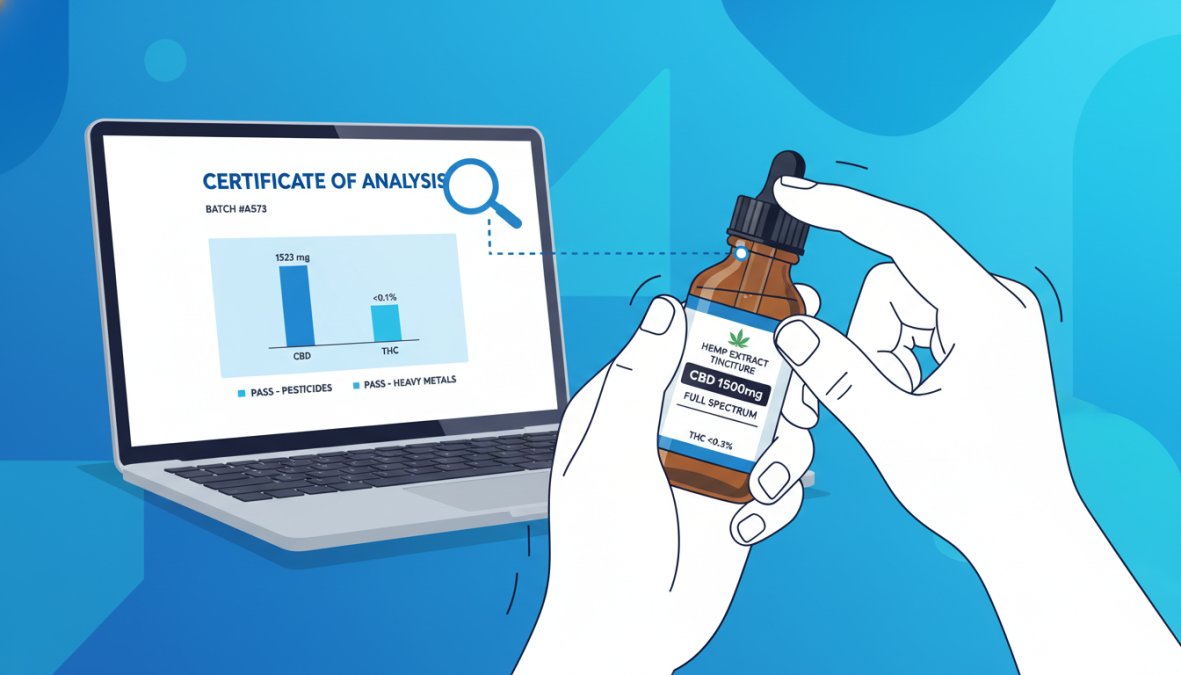
What the label should tell you: specific milligrams per serving (not just total per bottle), extract type (full-spectrum, broad-spectrum, or isolate), hemp source, and extraction method. If any of these are missing or vague, treat it as a red flag. According to U.S. Hemp Authority certification standards, reputable companies make current, batch-specific COAs easily accessible on their websites.
Red Flags to Avoid When Buying CBD
- No COA available, or COA is more than 12 months old
- COA from an in-house lab rather than an accredited third party
- No disclosure of extraction method
- "Hemp seed oil" listed as the primary ingredient (contains no meaningful CBD)
- Vague serving size information (e.g., "1 dropper" without specifying milligrams)
- Health claims that sound like drug claims (FDA regulations prohibit CBD products from claiming to treat, cure, or prevent diseases)
Safety, Side Effects, and Who Should Be Cautious
CBD has a well-established safety profile at wellness doses. Most commonly reported issues are mild and dose-dependent: dry mouth, changes in appetite, and drowsiness at higher doses. Pregnant and breastfeeding individuals should avoid CBD, as safety data is insufficient. People with liver conditions should use it cautiously, as high doses have shown liver enzyme elevation in some clinical contexts.
On drug testing: broad-spectrum and isolate products that are genuinely THC-free carry minimal risk. Full-spectrum products contain trace THC that can accumulate with daily use and potentially trigger a positive test. If drug testing is a concern, stick to verified THC-free products like Medterra’s isolate or CBD Health Collection’s broad-spectrum formula.
CBD is not a sedative in the pharmaceutical sense. For many users, it reduces the anxiety and physiological arousal that prevent natural sleep, setting realistic expectations matters.
Finding a CBD product you can actually trust is the real challenge in this market. CBD Health Collection was built specifically to solve that problem: pharmacist-informed formulations, organically grown USA hemp, CO2 extraction, water-based delivery for optimized bioavailability, and independently verified COA lab testing on every batch. Every purchase comes with free shipping and a 30-day satisfaction guarantee. Visit cbdhealthcollection.com and use the product finder to identify your best CBD option in under a minute.
Frequently Asked Questions
Does CBD actually help with sleep and anxiety?
Research into cannabidiol suggests it may support relaxation and reduce anxiolytic symptoms by interacting with the endocannabinoid system, which regulates mood and sleep cycles. Many users report reduced sleep latency and a calmer mental state. However, clinical evidence is still emerging, and results vary by individual, product type, and dosage. Choosing a third-party lab-tested, high-quality CBD product is essential to seeing consistent results for sleep and anxiety management.
What is the best type of CBD for anxiety and sleep?
Full-spectrum CBD is often considered the most effective for sleep and anxiety because it contains a complete range of cannabinoids, terpenes, and trace THC that work together via the entourage effect. Broad-spectrum CBD is a strong THC-free alternative. CBD isolate works well for those who need to avoid THC entirely but may be less potent. For sleep specifically, products combining CBD with CBN, like the CBDistillery Shhh oil, offer an extra layer of sedative support.
How much CBD should I take for sleep and anxiety?
CBD dosage for anxiety and sleep differs. For daytime anxiety relief, a lower dose of 15-30mg taken sublingually is a common starting point. For sleep, a higher dose of 25-50mg taken 30-60 minutes before bed tends to be more effective. Always start low and increase gradually over one to two weeks. Milligrams per serving vary widely by product, so reading the COA and product label is critical. Consult a pharmacist or physician if you take other medications.
Is it safe to take CBD for sleep every night?
Hemp-derived CBD is generally considered well-tolerated for regular use, with common side effects including mild drowsiness, dry mouth, or changes in appetite. However, nightly use may interact with medications like benzodiazepines or sedative sleep aids, potentially amplifying their effects. It is advisable to consult a healthcare provider before incorporating CBD into a nightly routine, especially if you are on prescription medications or have underlying health conditions.
How long does it take for CBD to work for anxiety?
The onset time for CBD depends on the delivery method. Sublingual tinctures absorbed under the tongue typically take effect within 15-45 minutes, making them one of the fastest options for anxiety relief. Gummies and soft gels pass through the digestive system, so effects may take 45-90 minutes but tend to last longer. Bioavailability also plays a role, water-based CBD formulations may absorb more efficiently than oil-based alternatives, potentially shortening onset time.
How do I know if a CBD product is high quality?
When learning how to choose high quality CBD, look for products with a current Certificate of Analysis (COA) from an independent third-party lab confirming cannabinoid potency and the absence of pesticides, heavy metals, and solvents. Prioritize brands using CO2 extraction from organically grown, USA-sourced hemp. GMP- and FDA-registered manufacturing facilities signal additional quality control. Avoid products with vague labeling, no lab results, or unrealistic health claims.
This article was written using GrandRanker