Table of Contents
- What Is CBD Oil and How It Works in Your Body
- 5 Benefits of CBD Oil for Women Over 40
- CBD for Menopause Symptoms: What the Research Shows
- How to Choose High-Quality CBD Oil
- CBD Oil Side Effects and Drug Interactions
- Dosage Protocols for Women Over 40
- Real Results: Why Women Over 40 Choose CBD Oil
- Conclusion
Last Updated: August 3, 2026
What Is CBD Oil and How It Works in Your Body
Cannabidiol (CBD) is a naturally occurring compound in hemp that interacts with your body’s endocannabinoid system to promote balance and wellness. Unlike THC, CBD is non-psychoactive and won’t produce a "high."
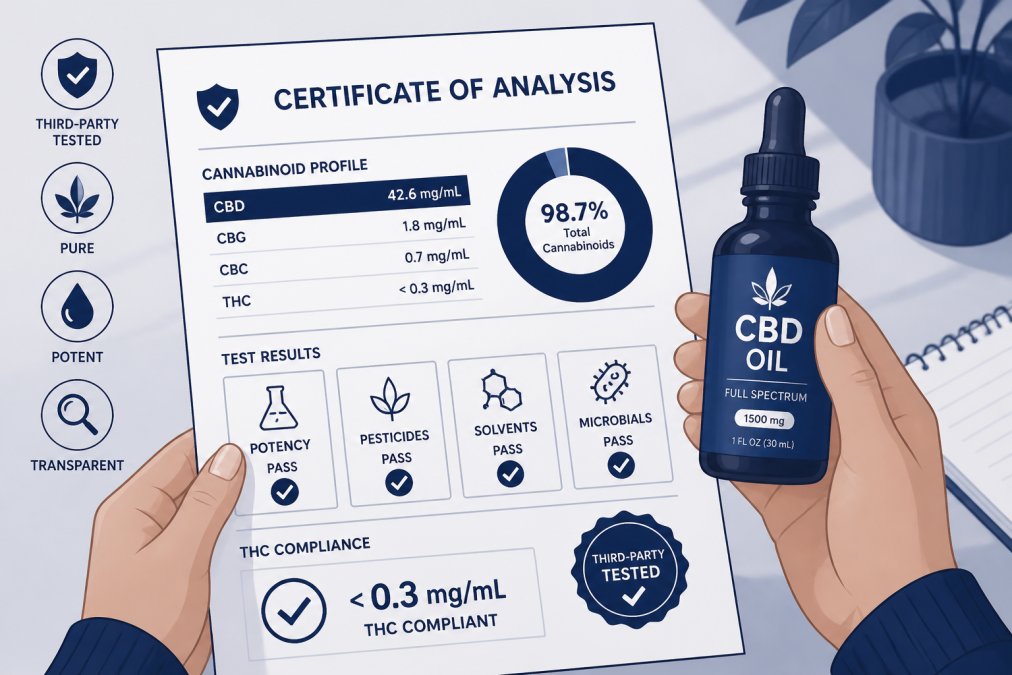
The endocannabinoid system (ECS) is a network of receptors regulating sleep, mood, pain, immune function, and hormonal balance. CBD influences these receptors indirectly, promoting homeostasis, your body’s natural equilibrium. For women navigating midlife hormonal shifts, this regulatory effect addresses multiple symptoms simultaneously.
CBD doesn’t bind directly to ECS receptors like THC does. Instead, it modulates serotonin receptors, vanilloid receptors, and other pathways influencing inflammation, anxiety, and pain perception.
Understanding the Endocannabinoid System
Life stress, aging, hormonal fluctuations, and inflammation deplete your body’s natural cannabinoids. This depletion may contribute to perimenopause and menopause symptoms: sleep disruption, joint pain, mood swings, and anxiety. CBD supplementation restores your body’s ability to regulate these systems.
The ECS has two primary receptor types: CB1 receptors (in the nervous system and brain) and CB2 receptors (in immune cells and peripheral tissues). CBD’s influence on these receptors, combined with its effects on serotonin and other neurotransmitters, explains why women report benefits ranging from better sleep to reduced inflammatory pain.
Full-Spectrum vs. Broad-Spectrum vs. Isolate
Full-spectrum CBD contains all plant compounds, cannabinoids, terpenes, flavonoids, and trace THC (less than 0.3% legally), working together in the "entourage effect," often producing stronger therapeutic results than isolated CBD alone.
Broad-spectrum CBD removes most THC while retaining other beneficial plant compounds, offering a middle ground for those concerned about any THC exposure.
CBD isolate is pure cannabidiol with all other plant compounds removed. It’s the most predictable for dosing with zero THC, but many practitioners find it less effective than full-spectrum options for managing multiple symptoms.
5 Benefits of CBD Oil for Women Over 40
CBD addresses five specific health challenges for this demographic: chronic pain from aging joints, sleep disruption from hormonal changes, stress and anxiety, menopausal symptom relief, and bone health support. Most women report meaningful improvements within 2-4 weeks of consistent use.
:::pro-tip
Start with 5-10mg daily and increase gradually over 1-2 weeks. Most women over 40 find their optimal dose between 15-50mg daily, depending on symptoms and body chemistry.
:::
1. Chronic Pain and Joint Inflammation Relief
Joint pain and muscle stiffness increase after 40 from repetitive movement, previous injuries, or natural cartilage decline. CBD’s anti-inflammatory properties address the root cause rather than just masking pain like NSAIDs. Women report particular relief from arthritis, tennis elbow, lower back pain, and muscle soreness.
CBD reduces inflammatory cytokines and activates vanilloid receptors that regulate pain perception. For localized pain, topical CBD products deliver faster relief than oral oils. CBD Health Collection’s topical freeze gel combines CBD with menthol and arnica, with customers reporting pain relief within 10-15 minutes of application.
2. Better Sleep and Rest During Hormonal Changes
Sleep disruption ranks among the most frustrating midlife symptoms. Night sweats, racing thoughts, and circadian rhythm shifts prevent restorative sleep. CBD addresses multiple barriers: it quiets anxious thoughts, reduces night sweats through temperature regulation effects, and promotes deeper sleep without the grogginess of pharmaceutical sleep aids.
CBD influences sleep through several pathways. It increases serotonin signaling, stabilizing mood and reducing sleep-preventing anxiety. It also affects adenosine receptors, which regulate your sleep-wake cycle. Sleep-specific formulations combine CBD with CBN and melatonin for circadian support.
3. Stress and Anxiety Reduction
Women over 40 manage distinct stressors: career pressures, aging parents, adult children, relationship shifts, and hormonal changes, often simultaneously. This chronic stress elevates cortisol, interfering with sleep, promoting inflammation, and accelerating aging. CBD interrupts this cycle by reducing anxiety at its source: your amygdala and stress response system.
Research demonstrates that CBD modulates serotonin receptor activity, producing anti-anxiety effects comparable to some prescription medications without dependency risk or side effects. Women report feeling calmer within 30-60 minutes of taking CBD oil sublingually, with sustained anxiety reduction over weeks of consistent use.
4. Support for Menopause and Perimenopause Symptoms
Perimenopause, the 5-10 years before menopause, brings hormonal volatility that CBD addresses through multiple mechanisms. Hot flashes, night sweats, mood swings, brain fog, and joint pain stem from fluctuating estrogen and progesterone. CBD doesn’t replace these hormones but modulates your nervous system’s response to hormonal fluctuations and reduces inflammation intensifying menopausal symptoms.
Hot flashes occur when your hypothalamus becomes hypersensitive to small temperature changes. CBD’s effects on temperature regulation and anxiolytic properties reduce flash frequency and intensity. Women report fewer episodes and less severe symptoms within 2-3 weeks of starting CBD.
Brain fog stems from inflammation, hormonal fluctuations affecting neurotransmitter production, and poor sleep. By addressing inflammation and improving sleep, CBD indirectly clears brain fog.
If you’re taking hormone replacement therapy (HRT), discuss CBD use with your healthcare provider. CBD inhibits cytochrome P450 enzymes, which metabolize many medications including some HRT formulations. Dosing adjustments may be necessary.
5. Bone Health and Osteoporosis Prevention
Bone density decline accelerates after menopause due to dropping estrogen. CBD supports bone health through multiple pathways: it reduces inflammatory markers that accelerate bone loss, promotes osteoblast activity (bone-building cells), and may enhance calcium absorption through improved gut health.
While direct human studies on CBD and bone density remain limited, the mechanisms are well-established. CBD’s anti-inflammatory effects reduce cytokines driving bone resorption. Combined with adequate calcium, vitamin D, weight-bearing exercise, and protein, CBD provides additional osteoporosis protection.
CBD for Menopause Symptoms: What the Research Shows
CBD’s effects on thermoregulation, inflammation, sleep architecture, and mood regulation directly address core mechanisms driving menopausal symptoms.
Managing Hot Flashes and Night Sweats
Hot flashes occur when your hypothalamus interprets normal temperature fluctuations as overheating, triggering vasodilation, increased heart rate, and profuse sweating. CBD’s effects on vanilloid receptors (TRPV1) regulate temperature perception, reducing both frequency and intensity.
Night sweats prevent restorative sleep. CBD addresses this through multiple routes: reducing the hot flash itself, improving sleep quality, and reducing anxiety that triggers additional sweating. Women using CBD report that hot flashes become less frequent and intense within 2-4 weeks.
Navigating Perimenopause vs. Post-Menopause
Perimenopause (typically ages 40-55) involves erratic hormone fluctuations creating unpredictable symptoms. CBD’s mood-stabilizing and sleep-supporting effects address this volatility, helping you maintain emotional equilibrium despite hormonal turbulence.
Post-menopause (after 12 consecutive months without menstruation) involves stable, lower hormone levels. Many women reduce their CBD dose post-menopause or shift to formulations emphasizing joint support and bone health over sleep support.
How to Choose High-Quality CBD Oil
Not all CBD products are created equal. The largely unregulated industry means product quality, potency, and purity vary dramatically.
Verify that the product comes from organically grown hemp extracted using clean methods. CO2 extraction is the gold standard, producing pure CBD without solvent residues. The company should be transparent about sourcing, processing, and testing.
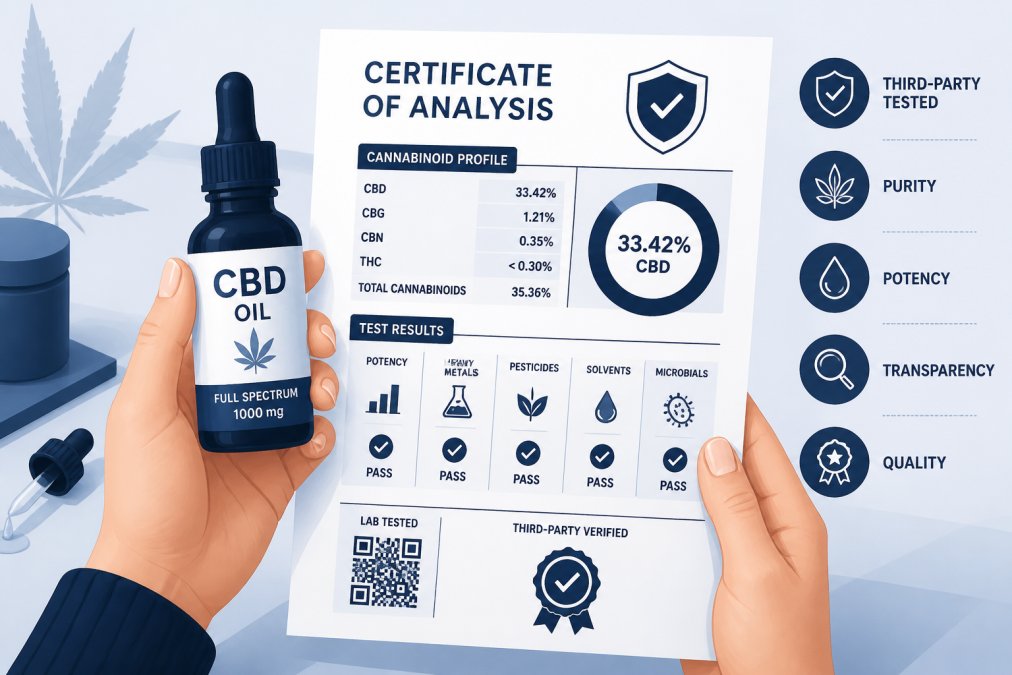
The most critical indicator is third-party lab testing. Reputable companies publish Certificates of Analysis (COAs) verifying CBD potency, confirming THC levels below 0.3%, and testing for contaminants like heavy metals, pesticides, mold, and microbial pathogens.
Reading Third-Party Lab Reports and Certificates of Analysis
A Certificate of Analysis proves the product contains what the label claims. When reviewing a COA, check these elements:
The testing facility should be ISO 17025 accredited, meeting international standards for accuracy and reliability. Verify CBD potency matches the label (within 10% variation is acceptable). THC content should be less than 0.3% (or "non-detect" for broad-spectrum products). The contaminant panel should test for heavy metals, pesticide residues, mold, mycotoxins, microbial pathogens, and residual solvents. Check the testing date, a COA from 18 months ago doesn’t reflect current batch quality.
What to Look for in Product Labels and Sourcing
The label should clearly state CBD amount per serving and container, specify whether the product is full-spectrum, broad-spectrum, or isolate, and list all ingredients. Look for "organically grown" or "certified organic" hemp. The extraction method should be disclosed, CO2 extraction is superior to ethanol or hydrocarbon extraction.
Bioavailability, how much CBD your body absorbs, varies dramatically. Standard CBD oil has moderate bioavailability (6-15%). Water-based or nano-emulsified formulations increase bioavailability to 20-30%, meaning you absorb more active compound per dose.
CBD Health Collection emphasizes water-based CBD formulations for optimized bioavailability. Products are produced in GMP- and FDA-registered facilities, extracted using clean CO2 processes, and independently third-party lab tested.
CBD Oil Side Effects and Drug Interactions
CBD is generally well-tolerated, but it’s not side-effect-free and does interact with certain medications.
Common Side Effects and Safety Profile
Most women experience no side effects. Among those who do, the most common are mild and temporary: dry mouth, drowsiness, appetite changes, and mild gastrointestinal discomfort, typically resolving within days.
Drowsiness occurs because CBD promotes relaxation. If you’re taking CBD during the day and feeling overly sedated, reduce your dose or shift consumption to evening. Dry mouth occurs because CBD affects salivary gland function, staying well-hydrated minimizes this. Some women report appetite suppression, while others notice increased appetite. These effects are dose-dependent and usually resolve with consistent use.
More serious side effects are rare. If you experience chest pain, severe dizziness, or concerning symptoms, discontinue CBD and consult your healthcare provider.
Interactions with Medications and Cytochrome P450
CBD inhibits cytochrome P450 (CYP450) enzymes, which metabolize approximately 60% of all medications. When CBD inhibits these enzymes, it can increase certain drug concentrations in your bloodstream, potentially causing side effects.
Commonly affected medications include blood thinners, heart medications, immunosuppressants, statins, antiarrhythmics, and some psychiatric medications. Discuss CBD use with your doctor or pharmacist before starting. This doesn’t mean you can’t use CBD alongside medications, your doctor may adjust medication doses or monitor you more closely. The interaction is dose-dependent; lower CBD doses produce less enzyme inhibition.
Women taking hormone replacement therapy should be particularly cautious, as some HRT formulations are metabolized by CYP450 enzymes.
Dosage Protocols for Women Over 40
Finding your optimal CBD dose requires understanding how bioavailability, body weight, symptom severity, and product type influence effectiveness.
Starting Low and Titrating Up
Begin with 5-10mg daily, taken consistently at the same time. After 3-5 days, assess your response. If you’re tolerating the dose well and want stronger effects, increase by 5mg. Continue this gradual titration every 3-5 days until you reach your optimal dose.
Most women over 40 find their sweet spot between 15-50mg daily. Some need as little as 10mg for anxiety relief, while others with severe chronic pain require 75-100mg or more. Once you’ve found your effective dose, maintain it consistently. CBD builds up over 2-4 weeks, and daily consistency produces better results than sporadic use.
Bioavailability and Absorption Methods
Sublingual administration (placing CBD oil under your tongue for 60-90 seconds) delivers faster results than swallowing directly, with effects occurring within 15-45 minutes.
Gummies and capsules require digestion, delaying onset to 1-2 hours but producing longer-lasting effects (6-8 hours vs. 4-6 hours for sublingual). Topical CBD works on local cannabinoid receptors in skin and underlying tissues without significant bloodstream entry, making topicals ideal for localized pain. Water-based or nano-emulsified CBD products absorb more efficiently than standard oil-based formulations.
| Delivery Method | Onset Time | Duration | Best For | Bioavailability |
|---|---|---|---|---|
| Sublingual oil | 15-45 min | 4-6 hours | Fast anxiety/pain relief | 6-15% |
| Gummies/capsules | 1-2 hours | 6-8 hours | Convenience, sustained relief | 6-15% |
| Topical cream/gel | 15-30 min | 4-6 hours | Localized joint/muscle pain | Local only |
| Water-based formulation | 15-45 min | 4-6 hours | Maximum absorption per dose | 20-30% |
Real Results: Why Women Over 40 Choose CBD Oil
T. Lynn has used CBD gummies for hot flashes for over two years, describing CBD Health Collection’s products as having "great quality and reasonable prices with the best customer service ever."
Brittany Harris uses multiple products from the CBD Health Collection line. Her family has experienced significant benefits, and her observation about her dog’s cancer recovery is remarkable, with her veterinarian noting he’d "never really seen anything like it."
Kathy Schmelzer’s experience with the topical freeze gel for tennis elbow demonstrates immediate relief many women experience, with pain resolution within 10-15 minutes allowing her to sleep and begin healing.
Conclusion
The 5 benefits of CBD oil for women over 40, chronic pain relief, better sleep, stress reduction, menopause symptom support, and bone health protection, address specific health challenges this demographic faces. These benefits emerge gradually through consistent use, with most women experiencing meaningful improvements within 2-4 weeks.
Choosing high-quality CBD from a company committed to transparency and bioavailability makes the difference between experiencing real benefits and wasting money. Third-party lab testing, organically grown hemp, and clean CO2 extraction are non-negotiable quality markers.
CBD Health Collection brings pharmaceutical-grade standards to CBD products. Founded by a pharmaceutical industry veteran and headquartered in Ohio, the company produces all products in GMP- and FDA-registered facilities using organically grown, USA-sourced hemp. Every product is independently third-party lab tested, backed by a 30-day satisfaction guarantee and free shipping nationwide. If you’re considering CBD for menopause symptoms, chronic pain, or sleep support, start with CBD Health Collection and experience the difference that quality and transparency make.
Frequently Asked Questions
What are the main benefits of CBD oil for women over 40?
CBD oil may help women over 40 manage chronic pain and inflammation, improve sleep quality during hormonal changes, reduce anxiety and stress, support menopause symptoms like hot flashes, and promote bone health. Many women report feeling more relaxed and sleeping better within 1-2 weeks of consistent use, though individual results vary.
How does CBD oil help with menopause symptoms?
CBD interacts with your endocannabinoid system to help regulate body temperature, reduce anxiety, and support sleep. Women experiencing hot flashes, night sweats, and mood swings report that CBD oil helps manage these symptoms. Some find relief from hot flashes within days, while others notice gradual improvement over 2-4 weeks of regular use.
What should I look for in a high-quality CBD oil?
Look for products derived from organically grown, USA-sourced hemp, extracted using clean CO2 methods, and independently third-party tested. Always request a Certificate of Analysis (COA) showing cannabidiol content, THC levels, and testing for contaminants like heavy metals and pesticides. Reputable brands provide these reports transparently on their website or upon request.
Are there side effects or drug interactions I should know about?
CBD is generally well-tolerated, but some women experience mild drowsiness, dry mouth, or appetite changes. The main concern is interaction with medications metabolized by cytochrome P450 enzymes, including blood thinners and certain heart medications. Always discuss CBD use with your doctor before starting, especially if you take prescription medications.
Women over 40 deserve solutions that address their actual health challenges rather than treating them as inevitable parts of aging. CBD offers a science-backed, non-psychoactive option for managing pain, sleep, stress, and hormonal transitions. Get started with [EXTERNAL_LINK: CBD Health Collection’s products | cbdhealthcollection.com] and discover why thousands of women have made CBD part of their wellness routine.
This article was written using GrandRanker