Table of Contents
- CBD Gummies vs Soft Gels for Anxiety: Key Differences at a Glance
- Bioavailability of CBD Gummies vs Soft Gels: How Your Body Absorbs Each
- Onset Time: CBD Gummies vs Soft Gels for Anxiety Relief
- CBD Dosage for Anxiety: Gummies vs Soft Gels Dosing Strategies
- Pros and Cons of CBD Gummies for Anxiety
- Pros and Cons of CBD Soft Gels for Anxiety
- Convenience, Taste, and Portability: Which Format Wins
- Safety Considerations: Interactions with Anxiety Medications
CBD Gummies vs Soft Gels for Anxiety: A Complete Comparison
Last Updated: July 19, 2026
When choosing between CBD gummies and soft gels for anxiety, the decision involves more than preference. The two formats deliver cannabidiol through different mechanisms, affecting onset speed, duration, and dose consistency. This guide covers the physiological differences that matter, practical trade-offs, and dosing strategies for anxiety management.
CBD Gummies vs Soft Gels for Anxiety: Key Differences at a Glance
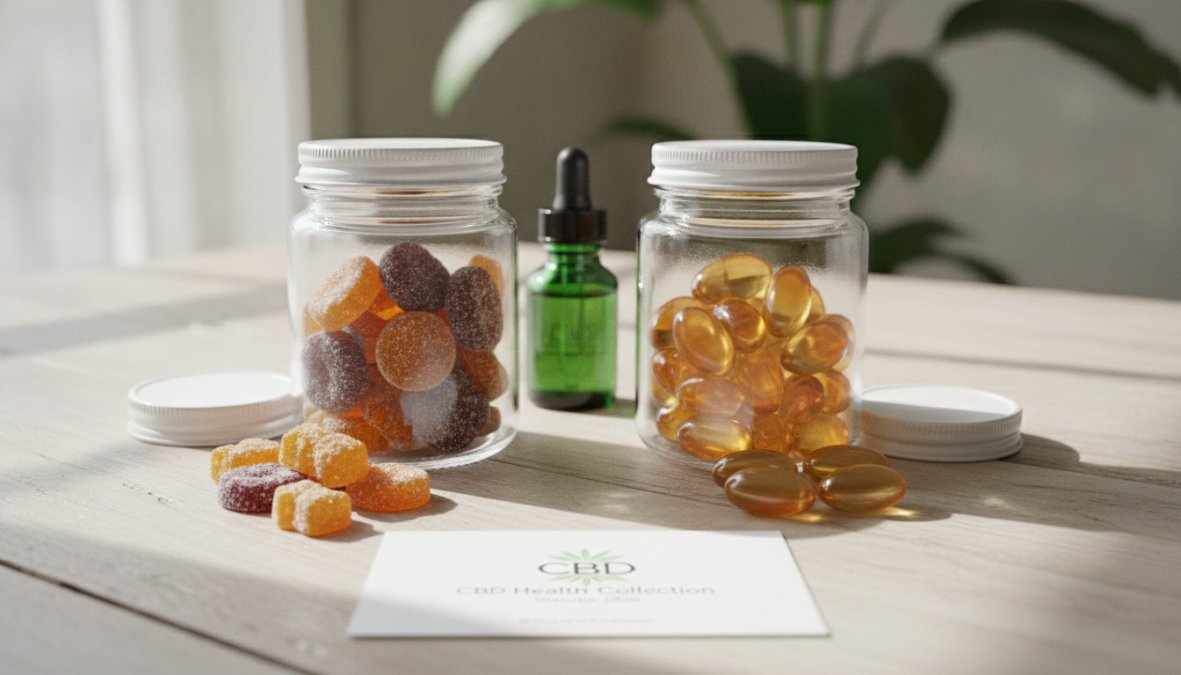
Gummies are solid edibles you chew; soft gels are capsules containing liquid CBD suspended in carrier oil. Gummies require mechanical breakdown in your mouth and chemical digestion in your stomach before absorption. Soft gels dissolve quickly, releasing pre-suspended CBD already mixed with carrier oil like MCT oil, which enhances bioavailability.
The choice hinges on three factors: how fast you need relief, how consistently you want dosing, and portability needs. Someone with predictable anxiety might prefer gummies for convenience and taste. Someone experiencing acute episodes might prioritize soft gels for faster onset.
Comparison Table: Gummies vs Soft Gels
| Factor | CBD Gummies | CBD Soft Gels | Winner for Anxiety |
|---|---|---|---|
| Onset Time | 30-90 minutes | 15-45 minutes | Soft Gels |
| Duration | 4-6 hours | 4-8 hours | Soft Gels |
| Bioavailability | 6-15% (first-pass metabolism) | 10-20% (carrier oil enhancement) | Soft Gels |
| Dosage Consistency | High (pre-measured) | High (pre-measured) | Tie |
| Portability | Excellent | Good | Gummies |
| Taste Factor | Flavored, pleasant | Neutral, no taste | Gummies |
| Fat Malabsorption Friendly | Yes | Requires dietary fat | Gummies |
| Cost Per Milligram | Moderate | Moderate-High | Gummies |
Bioavailability of CBD Gummies vs Soft Gels: How Your Body Absorbs Each
Bioavailability determines what percentage of consumed CBD reaches your bloodstream. CBD gummies must survive first-pass metabolism, where your liver breaks down compounds before systemic circulation. Gummies typically achieve 6-15% bioavailability, meaning a 25mg gummy may deliver only 1.5-3.75mg of active CBD.
Soft gels perform better because carrier oil protects CBD molecules during digestion and enhances intestinal absorption. The lipophilic nature of CBD means it absorbs more efficiently with dietary fat. Research shows CBD taken with fat can achieve 10-20% bioavailability, nearly double the gummy rate.
However, this advantage requires eating food containing fat simultaneously. Taking a soft gel on an empty stomach negates much of this benefit. Gummies work consistently regardless of food intake.
For maximum soft gel bioavailability, take them with a meal containing healthy fats: nuts, avocado, olive oil, or fatty fish. This adjustment can increase effective CBD delivery by 30-40%.
Onset Time: CBD Gummies vs Soft Gels for Anxiety Relief
Soft gels produce noticeable effects within 15-45 minutes because the capsule dissolves quickly, releasing pre-suspended CBD optimized for absorption. Gummies require your saliva and stomach acid to break down the solid matrix, adding 15-30 minutes to the process. Most users report gummy effects between 45-90 minutes.
For acute anxiety, sudden spikes before presentations or social events, soft gels offer a meaningful advantage. Taking one 30 minutes beforehand means calming effects begin as stress arrives. With gummies, you’d need to dose 60-90 minutes in advance, which isn’t always practical.
For chronic baseline anxiety, onset time matters less. You’re maintaining steady cannabinoid presence throughout the day rather than chasing immediate relief.
Avoid redosing too quickly. Many people consume a gummy, feel nothing after 30 minutes, and take another dose. Wait at least 90 minutes before redosing with gummies, and 45 minutes with soft gels.
CBD Dosage for Anxiety: Gummies vs Soft Gels Dosing Strategies
Both formats deliver exact pre-measured doses, eliminating guesswork. Most people with mild to moderate anxiety find relief in the 10-25mg range per dose. Those with severe anxiety often need 25-50mg per dose.
Start with 10-15mg daily for one week. If you notice modest anxiety reduction, stay there for another week. If you feel no change, increase to 20mg. Continue incrementally until you find your effective dose. CBD follows a bell-curve response for anxiety, too little is ineffective, the sweet spot produces calm, and excessive doses sometimes produce no additional benefit.
Pricing varies between brands, but cost-per-milligram metrics reveal true value. A 750mg bottle of gummies (30 gummies at 25mg each) typically costs less per milligram than soft gels, though both fall in similar ranges depending on brand positioning.
For anxiety management, consistency matters more than finding the cheapest option. A slightly more expensive product that reliably reduces anxiety for 6 hours is better value than a cheaper option requiring redosing every 3 hours.
Pros and Cons of CBD Gummies for Anxiety
Pros:
Gummies excel at convenience and palatability. You can carry them anywhere and consume them without water. The flavoring masks the earthy CBD taste completely. Many people find the ritual of chewing a gummy calming itself, especially when anxiety strikes.
Gummies work consistently regardless of whether you’ve eaten. The absorption mechanism doesn’t depend on dietary fat, making them ideal for people with unpredictable schedules or those managing anxiety throughout the day.
The pre-measured format eliminates dosing uncertainty, providing consistency valuable for tracking your optimal dose.
Cons:
Gummies take longer to produce effects (30-90 minutes versus 15-45 minutes for soft gels). If you experience sudden anxiety spikes, gummies won’t help you preempt episodes effectively.
Gummies contain added ingredients: sweeteners, gelatin, flavorings, and colorants. Someone taking gummies twice daily for anxiety consumes extra sugars that soft gels don’t include.
More CBD is lost to first-pass metabolism with gummies. You absorb 6-15% of the dose versus 10-20% with soft gels, potentially requiring higher gummy doses to match soft gel effects.
Pros and Cons of CBD Soft Gels for Anxiety
Pros:
Soft gels deliver faster onset time (15-45 minutes versus 30-90 minutes). This matters for acute anxiety episodes where you need quick relief. Taking one 30 minutes before a stressful situation means it’s working when stress arrives.
Superior bioavailability means more of each dose reaches your system. You absorb 10-20% of the dose compared to 6-15% with gummies, making soft gels more efficient.
Soft gels contain no added sugars, flavorings, or colorants, pure CBD suspended in carrier oil appeals to people tracking nutritional intake closely.
Cons:
Soft gels require dietary fat for optimal absorption. Taking one on an empty stomach reduces bioavailability significantly. You must plan timing around meals or ensure fat consumption with the dose.
Soft gels require water to swallow; you can’t chew and go. Travel becomes slightly more complicated without water access.
Soft gels have no flavor, which some experience as less satisfying than flavored gummies. The psychological comfort of gummies shouldn’t be dismissed in anxiety management.
Convenience, Taste, and Portability: Which Format Wins
Gummies win decisively on convenience and taste. You can carry them anywhere, consume them without water, and enjoy pleasant flavors. For people managing anxiety throughout the day, gummies fit seamlessly into any routine.
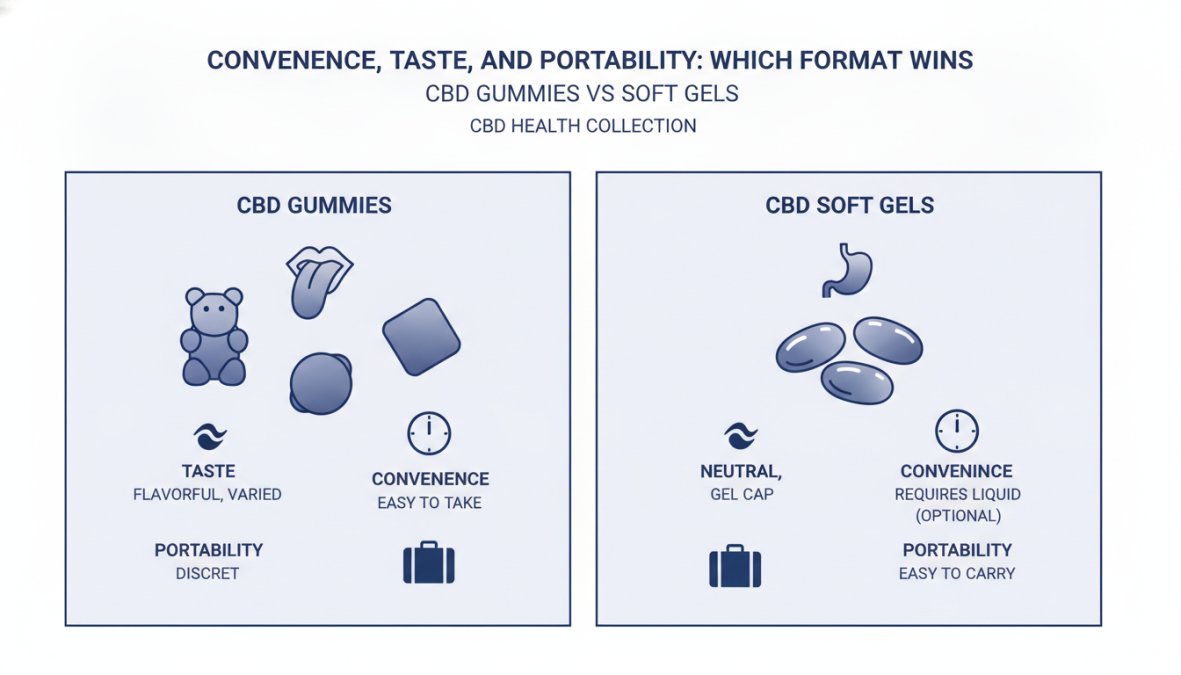
Soft gels prioritize efficacy over experience. They deliver faster results and superior bioavailability, making sense for people whose anxiety manifests in acute episodes rather than chronic baseline anxiety.
Portability slightly favors gummies because they’re smaller and don’t require water. You can take one discreetly in meetings or social settings. Gummies come in flavors like mixed berry or citrus, making consumption pleasant. Soft gels have no taste but also no aftertaste.
Safety Considerations: Interactions with Anxiety Medications
CBD is metabolized by cytochrome P450 enzymes in your liver, the same pathway used by many anxiety medications including SSRIs (sertraline, paroxetine), benzodiazepines (alprazolam), and buspirone. When CBD and these medications share the same metabolic pathway, CBD can slow medication breakdown, potentially increasing its concentration in your bloodstream.
This doesn’t mean you can’t combine them, many people do safely, but it requires medical oversight. Before adding CBD to your anxiety management, inform your prescribing physician. They can monitor medication levels, adjust dosing if needed, and watch for signs of over-medication.
According to FDA guidance on cannabidiol interactions, CBD may increase blood levels of certain medications metabolized by CYP3A4 enzymes. Your doctor might recommend starting with lower CBD doses or spacing doses further from your medication.
The format doesn’t change interaction risks. Both gummies and soft gels deliver CBD systemically, so both interact with medications identically.
Never discontinue anxiety medication to [use CBD](/how-to-use-cbd-oil-under-the-tongue/) without medical guidance. Abruptly stopping SSRIs or benzodiazepines can trigger withdrawal symptoms or anxiety rebound. Work with your doctor on a gradual transition plan if you want to explore CBD as a replacement.
Research from NIH database on cannabinoid-drug interactions documents specific interaction profiles for common anxiety medications. While interactions are possible, they’re often manageable with dose adjustment and medical monitoring.
Choosing between CBD gummies and soft gels for anxiety depends on your anxiety pattern and lifestyle. If you manage chronic baseline anxiety and value convenience, gummies deliver consistent effects without requiring meal timing or water. If you experience acute anxiety episodes and need faster relief, soft gels’ superior bioavailability and quicker onset justify the slightly more complex consumption process.
Start with whichever aligns with your lifestyle, track your response over 2-3 weeks, and adjust dosing based on actual effects. A satisfaction guarantee removes the risk from experimenting with either option.
Frequently Asked Questions
Are CBD gummies or soft gels better for anxiety?
Neither is universally 'better', it depends on your needs. CBD gummies offer taste appeal and easier dosing for beginners, while soft gels provide faster absorption and more discreet use. Gummies work through the digestive tract (first-pass metabolism), whereas soft gels bypass some digestive processes, potentially offering quicker onset. For anxiety management, soft gels may provide faster relief if you need rapid symptom management, while gummies suit those preferring a slower, sustained release.
What is the bioavailability of CBD gummies vs soft gels?
Bioavailability, how much CBD your body actually absorbs, differs between formats. Gummies undergo first-pass metabolism through the digestive tract, reducing bioavailability to roughly 5-15%. Soft gels, especially those with carrier oils like MCT oil, can achieve higher bioavailability (15-25%) because the oil carrier enhances absorption. Water-based formulations in soft gels further optimize bioavailability. This means soft gels may deliver more active CBD to your system per dose.
How long does it take for CBD gummies and soft gels to work for anxiety?
Onset time varies significantly. Gummies typically take 30 minutes to 2 hours to produce effects because they must be digested first. Soft gels generally work faster, 15 minutes to 1 hour, due to improved absorption and bypass of some digestive processes. For acute anxiety relief, soft gels offer a practical advantage. However, individual factors like metabolism, whether you've eaten, and body weight affect timing for both formats.
Can CBD interact with anxiety medications I'm already taking?
CBD can potentially interact with certain anxiety medications, particularly those metabolized by the CYP3A4 enzyme in your liver (like benzodiazepines). While research is limited, it's essential to consult your healthcare provider before combining CBD with prescription anxiety treatments. They can assess your specific medications and dosages. CBD Health Collection products undergo third-party testing for purity, but always disclose CBD use to your doctor to ensure safe, complementary treatment.
What dosage of CBD should I start with for anxiety using gummies or soft gels?
A common anxiety-specific protocol begins with 5-10mg CBD daily, gradually increasing by 5-10mg weekly until you achieve desired effects. Most people find relief at 15-30mg daily, though some require up to 50mg. Start with one gummy or soft gel, track effects for 1-2 weeks, then adjust. Soft gels allow easier titration due to consistent dosing, while gummies require more precision if you need to split doses. Always verify the COA (Certificate of Analysis) to confirm actual CBD content.
This article was written using GrandRanker