A CBD roll-on is made for the moments when one area is asking for attention: a stiff neck after a long drive, tired calves after a walk, or a shoulder that feels tight at the end of the workday. Learning how to apply CBD roll-on correctly can help you use less product, keep the application clean, and build a routine that fits your day.
Unlike CBD oils or gummies, a roll-on is applied to the skin where you want localized support. The roller ball gives you control, while the formula may also include familiar topical ingredients such as menthol or botanical extracts. The right approach is simple, but a few details make a meaningful difference.
How to apply CBD roll-on step by step
Start with clean, dry skin. Lotion, sweat, sunscreen, and body oil can create a barrier between the roll-on and your skin, so it is best to apply after you have gently washed and dried the area. You do not need to scrub the skin. Clean and dry is enough.
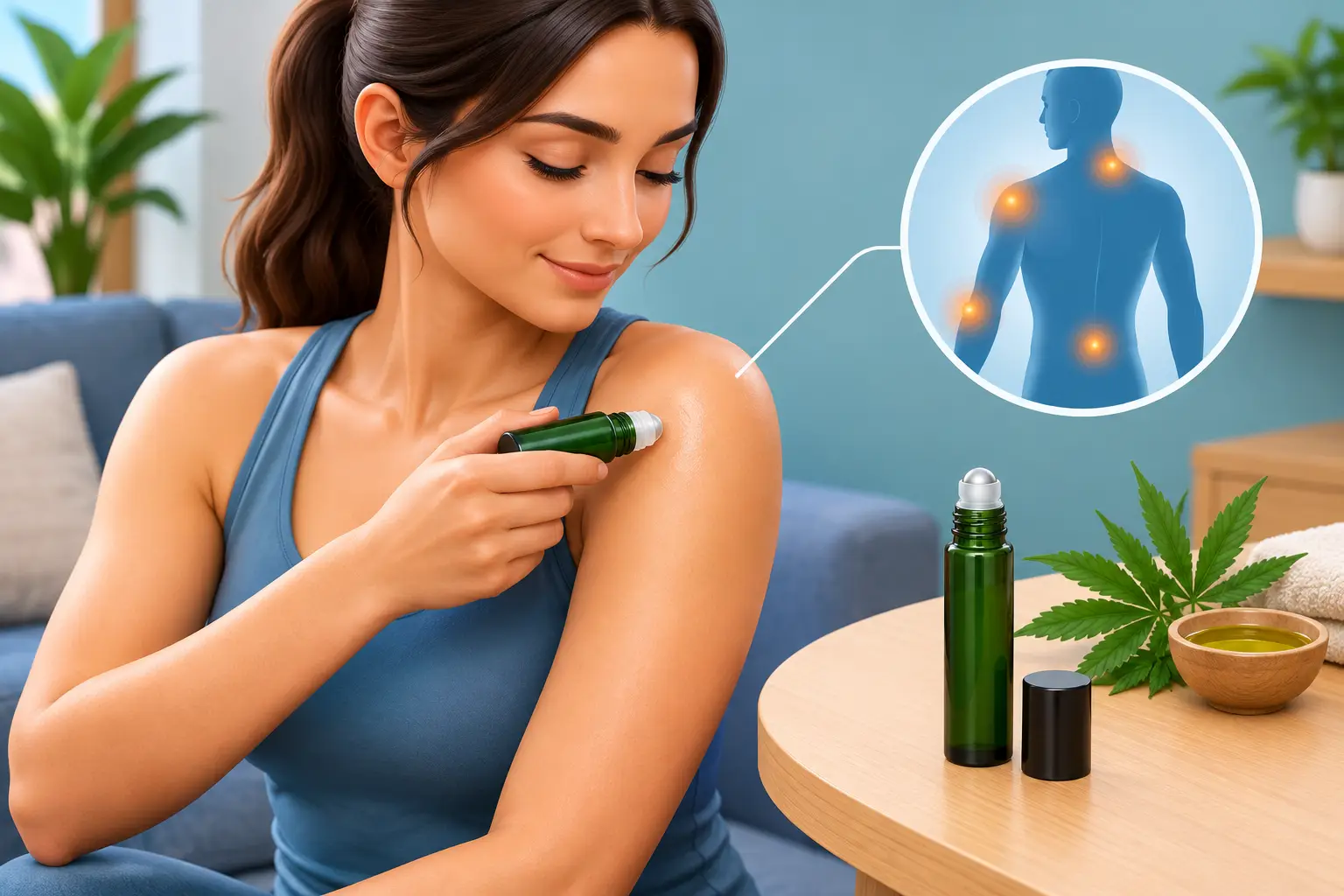
Remove the cap and roll the applicator directly over the area of discomfort using light, even pressure. For a small spot, such as the base of your neck or one side of a wrist, use a few passes. For a larger area, such as a thigh, calf, shoulder, or lower back, cover the area with several slow strokes rather than concentrating all the product in one place.
Then use clean fingertips to massage the product into the skin for 30 to 60 seconds, unless the product label says otherwise. Massage is not required for every roll-on, but it can help spread the formula evenly and may feel especially good on areas that are tense after activity. Let the area air dry before dressing so the product stays on your skin rather than transferring to clothing.
Finish by washing your hands, especially if the formula contains cooling or warming ingredients. This helps prevent accidental contact with your eyes, mouth, or other sensitive areas.
Choose the right amount for the area
More is not always better with a topical product. Begin with a modest amount so you can see how your skin responds and how the formula feels. A thin, even layer is usually more practical than a heavy application that remains wet or sticky.
The amount you need depends on the size of the area, the strength of the product, and the ingredients in the formula. A concentrated roll-on may require fewer passes than a lower-strength formula. If your product has a suggested serving size or application guidance on its label, follow that direction first.
For a small, focused area, two or three passes may be sufficient. Larger muscle groups may need a few additional passes to create even coverage. Give the product time to settle before deciding whether to apply more. If you are new to CBD topicals, keeping your first application light makes it easier to learn what works for you.
Where can you use a CBD roll-on?
CBD roll-ons are commonly used on external areas that feel sore, tight, or overworked. Many adults apply them to the neck, shoulders, elbows, hands, knees, calves, feet, hips, or lower back. The roller-ball format is especially useful for spots that are hard to reach or inconvenient to cover with a salve.
Use the product only on intact skin. Do not apply a CBD roll-on to cuts, burns, rashes, irritated skin, or freshly shaved areas. Avoid the eyes, lips, inside of the nose, genitals, and other mucous membranes. A topical product is for external use only, even when it contains clean, plant-based ingredients.
If you are treating an area near your face, such as the jawline, temples, or upper neck, use extra care. Apply a small amount away from the eyes, then wash your hands before touching your face again.
When to use a CBD roll-on
A roll-on can fit naturally into a daily comfort routine. Some people use it after exercise, gardening, travel, or physical work. Others keep one nearby for evening use when they are settling down after a full day. The best timing depends on your needs and the product’s ingredients.
If your roll-on includes menthol, eucalyptus, or other cooling botanicals, you may notice an immediate cool sensation. That feeling comes from the topical ingredients, not necessarily from the CBD itself. It can be refreshing after movement, but it may not be the right choice just before a hot shower, sauna, or heating pad.
Avoid applying a cooling or warming topical immediately before using heat. Heat can intensify the sensation and may irritate the skin. Likewise, wait until your skin is dry and calm after a shower before applying. If you plan to use a heating pad or take a hot bath, check the product label for specific precautions.
Give the formula a fair trial
Topical routines are personal. One person may prefer a single application after activity, while another may use a roll-on at predictable times each day. What matters is consistency and paying attention to your experience.
After applying, notice the feel of the product on your skin, whether it absorbs comfortably, and how long the sensation lasts. Keep in mind that CBD products are not intended to diagnose, treat, cure, or prevent disease. A roll-on can be one part of a broader wellness routine that may also include rest, gentle movement, hydration, stretching, or guidance from a healthcare professional.
If you are looking for support for ongoing or severe pain, swelling, numbness, weakness, or an injury that does not improve, seek medical advice. These symptoms deserve professional evaluation rather than repeated self-treatment with any topical product.
Check quality before it touches your skin
The quality of a CBD roll-on matters as much as the application method. Look for a product made with clearly listed ingredients and third-party lab testing that verifies cannabinoid content and checks for contaminants. For shoppers who want to avoid THC exposure, choose a formula labeled THC-free and review its testing information carefully.
It is also worth considering the base formula. A water-based topical can feel lighter and less oily than a heavy balm, which may be useful if you want to apply it during the day or before getting dressed. Fragrance-free or lightly scented options may be a better fit for sensitive skin, though natural essential oils can still cause reactions for some people.
At CBD Health Collection, the focus is on THC-free CBD and transparent testing so customers can make a clear, informed choice. Regardless of the brand you choose, ingredient transparency should be non-negotiable.
Safety tips for first-time users
Before using a new CBD roll-on broadly, perform a patch test. Apply a small amount to a discreet area, such as the inner forearm, and wait 24 hours. Do not continue use if you experience redness, itching, burning, hives, or unusual irritation.
Keep the cap tightly closed between uses and store the roll-on away from direct heat and sunlight. Do not share the applicator with others, particularly if it has touched irritated skin. If the roller ball becomes dirty, wipe the outside gently with a clean cloth before replacing the cap.
Talk with a healthcare professional before adding CBD to your routine if you are pregnant, nursing, managing a medical condition, or taking prescription medications. While topical use is different from ingesting CBD, personal health circumstances and product ingredients still matter. For children and pets, use products specifically formulated and labeled for them rather than adapting an adult roll-on.
Make it easy to use consistently
Place your CBD roll-on where it supports a real habit: in a gym bag, beside your favorite chair, in a work drawer, or near your evening skincare products. The goal is not to apply it constantly. It is to have a clean, practical option ready when localized discomfort shows up.
Start with clean skin, apply a light and even layer, massage if desired, and give yourself time to notice how the formula feels. That small routine can turn a roll-on from an impulse purchase into a dependable part of caring for your body.