
Table of Contents
- CBD vs THC for Pain: How These Cannabinoids Work Differently
- How CBD and THC Interact with the Endocannabinoid System
- CBD vs THC for Pain: Comparison Table and Pros & Cons
- Chronic and Neuropathic Pain: Which One Works Better?
- The Right CBD and THC Ratio for Pain Relief
- How to Use CBD Oil for Pain: Delivery Methods and Bioavailability
- Side Effects of Cannabis for Pain and Drug-Drug Interactions
- What Patient-Reported Outcomes Tell Us About Real-World Use
- Conclusion: Choosing Between CBD and THC for Your Pain
Last Updated: May 15, 2026
CBD vs THC for Pain: How These Cannabinoids Work Differently
The question of cbd vs thc for pain is one of the most searched topics in cannabis wellness, and for good reason: these two compounds work through fundamentally different mechanisms, produce different experiences, and suit different types of pain. At CBD Health Collection, we’ve spent years helping people navigate this decision with a science-based, medically informed approach. Most guides stop at "CBD doesn’t get you high, THC does." That’s true, but it’s also the least useful thing you can read if you’re trying to manage chronic pain, neuropathic discomfort, or inflammation.
Here’s what most guides get wrong: they treat CBD and THC as competing options when, in many cases, the real answer involves understanding how they interact together. Below, we’ll break down exactly how each compound works, which pain conditions respond better to each, how delivery method changes everything, and what drug interactions most people never think to ask about.
What Is CBD (Cannabidiol)?
Cannabidiol (CBD) is a non-psychoactive cannabinoid derived from the Cannabis sativa plant that produces analgesic and anti-inflammatory effects without causing intoxication. It’s the second most abundant compound in cannabis and the primary active ingredient in hemp-derived wellness products.
CBD works primarily by modulating the body’s endocannabinoid system indirectly. Rather than binding directly to cannabinoid receptors, it influences them through allosteric modulation and interacts with other receptor systems, including serotonin (5-HT1A) and vanilloid (TRPV1) receptors, both of which are involved in pain signaling and inflammation. This indirect action is precisely why CBD doesn’t produce a psychoactive "high" while still delivering meaningful therapeutic potential.
What Is THC (Delta-9-Tetrahydrocannabinol)?
Delta-9-tetrahydrocannabinol (THC) is the primary psychoactive cannabinoid in cannabis, responsible for the euphoric "high" associated with marijuana use. Federally, THC remains a Schedule 1 controlled substance in the United States, though many states have legalized it for medical or recreational use.
THC binds directly and powerfully to CB1 receptors concentrated in the brain and central nervous system, which explains its psychoactive effects. It also activates CB2 receptors in peripheral tissues, contributing to its anti-inflammatory and analgesic properties. For pain management specifically, THC’s direct receptor binding produces faster, stronger analgesia, but at the cost of cognitive impairment and legal complexity.
How CBD and THC Interact with the Endocannabinoid System
The endocannabinoid system (ECS) is the body’s internal regulatory network responsible for maintaining homeostasis across pain, mood, sleep, and immune function. Understanding how CBD and THC interact with it is the foundation of any rational pain management strategy.
The ECS operates through two primary receptor types: CB1 and CB2. Endogenous cannabinoids produced by the body (anandamide and 2-AG) activate these receptors naturally. Phytocannabinoids like CBD and THC essentially hijack this system, each in different ways.
CB1 and CB2 Receptors: Why the Distinction Matters for Pain
CB1 receptors are concentrated in the brain, spinal cord, and peripheral nervous system. THC’s strong affinity for CB1 receptors is why it produces both psychoactive effects and potent central analgesia, particularly useful for neuropathic pain where the nervous system itself is dysregulated.
CB2 receptors are found primarily in immune cells and peripheral tissues. Both CBD and THC activate CB2 receptors, which drive anti-inflammatory responses, making them relevant for conditions like arthritis, muscle spasms, and inflammatory pain. CBD’s preference for CB2 modulation, combined with its TRPV1 receptor activity, explains its effectiveness for inflammation-driven pain without cognitive side effects.
The practical implication: if your pain originates in damaged nerve tissue, THC’s CB1 activity is likely more relevant. If your pain is primarily inflammatory, CBD’s CB2 and TRPV1 activity may be sufficient.
CBD vs THC for Pain: Comparison Table and Pros & Cons
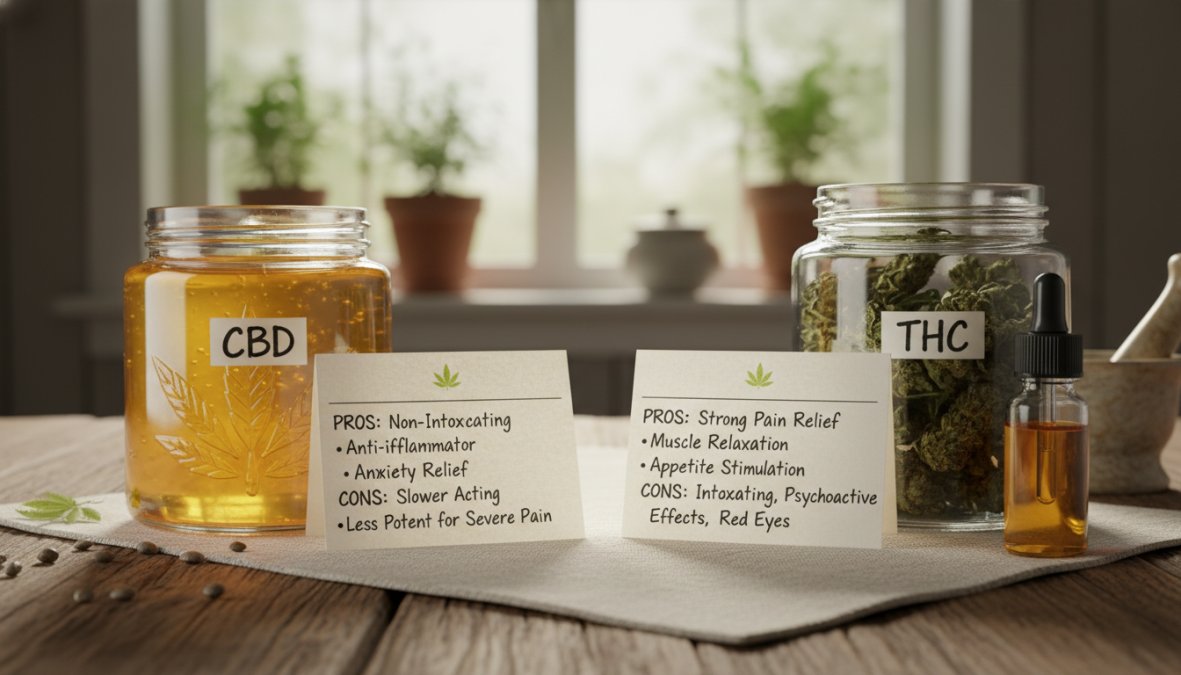
Choosing between CBD and THC for pain isn’t a binary decision, but this table gives you a clear starting point.
| Factor | CBD | THC |
|---|---|---|
| Psychoactive | No | Yes |
| Legal Status (Federal) | Legal (hemp-derived) | Schedule 1 |
| Best Pain Type | Inflammatory, chronic | Neuropathic, acute |
| Receptor Action | Indirect (CB2, TRPV1) | Direct (CB1, CB2) |
| Drug Test Risk | Low (broad-spectrum) | High |
| Onset (sublingual) | 15-30 minutes | 15-30 minutes |
| Side Effects | Mild (fatigue, dry mouth) | Impairment, anxiety |
| Tolerance Build-Up | Minimal | Moderate to high |
| Availability | Nationwide (hemp-derived) | State-restricted |
CBD for Pain: Pros and Cons
Pros:
- Non-psychoactive: no impairment during daily activities
- Federally legal when derived from hemp
- Lower risk of dependence or tolerance
- Suitable for drug-tested individuals (broad-spectrum formulations)
- Anti-inflammatory effects support joint flexibility
Cons:
- Less effective for severe neuropathic pain alone
- Slower onset compared to inhaled THC
- Bioavailability varies significantly by delivery method
THC for Pain: Pros and Cons
Pros:
- Potent direct analgesia via CB1 receptor activation
- Particularly effective for neuropathic pain and muscle spasms
- Can reduce opioid dependence in some pain patients
- Faster perceived relief for acute pain
Cons:
- Psychoactive: impairs cognition and motor function
- Federally illegal; state laws vary
- Causes positive drug test results
- Risk of anxiety, paranoia, and tolerance with frequent use
THC-containing products will trigger positive results on standard drug tests. If you’re subject to workplace drug screening, choose broad-spectrum or CBD isolate products that are independently verified as THC-free. CBD Health Collection’s broad-spectrum formulations carry third-party COA lab testing confirming THC content.
Chronic and Neuropathic Pain: Which One Works Better?
The answer depends entirely on the biological mechanism driving your pain, and conflating pain types is the single most common reason people report that cannabinoid therapy "didn’t work." Chronic inflammatory pain and neuropathic pain involve different receptor pathways, respond to different cannabinoids, and require different dosing strategies. High-authority medical sources break these categories down precisely because the distinction is clinically meaningful.
CBD for Chronic Inflammatory Pain
CBD is most supported by evidence for pain that originates in inflammation, the immune system’s sustained, often dysregulated response to tissue damage or autoimmune activity. Conditions in this category include:
- Osteoarthritis (OA): Cartilage breakdown triggers synovial inflammation and cytokine release. CBD’s CB2 receptor modulation and inhibition of pro-inflammatory cytokines (including TNF-α and IL-6) targets this mechanism directly. Preclinical research has shown CBD reduces joint inflammation and nerve damage in OA models, and many OA patients report meaningful improvements in morning stiffness and resting pain scores with consistent topical or sublingual use.
- Rheumatoid Arthritis (RA): An autoimmune condition where the immune system attacks synovial tissue. CBD’s immunomodulatory effects via CB2 and its interaction with GPR55 receptors, which regulate immune cell activity, make it a pharmacologically logical candidate. The Arthritis Foundation has acknowledged patient-reported benefits and called for more clinical research.
- Fibromyalgia: Characterized by central sensitization rather than peripheral tissue damage, fibromyalgia involves amplified pain signaling in the central nervous system. CBD’s interaction with TRPV1 receptors, which regulate pain sensitivity thresholds, and its serotonergic activity at 5-HT1A receptors may explain why some fibromyalgia patients report reductions in widespread pain and improved sleep quality with CBD use.
- Lower back pain and post-exercise inflammation: For musculoskeletal pain driven by localized inflammation, topical CBD formulations deliver cannabinoids directly to CB2-rich peripheral immune cells without systemic exposure, making them a practical first-line option.
CBD’s neuroprotective properties add a secondary benefit for long-term inflammatory pain patients: sustained inflammation can cause peripheral nerve sensitization and, over time, structural nerve damage. CBD’s antioxidant activity and its ability to reduce oxidative stress may help slow this progression, though this remains an area of active research rather than established clinical guidance.
Practical note on onset: CBD’s anti-inflammatory effects are not immediate. Most practitioners and patients report that meaningful symptom reduction requires consistent daily use for two to four weeks as cannabinoid levels stabilize and receptor modulation accumulates. Expecting acute relief within hours, the way an NSAID works, sets unrealistic expectations and leads to premature discontinuation.
THC for Neuropathic Pain and Muscle Spasticity
Neuropathic pain is caused by damage or dysfunction in the nervous system itself, not by tissue inflammation. Standard analgesics, NSAIDs, acetaminophen, have limited efficacy here because they target peripheral inflammation rather than aberrant nerve signaling. This is where THC’s direct CB1 receptor activation becomes clinically significant in a way CBD cannot fully replicate.
Conditions where THC has the strongest evidence base include:
- Diabetic peripheral neuropathy: Characterized by burning, shooting, or electric-shock pain in the extremities. CB1 receptors are densely distributed along the spinal dorsal horn and descending pain modulation pathways. THC’s direct binding suppresses pain signal transmission at these sites, producing analgesia that anti-inflammatory mechanisms cannot achieve. Several randomized controlled trials have found that inhaled cannabis (primarily THC) reduces neuropathic pain intensity scores compared to placebo in diabetic neuropathy patients.
- Multiple sclerosis (MS) spasticity: Sativex (a 1:1 CBD:THC oromucosal spray) is approved in the UK, Canada, and several European countries specifically for MS-related spasticity, making it one of the few cannabinoid products with regulatory approval for a specific pain indication. The CB1-mediated reduction in motor neuron excitability is the primary mechanism.
- Chemotherapy-induced peripheral neuropathy (CIPN): One of the most treatment-resistant pain conditions in oncology. THC’s central analgesic action and its ability to reduce the emotional distress component of pain (via limbic CB1 activity) make it relevant here, though evidence remains preliminary.
- Spinal cord injury pain: Central neuropathic pain following spinal injury is notoriously refractory to conventional treatment. THC’s CB1 activity along spinal pain pathways is the most pharmacologically rational cannabinoid approach for this population.
The psychoactivity trade-off in practice: Effective THC doses for neuropathic pain frequently produce noticeable cognitive and perceptual effects. The clinical strategy most commonly used to manage this is twofold: (1) titration, starting at the lowest possible dose (often 2.5 mg THC) and increasing by 2.5 mg increments no more than weekly, and (2) ratio adjustment, co-administering CBD, which modulates CB1 receptor activity and reduces THC’s psychoactive intensity without eliminating its analgesic effect. A 1:1 or 2:1 CBD:THC ratio is the most common clinical starting point for neuropathic pain where impairment is a concern.
When Neither Alone Is the Answer
For complex chronic pain presentations, particularly those involving both inflammatory and neuropathic components, as is common in advanced OA, lupus, or post-surgical pain, neither CBD nor THC in isolation is likely to be optimal. The clinical rationale for combination therapy is that CBD addresses peripheral and central inflammation while THC modulates central pain signal transmission, covering both pathways simultaneously.
The practical challenge is that combination products containing meaningful THC are only accessible in states with medical or adult-use cannabis programs. For patients in states where only hemp-derived CBD is available, maximizing CBD’s multi-receptor activity through full-spectrum formulations (which preserve minor cannabinoids and terpenes) is the most evidence-aligned approach within legal constraints.
For inflammatory and chronic pain (OA, RA, fibromyalgia, lower back pain), CBD’s CB2 and TRPV1 activity is often sufficient and avoids psychoactive side effects, but requires consistent use over weeks, not days. For neuropathic pain (diabetic neuropathy, MS spasticity, CIPN), THC’s direct CB1 activation produces superior analgesia that CBD cannot replicate alone; a 1:1 CBD:THC ratio is the most common clinical starting point to balance efficacy with tolerability.
The Right CBD and THC Ratio for Pain Relief
The CBD and THC ratio for pain is arguably more important than the total dose. A 1:1 ratio (equal parts CBD and THC) is commonly cited in clinical contexts as a starting point for balanced therapeutic effect, offering analgesia from both compounds while CBD moderates THC’s psychoactive intensity.
For patients who need pain relief without impairment, higher CBD-to-THC ratios, such as 20:1 or 10:1, provide meaningful analgesic benefit while keeping psychoactive effects negligible. For severe neuropathic pain where full CB1 activation is necessary, lower ratios like 4:1 or even 1:1 may be required.
Titration is essential regardless of the starting ratio. Begin with the lowest dose that produces any noticeable effect, wait at least a week before adjusting, and track your response systematically. Rushing to higher doses is the most common reason people report poor outcomes with cannabinoid therapy.
Terpene Profiles and the Entourage Effect
Here’s an angle most CBD vs THC guides completely ignore: terpenes. Terpenes are the aromatic compounds in cannabis that contribute to its distinctive smell, but they also have independent pharmacological activity that shapes the therapeutic outcome of any cannabinoid product.
The entourage effect describes the synergistic interaction between cannabinoids and terpenes, where the combined effect exceeds what either compound produces alone. For pain management, specific terpenes are particularly relevant:
- Myrcene: Found in indica-dominant strains; has sedative and muscle-relaxant properties that complement THC for spasm-related pain
- Beta-caryophyllene: Binds directly to CB2 receptors, producing anti-inflammatory effects without psychoactivity; common in black pepper and cloves
- Linalool: The primary terpene in lavender; has analgesic and anxiolytic properties that can reduce pain-related anxiety
- Limonene: Anti-inflammatory and mood-elevating; may reduce the anxiety that sometimes accompanies THC use
Full-spectrum and broad-spectrum products preserve these terpene profiles. CBD isolate products strip them away entirely, which is why many users find full-spectrum formulations more effective at equivalent CBD concentrations.
How to Use CBD Oil for Pain: Delivery Methods and Bioavailability
Knowing how to use CBD oil for pain is just as important as choosing the right cannabinoid. Bioavailability, the percentage of a compound that reaches systemic circulation and produces an active effect, varies dramatically by delivery method and determines both onset time and effectiveness.
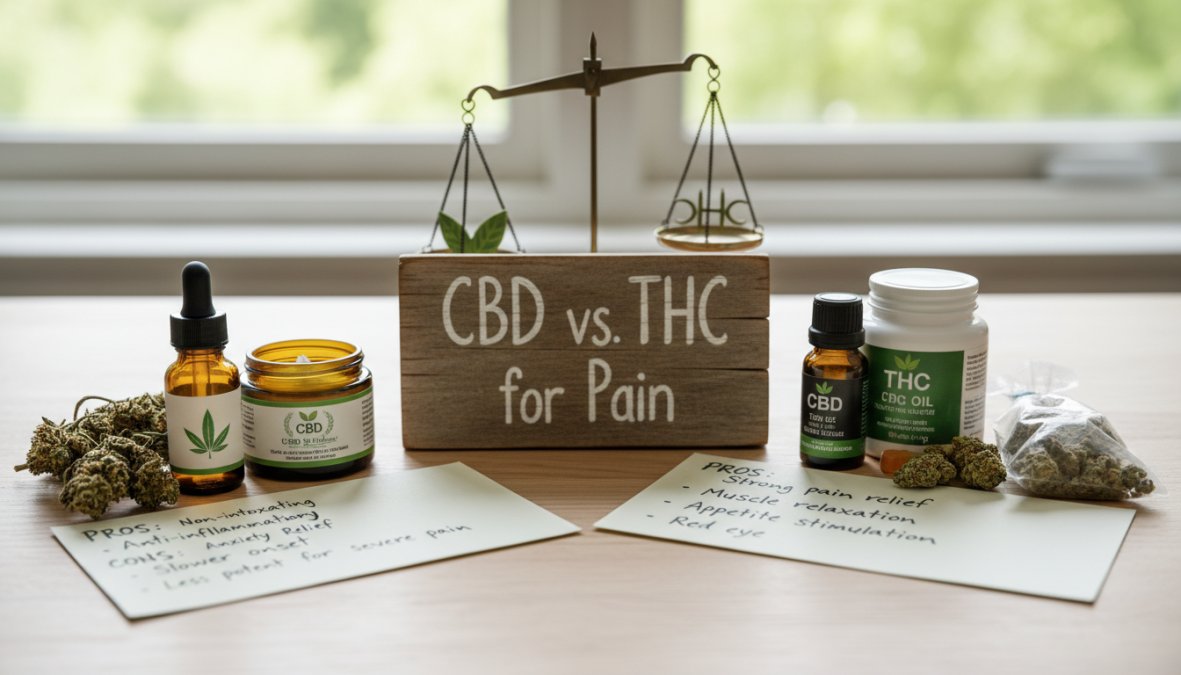
Sublingual administration (drops held under the tongue for 60-90 seconds) bypasses first-pass liver metabolism and delivers cannabinoids directly into the bloodstream through the sublingual mucosa. Onset is typically 15-30 minutes with effects lasting 4-6 hours. This is the most reliable method for systemic pain management.
Topical application (creams, gels, patches) delivers cannabinoids locally to the site of pain without entering systemic circulation. This makes topicals ideal for localized joint or muscle pain with zero psychoactive risk. CBD Health Collection’s topical freeze gels and pain patches use this mechanism for targeted relief.
Oral ingestion (gummies, soft gels, capsules) passes through the digestive system and liver, which metabolizes cannabinoids before they reach circulation. Bioavailability is lower and onset is slower (1-2 hours), but effects last longer (6-8 hours), making this a good choice for overnight pain management.
Inhalation produces the fastest onset (minutes) and highest bioavailability but carries respiratory risks and is not appropriate for most chronic pain patients seeking a long-term protocol.
Cost-Benefit Analysis of Common Delivery Methods
Most people choose delivery methods based on convenience rather than pharmacokinetics, which is a mistake when managing pain that requires consistent blood levels.
| Delivery Method | Bioavailability | Onset | Duration | Cost Per Dose | Best For |
|---|---|---|---|---|---|
| Sublingual oil | Moderate-High | 15-30 min | 4-6 hours | Low-Medium | Daily systemic pain |
| Topical/patch | Local only | 20-45 min | 6-12 hours | Medium | Localized joint pain |
| Oral (gummies/caps) | Low-Moderate | 60-120 min | 6-8 hours | Low | Overnight/sustained relief |
| Inhalation | High | 2-5 min | 2-3 hours | Variable | Acute breakthrough pain |
Water-soluble CBD formulations, like those used by CBD Health Collection, improve the bioavailability of sublingual and oral products significantly by reducing particle size and improving absorption at the gut wall. This is a meaningful practical advantage: better absorption means lower doses achieve equivalent effects, which reduces both cost and the risk of side effects.
For consistent pain management, pair a sublingual CBD oil for daytime use with an oral soft gel at night. The sublingual provides faster onset for daytime flares while the slow-release oral formulation maintains baseline cannabinoid levels overnight without requiring a second dose at 3am.
Side Effects of Cannabis for Pain and Drug-Drug Interactions
The side effects of cannabis for pain are well-documented but frequently misrepresented in both directions. CBD is often marketed as completely side-effect-free, which is inaccurate. THC’s risks are sometimes overstated in ways that discourage patients from a genuinely effective therapy. Getting this right matters, particularly because the patients most likely to use cannabinoids for pain are also the patients most likely to be on multiple prescription medications.
CBD Side Effects
CBD’s most common adverse effects are dose-dependent and generally mild:
- Fatigue and sedation: Most common at higher doses; can be useful for pain patients who also struggle with sleep disruption, but problematic for daytime use
- Dry mouth: Caused by CB1 and CB2 receptor activity in salivary glands; manageable with hydration
- Gastrointestinal effects: Diarrhea and changes in appetite occur primarily at doses above 300 mg/day, far above typical wellness doses of 25-75 mg
- Liver enzyme elevations: Clinically significant at very high doses (the 1,500 mg/day range used in some epilepsy trials); relevant for patients with pre-existing hepatic conditions and those on hepatotoxic medications
THC Side Effects
THC’s adverse effect profile is more significant and more variable between individuals:
- Acute psychoactive effects: Euphoria, altered time perception, impaired short-term memory, and reduced motor coordination are dose-dependent and largely unavoidable at analgesic doses
- Anxiety and paranoia: More common at higher doses, in THC-naive users, and in individuals with anxiety disorders or a personal history of psychosis; CBD co-administration reduces this risk
- Cardiovascular effects: Transient tachycardia (increased heart rate) occurs acutely with THC; patients with cardiovascular disease should discuss this with their physician before use
- Dependence and tolerance: With chronic daily use, tolerance to THC’s analgesic and psychoactive effects develops over weeks to months, requiring dose escalation; abrupt cessation after heavy use can produce a withdrawal syndrome (irritability, sleep disruption, appetite changes)
- Cognitive effects with long-term use: Heavy, long-term THC use is associated with working memory impairment; this risk is substantially lower with intermittent, low-dose therapeutic use
Older adults and individuals with a personal or family history of psychosis or schizophrenia should approach THC with particular caution and only under physician supervision.
CYP450 Enzymes: The Pharmacokinetic Foundation of Drug Interactions
Both CBD and THC are metabolized by the cytochrome P450 (CYP450) enzyme system in the liver, primarily CYP3A4 and CYP2C9. When CBD or THC inhibits these enzymes, other drugs processed by the same pathway accumulate to higher-than-expected blood concentrations. When these enzymes are induced (sped up), co-administered drugs may be cleared too quickly to maintain therapeutic levels.
This is not a theoretical concern. It is a pharmacokinetic mechanism that applies to anyone using meaningful cannabinoid doses alongside prescription medications, and it is the section most CBD vs. THC guides skip entirely.
Drug-Drug Interactions Specific to Pain Patients
The patients most likely to search "CBD vs THC for pain" are also the patients most likely to be on the following drug classes. This is the interaction profile that matters most for this population, and it is almost entirely absent from competing guides:
NSAIDs (ibuprofen, naproxen, celecoxib)
NSAIDs are among the most commonly used pain medications. CBD inhibits CYP2C9, the primary enzyme responsible for metabolizing several NSAIDs including ibuprofen and celecoxib. Inhibiting CYP2C9 can increase NSAID plasma concentrations, potentially amplifying both therapeutic effects and adverse effects, including GI bleeding risk and renal strain. Patients using CBD alongside daily NSAID therapy should be aware of this interaction and discuss it with their prescriber, particularly if they are on higher NSAID doses or have a history of GI or renal issues.
There is also a pharmacodynamic dimension: both CBD and NSAIDs reduce inflammation through partially overlapping mechanisms (CBD via CB2 and cytokine suppression; NSAIDs via COX-1/COX-2 inhibition). Some practitioners view this as potentially complementary, but it also means additive effects on platelet function and GI mucosa that warrant monitoring.
Opioids (oxycodone, hydrocodone, morphine, tramadol)
This interaction is clinically significant in two directions. First, both CBD and THC are metabolized by CYP3A4, as are many opioids. CBD’s CYP3A4 inhibition can increase opioid plasma levels, which may amplify both analgesia and adverse effects including respiratory depression, a serious safety concern at higher opioid doses.
Second, there is emerging evidence that cannabinoids may have an opioid-sparing effect: patients using cannabis alongside opioid therapy sometimes report adequate pain control at lower opioid doses. Several observational studies have documented reductions in opioid use among chronic pain patients who initiated cannabis therapy. This is a potentially meaningful benefit for patients trying to reduce opioid dependence, but it must be managed under physician supervision rather than through self-directed dose reduction, because the interaction is bidirectional and dose-dependent.
THC’s CNS depressant effects also add to opioid-related sedation and cognitive impairment, which is an additive risk that patients and clinicians need to account for explicitly.
Gabapentinoids (gabapentin, pregabalin)
Gabapentin and pregabalin are first-line treatments for neuropathic pain, the exact pain type where THC is most effective. This creates a common clinical scenario: a patient on gabapentin considering adding THC or CBD for additional neuropathic pain relief.
Gabapentin is not primarily metabolized by CYP450 enzymes (it is renally excreted largely unchanged), so the pharmacokinetic interaction with CBD is less direct than with NSAIDs or opioids. However, the pharmacodynamic interaction is relevant: both gabapentinoids and THC produce CNS depression and sedation. Combining them can amplify sedation, dizziness, and cognitive impairment beyond what either drug produces alone. Patients combining these agents should be counseled to avoid driving or operating machinery until they understand their individual response.
Muscle Relaxants (cyclobenzaprine, baclofen, methocarbamol)
Muscle relaxants are frequently prescribed alongside pain medications for spasm-related pain, one of THC’s strongest indications. Cyclobenzaprine is metabolized by CYP1A2 and CYP3A4; CBD’s CYP3A4 inhibition may increase cyclobenzaprine exposure. More practically, the additive CNS depressant effects of muscle relaxants and THC (both of which reduce motor neuron excitability) can produce pronounced sedation and impaired coordination. This combination requires careful dose management.
Antidepressants used for pain (duloxetine, amitriptyline)
Duloxetine (an SNRI used for diabetic neuropathy and fibromyalgia) is metabolized by CYP1A2 and CYP2D6. Amitriptyline (a tricyclic used for neuropathic pain) is metabolized by CYP2D6 and CYP3A4. CBD’s inhibition of CYP3A4 and partial inhibition of CYP2D6 can increase plasma levels of both drugs, potentially amplifying side effects including sedation, dry mouth, and cardiac conduction effects (particularly relevant for amitriptyline’s QT-prolonging potential).
Blood thinners (warfarin)
Warfarin remains the most widely cited cannabinoid drug interaction in the literature. CBD inhibits CYP2C9, the primary enzyme responsible for warfarin metabolism. Elevated warfarin levels increase bleeding risk. Patients on warfarin who begin CBD therapy should have their INR monitored more frequently, particularly during dose initiation or adjustment. This interaction is well-established enough that it appears in FDA guidance documentation.
If you are currently taking any opioid, NSAID, gabapentinoid, muscle relaxant, antidepressant prescribed for pain, or blood thinner, do not begin cannabinoid therapy without first consulting your prescribing physician. The drug interactions described above are pharmacokinetic realities, not theoretical risks, and several of them (opioid respiratory depression, warfarin bleeding risk) carry serious safety implications at higher doses. This is not a reason to avoid cannabinoids; it is a reason to manage them as the pharmacologically active compounds they are.
A Note on Drug Testing and Workplace Safety
For pain patients who are subject to workplace drug screening, the interaction between cannabinoid use and drug testing is a practical concern that sits alongside the pharmacological ones. THC-containing products will produce positive results on standard immunoassay urine tests. Broad-spectrum CBD products are formulated to remove THC, but cross-contamination and metabolic conversion of CBD to THC in the GI tract (a documented but dose-dependent phenomenon) means that even broad-spectrum products carry a small residual risk at high doses. CBD isolate products carry the lowest drug test risk. Any product used by a drug-tested individual should carry a verified third-party Certificate of Analysis (COA) confirming non-detectable THC levels.
FDA guidance on drug interactions with cannabidiol
What Patient-Reported Outcomes Tell Us About Real-World Use
Clinical trials provide controlled efficacy data, but patient-reported outcome measures (PROMs) tell a different story: how cannabinoid therapy actually performs in the messy reality of daily life, with variable doses, inconsistent products, and co-existing conditions.
Several consistent themes emerge from real-world patient experience with CBD and THC for pain. People managing inflammatory conditions like arthritis and fibromyalgia tend to report meaningful improvements in daily function, sleep quality, and pain intensity scores with CBD-dominant products, particularly when used consistently over weeks rather than days. The expectation of immediate relief, common among new users, leads to premature discontinuation before therapeutic blood levels stabilize.
Patients using THC for neuropathic pain frequently report that the psychoactive effects are the primary barrier to consistent use, which is why balanced ratios and careful titration produce better adherence than high-THC approaches alone. Many report that starting with a high-CBD product and gradually introducing small amounts of THC produces better outcomes than starting with THC directly.
What most clinical trial data doesn’t capture is the role of delivery method consistency. Patients who switch between products, concentrations, and delivery methods frequently report unpredictable outcomes. Choosing one well-characterized product, understanding its pharmacokinetics, and using it consistently is the single most underrated factor in real-world cannabinoid pain management.
As documented in Project CBD’s clinical overview of cannabinoids for pain, patient-reported improvements in pain and quality of life often exceed what objective clinical measures capture, suggesting cannabinoids may influence pain experience through psychological and neurological pathways beyond simple receptor binding.
The honest takeaway from PROMs: cannabinoid therapy for pain is real and often meaningful, but it requires patience, consistency, and a willingness to adjust variables systematically rather than abandoning the approach after a week.
Conclusion: Choosing Between CBD and THC for Your Pain
The cbd vs thc for pain decision ultimately comes down to pain type, lifestyle, legal context, and medication profile. CBD is the appropriate starting point for most people: non-psychoactive, federally legal, and genuinely effective for inflammatory and chronic pain with a favorable safety profile. THC earns its place for neuropathic pain and muscle spasms where CBD alone is insufficient, but it requires more careful management. For many patients, the answer isn’t one or the other but a considered ratio of both, combined with the right delivery method and consistent titration.
Drug-drug interactions and terpene profiles are the two variables most guides ignore entirely. They shouldn’t be afterthoughts.
Managing pain with cannabinoids works best when you start with a product you can trust. CBD Health Collection brings a pharmaceutical-grade approach to CBD wellness: organically grown, CO2-extracted, produced in a GMP- and FDA-registered facility, and independently third-party lab tested for purity and potency. Every product comes with a verified COA and a 30-day satisfaction guarantee. Get started with CBD Health Collection and experience what science-backed, water-soluble CBD can do for your pain management protocol.
Frequently Asked Questions
Is CBD or THC better for chronic pain?
Neither is universally better, it depends on your pain type and circumstances. CBD is generally preferred for inflammatory and musculoskeletal chronic pain because it is non-psychoactive and legal in most states. THC may offer stronger analgesic relief for severe or neuropathic pain, particularly where inflammation and nerve signaling are both involved. Many users report the best results from a balanced CBD-to-THC ratio, which may leverage the entourage effect for broader symptom management. Always consult a healthcare provider before starting either cannabinoid for pain.
Does CBD get you high like THC?
No. CBD (cannabidiol) is non-psychoactive and does not produce the 'high' associated with THC (delta-9-tetrahydrocannabinol). THC binds directly to CB1 receptors in the brain, which produces psychoactive effects. CBD interacts with CB1 and CB2 receptors differently, it does not activate CB1 receptors in the same way, so it does not alter perception or cognition. This makes CBD a practical option for pain relief during work or daily activities where mental clarity is essential.
Can you use CBD and THC together for pain?
Yes, and many pain patients do. Using both cannabinoids together, often called a balanced ratio, may enhance therapeutic outcomes through the entourage effect, where cannabinoids and terpenes work synergistically. Common ratios for pain management include 1:1, 4:1, or 20:1 CBD to THC. Topical products like balms and patches can deliver both compounds locally without significant psychoactive effects. If THC is a concern for drug testing or legal reasons, broad-spectrum or CBD-isolate products are safer alternatives.
What are the side effects of using CBD vs. THC for pain?
CBD's side effects are generally mild and may include fatigue, dry mouth, changes in appetite, or diarrhea at high doses. A significant concern is that CBD inhibits CYP450 enzymes, which can affect how the body metabolizes certain medications, a drug-drug interaction (DDI) risk worth discussing with your doctor. THC carries a broader side-effect profile including anxiety, paranoia, impaired memory, increased heart rate, and psychoactive effects. Both cannabinoids may cause adverse effects at high doses, so titration, starting low and going slow, is strongly recommended.
How do CBD and THC interact with the body's pain receptors?
Both cannabinoids interact with the endocannabinoid system (ECS), but through different mechanisms. THC binds directly to CB1 receptors in the brain and spinal cord, producing analgesia and reducing pain signal transmission. CBD has a lower binding affinity for CB1 and CB2 receptors but modulates pain indirectly, influencing serotonin receptors, reducing inflammation, and potentially offering neuroprotective effects. CBD also appears to enhance the body's own endocannabinoids by inhibiting their breakdown, prolonging their natural pain-relieving activity.
Is it legal to use CBD and THC for pain relief?
Hemp-derived CBD containing less than 0.3% THC is federally legal in the United States under the 2018 Farm Bill, making it accessible in most states without a prescription. THC remains a Schedule 1 controlled substance at the federal level, though many states have legalized it for medical or recreational use. Medical marijuana programs in qualifying states allow THC use for pain under physician supervision. Always verify your state's laws before purchasing or using any THC-containing product, especially if you are subject to workplace drug testing.
This article was written using GrandRanker