Table of Contents
- How CBD Works for Muscle Recovery in Sports
- Scientific Evidence: What Research Actually Says
- Is CBD Banned by WADA? Legality for Professional Athletes
- Topical CBD vs Oral CBD for Muscles: Which Works Better?
- CBD Dosage for Athletes: Protocols by Body Weight and Training Intensity
- Integrating CBD for Muscle Recovery in Sports With Other Recovery Modalities
- How to Choose a Safe, High-Quality CBD Product as an Athlete
- Conclusion
Last Updated: May 14, 2026
Athletes and coaches increasingly turn to cannabidiol as a natural tool for post-workout recovery, and the science behind cbd for muscle recovery sports is catching up to the anecdotal buzz. CBD Health Collection has helped many active individuals understand how hemp-derived cannabidiol fits into a serious training regimen. The endocannabinoid system plays a documented role in regulating inflammation, pain perception, and sleep, all three of which directly affect how fast muscles repair after hard training. Below, we’ll show you exactly how CBD works, what the research actually supports, and how to use it safely without risking your competitive standing.
Here’s what most guides get wrong: they treat CBD as a magic recovery bullet. It isn’t. CBD works best as one layer in a broader recovery stack, and the athletes who see the most benefit are the ones who understand where it fits and where it doesn’t.
How CBD Works for Muscle Recovery in Sports
Cannabidiol (CBD) is a non-psychoactive compound derived from hemp that interacts with the body’s endocannabinoid system to support homeostasis, including the regulation of inflammation, pain modulation, and sleep cycles. Unlike THC, CBD produces no intoxicating effect, making it a practical option for athletes who need to stay sharp.
The Endocannabinoid System and Athletic Homeostasis
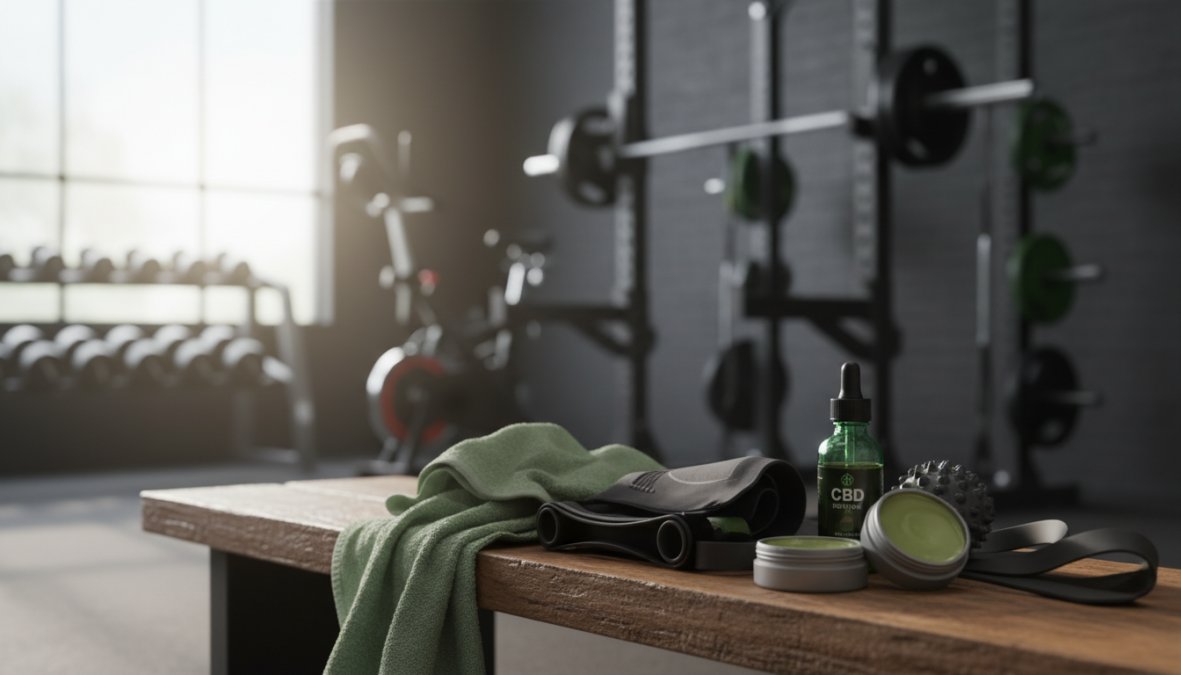
The endocannabinoid system (ECS) is a cell-signaling network present throughout the human body that regulates pain, immune response, mood, and recovery. It operates through two primary receptor types: CB1 receptors, concentrated in the brain and central nervous system, and CB2 receptors, found predominantly in immune tissue and peripheral organs, including skeletal muscle.
Intense exercise creates physiological stress. Micro-tears in muscle fibers trigger an inflammatory cascade, free radicals accumulate, and the nervous system registers pain. The ECS responds by releasing endocannabinoids to restore balance, but this natural response has limits, especially under high training volumes.
CBD doesn’t bind directly to CB1 or CB2 receptors the way THC does. Instead, it modulates receptor activity, inhibits the breakdown of the body’s own endocannabinoids, and interacts with several non-cannabinoid receptors involved in pain and inflammation. The practical result is a broader, more sustained support of the ECS during recovery windows.
CB2 receptors are especially dense in muscle tissue and immune cells. Products that emphasize [systemic delivery](/buy-cbd-oil-for-pain-relief/), like tinctures or soft gels, are more likely to reach these receptors than topicals alone.
Anti-Inflammatory and Analgesic Effects on Muscle Tissue
Oxidative stress and inflammation are the two primary obstacles to fast muscle regeneration. CBD has demonstrated anti-inflammatory properties in preclinical pharmacology research, with mechanisms that include inhibition of pro-inflammatory cytokines and interaction with TRPV1 receptors, which are directly involved in pain and heat sensation.
Delayed onset muscle soreness (DOMS) typically peaks 24-72 hours after exercise. Many athletes report that consistent CBD use reduces the severity and duration of DOMS, though individual response varies based on dosage, bioavailability, and training load. The analgesic effect appears to work through pain modulation pathways rather than numbing, meaning athletes retain proprioceptive feedback during training.
Satellite cell differentiation, the process by which muscle stem cells repair and grow damaged fibers, is also thought to be influenced by ECS signaling. While human clinical data here remains limited, the pharmacological pathway is credible and worth monitoring as research matures.
Scientific Evidence: What Research Actually Says
The honest picture is this: preclinical evidence is promising, human clinical trials are limited, and most of the compelling data comes from animal models or small-scale human studies. But ‘limited’ does not mean ‘absent,’ and the specific mechanisms that have been studied are directly relevant to athletic recovery. Here is what the research actually shows, and where the gaps are.
What Preclinical Research Has Established
The most consistent finding across preclinical pharmacology is CBD’s interaction with the TRPV1 receptor (transient receptor potential vanilloid type 1), which is a key mediator of pain, heat sensation, and inflammation in muscle and connective tissue. CBD acts as a TRPV1 agonist at higher concentrations, desensitizing the receptor over time, a mechanism that is pharmacologically distinct from NSAIDs and opioids, and one that does not carry the same gastrointestinal or dependency risks.
CBD has also demonstrated inhibition of pro-inflammatory cytokines, including TNF-α and IL-6, in multiple cell-culture and animal studies. These are the same cytokines that drive the inflammatory cascade following intense exercise-induced muscle damage. The pathway is credible and well-characterized; what is missing is large-scale human replication in athletic populations specifically.
A third mechanism worth noting is CBD’s interaction with the adenosine A2A receptor, which plays a role in regulating inflammation and has been studied in the context of tissue repair. Adenosine signaling is also involved in sleep regulation, which may partly explain why sleep improvement is one of the most consistently reported benefits among CBD users.
Clinical Trials and Human Data: What Exists
The most robust human clinical evidence for CBD comes from neurological applications. The FDA-approved pharmaceutical cannabidiol drug Epidiolex demonstrated clear efficacy in reducing seizure frequency in Dravet syndrome and Lennox-Gastaut syndrome, conditions that, while unrelated to sports recovery, validated CBD’s pharmacological activity in humans at controlled doses.
For sports-specific applications, the human data is thinner but not absent. A small number of peer-reviewed studies have examined CBD’s effects on exercise-induced inflammation and perceived recovery, with mixed but generally positive results on subjective soreness and sleep quality outcomes. The challenge is that most of these studies use small sample sizes, varying dosages, and different delivery methods, making direct comparison difficult.
According to the National Institutes of Health’s research database on cannabidiol, the volume of registered clinical trials examining CBD for pain and inflammation in human subjects has grown substantially since 2018, suggesting the evidence base will look meaningfully different within the next three to five years.
What Athletes Actually Report vs. What Studies Confirm
There is a documented gap between what athletes consistently report and what controlled trials have formally confirmed. The most commonly reported benefits, faster perceived recovery between sessions, reduced reliance on NSAIDs, and improved sleep quality, map onto plausible pharmacological mechanisms, even where direct clinical proof in athletic populations is still developing.
The sleep connection is where the mechanistic evidence is strongest. CBD’s anxiolytic properties are reasonably well-supported in human studies, and since sleep is the primary window for muscle regeneration (growth hormone secretion peaks during slow-wave sleep, and satellite cell differentiation is most active during rest), any intervention that reliably improves sleep quality has a credible downstream effect on recovery, even if the direct anti-inflammatory pathway in humans is still being characterized.
Reduced NSAID reliance is worth flagging separately. Chronic NSAID use carries documented risks including gastrointestinal damage, impaired satellite cell function, and potential blunting of training adaptation. If CBD provides comparable pain modulation with a lower risk profile, that is a clinically meaningful trade-off even before direct anti-inflammatory evidence in humans is fully established.
CBD’s strongest documented benefits for athletes are sleep improvement and anxiety reduction, both with direct downstream effects on muscle recovery. The anti-inflammatory mechanisms are pharmacologically credible and preclinically supported. Athletes should treat current evidence as ‘promising and low-risk’ rather than ‘proven,’ and monitor the research as human trials mature.
The Honest Risk-Benefit Framing
A practitioner’s honest take: the risk profile of high-quality, THC-free CBD is low, the potential upside for recovery is meaningful, and the pharmacological mechanisms are not speculative, they are simply awaiting larger-scale human confirmation. Waiting for a decade of clinical trials before trying it is an overcorrection. Using it as a replacement for evidence-based recovery fundamentals (sleep, nutrition, load management) is an undercorrection. The rational position is to use it as one layer in a broader recovery system, with realistic expectations about what the current evidence supports.
Is CBD Banned by WADA? Legality for Professional Athletes
CBD is not banned by WADA. The World Anti-Doping Agency removed cannabidiol from its Prohibited List in 2018, and as of 2026, CBD remains fully permitted in and out of competition for athletes subject to WADA-compliant anti-doping programs.
CBD vs. THC: Why the Distinction Matters for Drug Testing Safety
This is the part most athletes misunderstand. WADA removed CBD from the Prohibited List, but THC remains banned in competition. The distinction matters enormously because many CBD products on the market contain trace amounts of THC, and full-spectrum products can contain up to 0.3% THC by dry weight under US federal law.
Drug testing safety for competitive athletes comes down to product selection, not just ingredient labels. A positive test for THC can result from consistent use of a full-spectrum CBD product, particularly at higher doses. The risk is real, and it’s been the source of several athlete sanctions.
According to WADA’s official Prohibited List documentation, only cannabidiol is explicitly exempted. All other cannabinoids, including synthetic CBD analogs, remain prohibited. Athletes competing under WADA-affiliated bodies should use:
- Broad-spectrum CBD: THC removed, other cannabinoids retained
- CBD isolate: Pure cannabidiol, zero other cannabinoids
- THC-free certification: Verified by independent third-party testing with a certificate of analysis (COA)
Full-spectrum products, despite their potential pharmacological advantages, carry measurable drug-testing risk for competitive athletes. This is a non-negotiable trade-off.
| Product Type | THC Content | Drug Test Risk | Best For |
|---|---|---|---|
| Full-Spectrum | Up to 0.3% | Moderate-High | Recreational athletes |
| Broad-Spectrum | Non-detectable | Low | Competitive athletes |
| CBD Isolate | Zero | Minimal | Drug-tested athletes |
| Hemp-Derived Topical | Trace/None | Very Low | Localized soreness |
Topical CBD vs Oral CBD for Muscles: Which Works Better?
Topical and oral CBD work through fundamentally different mechanisms, and the right choice depends entirely on what you are trying to treat, where the problem is located, and what phase of recovery you are in. Most guides stop at ‘topicals work locally, orals work systemically.’ That is true but not useful. What follows is a decision framework that maps delivery method to specific athletic use cases.
The Core Mechanism Difference
Oral CBD (tinctures, soft gels, capsules) enters systemic circulation and reaches CB2 receptors throughout the body, in immune tissue, skeletal muscle, and the central nervous system. It supports whole-body recovery, sleep architecture, and systemic inflammation. The trade-off is onset time and first-pass metabolism: soft gels and capsules must pass through the liver before reaching circulation, which reduces bioavailability and delays onset to 45-90 minutes. Sublingual tinctures bypass first-pass metabolism partially, reducing onset to 15-45 minutes.
Topical CBD (balms, freeze gels, creams) interacts with CB2 receptors and TRPV1 receptors in the skin, underlying muscle tissue, and fascia at the application site. It does not meaningfully reach systemic circulation in standard formulations, which means it cannot support sleep, reduce whole-body inflammation, or address recovery in muscle groups you did not apply it to. Onset is fast, typically 10-20 minutes, and the effect is localized.
Transdermal patches occupy a middle ground: they are designed to deliver CBD through the skin into systemic circulation over several hours, making them more similar to oral delivery in terms of reach, but with slower, more controlled release.
Decision Framework: Match Your Delivery Method to Your Situation
Use the following framework to select the right format based on your specific recovery need:
Use a topical balm or freeze gel when:
- The problem is localized: a specific muscle group, tendon insertion point, or joint
- You need fast onset for immediate post-workout soreness
- You want to avoid any systemic effects or are cautious about oral dosing
- You are managing a surface-level issue like shin splints, IT band tightness, or a sore shoulder
- You are already using an oral product and want to add targeted support on top
Use a sublingual tincture when:
- You want systemic recovery support across multiple muscle groups
- You are using CBD primarily to improve pre-sleep relaxation and sleep quality
- You need faster onset than a capsule but more flexibility in dose adjustment than a soft gel
- You are in a high-volume training block where whole-body inflammation is the primary concern
Use a soft gel or capsule when:
- You want consistent, predictable dosing without measuring
- You are using CBD as a daily recovery supplement rather than an acute intervention
- You prefer longer duration of effect (soft gels typically sustain effect for 6-8 hours vs. 4-6 hours for tinctures)
- You are sensitive to the taste of sublingual oil
Use a transdermal patch when:
- You are managing chronic soreness in a specific area over an extended period (overnight recovery, multi-day events)
- You want systemic delivery without the variability of oral absorption
- You are dealing with a persistent issue in one location, a chronically tight hip flexor, recurring calf tightness, and want sustained release directly at the site
For most athletes, the highest-value combination is a sublingual tincture 30-45 minutes before sleep (systemic recovery and sleep support) plus a topical applied immediately post-workout to the primary muscle groups trained that day. These two delivery methods are additive, not redundant, they address different physiological targets simultaneously.
Product Comparison: Formats, Onset, Duration, and Best Use Case
| Format | Onset Time | Duration | Bioavailability | Best Athletic Use Case |
|---|---|---|---|---|
| Sublingual Tincture | 15-45 min | 4-6 hours | Moderate-High | Pre-sleep recovery, systemic inflammation |
| Soft Gel / Capsule | 45-90 min | 6-8 hours | Moderate | Daily recovery supplement, sustained support |
| Topical Balm / Freeze Gel | 10-20 min | 2-4 hours | Local only | Post-workout soreness, targeted muscle/joint |
| Transdermal Patch | 30-60 min | 8-12 hours | Moderate-High | Overnight recovery, chronic localized soreness |
| Water-Soluble / Nano CBD | 10-20 min | 4-5 hours | High | Fast-acting systemic support, pre-competition |
Bioavailability design matters significantly here. Standard oil-based oral products have estimated bioavailability in the range of 6-19% due to first-pass metabolism and poor water solubility. Water-based or nano-emulsified formulations, like those used by CBD Health Collection, are designed to improve absorption efficiency, which means effective doses may be meaningfully lower than with standard oil products, an important consideration for athletes managing both cost and dosage precision.
A common and costly mistake is using only a topical product and expecting systemic anti-inflammatory or sleep benefits. Topicals work locally. If your recovery goal involves sleep quality, whole-body soreness, or systemic inflammation from high training volume, you need an oral delivery method. Topicals and orals solve different problems.
Injury-Type Quick Reference
- Acute post-workout muscle soreness (DOMS): Topical to affected area immediately post-workout + oral tincture pre-sleep
- Joint discomfort (knees, shoulders, hips): Topical balm directly to joint + transdermal patch overnight if chronic
- General fatigue and slow recovery between sessions: Oral soft gel or tincture daily, prioritize pre-sleep timing
- Pre-competition anxiety affecting sleep: Sublingual tincture 45 minutes before bed, isolate or broad-spectrum only
- Chronic tendon or connective tissue soreness: Transdermal patch to site + oral for systemic support
Choosing the wrong delivery method is one of the most common reasons athletes report that ‘CBD didn’t work for me.’ Matching format to use case is not a minor detail, it is the difference between a product that addresses your actual recovery bottleneck and one that misses it entirely.
CBD Dosage for Athletes: Protocols by Body Weight and Training Intensity
CBD dosage for athletes is not standardized, and this is where most guides leave you stranded. There is no universal clinical dose for muscle recovery. What follows is a practical framework based on body weight and training intensity, consistent with general guidance from hemp wellness practitioners.
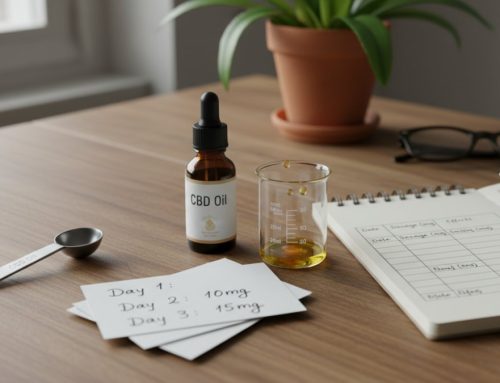
Starting baseline: 0.15-0.25mg of CBD per pound of body weight per day. A 160lb athlete would start at 24-40mg daily.
By training intensity:
- Light training days: Lower end of baseline range
- Moderate training (3-4 sessions/week): Baseline range, split between morning and post-workout
- High-intensity or competition weeks: Upper end of baseline, with additional topical application to specific muscle groups
Titration protocol:
- Start at the lower end of your weight-based range for 7 days
- Assess sleep quality, perceived soreness, and recovery time
- Increase by 5-10mg increments weekly until desired effect is achieved
- Hold at effective dose for 30 days before reassessing
Bioavailability varies significantly by delivery method. Water-based CBD formulations, like those used by CBD Health Collection, are designed for enhanced absorption compared to oil-based alternatives, which means effective doses may be lower than with standard oil products.
According to Project CBD’s educational resource on dosing cannabidiol, individual response to CBD is highly variable based on body chemistry, metabolism, and the condition being addressed. Start low, increase gradually, and track your results.
Integrating CBD for Muscle Recovery in Sports With Other Recovery Modalities
CBD works best as part of a system, not as a standalone fix. The athletes who report the most consistent results are those who use it alongside evidence-based recovery practices, not instead of them.
Sleep Hygiene, Nutrition, and Active Recovery Stacking
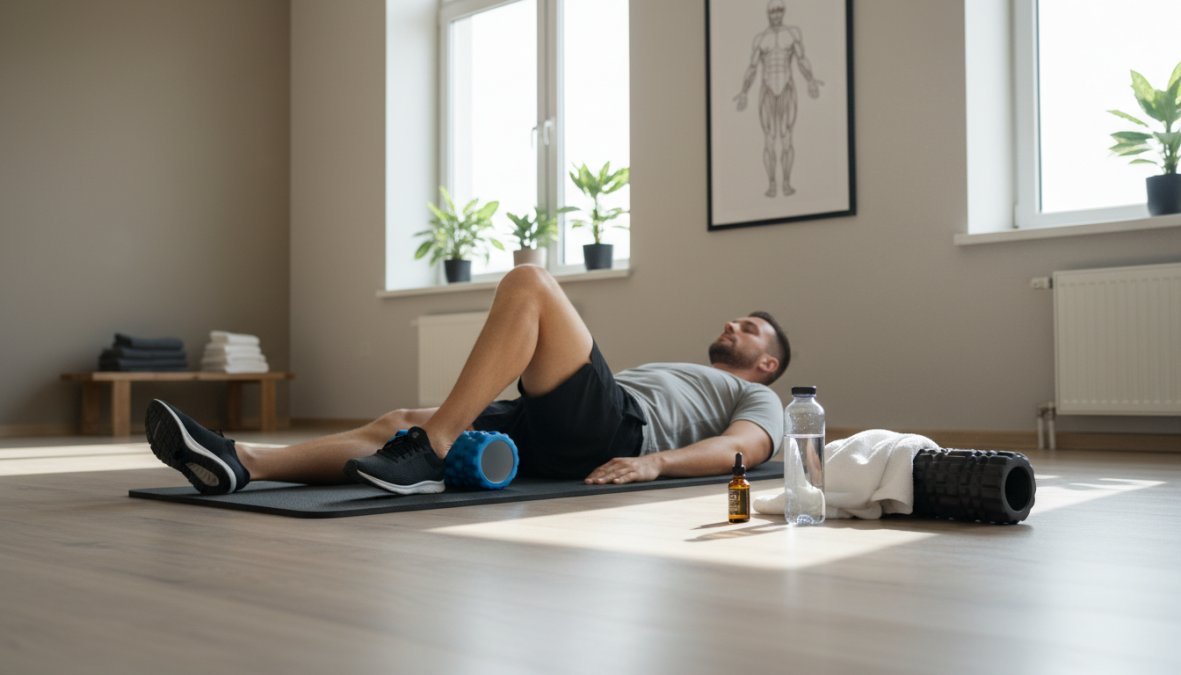
Sleep: CBD’s anxiolytic properties reduce pre-sleep cortisol and racing thoughts, which are two of the most common barriers to deep sleep in competitive athletes. Taking an oral CBD product 30-60 minutes before bed is the most consistent use case with meaningful recovery impact. Sleep is where growth hormone peaks, protein synthesis accelerates, and satellite cell differentiation occurs. Anything that improves sleep quality improves recovery quality.
Nutrition: CBD does not replace protein timing, carbohydrate replenishment, or micronutrient support. What it may do is reduce the inflammatory burden from training, which can improve nutrient partitioning. Pair CBD use with adequate protein intake (generally 1.6-2.2g per kg of body weight for strength athletes) and anti-inflammatory foods.
Active recovery: Cold water immersion, compression, and light movement all work through different physiological pathways than CBD. These modalities are additive, not redundant. A practical stack for a hard training day: post-workout topical CBD application to worked muscle groups, active recovery session 3-4 hours later, oral CBD 45 minutes before sleep.
Stress management: CBD’s interaction with the ECS supports cortisol regulation. Chronic training stress elevates cortisol, which suppresses immune function and slows recovery. Athletes in heavy training blocks often report that consistent CBD use helps maintain baseline mood and reduces the psychological fatigue that compounds physical fatigue.
How to Choose a Safe, High-Quality CBD Product as an Athlete
Most CBD products on the market fail on at least one of three criteria: source quality, extraction method, or third-party verification. For athletes, all three are non-negotiable.
What to check before buying:
- Hemp source: USA-grown, organically cultivated hemp is the baseline standard
- Extraction method: CO2 extraction preserves cannabinoid profile without solvent residue
- Certificate of Analysis (COA): Independent third-party lab testing confirming cannabinoid content and absence of pesticides, heavy metals, and residual solvents
- THC content: Broad-spectrum or isolate for competitive athletes; COA must confirm THC is non-detectable
- GMP-certified facility: Good Manufacturing Practice certification indicates consistent production standards
- Bioavailability design: Water-based or liposomal formulations absorb more efficiently than standard oil
CBD Health Collection checks every box on this list. Founded by pharmaceutical industry veteran Rick Bauer, the company produces all products from organically grown, USA-sourced hemp using clean CO2 extraction, manufactured in a GMP- and FDA-registered facility, with independently verified COAs available for every product. For athletes who need confidence in what they’re putting in their bodies, that supply chain transparency matters.
The thing nobody tells you about CBD product selection: the COA date matters as much as the COA results. A certificate from two years ago doesn’t reflect what’s in the current batch. Always verify the COA is current and batch-specific.
According to the U.S. Hemp Authority certification program standards, third-party testing and supply chain transparency are the two most critical quality indicators for hemp-derived CBD products in the US market.
Choosing the right CBD product for athletic recovery is genuinely confusing, and the market is full of products that don’t meet the quality threshold serious athletes need. CBD Health Collection offers organically grown, CO2-extracted, third-party tested CBD products, including tinctures, soft gels, topical freeze gels, and transdermal patches, all produced in a GMP-registered facility with full COA transparency. Get started with CBD Health Collection and give your recovery the same science-based attention you give your training.
Frequently Asked Questions
Does CBD help with muscle recovery after a workout?
CBD for muscle recovery in sports is increasingly popular among athletes due to its potential anti-inflammatory and analgesic properties. By interacting with CB1 and CB2 receptors in the endocannabinoid system, cannabidiol may help reduce oxidative stress and DOMS (delayed onset muscle soreness) following intense training. While clinical trials are still ongoing, many athletes report faster perceived recovery times. Always choose a third-party tested, hemp-derived product to ensure quality and safety.
Is CBD legal for professional athletes to use, and is it banned by WADA?
CBD is not banned by WADA (World Anti-Doping Agency) as of 2024 and is permitted for use by professional athletes in and out of competition. However, THC remains prohibited. This makes broad-spectrum or isolate CBD products, which are THC-free, the safest choice for competitive athletes. Always verify your product has a certificate of analysis (COA) from third-party testing to confirm it contains no detectable THC before competition use.
What is the best way to take CBD for muscle soreness, topical or oral?
The best method depends on your recovery goal. Topical CBD balms and freeze gels target localized muscle soreness directly at the site, offering faster surface-level relief with minimal systemic absorption. Oral CBD, such as tinctures, soft gels, or broad-spectrum gummies, enters the bloodstream and may support systemic inflammation reduction and sleep quality. Many athletes use both: a topical CBD for acute post-workout soreness and an oral product for overnight recovery support.
What CBD dosage should athletes start with?
There is no universally established CBD dosage for athletes, but a practical starting point is 1-6 mg of CBD per 10 lbs of body weight, adjusted for training intensity. A 160 lb athlete doing moderate training might begin with 15-25 mg orally per day, while high-intensity training days may warrant 30-50 mg. Start low, assess your response over one to two weeks, and increase gradually. Always consult a healthcare provider, especially if you take other medications.
Are there any side effects of using CBD for sports recovery?
CBD is generally well-tolerated, but some users report mild side effects including fatigue, dry mouth, or digestive changes, particularly at higher doses. Drug interactions are possible, CBD can affect how the liver processes certain medications. For athletes, the key risk is inadvertent THC exposure from low-quality products, which can trigger a failed drug test. Choosing independently verified, THC-free broad-spectrum or isolate products with a published COA significantly reduces this risk.
How long does it take for CBD to work for muscle pain?
Onset time varies by delivery method and bioavailability. Sublingual CBD tinctures typically take effect within 15-45 minutes. Soft gels and gummies may take 45-90 minutes due to digestion. Topical CBD balms applied directly to sore muscles can provide localized relief within 15-30 minutes. For systemic benefits like reduced inflammation and improved sleep hygiene, consistent daily use over one to two weeks is generally needed before athletes notice meaningful improvements in recovery time.
This article was written using GrandRanker