Table of Contents
- How CBD Works for Chronic Pain Relief
- CBD vs THC for Pain Relief: Key Differences
- Full Spectrum vs Isolate CBD for Pain: Which Works Better?
- Forms of CBD for Pain: Oils, Gummies, Topicals, and More
- CBD Dosage for Pain: A Practical Titration Protocol
- CBD Side Effects, Drug Interactions, and Safety
- How to Choose a CBD Product for Chronic Pain Relief
- Conclusion
Last Updated: May 18, 2026
Chronic pain affects millions of people who are searching for relief beyond conventional pharmaceuticals, and interest in cbd for chronic pain relief has grown substantially as a result. CBD Health Collection has helped many of those people find a science-backed, non-psychoactive option worth understanding properly. The challenge is that the market is flooded with half-truths, overblown claims, and products that vary wildly in quality. Below, we’ll cover exactly how cannabidiol works, how to match the right product to your specific pain type, and how to verify that what’s on the label is actually in the bottle.
Here’s what most guides get wrong: they treat CBD as a single, uniform solution. It isn’t. The form you take, the spectrum you choose, and the dose you start with all determine whether you experience genuine relief or nothing at all.
How CBD Works for Chronic Pain Relief
Cannabidiol is a non-psychoactive compound derived from hemp that interacts with the body’s endocannabinoid system to modulate pain signaling and inflammation. That sentence is worth reading twice, because it contains the entire mechanism.
The endocannabinoid system is a network of receptors, enzymes, and signaling molecules distributed throughout the brain, nervous system, and immune tissue. It regulates pain perception, immune response, mood, and sleep. CBD doesn’t bind directly to these receptors the way tetrahydrocannabinol does. Instead, it modulates receptor activity, slows the breakdown of naturally occurring endocannabinoids, and interacts with non-cannabinoid receptors involved in pain and inflammation.
The Endocannabinoid System and CB2 Receptors
CB2 receptors are concentrated in immune tissue and peripheral nerves. This is significant for pain management because CB2 activation tends to reduce neuroinflammation without producing the psychoactive effects associated with CB1 activation. CBD’s influence on CB2 receptors is one reason researchers are particularly interested in its potential for conditions like neuropathic pain, fibromyalgia, and osteoarthritis, where inflammation and nerve sensitization drive the pain experience.
CBD also interacts with TRPV1 receptors (involved in heat and pain signaling) and serotonin receptors that influence mood and pain tolerance. This multi-receptor activity is why the analgesic effects of CBD are broader than a single-pathway drug.
CBD’s value for chronic pain management lies in its multi-receptor activity. It doesn’t just block one pain signal; it modulates several systems simultaneously, which makes it particularly relevant for complex, long-standing pain conditions.
Acute vs. Chronic Pain: Does the Distinction Matter?
The distinction matters enormously, and most CBD guides skip over it entirely.
Acute pain is a short-term signal: you sprained your ankle, you have post-surgical soreness. The pain has a clear cause and a predictable endpoint. CBD may offer some analgesic support here, but it’s not where the compound shines.
Chronic pain is different. It involves central sensitization, neuroinflammation, and often a dysregulated endocannabinoid system. Many people living with chronic pain conditions show lower baseline levels of endocannabinoids, which is exactly the deficit CBD may help address. For chronic pain management, consistent daily use over weeks, not a single dose, is how most people report meaningful results.
The practical implication: if you try CBD once and feel nothing, that tells you almost nothing about whether it will work for you.
CBD vs THC for Pain Relief: Key Differences
CBD and THC both interact with the endocannabinoid system, but they operate through different receptor pathways, produce fundamentally different experiences, and are not interchangeable tools for every pain type. Understanding the distinction is not academic, it directly determines which product category you should be shopping in.
How Each Compound Engages the Endocannabinoid System
Tetrahydrocannabinol (THC) is a direct agonist at CB1 receptors, which are concentrated in the brain and central nervous system. This direct binding is what produces the psychoactive effect, but it is also what drives THC’s strongest analgesic action, particularly for neuropathic pain, where central sensitization is a dominant feature. Research from pain clinics in states and countries where medical cannabis is legal consistently shows that THC-containing products outperform CBD-only products for severe neuropathic conditions, but that advantage comes with trade-offs in cognitive clarity, dependency risk, and legal status.
CBD does not bind directly to CB1 receptors. Instead, it acts as a negative allosteric modulator, meaning it changes the shape of CB1 receptors in a way that actually reduces THC’s psychoactive potency when both compounds are present. This is one reason full-spectrum hemp products with trace THC feel different from high-THC cannabis: the CBD in the formula is actively moderating the THC signal. Simultaneously, CBD engages CB2 receptors (concentrated in immune tissue and peripheral nerves), TRPV1 pain receptors, and serotonin receptors involved in pain tolerance. This broader, indirect engagement makes CBD more suitable for inflammatory and widespread chronic pain than for acute neuropathic spikes.
Matching the Compound to the Pain Type
This is the practical layer most guides skip. The right compound depends on your pain’s underlying mechanism:
Inflammatory chronic pain (osteoarthritis, rheumatoid arthritis, inflammatory bowel-related pain): CBD’s CB2 and TRPV1 activity addresses the inflammatory cascade directly. Hemp-derived CBD is a reasonable first-line option here, and many people with inflammatory conditions report meaningful improvement with consistent daily use.
Neuropathic pain (diabetic neuropathy, post-herpetic neuralgia, chemotherapy-induced peripheral neuropathy): This is where the CBD-only evidence is weakest and where THC’s CB1 activity shows the most clinical promise. For people in states with legal medical cannabis programs, a low-THC formulation (such as a 20:1 or 10:1 CBD:THC ratio) may offer better relief than CBD alone, while keeping psychoactive effects minimal.
Fibromyalgia and central sensitization syndromes: The evidence base here is still developing, but the working hypothesis is that people with fibromyalgia may have a clinically deficient endocannabinoid tone. Both CBD and low-dose THC have been explored in this context. CBD’s effect on sleep quality, a major driver of fibromyalgia symptom severity, is one of its most practically relevant benefits for this population.
Post-workout muscle soreness and acute soft-tissue pain: Neither CBD nor THC is a first-line recommendation here. Topical CBD may reduce localized soreness, but the evidence for systemic CBD or THC in acute, non-inflammatory pain is thin.
| Feature | CBD (Hemp-Derived) | Low-Ratio THC (e.g., 20:1 CBD:THC) | High-THC Cannabis |
|---|---|---|---|
| Psychoactive | No | Minimal | Yes |
| Legal federally | Yes (0.3% THC limit) | No | No |
| Best pain type | Inflammatory, widespread | Neuropathic, mixed | Severe neuropathic |
| Drug test risk | Low (trace THC possible) | Moderate | High |
| Daily function impact | Minimal | Low to moderate | Moderate to high |
| Dependency potential | Very low | Low | Moderate |
The Honest Verdict on CBD vs. THC
For the majority of people seeking cbd for chronic pain relief who need to work, drive, and maintain cognitive clarity, hemp-derived CBD is the practical starting point. It is federally legal, non-intoxicating, and addresses the inflammatory and central sensitization mechanisms that underlie most common chronic pain conditions.
For people in legal-access states with severe neuropathic pain who have not found adequate relief from CBD alone, a conversation with a physician about a low-THC medical cannabis product is clinically reasonable, not a failure of CBD, but a recognition that different pain mechanisms respond to different tools.
One important nuance: if you are currently using hemp-derived CBD and considering adding any THC-containing product, do not treat them as equivalent. THC carries meaningful drug interaction considerations, dependency potential at higher doses, and legal implications that CBD does not. The decision warrants a conversation with your prescribing physician, particularly if you are on any medications metabolized by the cytochrome P450 enzyme system.
CBD and THC are not competing products, they are tools for different jobs. CBD is the appropriate daily-use option for inflammatory and widespread chronic pain. THC becomes relevant for severe neuropathic pain when legal access exists and CBD alone has proven insufficient. Knowing which mechanism drives your pain helps you choose the right tool rather than cycling through products at random.
Full Spectrum vs Isolate CBD for Pain: Which Works Better?
This is the question that generates the most confusion, and the answer depends on your specific situation.
Full-spectrum CBD contains cannabidiol plus all other naturally occurring cannabinoids, terpenes, and flavonoids from the hemp plant, including trace amounts of THC (up to 0.3%). The prevailing theory is that these compounds work synergistically, a concept known as the entourage effect. For chronic pain management, many practitioners and users report that full-spectrum products produce more noticeable effects than isolates at equivalent doses.
CBD isolate is pure cannabidiol with all other compounds removed. It contains zero THC, which makes it the right choice for people who are subject to drug testing or who are sensitive to other cannabinoids. The trade-off is that isolate may require higher doses to achieve the same effect as full-spectrum.
According to Project CBD’s overview of the entourage effect, the combination of cannabinoids and terpenes found in whole-plant hemp extracts may produce greater therapeutic benefit than isolated compounds alone.
Broad-Spectrum CBD: The Middle Ground
Broad-spectrum CBD sits between full-spectrum and isolate. It retains the full range of cannabinoids and terpenes but removes THC entirely through additional processing. This is the format CBD Health Collection uses in its gummy products, and it’s a sensible choice for people who want potential entourage benefits without any THC exposure.
For chronic pain relief, the practical ranking looks like this:
- Full-spectrum: Best potential efficacy, trace THC present
- Broad-spectrum: Strong efficacy profile, zero THC
- Isolate: Predictable, THC-free, may need higher doses
If you’re new to CBD for pain and have no drug testing concerns, start with a broad-spectrum or full-spectrum product. You’ll get the most complete picture of how CBD affects your pain before deciding whether to simplify to isolate.
Forms of CBD for Pain: Oils, Gummies, Topicals, and More
The delivery method determines how quickly you feel effects and how long they last. A common mistake is choosing a form based on convenience alone without thinking about the pain type.
Tinctures (CBD oils): Placed under the tongue, tinctures absorb through the sublingual mucosa and reach the bloodstream in 15-45 minutes. Bioavailability is higher than oral ingestion because the compound bypasses first-pass liver metabolism. Best for systemic chronic pain, fibromyalgia, and widespread inflammation. CBD Health Collection’s water-based CBD formulation is designed specifically for optimized bioavailability, which addresses one of the main criticisms of oil-based tinctures.
Gummies and soft gels: Oral ingestion takes 45-90 minutes to produce effects but provides longer-lasting relief, often 4-8 hours. The delayed onset is the main pitfall; people take a second dose too early and overshoot. Best for sustained daily pain management.
Topical application (balms, freeze gels, pain patches): Topicals work locally. They don’t reach the bloodstream in meaningful quantities, so they won’t address systemic or central pain. For localized joint pain, muscle soreness, and osteoarthritis in specific joints, topicals can provide targeted relief without any systemic effects. CBD Health Collection’s freeze gel and pain patches are designed for exactly this use case.
| Form | Onset Time | Duration | Best For |
|---|---|---|---|
| Tincture/Oil | 15-45 min | 4-6 hours | Systemic pain, fibromyalgia |
| Gummies/Soft gels | 45-90 min | 6-8 hours | Daily maintenance |
| Topical/Freeze gel | 15-30 min | 2-4 hours | Localized joint/muscle pain |
| Pain patches | 30-60 min | 8-12 hours | Sustained localized relief |
CBD Dosage for Pain: A Practical Titration Protocol
Dosage titration is the part of cbd for chronic pain relief that virtually every guide glosses over, and it’s the reason many people conclude that CBD "doesn’t work" for them.
The principle is simple: start low, go slow, track everything.
A practical titration protocol for chronic pain:
- Week 1: Start at 10-15mg CBD per day, taken in a single dose. Note your pain level on a 1-10 scale each evening.
- Week 2: If no change, increase to 20-25mg per day. Continue tracking.
- Week 3: If still no change, increase to 30-40mg per day. Split into morning and evening doses.
- Week 4: Evaluate. If you’ve seen improvement, hold at the current dose for two more weeks before adjusting further.
- Ongoing: Once you find an effective dose, maintain it consistently. CBD’s effects on chronic pain tend to compound with consistent use.
The thing nobody tells you about CBD dosage is that body weight is only one variable. Metabolism, the severity and type of pain, and whether you’re taking CBD with food (fat increases absorption significantly) all affect your effective dose. Anecdotal evidence from long-term users consistently points to the importance of taking CBD with a meal containing healthy fats.
Do not increase your CBD dose more than once every 7 days. Jumping doses quickly makes it impossible to identify your actual effective threshold, and you’ll waste product in the process.
As documented in Harvard Health Publishing’s overview of CBD and pain, the research on optimal CBD dosing for pain is still developing, and individualized titration remains the most evidence-consistent approach.
CBD Side Effects, Drug Interactions, and Safety
CBD has a favorable safety profile compared to many conventional pain medications, but "favorable" doesn’t mean "without risk."
Common side effects include drowsiness, dry mouth, reduced appetite, and mild gastrointestinal upset, particularly at higher doses. These are dose-dependent and often resolve as the body adjusts.
Liver toxicity is a real concern at very high doses. The FDA-approved CBD drug Epidiolex, used for epilepsy, showed liver enzyme elevations at doses far above what typical pain-relief products contain. For standard over-the-counter CBD doses (10-100mg/day), liver toxicity is not a documented concern, but people with pre-existing liver conditions should consult a physician before use.
Drug interactions are the most clinically significant safety issue. CBD inhibits cytochrome P450 enzymes in the liver, the same enzyme family responsible for metabolizing many common medications. This can increase or decrease blood levels of drugs including:
- Blood thinners (warfarin)
- Anti-seizure medications
- Certain antidepressants
- Immunosuppressants
The interaction risk is real and not hypothetical. According to the FDA’s guidance on CBD drug interactions, anyone taking prescription medications should discuss CBD use with their prescribing physician before starting.
CBD is not recommended during pregnancy or breastfeeding.
How to Choose a CBD Product for Chronic Pain Relief
Choosing the right product for cbd for chronic pain relief comes down to three factors: verified quality, appropriate form, and transparent sourcing.
Start with sourcing. Hemp-derived CBD quality varies enormously based on how the plant was grown and how the oil was extracted. Organically grown, USA-sourced hemp processed via CO2 extraction is the cleanest standard available. CO2 extraction avoids the residual solvents that cheaper ethanol extraction can leave behind. CBD Health Collection sources all its hemp domestically, uses CO2 extraction, and produces its products in a GMP- and FDA-registered facility, which means the manufacturing process itself is subject to regulatory oversight.
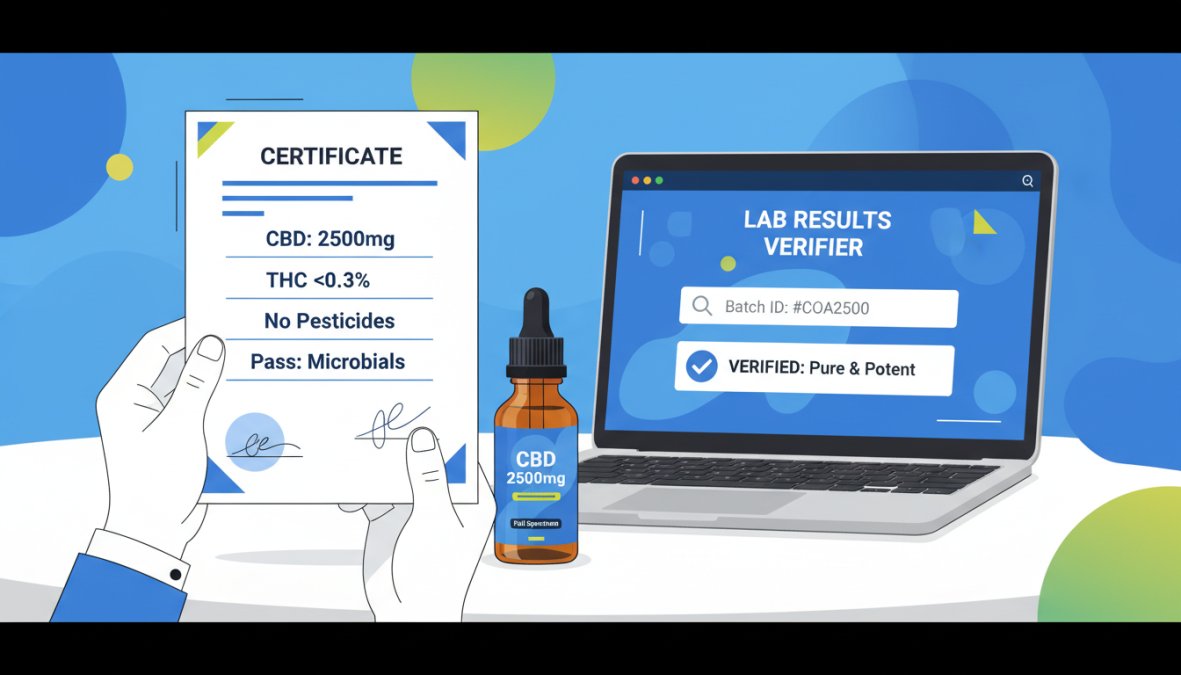
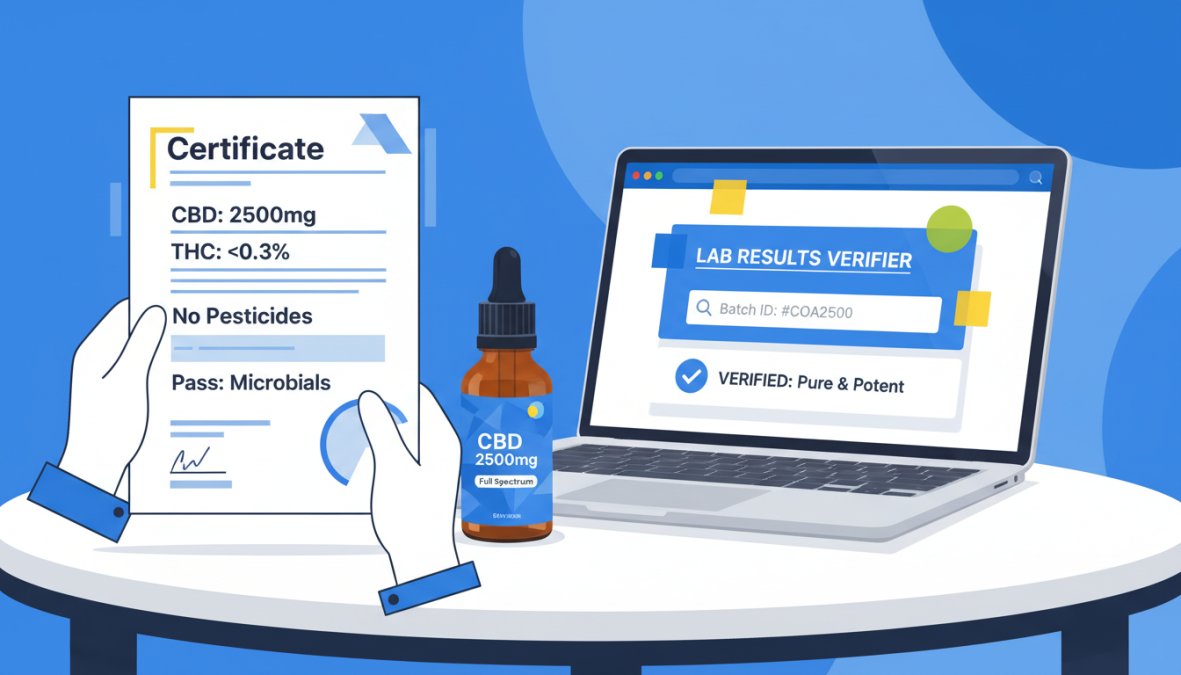
Second, look for independent third-party testing. Any brand making quality claims should back them with a Certificate of Analysis (COA) from an accredited external lab, not an in-house test.
Third, match the product to your pain pattern. Localized joint pain calls for a topical. Systemic or widespread pain calls for a tincture or oral product. Daily maintenance often works best with a consistent oral dose.
Reading a Certificate of Analysis (COA): What to Look For
A COA is the single most important document in CBD purchasing, and most consumers have never read one.
A legitimate COA should include:
- Cannabinoid potency panel: Confirms the actual CBD content matches the label claim. Look for the CBD mg/ml or mg/serving figure and compare it to what the label states.
- THC content: Should be at or below 0.3% for hemp-derived products. If you’re using broad-spectrum or isolate, THC should read as "ND" (not detected).
- Heavy metals panel: Hemp is a bioaccumulator, meaning it pulls metals from soil. A clean COA shows lead, arsenic, cadmium, and mercury at or below safe thresholds.
- Pesticide and residual solvent screening: Should show "pass" or "ND" across all tested compounds.
- Issuing lab: The lab should be accredited (ISO 17025 is the standard) and independent, meaning it has no financial relationship with the brand.
- Batch number: The COA should correspond to the specific batch of product you purchased, not a generic annual test.
When you receive a CBD product, scan the QR code or look up the batch number on the brand’s website before opening it. If the COA doesn’t match your batch, treat the product as unverified.
The U.S. Hemp Authority’s certification standards provide a useful benchmark for what a compliant, transparent CBD brand looks like at the production and testing level.
A COA isn’t a guarantee of efficacy, but it is a guarantee of honesty. A brand that won’t show you its lab results is telling you something important.
Finding effective, consistent relief from chronic pain is genuinely difficult, and the CBD market makes it harder by mixing quality products with underdosed, untested ones. The right approach is to start with a product that has verified cannabinoid content, matches your specific pain pattern, and comes from a manufacturer with documented GMP compliance and independent lab testing. CBD Health Collection was built on exactly that standard: organically grown hemp, CO2 extraction, third-party COA testing, and a 30-day satisfaction guarantee on every product. Get started with CBD Health Collection and take the guesswork out of cbd for chronic pain relief.
Frequently Asked Questions
Is CBD effective for chronic pain?
Research into CBD for chronic pain relief is ongoing, and clinical trials show promising results, particularly for neuropathic pain, fibromyalgia, and osteoarthritis. While anecdotal evidence is strong, most experts recommend treating CBD as a complementary approach alongside conventional care. Product quality, bioavailability, and consistent dosage titration all influence how effective CBD may be for any individual. Always consult a healthcare provider before starting a CBD regimen for chronic pain management.
How much CBD should I take for chronic pain?
There is no universal CBD dosage for pain. A practical starting point is 10-15 mg of cannabidiol once or twice daily, increasing by 5 mg every 5-7 days until you notice relief, a process called titration. Body weight, metabolism, the form of CBD used, and the type of pain all affect optimal dosage. Keeping a simple pain and dosage journal helps track what works. Always start low and go slow, especially if you take other medications.
What type of CBD is best for chronic pain?
Full-spectrum CBD is often considered the most effective for chronic pain because it contains cannabidiol alongside other cannabinoids, terpenes, and trace amounts of tetrahydrocannabinol, which may create an 'entourage effect.' Broad-spectrum CBD offers similar benefits without THC. Isolate is the purest form but lacks supporting compounds. For localized pain like joint or muscle discomfort, a topical application may work well alongside an oral tincture or soft gel for systemic support.
Are there side effects of using CBD for pain?
CBD side effects are generally mild and may include drowsiness, dry mouth, changes in appetite, and, at high doses, potential liver toxicity. CBD also carries a risk of drug interactions, particularly with blood thinners, anti-epileptics, and certain antidepressants, because it is processed by the same liver enzymes. Always review a product's third-party COA to confirm it is free of contaminants, and consult your doctor if you take prescription medications before using CBD for pain relief.
How do I verify the quality of a CBD product using a COA?
A Certificate of Analysis (COA) is a third-party lab report that confirms a product's cannabidiol potency, THC level, and absence of pesticides, heavy metals, and residual solvents. Look for COAs issued by ISO-accredited labs, match the batch number on the product label to the COA, and confirm the CBD content matches what is advertised. Avoid any hemp-derived CBD product that cannot provide a current, publicly accessible COA, this is the single most important quality signal for consumers.
This article was written using GrandRanker