Table of Contents
- What Is Natural CBD for Pet Anxiety Relief?
- Recognizing Signs of Anxiety in Pets
- CBD Dosage for Dogs Anxiety: Finding the Right Amount
- CBD for Separation Anxiety in Pets: Targeted Relief
- Safety, Side Effects, and Drug Interactions
- How to Choose the Right Natural CBD Product for Your Pet
- Natural CBD for Pet Anxiety Relief: Real-World Implementation
- Conclusion
Last Updated: July 6, 2026
What Is Natural CBD for Pet Anxiety Relief?
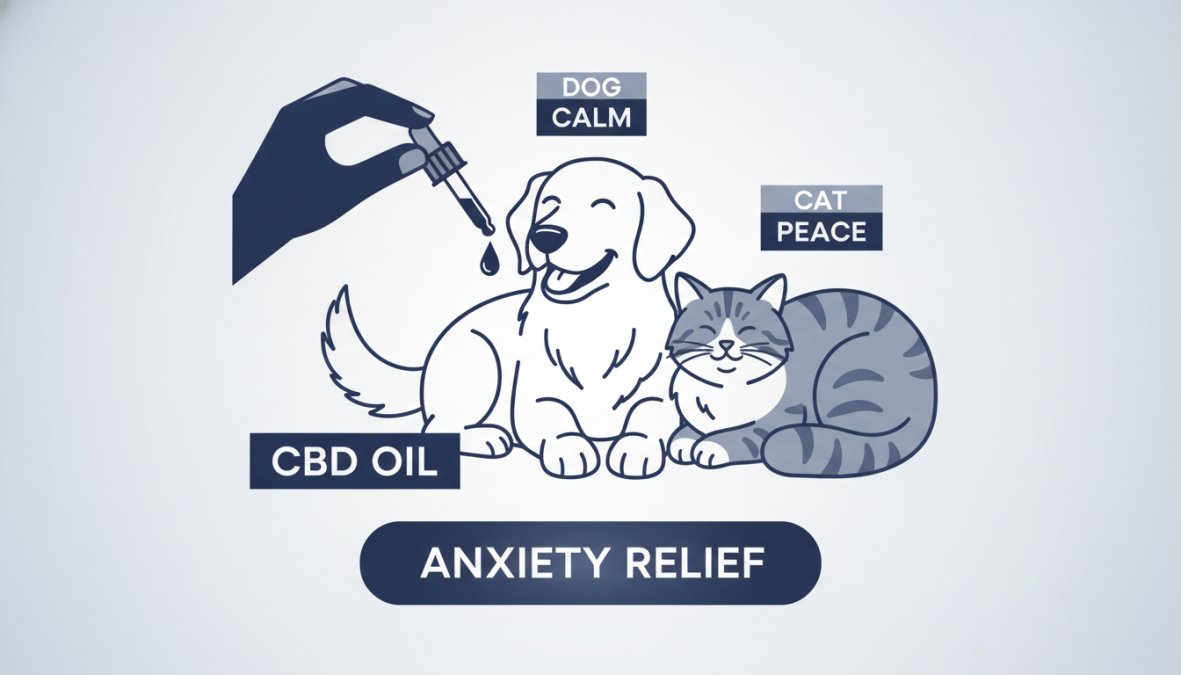
Natural CBD for pet anxiety relief refers to cannabidiol extracted from hemp plants and formulated to help pets manage stress and anxiety-related behaviors. Unlike THC, CBD is non-psychoactive and works with your pet’s endocannabinoid system to promote calm without impairment. CBD comes in multiple forms, tinctures, soft chews, oils, and treats, making it easy to integrate into your pet’s daily routine. Quality products are distinguished by extraction method, hemp source, and third-party testing; those derived from organically grown, USA-sourced hemp and extracted using clean CO2 processes maintain higher cannabinoid profiles and purity standards.
How Cannabidiol Works in Your Pet’s Endocannabinoid System
Your pet’s body contains an endocannabinoid system (ECS), a cell-signaling network that regulates mood, stress response, sleep, and immune function. Cannabidiol interacts with CB1 and CB2 receptors throughout this system, influencing neurotransmitter activity without directly binding to these receptors as THC does. When a pet experiences anxiety, their ECS becomes dysregulated and stress hormones spike. CBD helps restore balance by enhancing the body’s natural ability to manage stress signals and increasing serotonin signaling, which directly counteracts anxiety-driven behaviors. Effects typically emerge gradually over days or weeks as CBD accumulates in your pet’s system.
Full-Spectrum vs. Broad-Spectrum Hemp Extract: Which Matters for Anxiety
Full-spectrum hemp extract contains all naturally occurring compounds from the plant, cannabinoids, terpenes, flavonoids, and trace amounts of THC (below 0.3% federally). Broad-spectrum extract removes most THC while retaining other beneficial compounds. For anxiety relief, full-spectrum products often show superior efficacy due to the "entourage effect," where multiple plant compounds work synergistically to amplify therapeutic benefits. Terpenes like myrcene, limonene, and linalool contribute significantly to anxiety relief; myrcene promotes relaxation while limonene supports mood elevation. When selecting a product, examine the certificate of analysis (COA) to verify terpene profiles, not just CBD potency.
Full-spectrum products typically cost 10-15% more than broad-spectrum alternatives but deliver noticeably stronger anxiety relief for most pets within 2-3 weeks of consistent use.
Recognizing Signs of Anxiety in Pets
Anxiety in pets manifests through behavioral and physiological signals often misinterpreted as misbehavior. Common signs include excessive barking, destructive behavior, panting, drooling, pacing, trembling, and reluctance to eat. Subtle symptoms include hiding, withdrawn behavior, or excessive grooming. Physical indicators include dilated pupils, tucked tail, flattened ears, and jaw tension. During anxiety episodes, heart rate elevates, digestion slows, and the immune system becomes temporarily suppressed. These physiological responses compound over time if untreated, leading to chronic stress-related health issues.
Breed-Specific Anxiety Triggers You Should Know
Different breeds show predisposition to specific anxiety triggers based on genetic history and temperament. Herding breeds like German Shepherds and Border Collies often develop anxiety from lack of mental stimulation, manifesting as obsessive behaviors. Toy breeds tend toward separation anxiety and sound sensitivity due to close bonding patterns. Large breeds like Golden Retrievers typically experience anxiety when exercise needs aren’t met. Rescue dogs frequently display generalized anxiety disorder, responding fearfully to unpredictable stimuli. Understanding your pet’s breed-specific triggers allows for targeted CBD dosing and complementary behavioral strategies.
CBD Dosage for Dogs Anxiety: Finding the Right Amount
Determining the correct CBD dosage requires consideration of body weight, anxiety severity, product potency, and individual metabolism. A general starting guideline is 0.5 to 1 mg of CBD per pound of body weight, administered once or twice daily. Optimal dosing varies significantly between individual pets; some respond within 3-5 days while others require 2-3 weeks at higher doses. Start at the lower end of the range and increase gradually every 5-7 days until desired effects appear.
Exceeding 2 mg per pound of body weight daily can cause drowsiness, dry mouth, and temporary appetite suppression. Monitor your pet closely during the first two weeks of CBD use and adjust dosage based on observed behavior changes.
Step-by-Step Titration Schedule for Safe Dosing
Begin with a baseline dose of 0.5 mg per pound of body weight for 5-7 days. Keep a daily anxiety log noting your pet’s behavior, stress responses, and changes in appetite, sleep, or activity level. After the first week, evaluate whether anxiety symptoms have diminished by 25-50%. If improvement is noticeable, maintain that dose. If no change appears, increase to 0.75 mg per pound for the next 5-7 days. Continue this progression: 0.75 mg per pound (week 2), 1 mg per pound (week 3), and up to 1.5 mg per pound if needed. Most pets reach their optimal dose within 2-4 weeks. Once identified, maintain consistency by giving CBD at the same time each day, ideally with food to enhance absorption.
Bioavailability and Absorption: Why Delivery Method Matters
Bioavailability refers to the percentage of CBD that enters your pet’s bloodstream and becomes available for therapeutic use. Tinctures administered sublingually achieve 12-35% bioavailability because sublingual tissue absorbs cannabinoids directly into the bloodstream, bypassing first-pass liver metabolism. Soft chews and treats have lower bioavailability of 6-15% because they must pass through the digestive system. Water-based CBD technology optimizes bioavailability compared to traditional oil-based formulations, meaning smaller doses deliver equivalent therapeutic effects. CBD taken with fatty foods increases absorption by up to 40%. For pets requiring rapid onset, sublingual tinctures outperform chews by 2-3 hours in symptom relief.
CBD for Separation Anxiety in Pets: Targeted Relief
Separation anxiety represents one of the most common anxiety presentations in pets, characterized by panic and destructive behavior when owners leave home. Symptoms include excessive barking, elimination indoors despite house training, destructive chewing focused on exits, and self-injury attempts. CBD addresses the neurobiological root by reducing hypervigilance and promoting emotional regulation during vulnerable periods. Administer CBD 30-60 minutes before you typically leave home, allowing the cannabinoid to reach peak blood levels as your pet anticipates your departure.
Combine CBD with desensitization training for significantly faster improvement. Give your pet their CBD dose, wait 45 minutes, then leave for 15 minutes. Gradually extend absence duration by 10-minute increments every 3-4 days. Your pet learns that your departure no longer triggers panic because CBD maintains emotional stability. After 4-6 weeks, many pets show such improvement that owners can reduce CBD frequency from daily to 3-4 times weekly.
Separation anxiety responds fastest to CBD when combined with gradual exposure therapy. The cannabinoid reduces fear responses while your pet learns new behavioral patterns through repeated safe experiences.
Safety, Side Effects, and Drug Interactions
CBD demonstrates excellent safety profiles across thousands of pet users, with side effects remaining rare and mild. The most commonly reported effects include temporary drowsiness during the first 1-2 weeks, mild dry mouth, and reduced appetite in sensitive animals. These effects typically resolve within days as tolerance develops. More serious concerns arise from drug interactions rather than CBD toxicity itself. CBD inhibits the cytochrome P450 enzyme system, which metabolizes many pharmaceutical drugs. If your pet takes medications for seizures, heart conditions, behavioral issues, or pain management, CBD may increase those drugs’ blood levels and potency.
Always inform your veterinarian before introducing CBD, providing the product’s certificate of analysis and your intended dosage. Your vet can monitor liver function through periodic bloodwork if your pet takes multiple medications. Pregnant or nursing pets should avoid CBD due to insufficient safety data. Pets with liver disease require lower CBD doses and more frequent monitoring.
Never combine CBD with sedative medications without veterinary guidance. The combination can cause excessive drowsiness and impaired coordination. Your vet may recommend reducing the sedative dose as CBD takes effect.
Understanding Third-Party Lab Reports and Certificates of Analysis
A certificate of analysis (COA) represents your guarantee that a CBD product contains what the label claims. Legitimate manufacturers send samples to independent laboratories for testing. The COA verifies CBD potency (actual milligrams per serving), the presence or absence of THC, contamination levels for heavy metals and pesticides, and microbial safety. CBD potency should match the label within ±10%, THC should measure below 0.3% federally, and heavy metals should fall below detectable limits. Microbial testing screens for E. coli, salmonella, and mold, critical for pet safety.
Reputable companies publish COAs on their websites, allowing customers to verify product safety before purchase. If a CBD manufacturer cannot provide a recent COA from an independent lab, the product’s quality remains questionable. Look for labs accredited by ISO 17025, indicating they meet rigorous testing standards. COAs should be dated within the past 12 months.
How to Choose the Right Natural CBD Product for Your Pet
Selecting quality CBD requires evaluating multiple factors beyond price and brand recognition. Start by verifying the hemp source, USA-grown, organically cultivated hemp contains fewer pesticides and environmental contaminants than imported alternatives. Check whether the company uses clean CO2 extraction, the gold standard for preserving cannabinoids and terpenes. Potency matters in context of your pet’s weight and anxiety severity; a 30 mg/ml tincture serves small pets efficiently, while larger dogs benefit from 60-100 mg/ml concentrations. Read customer reviews from pet owners with similar-sized pets and anxiety presentations to inform realistic expectations.
Product freshness affects efficacy; CBD degrades when exposed to heat, light, and oxygen. Opt for products in dark glass bottles with airtight seals, stored in cool conditions. Check manufacturing dates on the label; products older than 6 months may show reduced potency.
Product Forms: Tinctures, Chews, and Oils Compared
| Product Form | Bioavailability | Onset Time | Best For | Dosing Control |
|---|---|---|---|---|
| Sublingual Tincture | 12-35% | 15-30 minutes | Rapid anxiety relief, accurate dosing | Excellent (dropper precision) |
| Soft Chews | 6-15% | 45-90 minutes | Convenience, picky eaters | Good (pre-measured) |
| CBD Oil (food additive) | 6-12% | 60-120 minutes | Daily maintenance, budget-conscious | Fair (requires measuring) |
| Capsules | 4-10% | 90-120 minutes | Precise dosing, medication-like format | Excellent (pre-measured) |
Tinctures dominate for anxiety relief because sublingual absorption bypasses digestive processing, delivering faster effects with lower doses. For pets resistant to tinctures, soft chews offer convenience and palatability. CBD oils mixed into food work well for maintenance dosing but show slower onset and variable absorption depending on meal composition. The best form ultimately matches your pet’s preferences and your lifestyle; consistency matters more than the theoretical superiority of one delivery method.
What to Look for in a Veterinarian-Approved Product
Veterinarian-approved CBD products meet specific standards: third-party lab testing, transparent ingredient lists, appropriate potency for pet body weight, and documented safety records. Quality products list all ingredients clearly with no proprietary blends hiding unknown additives. Avoid products containing xylitol, a sweetener toxic to dogs, or excessive fillers that dilute CBD potency. The label should state the total CBD content per bottle and per serving, allowing you to calculate precise doses. Products manufactured in GMP-certified facilities meet pharmaceutical-grade standards for cleanliness and consistency.
Natural CBD for Pet Anxiety Relief: Real-World Implementation
Implementing CBD successfully requires consistency, patience, and realistic expectations. Most pets show noticeable anxiety improvement within 2-3 weeks of daily CBD administration at appropriate doses. However, 10-15% of pets require 4-6 weeks to demonstrate measurable changes. Start CBD during a stable period in your pet’s life, avoiding times of major environmental change. Keep detailed records of anxiety episodes, behavioral triggers, CBD dose and timing, and environmental factors. After 3 weeks, review these records to assess whether anxiety frequency or severity has decreased.
Many pet owners find that combining CBD with complementary strategies, anxiety wraps, pheromone diffusers, consistent exercise routines, and desensitization training, produces superior results compared to CBD alone. Natural CBD for pet anxiety relief works best as part of a comprehensive anxiety management plan.
Most pets respond best to CBD administered at the same time daily, ideally with or shortly after a meal. This consistency helps your pet’s body establish a rhythm of anxiety management rather than reactive dosing during panic episodes.
Common Mistakes Pet Owners Make When Starting CBD
The most frequent error involves underdosing; pet owners start at the minimum recommended dose and never increase it, then conclude CBD doesn’t work. Anxiety relief requires finding your pet’s individual optimal dose, which often falls in the middle to upper range of recommendations. Give CBD at least 5-7 days at each dose level before increasing.
Another common mistake involves inconsistent administration. Giving CBD sporadically prevents the consistent blood levels necessary for sustained anxiety relief. CBD works best as a daily preventative, not an emergency treatment. Pet owners frequently switch products or doses too quickly, interpreting the normal 2-3 week adjustment period as failure. Your pet’s endocannabinoid system requires time to rebalance; patience yields better results than constant adjustments.
Failing to communicate with your veterinarian represents another critical mistake. Your vet needs to know you’re using CBD, especially if your pet takes other medications. This transparency allows your vet to monitor for interactions and adjust other treatments as needed. Pets receiving coordinated care, CBD plus veterinary oversight, show faster anxiety improvement than those using CBD without professional guidance.
Natural CBD for pet anxiety relief offers a plant-based, non-psychoactive alternative for pets struggling with stress and behavioral issues. Success lies in selecting high-quality products with verified potency, implementing consistent dosing protocols tailored to your individual pet, and combining CBD with behavioral strategies for comprehensive anxiety management. Start your pet’s anxiety relief journey with products backed by transparent lab reports, realistic dosing guidance, and satisfaction guarantees, because your pet’s wellbeing deserves nothing less than premium quality and genuine care.
Frequently Asked Questions
Is natural CBD safe for pets with anxiety?
Yes, natural CBD derived from hemp is generally safe for pets when sourced from reputable, third-party tested brands. Look for products that are THC-free and contain no harmful additives. Always consult your veterinarian before starting, especially if your pet takes other medications. CBD Health Collection products are made from organically grown, USA-sourced hemp with independent lab verification for purity and potency.
How long does it take for CBD to work for dog anxiety?
Most pets show noticeable calming effects within 30 minutes to 2 hours of taking CBD, though this varies by individual metabolism, product type, and dosage. Some pets may need 1-2 weeks of consistent use before full anxiety-relieving benefits appear. Bioavailability affects speed, tinctures absorbed sublingually work faster than chews. Keep a log of your pet's behavior to track improvements accurately.
What CBD dosage for dogs anxiety should I start with?
Begin with 0.25-0.5 mg of CBD per pound of body weight daily, divided into two doses. For a 50-pound dog, this means 12.5-25 mg daily. Monitor your pet's response for 7-10 days, then increase gradually by 25% if needed. Never jump to high doses immediately. A step-by-step titration schedule prevents side effects and helps identify the minimum effective dose for your dog's unique anxiety triggers.
Can I give my cat CBD for anxiety, and how is it different from dogs?
Yes, cats can benefit from natural CBD for anxiety, but they require lower doses than dogs due to their smaller size and different metabolism. Start with 0.1-0.25 mg per pound of body weight. Cats are more sensitive to taste and smell, so flavored tinctures or palatable chews work better than unflavored oils. Always verify the product is formulated for cats and contains no harmful additives like xylitol.
This article was written using GrandRanker