
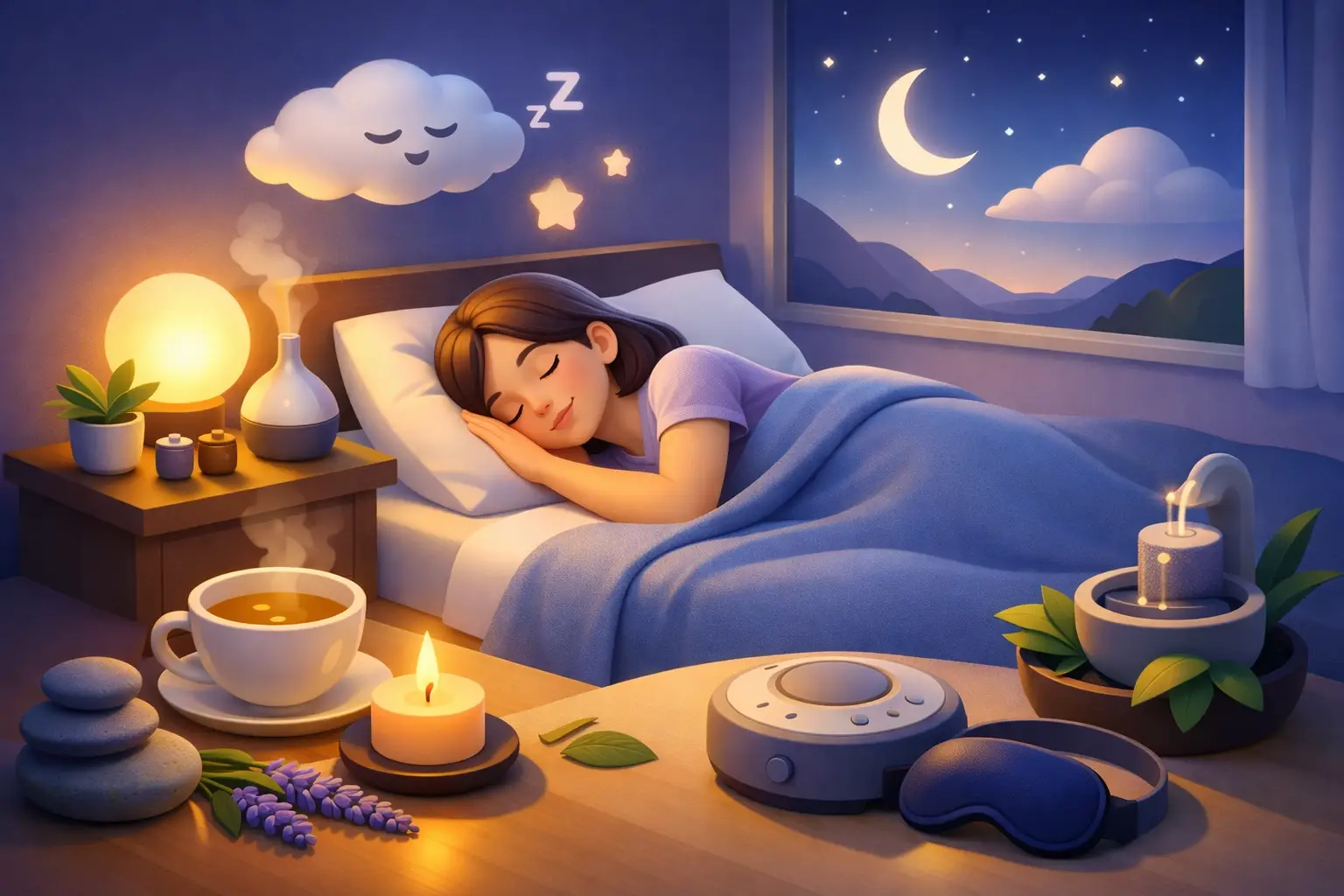
Some nights, the problem is not being tired. It is being tired and still feeling switched on. Your body is in bed, but your mind is replaying conversations, tomorrow’s to-do list, or that low-level stress you kept pushing aside all day. If you are wondering how to relax and sleep well, the answer is usually not one dramatic fix. It is a handful of steady habits that tell your nervous system it is safe to power down.
For most adults, better sleep starts earlier than bedtime. What you do in the final hour matters, but so does how much caffeine you had at 3 p.m., how stressed you felt at dinner, and whether your body ever got a clear signal that the day was ending. Sleep is not a switch. It is a process.
Why relaxing before bed matters
Falling asleep is easier when your brain and body are working together. Stress changes that equation. Even mild tension can keep heart rate elevated, tighten muscles, and make your thoughts feel louder than the room around you. That is why people can feel physically exhausted and still struggle to drift off.
Relaxation is not laziness or wasted time. It is a biological cue. When you slow your breathing, reduce stimulation, and follow a predictable evening routine, you help shift out of a fight-or-flight state and into a rest-and-recover state. That is the foundation of how to relax and sleep well in a way that feels consistent, not accidental.
It also helps to be realistic. You do not need a perfect sleep routine to sleep better. You need a routine your body can recognize and trust. Simpler usually works better than complicated.
Start with the hour before bed
If your evenings are packed with bright screens, late meals, and mental multitasking, your body may still feel like it is daytime when you get into bed. Creating a buffer between the demands of the day and the act of sleeping can make a noticeable difference.
Start by dimming lights around the house about an hour before bed. Bright overhead lighting can make it harder for your brain to wind down. Lower light levels create a clearer transition into nighttime.
Then look at stimulation. If social media, news, or work messages leave you feeling alert or agitated, they are not neutral parts of your bedtime routine. They are inputs your nervous system has to process. Some people can read email at 10 p.m. and sleep fine. Many cannot. It depends on how sensitive you are to stress and mental activation.
A better approach is to replace high-input activities with low-input ones. A warm shower, light stretching, quiet reading, calm music, or a few minutes of breathing practice can all help. The specific habit matters less than the consistency.
Try a simple reset ritual
When people ask how to relax and sleep well, they often expect a long checklist. In reality, a short routine repeated nightly tends to work better. You might wash your face, lower the lights, make a cup of caffeine-free tea, and sit quietly for ten minutes. That may sound small, but repeated cues train your body to anticipate rest.
The key is to choose a routine you will actually keep. A ten-step plan is not useful if it only lasts three nights.
Watch the hidden sleep disruptors
Sometimes the issue is not what you are missing. It is what is quietly getting in the way.
Caffeine is one of the most common examples. Many people underestimate how long it stays active in the body. If you are sensitive to it, coffee, energy drinks, or even strong tea late in the afternoon can interfere with your ability to fall asleep at night.
Alcohol can also be misleading. It may make you feel drowsy at first, but it often leads to lighter, more fragmented sleep later on. You may fall asleep faster and still wake up feeling less restored.
Late heavy meals, excess sugar, and inconsistent bedtimes can have a similar effect. None of these habits guarantees poor sleep, but together they can push your body away from a stable rhythm.
If you are trying to sleep better, change one or two variables first. That gives you a better sense of what is actually helping. Trying to overhaul everything at once can make the process feel harder than it needs to be.
Calm the body if the mind will not slow down
A racing mind is one of the biggest obstacles to sleep. The usual response is to try harder to stop thinking, which rarely works. In many cases, the better move is to give your body a job that signals safety and calm.
Slow breathing is one of the most practical tools because it does not require special equipment or much time. Try inhaling gently through your nose for four counts, then exhaling for six. Repeat that for a few minutes. A longer exhale can help reduce physical tension and promote a calmer state.
Progressive muscle relaxation can also help, especially if stress shows up as tight shoulders, a clenched jaw, or restless legs. Starting at your feet, gently tense a muscle group for a few seconds, then release. Work your way upward. This gives your attention somewhere to land besides anxious thoughts.
If your thoughts are looping
Mental overstimulation often comes from unfinished business. If your brain keeps serving reminders the moment your head hits the pillow, try a brief brain dump before bed. Write down what needs attention tomorrow, then stop. The goal is not to solve everything. It is to tell your mind it does not have to hold it all overnight.
This can be especially useful for caregivers, busy parents, and adults carrying a lot of responsibility. When life is full, the mind does not always relax on command. Externalizing your thoughts can create enough distance to rest.
Make your sleep space work for you
Your bedroom does not need to look like a spa retreat, but it should support sleep instead of competing with it. Temperature, noise, and light all matter more than many people realize.
Most people sleep better in a cool, dark, quiet room. If your space runs warm, lowering the temperature slightly may help. If noise is an issue, a fan or soft white noise can provide a steadier sound environment. Blackout curtains or an eye mask can be useful if outside light is interrupting sleep.
Your bed matters too. If you regularly work, scroll, or watch intense shows in bed, your brain can stop linking that space with sleep. It is a small behavioral shift, but using the bed primarily for sleep helps strengthen that association over time.
Natural support can help when routines are not enough
Good sleep habits are the base layer, but some people need additional support, especially during periods of stress, discomfort, or schedule disruption. That is where natural wellness tools may fit in.
For adults looking for non-intoxicating options, THC-free CBD is one approach many people consider as part of an evening routine. It is not a sedative in the traditional sense, and results vary from person to person. For some, the benefit is less about feeling knocked out and more about feeling calmer, more settled, and less physically tense at the end of the day.
That distinction matters. If stress, restlessness, or general discomfort is what keeps you from winding down, support that helps your body relax may make it easier to fall asleep naturally. Quality matters here. If you choose CBD, look for products that are independently lab tested, clearly labeled, and free from detectable THC so you know exactly what you are taking.
CBD Health Collection focuses on clean, THC-free formulations designed for everyday wellness support, which can be a practical fit for adults who want a more confident and straightforward option as part of a bedtime routine.
When better sleep takes more than one adjustment
If you have tried improving your routine and still struggle, it may be time to look at the bigger picture. Ongoing pain, anxiety, hormonal changes, medications, and sleep disorders can all affect rest. Snoring, frequent waking, waking up gasping, or feeling exhausted despite a full night in bed are worth paying attention to.
There is no benefit in forcing yourself through chronic sleep issues without support. Sometimes the right next step is not another sleep tip. It is a conversation with a healthcare professional who can help identify what is behind the pattern.
That said, many people do see real improvement from small, repeatable changes. A calmer evening, less stimulation, a more supportive sleep environment, and the right natural tools can add up. Better sleep often comes back gradually, then suddenly feels normal again.
If you are trying to figure out how to relax and sleep well, start by making nighttime feel less like a battle and more like a landing. Your body responds to consistency, clarity, and care, and even a few gentle changes can help it remember how to rest.