Table of Contents
- How CBD Affects Sleep Quality and Your Body’s Sleep Systems
- CBD vs Melatonin for Sleep: Which One Actually Works Better?
- CBD Dosage for Sleep: How to Find Your Optimal Amount
- How Long Does CBD Take to Work for Sleep?
- Types of CBD Products for Sleep: Oils, Gummies, and More
- CBD for Specific Sleep Disorders: Insomnia, Sleep Apnea, and Restless Legs
- Side Effects of CBD for Sleep and Drug Interactions to Know
- Improving Sleep Quality with CBD: Building a Sustainable Routine
- Conclusion
Last Updated: May 25, 2026
Poor sleep affects a significant portion of adults worldwide, and the search for natural, non-habit-forming solutions has never been more urgent. CBD for improving sleep quality has emerged as one of the most discussed options in the wellness space, and CBD Health Collection has helped thousands of customers understand how cannabidiol fits into a science-backed sleep routine. Below, we’ll show you exactly how CBD interacts with your body’s sleep systems, how it compares to conventional options like melatonin, and what the research actually says about dosage, product types, and safety. But first, here’s what most guides get wrong: they treat CBD as a sedative. It isn’t one. The mechanism is far more nuanced, and understanding that distinction changes how you use it.
How CBD Affects Sleep Quality and Your Body’s Sleep Systems
Cannabidiol (CBD) is a non-psychoactive compound derived from hemp that interacts with the body’s endocannabinoid system to influence sleep, mood, and pain regulation without producing the intoxicating effects associated with THC.
The endocannabinoid system is a cell-signaling network present throughout the body that helps regulate functions including circadian rhythm, stress response, and sleep-wake cycles. CBD doesn’t work by sedating you directly. It works by reducing the physiological and psychological barriers to sleep: anxiety, chronic pain, and circadian disruption.
The Endocannabinoid System and Circadian Rhythm Regulation
The endocannabinoid system contains two primary receptor types: CB1 receptors, concentrated in the central nervous system, and CB2 receptors, found primarily in immune tissue. CBD interacts with both, but its relationship to sleep is largely mediated through its influence on adenosine signaling and cortisol suppression.
Adenosine is a sleep-promoting neurotransmitter that accumulates throughout the day. CBD appears to slow its reuptake, allowing adenosine to build up more effectively and signal to the body that it’s time to rest. Separately, CBD’s anxiolytic properties help regulate cortisol, the stress hormone that frequently disrupts circadian rhythm by keeping the nervous system in a heightened state during hours when it should be winding down.
This is why CBD tends to work better for sleep-onset issues tied to anxiety than for pure insomnia with no identifiable cause. Knowing that distinction helps you set realistic expectations before you buy.
CBD’s Impact on Sleep Architecture: REM vs. Deep Sleep
Sleep architecture refers to the cyclical structure of sleep stages: light non-REM sleep, deep non-REM sleep (slow-wave sleep), and REM sleep. Each stage serves distinct functions. Deep sleep drives physical recovery and immune function. REM sleep supports memory consolidation, emotional processing, and cognitive repair.
According to research reviewed by the Sleep Foundation’s clinical overview of cannabinoids and sleep, CBD at lower doses may promote alertness during waking hours while improving sleep quality at night, whereas higher doses appear to increase total sleep time. The relationship with REM sleep is more complex. THC is known to suppress REM sleep significantly. CBD alone, particularly in broad-spectrum or isolate form, appears to have a more neutral or mildly stabilizing effect on REM architecture.
What this means practically: CBD is less likely to leave you feeling emotionally flat or cognitively foggy the morning after use, which is a common complaint with THC-heavy products and some pharmaceutical sleep aids. For those concerned about maintaining healthy delta oscillations and sleep spindle activity, CBD’s lighter footprint on sleep architecture is a meaningful advantage.
If you wake up feeling unrested despite sleeping a full night, disrupted sleep architecture, not just sleep duration, is often the culprit. CBD’s effect on anxiety and cortisol may help restore more restorative sleep cycles over time.
CBD vs Melatonin for Sleep: Which One Actually Works Better?
The CBD vs melatonin for sleep debate comes down to mechanism: melatonin is a hormone that signals the timing of sleep, while CBD addresses the conditions that prevent sleep from happening.
Melatonin is best for circadian rhythm disruptions: jet lag, shift work, or delayed sleep phase. It tells your body when to sleep. CBD is better suited for sleep problems rooted in anxiety, chronic pain, or stress-related hyperarousal. It addresses why you can’t sleep.
| Factor | CBD | Melatonin |
|---|---|---|
| Primary mechanism | Anxiety/pain reduction | Circadian timing signal |
| Best use case | Stress-driven insomnia | Jet lag, shift work |
| Habit-forming risk | Very low | Very low |
| Morning grogginess | Rare at moderate doses | Common at high doses |
| Drug interaction risk | Moderate (see CYP450) | Low |
| Onset time | 30-90 minutes | 20-40 minutes |
The honest answer: many people find that combining low-dose melatonin (0.5-1mg) with CBD produces better results than either alone, because the two address different parts of the sleep problem simultaneously. That said, start with one at a time to identify what’s actually helping.
CBD Dosage for Sleep: How to Find Your Optimal Amount
CBD dosage for sleep is genuinely individual, and most guides skip this inconvenient truth. Body weight, metabolism, the severity of your sleep issues, and the bioavailability of your chosen product all affect how much you need. There is no universal dose. What separates useful guidance from generic advice is a structured titration protocol, a step-by-step process for finding your personal effective dose rather than guessing from a chart.
A practical starting framework based on commonly reported clinical patterns:
- Low dose (10-25 mg): Mild anxiety, occasional sleep difficulty, first-time users
- Moderate dose (25-50 mg): Chronic stress-related insomnia, moderate pain disrupting sleep
- Higher dose (50-100 mg+): Severe sleep disorders, significant chronic pain, under medical supervision
Start at the low end and increase by 5-10 mg every three to five nights until you find the amount that produces noticeable improvement without next-day grogginess. This process is called dosage titration, and it is the standard approach used in clinical settings.
The 4-Week Titration Protocol: A Structured Approach
Rather than picking a dose and hoping for the best, a structured titration protocol gives you a repeatable, adjustable framework. Here is how to run one:
Week 1, Baseline establishment (10-15 mg nightly):
Take a low dose 45-60 minutes before your target sleep time. Do not change anything else about your sleep environment or routine. Log three data points each morning: time to fall asleep (estimated), number of nighttime wakings, and subjective morning energy on a 1-5 scale. This week is not about results, it is about establishing a baseline you can measure against.
Week 2, First titration step (20-25 mg nightly):
If Week 1 produced no meaningful change in any of your three logged metrics, increase by 5-10 mg. If you noticed partial improvement, hold the dose for one more week before increasing. If you experienced next-day drowsiness, drop back by 5 mg and hold. Continue logging.
Week 3, Second titration step or hold:
Apply the same decision logic. Most people find their effective dose somewhere between 20-50 mg when the primary issue is anxiety-driven sleep latency. People dealing with chronic pain as the primary sleep disruptor often require the higher end of the moderate range or above.
Week 4, Evaluation and stabilization:
Compare your Week 4 log averages against your Week 1 baseline. A meaningful response typically looks like a reduction in sleep latency, fewer nighttime wakings, or a consistent improvement in morning energy score. If you have reached this point without improvement, the issue may be product quality, delivery format, or an underlying condition that warrants medical evaluation rather than a higher dose.
Keep your titration log in a notes app or a simple paper journal. Three data points per morning takes less than 60 seconds and gives you objective evidence to work from instead of relying on memory. Most people who say CBD “didn’t work” never tracked their results systematically enough to know.
Micro-Dosing vs. Macro-Dosing Protocols for Sleep
Beyond the titration framework, there are two fundamentally different dosing philosophies worth understanding before you commit to a routine. Most articles mention dosage ranges without explaining that the timing and distribution of those doses matters as much as the total amount.
Micro-dosing for sleep involves taking very small amounts of CBD, typically 5-15 mg, at two or three points throughout the day rather than a single large dose at night. The goal is to maintain a steady baseline level of endocannabinoid support that progressively reduces anxiety and cortisol accumulation before bedtime ever arrives. A common micro-dosing schedule looks like this:
- Morning: 5-10 mg with breakfast
- Early afternoon: 5-10 mg around 2-3 PM
- Evening: 5-10 mg approximately 60 minutes before bed
The rationale is that anxiety-driven sleep latency is not a problem that begins at 11 PM, it builds across the entire day through cortisol accumulation and nervous system activation. Addressing it only at bedtime is addressing the symptom rather than the cause. Many practitioners find that consistent micro-dosing over two to three weeks produces more stable sleep improvements for anxiety-driven insomnia than a single large nighttime dose, particularly for people whose minds are still racing when they get into bed.
The critical caveat: micro-dosing requires consistency over weeks to show its full effect. It is not appropriate to evaluate after three nights. Commit to three weeks before drawing conclusions.
Macro-dosing for sleep involves a single larger dose, typically 40-100 mg, taken 30-60 minutes before bed. This approach is better suited to people dealing with significant chronic pain that interrupts sleep maintenance rather than sleep onset, or for those who have already established their tolerance through a titration protocol and know their effective dose. A single larger dose produces a more pronounced and time-limited effect, which can be useful when the goal is staying asleep through pain rather than reducing pre-sleep anxiety.
The trade-off with macro-dosing is a higher risk of next-day grogginess, particularly at doses above 75 mg, and a less stable effect across the full night compared to a split-dose approach.
| Protocol | Best for | Typical dose range | Timing | Evaluation window |
|---|---|---|---|---|
| Micro-dosing | Anxiety-driven sleep latency, daytime stress accumulation | 5-15 mg per dose, 2-3x daily | Morning, afternoon, evening | 3 weeks minimum |
| Macro-dosing | Pain-related sleep maintenance, established tolerance | 40-100 mg single dose | 30-60 min before bed | 2 weeks minimum |
| Titrated single dose | General insomnia, first-time users | 10-50 mg, increasing weekly | 45-60 min before bed | 4 weeks |
Bioavailability and Why Your Delivery Method Changes Your Effective Dose
One reason dosage advice is so inconsistent across sources is that the same milligram amount produces very different blood concentrations depending on how you take it. Sublingual tinctures bypass first-pass liver metabolism and deliver a higher proportion of CBD into the bloodstream compared to gummies or capsules, which must survive digestion before absorption. Water-soluble or nano-emulsified CBD formulations are designed to improve absorption further, though the degree of enhancement varies by product and formulation quality.
Practically, this means a 25 mg sublingual dose may be functionally equivalent to a 40-50 mg gummy dose for some users. If you switch delivery formats mid-titration, restart your titration from a lower dose rather than assuming the milligram count transfers directly.
Jumping straight to high doses without titration is the most common mistake new CBD users make. High doses can cause next-day drowsiness, interfere with daytime focus, and make it significantly harder to identify your actual effective dose. Start low, increase slowly, and log your results. The titration process is not optional, it is the method.
How Long Does CBD Take to Work for Sleep?
How long CBD takes to work for sleep depends almost entirely on the delivery method. Sublingual tinctures absorbed under the tongue reach the bloodstream in 15-45 minutes. Gummies and soft gels, which pass through the digestive system, typically take 45-90 minutes. Onset time directly affects when you should take your dose.
For tinctures: take 30-45 minutes before your target sleep time. For gummies or capsules: take 60-90 minutes before bed. Getting the timing wrong is one of the most common reasons people conclude that "CBD didn’t work" after their first attempt.
Consistent use over two to four weeks is where most people report the most meaningful improvement. According to research summaries published by the National Center for Complementary and Integrative Health, the evidence base for CBD and sleep continues to grow, with many researchers noting that longer-term use appears to produce more stable improvements than single-dose protocols.
Types of CBD Products for Sleep: Oils, Gummies, and More
The delivery format you choose affects both how quickly CBD works and how long the effects last. Each product type has a distinct bioavailability profile, which determines how much of the CBD you consume actually reaches your bloodstream.
- CBD oils and tinctures: Fastest onset (15-45 min), moderate duration (4-6 hours), sublingual absorption bypasses first-pass metabolism
- Gummies and edibles: Slower onset (45-90 min), longer duration (6-8 hours), convenient and pre-dosed
- Soft gel capsules: Similar to gummies in onset, consistent dosing, no taste
- Sleep formulations: Often combine CBD with melatonin, L-theanine, or valerian root for a synergistic effect
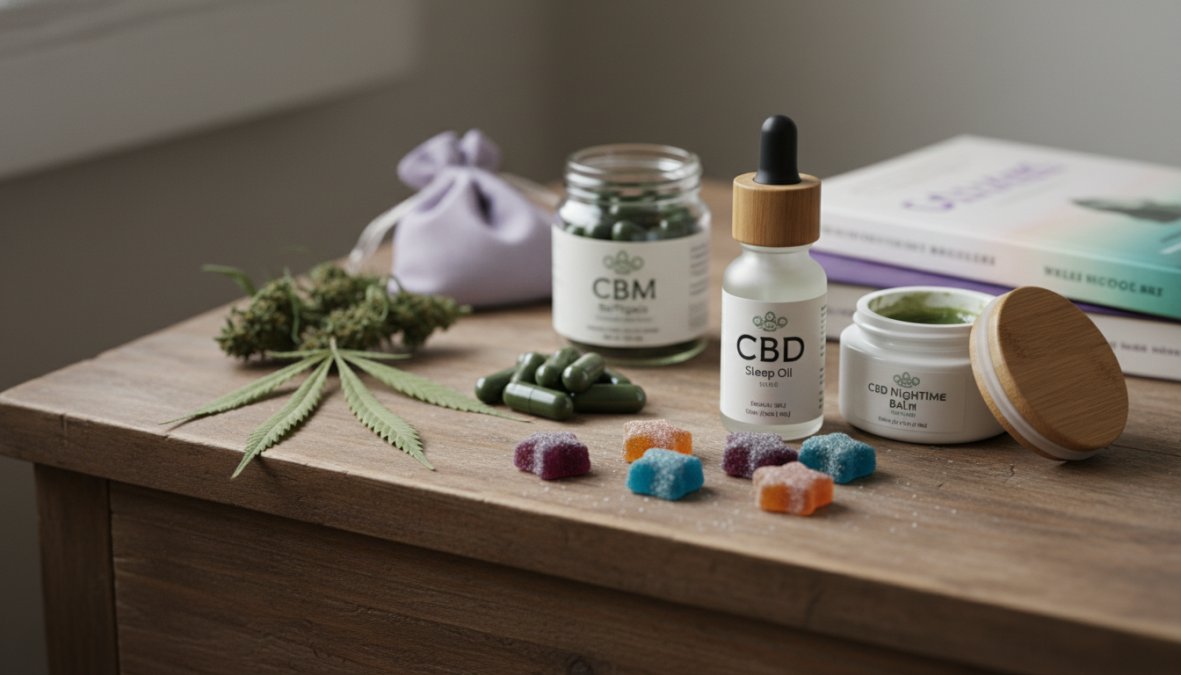
CBD Health Collection offers a range of sleep-focused products, including broad-spectrum gummies and CBD oils derived from organically grown, USA-sourced hemp. Their water-based CBD formulation is specifically designed for optimized bioavailability, meaning more of the active compound reaches your system compared to standard oil-based products. All products are produced in a GMP- and FDA-registered facility, which matters more than most buyers realize.
Full-Spectrum vs. Broad-Spectrum vs. Isolate: What to Choose
Full-spectrum CBD contains all naturally occurring hemp compounds, including trace amounts of THC (below 0.3%). The combined effect of cannabinoids, terpenes, and flavonoids is called the entourage effect, and many practitioners believe it enhances therapeutic potential.
Broad-spectrum CBD retains most hemp compounds but removes THC entirely. This is the best option for people who want the entourage effect without any THC exposure, including those subject to drug testing.
CBD isolate is pure cannabidiol with all other compounds removed. It’s the most predictable option for dosing but loses the synergistic benefits of the full plant profile.
For sleep specifically, broad-spectrum is the most commonly recommended format. It preserves the therapeutic potential of minor cannabinoids and terpenes without the REM-suppressing effects associated with THC.
How to Verify Quality: Third-Party Lab Testing and Certificate of Analysis
A Certificate of Analysis (COA) is a document issued by an independent laboratory that verifies a CBD product’s cannabinoid content, confirms the absence of pesticides and heavy metals, and validates that THC levels fall within legal limits.
A COA is non-negotiable. Any brand that doesn’t publish COAs for every product batch should be disqualified immediately.
When reviewing a COA, check for:
- Cannabinoid panel: confirms CBD potency matches label claims
- Heavy metals panel: lead, mercury, arsenic, cadmium
- Pesticide panel: organophosphates and synthetic pesticides
- Microbial panel: mold, yeast, E. coli, Salmonella
- Residual solvents: confirms clean extraction method
- Batch number matches the product you’re buying
CBD Health Collection publishes independently verified COAs for all products, and their clean CO2 extraction process eliminates the residual solvent concerns associated with ethanol or hydrocarbon extraction methods.
A Certificate of Analysis from an accredited third-party lab is the single most important quality signal when buying CBD for sleep. Potency claims without COA verification are unverifiable marketing.
CBD for Specific Sleep Disorders: Insomnia, Sleep Apnea, and Restless Legs
Most CBD and sleep content treats all sleep problems as a single category. They are not. The mechanism behind why you cannot sleep determines whether CBD is likely to help, unlikely to help, or potentially contraindicated. This section breaks down the four most common sleep disorders individually, what is happening physiologically, where CBD’s mechanism of action intersects with that pathophysiology, and what a realistic expectation looks like for each.
Chronic Insomnia: Where CBD Has Its Strongest Evidence Base
Insomnia is not a single condition. It is a symptom cluster with multiple subtypes, and CBD’s usefulness varies significantly depending on which subtype you are dealing with.
Sleep-onset insomnia driven by anxiety and hyperarousal is where CBD’s evidence base is most consistent. The mechanism is well-established: CBD’s anxiolytic effects appear to be mediated in part through its interaction with serotonin 5-HT1A receptors, which play a central role in regulating anxiety and stress response. By modulating this receptor, CBD can reduce the physiological hyperarousal, elevated heart rate, racing thoughts, elevated cortisol, that keeps the nervous system activated when it should be transitioning toward sleep. People who lie awake due to stress, worry, or an inability to mentally disengage from the day tend to report the most consistent improvements with CBD.
Sleep-maintenance insomnia driven by chronic pain is the second strongest use case. CBD’s anti-inflammatory properties, mediated through its influence on cytokine signaling and TRPV1 receptor activity, may reduce the pain signals that cause nighttime waking. For this subtype, a longer-acting delivery format, a gummy or capsule taken 60-90 minutes before bed, is generally more appropriate than a fast-acting tincture, because the goal is sustained coverage across the sleep period rather than rapid onset.
Primary insomnia with no identifiable cause is where CBD’s evidence is weakest. If there is no anxiety, no pain, and no circadian disruption driving the problem, CBD’s indirect mechanism of action has less to work with. This is the subtype most likely to require medical evaluation rather than a supplement-based approach.
Before starting CBD for insomnia, spend one week logging what wakes you up or keeps you awake. Is it racing thoughts? Physical discomfort? Waking at 3 AM with no clear cause? The answer should guide both your product choice and your dosing strategy. CBD is not a one-size-fits-all sedative, it is a tool that works best when matched to the right problem.
Sleep Apnea: An Important Boundary to Understand
Obstructive sleep apnea (OSA) is a mechanical and neurological problem: the upper airway collapses partially or fully during sleep, causing repeated interruptions in breathing that fragment sleep architecture and reduce blood oxygen saturation. CBD is not a treatment for obstructive sleep apnea, and presenting it as one would be both inaccurate and potentially harmful.
That said, there is a more nuanced picture worth understanding. Some preliminary research has examined whether cannabinoids might influence the serotonergic pathways that regulate upper airway muscle tone during sleep. Serotonin plays a role in maintaining the activity of the genioglossus muscle, the primary muscle that keeps the airway open, and disruptions in serotonin signaling are implicated in the loss of airway tone that characterizes OSA. Whether CBD’s interaction with 5-HT1A receptors produces any clinically meaningful effect on airway muscle tone during sleep remains an open research question. The studies that exist are early-stage, small, and not sufficient to support clinical recommendations.
For people with diagnosed OSA, the standard of care remains CPAP therapy, positional therapy, or surgical intervention depending on severity. CBD may be used alongside these treatments for its general anxiolytic or anti-inflammatory properties, but it should not be used in place of them. If you suspect you have sleep apnea, common signs include loud snoring, waking with a gasping sensation, and persistent daytime fatigue despite adequate sleep time, the appropriate first step is a sleep study, not a supplement.
Restless Legs Syndrome: A Promising but Under-Researched Application
Restless Legs Syndrome (RLS) is a neurological sensorimotor disorder characterized by uncomfortable sensations in the legs, often described as crawling, tingling, or an irresistible urge to move, that worsen at rest and are most severe in the evening and nighttime hours. These sensations trigger involuntary leg movements that disrupt sleep onset and sleep maintenance, often severely.
The primary neurological mechanism in RLS involves dopaminergic dysfunction in the basal ganglia and spinal cord, which is why first-line pharmaceutical treatments are dopamine agonists. CBD does not directly target dopamine pathways in the same way, which is an important limitation to acknowledge.
However, there are two secondary mechanisms through which CBD may offer meaningful relief for some RLS sufferers:
Anti-inflammatory and analgesic effects: Many RLS sufferers experience a pain and discomfort component alongside the neurological urge to move. CBD’s interaction with TRPV1 receptors and its downstream anti-inflammatory effects may reduce the intensity of these sensations, even if it does not address the underlying dopaminergic dysfunction.
Anxiety and hyperarousal reduction: RLS symptoms are significantly worsened by stress and anxiety. The anticipatory anxiety of knowing that symptoms will arrive at bedtime can itself amplify the severity of those symptoms. CBD’s anxiolytic properties may interrupt this feedback loop, reducing the psychological component of RLS-related sleep disruption.
A common approach among RLS sufferers who use CBD is a combination protocol: topical CBD applied directly to the legs 30-45 minutes before bed to address localized discomfort, combined with an oral dose for systemic anxiolytic effect. This is not a clinically validated protocol, but it reflects a logical application of CBD’s known mechanisms to the specific symptom profile of RLS. Placebo-controlled clinical trials in RLS populations remain limited, and anyone with diagnosed RLS should discuss CBD use with their neurologist before making changes to their treatment plan.
Narcolepsy: Adjunctive at Best
Narcolepsy is a chronic neurological disorder caused primarily by the loss of hypocretin-producing neurons in the hypothalamus. Hypocretin (also called orexin) is a neuropeptide that plays a central role in regulating wakefulness and suppressing REM sleep at inappropriate times. The hallmark symptoms, excessive daytime sleepiness, cataplexy, sleep paralysis, and hypnagogic hallucinations, reflect the loss of this regulatory signal.
CBD does not restore hypocretin signaling. There is no established mechanism by which CBD addresses the core pathophysiology of narcolepsy. Some researchers have speculated that CBD’s interaction with the endocannabinoid system may offer modest modulation of sleep-wake transitions, but this remains theoretical and unsupported by clinical trial data in narcolepsy populations.
Narcolepsy requires specialist management, typically involving a combination of scheduled napping, stimulant medications for daytime sleepiness, and sodium oxybate or other agents for cataplexy. CBD may be considered as an adjunctive tool for managing anxiety or improving nighttime sleep quality in narcolepsy patients, but only under the supervision of a sleep specialist or neurologist.
Condition-by-Condition Summary
| Sleep Disorder | CBD Mechanism Relevance | Realistic Expectation | Medical Supervision Needed? |
|---|---|---|---|
| Anxiety-driven insomnia | High, direct anxiolytic mechanism | Consistent improvement likely with correct dose and format | Recommended but not always required |
| Pain-driven insomnia | Moderate-high, anti-inflammatory and analgesic effects | Meaningful improvement possible, especially for inflammatory pain | Recommended |
| Primary insomnia (no identifiable cause) | Low, indirect mechanism with less to act on | Limited evidence; medical evaluation warranted | Yes |
| Obstructive sleep apnea | Very low, not a treatment for airway mechanics | Not a substitute for CPAP or medical treatment | Yes, do not delay diagnosis |
| Restless Legs Syndrome | Moderate, addresses secondary symptoms, not core dopaminergic dysfunction | Partial relief possible, particularly for discomfort and anxiety component | Yes, discuss with neurologist |
| Narcolepsy | Very low, does not address hypocretin deficiency | Adjunctive only; not a primary treatment | Yes, specialist management required |
The pattern across all of these conditions is consistent: CBD works best as a supportive tool that addresses secondary symptoms, anxiety, pain, hyperarousal, rather than as a primary treatment for the neurological or mechanical root cause of a diagnosed sleep disorder. That distinction is not a limitation to be embarrassed about. It is an honest framing that helps you use CBD effectively and know when to seek medical care instead.
If your sleep problems are severe enough to have a clinical name, sleep apnea, narcolepsy, severe RLS, your first call should be to a sleep specialist, not a supplement brand. CBD may have a role in your overall management plan, but that role should be defined in conversation with a clinician who knows your full medical history.
Side Effects of CBD for Sleep and Drug Interactions to Know
The side effects of CBD for sleep are generally mild and dose-dependent. The most commonly reported adverse effects include dry mouth, drowsiness (particularly at higher doses), reduced appetite, and mild gastrointestinal discomfort.
The more important conversation is drug interactions. CBD is metabolized by the cytochrome P450 (CYP450) enzyme system in the liver, the same system responsible for processing many common medications. This means CBD can either slow or accelerate how your body processes certain drugs, potentially raising or lowering their effective concentration in your bloodstream.
Medications that warrant particular attention:
- Blood thinners (warfarin): CBD may increase blood-thinning effects
- Antiepileptic drugs: CBD is used therapeutically here but requires careful monitoring
- Sedatives and benzodiazepines: additive sedative effects are possible
- Some antidepressants and antipsychotics: variable interactions depending on the specific drug
According to FDA guidance on cannabidiol drug interactions, anyone taking prescription medications should consult their physician before adding CBD to their routine. This isn’t boilerplate caution. The CYP450 interaction is real and clinically relevant.
CBD is hemp-derived and federally legal in the United States under the 2018 Farm Bill, provided it contains less than 0.3% THC. State laws vary, so verify your local regulations before purchasing.
Improving Sleep Quality with CBD: Building a Sustainable Routine
The biggest mistake people make with CBD for improving sleep quality is treating it like a pharmaceutical: take it once, evaluate the result, and either continue or abandon it. CBD doesn’t work that way.
A sustainable routine looks like this:
- Choose your product format based on your sleep problem. Anxiety-driven sleep onset: tincture 30-45 minutes before bed. Pain-related sleep maintenance: gummy or capsule taken earlier.
- Start at a low dose and titrate upward every three to five nights.
- Pair CBD with consistent sleep hygiene: fixed wake time, reduced blue light exposure, cooler bedroom temperature. CBD amplifies good habits. It doesn’t replace them.
- Track your results for at least three weeks before evaluating. Note sleep latency, number of nighttime wakings, and morning energy.
- Adjust format or dose based on your log, not your first impression.
CBD Health Collection’s sleep formulations are designed with this kind of sustained use in mind. Products are derived from organically grown hemp with clean CO2 extraction, and the company’s 30-day satisfaction guarantee gives you a full evaluation window without financial risk. Free shipping and a straightforward product selection make it easier to start and stay consistent.
The real difference between people who say CBD changed their sleep and those who say it did nothing almost always comes down to consistency, timing, and dose accuracy. Get those three variables right, and the therapeutic potential of CBD for sleep becomes much more accessible.
Struggling to find a sleep solution that’s natural, non-habit-forming, and actually backed by a transparent production process? CBD Health Collection offers broad-spectrum gummies, CBD oils, and dedicated sleep formulations made from organically grown, USA-sourced hemp, independently verified by third-party COA testing, and produced in a GMP- and FDA-registered facility. Get started with CBD Health Collection and experience the difference that pharmaceutical-grade quality and genuine product transparency make for your nightly rest.
Frequently Asked Questions
Does CBD actually help with sleep quality?
CBD for improving sleep quality shows promising potential, particularly for people whose poor sleep is linked to anxiety, chronic pain, or stress. By interacting with the endocannabinoid system, cannabidiol may help reduce sleep latency and support more restful non-REM sleep cycles. While clinical trials are ongoing and results vary by individual, many users report meaningful improvements in how quickly they fall asleep and how rested they feel. Consistent use alongside good sleep hygiene tends to yield the best results.
How much CBD should I take for sleep?
CBD dosage for sleep varies widely depending on body weight, metabolism, and the underlying cause of your sleep issues. A common starting point is 15-25 mg taken 30-60 minutes before bed, with gradual dosage titration upward as needed. Some individuals benefit from micro-dosing (5-10 mg), while others find higher doses more effective. It's best to start low, track your response over one to two weeks, and adjust accordingly. Always consult a healthcare provider if you take other medications.
How long does it take for CBD to work for sleep?
How long CBD takes to work for sleep depends largely on the product type and delivery method. Sublingual tinctures and oils absorbed under the tongue typically take effect within 15-45 minutes due to higher bioavailability. Gummies and soft gels pass through the digestive system and may take 45-90 minutes. For consistent results, many users find that taking CBD at the same time each night for at least two weeks gives the body time to respond and helps regulate circadian rhythm patterns.
Are there side effects of using CBD for sleep?
Side effects of CBD for sleep are generally mild and uncommon at moderate doses. The most reported adverse effects include dry mouth, drowsiness the following morning, mild digestive discomfort, and changes in appetite. CBD can also interact with certain medications, particularly those metabolized by liver enzymes, including some sedatives and blood thinners. Hemp-derived CBD products with less than 0.3% THC are broadly considered safe, but always review a product's Certificate of Analysis and consult a physician if you have existing health conditions.
Is it safe to take CBD for sleep every night?
Daily use of CBD for improving sleep quality appears well-tolerated for most adults based on current evidence, though long-term clinical trial data is still emerging. Unlike sedative sleep aids, CBD is not considered habit-forming. To minimize any risk of tolerance, some users cycle their use, taking breaks every few weeks. Choosing a high-quality, third-party lab-tested broad-spectrum or isolate product from an FDA-registered, GMP-compliant facility reduces exposure to unwanted compounds and supports safer nightly use.
What is the best type of CBD product for sleep?
The best CBD product for sleep depends on your priorities. Sublingual tinctures offer faster onset and easier dosage titration, making them popular for sleep latency issues. Broad-spectrum gummies are convenient and pre-dosed, ideal for routine nightly use without THC exposure. Full-spectrum products include additional cannabinoids that may enhance therapeutic potential through the entourage effect. Whatever format you choose, verify the product has a current Certificate of Analysis confirming cannabidiol content and the absence of contaminants.
This article was written using GrandRanker