Table of Contents
- What Is Broad Spectrum CBD and How Does It Work?
- Full Spectrum vs Broad Spectrum CBD vs Isolate: Key Differences
- The Entourage Effect: Why Cannabinoids Work Better Together
- Benefits of Broad Spectrum CBD for Everyday Wellness
- How Broad Spectrum CBD Is Made: Extraction Methods Explained
- Does Broad Spectrum CBD Contain THC? Drug Testing and Regulatory Facts
- How to Use Broad Spectrum CBD: Dosage, Formats, and Product Selection
- Conclusion
Last Updated: May 20, 2026
Broad-spectrum CBD sits at the center of one of the fastest-growing segments in wellness, yet most buyers still don’t fully understand what separates it from its close relatives. If you’ve been searching for a clear answer to what is broad spectrum cbd, this guide from CBD Health Collection breaks it down completely: the science, the extraction process, the differences from full-spectrum and isolate, and exactly how to verify you’re buying a quality product. Below, we’ll show you precisely how THC removal works, what the entourage effect actually means in practice, and the one document you should always request before spending a dollar on any CBD product.
Here’s what most guides get wrong: they treat "broad-spectrum" as simply "full-spectrum minus THC." That framing misses the nuance. The real story is about which cannabinoids and phytocompounds survive the THC removal process, and whether the product you’re buying still delivers meaningful therapeutic potential or has been stripped down to something closer to isolate.
What Is Broad Spectrum CBD and How Does It Work?
Broad-spectrum CBD is a hemp extract that contains multiple naturally occurring cannabinoids, terpenes, and flavonoids from the cannabis plant, with delta-9-tetrahydrocannabinol (THC) removed to non-detectable levels. It occupies the middle ground between full-spectrum oil, which retains all plant compounds including THC, and CBD isolate, which contains only pure cannabidiol.
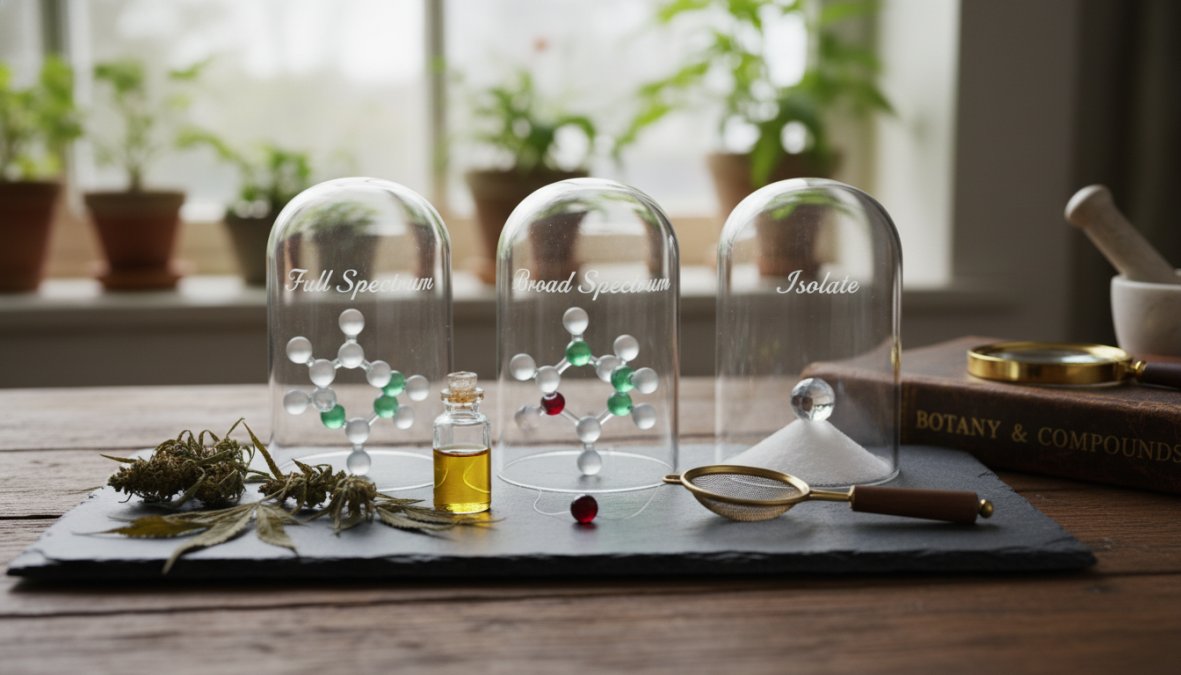
The key distinction matters because cannabidiol does not work in isolation the way most early marketing suggested. The hemp plant produces dozens of minor cannabinoids, including CBG (cannabigerol), CBN (cannabinol), and CBC, alongside aromatic terpenes and flavonoids. Broad-spectrum hemp extract preserves these compounds while targeting THC specifically for removal.
(/what-is-cbd-good-for-pain/) Is Broad Spectrum CBD and How Does It Work?]
How Broad Spectrum CBD Interacts With the Endocannabinoid System
The endocannabinoid system (ECS) is a signaling network present throughout the human body, regulating functions including mood, pain response, sleep cycles, and immune activity. The ECS operates through two primary receptor types: CB1 receptors, concentrated in the central nervous system, and CB2 receptors, found primarily in immune tissues and peripheral organs.
Cannabidiol does not bind directly to CB1 or CB2 receptors the way THC does. Instead, it modulates receptor activity indirectly and interacts with several other receptor systems, including serotonin (5-HT1A) and vanilloid (TRPV1) receptors. The minor cannabinoids preserved in broad-spectrum extracts add additional receptor interactions. CBG, for example, shows affinity for both CB1 and CB2 receptors, while terpenes like myrcene and linalool may influence neurological signaling through separate pathways.
According to the National Institutes of Health’s overview of the endocannabinoid system, this receptor network is one of the most widespread modulatory systems in the human body, which explains why cannabinoids produce effects across such many physiological functions.
When evaluating a broad-spectrum product, look specifically for CBG and CBN content on the certificate of analysis. Products listing only CBD with trace amounts of everything else are often closer to an enriched isolate than a true broad-spectrum extract.
Full Spectrum vs Broad Spectrum CBD vs Isolate: Key Differences
The popular advice here is oversimplified. Most descriptions reduce these three categories to a single variable: THC presence. The real differences run deeper and affect everything from bioavailability to drug testing risk.
Comparison Table: Full Spectrum, Broad Spectrum, and CBD Isolate
| Feature | Full Spectrum | Broad Spectrum | CBD Isolate |
|---|---|---|---|
| THC Content | Up to 0.3% (legal limit) | Non-detectable | None |
| Minor Cannabinoids | Yes (CBG, CBN, CBC) | Yes (most retained) | No |
| Terpenes | Yes | Yes (most retained) | No |
| Flavonoids | Yes | Yes | No |
| Entourage Effect | Full | Partial to strong | None |
| Drug Test Risk | Low but present | Very low | None |
| Taste/Flavor | Earthy, plant-forward | Earthy, plant-forward | Neutral |
| Best For | Maximum synergy | THC-sensitive users | Precise dosing |
The most common misconception about full spectrum vs broad spectrum CBD is that full-spectrum is always "stronger." Potency is a function of cannabinoid concentration and bioavailability, not THC presence alone. A well-formulated broad-spectrum product with high CBD concentration and preserved terpene profile can outperform a poorly made full-spectrum oil.
CBD isolate has its place, particularly for users who require zero risk of any cannabinoid exposure or who are sensitive to plant compounds. But for most wellness applications, the synergistic profile of broad-spectrum hemp extract delivers more consistent results than isolate alone.
The Entourage Effect: Why Cannabinoids Work Better Together
This is where it gets genuinely interesting. The entourage effect is the theory, supported by growing preclinical evidence, that cannabinoids, terpenes, and flavonoids from the cannabis plant produce stronger and more nuanced effects when they work together than any single compound does alone.
The concept was first articulated by researchers examining how the full chemical profile of cannabis modulates biological activity. The practical implication: a hemp extract with preserved terpenes like beta-caryophyllene (which directly binds CB2 receptors) and minor cannabinoids like CBN (associated with sedative properties) may produce outcomes that pure CBD cannot replicate.
For broad-spectrum users, the entourage effect is partial but meaningful. THC removal does eliminate one interaction node, but the remaining phytocompounds still create a synergistic environment that CBD isolate entirely lacks. As documented in Project CBD’s research summaries on cannabinoid synergy, terpene-cannabinoid interactions represent one of the most underexplored areas in cannabis science, with researchers increasingly finding that these compounds modulate each other’s receptor binding in meaningful ways.
The honest caveat: most entourage effect research is preclinical. Human clinical trials specifically isolating synergy variables are limited. The mechanism is plausible and supported by pharmacological logic, but buyers should treat it as a compelling working theory rather than settled science.
Broad-spectrum CBD preserves the entourage effect without the THC variable, making it the most practical choice for users who want plant-derived synergy and need to avoid detectable THC.
Benefits of Broad Spectrum CBD for Everyday Wellness
The benefits attributed to broad-spectrum CBD are not a single effect delivered through a single mechanism. They emerge from a network of receptor interactions involving multiple compounds working simultaneously, and understanding which mechanisms are involved helps you evaluate whether a product is likely to work for your specific use case.
It is also important to be precise about the evidence base. Some mechanisms are well-characterized at the pharmacological level. Human clinical evidence for specific wellness outcomes is more limited and varies considerably by condition. This section distinguishes between what is mechanistically understood and what is supported by clinical evidence.
Stress Response and Mood Regulation
Mechanism: CBD’s most studied receptor interaction relevant to stress is its partial agonism at the 5-HT1A serotonin receptor. Serotonin receptor activity is directly involved in anxiety modulation, and 5-HT1A agonism is the same receptor target as buspirone, a prescribed anxiolytic. CBD also inhibits the reuptake of anandamide, an endogenous cannabinoid sometimes called the ‘bliss molecule,’ by blocking the enzyme FAAH (fatty acid amide hydrolase). Elevated anandamide levels are associated with reduced anxiety response.
In broad-spectrum extracts, the terpene linalool, found in hemp strains with floral aromatic profiles, has demonstrated interaction with GABA-A receptors in preclinical models, the same receptor system targeted by benzodiazepines. Beta-caryophyllene, one of the most common terpenes in hemp, is a selective CB2 agonist and has shown anti-anxiety effects in animal models through this pathway.
Evidence quality: The 5-HT1A mechanism is well-established pharmacologically. Human clinical trials on CBD for anxiety have shown promising results in specific contexts, particularly social anxiety disorder, but most are small-scale or use doses higher than typical wellness products. The terpene contributions are primarily preclinical.
Sleep Quality
Mechanism: CBD’s effect on sleep is indirect rather than sedative. At lower doses, CBD appears to have alerting properties through adenosine pathway modulation. At higher doses, the balance shifts toward relaxation, partly through the same 5-HT1A and GABA-adjacent pathways relevant to stress. The minor cannabinoid CBN (cannabinol), which is present in many broad-spectrum extracts, is frequently associated with sedative properties in practitioner use, though the clinical evidence specifically for CBN as a sleep aid is still emerging.
The more established sleep-related mechanism for CBD involves its effect on REM sleep behavior. Some research suggests CBD may reduce REM sleep disturbances, which is particularly relevant for users whose sleep disruption is anxiety-driven rather than a primary sleep disorder.
Evidence quality: Sleep is one of the most commonly reported benefits by CBD users. Mechanistic plausibility is solid. Controlled human trials specifically on broad-spectrum CBD for sleep are limited; most sleep research uses CBD isolate or pharmaceutical-grade CBD at doses that exceed typical OTC product levels.
Inflammation and Physical Discomfort
Mechanism: CBD interacts with TRPV1 receptors (transient receptor potential vanilloid type 1), which are involved in pain signaling and temperature sensation. TRPV1 is expressed throughout the peripheral nervous system and in skin tissue, making it particularly relevant for topical applications. CBD also modulates inflammatory signaling through CB2 receptor pathways, CB2 receptors are expressed on immune cells including macrophages and T-cells, and their activation generally produces anti-inflammatory effects.
Beta-caryophyllene’s direct CB2 agonism makes it a meaningful contributor to the anti-inflammatory profile of broad-spectrum extracts, not merely a flavor compound. CBC (cannabichromene), another minor cannabinoid retained in broad-spectrum products, has demonstrated interaction with TRPA1 receptors, which are involved in inflammatory pain signaling.
For topical broad-spectrum products specifically, the combination of CBD, minor cannabinoids, and terpenes may enhance skin penetration compared to isolate-based topicals. Terpenes including myrcene and limonene have demonstrated penetration-enhancing properties in pharmaceutical research, potentially improving the local bioavailability of co-applied cannabinoids.
Evidence quality: The TRPV1 and CB2 mechanisms are pharmacologically well-characterized. Human clinical evidence for CBD in pain management is strongest for neuropathic pain contexts. Topical CBD evidence is primarily anecdotal and small-scale, though the receptor mechanisms in skin tissue are biologically plausible.
How the Absence of THC Specifically Affects These Benefits
This is the question most benefit sections skip entirely. THC contributes to the entourage effect through direct CB1 receptor agonism, a pathway that CBD does not activate. CB1 receptors in the central nervous system are involved in pain modulation (particularly the descending pain inhibition pathway), appetite regulation, and some aspects of mood. Full-spectrum products that retain THC engage this pathway; broad-spectrum products do not.
The practical implication: for conditions where CB1 activation is a meaningful part of the therapeutic mechanism, certain types of neuropathic pain, appetite stimulation, or conditions where THC’s psychoactive effect is itself therapeutic, full-spectrum products may have a pharmacological advantage. For conditions primarily mediated through CB2, serotonin, TRPV1, or GABA-adjacent pathways, the absence of THC in broad-spectrum extracts is unlikely to meaningfully reduce efficacy.
This is why the ‘full-spectrum is always stronger’ claim is pharmacologically imprecise. It depends entirely on which receptor systems are most relevant to the outcome you are seeking.
Bioavailability and Why It Affects Every Benefit
The benefits above are only accessible if the cannabinoids are actually absorbed. Standard oil-based CBD products taken orally undergo first-pass liver metabolism, which reduces the proportion of CBD that reaches systemic circulation. This is a well-documented limitation of oral lipophilic compounds.
Formulation technology directly affects how much of the labeled dose actually becomes bioavailable. Nano-emulsified or water-compatible CBD formulations reduce particle size to improve absorption through the gastrointestinal mucosa, producing more consistent blood levels from smaller doses. Sublingual administration bypasses some first-pass metabolism by allowing absorption through the oral mucosa directly into the bloodstream.
The format you choose affects not just onset time but the effective dose your body actually receives, which means two products with identical label claims can produce meaningfully different outcomes based on formulation quality alone.
Pros and Cons of Choosing Broad Spectrum CBD
Pros:
- Preserves terpenes, flavonoids, and minor cannabinoids for partial entourage effect
- THC removed to non-detectable levels, significantly reducing drug test risk
- Suitable for users sensitive to THC or subject to workplace testing
- Broader mechanistic coverage than CBD isolate through multi-receptor engagement
- Available in tinctures, gummies, soft gels, topicals, and other formats
- Appropriate for users in most jurisdictions where full-spectrum THC content creates legal ambiguity
Cons:
- Slightly higher price point than isolate products due to complex extraction and THC removal
- THC removal process can degrade some minor cannabinoids if distillation rather than chromatography is used
- ‘Non-detectable’ does not mean zero risk for high-dose users on sensitive drug tests
- Does not engage CB1 receptor pathways the way full-spectrum products do, which may matter for specific use cases
- Flavor is more plant-forward than isolate-based products
- Evidence base for specific health claims remains limited at the human clinical trial level
When evaluating a broad-spectrum product for a specific wellness goal, cross-reference the COA’s cannabinoid and terpene panel against the receptor mechanisms most relevant to your use case. A product marketed for sleep support should show meaningful CBN content and terpenes like linalool or myrcene. A product marketed for physical discomfort should show beta-caryophyllene and CBC alongside CBD. A COA showing only CBD with trace amounts of everything else is not delivering the mechanistic profile the marketing implies.
How Broad Spectrum CBD Is Made: Extraction Methods Explained
Most guides stop at "CO2 extraction is best." That’s true, but the extraction method is only half the story. The THC removal step is where broad-spectrum products succeed or fail, and most consumers never think to ask about it.
The process begins with hemp biomass from organically grown, USA-sourced plants. The extraction method determines how much of the plant’s chemical profile survives intact.
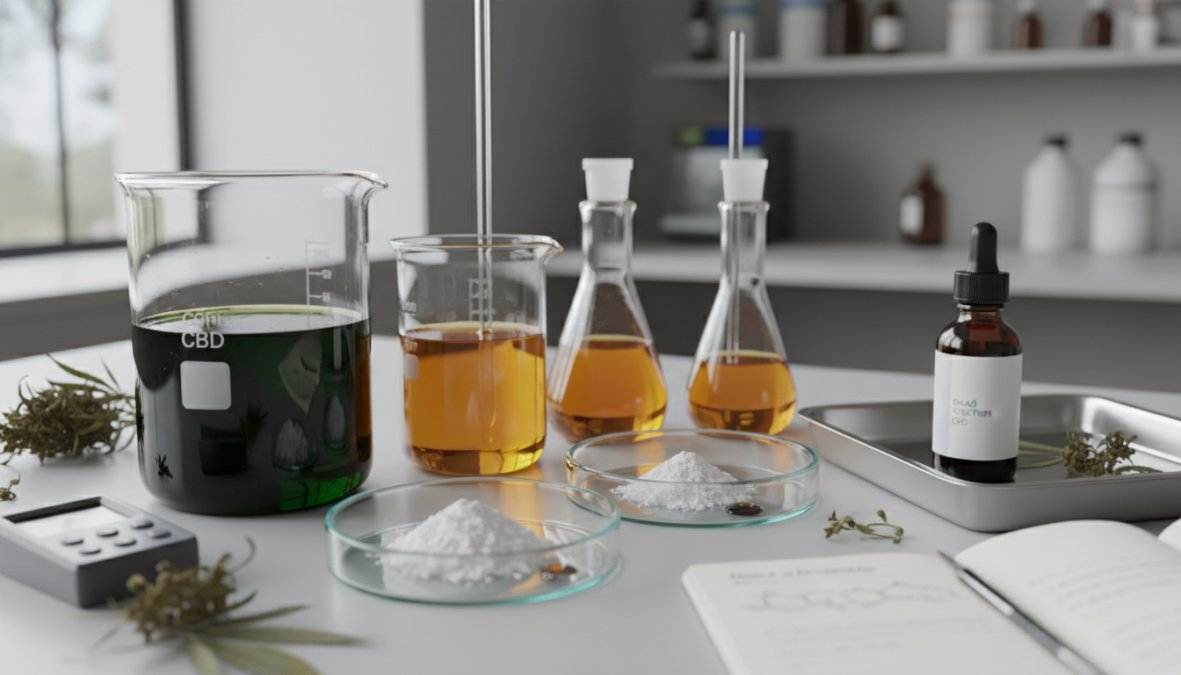
CO2 extraction uses pressurized carbon dioxide as a solvent. At specific temperature and pressure combinations (supercritical CO2), it selectively pulls cannabinoids, terpenes, and lipids from the plant material. CO2 leaves no solvent residue, preserves heat-sensitive terpenes better than ethanol, and produces a clean, full-spectrum crude oil.
Ethanol extraction is faster and cheaper at scale. It’s effective for cannabinoid extraction but less selective, pulling chlorophyll and other plant compounds that require additional refinement. Ethanol processing at low temperatures (cryo-ethanol) improves selectivity and terpene preservation.
Hydrocarbon extraction (butane, propane) is common in cannabis concentrate markets but less common in hemp CBD production due to regulatory concerns and solvent residue risks.
According to the FDA’s guidance on hemp extract processing standards, manufacturing facilities producing hemp-derived products for consumption should operate under GMP (Good Manufacturing Practice) standards, which govern equipment, testing, and documentation requirements.
THC Removal Techniques and Bioavailability Considerations
Once crude extract is produced, THC removal transforms it from full-spectrum to broad-spectrum. The three primary techniques are:
-
Chromatography (most precise): Passes the extract through a medium that separates compounds by molecular weight and polarity. HPLC (high-performance liquid chromatography) can isolate and remove THC to genuinely non-detectable levels while preserving most other cannabinoids and terpenes. This is the gold standard.
-
Distillation with selective refinement: Fractional distillation separates cannabinoids by boiling point. THC and CBD have similar boiling points, making this less precise than chromatography. Often requires multiple passes and sacrifices some minor cannabinoids.
-
Crystallization: Cooling the distillate to isolate CBD crystals, then re-blending with terpenes and minor cannabinoids. Effective but labor-intensive and dependent on the quality of the re-blending process.
Bioavailability is the variable nobody discusses enough. Standard oil-based CBD tinctures have oral bioavailability in the range that researchers generally describe as relatively low due to first-pass liver metabolism. Water-based or nano-emulsified CBD formulations, like those used by CBD Health Collection, improve absorption by reducing particle size to allow more direct uptake through the digestive mucosa. The practical result: smaller doses can produce more consistent effects when bioavailability is optimized.
Avoid broad-spectrum products that only list “CBD content” on the label without a full cannabinoid panel. THC removal processes that aren’t verified by third-party COA testing may leave detectable THC in the final product, creating drug test risk the manufacturer never disclosed.
Does Broad Spectrum CBD Contain THC? Drug Testing and Regulatory Facts
Broad-spectrum CBD is formulated to contain THC at non-detectable levels, but understanding what that phrase actually means in a laboratory and legal context is what separates an informed buyer from one who gets a surprise positive on a workplace drug screen.
What ‘Non-Detectable’ Actually Means in Lab Terms
When a certificate of analysis reports THC as "ND" (non-detected), it means the concentration fell below that laboratory’s limit of quantification (LOQ). Depending on the instrument and method used, a typical LOQ for THC in a hemp extract COA is around 0.01% (100 ppm) or lower for high-sensitivity HPLC equipment. This is not the same as zero. It means the instrument could not reliably measure a quantity, not that none exists.
This distinction matters because drug tests operate on an entirely different detection system than COA lab panels.
How Workplace Drug Tests Actually Work
Standard urine immunoassay drug screens, the most common format used by employers, do not test for THC itself. They test for THC-COOH (11-nor-9-carboxy-THC), the primary metabolite produced when the liver processes delta-9-THC. The federally established cutoff for a preliminary positive on a urine immunoassay is 50 ng/mL of THC-COOH, as set by SAMHSA (Substance Abuse and Mental Health Services Administration) guidelines used by federally regulated workplaces.
A confirmatory GC-MS (gas chromatography-mass spectrometry) test, used to verify a preliminary positive, applies a stricter cutoff of 15 ng/mL.
The critical variable: THC-COOH is fat-soluble and accumulates in adipose tissue. Even trace THC ingested daily can produce measurable metabolite levels over time, particularly in users with higher body fat percentages or slower metabolic clearance. This is the mechanism behind the rare but real false-positive risk with broad-spectrum products.
Calculating Your Personal Risk Profile
The risk of a positive drug test from a verified broad-spectrum product is genuinely low for most users, but it is not uniform. Several factors increase individual risk:
- High daily dose: Users taking 100mg+ of CBD daily from a broad-spectrum source ingest more cumulative trace THC than users taking 25mg
- Body composition: THC-COOH accumulates in fat tissue; higher body fat percentage means slower clearance
- Test sensitivity: Some employers use more sensitive cutoffs than the SAMHSA standard, particularly in safety-critical industries
- Product quality: A broad-spectrum product from a manufacturer using chromatography-verified THC removal carries meaningfully lower risk than one relying on distillation alone
- Frequency of use: Daily use compounds trace accumulation more than occasional use
If you are subject to zero-tolerance drug testing, federal employment, DOT-regulated transportation, military, or professional athletics, no broad-spectrum product can be considered fully safe. CBD isolate from a verified manufacturer is the only appropriate choice in these contexts. Even isolate products can carry contamination risk if not third-party tested; always verify the COA shows ND for THC on the specific batch you are using.
What to Look for on a COA to Assess Drug Test Risk
Not all COAs are equally informative for drug test risk assessment. When evaluating a broad-spectrum product specifically for this concern, check the following:
- THC result and the LOQ: A COA that reports THC as "ND" but does not disclose the LOQ is less informative than one that states, for example, "ND (<0.01%)". The lower the LOQ, the more confident you can be in the non-detection result.
- Total THC vs. delta-9 THC: Some COAs report only delta-9 THC. Others report total THC, which includes THCA (the acidic precursor that converts to THC when heated). For drug testing purposes, delta-9 THC is the primary concern in an oral product, but a complete panel is more transparent.
- Testing method: HPLC (high-performance liquid chromatography) is the standard for cannabinoid quantification. GC (gas chromatography) can convert THCA to THC during analysis, potentially inflating THC readings, a detail that matters when comparing COAs across manufacturers.
- ISO 17025 accreditation: The testing laboratory should hold this accreditation, which is the international standard for analytical testing competence. An accredited lab’s LOQ claims are subject to external verification.
Regulatory Status by Region
The legal framework for broad-spectrum CBD varies significantly by jurisdiction, and the THC threshold that defines a compliant product is not universal.
United States: Under the 2018 Farm Bill, hemp-derived CBD products are federally legal when the finished product contains no more than 0.3% delta-9 THC on a dry weight basis. Broad-spectrum products formulated to non-detectable THC levels are well within this threshold. State-level regulations vary: Idaho, for example, has historically applied stricter standards requiring zero detectable THC, while most states follow the federal framework. As referenced in the USDA’s hemp regulations and compliance guidance, these standards are subject to ongoing regulatory revision.
United Kingdom: The Food Standards Agency (FSA) regulates CBD as a novel food. Compliant products must contain THC at levels that are not pharmacologically active, in practice, this means THC must be non-detectable or at trace levels consistent with naturally occurring contamination. The legal threshold applied by UK enforcement is effectively non-detectable THC, making broad-spectrum products formulated to US standards generally compliant, though manufacturers must hold a validated novel food application.
European Union: EU member states apply varying interpretations. The European Court of Justice ruled in 2020 that CBD derived from the whole hemp plant is not a narcotic under EU law, which opened the door for broader market access. However, individual member states, including France and Slovakia, have maintained stricter national rules. The practical standard across most EU markets is non-detectable THC in the finished product.
Australia: The Therapeutic Goods Administration (TGA) reclassified low-dose CBD as a Schedule 3 (pharmacist-only) medicine in 2021. Products must contain no more than 150mg of CBD per pack and must have THC below 1% of total cannabinoids. Broad-spectrum products meeting these criteria can be sold without prescription, but the regulatory pathway is more structured than in the US or UK.
Canada: CBD is regulated under the Cannabis Act, not as a hemp supplement. All CBD products, including broad-spectrum, require a licensed producer and are subject to the same regulatory framework as recreational cannabis products.
Always verify the current regulatory status in your jurisdiction before purchasing or traveling internationally with any CBD product, as these frameworks continue to evolve.
For most users taking verified broad-spectrum CBD at standard wellness doses, the drug test risk is low. For users in high-stakes testing environments, the only risk-free option is ISO 17025-verified CBD isolate with a batch-specific COA showing ND THC at a disclosed LOQ. Understanding the difference between ‘non-detectable’ and ‘zero’ is the single most important piece of information this category of buyer needs.
How to Use Broad Spectrum CBD: Dosage, Formats, and Product Selection
There is no universal CBD dose, and any guide that gives you a single number without context is oversimplifying. Dosage depends on body weight, individual endocannabinoid system sensitivity, the condition being addressed, and the bioavailability of the specific product format.

A practical starting framework for new users:
- Start low: 10-15mg of CBD per day for general wellness
- Titrate slowly: Increase by 5-10mg every 3-5 days until desired effects are noticed
- Format matters: Sublingual tinctures absorb faster (15-45 minutes) than gummies or soft gels (45-90 minutes); topicals work locally and don’t produce systemic effects
- Consistency matters more than single doses: Most users report better results after 2-4 weeks of daily use
Format selection guide:
| Format | Onset Time | Duration | Best For |
|---|---|---|---|
| Sublingual tincture | 15-45 min | 4-6 hours | Fast relief, precise dosing |
| Gummies | 45-90 min | 6-8 hours | Convenience, consistent dose |
| Soft gels | 45-90 min | 6-8 hours | Travel, tasteless option |
| Topicals | 10-20 min (local) | 2-4 hours | Localized discomfort |
| Patches | 30-60 min | 8-12 hours | Sustained release |
How to Read a Certificate of Analysis (COA) Before You Buy
A certificate of analysis is a third-party lab report that verifies what’s actually in a CBD product. It’s the single most important document in the purchasing decision, and most consumers skip it entirely.
A trustworthy COA includes:
- Cannabinoid panel: Lists CBD, THC, CBG, CBN, and other detected cannabinoids with concentration in mg/g or percentage. Verify CBD content matches the label claim. Verify THC is listed as "ND" (non-detected) or below 0.3%.
- Terpene panel: Confirms terpene presence for true broad-spectrum claims.
- Contaminant testing: Pesticides, heavy metals, residual solvents, and microbial contamination should all be tested and pass.
- Batch number: The COA should match the batch number on your product. Generic COAs posted on a website without batch matching are meaningless.
- Lab accreditation: The testing laboratory should be ISO 17025 accredited, the international standard for testing laboratory competence.
CBD Health Collection provides independently verified COA lab testing for every product, with results available by batch. All products are produced in a GMP- and FDA-registered facility, which means the manufacturing process itself is subject to regulatory oversight, not just the final product.
The thing nobody tells you about COAs: a COA showing compliant THC levels doesn’t automatically mean the product is high quality. Check the CBD concentration matches the label claim within a reasonable margin. Products that test significantly lower than their label claim on CBD content are either mislabeled or degraded.
Finding a broad-spectrum CBD product that genuinely delivers requires more than trusting a label. The science, the extraction process, the THC removal method, and the third-party verification all have to align. CBD Health Collection brings a pharmaceutical-industry background to every formulation, using clean CO2 extraction, water-based delivery for optimized bioavailability, and independently verified COA testing on every batch. Get started with CBD Health Collection and experience the difference that transparent, science-based formulation makes for your daily wellness routine.
Frequently Asked Questions
What is the difference between full spectrum and broad spectrum CBD?
Full spectrum CBD contains all naturally occurring cannabinoids from the hemp plant, including up to 0.3% delta-9-tetrahydrocannabinol (THC). Broad spectrum CBD goes through an additional processing step to remove THC while retaining other beneficial cannabinoids like CBG and CBN, terpenes, and flavonoids. CBD isolate, by contrast, contains only pure cannabidiol with no other phytocompounds. Broad spectrum is often the preferred middle ground for those who want the entourage effect without any THC exposure.
Does broad spectrum CBD contain THC, and will it show up on a drug test?
Broad spectrum CBD is processed to be THC-free, meaning delta-9-tetrahydrocannabinol is removed during extraction. However, trace residual amounts can occasionally remain depending on the extraction method and lab testing thresholds. Most standard drug tests screen for THC metabolites, so while the risk is lower than with full spectrum CBD, it cannot be considered zero. If drug testing is a concern, always verify the product's certificate of analysis (COA) and consider CBD isolate as the safest option.
What are the main benefits of broad spectrum CBD?
The benefits of broad spectrum CBD are thought to come from the synergistic interaction of multiple cannabinoids, terpenes, and flavonoids working together, known as the entourage effect. This may support stress relief, relaxation, sleep quality, and reduced inflammation compared to CBD isolate alone. Because it is non-psychoactive and THC-free, it is a popular choice for daily wellness routines. Always look for lab-tested, COA-verified products from organically grown hemp to ensure potency and purity.
Is broad spectrum CBD better than CBD isolate?
Whether broad spectrum CBD is better than CBD isolate depends on your wellness goals and personal circumstances. Broad spectrum CBD retains minor cannabinoids, terpenes, and flavonoids that may enhance therapeutic potential through the entourage effect, making it a stronger choice for general wellness. CBD isolate, however, is the purest form of cannabidiol, containing no other phytocompounds, making it preferable for those with strict THC-free requirements, sensitivity to other cannabinoids, or frequent drug testing obligations.
How should I use broad spectrum CBD and what dosage should I start with?
How to use broad spectrum CBD depends on the product format you choose, tinctures, gummies, soft gels, or topicals each have different onset times and bioavailability profiles. A common starting approach is to begin with a low dose (typically 10-25 mg of cannabidiol per day) and gradually increase every few days until you find the amount that works for you. Always follow the product's dosage guidelines, check the COA for potency confirmation, and consult a healthcare professional if you have any medical conditions.
This article was written using GrandRanker