Table of Contents
- What Is CBD Good for Pain, and How Does It Work?
- What Types of Pain Is CBD Best For? Acute vs. Chronic
- Scientific Evidence: What Research Says About CBD for Pain
- Forms of CBD for Pain: Oils, Gummies, Topicals, and More
- CBD Dosage for Pain: A Personalized Titration Protocol
- How to Use CBD for Back Pain: Step-by-Step Application Guide
- Side Effects of CBD Oil and Drug Interactions to Know
- How to Choose a Quality CBD Product: COA Literacy and What to Look For
- What Is CBD Good for Pain? Common Myths Debunked
- Conclusion: Is CBD Right for Your Pain Management Plan?
Last Updated: May 17, 2026
Chronic pain affects hundreds of millions of people worldwide, and the question of what is cbd good for pain has moved from fringe wellness forums into mainstream medical conversations. This guide from CBD Health Collection breaks down the science, the practical applications, and the critical quality checks that most articles skip entirely. Below, you’ll find exactly how CBD interacts with your body’s pain pathways, which pain types respond best, and how to verify that the product you’re buying actually contains what the label claims.
Here’s what most guides get wrong: they treat CBD as a one-size-fits-all solution. The reality is more nuanced, and understanding those nuances is what separates effective pain management from wasted money.
Cannabidiol (CBD) is a non-psychoactive compound derived from hemp that interacts with the body’s endocannabinoid system to modulate pain signaling and inflammation without producing the intoxicating effects associated with tetrahydrocannabinol (THC).
According to the National Institutes of Health pain research portal, chronic pain is one of the most common reasons adults seek medical care. The growing interest in hemp-derived alternatives reflects both the limitations of conventional analgesics and a genuine shift in how patients approach long-term pain management.
What Is CBD Good for Pain, and How Does It Work?
CBD is good for pain primarily through its influence on the endocannabinoid system, a regulatory network that governs pain perception, inflammation, and immune response throughout the body. Unlike opioids, cannabidiol does not bind directly to opioid receptors, which means its analgesic mechanism carries a fundamentally different risk profile.
The practical implication: CBD is not a sedative painkiller. It works by modulating the sensitivity of pain pathways rather than suppressing the central nervous system.
How CBD Interacts with the Endocannabinoid System
The endocannabinoid system consists of two primary receptor types: CB1 receptors, concentrated in the brain and central nervous system, and CB2 receptors, found predominantly in immune tissues and peripheral organs. CBD’s analgesic and anti-inflammatory effects are largely mediated through CB2 receptors.
CBD also inhibits the enzyme FAAH (fatty acid amide hydrolase), which breaks down anandamide, the body’s naturally occurring "bliss molecule." Higher anandamide levels correlate with reduced pain sensitivity. Additionally, CBD interacts with TRPV1 receptors, which are directly involved in heat and pain signaling, and with serotonin receptors that influence both mood and pain perception.
This multi-receptor activity is why CBD’s effects feel different from a standard painkiller. It doesn’t block pain so much as recalibrate how the body processes it.
CBD’s interaction with CB2 receptors makes it particularly relevant for inflammatory pain conditions. If your pain has an inflammatory component, such as joint swelling or post-exercise soreness, CB2 receptor modulation is likely where much of the benefit originates.
CBD vs. THC: Key Differences for Pain Relief
The CBD vs. THC comparison matters practically, not just legally. Both compounds interact with the endocannabinoid system, but they do so differently and with very different consequences for daily function.
| Property | CBD | THC |
|---|---|---|
| Psychoactive effect | None | Yes (intoxicating) |
| Primary receptor | CB2 (indirect) | CB1 (direct) |
| Legal status (federal) | Legal (hemp-derived) | Federally restricted |
| Drug test risk | Low (isolate/broad-spectrum) | Yes |
| Best for | Inflammation, chronic pain | Acute pain, spasm |
| Drowsiness risk | Low | Moderate to high |
For people managing pain while maintaining work and family responsibilities, CBD’s non-psychoactive profile is a decisive advantage. THC may offer stronger acute pain relief in some cases, but the cognitive impairment and legal considerations make it impractical for daytime use for most people.
What Types of Pain Is CBD Best For? Acute vs. Chronic
The most important distinction most CBD guides skip entirely: CBD performs differently depending on whether your pain is acute or chronic, and the application strategy should change accordingly. Treating a post-workout muscle strain the same way you treat a three-year fibromyalgia flare is one of the primary reasons people conclude CBD doesn’t work for them.
Understanding the Difference: What’s Actually Happening in Your Body
Acute pain is a protective alarm signal. It is sharp, localized, and time-limited, a sprained ankle, post-surgical soreness, or delayed-onset muscle soreness (DOMS) after heavy training. The nervous system is functioning correctly; it is simply reporting tissue damage. Inflammation is present but purposeful: it initiates healing.
Chronic pain involves a fundamentally different biological state. After weeks to months of persistent pain signaling, the nervous system itself undergoes structural changes, a process called central sensitization. Pain receptors become more sensitive, inhibitory pathways weaken, and the brain begins processing normal sensory input as painful. This is why chronic pain sufferers often experience pain disproportionate to any identifiable tissue damage. The problem is no longer just in the tissue; it is in the pain-processing architecture itself.
This distinction matters for CBD because its mechanisms address different parts of this picture.
CBD for Acute Pain: Localized, Fast, Topical-First
For acute pain, post-workout soreness, minor joint strain, localized muscle tension, topical application is the primary strategy, with systemic CBD as optional support.
Why topicals work for acute pain:
CBD applied directly to skin penetrates into underlying muscle and joint tissue without reaching systemic circulation in meaningful amounts. This means the anti-inflammatory and TRPV1-modulating effects are concentrated exactly where the tissue damage is. Onset is fast (typically 5-20 minutes for a well-formulated freeze gel or cream), and there is no need to wait for gastrointestinal absorption.
Acute pain application protocol:
- Apply a CBD freeze gel or balm directly to the affected area within 30-60 minutes of the acute injury or immediately after exercise.
- Use 2-3 times daily during the acute phase (typically the first 48-72 hours).
- For post-workout DOMS specifically, applying topical CBD before sleep, when tissue repair is most active, is a pattern many athletes report as particularly effective.
- Systemic CBD (oil or soft gel) is optional for acute pain but can help if the injury is affecting sleep quality, since poor sleep impairs tissue repair.
Realistic expectation: Topical CBD for acute muscular pain can reduce localized soreness and stiffness meaningfully within the first application. It is not a substitute for rest, ice, and compression in the first 24 hours of an acute injury.
CBD for Chronic Pain: Systemic, Consistent, Long-Horizon
For chronic pain, osteoarthritis, fibromyalgia, neuropathic conditions, persistent lower back pain, systemic CBD taken consistently over weeks is the primary strategy, with topicals as targeted adjuncts.
Why systemic CBD matters for chronic pain:
Central sensitization and persistent inflammation are whole-body processes. Topical application cannot reach the spinal cord pathways or the brain circuits involved in central sensitization. Oral or sublingual CBD enters systemic circulation and can modulate CB2 receptors in immune tissue throughout the body, reduce circulating inflammatory cytokines over time, and interact with the serotonin and glycine receptor systems involved in central pain processing.
The critical word is over time. Unlike acute pain, where topical relief can be felt in minutes, the anti-inflammatory and central sensitization effects of systemic CBD accumulate over 2-4 weeks of consistent daily use. This is the most common reason people with chronic pain abandon CBD prematurely, they expect the same fast response they would get from a topical on a sore muscle.
Chronic pain application protocol:
- Choose a systemic format: Tinctures (sublingual, 15-45 minute onset) or soft gels (45-90 minute onset, longer duration). Soft gels are better for consistent daily dosing; tinctures are better if you need to adjust dose frequently during titration.
- Take at consistent times daily. Maintaining steady CBD levels in the bloodstream is more important for chronic pain than timing around acute flares.
- Add topical CBD for localized flares. Even in chronic conditions like osteoarthritis, acute flare-ups in specific joints respond well to topical application on top of the systemic baseline.
- Track pain scores for at least 21 days before evaluating. Use a simple 1-10 scale morning and evening. Many people notice sleep improvement before pain reduction, this is a meaningful early signal that the systemic effect is building.
Condition-Specific Application Summary
| Pain Type | Category | Primary Strategy | Secondary Strategy | Realistic Timeline |
|---|---|---|---|---|
| Post-workout DOMS | Acute | Topical freeze gel | Systemic CBD for sleep | 1-3 days |
| Acute joint sprain | Acute | Topical balm/patch | Rest + ice first | 2-5 days |
| Osteoarthritis | Chronic | Systemic oil or soft gel | Topical on flare joints | 3-6 weeks |
| Fibromyalgia | Chronic | Systemic CBD (split dose) | Sleep-focused dosing | 4-8 weeks |
| Neuropathic pain | Chronic | Systemic CBD (consistent) | Topical for surface burning | 4-8 weeks |
| Lower back pain (muscular) | Acute/subacute | Topical freeze gel | Systemic if recurring | Days to weeks |
| Lower back pain (disc/nerve) | Chronic | Systemic CBD | Topical for surface relief | 4-6 weeks |
Neuropathic Pain and Fibromyalgia: The Sleep Connection
Neuropathic pain, resulting from nerve damage or dysfunction rather than tissue injury, is notoriously resistant to conventional analgesics. Conditions like diabetic neuropathy, post-herpetic neuralgia, and fibromyalgia fall into this category. CBD’s interaction with TRPV1 receptors and its modulation of serotonin 5-HT1A pathways give it a theoretically sound mechanism for neuropathic pain relief.
What most reviews miss: fibromyalgia pain and neuropathic pain both worsen significantly with poor sleep, and CBD’s documented effects on sleep architecture, particularly its influence on REM sleep and sleep continuity, create a compounding secondary benefit. Many people with fibromyalgia report that the first noticeable improvement from CBD is sleep quality, and that pain reduction follows as sleep improves. This is not coincidental; restorative sleep is one of the primary mechanisms through which the central nervous system downregulates sensitized pain pathways.
For fibromyalgia specifically, taking systemic CBD 60-90 minutes before bedtime, in addition to any daytime dose, is a strategy worth building into the protocol from the start.
If you have a chronic pain condition and have tried CBD without success, ask yourself: Did you use a systemic format (not just topical)? Did you use it consistently for at least three weeks? Did you track your results? Most ‘CBD didn’t work for me’ experiences involve topical-only use, inconsistent dosing, or evaluation after fewer than 10 days, none of which give systemic CBD a fair test for chronic pain.
Scientific Evidence: What Research Says About CBD for Pain
The honest answer is that the clinical evidence for CBD and pain is stratified, strong in some areas, thin in others, and understanding which tier your pain condition falls into is more useful than a blanket ‘promising but incomplete’ verdict.
Tier 1: Strongest Human Evidence
The most robust human data comes from studies on multiple sclerosis-related spasticity and pain and cancer-related pain, largely using oromucosal sprays combining CBD and THC (such as nabiximols, marketed as Sativex in countries where it is approved). These trials are randomized, controlled, and published in peer-reviewed journals. The challenge for pure-CBD advocates is that isolating CBD’s specific contribution from THC’s in these studies is methodologically difficult.
The FDA’s approval of Epidiolex, a pharmaceutical-grade CBD oral solution, for two rare epilepsy syndromes (Lennox-Gastaut and Dravet) is the clearest regulatory acknowledgment that cannabidiol is a pharmacologically active compound with measurable clinical effects. While this approval is for seizure reduction rather than pain, it establishes the compound’s legitimacy and the viability of its delivery at therapeutic doses.
Tier 2: Moderate Evidence with Mechanistic Support
Neuropathic pain sits in this tier. Preclinical models consistently show CBD reducing pain behavior in nerve-injury models, and the biological rationale, TRPV1 desensitization, serotonin 5-HT1A receptor agonism, and modulation of glycine receptors involved in spinal pain processing, is well-documented in pharmacology literature. Human trials are smaller and less controlled, but the mechanistic case is strong enough that many pain specialists consider CBD a reasonable adjunct for neuropathic conditions.
Osteoarthritis also falls here. Animal studies have shown intra-articular CBD reducing joint inflammation and pain behavior. A small number of human observational studies report meaningful symptom improvement. The CB2 receptor density in synovial tissue provides a credible biological target.
Tier 3: Weakest Evidence, Common Conditions
For the conditions most people actually search about, lower back pain, general muscle soreness, and headache, the controlled human trial data is sparse. Most evidence is observational or anecdotal. This does not mean CBD is ineffective for these conditions; it means the research infrastructure has not yet caught up to consumer use patterns. Large-scale trials are expensive, and the regulatory ambiguity around CBD has historically made funding difficult to secure.
How to Evaluate a CBD Study Yourself
Most consumer CBD content either overclaims research or dismisses it entirely. A more useful skill is knowing what to look for when a brand cites a study:
- Was it in humans or animals? Animal models are hypothesis-generating, not proof. A rat study showing CBD reduces inflammation is interesting; it is not clinical evidence.
- Was CBD isolated or combined with THC? Many positive pain studies used combination products. Attributing those results entirely to CBD is a common marketing error.
- What was the dose? Some studies use doses (600mg+) far above typical consumer products (10-75mg). Dose-response relationships in CBD research are not linear, and high-dose findings do not automatically apply to lower-dose consumer use.
- Who funded it? Industry-funded studies are not automatically invalid, but independent replication matters.
A reasonable evidence-based position: CBD is a low-risk adjunct to conventional pain management with credible biological mechanisms and the strongest human evidence in MS-related and cancer-related pain contexts. For more common pain conditions, the biological plausibility is real, the clinical proof is still accumulating, and the risk-benefit ratio remains favorable compared to many pharmaceutical alternatives.
Do not discontinue prescribed pain medications to try CBD without consulting your physician. CBD can interact with certain medications, and abrupt cessation of some analgesics carries serious risks. Use CBD as a complement, not a replacement, until your doctor advises otherwise.
According to the Harvard Health Publishing overview of CBD research, the gap between consumer adoption and clinical evidence is one of the defining challenges in CBD research. The practical implication for pain sufferers is not to wait for perfect evidence before making a decision, but to make decisions with a clear-eyed understanding of where the evidence is strong, where it is weak, and what that means for realistic expectations.
Forms of CBD for Pain: Oils, Gummies, Topicals, and More
Different delivery methods reach the body differently, and choosing the wrong format is one of the most common reasons people conclude that CBD "doesn’t work" for them.
| Form | Onset Time | Duration | Best For |
|---|---|---|---|
| Tinctures (oils) | 15-45 minutes | 4-6 hours | Systemic chronic pain |
| Soft gels/capsules | 45-90 minutes | 6-8 hours | Consistent daily dosing |
| Gummies | 30-90 minutes | 5-7 hours | Ease of use, travel |
| Topical freeze gel | 5-15 minutes | 2-4 hours | Localized joint/muscle pain |
| Pain patches | 1-2 hours | 8-12 hours | Sustained localized relief |
CBD Health Collection offers the full spectrum of these formats, including water-based CBD products engineered for improved bioavailability, which addresses one of the core limitations of standard oil-based cannabidiol: poor absorption in the digestive tract.
Full-Spectrum vs. Broad-Spectrum vs. Isolate
This distinction matters more than most buyers realize.
Full-spectrum CBD contains all naturally occurring hemp compounds, including trace amounts of THC (below 0.3% in legal hemp-derived products), terpenes, and minor cannabinoids. The combined effect of these compounds, often called the "entourage effect," may enhance analgesic outcomes compared to CBD alone.
Broad-spectrum CBD retains the terpenes and minor cannabinoids but removes THC entirely. This is the best option for people who need to pass drug tests or prefer zero THC exposure while still potentially benefiting from entourage effects.
CBD isolate is pure cannabidiol with no other hemp compounds. It’s the most predictable format and the safest choice for people with sensitivities, but it may be less effective for pain than full or broad-spectrum options.
For most pain management applications, broad-spectrum is the practical sweet spot: entourage benefit without THC risk.
CBD Dosage for Pain: A Personalized Titration Protocol
Dosage is where the most confusion lives, and the standard advice to "start low and go slow" is correct but incomplete. Here’s a structured titration protocol that most guides don’t provide.
CBD Dosage Titration Protocol for Pain:
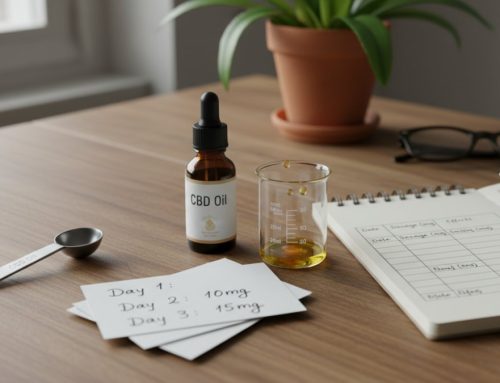
- Baseline week (Days 1-7): Start with 10-15mg CBD daily, taken at the same time each day. Note pain levels on a 1-10 scale each morning and evening.
- First adjustment (Day 8): If pain scores haven’t improved by at least 1-2 points, increase to 20-25mg daily.
- Second adjustment (Day 15): If still insufficient, increase to 30-40mg daily. At this point, split dosing (morning and evening) often outperforms a single daily dose.
- Maintenance phase (Day 22+): Once a dose produces consistent relief, hold it for two weeks before evaluating further changes.
- Upper threshold guidance: Many practitioners suggest that doses above 50-75mg daily for pain rarely produce proportionally greater benefit and increase the risk of side effects like drowsiness and liver enzyme elevation.
Body weight, metabolism, the severity of the pain condition, and the bioavailability of the specific product all influence effective dosage. A water-based CBD formulation, like those offered by CBD Health Collection, typically requires a lower dose to achieve equivalent effects compared to standard oil-based tinctures because absorption is more efficient.
The biggest mistake in CBD dosing is abandoning the protocol too early. Meaningful anti-inflammatory effects often require 2-4 weeks of consistent use before the full benefit is apparent. Most people quit after 5 days and conclude it doesn’t work.
How to Use CBD for Back Pain: Step-by-Step Application Guide
Back pain is one of the most common reasons people search for what is cbd good for pain, and it responds well to a combined topical-plus-systemic approach.
Step 1: Identify the pain type. Is the back pain primarily muscular (tension, spasm), inflammatory (disc-related, arthritis), or neuropathic (radiating, burning)? Muscular pain responds fastest to topicals. Inflammatory and neuropathic pain benefit more from systemic CBD.
Step 2: Apply topical CBD to the affected area. Use a freeze gel or pain patch directly over the pain site. Apply after a warm shower when pores are open and blood flow is increased. This improves topical absorption meaningfully.
Step 3: Take systemic CBD simultaneously. Use a tincture held under the tongue for 60-90 seconds before swallowing, or take a soft gel with a meal containing healthy fats. Fat increases CBD bioavailability in oil-based products.
Step 4: Time your doses around pain peaks. If back pain is worst in the morning, take systemic CBD the night before at bedtime. If pain peaks in the evening after activity, take it in the early afternoon.
Step 5: Track and adjust. Use a simple pain journal for the first 30 days. Without tracking, it’s nearly impossible to identify what’s working.
According to the American Chiropractic Association’s patient resource library, back pain is the leading cause of disability worldwide. Given this scale, the practical guidance above is more valuable than theoretical discussions.
Side Effects of CBD Oil and Drug Interactions to Know
CBD’s safety profile is genuinely favorable compared to most pharmaceutical analgesics, but "low risk" is not the same as "no risk." The side effects of CBD oil that appear most consistently in research include drowsiness, dry mouth, reduced appetite, and diarrhea at higher doses.
The more serious concern is liver toxicity. High-dose CBD (well above typical consumer doses) has shown liver enzyme elevation in clinical trials, primarily at doses used in epilepsy treatment. For pain management doses in the 10-75mg range, this risk is low, but people with existing liver conditions should consult a physician before use.
Drug interactions are the most underreported risk in consumer CBD content. CBD inhibits cytochrome P450 enzymes in the liver, the same enzyme family responsible for metabolizing many common medications. This means CBD can increase or decrease the blood concentration of drugs including:
- Blood thinners (warfarin): CBD may increase anticoagulant effect
- Certain antiepileptic drugs
- Some antidepressants and antipsychotics
- Immunosuppressants
The "grapefruit warning" is a useful shorthand: if your medication comes with a warning to avoid grapefruit, it likely interacts with CBD through the same enzyme pathway.
How to Choose a Quality CBD Product: COA Literacy and What to Look For
The CBD market remains largely unregulated at the consumer level, which means product quality varies enormously. Choosing based on price or marketing claims alone is a reliable way to get a product that contains neither the amount of CBD stated nor the purity implied.

The single most important quality signal is an independent third-party Certificate of Analysis (COA). CBD Health Collection publishes COA lab results for all products, produced in a GMP- and FDA-registered facility using clean CO2 extraction from organically grown, USA-sourced hemp. This is the standard every CBD product should meet, and most don’t.
How to Read a Certificate of Analysis (COA)
A COA is a lab report from an independent testing facility that verifies what’s actually in a CBD product. Here’s what to check:
Potency panel: Confirms the actual CBD content matches the label claim. A product labeled "30mg CBD per serving" should test within a reasonable margin (typically plus or minus 10-15%) of that figure. Significant underdosing is common in lower-quality products.
Cannabinoid profile: Shows the full range of cannabinoids present. For broad-spectrum products, THC should read as "ND" (not detected) or below 0.001%. For full-spectrum, THC should be below 0.3%.
Pesticide panel: Confirms the hemp extract is free from agricultural chemicals. Organically grown hemp is the starting point; the COA verifies it.
Heavy metals panel: Hemp is a bioaccumulator, meaning it absorbs metals from soil. A clean COA will show lead, arsenic, mercury, and cadmium at or below safe thresholds.
Microbial panel: Confirms the product is free from harmful bacteria and mold.
Always verify that the COA was issued by a laboratory accredited by ISO 17025. This accreditation means the lab itself has been independently audited for accuracy. A COA from a non-accredited lab is nearly meaningless.
COA Red Flags Checklist:
- No COA available at all (immediate disqualifier)
- COA issued by the brand’s own internal lab (not independent)
- COA is more than 12 months old
- Potency result differs from label by more than 20%
- Missing pesticide or heavy metals panels
- Lab is not ISO 17025 accredited
According to the FDA’s consumer guidance on CBD products, the agency has found significant discrepancies between labeled and actual CBD content in many products tested. Independent COA verification is your primary defense against mislabeled products.
What Is CBD Good for Pain? Common Myths Debunked
The popular narrative around CBD swings between two extremes: miracle cure and complete hoax. Neither is accurate, and both extremes lead people to make poor decisions.
Myth 1: "More CBD always means more pain relief." Dose-response curves for CBD are not linear. Many users find that moderate doses outperform high doses, possibly due to biphasic effects where very high doses produce diminishing or even opposite returns. The titration protocol above exists precisely because optimal dosing is individual.
Myth 2: "CBD works immediately." Topical application can produce localized relief within 15-30 minutes. Systemic CBD for chronic inflammatory pain typically requires 2-4 weeks of consistent use before the anti-inflammatory effect accumulates to a noticeable level. Expecting immediate results from oral CBD is the most common reason people abandon it prematurely.
Myth 3: "CBD isolate is safer than full-spectrum." Isolate is not inherently safer; it’s simply more predictable. Full-spectrum hemp-derived CBD at legal THC limits (below 0.3%) is safe for most adults. The choice between isolate and full-spectrum should be driven by drug testing requirements and individual response, not a misconception that isolate is the "pure" and therefore superior option.
Myth 4: "Topical CBD gets you high." Topical application is localized. CBD applied to the skin does not reach systemic circulation in meaningful amounts and produces no psychoactive effect whatsoever, regardless of the product’s THC content.
The throughline across all of these myths: CBD is a pharmacologically active compound with real mechanisms and real limitations. Treating it as magic or as placebo both lead to poor outcomes.
Conclusion: Is CBD Right for Your Pain Management Plan?
Managing chronic or recurring pain without dependence on sedating medications is a genuine challenge, and the evidence suggests CBD is a credible tool in that effort rather than a replacement for conventional care. The key is product quality, consistent dosing, realistic timelines, and an honest assessment of which pain types respond best.
CBD Health Collection was founded by a pharmaceutical industry veteran specifically to bring medical rigor to the consumer CBD market. Every product is derived from organically grown, USA-sourced hemp, extracted via clean CO2 processing, produced in a GMP- and FDA-registered facility, and independently third-party lab tested with published COA results. The 30-day satisfaction guarantee and free shipping remove the risk from trying. Visit cbdhealthcollection.com to find the right product for your pain management needs and get started with a protocol built on transparency, not marketing claims.
Frequently Asked Questions
Does CBD actually help with chronic pain?
CBD may help with chronic pain management by interacting with CB2 receptors in the endocannabinoid system to reduce inflammation and modulate pain signals. Anecdotal evidence is strong, and some clinical trials show promising results, particularly for neuropathic pain and osteoarthritis. However, research is still evolving. Many users report meaningful relief when using consistently dosed, third-party tested hemp-derived CBD products. Results can vary based on pain type, dosage, and product quality.
How much CBD should I take for pain relief?
There is no universal CBD dosage for pain. A practical titration approach is to start low, typically 10-15 mg per day, and increase by 5 mg every 3-5 days until you notice relief. Factors like body weight, metabolism, pain severity, and product bioavailability all influence the right dose. Topical CBD for localized pain like back pain is applied directly and does not require the same systemic dosing. Always consult a healthcare provider before starting, especially if you take other medications.
Is CBD oil or cream better for pain?
It depends on the pain type. CBD oil tinctures and gummies work systemically, making them better suited for widespread chronic pain, fibromyalgia, or neuropathic pain. Topical CBD creams, freeze gels, and pain patches are ideal for localized pain like back pain, joint inflammation, or sore muscles because they allow direct topical application to the affected area. Many users combine both methods, a tincture for systemic support and a topical for targeted relief.
How long does it take for CBD to work for pain?
Onset time varies by delivery method. CBD oil taken sublingually typically takes 15-45 minutes to take effect. Gummies and soft gels pass through digestion and may take 45-90 minutes but offer longer-lasting effects. Topical CBD for back pain or joint pain can produce localized relief within 15-30 minutes of application. Consistent daily use over 2-4 weeks often produces the most noticeable results for chronic pain management, as cannabidiol builds in the system over time.
Are there any side effects of using CBD for pain?
CBD is generally well tolerated, but side effects of CBD oil can include drowsiness, dry mouth, reduced appetite, and mild digestive upset. At high doses, there is some concern about liver toxicity, particularly when combined with certain medications. CBD can also interact with drugs metabolized by the liver's cytochrome P450 enzyme system, including blood thinners and some antidepressants. Always choose third-party tested, hemp-derived CBD and consult a doctor if you take prescription medications.
What should I look for on a CBD product's Certificate of Analysis (COA)?
A COA is a lab report from an independent third-party testing facility. When evaluating CBD for pain relief, check that the cannabidiol potency matches the label claim, that THC levels are below 0.3% (federal legal limit for hemp-derived products), and that the product tests negative for pesticides, heavy metals, and residual solvents. Confirm the COA is recent (within 12 months) and issued by an accredited lab, not the brand's own facility. Reputable brands like CBD Health Collection make COAs publicly accessible.
This article was written using GrandRanker