Table of Contents
- How We Chose the Best CBD Topicals for Joint Pain
- Quick Comparison: Top CBD Topicals at a Glance
- The 9 Best CBD Topicals for Joint Pain Ranked and Reviewed
- 1. CBD Health Collection Topical Freeze Gel, Best Overall for Bioavailability
- 2. Lazarus Naturals Relief + Recovery Muscle Gel, Best Value Full-Spectrum
- 3. Charlotte’s Web Arthritis Aches and Pain Relief Ointment, Best for Arthritis-Specific Formulation
- 4. Joy Organics Premium CBD Sports Cream, Best for Active Recovery
- 5. Aspen Green Relief Cooling Cream, Best Organic Luxury Option
- 6. Extract Labs CBD Muscle Cream, Best for Clean, High-Potency Formulas
- 7. cbdMD Freeze Roller, Best for On-the-Go Application
- 8. Medterra Pain Relief Cream, Best Budget-Friendly Pick
- 9. CBDfx Muscle and Joint Cooling Balm Stick, Best Portable Format
- CBD Cream for Arthritis Pain: What the Ingredients Actually Do
- How to Use CBD Topicals for Pain: Application Tips That Maximize Relief
- CBD Dosage for Joint Pain: How Many Milligrams Do You Actually Need?
- Third-Party Lab Testing for CBD: Why a COA Is Non-Negotiable
- Conclusion: Which CBD Topical for Joint Pain Is Right for You?
Last Updated: May 11, 2026
Finding the best cbd topical for joint pain is harder than it looks. The market is flooded with products making identical claims, and most comparison guides are little more than affiliate link farms with no meaningful analysis of ingredients, potency, or third-party verification. CBD Health Collection has helped thousands of customers cut through that noise with a science-backed approach to cannabidiol wellness. This guide ranks nine real products on criteria that actually matter: bioavailability, ingredient synergy, certificate of analysis (COA) transparency, and practical usability for people managing osteoarthritis, rheumatoid arthritis, and chronic joint stiffness.
Here’s what most guides get wrong: they treat all CBD topicals as interchangeable. They’re not. A broad-spectrum gel with menthol and arnica montana delivers a fundamentally different experience than a hemp-derived isolate cream with no supporting actives. Below, we’ll show you exactly how formulation choices affect localized relief, why the endocannabinoid system responds differently to transdermal application than to oral cannabidiol, and which product earns the top spot for each use case.
How We Chose the Best CBD Topicals for Joint Pain
Evaluation for this list came down to five non-negotiable criteria. Products that couldn’t clear all five were cut regardless of brand recognition.
Key Evaluation Criteria: Potency, Ingredients, and Transparency
Potency (milligrams per container): Higher mg counts matter for joint pain because cannabidiol must penetrate multiple skin layers to reach joint tissue. Products below 500mg rarely deliver meaningful localized relief for arthritic symptoms.
Ingredient synergy: The best CBD topicals pair cannabidiol with evidence-backed actives. Menthol creates an immediate cooling sensation that interrupts pain signals. Arnica montana has a long track record in sports medicine for reducing muscle soreness and swelling. Capsaicin depletes substance P, a neurotransmitter involved in pain signaling. Carrier oils like coconut and jojoba affect how deeply active compounds absorb.
Third-party lab testing and COA availability: Every product on this list has publicly accessible certificates of analysis from independent laboratories. A COA confirms actual CBD potency, verifies THC-free or trace-THC status, and screens for pesticides and heavy metals. This is the single most important trust signal in the CBD industry.
Spectrum type: Full-spectrum products retain terpenes and minor cannabinoids that may contribute to the entourage effect. Broad-spectrum products offer similar complexity without detectable THC. Isolate products contain only cannabidiol. Each has legitimate use cases depending on the buyer’s situation.
Dermatological safety and formulation quality: Products manufactured in GMP- and FDA-registered facilities with clean CO2 extraction scored higher than those with undisclosed manufacturing standards.
Never buy a CBD topical that lacks a scannable QR code or direct URL linking to a current COA. Outdated or missing lab reports are the most common sign of a low-quality product. The consequence: you may be paying for a product with far less CBD than advertised.
Quick Comparison: Top CBD Topicals at a Glance
| Product | Type | CBD Potency | Starting Price | Best For |
|---|---|---|---|---|
| CBD Health Collection Topical Freeze Gel | Broad-spectrum | High | Visit site | Best overall bioavailability |
| Lazarus Naturals Relief + Recovery Gel | Full-spectrum | Up to 2000mg | $27.00 | Best value |
| Charlotte’s Web Arthritis Ointment | Full-spectrum | Moderate | $29.99 | Arthritis-specific formula |
| Joy Organics Sports Cream | Broad-spectrum | 1000mg | $69.95 | Active recovery |
| Aspen Green Relief Cooling Cream | Full-spectrum | High | $89.99 | Organic luxury |
| Extract Labs CBD Muscle Cream | Full-spectrum | 2000mg | $89.99 | Clean high-potency |
| cbdMD Freeze Roller | Broad-spectrum | Up to 3000mg | $34.99 | On-the-go use |
| Medterra Pain Relief Cream | Isolate-based | 1000mg | $39.99 | Budget-friendly |
| CBDfx Muscle and Joint Balm Stick | Broad-spectrum | Moderate | $29.99 | Portable format |
The 9 Best CBD Topicals for Joint Pain Ranked and Reviewed
The products below are ranked by overall performance for joint pain specifically. Active recovery and muscle soreness products are noted where the formula skews more toward soft tissue than joint support.
1. CBD Health Collection Topical Freeze Gel, Best Overall for Bioavailability
The CBD Health Collection Topical Freeze Gel earns the top position because of one differentiator most competitors ignore: water-based formulation for optimized bioavailability. Oil-based topicals sit on the skin surface longer before absorbing. A water-based CBD gel penetrates more readily, which matters enormously when the target is a joint rather than a superficial muscle.
Founded by pharmaceutical industry veteran Rick Bauer, CBD Health Collection operates out of Granville, Ohio, and produces every product in a GMP- and FDA-registered facility. The hemp is organically grown and USA-sourced, extracted via clean CO2 process with no chemical solvents. Every batch is independently third-party lab tested, and COAs are accessible to customers.
The freeze gel formula combines cannabidiol with a cooling sensation complex that provides fast-acting temporary relief. For people managing chronic joint stiffness from osteoarthritis or rheumatoid arthritis, the combination of rapid absorption and anti-inflammatory cannabidiol is the most practical daily-use option on this list.
Pros: Water-based for superior absorption, organically grown hemp, COA-verified purity, GMP-certified manufacturing, 30-day satisfaction guarantee, free shipping
Cons: Online-only purchase (cbdhealthcollection.com)
Anyone managing daily joint pain who wants a clinically informed formulation with full transparency on manufacturing standards and lab testing.
2. Lazarus Naturals Relief + Recovery Muscle Gel, Best Value Full-Spectrum
At $27.00 for up to 2000mg of full-spectrum CBD, Lazarus Naturals offers the strongest value proposition on this list. The gel texture absorbs quickly without leaving a greasy residue, which matters for people applying it to hand and finger joints throughout the day.
The formula includes both menthol and capsaicin, which is an unusual and effective pairing. Menthol delivers an immediate cooling sensation while capsaicin works on a slower timescale to reduce substance P activity. The full-spectrum hemp extract retains terpenes that may contribute to the entourage effect.
The one honest caveat: full-spectrum means trace THC. For most users this is irrelevant, but anyone subject to workplace drug screening should choose a broad-spectrum or isolate product instead.
Pros: Excellent value for money, high CBD potency, menthol plus capsaicin synergy
Cons: Contains trace THC (full-spectrum), may not suit drug-tested individuals
3. Charlotte’s Web Arthritis Aches and Pain Relief Ointment, Best for Arthritis-Specific Formulation
Charlotte’s Web built this ointment specifically for arthritic symptoms, and the formulation reflects that focus. The 10% menthol and 10% camphor concentrations are at the upper end of what OTC pain relief products typically use. Camphor adds a warming sensation that complements menthol’s cooling effect, creating a contrast therapy dynamic in a single application.
The full-spectrum hemp extract is dermatologist-tested and hypoallergenic, which makes it appropriate for people with sensitive skin. At $29.99, it’s one of the more accessible price points for a purpose-built arthritis formula.
The practical downside is availability. High demand means this product goes out of stock frequently. If you find it in stock, buying two is a reasonable precaution.
Pros: Formulated specifically for arthritis, trusted brand reputation, dermatologist-tested
Cons: Frequently out of stock, ointment texture is heavier than gels or creams
4. Joy Organics Premium CBD Sports Cream, Best for Active Recovery
Post-activity joint recovery is a different need than chronic pain management, and Joy Organics addresses it directly. The 1000mg broad-spectrum CBD per 4oz container is a solid potency for a cream format. The menthol and camphor combination provides both cooling and warming sensations, which many athletes prefer over single-note topicals.
The formula absorbs without leaving residue, which matters for people who apply it and then return to activity. At $69.95, it’s priced at the premium end of the mid-tier market.
Pros: High CBD concentration, fast-absorbing, broad-spectrum (THC-free), third-party lab tested
Cons: Higher price point per unit compared to similar potency competitors
5. Aspen Green Relief Cooling Cream, Best Organic Luxury Option
USDA-certified organic status is genuinely rare in the CBD topical market. Aspen Green holds that certification, and the formula reflects the commitment: arnica montana, calendula, and tea tree oil alongside full-spectrum CBD rich in terpenes. The physician-formulated designation adds credibility, though buyers should verify what that claim specifically entails.
At $89.99, this is a luxury purchase. The ingredient quality justifies the price for buyers who prioritize organic sourcing above all else. For budget-conscious buyers, the value-per-mg calculation doesn’t favor this product.
Pros: USDA-certified organic, rich terpene profile, arnica and calendula support
Cons: Premium price, full-spectrum means trace THC
6. Extract Labs CBD Muscle Cream, Best for Clean, High-Potency Formulas
Nine ingredients. That’s the entire formula for Extract Labs CBD Muscle Cream. For people who read ingredient labels carefully and want nothing they can’t identify, this is the standout option on the list.
The 2000mg full-spectrum CBD in a 2.5oz container represents one of the highest concentration-to-volume ratios available. USDA-organic certified, with menthol and arnica as the primary supporting actives. The clean formulation philosophy means no synthetic fragrances, no parabens, and no unnecessary fillers.
The $89.99 price reflects the organic certification and potency. Worth it for buyers who prioritize purity over cost.
Pros: Very high potency, minimal clean ingredient list, USDA-organic certified
Cons: Expensive, smaller volume than comparably priced competitors
7. cbdMD Freeze Roller, Best for On-the-Go Application
The roll-on applicator format solves a real problem: applying CBD topical to joints like knees or elbows without getting product on your hands. The broad-spectrum formula contains menthol for immediate cooling sensation, and the THC-free status makes it appropriate for a wider range of users.
Available in potencies up to 3000mg, cbdMD’s Freeze Roller is one of the few roll-on formats that scales to genuinely high CBD concentrations. Starting at $34.99, it’s mid-range pricing for the format.
The strong menthol scent is the most common user complaint. For people sensitive to fragrance, this is worth considering before purchase.
Pros: Mess-free application, fast-acting cooling effect, THC-free, high potency options
Cons: Strong menthol scent, roll-on format may not suit very large joint areas
8. Medterra Pain Relief Cream, Best Budget-Friendly Pick
Medterra’s Pain Relief Cream at $39.99 delivers 1000mg CBD with arnica and menthol in a non-greasy, quick-absorbing formula. For first-time CBD topical users who want to test the format before committing to a premium product, this is the most sensible entry point.
The wide retail availability is a genuine practical advantage. Finding it in a local store means no shipping wait when you need relief today.
The CBD concentration is lower than luxury competitors, which is the honest trade-off at this price point. For mild to moderate joint discomfort, it’s sufficient. For severe arthritic symptoms, stepping up to a higher-potency product will likely deliver better results.
Pros: Affordable, widely available in retail stores, arnica and menthol combination
Cons: Lower CBD concentration, may be insufficient for severe chronic pain
9. CBDfx Muscle and Joint Cooling Balm Stick, Best Portable Format
The balm stick format is the most portable option on this list. Gym bags, travel kits, desk drawers: the solid stick goes anywhere without leakage risk. White willow bark is an interesting inclusion alongside menthol, as it contains salicin, a compound with a long history of use for pain and inflammation.
At $29.99, it’s an accessible price point. The trade-off is volume: stick formats hold less product than jars or tubes, so frequent users will replace it more often.
Pros: Highly portable, easy targeted application, white willow bark inclusion
Cons: Smaller volume, not ideal as a primary product for large joint areas
CBD Cream for Arthritis Pain: What the Ingredients Actually Do
CBD cream for arthritis pain works through two parallel mechanisms. Cannabidiol interacts with cannabinoid receptors in skin and peripheral tissue, engaging the endocannabinoid system to modulate local inflammatory signaling. Supporting actives like menthol, arnica, and capsaicin work through entirely separate pathways, which is why ingredient synergy matters more than CBD milligrams alone.
Ingredient Synergy: Why Menthol, Arnica Montana, and Capsaicin Matter
Menthol activates TRPM8 receptors in the skin, producing a cooling sensation that effectively competes with pain signals. The effect is fast and noticeable within minutes of application. It doesn’t reduce inflammation directly, but the sensory interruption provides meaningful temporary relief.
Arnica montana is a botanical extract with documented anti-inflammatory properties. According to Arthritis Foundation guidance on topical pain relievers, arnica is among the more evidence-supported natural topical ingredients for joint and muscle discomfort.
Capsaicin works differently from both. Repeated application depletes substance P in local nerve fibers, reducing pain signal transmission over time. The initial burning sensation is a deterrent for some users, but the long-term effect on chronic joint pain can be significant.
Terpenes in full-spectrum and broad-spectrum products add another layer. Myrcene, beta-caryophyllene, and linalool each have anti-inflammatory or analgesic properties documented in preliminary research. Their contribution to the overall effect is why full-spectrum products often outperform isolate products at equivalent CBD concentrations.
Apply capsaicin-containing products to a small test area first. The warming sensation intensifies with repeated use before subsiding. Users who push through the initial discomfort typically report better long-term results for chronic joint pain than those who stop after the first application.
How to Use CBD Topicals for Pain: Application Tips That Maximize Relief
Correct application technique is the part of CBD topical guidance that most product pages skip entirely. The method matters as much as the product.
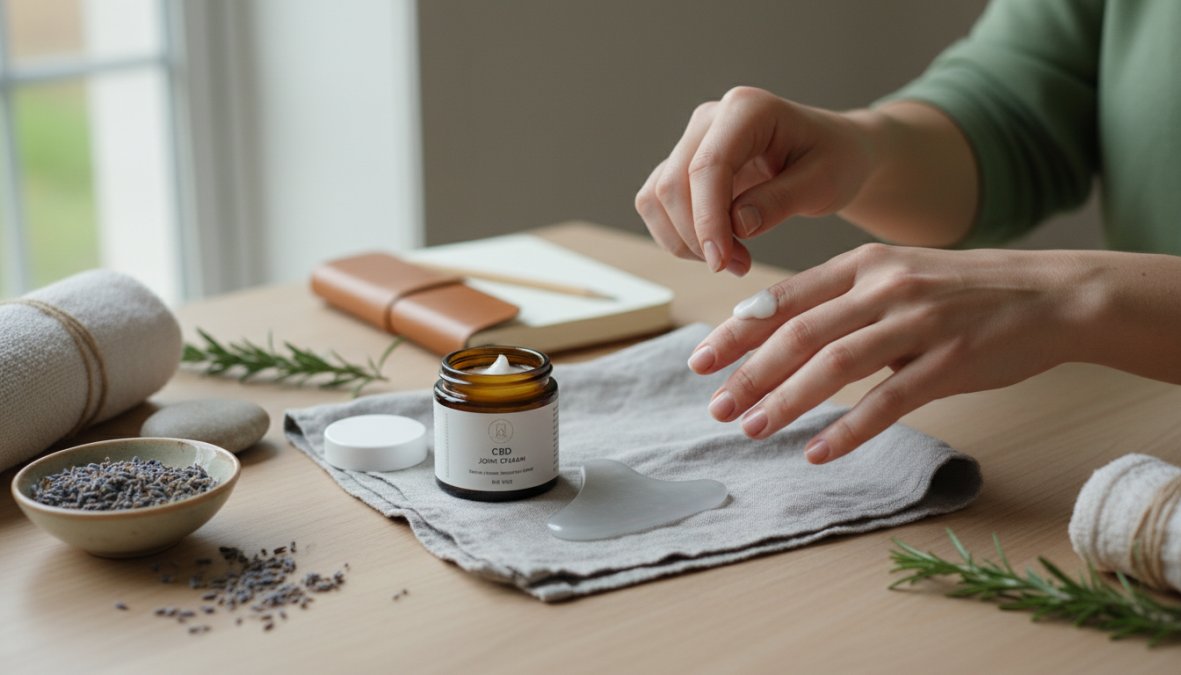
Start with clean, dry skin. Residual lotions, sunscreens, or oils on the skin surface create a barrier that slows absorption. For joints covered by clothing, apply before dressing rather than through fabric.
Use more product than you think you need. A pea-sized amount is appropriate for a fingertip. For a knee or hip joint, a tablespoon-sized application is more realistic. Thin applications on large joints are the most common reason people report that CBD topicals "don’t work."
Massage the product in with firm, circular pressure for 60-90 seconds. This increases local circulation and drives absorption deeper into the tissue. For arthritic finger joints, gentle kneading between applications also helps maintain mobility.
Reapply every 4-6 hours for chronic joint pain management. Topical CBD does not accumulate in joint tissue the way oral cannabidiol does. Consistent reapplication maintains the localized relief effect throughout the day.
For rheumatoid arthritis affecting multiple joints, apply to the most symptomatic areas first. Prioritizing two or three joints per application session produces better results than spreading a small amount across many sites.
CBD Dosage for Joint Pain: How Many Milligrams Do You Actually Need?
CBD dosage for joint pain via topical application doesn’t follow the same logic as oral dosing. Bioavailability through the skin is inherently lower than through the digestive system, which is why topical products are formulated at much higher mg concentrations than tinctures or capsules.
A practical starting point for joint pain is a product containing at least 250-500mg per container. For moderate to severe arthritic symptoms, products in the 1000-2000mg range typically deliver more consistent results. The 2000mg Extract Labs and Lazarus Naturals products represent the high end of what’s currently available.
The amount applied per session matters more than the total container potency. A 500mg product used generously provides more localized relief than a 2000mg product applied sparingly. The goal is saturating the target tissue.
Water-based formulations like the CBD Health Collection Topical Freeze Gel address the bioavailability challenge directly. Higher absorption efficiency means a given mg dose delivers more active cannabidiol to joint tissue than an equivalent oil-based product, which is why formulation type belongs in any honest dosage conversation.
According to Project CBD’s clinical guidance on cannabidiol topicals, topical application produces localized effects without significant systemic absorption, which means the psychoactive concerns associated with THC-containing products are largely irrelevant for transdermal use.
Third-Party Lab Testing for CBD: Why a COA Is Non-Negotiable
Third-party lab testing for CBD is the single most important quality signal in a market that remains lightly regulated. A certificate of analysis (COA) is a document produced by an independent laboratory confirming what a product actually contains.
A complete COA covers three things: potency verification (confirming the actual CBD milligrams match the label), cannabinoid profile (showing the full-spectrum, broad-spectrum, or isolate status), and contaminant screening (testing for pesticides, heavy metals, residual solvents, and microbial contamination).
What to look for when reading a COA:
- Testing date: COAs older than 12 months should be treated with skepticism. Batch-specific testing is the standard.
- Lab accreditation: The testing laboratory should hold ISO 17025 accreditation. This is the international standard for testing laboratory competence.
- CBD potency match: If the label says 1000mg and the COA shows 600mg, that’s a red flag regardless of brand reputation.
- THC levels: For THC-free claims, the COA should show non-detectable or below 0.001% THC.
As noted in FDA guidance on hemp-derived CBD product labeling, the agency has found significant discrepancies between labeled and actual CBD content in market surveys. COA verification is the buyer’s primary protection against mislabeled products.
Every product on this list has accessible COAs. For any product not on this list, check for the COA before purchasing. If a brand doesn’t publish it, that tells you everything you need to know.
A COA is not optional. It’s the only way to verify that a CBD topical contains what the label claims. Any brand that doesn’t publish current, batch-specific COAs from an ISO-accredited lab should be removed from your consideration list immediately.
For additional context on how cannabidiol interacts with joint tissue at the cellular level, National Institutes of Health research on cannabinoids and inflammation provides a useful overview of the current science.
Conclusion: Which CBD Topical for Joint Pain Is Right for You?
The right choice depends on three variables: severity of symptoms, sensitivity to THC, and whether bioavailability or organic sourcing is the higher priority.
For most people managing daily joint pain, the answer is a high-potency, water-based formula with menthol and arnica from a manufacturer with verifiable COAs and GMP-certified production. Budget matters too: Lazarus Naturals is the strongest value play, Charlotte’s Web is the best arthritis-specific formula, and cbdMD’s roller is the most practical for on-the-go use.
Joint pain affects quality of life in ways that compound over time, and finding a product that actually works requires more than reading a label. CBD Health Collection was built specifically to address that problem, combining pharmaceutical-grade manufacturing standards, water-based formulation for optimized bioavailability, and independently verified COA lab testing on every batch. The 30-day satisfaction guarantee and free shipping remove the risk from trying it. Get started with CBD Health Collection and experience the difference that formulation quality and genuine transparency make for localized joint relief.
Frequently Asked Questions
Does CBD cream actually help with joint pain?
CBD topicals may offer localized relief by interacting with cannabinoid receptors in skin and underlying tissue through the endocannabinoid system. While research is still evolving, many users report reduced joint stiffness and temporary relief from conditions like osteoarthritis and rheumatoid arthritis. The best CBD topical for joint pain typically combines cannabidiol with synergistic ingredients like menthol or arnica montana to enhance the anti-inflammatory and analgesic effect at the application site.
Is full-spectrum or broad-spectrum CBD better for joint pain?
Full-spectrum CBD contains all naturally occurring hemp compounds including trace THC, which may enhance the entourage effect, potentially improving anti-inflammatory outcomes. Broad-spectrum CBD is THC-free and still includes beneficial terpenes and cannabinoids, making it a strong choice for those who need to avoid THC entirely. For topical application, either format can be effective; the choice often comes down to personal preference, dermatological safety concerns, and whether THC presence is a factor for you.
How often should I apply CBD cream to my joints?
Most CBD topicals for joint pain can be applied two to four times daily, depending on the product's potency in milligrams and your level of discomfort. Start with a pea-sized amount, massage it thoroughly into the affected area, and allow it to absorb fully before reapplying. For chronic pain management related to arthritic symptoms or muscle soreness, consistent daily use tends to yield better results than sporadic application. Always follow the specific product's usage guidelines.
Can CBD topicals interact with my current arthritis medications?
CBD topicals are generally considered low-risk for drug interactions because transdermal absorption into the bloodstream is minimal compared to oral CBD products. However, if you are managing rheumatoid arthritis or osteoarthritis with prescription medications, it is still advisable to consult your healthcare provider before adding any CBD product to your routine. Ingredients like menthol and capsaicin in some formulas can occasionally cause skin sensitivity, so patch-testing is recommended for dermatological safety.
What should I look for when buying CBD topicals for joint pain?
Prioritize products with a verifiable certificate of analysis (COA) from independent third-party lab testing, which confirms potency and purity. Look for clearly stated milligrams of CBD per container, whether the formula is full-spectrum, broad-spectrum, or isolate, and the quality of carrier oils and synergistic ingredients like arnica, menthol, or capsaicin. Organically grown, hemp-derived cannabidiol processed via CO2 extraction and produced in a GMP-registered facility signals a higher-quality, safer product.
This article was written using GrandRanker