Table of Contents
- Understanding CBD and the Canine Endocannabinoid System
- Key Benefits of CBD for Senior Dogs
- CBD Dosage for Senior Dogs: Finding the Right Amount
- Side Effects of CBD in Dogs and Safety Considerations
- Best CBD Oil for Senior Dogs with Arthritis: Quality and Selection
- CBD for End-of-Life Palliative Care in Senior Dogs
- Breed-Specific Considerations for CBD Use
- Getting Started: Your Senior Dog’s CBD Wellness Plan
CBD for Senior Dogs: Benefits, Dosage & Safety Guide
Last Updated: July 13, 2026
Senior dogs face a unique set of health challenges. As our pets age, joint discomfort, anxiety, mobility issues, and appetite changes become increasingly common. Many pet owners are turning to CBD as a natural option to support their aging companions. This guide from CBD Health Collection explores the benefits of cbd for senior dogs, covering everything from how CBD works to dosage protocols and safety considerations. Below, we’ll show you exactly how to evaluate CBD for your senior dog’s specific needs and monitor their progress over time.
Research from the American Kennel Club’s senior dog health survey indicates that dogs over age 7 experience significant quality-of-life declines without proper management. The good news: many pet owners report meaningful improvements when they introduce CBD thoughtfully into their senior dog’s wellness routine. What makes this approach different from generic supplements is the specificity, understanding your dog’s endocannabinoid system and matching CBD dosage to their individual metabolism.
Understanding CBD and the Canine Endocannabinoid System
Every mammal, including dogs, has an endocannabinoid system (ECS), a complex network of receptors and signaling molecules that maintains homeostasis throughout the body. This biological system regulates pain perception, immune function, mood, appetite, and sleep-wake cycles. When your senior dog’s ECS becomes imbalanced due to aging, chronic inflammation, or stress, CBD can help restore equilibrium by interacting with CB1 and CB2 receptors.
Cannabidiol (CBD) is a non-intoxicating compound derived from hemp that binds indirectly to these receptors, unlike THC, which creates psychoactive effects. CBD doesn’t produce a "high" in dogs or humans, it works by modulating the body’s own endocannabinoid signaling. For senior dogs, this means pain relief, reduced anxiety, and improved overall vitality without the side effects of pharmaceutical interventions.
The endocannabinoid system in dogs becomes less efficient with age, much like other biological systems. Senior dogs often have fewer active CB1 and CB2 receptors, which is why CBD supplementation can be particularly valuable during their later years. At CBD Health Collection, we emphasize understanding this mechanism because it explains why CBD works for some conditions better than others, and why dosage titration matters so much.
The key difference between CBD and traditional pain medications: CBD addresses the root cause (ECS imbalance) rather than masking symptoms. This is why many owners see cumulative improvements over weeks rather than immediate relief.
Key Benefits of CBD for Senior Dogs
The benefits of cbd for senior dogs extend across multiple body systems. Research from the Journal of the American Veterinary Medical Association documents that CBD shows promise for managing age-related conditions in canines. The most commonly reported benefits fall into four categories: joint and mobility support, anxiety and cognitive function, appetite regulation, and overall quality of life enhancement.
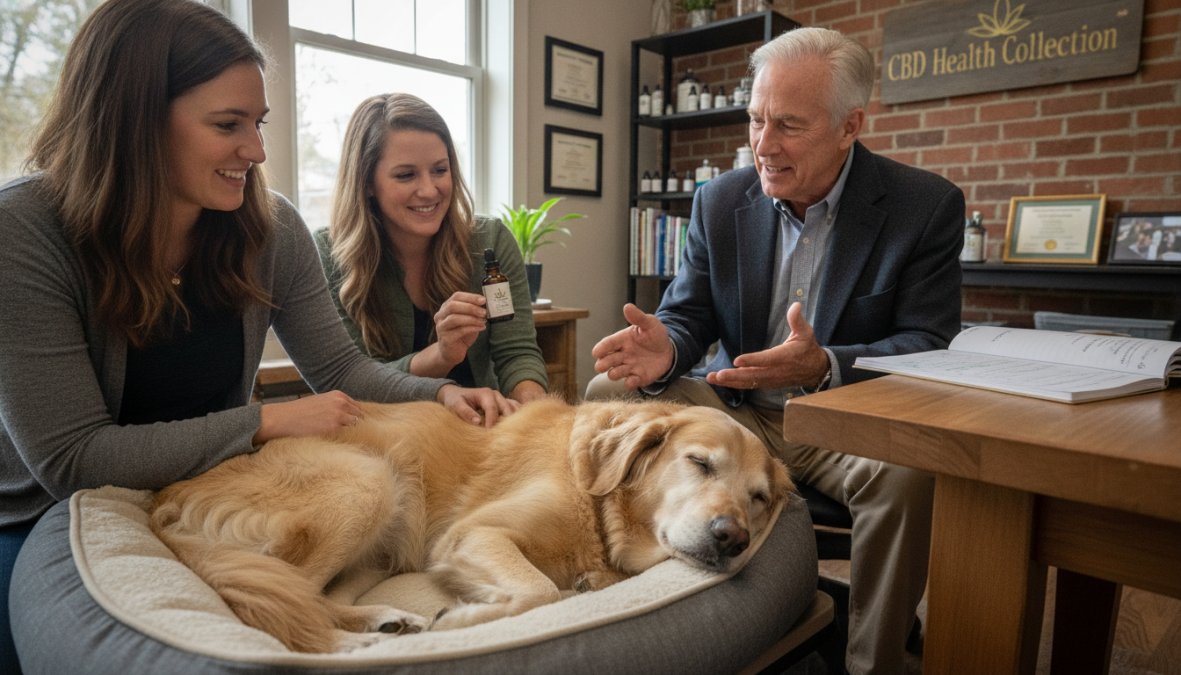
Senior dogs using CBD often show visible improvements in their willingness to move, their appetite, and their emotional state. Some owners notice their dog climbing stairs again after months of avoiding them. Others report their anxious senior becoming calm enough to sleep through thunderstorms. These aren’t placebo effects, they’re the result of CBD’s direct action on pain pathways and stress-response systems.
Joint Discomfort, Arthritis, and Mobility Support
Osteoarthritis affects roughly 80% of dogs over age 8, making joint discomfort one of the most pressing concerns for senior dog owners. CBD addresses this through multiple mechanisms: reducing inflammatory cytokines, decreasing pain signal transmission, and promoting cartilage health through neuroprotection. Dogs with chronic pain from osteoarthritis show measurable improvements in mobility within 2-4 weeks of consistent CBD use.
The anti-inflammatory properties of full-spectrum CBD work on multiple pathways simultaneously. Rather than blocking one inflammatory marker like NSAIDs do, CBD modulates the entire immune response, reducing overactive inflammation while preserving the immune system’s protective functions. This is particularly important for senior dogs who may already be on multiple medications.
Many owners report that their senior dogs return to activities they’d abandoned months earlier: longer walks, climbing stairs without hesitation, playing with younger dogs. The improvement in joint discomfort translates directly to quality of life. CBD also works synergistically with other joint-support ingredients like glucosamine and omega-3s, making it an excellent addition to an existing wellness protocol.
For senior dogs with arthritis, CBD’s anti-inflammatory action combined with pain relief typically produces visible improvements in mobility within 2-4 weeks, far faster than many pharmaceutical alternatives and without the liver enzyme complications.
Anxiety Relief and Cognitive Function
Senior dogs often experience increased anxiety as their cognitive function declines. Thunderstorm phobia, separation anxiety, and generalized nervousness become more common with age. CBD reduces anxiety by modulating serotonin receptors and GABA signaling, the same pathways targeted by pharmaceutical anxiolytics, but through a gentler, more natural mechanism.
The neuroprotective properties of CBD also support cognitive function in aging dogs. Studies indicate that CBD may slow cognitive decline by reducing neuroinflammation and promoting neuroplasticity. Senior dogs on CBD often show improved alertness, better response to commands, and reduced confusion, signs that their brain health is being actively supported.
Anxiety relief from CBD isn’t just about calming behavior. It’s about reducing the stress hormones that accelerate aging and degrade quality of life. A calm senior dog sleeps better, eats more consistently, and has lower baseline cortisol levels. This creates a positive feedback loop where reduced stress supports better appetite, better sleep, and better immune function.
Appetite Stimulation and Digestive Health
Age-related appetite loss is one of the most frustrating challenges senior dog owners face. CBD stimulates appetite through multiple pathways: it increases ghrelin (the "hunger hormone"), reduces nausea-inducing signals, and improves digestive motility. Dogs that have been picking at their food often return to enthusiastic eating within days of starting CBD.
Beyond appetite, CBD supports digestive health by modulating gut inflammation and promoting healthy microbiome balance. Senior dogs often develop food sensitivities and digestive upset that compounds their nutritional challenges. CBD’s anti-inflammatory action in the GI tract can reduce these symptoms, making it easier for your dog to absorb nutrients from their food.
Consistent nutrition is critical for senior dogs, it supports immune function, maintains muscle mass, and provides energy for healing. When CBD restores appetite and digestive comfort, the downstream effects on overall health are substantial. Many owners find they can reduce supplementation in other areas once their senior dog is eating well again.
CBD Dosage for Senior Dogs: Finding the Right Amount
Dosing CBD for senior dogs is not one-size-fits-all. Factors including body weight, metabolism, liver function, other medications, and the specific condition being treated all influence the optimal dose. General guidelines suggest starting at 1-2 mg of CBD per pound of body weight daily, divided into two doses (morning and evening).
However, this starting dose is just that, a starting point. Many senior dogs benefit from dosages up to 3-5 mg per pound, especially those with severe arthritis or anxiety. The key is titration: beginning low and gradually increasing while monitoring your dog’s response.
Dosage Titration and Monitoring Progress
Begin with the lowest effective dose and track your dog’s response over 7-10 days before making adjustments. Create a simple log noting: dose given, time of day, observed behaviors, appetite, mobility, and any side effects. This data becomes invaluable when discussing CBD with your veterinarian and when deciding whether to increase the dose.
Increase the dose by 0.5-1 mg per pound every 7-10 days until you see the desired effect. Most senior dogs reach their optimal dose within 3-4 weeks. Some respond beautifully at low doses; others need higher amounts. This individual variation is why monitoring is essential, you’re personalizing the protocol to your specific dog.
Watch for these signs of optimal dosing: improved mobility without excessive sedation, reduced anxiety without loss of alertness, improved appetite without restlessness. If your dog seems overly sedated or shows decreased interest in activities, you’ve likely gone too high, reduce the dose by 0.5 mg per pound and reassess after a week.
| Dosing Phase | Duration | Action | Expected Outcome |
|---|---|---|---|
| Initial | Days 1-10 | Start at 1-2 mg/lb daily | Establish baseline response |
| Titration | Weeks 2-4 | Increase by 0.5-1 mg/lb every 7-10 days | Find optimal dose |
| Maintenance | Week 5+ | Continue optimal dose consistently | Sustained symptom relief |
| Monitoring | Ongoing | Track monthly changes | Adjust for seasons or health changes |
Skipping the titration phase and jumping to high doses can cause excessive sedation, which some owners misinterpret as “the CBD isn’t working.” Start low, go slow, and give each dose level at least a week to show its full effect.
Side Effects of CBD in Dogs and Safety Considerations
CBD is generally well-tolerated by senior dogs, but side effects can occur, especially at higher doses or when combined with certain medications. The most common side effects are mild: dry mouth (increased thirst), slight drowsiness, and temporary appetite changes during the adjustment period. These typically resolve within 7-10 days as the dog’s body adapts.
Less common but more significant side effects include diarrhea, vomiting, or changes in liver enzyme levels. These warrant immediate veterinary consultation. Some senior dogs on CBD show increased lethargy initially, this often resolves when the dose is reduced slightly. The key is distinguishing between therapeutic sedation (calm, relaxed, sleeping more peacefully) and problematic sedation (inability to wake, loss of interest in activities).
Liver function is particularly important to monitor in senior dogs, as their liver metabolism naturally declines with age. CBD is metabolized in the liver through the cytochrome P450 system, the same pathway used by many medications. This is where drug-drug interactions become critical.
Drug-Drug Interactions and Veterinary Consultation
Before starting CBD, consult with your veterinarian, especially if your senior dog is on other medications. CBD can inhibit cytochrome P450 enzymes, potentially increasing blood levels of drugs metabolized through this pathway. Common senior dog medications affected include NSAIDs, anticonvulsants, corticosteroids, and cardiac medications.
This doesn’t mean CBD is incompatible with these drugs, it means your veterinarian may need to adjust dosages or monitor blood levels more frequently. Many vets now routinely check liver enzymes (ALT, AST, alkaline phosphatase) before starting CBD and again 4-6 weeks into treatment. This baseline data is invaluable for ensuring your dog’s safety.
Medications with known interactions requiring careful monitoring include:
- Phenobarbital (seizure control)
- Carprofen and other NSAIDs (pain management)
- Prednisone and other corticosteroids (inflammation)
- Digoxin (heart function)
- Warfarin and other anticoagulants
Your veterinarian may recommend spacing CBD doses several hours apart from other medications to minimize interaction risk. Some vets recommend starting CBD at very low doses and increasing more gradually when other medications are present. The collaboration between you, your vet, and CBD Health Collection’s educational resources ensures your senior dog receives safe, effective care.
Request baseline liver enzyme bloodwork before starting CBD, then schedule follow-up testing 4-6 weeks in. This proactive monitoring catches any issues early and gives you objective data about whether the CBD dose needs adjustment.
Best CBD Oil for Senior Dogs with Arthritis: Quality and Selection
Not all CBD products are created equal. The difference between a premium, effective product and a substandard one often comes down to extraction method, third-party testing, and bioavailability. For senior dogs with arthritis, selecting a high-quality CBD oil can mean the difference between noticeable improvement and wasted money.
CBD Health Collection’s pet wellness products exemplify the standard you should seek: organically grown, USA-sourced hemp extracted using clean CO2 methods, produced in GMP- and FDA-registered facilities, and independently third-party lab tested for purity and potency. This level of transparency and quality control ensures your senior dog receives exactly what the label promises, no contaminants, no heavy metals, no mislabeling.
The extraction method matters significantly. CO2 extraction preserves the full spectrum of cannabinoids and terpenes while avoiding harsh chemical solvents. Solvent-based extraction is cheaper but often leaves residual chemicals that can be harmful to senior dogs with sensitive systems. Water-based CBD formulations offer superior absorption and bioavailability, meaning more of the CBD actually reaches your dog’s endocannabinoid system.
Reading Certificate of Analysis (COA) Reports
A Certificate of Analysis is a third-party lab report documenting the exact cannabinoid content, contaminant levels, and purity of a CBD product. Reputable companies provide COAs openly; if a brand won’t share theirs, that’s a major red flag. When reviewing a COA, look for these critical elements:
Cannabinoid Profile: The report should list exact percentages of CBD, THC (should be <0.3%), CBN, CBG, and other cannabinoids. Verify that the CBD percentage matches the product label. A product claiming 500 mg CBD should show approximately 500 mg ÷ bottle volume = stated percentage.
Contaminant Testing: Look for testing for pesticides, heavy metals (lead, mercury, arsenic), microbial pathogens, and residual solvents. The report should show "Not Detected" or values below EPA safety thresholds for all contaminants. Senior dogs are particularly vulnerable to heavy metal accumulation, making this testing essential.
Potency Verification: The COA confirms the product contains the advertised amount of CBD. This prevents the common problem of underdosed products that claim high potency but deliver far less.
Testing Date: Ensure the COA is recent (within 6 months). CBD degrades over time, so older test results don’t reflect current product quality.
Full-Spectrum vs. THC-Free and Delivery Methods
Full-spectrum CBD contains all cannabinoids, terpenes, and beneficial compounds from the hemp plant. This "entourage effect" means the cannabinoids work synergistically, producing stronger effects than isolated CBD alone. For senior dogs with arthritis, full-spectrum formulations typically outperform isolates because the additional cannabinoids (CBN, CBG, CBC) each contribute anti-inflammatory or analgesic properties.
THC-free products use broad-spectrum or isolate CBD, removing all THC to eliminate any psychoactive risk. While this is unnecessary for dogs (they don’t get "high" from <0.3% THC), some owners prefer the peace of mind. The trade-off: THC-free products often lack the full entourage effect, requiring higher CBD doses to achieve the same results.
Delivery methods significantly affect bioavailability and onset time:
- Tinctures (CBD oils): Sublingual absorption under the tongue provides fastest onset (15-30 minutes) and highest bioavailability. Most effective for acute anxiety or pain flare-ups.
- Soft gels/capsules: Slower onset (45-60 minutes) but consistent, predictable dosing. Ideal for twice-daily maintenance protocols.
- Treats/chews: Most palatable for dogs but slowest onset (60-90 minutes) and variable absorption depending on stomach contents.
- Topical freeze gels: Direct application to affected joints provides localized relief without systemic absorption. Excellent for arthritis flare-ups.
For senior dogs with arthritis, a combination approach often works best: daily tincture or soft gel for baseline endocannabinoid support, plus topical freeze gel applied directly to affected joints during acute pain episodes.
CBD for End-of-Life Palliative Care in Senior Dogs
As senior dogs approach end-of-life, quality of life becomes the paramount concern. CBD plays a valuable role in palliative care protocols, addressing pain, anxiety, nausea, and loss of appetite during this delicate time. Unlike aggressive treatments, CBD focuses purely on comfort and dignity.
End-of-life CBD protocols prioritize symptom management: pain relief from terminal conditions, anxiety reduction to allow peaceful rest, appetite stimulation to maintain nutrition and strength, and nausea control for dogs experiencing digestive upset. Many veterinary hospice specialists now recommend CBD as a core component of comfort-focused care.
The dosing approach in palliative care differs from maintenance protocols. Rather than titrating to an optimal dose, end-of-life patients often benefit from higher doses focused on maximum comfort. Veterinarians may recommend 3-5 mg CBD per pound daily, divided into frequent small doses to maintain consistent comfort levels. The goal is peaceful, pain-free days rather than strict adherence to standard dosing guidelines.
CBD also supports the emotional needs of both dog and owner during this time. A comfortable, calm dog allows owners to focus on cherishing final moments rather than managing distressing symptoms. The reduced anxiety and improved sleep quality from CBD often creates a peaceful atmosphere that benefits everyone in the household.
Breed-Specific Considerations for CBD Use
Certain dog breeds metabolize CBD differently due to genetic variations in liver enzymes. Small breeds like Chihuahuas and toy poodles often require lower doses than larger breeds, not just due to body weight but because of metabolic differences. Giant breeds like Great Danes and Saint Bernards may require higher doses to achieve the same effect.
Brachycephalic breeds (flat-faced dogs like bulldogs and pugs) often have compromised respiratory function, making anxiety reduction from CBD particularly valuable. These breeds benefit from lower starting doses due to their metabolic sensitivity, with careful titration upward.
Breeds predisposed to liver disease, including Bedlington Terriers and West Highland White Terriers, require especially careful veterinary monitoring when using CBD. Baseline liver enzyme testing becomes even more critical for these breeds.
Senior dogs of any breed with a history of seizures should use CBD cautiously. While CBD shows promise for seizure management, it can interact with anticonvulsant medications, requiring close veterinary oversight and possible dose adjustments of both the seizure medication and the CBD.
Getting Started: Your Senior Dog’s CBD Wellness Plan
Begin by scheduling a veterinary consultation. Bring any questions about your dog’s specific health conditions, current medications, and baseline health data (recent bloodwork if available). Your vet can assess whether CBD is appropriate and identify potential drug interactions.
Select a high-quality CBD product from a transparent brand like CBD Health Collection that provides third-party lab testing and clear dosing guidance. Review the COA to verify purity and potency. Choose a delivery method that works best for your dog’s preferences and your daily routine.
Start with the lowest recommended dose (1-2 mg per pound daily) and maintain a detailed log of your observations. After 7-10 days, assess whether you’re seeing the desired effects. If not, increase the dose by 0.5-1 mg per pound and reassess. Continue this titration process until you find the sweet spot, typically within 3-4 weeks.
Once you’ve identified the optimal dose, maintain consistency. CBD works best with regular daily use rather than sporadic dosing. Many owners find that combining a daily maintenance dose with additional CBD during acute flare-ups (arthritis pain, anxiety triggers) produces the best results.
Schedule follow-up bloodwork 4-6 weeks after starting CBD to ensure liver function remains stable. This baseline data protects your senior dog and gives you objective evidence of whether the CBD protocol is working safely.
Monitor your dog’s response continuously. Seasonal changes, medication adjustments, or progression of underlying conditions may require dose modifications. The most successful CBD protocols are dynamic, adjusted based on your dog’s changing needs rather than locked into a single dose forever.
Supporting your senior dog through their final years is one of the most meaningful things you can do. The benefits of cbd for senior dogs extend beyond symptom relief, they provide a pathway to maintaining dignity, comfort, and quality of life as your companion ages. CBD Health Collection’s commitment to science-based, transparent pet wellness products ensures you’re giving your senior dog the highest-quality support available. Start with veterinary guidance, choose premium products with verified lab testing, and adjust your protocol based on your dog’s individual response. Your senior dog deserves comfort in their golden years.
Frequently Asked Questions
Is CBD safe for senior dogs with existing health conditions?
CBD is generally well-tolerated by senior dogs, but safety depends on your dog's specific health status and medications. Always consult your veterinarian before starting CBD, especially if your dog takes medications for arthritis, seizures, or other chronic conditions. Your vet can review potential drug-drug interactions and recommend appropriate dosing. CBD Health Collection products are independently third-party lab tested for purity and quality, ensuring you're giving your dog a clean product.
How much CBD dosage for senior dogs should I give my pet?
CBD dosage varies based on your dog's weight, age, and condition. A common starting point is 0.25-0.5 mg per pound of body weight, given once or twice daily. Begin with a lower dose and gradually increase (dosage titration) over 1-2 weeks while monitoring your dog's response. Track changes in mobility, anxiety, appetite, and overall quality of life. Your veterinarian can provide personalized dosing guidance based on your senior dog's individual needs and health profile.
What side effects of CBD in dogs should I watch for?
Most senior dogs tolerate CBD well, but potential side effects include dry mouth, lethargy, and changes in appetite. In rare cases, CBD may affect liver enzyme levels, particularly at high doses. Monitor your dog for unusual behavior, excessive thirst, or fatigue. If your dog is on medications that affect liver metabolism, liver enzyme testing may be recommended. Side effects are typically mild and reversible; discontinue use and consult your vet if concerns arise.
What makes the best CBD oil for senior dogs with arthritis?
Quality CBD oil for arthritic senior dogs should be full-spectrum (containing beneficial hemp compounds), derived from organically grown USA hemp, extracted using clean CO2 methods, and independently third-party lab tested with a published certificate of analysis (COA). Look for products that specify bioavailability and are THC-free. CBD Health Collection products meet these standards and offer water-based formulations for optimal absorption. Choose delivery methods (tinctures, chews, or soft gels) based on your dog's preference and ease of administration.
This article was written using GrandRanker