
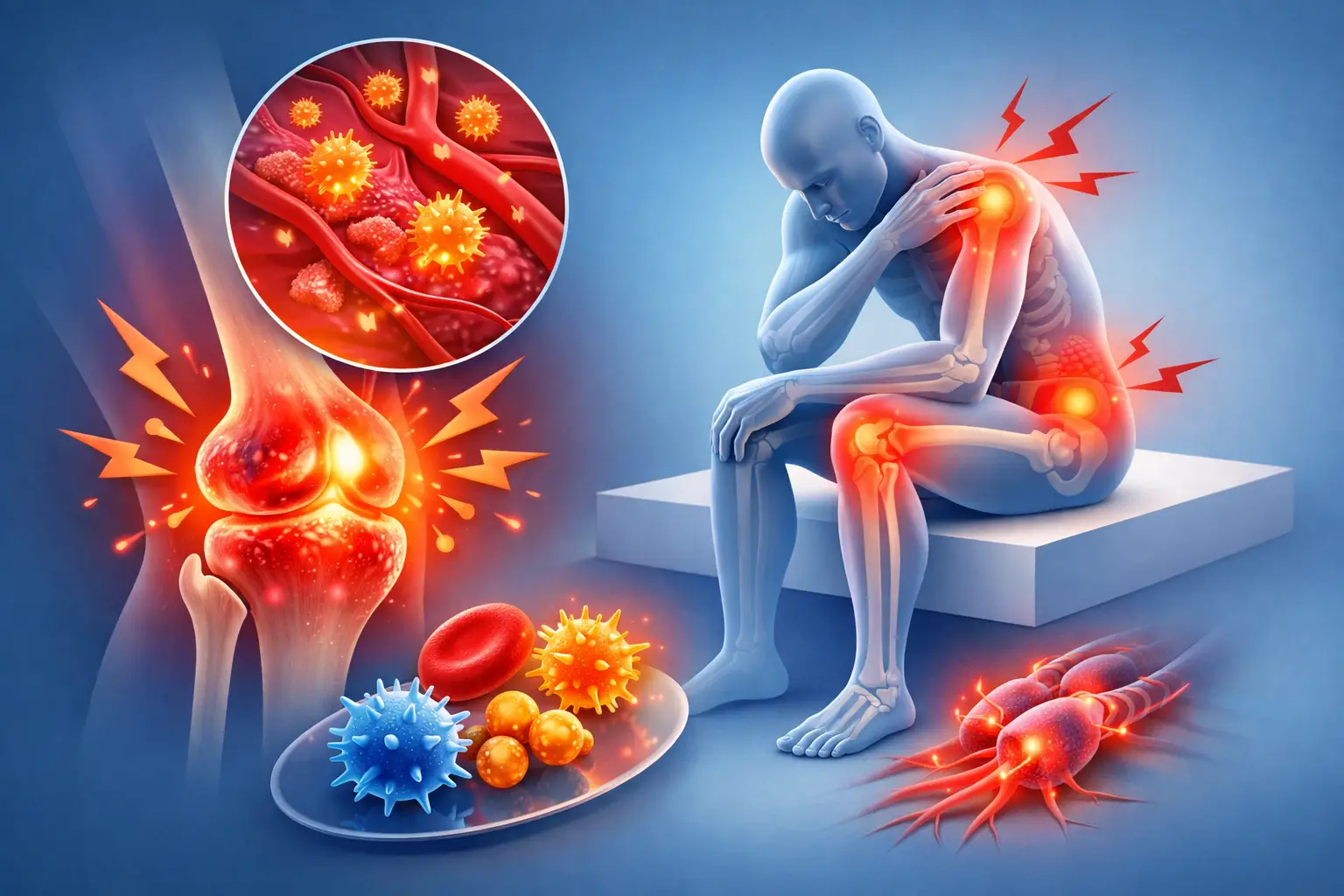
A sore knee after a long walk, throbbing gums after dental work, or aching joints during a flare-up can all raise the same question: why does inflammation cause pain? The short answer is that inflammation changes the area around an injury or irritation in ways that put pressure on tissues, activate pain-sensing nerves, and make those nerves more sensitive than usual.
That answer is simple. What is happening in the body is more layered, and understanding it can help you make better decisions about rest, recovery, and daily wellness support.
Why does inflammation cause pain in the first place?
Inflammation is part of the body’s defense system. When tissue is injured, irritated, or exposed to infection, the immune system responds by sending blood, fluid, and signaling chemicals to the area. This response is designed to protect you and start repair.
Pain shows up because that protective process is not quiet. It creates heat, swelling, and chemical activity around local nerves. Those nerves are built to detect possible harm. Once inflammation starts, they receive a stronger message that something is wrong.
In other words, pain is often the alarm system, while inflammation is part of the repair crew. The challenge is that the repair crew can be uncomfortable to live with.
The main reasons inflammation hurts
Inflammatory chemicals irritate pain receptors
One of the biggest reasons inflamed tissue hurts is the release of chemical messengers such as prostaglandins, cytokines, and bradykinin. These compounds help coordinate healing, but they also interact with nociceptors, which are specialized nerve endings that detect pain.
When these chemicals are present, nerves fire more easily. A level of pressure or movement that might normally feel mild can suddenly feel sharp, tender, or sore. This is why an inflamed area often feels painful even when the original injury seems small.
Swelling creates pressure
Inflammation also increases blood flow and brings fluid into the affected tissue. That extra fluid causes swelling. In some parts of the body, swelling creates mechanical pressure on nearby nerves and surrounding structures.
This is one reason inflamed joints can feel stiff and achy, and why swelling in a tight space, such as around a tendon or inside the sinuses, can be especially uncomfortable. The tissue does not always have much room to expand.
Nerves become more sensitive
Another important piece is sensitization. During inflammation, the nervous system can become more reactive. That means signals that would usually be manageable start to feel stronger.
This sensitivity can show up as tenderness to touch, pain with movement, or lingering discomfort even after the main trigger has started to improve. In some cases, the body becomes so alert to the inflamed area that it keeps amplifying the message.
Why inflammatory pain can feel different from other pain
Not all pain feels the same because not all pain starts the same way. Inflammatory pain often comes with warmth, swelling, stiffness, redness, and sensitivity. It may feel worse after inactivity, or it may flare when the affected area is used too much. For some people it is dull and constant. For others it is pulsing, burning, or tender.
Compare that with nerve pain, which is more likely to feel electric, tingling, or shooting, or with mechanical pain from overuse, which may improve quickly with simple rest. Real life is not always neat, though. Many people experience overlap. An inflamed area can irritate nerves, and repeated irritation can create both inflammatory and mechanical pain patterns.
That is why symptoms matter more than labels alone.
Acute inflammation vs chronic inflammation
Acute inflammation is protective
Short-term inflammation is a normal response. If you twist your ankle, strain a muscle, or recover from a minor illness, the body uses inflammation to stabilize the area and begin repair. The pain is unpleasant, but the process itself is often helpful.
In these situations, the discomfort usually improves as healing moves forward. The body turns the inflammatory response on, does its job, and then gradually turns it down.
Chronic inflammation is harder on the body
Chronic inflammation is different. It lasts longer, may involve ongoing immune activity, and can continue to irritate tissues and nerves over time. This is where pain can become more complicated.
Conditions such as arthritis, inflammatory bowel disease, some autoimmune disorders, and persistent soft tissue irritation can all create a cycle where inflammation keeps feeding discomfort. The longer this goes on, the more likely the nervous system is to stay on high alert.
That does not mean every long-lasting ache is caused by inflammation. It does mean chronic pain often deserves a closer look instead of a quick guess.
Why even light touch can hurt during inflammation
If you have ever had sunburn, a swollen joint, or a sore patch of skin, you know how surprising this can be. Gentle contact can feel disproportionately painful.
This happens because inflamed nerves have a lower threshold for activation. Touch, movement, pressure, and temperature changes may all register more strongly than they should. The body is trying to protect the area by making you less likely to use it carelessly.
That protective effect can be useful for a day or two. It becomes frustrating when it lingers and interferes with sleep, mobility, or basic comfort.
What affects how much inflammation hurts?
Two people can have similar inflammation and very different pain levels. Part of that comes down to location. Inflammation in a finger joint feels different from inflammation in the lower back or gut. Part comes down to intensity and duration. Mild short-term irritation is one thing. Repeated flare-ups are another.
Personal factors matter too. Age, stress, sleep quality, activity level, previous injuries, and existing health conditions can all change how pain is felt. Even mood and nervous system load can influence the experience. This does not make pain less real. It shows that pain is shaped by both tissue changes and the way the body processes those signals.
Can reducing inflammation reduce pain?
Often, yes. If inflammation is a major driver of discomfort, calming that response can help reduce pain. The right approach depends on the cause.
For mild, everyday inflammation, people often benefit from practical steps such as rest, ice or heat when appropriate, hydration, gentle movement, and avoiding activities that keep re-irritating the area. For some, topical support becomes part of the routine because it offers a targeted option without adding complexity.
Longer-term support may also include anti-inflammatory eating patterns, better sleep habits, stress management, and consistent movement that does not overload sensitive tissues. Some adults also explore non-intoxicating wellness tools such as THC-free CBD as part of a broader routine, especially when discomfort is affecting daily quality of life. What helps most can vary, and consistency usually matters more than chasing a quick fix.
When pain is not just inflammation
This is where nuance matters. Inflammation can cause pain, but pain is not always caused by inflammation alone. Structural issues, nerve compression, muscle imbalance, infection, injury, and systemic illness can all create similar symptoms.
If pain is severe, rapidly worsening, or paired with fever, major swelling, weakness, numbness, chest pain, or unexplained weight loss, it is smart to get medical attention promptly. The same is true for pain that keeps returning without a clear reason.
Ongoing discomfort deserves clarity, not guesswork.
Why understanding the cause matters
When you understand why inflammation causes pain, the experience can feel less confusing. The body is not necessarily failing. It is signaling, protecting, and trying to repair. The problem is that the same process that supports healing can also create real discomfort.
That is why relief is often about more than masking symptoms. It helps to support the tissue, reduce unnecessary irritation, and give the nervous system a chance to settle down. For many people, the best results come from a steady, practical routine rather than a dramatic intervention.
If your body has been asking for attention through aches, stiffness, or flare-ups, listening early is usually the gentler path. Pain may be a warning, but it can also be a useful prompt to care for yourself with more intention.